How to Thin Lettuce Seedlings for Crisp, Full Heads
Crowded lettuce never sizes up. Seeds are tiny, so most of us oversow. Then the area gets a thick mat of seedlings fighting for light. Learning how to thin lettuce seedlings fixes that fast.
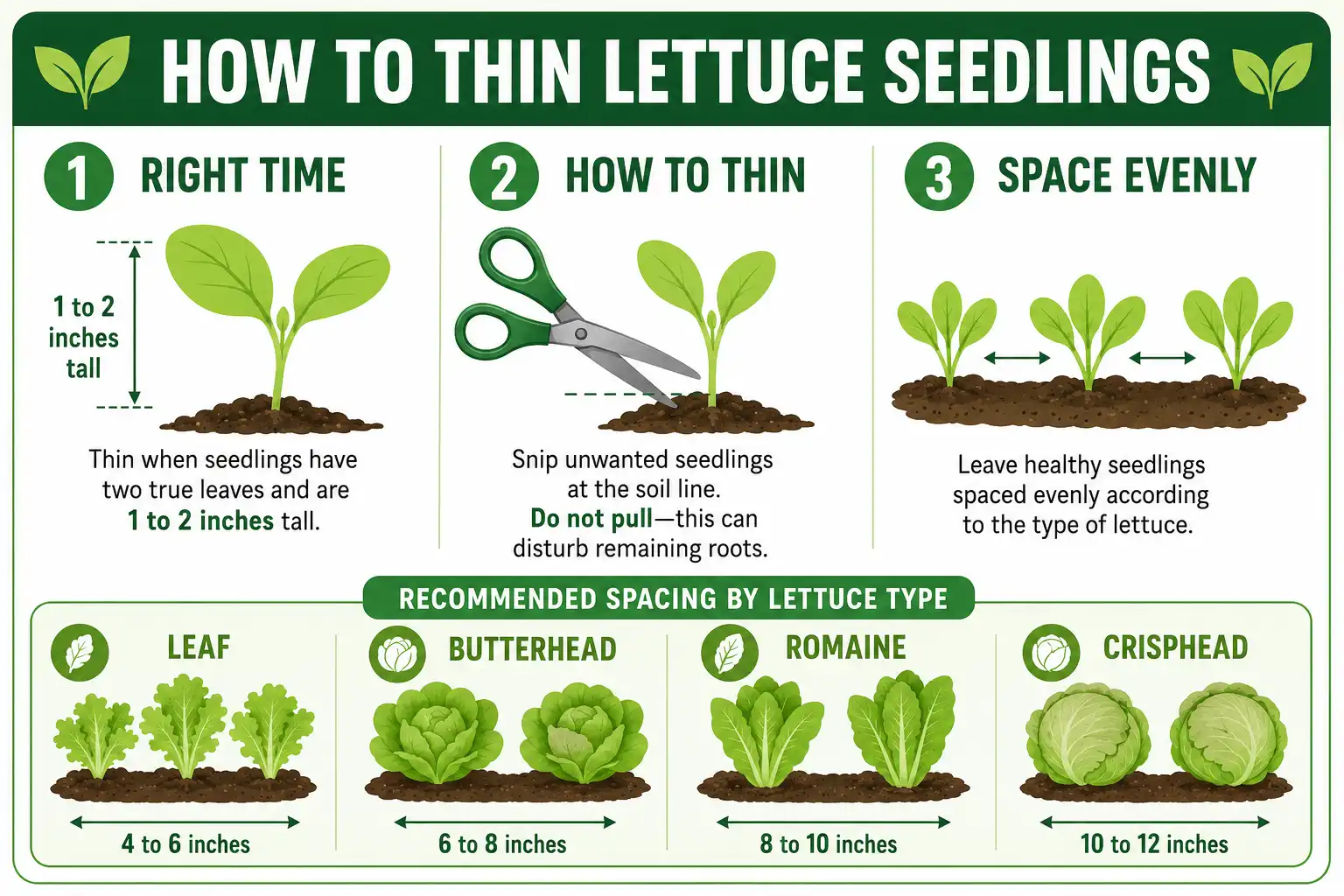
Thin lettuce seedlings when they reach the two-to-three true leaf stage, about 1 to 2 inches tall. Snip the weakest plants off at the soil line, then leave the strongest 4 to 12 inches apart depending on the type.
When Should You Thin Lettuce Seedlings?
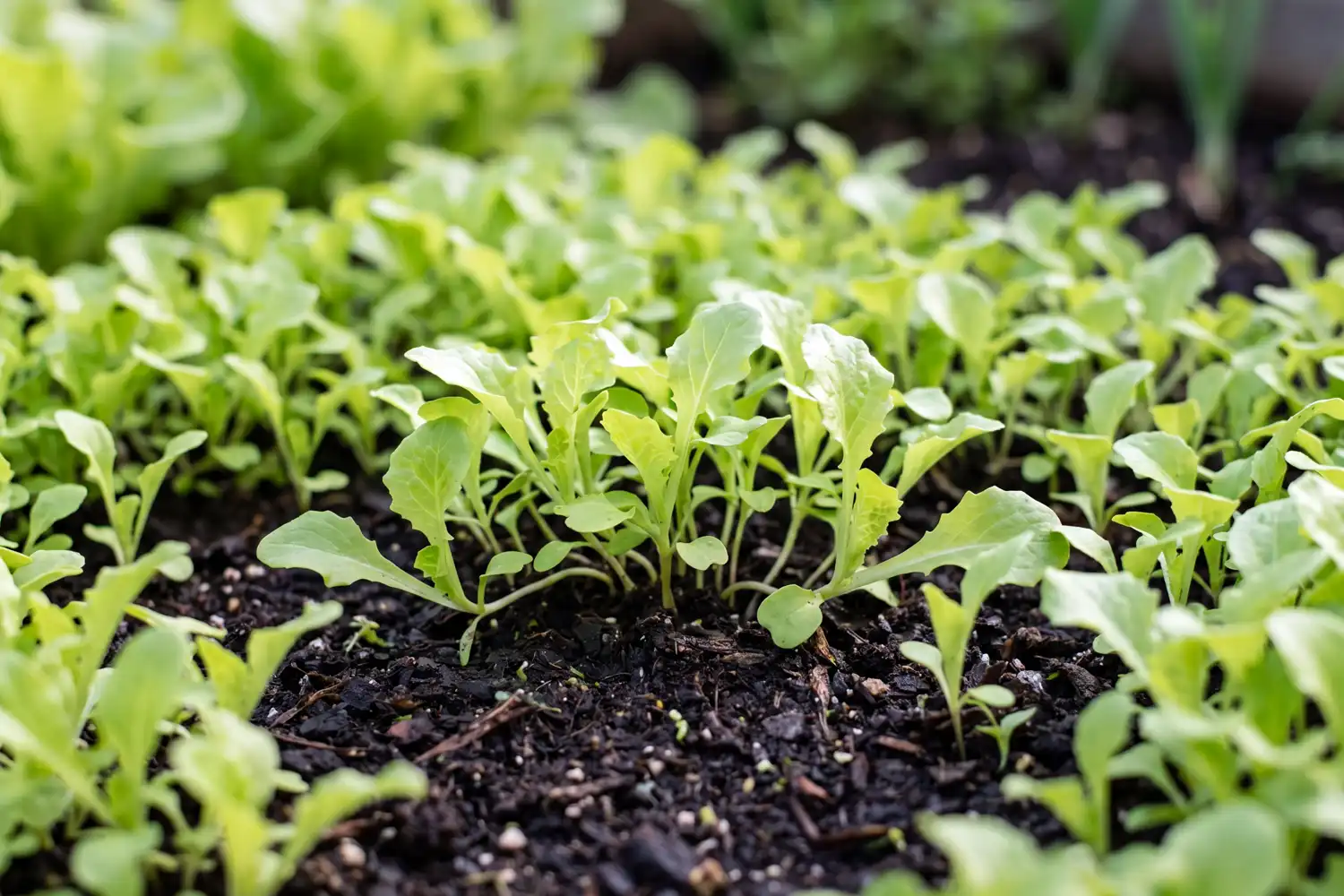
Thin them once they have two to three true leaves and stand 1 to 2 inches tall. True leaves are the second set, the ones that look like real lettuce. The first pair, the cotyledons, are rounded and plain. Waiting for true leaves does two things. First, the seedlings are tough enough to handle the work. Second, you can finally tell the strong plants from the weak ones.
Sow lettuce thin and shallow, about a quarter inch deep, the way K-State Research and Extension recommends. Even so, those tiny seeds clump together. So thinning is almost always part of the job. If you want a refresher on getting lettuce seeds to germinate first, that step sets up everything that follows.
Do not wait too long, though. Once roots tangle together, pulling one plant rips the neighbor. So aim to thin within a week or two of the true leaves showing.
What Happens If You Don’t Thin Lettuce Seedlings?
Skip thinning and your lettuce stays small, leggy, and stressed. Crowded plants fight for the same light, water, and nutrients. None of them win. So you get thin, pale leaves on stretched stems instead of full, crisp heads.
Tight spacing also traps moisture against the foliage. That damp, still air invites rot, which is the same reason crowded trays run into damping-off problems. Good airflow keeps leaves dry and healthy.
Crowding pushes lettuce to bolt sooner too. When plants feel stressed, they rush to seed. Bolted lettuce turns bitter fast. So thinning early heads off most of that.
This starts before the seedlings even sprout. The fewer seeds you drop, the less thinning you face later. So it pays to think about how many seeds you sow per hole at planting time.
How to Thin Lettuce Seedlings Step by Step
Here is the exact process on the beds. It takes a few minutes per row and saves the whole planting.
Water the bed a few hours before
Water first. Moist soil loosens its grip on the roots. So when you pull a seedling, it lifts clean instead of dragging neighbors with it. Dry soil tears roots and disturbs the keepers. Water in the morning and thin that afternoon.
Snip the weak ones at the soil line
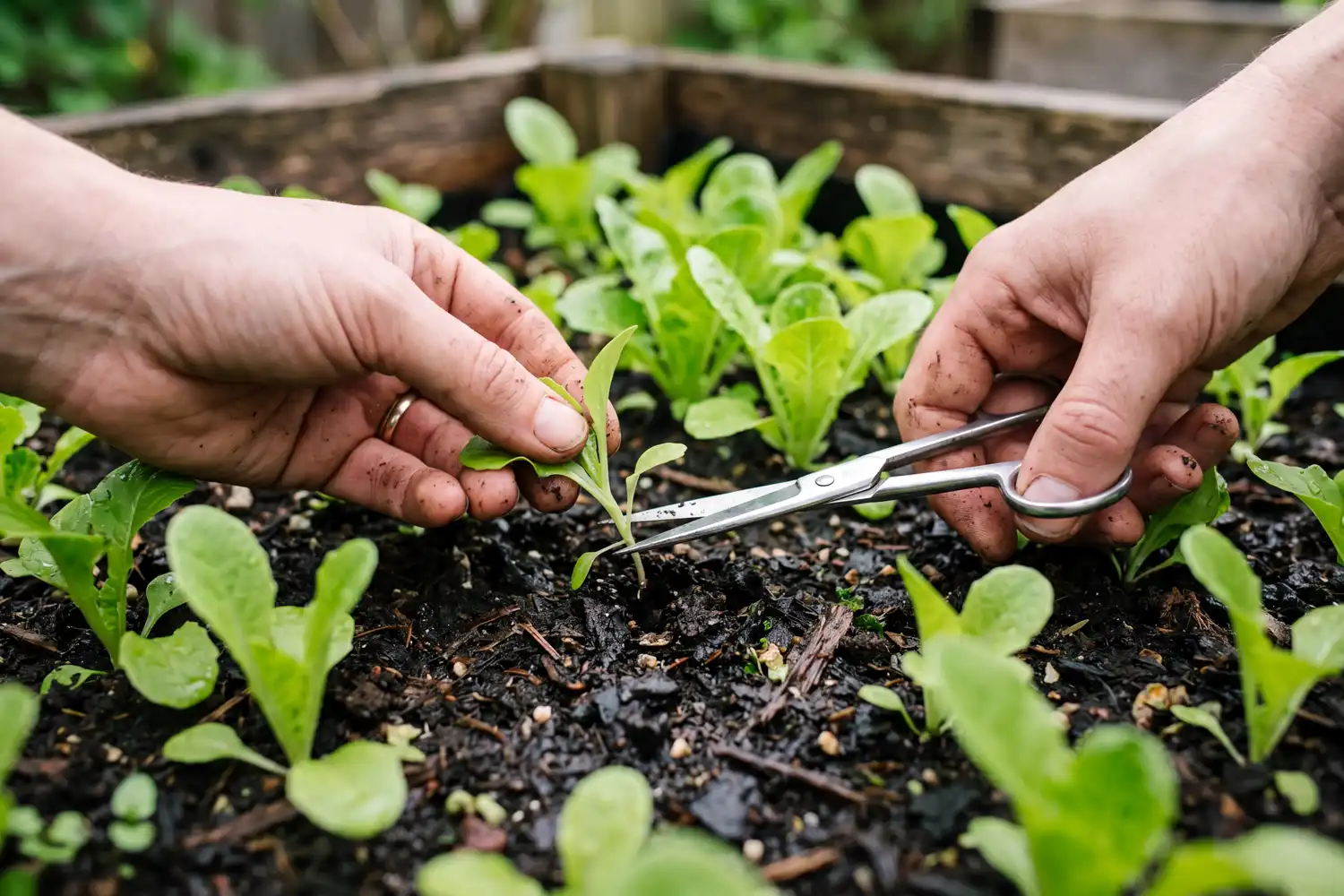
Reach for small scissors, not your fingers. Then snip each unwanted seedling right at the soil line. Cutting leaves the roots in the ground, where they shrivel without bothering the plant beside them. Pulling, by contrast, yanks on a shared root zone.
This matters more with lettuce than most crops. Lettuce roots sit shallow and spindly, so they damage easily. That is exactly why cutting instead of pulling near remaining plants is the recommended approach. The shallow lettuce root system bruises with the slightest tug, so a clean snip protects it.
Keep the strongest, best-spaced plants
Choose your keepers before you cut. Look for thick stems, good color, and even leaves. Then remove the runts, the tight clusters, and any plant crowding a strong neighbor. Space the survivors evenly, never in a clump.
How Far Apart Should Lettuce Be After Thinning?
Final spacing runs from 4 to 12 inches, set by the type you grow. Leaf types pack in tightest. Head types need the most room. Here is how to space.
Loose-leaf and oakleaf lettuce do fine at 4 to 6 inches apart. Butterhead and Bibb want 6 to 8 inches to fill out their soft heads. Romaine needs 8 to 10 inches for those tall, upright hearts. Crisphead, the iceberg type, takes the most space, 10 to 12 inches or more. University of Maryland Extension even pushes crisphead to 15 inches in rich ground.
K-State keeps it simple with one rule of thumb. Thin to a plant every 6 to 8 inches, with rows as close as 12 to 15 inches. That covers most home plantings. If you want the full breakdown, our guide covers proper spacing for lettuce in rows and beds in a separate guide.
One note on iceberg. Crisphead grows most reliably from transplants, so a lot of growers set it at final spacing and skip thinning altogether. Thinning matters most for direct-sown leaf, romaine, and butterhead lettuce.
Thin in Two Passes for Stronger Heads
Do not thin everything at once. Thin in two passes, and it gives me better heads every season.
First pass comes at the true-leaf stage. Snip out the worst crowding, but leave the plants closer than final spacing, maybe half the target gap. Some seedlings always fail, or pests nip a few, so this keeps backups in place.
Second pass comes a week or two later. Now thin to full spacing, because by this point the strong plants are obvious. This two-step method also lines up with cut-and-come-again harvesting. K-State notes that cutting every other plant for baby greens gives the rest room to size up.
Can You Eat or Transplant the Thinnings?
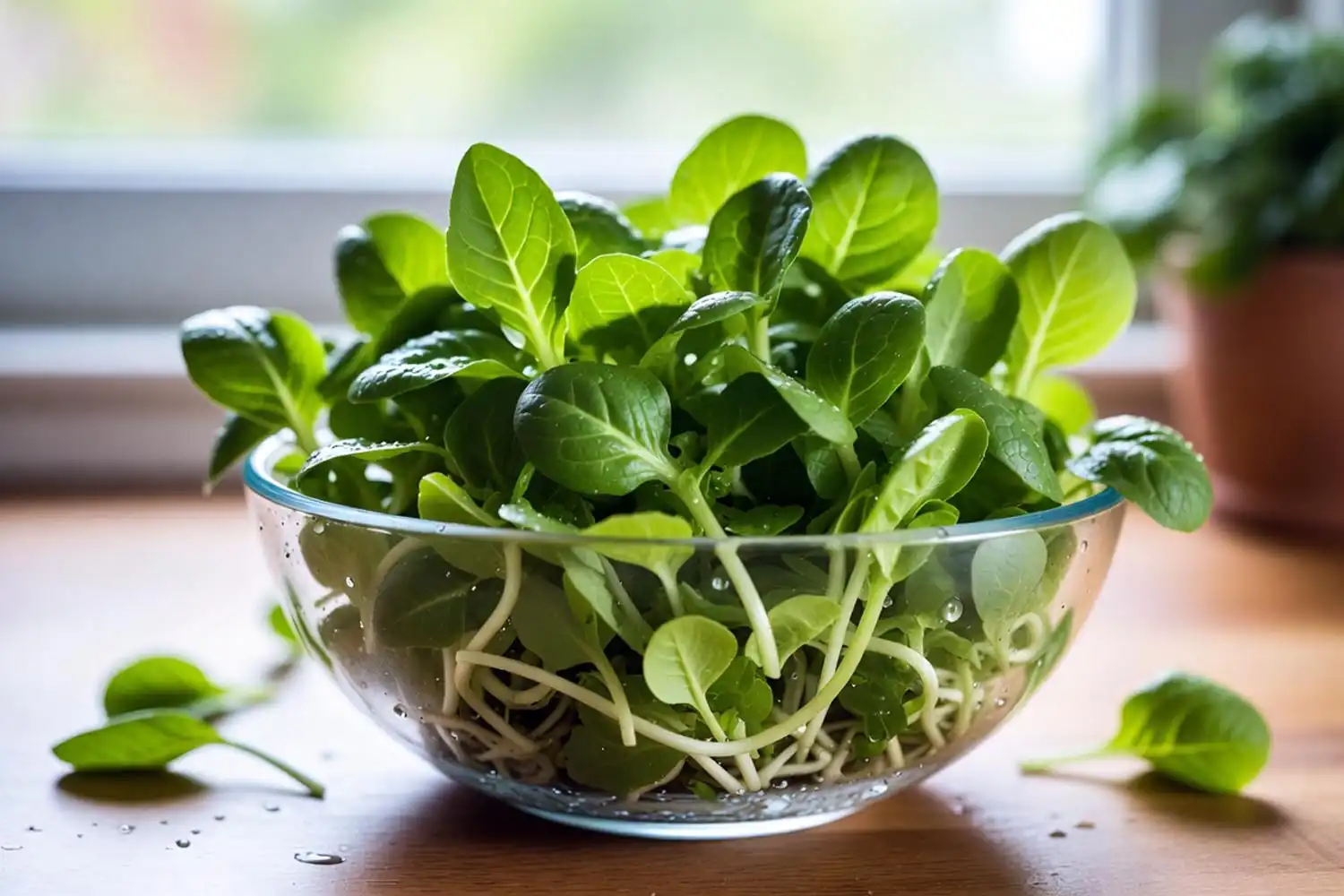
Yes, and you should. Thinned lettuce seedlings are tender baby greens, perfect on a sandwich or in a salad. Rinse them and eat them the same day. K-State points out the same thing, since thinnings work great as a baby leaf salad.
You can also replant the thinnings if you pull them with a little root attached. Lift them gently, set them at final spacing, water them in, then keep them shaded for a day or two. Leaf and romaine types take to this best. Crisphead is fussier and often sulks. The same care that works for thinning carrot seedlings applies here, because both crops have delicate young roots.
Thin and replant in the cool part of the day. Evening or an overcast afternoon beats hot midday sun. Less heat means less shock for the moved plants.
Thinning Mistakes That Cost You Lettuce
A few habits ruin a good thinning. So watch for these.
Thinning too late tops the list. Tangled roots mean you damage keepers no matter how careful you are. Thinning dry comes next, so always water first. Being too gentle is real too, because leaving crowded plants defeats the whole point. Pull or snip enough to hit your target spacing.
The last one is thinning at high noon in July. Heat plus root disturbance stresses lettuce hard, and stressed lettuce bolts. So stick to a cool morning, a cool evening, or a cloudy day. That is all it takes.
What Thinning Looks Like in the Beds
Here is the short version. Sow thin, then thin again once true leaves show. Snip the weak ones at the soil line, water first, and leave the strong plants spaced by type. Eat or replant what you pull. Thin in the cool hours, and work in two passes for the best heads. Do that, and your lettuce comes in crisp and full instead of thin and bitter. That is the whole job on the beds in zone 6a.