What Is the Difference Between Cabbage and Lettuce?
Cabbage and lettuce look like cousins at the store, yet the difference between cabbage and lettuce runs deep. They come from separate plant families, taste nothing alike, and grow on different timelines.
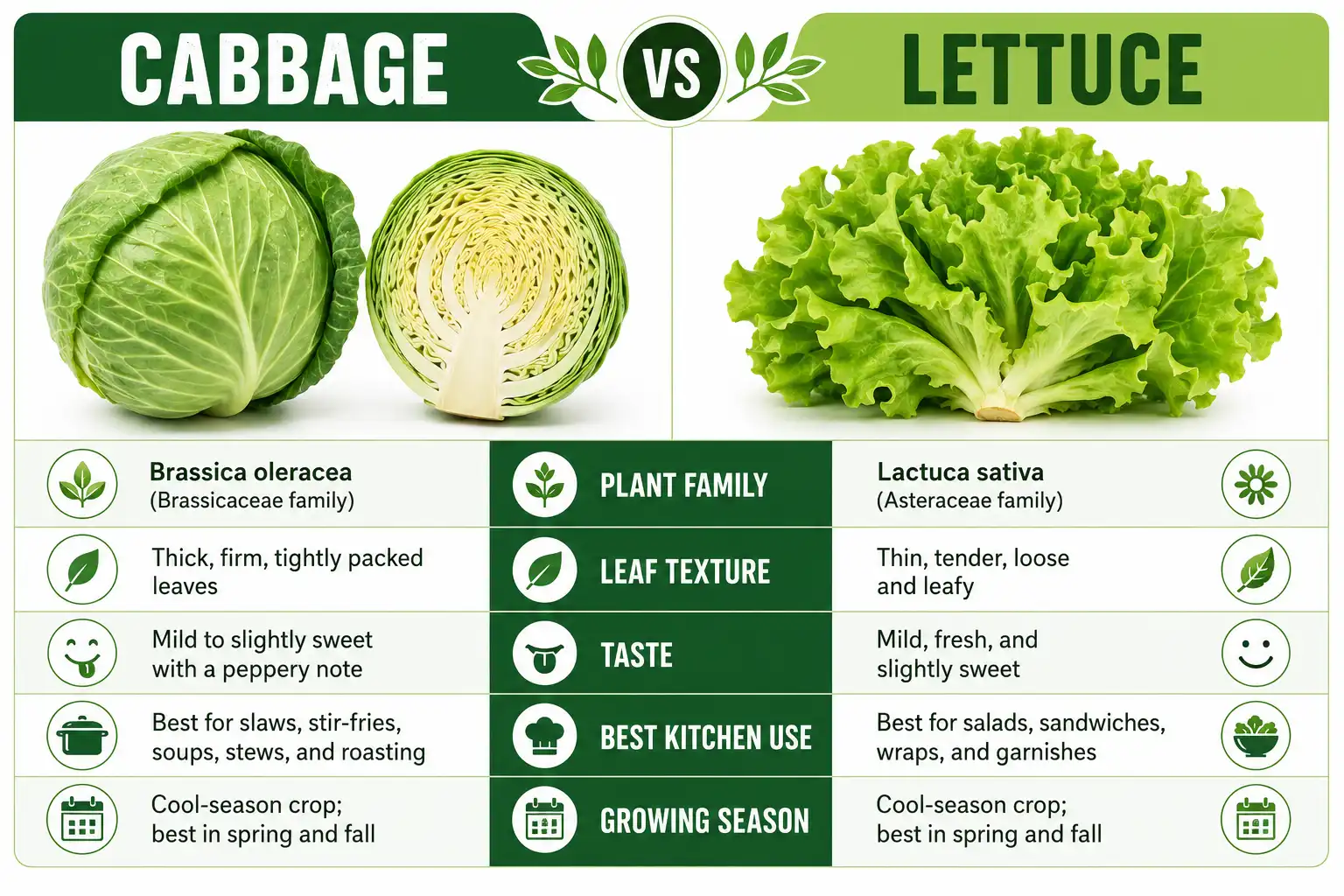
The main difference between cabbage and lettuce is family and texture. Cabbage is a dense, crunchy brassica that cooks well. Lettuce is a soft, watery, daisy-family green eaten raw. They only look alike.
Are Cabbage and Lettuce the Same Plant?
No. Cabbage and lettuce come from two unrelated plant families. Cabbage is Brassica oleracea, a member of the mustard family, Brassicaceae. That makes it a cole crop, right next to broccoli, cauliflower, kale, and Brussels sprouts. Lettuce is Lactuca sativa, and it sits in the aster or daisy family, Asteraceae. Its closest kin are sunflowers, chicory, and dandelions.
So they share almost nothing in their genetics. They only look similar because both can grow into a round, leafy head. Treat them as separate crops, because that is what they are. Wild cabbage is naturally biennial, though it’s grown in a single season.. By contrast, lettuce grows as an annual and wraps up in one short, cool stretch.
Learn more: Plant Lettuce in Florida (North, Central & South)
How Do You Tell the Difference Between Cabbage and Lettuce?
Pick one up. A cabbage head feels heavy, hard, and solid for its size. A lettuce head feels light and airy, even the crisphead types. That weight test alone settles most cases at the market.
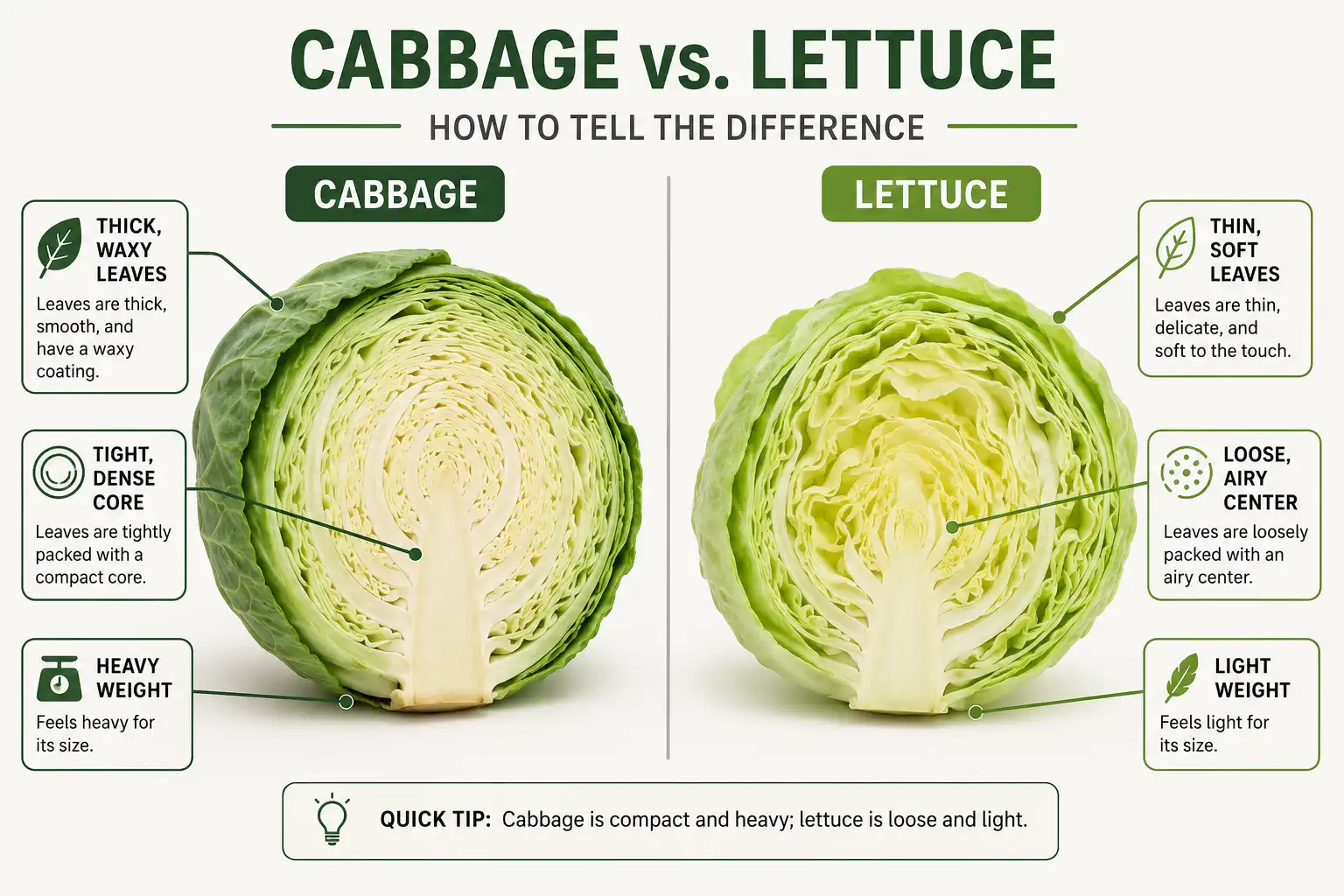
Look closer and the leaves give it away. Cabbage leaves are thick, waxy, and wrapped tight around a short, stout core. Many are smooth, while savoy types are deeply crinkled. Lettuce leaves are thin, soft, and loosely layered. Now cut each one in half. Cabbage shows a dense cross-section packed around a pale central stem. Lettuce shows an open, loose inside you can pull apart by hand.
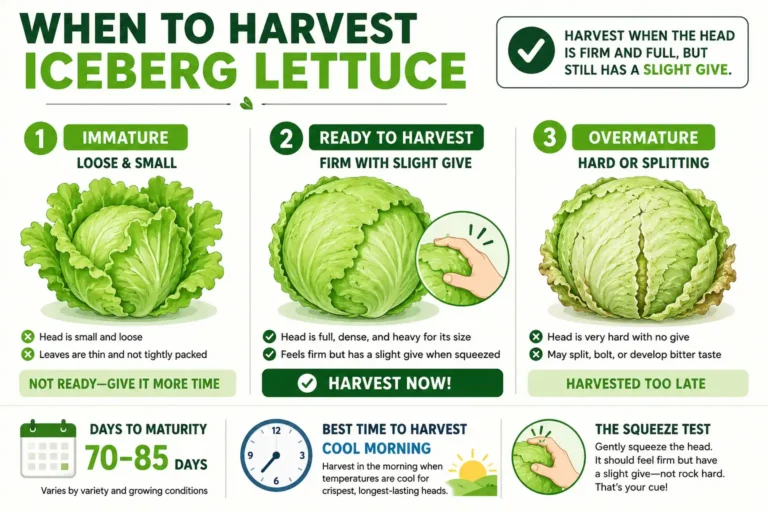
Color helps too, though it can fool you. Both come in green and red or purple forms. Red cabbage runs deep purple all the way through. Iceberg lettuce stays pale green and forms the loosest head of the group. To see how a true lettuce head fills in, check our guide on planting iceberg lettuce.
Do Cabbage and Lettuce Taste the Same?
No. Cabbage and lettuce taste worlds apart. Cabbage has a firm crunch and a peppery, slightly sulfur edge. That bite comes from glucosinolates, the same compounds broccoli and mustard carry. Cook cabbage and it turns soft and sweet. Lettuce, by comparison, tastes mild, fresh, and watery, with almost no spice.
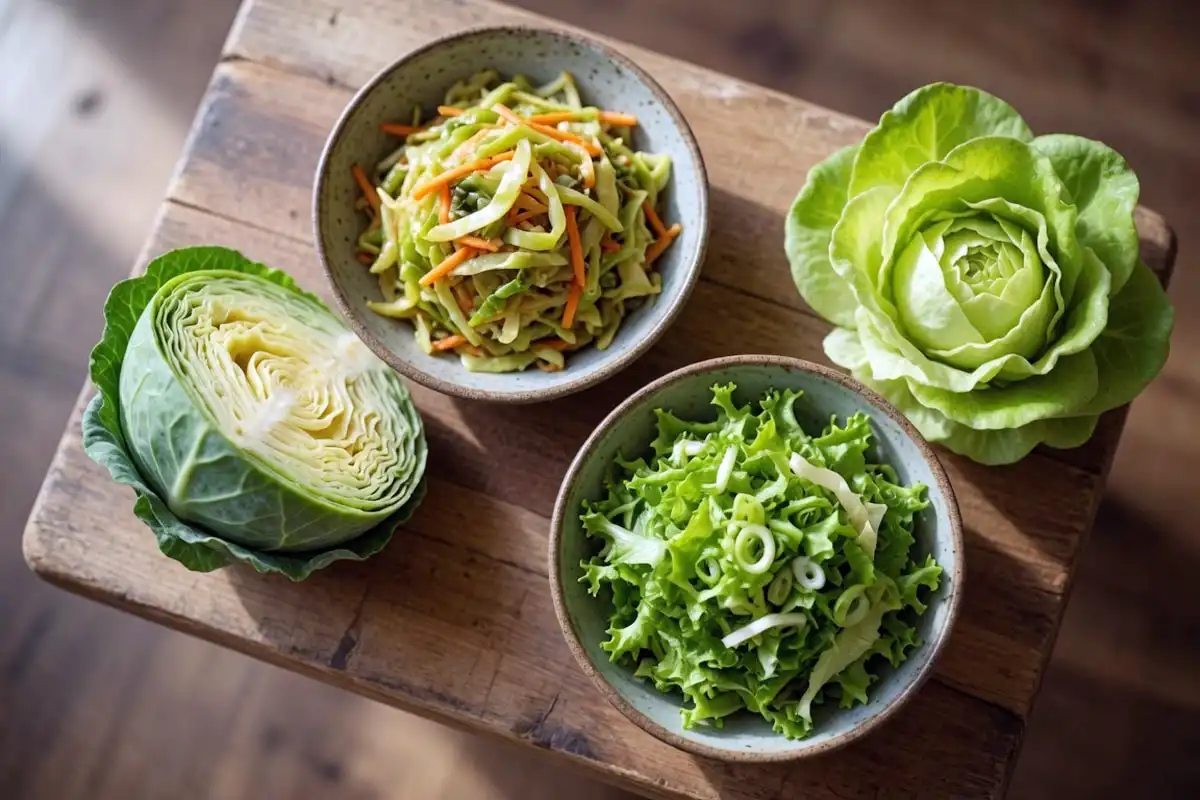
Texture decides how each one lands on the plate. Cabbage holds its shape under heat, so it works in coleslaw, stir-fries, braises, and stuffed rolls. Fermented, it becomes sauerkraut or kimchi. Lettuce wilts and turns bitter the moment it hits a hot pan. That is why it stays raw, in salads, wraps, sandwiches, tacos, and burgers. One bitter note with lettuce: when it bolts in summer heat, the leaves turn sharp and milky.
Which Is Healthier, Cabbage or Lettuce?
It depends on the variety, but cabbage usually edges ahead on fiber and vitamin C. Raw green cabbage carries about 25 calories per 100 grams and roughly 2.5 grams of fiber. That same small serving covers close to 40 percent of your daily vitamin C. Cabbage also brings folate, calcium, and glucosinolates that researchers study for anti-inflammatory effects.
Lettuce is lighter and leans toward hydration. Iceberg runs near 14 calories per 100 grams and is mostly water, with modest fiber. Here is the catch, though. Darker lettuce changes the math. Romaine packs more vitamin A, more potassium, and even more vitamin K than green cabbage. So romaine and red leaf hold their own, while iceberg sits at the bottom for nutrients. Both crops stay low in calories, so each earns a spot on your plate. Cabbage simply delivers a denser load of nutrients per bite.
How Does Growing Cabbage Differ From Growing Lettuce?
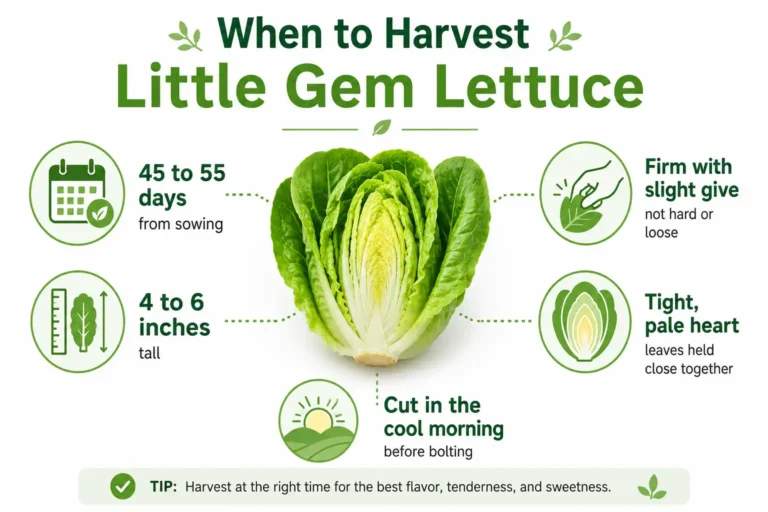
Cabbage takes far longer to grow and shrugs off harder cold. Most cabbage needs 60 to 110 days from transplant, depending on the variety. Lettuce can be ready in 20 to 45 days for leaf types, and 45 to 75 days for heads. So lettuce gives you a fast crop, while cabbage asks for patience.
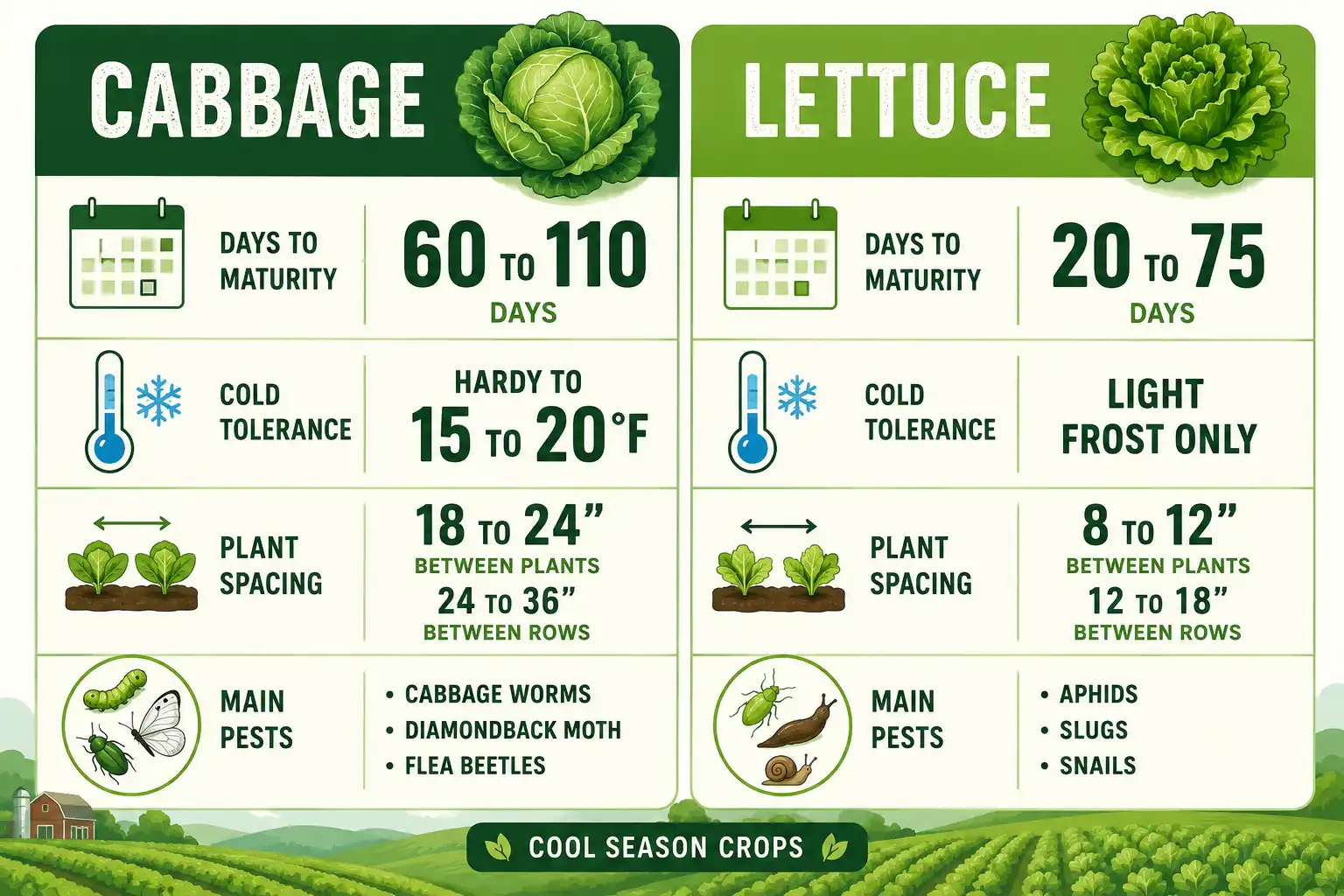
Cold tolerance splits them too. A mature cabbage head handles frost down to about 15°F to 20°F. That hardiness lets me hold cabbage in the field well into a Kansas fall. Lettuce takes only light frost and melts in a hard freeze. With a little cover, though, you can still grow lettuce through winter in milder spots.
Heat works the other way. Lettuce bolts once temperatures climb into the 70s and low 80s Fahrenheit. It sends up a seed stalk and the leaves turn bitter. Smart timing and afternoon shade help keep lettuce from bolting through summer. Cabbage handles warmth better, yet it still favors the 60°F to 70°F range. Young cabbage can also bolt after a long cold snap.
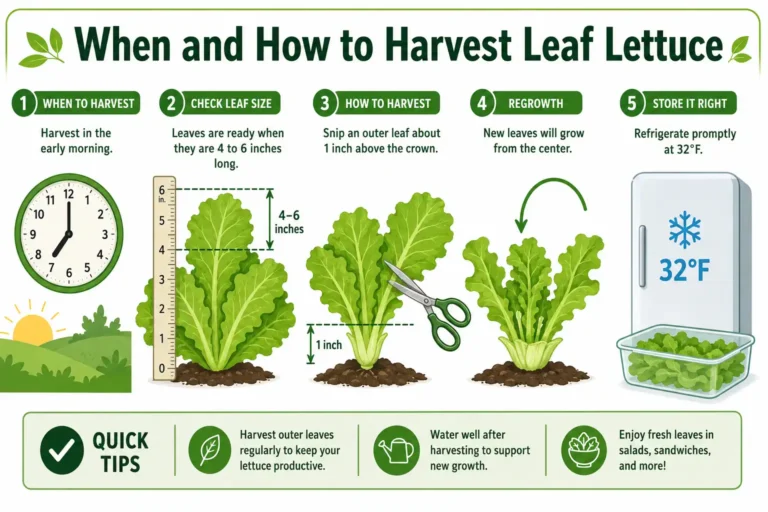
A few more field notes round this out. Cabbage is a heavy feeder and usually goes in as a transplant. Space it 12 to 24 inches apart, one head per plant. Watch for cabbageworms, loopers, aphids, and harlequin bugs. Lettuce has shallow roots, seeds easily, and works for cut-and-come-again leaf harvests. Succession-sowing lettuce every couple of weeks keeps salads coming. Cabbage also splits if it drinks too much water right before harvest, so easing off late-season watering helps.
How Do You Store Cabbage and Lettuce?
Cabbage keeps for weeks to months, while lettuce lasts about a week. A solid cabbage head holds in the crisper drawer for three to four weeks. It lasts far longer in a cool root cellar near freezing. Its tight, waxy leaves seal in moisture. That long storage life is one reason cabbage fed families through winter long before refrigerators.
Lettuce is fragile by comparison. Most heads stay fresh 7 to 10 days, and leaf types fade faster. They bruise, wilt, and spoil quickly once cut. A little care stretches that window. method to keep cut lettuce crisp can buy you extra days in the fridge. So cabbage forgives a busy week, but lettuce will not.
What to Tell New Growers in Kansas
Cabbage and lettuce only look like twins. One is a dense brassica that cooks down sweet and stores for months. The other is a tender, daisy-family green you eat raw and use within the week. In the garden, cabbage rewards patience and laughs at frost. Lettuce comes fast but hates summer heat. Grow both, lean on each for what it does best, and you will never mix them up again.