How to Grow Zucchini Vertically on a Stake or Trellis
Bush zucchini sprawls across several feet of bed by midsummer, shading neighbors and hiding fruit under its leaves. Learning how to grow zucchini vertically keeps the plant upright. As a result, it uses less ground, dries faster after rain, and is easier to scout and pick.
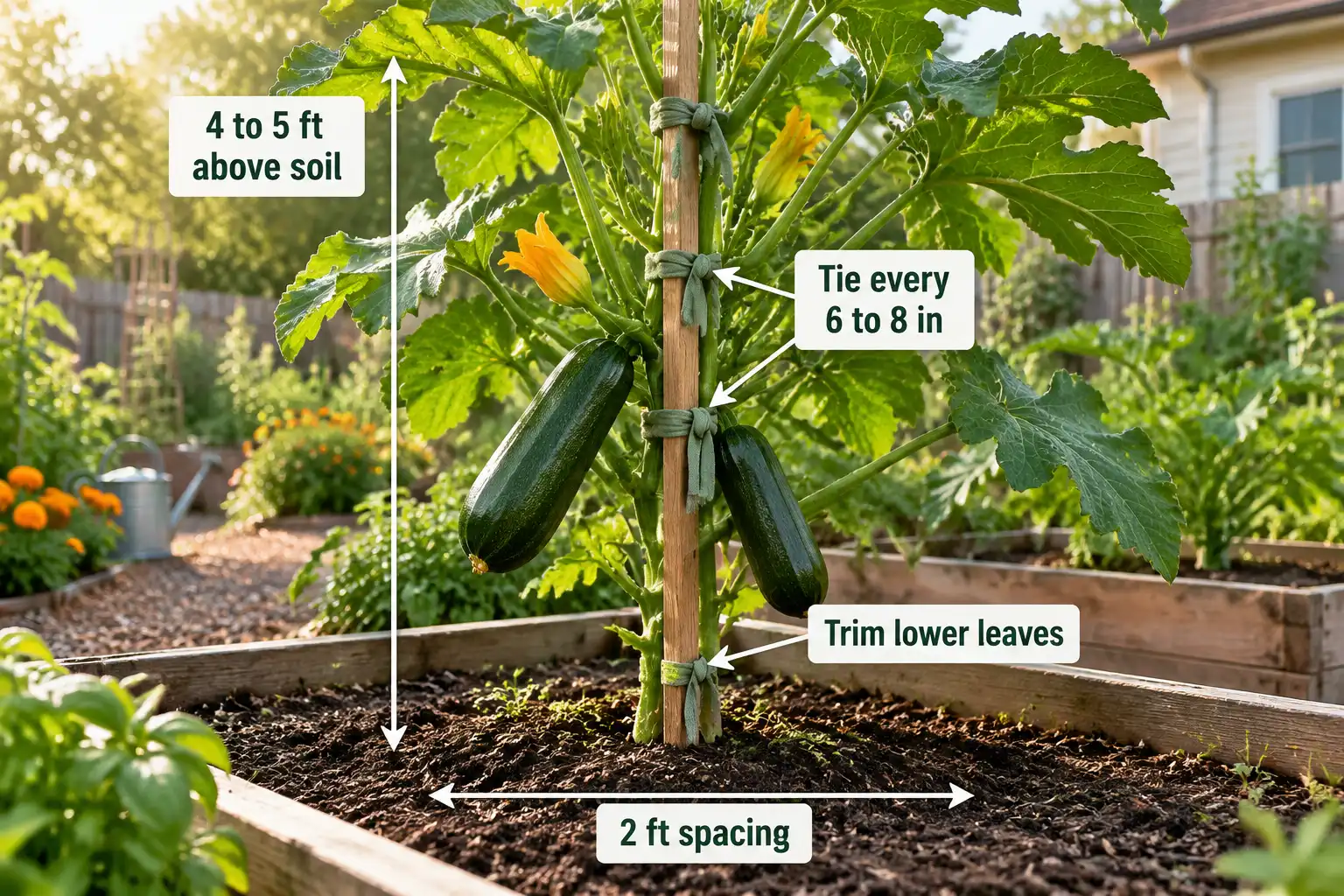
Bush zucchini will not climb by itself. To grow zucchini vertically, drive a 5 to 6 foot stake beside each plant at planting. Then tie the main stem every 6 to 8 inches and trim lower leaves as fruit sets.
Can You Trellis Zucchini?
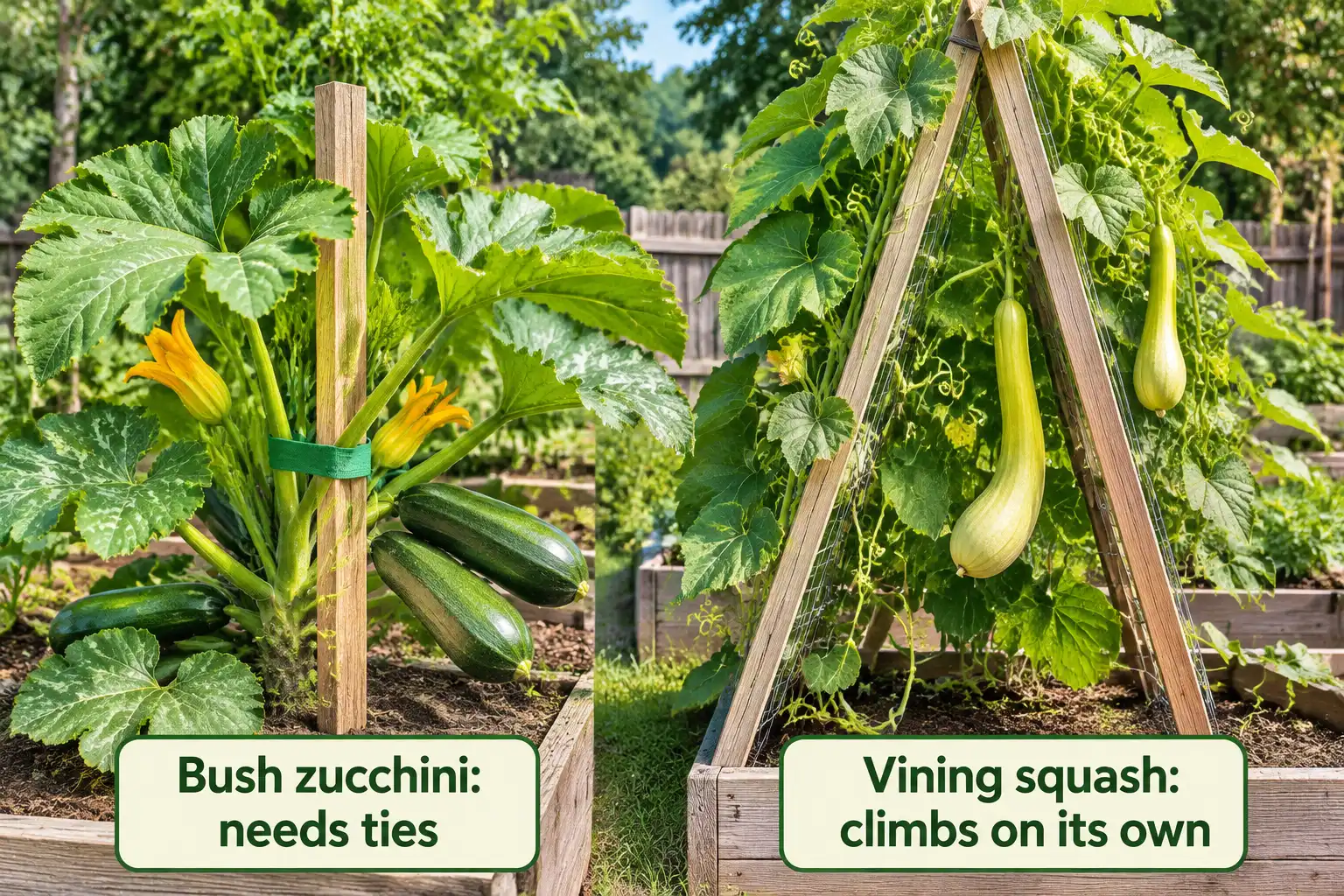
Yes, you can trellis zucchini, but the right support depends on growth habit. Bush zucchini trains best on a single stake, while long-vined types climb an A-frame or panel trellis.
Zucchini is a summer squash (Cucurbita pepo). University of Minnesota Extension notes that some summer squash varieties form long, rambling vines, while bush types have very short vines that fit small gardens. Most zucchini sold today is the bush type. It grows from one thick central stem that lengthens all season and slowly tips over. That central stem is the part you train upward.
Do Zucchini Plants Climb?
No, bush zucchini does not climb on its own. It sometimes forms a few short tendrils, but they are too weak to lift a heavy, water-filled stem. So every inch of upward growth comes from your ties.
True climbers behave differently. Clemson Cooperative Extension describes Tromboncino as a vigorous vine from the butternut species, Cucurbita moschata, that you eat young like zucchini. Trellising keeps its fruit off the soil, lets the fruit grow long, and makes picking easy.
Learn more: Growing Zucchini in Raised Beds
Does Zucchini Need a Trellis?
No, zucchini does not need a trellis. It grows and fruits well when left to sprawl. Vertical support earns its place when space is tight or disease pressure is high.
Airflow is the main payoff. University of Minnesota Extension lists staking, proper spacing, and weed control as ways to improve air movement and limit powdery mildew on cucurbits. Upright plants also show their fruit, so fewer zucchini grow to baseball-bat size under the leaves.
There is one trade-off, though. The same UMN guide notes that trellised plants tend to need more frequent watering.
| Your situation | Go vertical? | Why |
|---|---|---|
| Raised bed or bed under 4 feet wide | Yes | A staked plant needs only about 2 feet of row |
| Humid summers or past powdery mildew | Yes | Open plants dry faster after rain and dew |
| Wide rows with room to spare | Optional | Sprawling plants yield normally |
| Hot, dry, or windy site | Yes, with care | Water more often and use a deeper stake |
| Heavy squash vine borer pressure | Consider a vining substitute | Upright stems cannot root along the vine |
Best Zucchini Varieties for Vertical Growing
Open, upright bush varieties are the easiest to stake. Fewer, shorter leaf stems leave room for ties and keep fruit easy to reach.
| Variety | Type | Growth habit | Vertical notes |
|---|---|---|---|
| Black Beauty | Open-pollinated heirloom | Bush | Classic dark green fruit on one strong main stem |
| Spineless Beauty | F1 hybrid | Open bush, spineless leaf stems | Easy to tie and harvest without scratched arms |
| Costata Romanesco | Italian heirloom | Large, semi-sprawling bush | Ribbed fruit; needs the tallest, strongest stake |
| Tromboncino | C. moschata heirloom | True vine with tendrils | Climbs a trellis; resists squash vine borer |
Clemson Cooperative Extension lists Black Beauty as a popular zucchini dating to the 1920s. Tromboncino is not botanically zucchini. Still, Clemson reports that its young fruit fills in well for summer squash. Its dense, solid stems also make it essentially immune to squash vine borer.
How to Support Zucchini Plants: Stake, Cage, or Trellis
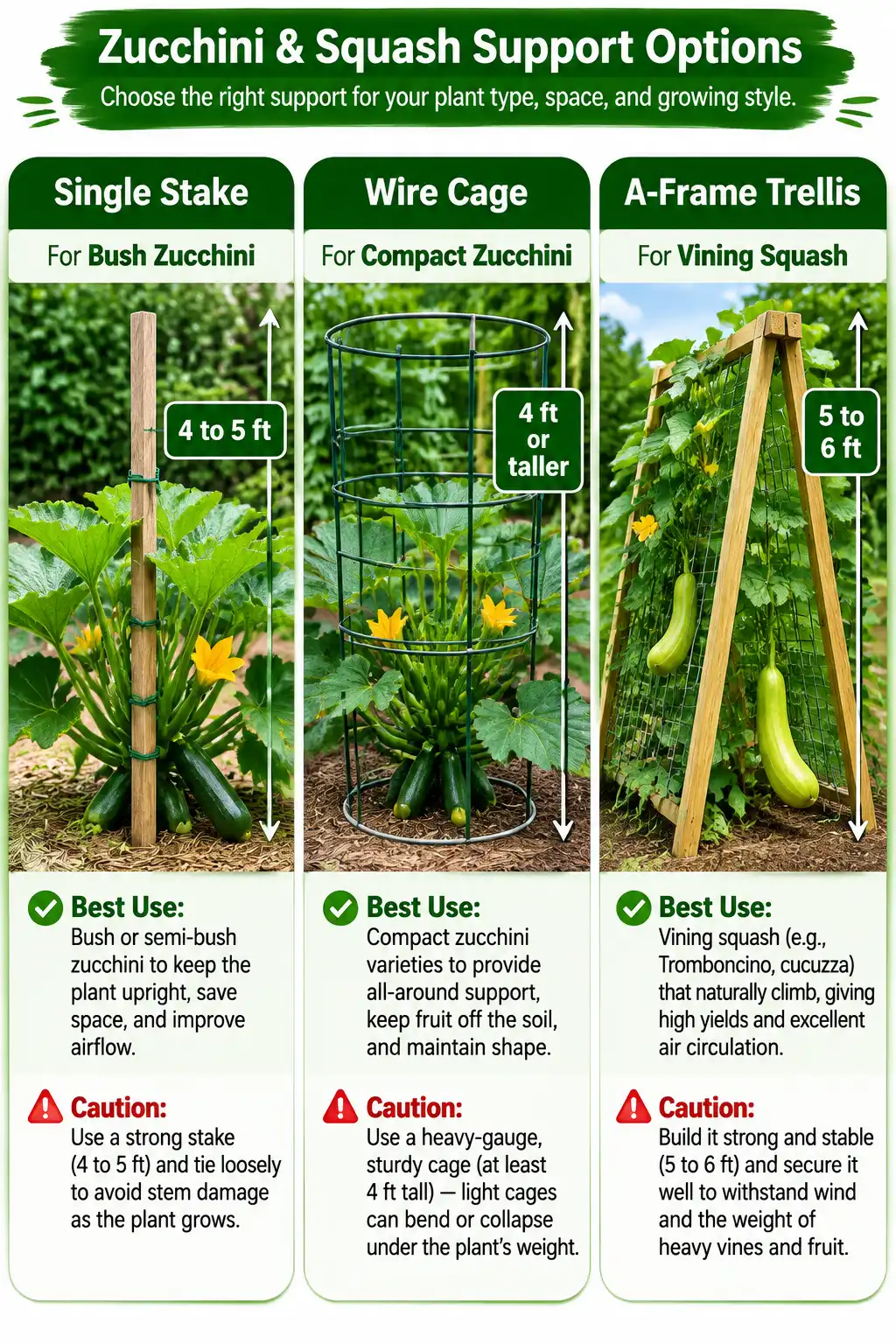
A single stake is the simplest way to support zucchini plants. Cages and trellises suit other setups, so match the support to the plant’s habit and your space.
| Support | Best for | Height above soil | Strength | Watch for |
|---|---|---|---|---|
| Single stake (wood, steel T-post, or conduit) | Bush zucchini in beds and rows | 4 to 5 feet | Cheap, smallest footprint | Needs a new tie about weekly |
| Heavy-gauge cage | Compact bush zucchini in beds or large pots | At least 4 feet | Holds leaf stems with fewer ties | Light wire cones tip under fruit weight |
| A-frame or panel trellis | Tromboncino and long-vined types | 5 to 6 feet | Fruit hangs free and grows straight | Larger build; anchor it well |
The logic mirrors choosing between stakes, trellises, and cages for tomatoes, although zucchini stems are thicker and more brittle. For vining squash, the frame and anchoring steps used when building a sturdy tomato trellis carry over well.
Set any support in place at or before planting. UMN Extension notes that squash forms branching surface roots. A stake driven beside an established plant risks tearing through them.
How to Grow Zucchini Vertically, Step by Step
1. Prepare a Sunny, Well-Drained Bed
Choose a spot with full sun. University of Minnesota Extension puts the ideal pH for vine crops at 6.0 to 6.5 and suggests working in compost or well-rotted manure. Raised beds also help drainage.
2. Wait for Warm Soil
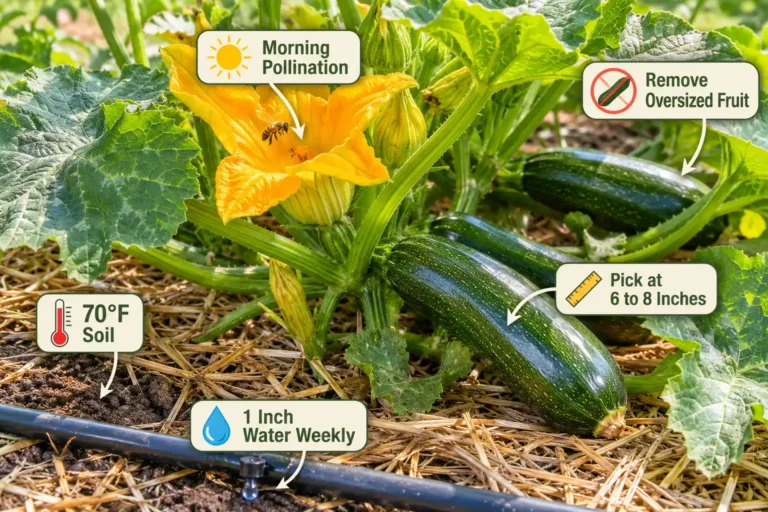
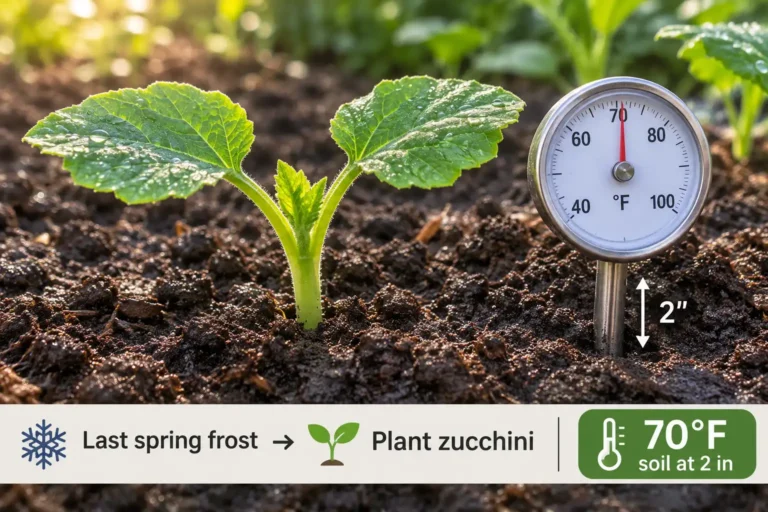
Squash seed germinates poorly in cold soil, and the planting threshold varies by region. UMN Extension waits for 70°F at a 2-inch depth in Minnesota, usually late May to early June. Clemson Extension uses 60°F at 4 inches for South Carolina, after the last frost. Take soil thermometer readings in the morning, when soil is coolest, for a conservative check.
3. Set the Stake First
Drive a 5 to 6 foot stake about 12 inches into the soil. That leaves 4 to 5 feet of support above ground. Then mark the seed spot 2 to 3 inches from the stake.
4. Sow, Thin, and Space
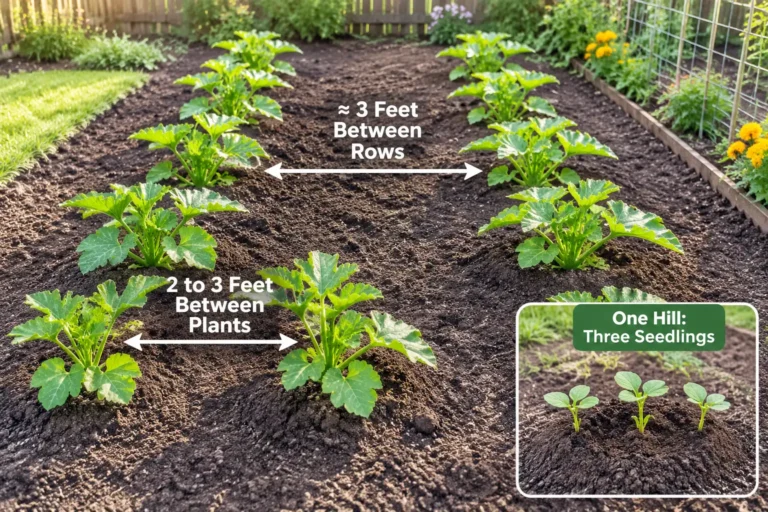
Sow 2 or 3 seeds about ½ inch deep beside each stake, the depth both UMN and Clemson recommend. Once true leaves open, thin to the single strongest seedling. Space stakes about 2 feet apart in rows 3 feet apart.
UMN allows bush types 2 to 3 feet between hills, and staking lets you use the tighter end. Avoid going closer than 2 feet, though. Oregon State University Extension notes that wider spacing improves air circulation and reduces powdery mildew.
How to Stake Zucchini Plants as They Grow
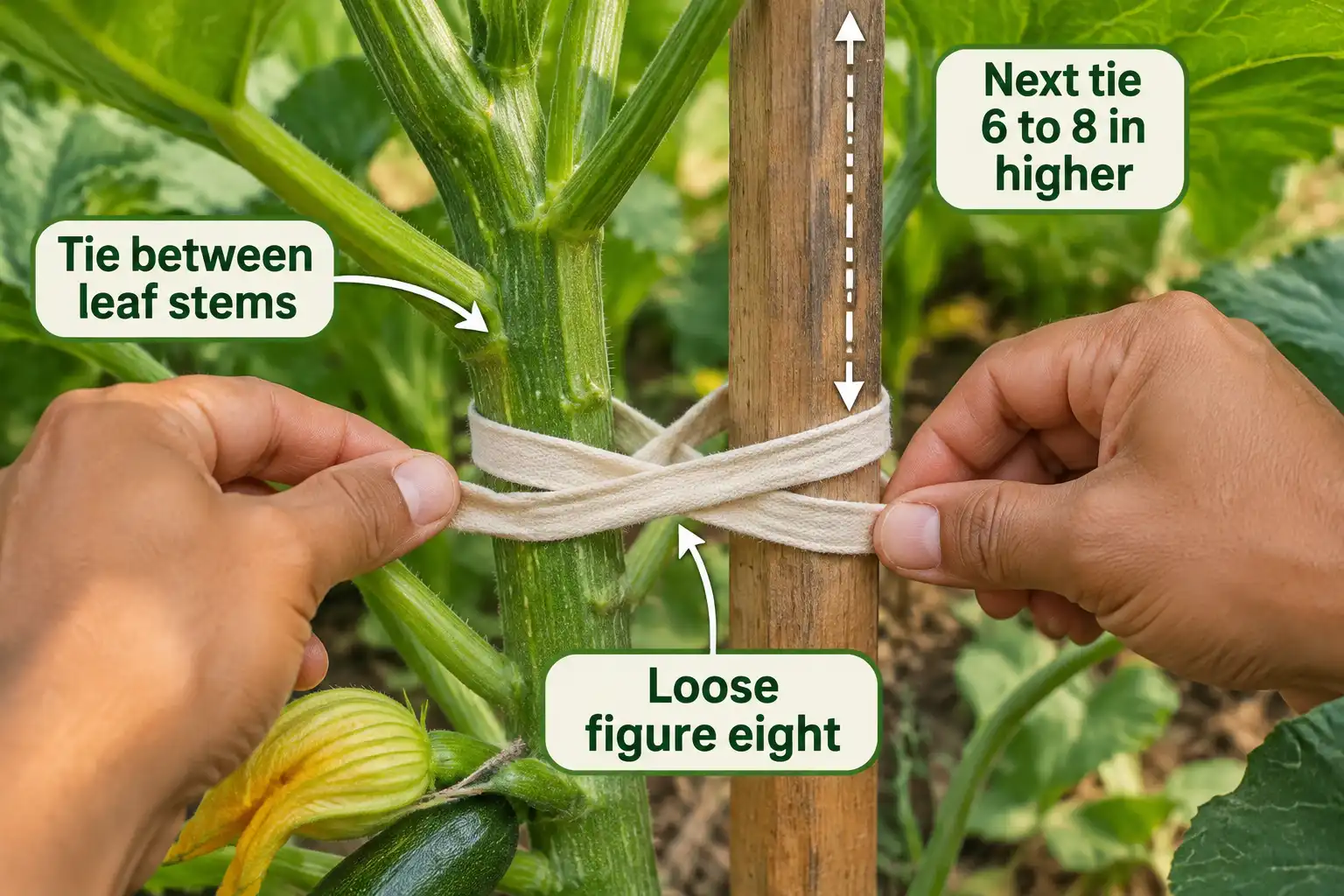
Start tying when the stem shows 6 to 8 inches of upright growth, usually at four or five leaves. Use soft material such as cotton strips, jute twine, or plant tape. Thin wire and fishing line cut into the stem.
Tie each one in a loose figure eight. First, loop the stake. Next, cross the tie between stake and stem, then loop the stem. The cross acts as a cushion and leaves room for growth. Place ties on the main stem between leaf stems, never over a flower or leaf base.
After that, add a new tie for every 6 to 8 inches of growth. Zucchini stems thicken fast and crack when pinched, so check ties weekly and loosen any that bite.
How to Stake a Zucchini That Is Already Sprawling
A sprawling plant still takes a stake, as long as you straighten it in stages. Set the stake close to the crown on the side the stem leans toward. Then lift the stem a few inches at a time over several days, tying loosely after each lift.
Leave any section that has rooted where it touched the soil. UMN Extension notes that squash often roots at vine joints, and lifting the vine breaks those roots.
Vertical Zucchini Timeline by Growth Stage
Follow plant cues rather than calendar dates, because warm weather speeds every stage.
| Stage | Plant cue | Task |
|---|---|---|
| Sowing | Soil at your regional threshold | Set stake; sow 2 or 3 seeds ½ inch deep |
| Emergence | Seedlings up in 5 to 7 days | Keep soil evenly moist |
| Thinning | First true leaves open | Keep one seedling per stake |
| First tie | 6 to 8 inches of upright stem | Loose figure eight tie |
| Flowering | First male blooms open | Remove row covers; keep tying |
| Fruit set | Lowest fruit starts swelling | Trim leaves below it |
| Harvest | 50 to 70 days from seeding | Pick zucchini at 7 to 8 inches |
Texas A&M AgriLife Extension lists 5 to 7 days for squash germination and 50 to 70 days from seeding to harvest. Clemson Extension sets the 7 to 8 inch harvest size for zucchini.
Pruning Leaves on Vertical Zucchini
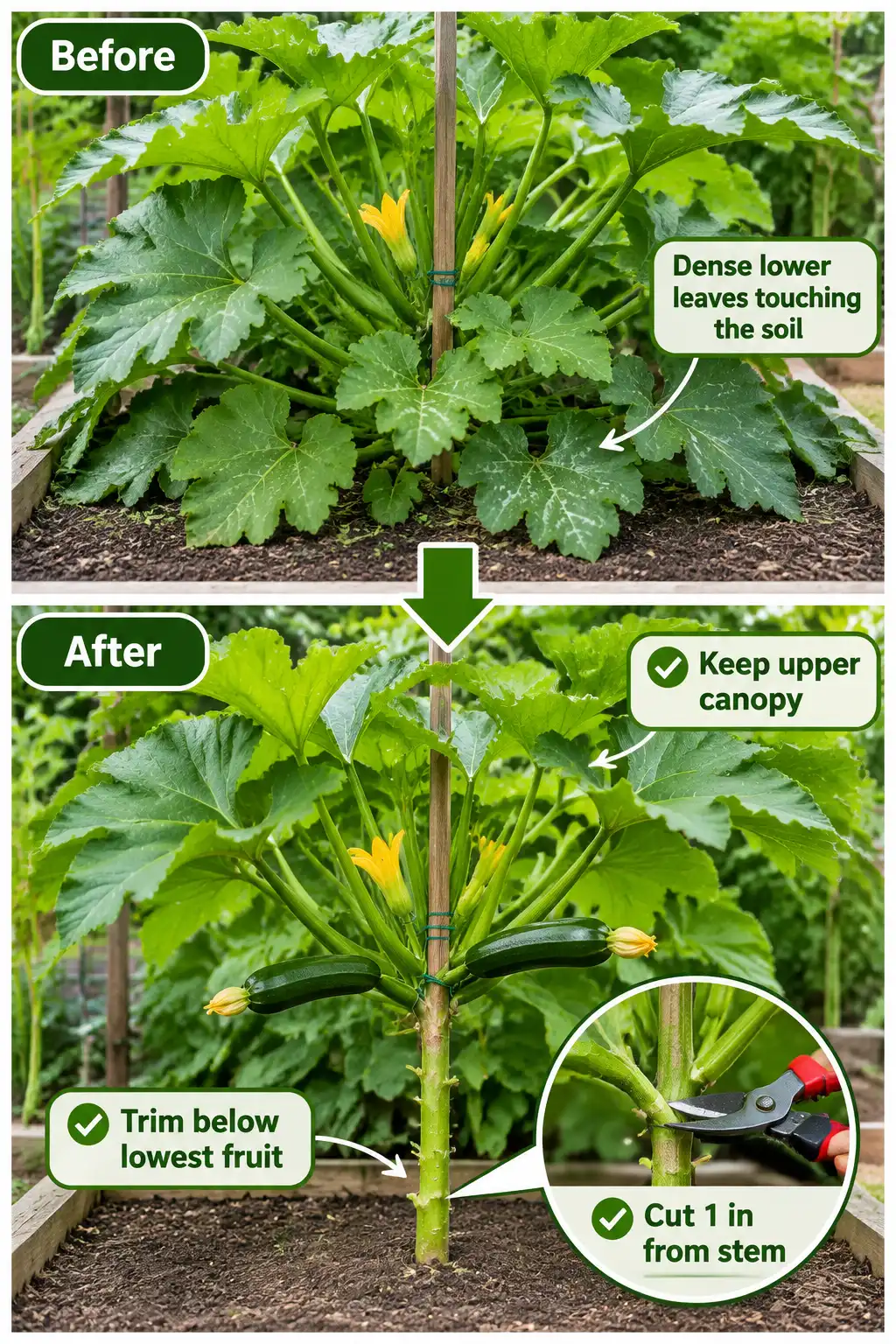
Remove leaves below the lowest developing fruit once the plant starts producing. This opens the base of the plant to sun and wind.
Oregon State University Extension notes that pruning back squash plants improves air circulation and reduces powdery mildew. UMN Extension adds that older leaves show infection first, so they are the right ones to cut. Follow these limits:
- Cut each leaf stem about 1 inch from the main stem with clean pruners.
- Remove 2 or 3 leaves per session, then wait several days.
- Start with yellowing, damaged, or mildewed leaves.
- Keep the upper canopy, which feeds the plant and shades the fruit.
- Prune on a dry day.
The canopy rule matters. UMN Extension notes that fruit sunburns once powdery mildew kills most of a plant’s foliage. Heavy pruning strips away that shade just as fast.
Watering and Feeding Staked Zucchini
Give zucchini about 1 inch of water per week from rain or irrigation, per University of Minnesota Extension. Upright plants dry out faster, so check the soil every few days in hot weather.
Water the soil, not the leaves. UMN recommends drip or soaker hose over sprinklers. Oregon State Extension also favors drip to keep humidity low around foliage. A timed drip kit keeps moisture steady when you are away.
Mulch helps, but timing matters. UMN advises waiting until soil reaches 75°F before adding straw or compost mulch, since organic mulch slows soil warming.
For feeding, start with a soil test. UMN suggests side-dressing with nitrogen when vines begin to spread. Still, keep rates modest. Over-fertilized plants are more prone to powdery mildew, according to UMN’s cucurbit disease guidance.
Pollination and Harvest on an Upright Plant
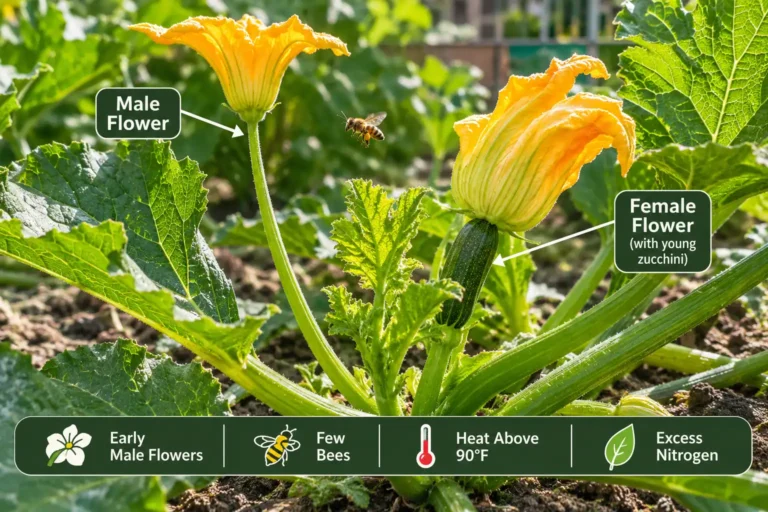
Upright plants put flowers and fruit in plain view. The first blooms are usually male and drop off, which UMN Extension calls normal. Female flowers carry a tiny squash at the base.
Cold, rainy, or cloudy weather cuts bee activity and fruit set. Clemson Extension notes that poor pollination leads to no fruit or misshapen fruit. When small zucchini yellow and shrivel from the tip, hand-pollinate in the morning. Pick an open male flower, peel back its petals, and brush the pollen onto the center of an open female flower.
Harvest zucchini at 7 to 8 inches long, per Clemson. Check plants every day or two at peak, and cut fruit with a knife, leaving a short stem. Remove oversized fruit too, since UMN notes yields drop when large fruit stays on the plant. Also, skip picking while leaves are wet to avoid spreading disease.
Squash Vine Borer on Vertical Zucchini
Squash vine borer is the biggest threat to staked zucchini in the eastern US. NC State Extension describes it as native to the eastern half of the country and the most destructive squash pest in its region.
Vertical growing raises the stakes. A sprawling plant often roots at its vine joints, which gives it backup roots. A staked stem never touches the soil, so the crown is its only lifeline.
Prevention starts at planting:
- Plant early, so squash is producing before the 6 to 8 summer weeks borers are active, as UGA Extension advises.
- Sow a new planting every couple of weeks to stay ahead of losses.
- Cover young plants with row cover, then remove it at first bloom so bees reach the flowers.
- Inspect the stem base weekly for holes and sawdust-like frass.
If a borer gets in, UGA Extension recommends slitting the stem lengthwise from the entry hole and removing the larva. Then cover the wound with soil and water it to encourage rooting. On a staked plant, mound 2 to 3 inches of soil around the base. Both NC State and UGA note that insecticides rarely help once larvae are inside the stem.
Borers overwinter in soil where squash grew, so move squash each year with a simple rotation plan. These steps fit an integrated pest management approach that puts prevention before sprays. Where losses repeat every summer, grow Tromboncino on a trellis instead.
Troubleshooting Vertical Zucchini
Most problems with upright zucchini trace back to ties, stakes, water, or pests.
| Problem | Likely cause | Fix |
|---|---|---|
| Stem cracks at a tie | Tie too tight, or stem bent too far at once | Use loose figure eight ties; straighten in stages |
| Plant and stake lean over | Stake too shallow or too thin | Drive 12 inches deep; add a second stake |
| Whole plant wilts, frass at base | Squash vine borer | Slit the stem, remove the larva, bury the wound |
| White powder on older leaves | Powdery mildew | Trim the worst lower leaves; water at soil level |
| Small fruit shrivels from the tip | Poor pollination | Hand-pollinate in the morning |
| Midday wilt with dry soil | Faster drying on upright plants | Water more often; mulch once soil hits 75°F |
Frequently Asked Questions
How tall should a zucchini stake be?
A zucchini stake needs to stand 4 to 5 feet above the soil. Use a 5 to 6 foot stake driven 12 inches deep, so it stays firm under a full fruit load.
Can you use a tomato cage for zucchini?
Yes, a heavy-gauge tomato cage works well for compact bush zucchini in beds or large pots. Choose one at least 4 feet tall, and anchor it so it cannot tip.
Can you grow zucchini vertically in a container?
Yes, a compact bush variety grows well upright in a pot. Texas A&M AgriLife Extension lists squash at one plant per 5-gallon container, and container plants usually need water once a day.
Do zucchini on a trellis need fruit slings?
No, zucchini picked at harvest size hangs firmly from the stem and needs no sling. Slings matter for heavy melons and winter squash, or for fruit left to grow oversized.
Can you grow yellow squash vertically the same way?
Yes, bush yellow squash stakes the same way as zucchini. Use the same stake height and tie spacing, then pick fruit at 1½ to 2 inches in diameter, per Clemson Extension.
Where to Start
Choose an open bush variety and set a 5 to 6 foot stake before you sow. Then tie the stem loosely every 6 to 8 inches, and trim leaves only below the lowest fruit. Water at the soil line more often than a sprawling plant needs. In borer country, plant early or grow Tromboncino on a trellis instead.