How to Grow Zucchini in Containers: Pot Size, Care, and Harvest
Zucchini produces a lot of fruit from a single plant, which makes it a practical crop for patios and balconies. Here is how to grow zucchini in containers, from pot size and varieties to feeding, pollination, and harvest.
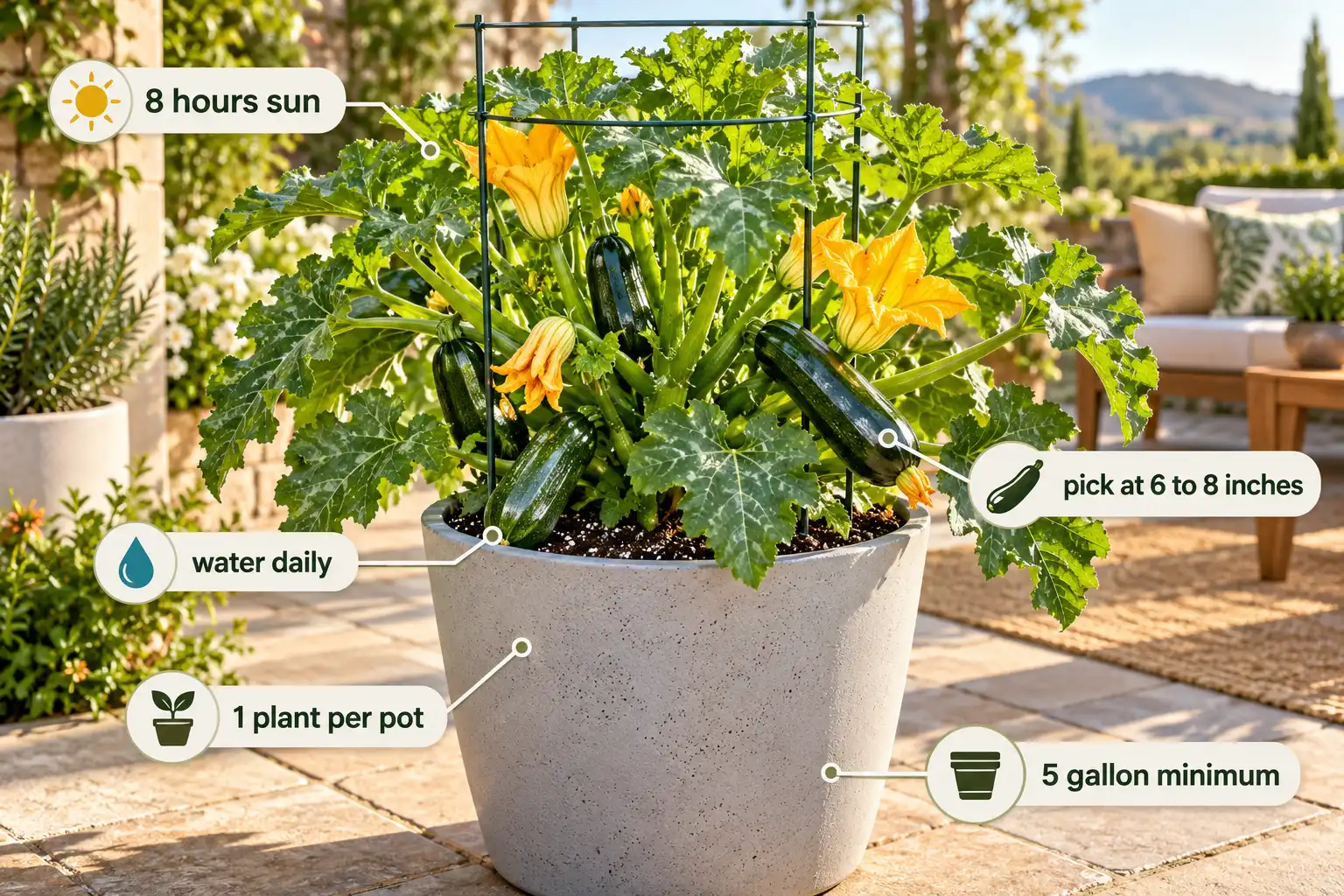
To grow zucchini in containers, plant one compact bush variety in a 5-gallon or larger pot of potting mix. Give it 8 hours of sun, water daily in summer, feed weekly after flowering, and pick at 6 to 8 inches.
Best Zucchini Varieties for Pots
Bush zucchini is the right type for pots. Vining squash sprawls for several feet, while bush types grow in a tighter mound. University of Minnesota Extension notes that bush types fit more easily into small gardens than long-vining varieties.
So variety choice is the first step in growing zucchini in pots. Compact cultivars sold for patios fit best. For example, seed company descriptions put ‘Patio Star’ at about half the size of a standard zucchini plant. Standard bush types such as ‘Black Beauty’ still work, but they need a bigger pot.
| Cultivar | Fruit | Container Fit |
|---|---|---|
| ‘Patio Star’ | Dark green, standard size | Compact patio plant; 5 gallons works |
| ‘Eight Ball’ | Round, dark green | Easy to pick small; 5 to 10 gallons |
| ‘Spineless Beauty’ | Medium green | Very few spines; easier picking in tight spaces |
| ‘Black Beauty’ | Glossy dark green | Standard bush habit; 10 gallons or more |
UF/IFAS describes ‘Eight Ball’ as round, ‘Spineless Beauty’ as a plant with very few spines, and ‘Black Beauty’ as glossy dark green. Texas A&M AgriLife Extension also lists ‘Zucco’, ‘Senator’, and ‘Diplomat’ among squash varieties suited to container growing.
What Size Pot for Zucchini?
Zucchini needs at least 5 gallons of potting mix per plant. Texas A&M AgriLife Extension lists squash at 5 gallons and one plant per container. University of Minnesota Extension Master Gardeners also name 5 gallons as the minimum. NC State Extension allows 3 gallons, but that size leaves little margin in July heat.
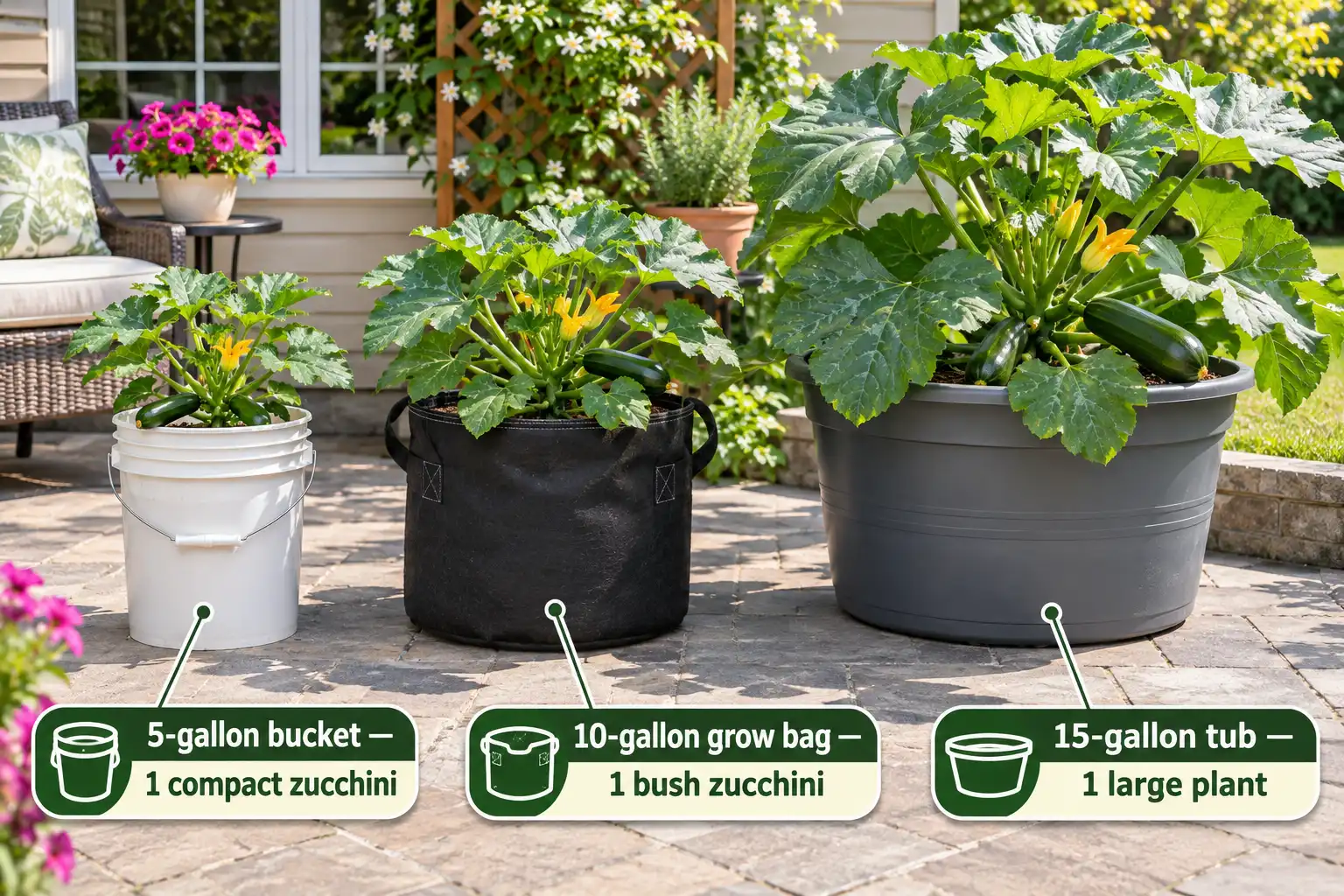
Bigger pots still perform better. A 10- to 15-gallon container stores more water between waterings. As a result, the plant wilts less on hot afternoons and keeps setting fruit. Compact cultivars handle 5 gallons well, while standard bush types do better at 10 gallons or more.
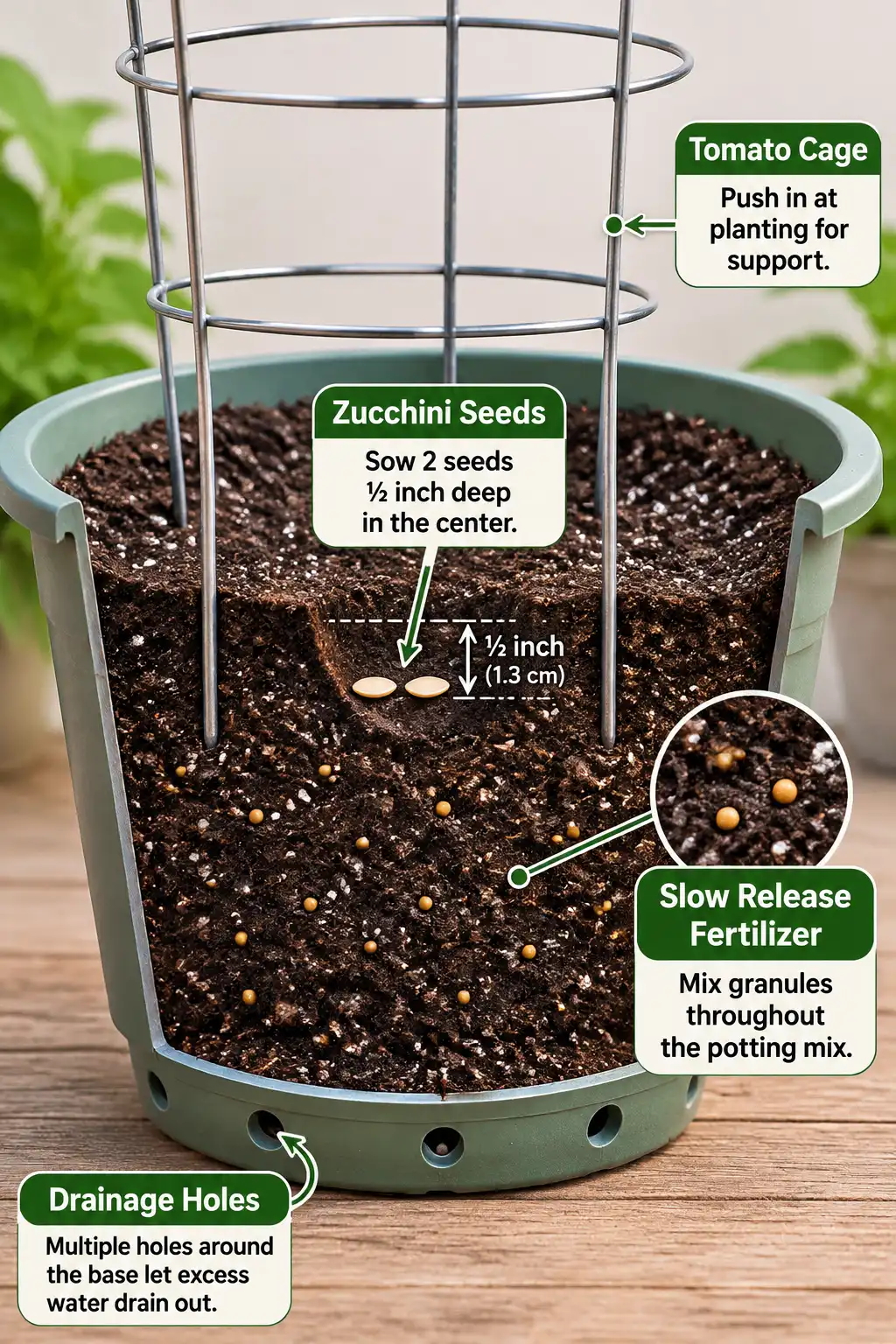
Shape matters too. Zucchini grows into a wide, top-heavy mound, so pick a wide, heavy pot that resists tipping. Also, every container needs drainage. Texas A&M notes that drain holes work best along the side, about ¼ to ½ inch above the bottom.
| Container | Plants | Best Fit |
|---|---|---|
| 5-gallon pot or bucket | 1 | Compact patio cultivars |
| 7- to 10-gallon pot or grow bag | 1 | Standard bush zucchini |
| 15 gallons or larger | 1 to 3 | Bigger yields or a small hill |
Can You Grow Zucchini in a 5 Gallon Bucket?
Yes, a 5-gallon bucket grows one zucchini plant well. That size matches the one-plant, 5-gallon guideline from Texas A&M AgriLife Extension. A compact cultivar such as ‘Patio Star’ gives the best results.
Prepare the bucket before you plant:
- Use a clean bucket that never held paint, chemicals, or solvents.
- Drill five or six ½-inch holes in the bottom.
- Add a ring of holes around the side, about ½ inch above the base.
- Choose a white or light-colored bucket.
- Fill with potting mix to 1 inch below the rim.
- Set the bucket on bricks or a tray so water drains freely.
Color matters more than it seems. University of Minnesota Extension Master Gardeners warn that dark pots overheat easily in summer sun.
A bucket also holds less water than a larger pot. So in midsummer, check the mix every morning and again in late afternoon.
How Many Zucchini Plants per Pot?
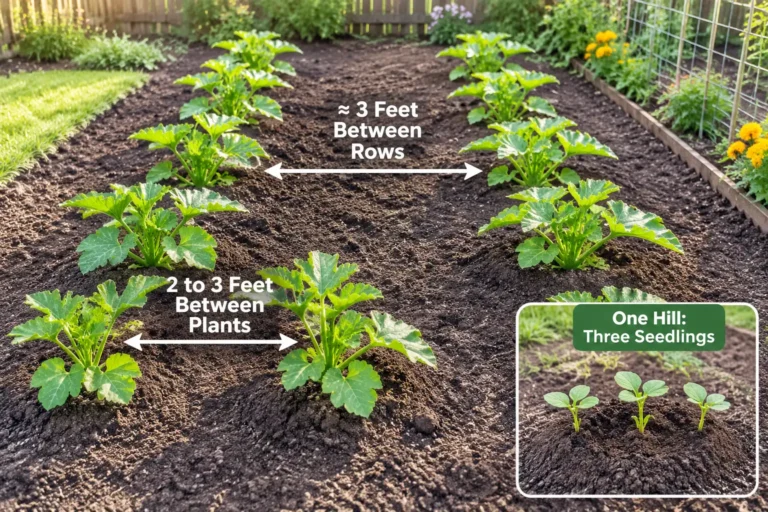
Grow one zucchini plant per pot in any container under 15 gallons. Each plant needs about 5 gallons of root space, according to Texas A&M AgriLife Extension. Two plants in a 5-gallon pot split the water and nutrients, and neither produces well.
Large tubs can hold more. NC State Extension notes that a container of 15 gallons or larger can carry up to three plants, or a hill. Even then, crowding cuts airflow between the big leaves. That still, humid canopy favors powdery mildew, so give each plant open space on all sides.
To get one strong plant, sow 2 or 3 seeds per pot. Then snip the extra seedlings at soil level once true leaves appear. Snipping instead of pulling protects the roots of the plant you keep.
How to Grow Zucchini in Grow Bags
Fabric grow bags work well for zucchini. Use a 10-gallon bag for a standard bush type, or a 5- to 7-gallon bag for a compact cultivar. The logic mirrors grow bag sizing for tomatoes: more volume means more stored water and steadier growth.
Grow bags offer three clear benefits. First, the fabric drains freely, so waterlogged roots are rare. Second, roots that reach the fabric wall stop there instead of circling, a process called air pruning. Third, empty bags fold flat for winter storage.
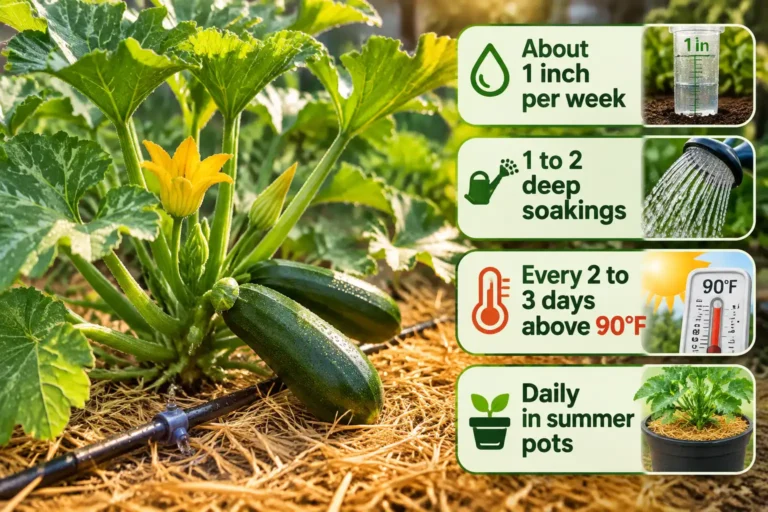
The tradeoff is faster drying. Moisture escapes through the fabric sides, so bags dry out sooner than plastic pots. Plan to water at least once a day in summer and twice during heat waves.
Set each bag on a tray, pavers, or a wire rack to protect deck boards and help the base drain. Then fill the bag to the top with potting mix. A half-filled bag slumps, and the plant leans with it.
When to Plant Zucchini in Containers
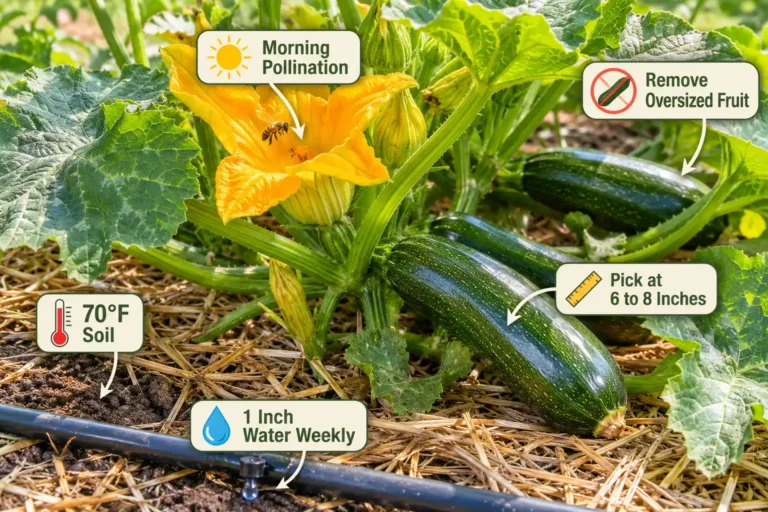
Plant zucchini after your last frost, once the potting mix reaches 70°F. University of Minnesota Extension advises sowing squash once soil hits at least 70°F at a 2-inch depth. Seeds will not germinate in cold soil. A probe-style soil thermometer gives a quick reading.
Planting windows vary widely by region:
| Region | Planting Window | Source |
|---|---|---|
| Minnesota | Late May to early June | University of Minnesota Extension |
| Coastal North Carolina | Mid to late April | NC State Extension |
| North Florida | February to April; August to September | UF/IFAS |
| Central Florida | February to May; August to September | UF/IFAS |
| South Florida | August to March | UF/IFAS |
Florida growers should skip midsummer. UF/IFAS notes that summer squash does not grow well there during the hottest months.
A later sowing also helps farther north. University of Minnesota Extension suggests an early July planting, which matures after squash vine borer moths finish laying eggs.
How to Grow Zucchini in Containers Step by Step
Start with potting mix, not garden soil. University of Minnesota Extension Master Gardeners note that garden soil compacts in pots and squeezes out air and water. Before planting, blend a 14-14-14 slow-release fertilizer into the mix at the label rate, as Texas A&M AgriLife Extension suggests for container vegetables.
Then follow these steps:
- Fill the container to 1 inch below the rim, then water until it drains.
- Push a tomato cage or stake into the mix now, before roots spread.
- Sow 2 or 3 seeds about ½ inch deep in the center of the pot.
- Keep the mix evenly moist until seedlings emerge in 5 to 7 days.
- Thin to the strongest seedling once true leaves appear.
- For transplants, set out 3- to 4-week-old seedlings without breaking the root ball.
University of Minnesota Extension recommends the ½-inch sowing depth and prefers direct seeding for squash. Transplanting often damages squash roots, and damaged plants grow poorly. Texas A&M lists 5 to 7 days to germination and 3 to 4 weeks to transplant size.
Sun, Water, and Fertilizer for Container Zucchini
How Much Sun Does Container Zucchini Need?
Container zucchini needs at least 8 hours of direct sun daily. University of Minnesota Extension Master Gardeners recommend that minimum for squash in pots. Shortfalls show up fast. Texas A&M AgriLife Extension links tall, spindly, unproductive plants to insufficient light.
How Often to Water Zucchini in Pots
Water container zucchini every day in summer, and twice a day during heat waves. Texas A&M notes that one daily watering usually works, but heavy-foliage crops may need two. Zucchini’s broad leaves fit that description.
Check by touch first. Push a finger 1 inch into the mix and water when it feels dry. Then soak until water runs from the drainage holes. Water at the base in the morning so leaves dry quickly.
Steady moisture also protects the fruit. UMN Extension Master Gardeners link uneven watering to blossom end rot, a dark, leathery patch at the fruit tip.
How to Fertilize Zucchini in Containers
Feed container zucchini weekly once flowers appear. University of Minnesota Extension Master Gardeners recommend a weekly fertilizer solution at half strength after flowering starts. A balanced water-soluble 20-20-20 mixed at half the label rate fits that schedule.
Avoid heavy nitrogen, though. Texas A&M lists excess nitrogen as a cause of leggy, unproductive plants. Also flush each pot with plain water once a week, on a day you do not feed. Texas A&M recommends this rinse to clear salt buildup, which scorches leaf edges.
How to Hand Pollinate Container Zucchini
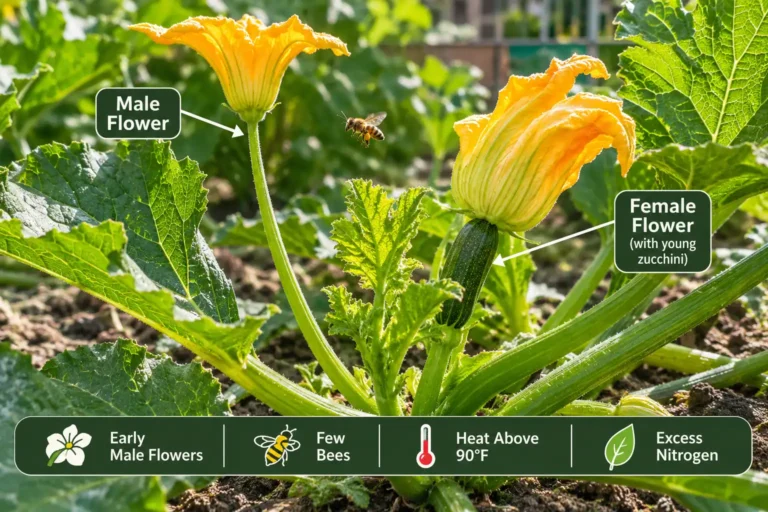
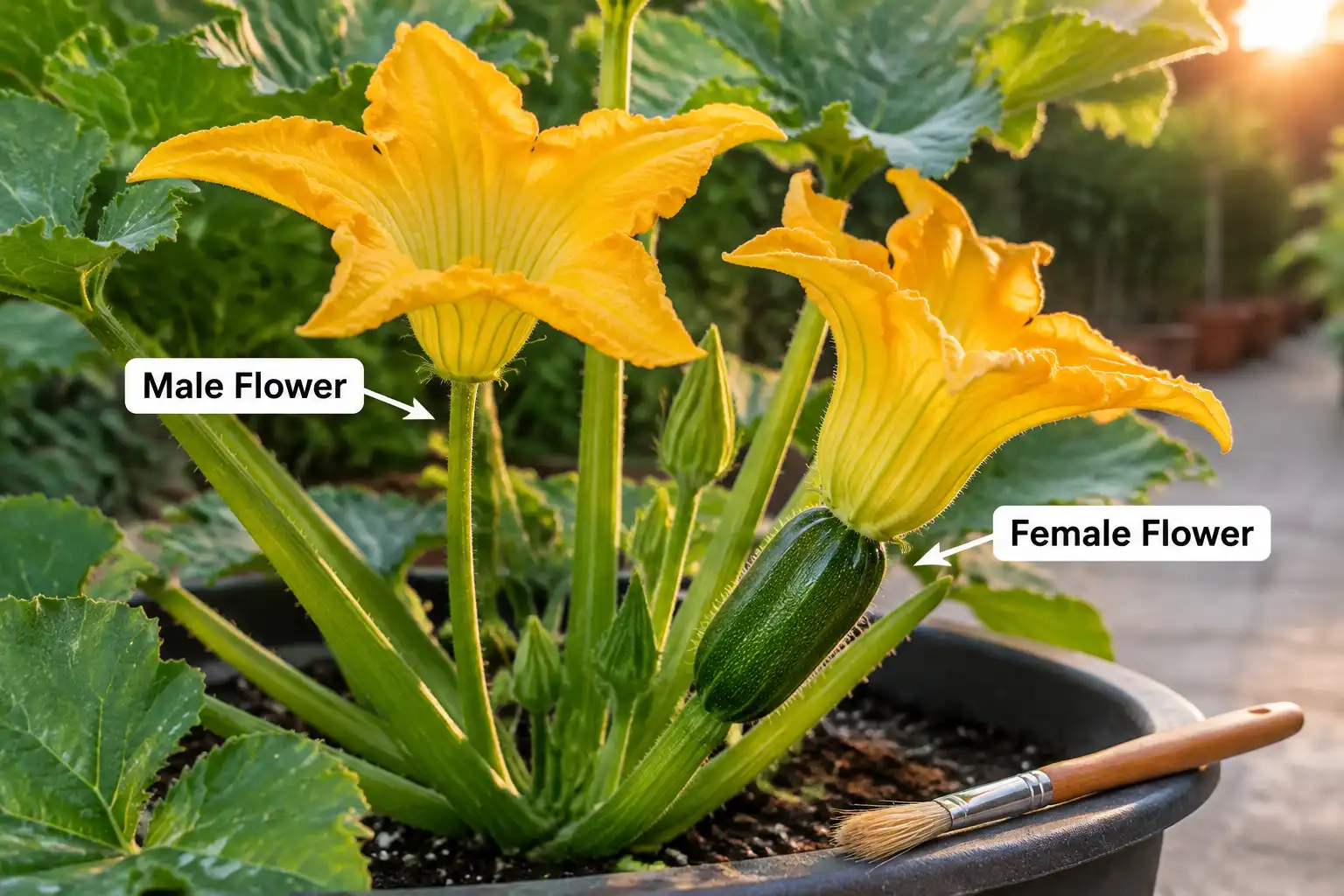
Hand pollinate when young fruits shrivel or drop. Zucchini has separate male and female flowers, and an insect must carry pollen between them, per University of Minnesota Extension. Patios and balconies often draw fewer bees, so hand pollination fills the gap.
Tell the flowers apart first. Male flowers sit on long, slender stems. Female flowers grow close to the main stem with a tiny fruit at the base. The first blossoms are usually male, so early flower drop is normal.
Squash flowers open for one day only, so pollinate in early morning:
- Pick a fully open male flower.
- Peel off its petals to expose the pollen-coated center.
- Dab pollen generously onto the sticky center of an open female flower.
- Repeat with a fresh male flower as needed.
University of Minnesota Extension Master Gardeners describe this method and note that a cotton swab or small brush also works. UF/IFAS adds that wrinkled fruit and early fruit drop are signs of poor pollination. A well-pollinated fruit swells and lengthens within a few days.
How to Grow Zucchini on a Balcony
A balcony works for zucchini if it gets 8 hours of direct sun. In the US, south- and west-facing balconies usually receive the most light. Track the sun for a full day before buying pots.
Balconies add four challenges to plan around:
- Wind: Big leaves tear and catch gusts. Use a heavy pot, a sturdy cage, and soft ties on the main stem.
- Weight: Wet potting mix is heavy. Check your building’s balcony load rules before lining up large tubs.
- Heat: Walls and railings reflect heat onto roots. Light-colored pots stay cooler than dark ones.
- Pollinators: Upper floors see fewer bees. Plan to hand pollinate most mornings during flowering.
Place a saucer under every pot. It protects the floor and keeps runoff off the balcony below.
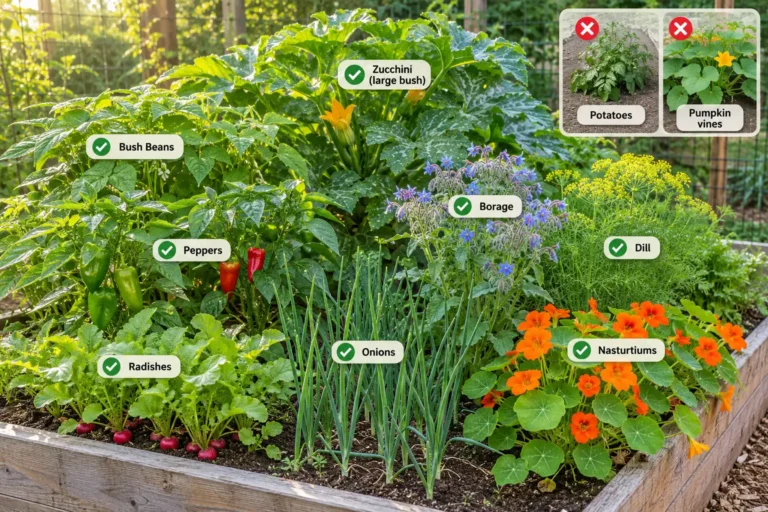
Zucchini needs the same full sun as tomatoes, so growing zucchini next to tomatoes works on a sunny balcony when each plant has its own container.
Pests and Diseases in Potted Zucchini
Squash Vine Borer
Sudden wilting with sawdust-like frass at the stem base points to squash vine borer. University of Minnesota Extension explains that the larvae tunnel through stems and block water flow. In Minnesota, adults emerge in late June or early July. In coastal North Carolina, NC State Extension advises row covers or preventive sprays from mid-May through June.
Pots do not keep this moth away. So cover young plants with floating row cover, and remove it once flowers open. UMN also notes that Bt does not reach larvae inside stems. Larvae pupate 1 to 2 inches deep in soil, so dump used mix far from next year’s pots.
Squash Bugs and Cucumber Beetles
Squash bugs feed in groups and leave leaves ragged, per University of Minnesota Extension. NC State Extension suggests laying boards on the soil, then destroying the adults that gather underneath. Also scrape off the brassy egg clusters on leaves. Cucumber beetles chew leaves, flowers, stems, and fruit. Containers make scouting easy, and regular checks are the core of integrated pest management basics.
Powdery Mildew
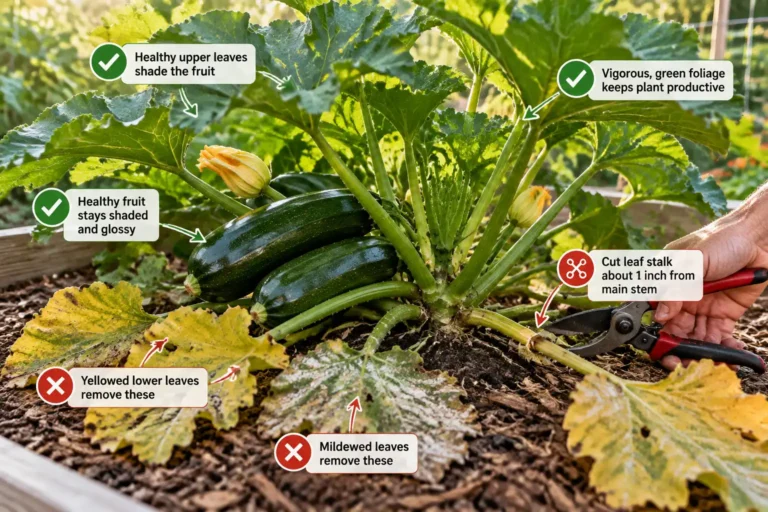
Powdery mildew forms white, powdery spots on leaves and vines, per University of Minnesota Extension. Water at the soil line and keep space around each pot for airflow. Still, look closely before treating. UF/IFAS points out that zucchini leaves carry natural greenish-gray splotches that growers often mistake for mildew.
Container Zucchini Troubleshooting
Most container zucchini problems trace back to light, water, feeding, or pollination. The table pairs symptoms described by Texas A&M AgriLife Extension and University of Minnesota Extension with practical fixes.
| Symptom | Likely Cause | Fix |
|---|---|---|
| Flowers but no fruit | Early male flowers or poor pollination | Wait a week, then hand pollinate |
| Small fruit shrivels and drops | Poor pollination | Hand pollinate in early morning |
| Whole plant wilts suddenly | Squash vine borer | Check the stem base for frass |
| Tall, spindly, few fruit | Low light or excess nitrogen | Move to more sun; feed less |
| Lower leaves turn yellow | Overwatering or low fertility | Check drainage; resume weekly feeding |
| Wilting in wet mix | Poor drainage | Add holes; raise the pot |
| Scorched leaf edges | Salt buildup | Flush with plain water weekly |
| Dark, leathery fruit tip | Blossom end rot | Water on a steady schedule |
When and How to Harvest Container Zucchini
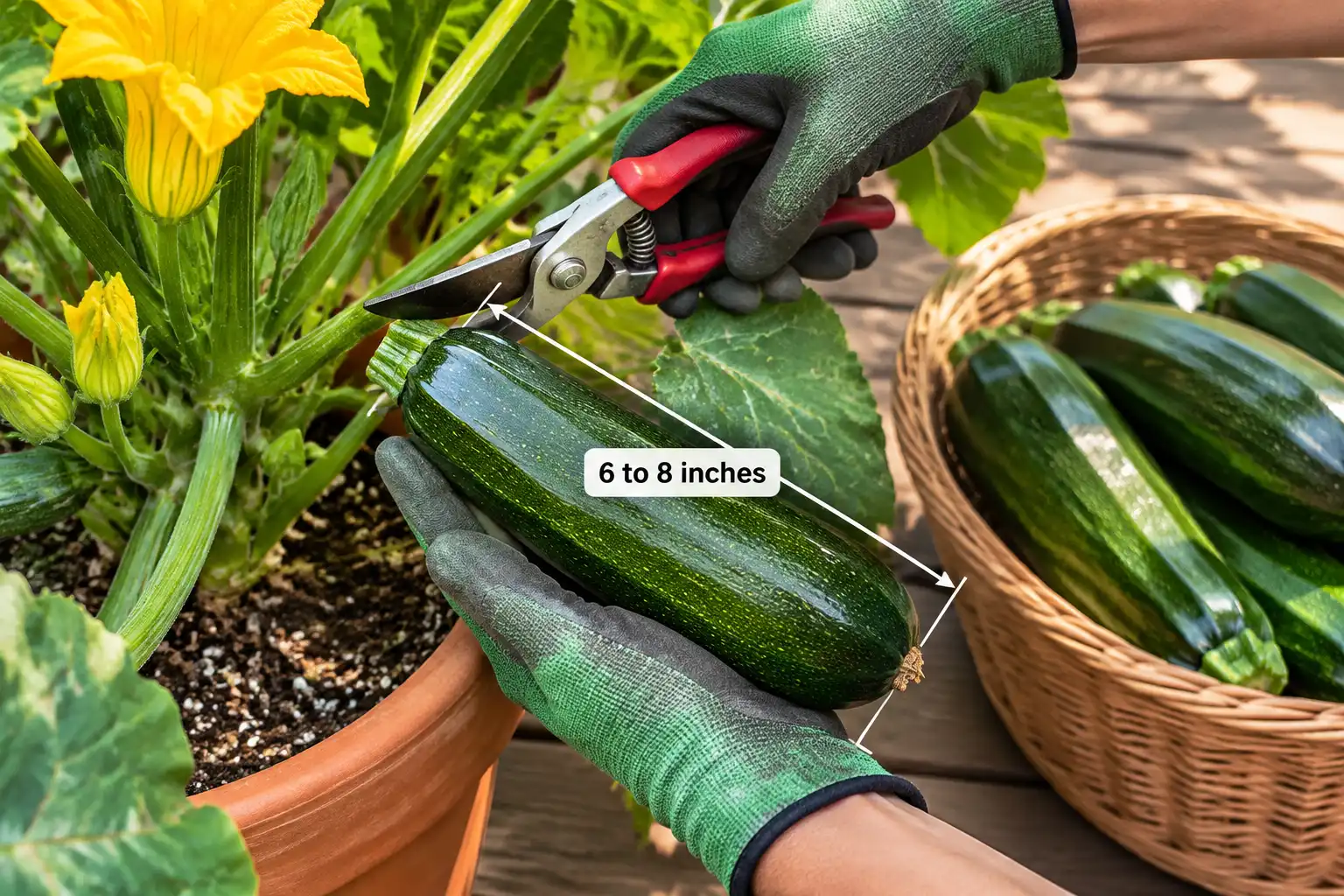
Harvest zucchini at 6 to 8 inches long and 1½ to 2 inches across. Iowa State University Extension recommends that size for zucchini and other long summer squash. First harvest arrives 40 to 70 days after seeding. UF/IFAS puts summer squash at 40 to 50 days, while Texas A&M lists 50 to 70 days for container squash.
Pick every other day once fruiting starts, as University of Minnesota Extension Master Gardeners suggest. UMN Extension also warns that oversized fruit left on the plant lowers yield. So remove any missed giants, even if they go to the compost pile.
Cut instead of pulling. Use a sharp knife or pruners and leave 1 to 2 inches of stem on the fruit, as UF/IFAS advises. Wear gloves, since squash stems can carry sharp spines. Also skip harvest while leaves are wet, which UMN notes can spread disease. Refrigerate fresh zucchini and use it within about four days.
FAQs
Do zucchini plants need a cage in a pot?
A cage is not required, but it helps a container plant. Set a tomato cage at planting so it holds the heavy stem upright and lifts leaves off the rim for airflow.
Can you reuse potting mix after growing zucchini?
No, start each season with fresh mix. Texas A&M AgriLife Extension warns that reused mix spreads disease unless properly composted, and old mix can also hide squash vine borer pupae.
Why do zucchini flowers fall off without fruit?
The first flowers are usually male, and they drop naturally. Later, if small fruits shrivel and fall, pollination failed, so hand pollinate each open female flower early in the morning.
Can zucchini grow indoors in a pot?
It can, but results are usually poor. The plant needs light equal to 8 hours of direct sun, and every female flower needs hand pollination, so a sunny patio performs far better.
Are grow bags or plastic pots better for zucchini?
Both work if the size is right. Grow bags drain and aerate roots better, while plastic pots hold moisture longer, so choose plastic if you cannot water at least once a day.
Putting This Into Practice
Choose a compact bush cultivar and the largest pot your space allows, with 5 gallons as the floor. Plant once the mix reaches 70°F, give it 8 hours of sun, and water by touch every day. After flowering starts, feed weekly at half strength. Hand pollinate when fruit stalls, and pick every other day at 6 to 8 inches.