When to Plant Zucchini: 70°F Soil Rule, Dates by Region, and Fall Timing
Zucchini grows fast, but it punishes an early start. Cold soil stalls seed and seedlings, while a late sowing can run into frost. Knowing when to plant zucchini comes down to soil temperature, your frost dates, and the crop’s short harvest clock.
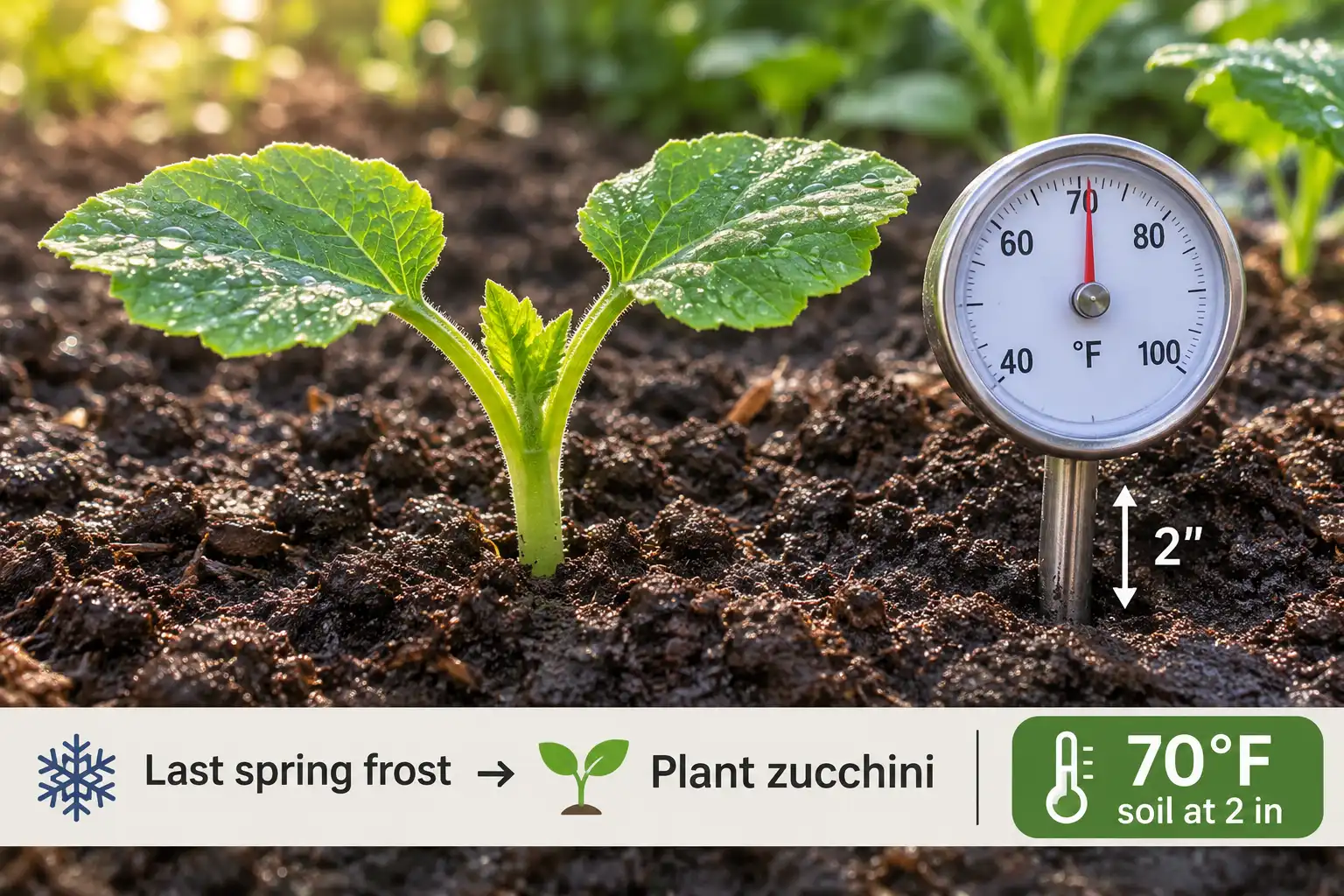
Cold soil stalls zucchini, so deciding when to plant zucchini starts with soil temperature. Sow after your last spring frost, once soil holds 70°F at 2 inches deep. For fall harvests, sow 60 to 75 days before first frost.
When to Plant Zucchini Seeds Outdoors
Sow zucchini seeds outdoors after the last spring frost, once soil holds 70°F at a 2 inch depth. University of Minnesota Extension sets that 70°F mark and notes squash seed will not germinate in cold soil. In most of Minnesota, that point arrives in late May, or early June in the north.
Your frost date only tells you the earliest safe day. Soil temperature, on the other hand, tells you the right day. So check the soil each morning at 2 inches with a reliable soil thermometer. Then plant once it reads 70°F for several mornings in a row.
You can also move the date earlier. According to UMN Extension, black plastic mulch absorbs sun and warms the soil faster, which allows earlier sowing. Straw or compost works the opposite way, though. UMN advises waiting until soil reaches 75°F before you spread organic mulch, because it slows soil warming. That’s why the choice between plastic and organic mulches depends on which job comes first.
Stagger Sowings for a Longer Harvest
One sowing gives a heavy flush, then tapers off. Instead, UMN Extension suggests seeding part of the bed first and finishing the planting three weeks later. UGA Extension follows a similar pattern in Georgia. Its calendar calls for a second squash planting 2 to 3 weeks after the first. A third planting follows in May.
What Temperature Is Best for Planting Zucchini?
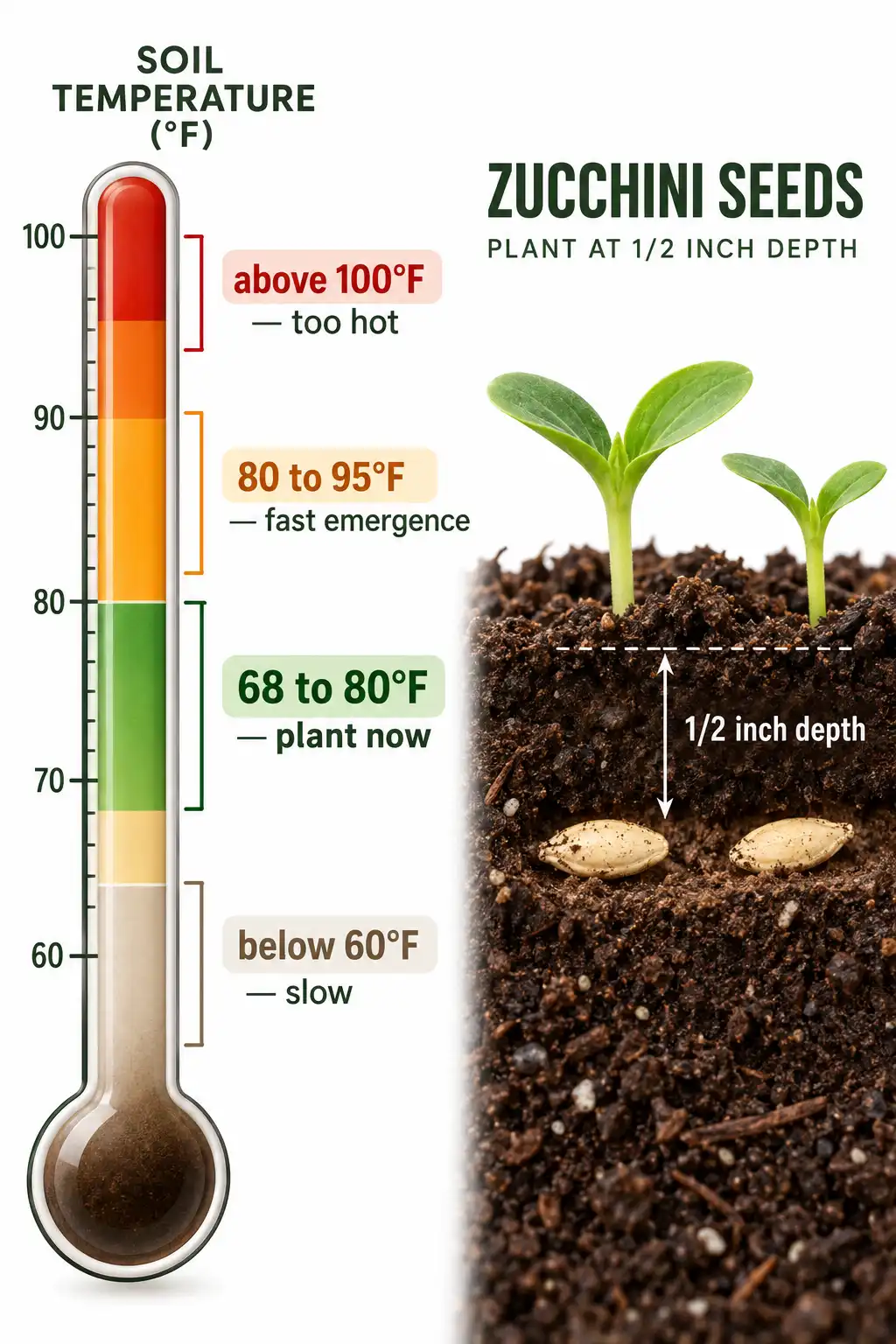
Zucchini seed germinates best in 70°F to 95°F soil, according to UC Agriculture and Natural Resources (UC ANR). Below 60°F, germination can take as long as 2 weeks. Above 100°F, seed passes its maximum germination temperature.
UGA Extension gives a slightly tighter target for Georgia growers: a 68°F minimum and a 70°F to 80°F optimum. So use 70°F as your trigger, and expect faster emergence as the soil warms toward 80°F.
Air temperature matters once plants emerge, too. UC ANR lists 65°F to 75°F as the optimal growing range for summer squash (Cucurbita pepo). Also, Texas A&M AgriLife Extension describes cucurbits as chilling sensitive. In other words, cold nights can stunt seedlings even without frost.
| Soil temperature at 2 inches | What to expect | What to do |
|---|---|---|
| Below 60°F | Germination can take up to 2 weeks | Wait |
| 60°F to 67°F | Below UGA’s 68°F minimum; slow, uneven stand | Warm soil with black plastic, or wait |
| 68°F to 80°F | UGA’s minimum through optimum range | Plant |
| 80°F to 95°F | Inside UC ANR’s optimal germination range | Plant and keep the seedbed moist |
| Above 100°F | Past the maximum germination temperature | Water the furrow first, then sow |
When Can Zucchini Go Outside?
Zucchini transplants can go outside on the same signal as seed: after the last frost, once soil reaches 70°F. Moving them out earlier gains nothing. In fact, UMN Extension reports that squash started indoors and set into cold soil does not grow well.
For that reason, direct seeding is UMN’s preferred method. Squash roots also suffer damage during transplanting, which sets plants back. Still, weighing the trade-offs of direct sowing and transplanting makes sense in short-season areas. There, a head start can pay off.
If you start seed indoors, keep the window short:
- Sow indoors no more than 4 weeks before your last frost, per Clemson Extension’s Home and Garden Information Center.
- Use peat pots or pellets you can plant whole, so roots stay undisturbed.
- Harden seedlings off outdoors for several days before planting.
- Set transplants out once soil hits 70°F, then water them in well.
The hardening-off routine for tomato transplants works the same way for squash seedlings.
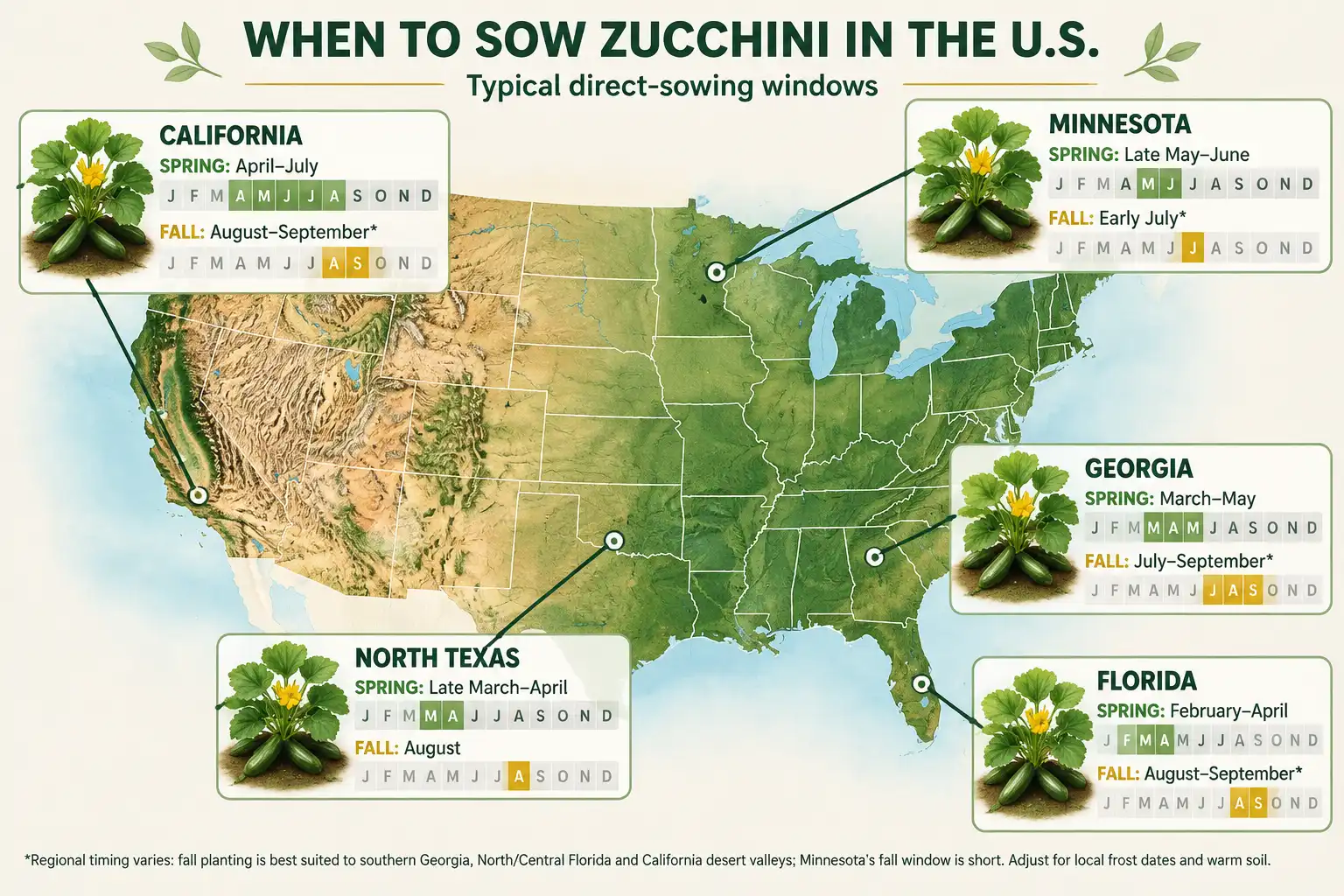
Zucchini Planting Dates by Region
Planting windows shift with latitude, elevation, and frost dates. The table below pulls windows from state extension publications. Treat each range as the outer limit, and then plant inside it once soil temperature agrees.
| Region | Planting window | Source |
|---|---|---|
| Minnesota | Late May to early June; second sowing about 3 weeks later | UMN Extension |
| Middle Georgia | Late March to May (spring); July to August 31 (fall) | UGA Extension |
| North Texas | March 25 to May 1 (spring); August 1 to 25 (fall) | Texas A&M AgriLife |
| North Florida | February to April; August to September | UF/IFAS |
| Central Florida | January to April; August to September | UF/IFAS |
| South Florida | August to September | UF/IFAS |
| California Central Valley | March 1 to 15; mid-February under plastic tunnels | UC ANR |
| California southern desert valleys | December to January for early spring squash | UC ANR |
Local adjustments matter as well. UGA Extension notes that extreme south Georgia can plant spring crops 2 to 3 weeks earlier. Fall crops there can go in up to 2 weeks later. Meanwhile, the north Georgia mountains plant spring crops 1 to 3 weeks later and fall crops about 2 weeks earlier.
Outside these regions, start from your average last frost date and confirm with a soil reading. A seasonal planting calendar also helps you line up zucchini with your other warm-season crops.
Can You Plant Zucchini in July?
Yes. July is a workable planting month in most of the US because zucchini produces quickly. UF/IFAS lists 40 to 50 days from seed to harvest, and UGA Extension cites 45 to 55 days. UGA’s garden calendar also includes squash among its July plantings.
The real limit is your first fall frost. If your frost countdown leaves enough days, a July sowing has time to produce. However, July brings three timing risks:
- Squash vine borer. UMN Extension reports adult moths are active from late June or early July into early or mid August. So a July sowing still overlaps that flight in the North. Cover seedlings with floating row cover, then remove it once flowers open so bees can pollinate.
- Hot soil. Soil above 100°F passes the maximum germination temperature, per UC ANR. For dry, hot beds, UGA Extension suggests opening the furrow, pouring in water, then sowing and covering the seed.
- Disease pressure. UGA notes that disease and insect problems often cut late summer and fall squash production short. For late plantings, UGA recommends varieties resistant to downy mildew.
Row covers, smart timing, and regular scouting form the core of an integrated pest management approach to squash pests.
When to Plant Zucchini for Fall Harvest
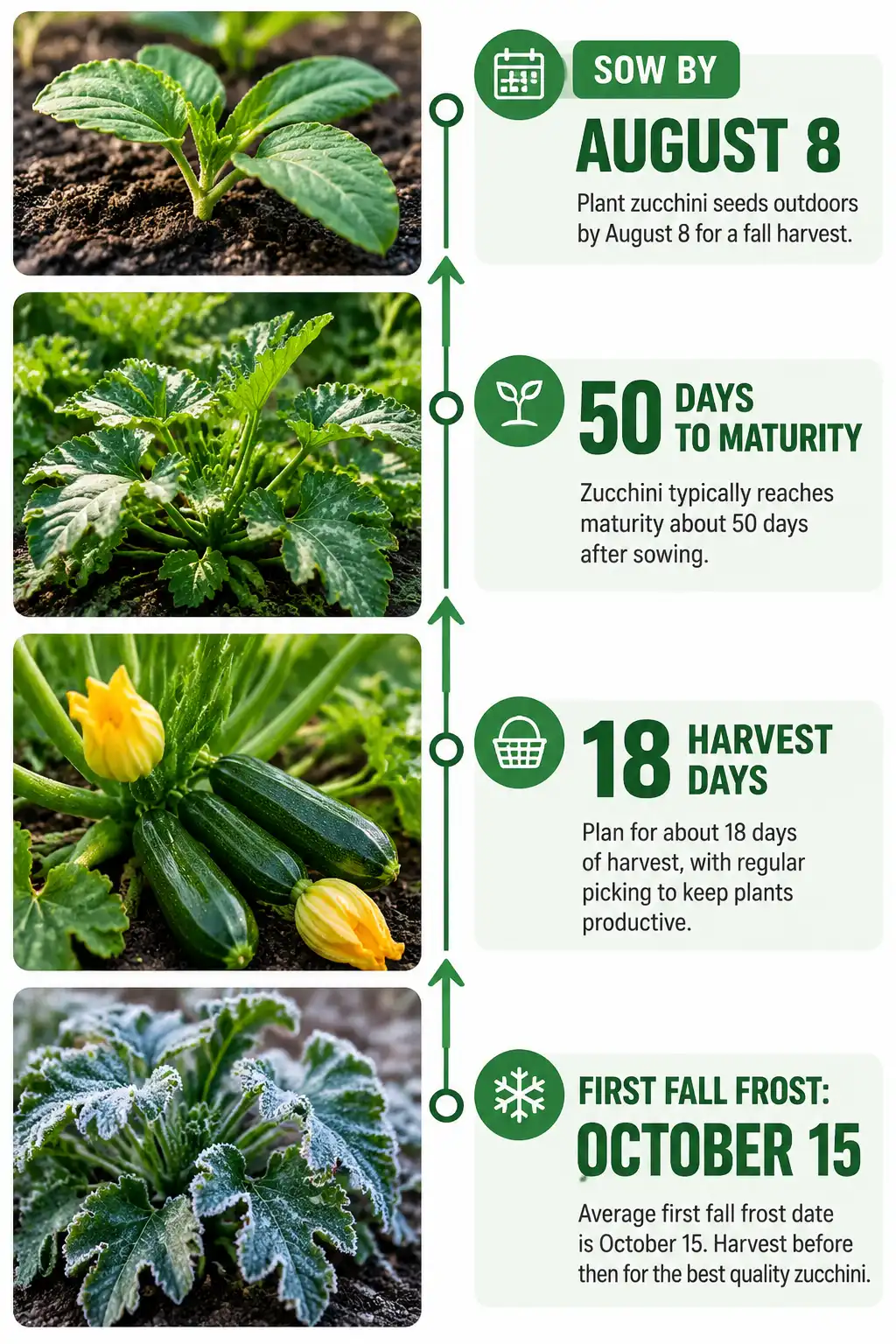
Plant fall zucchini by counting back from your average first fall frost. UGA Extension’s formula is simple. Take the frost date, then subtract the variety’s days to maturity plus 18 days for harvest. The result is your last safe sowing date.
For example, a 50-day variety with an October 15 frost needs sowing by August 8.
| Average first fall frost | Last sowing, 45-day variety | Last sowing, 55-day variety |
|---|---|---|
| September 20 | July 19 | July 9 |
| October 15 | August 13 | August 3 |
| November 15 | September 13 | September 3 |
Regional fall windows from extension sources line up with this math. Texas A&M AgriLife lists August 1 to 25 for zucchini in North Texas. Similarly, UGA sets August 31 as the squash cutoff in Middle Georgia, and UF/IFAS lists August to September across Florida.
Cooler fall days slow growth, so pick fast varieties. UF/IFAS recommends Black Beauty, Spineless Beauty, and Cocozelle zucchini for Florida gardens. Also check seed packets for days to maturity, and choose the shortest option when your countdown is tight.
Can Zucchini Survive Frost?
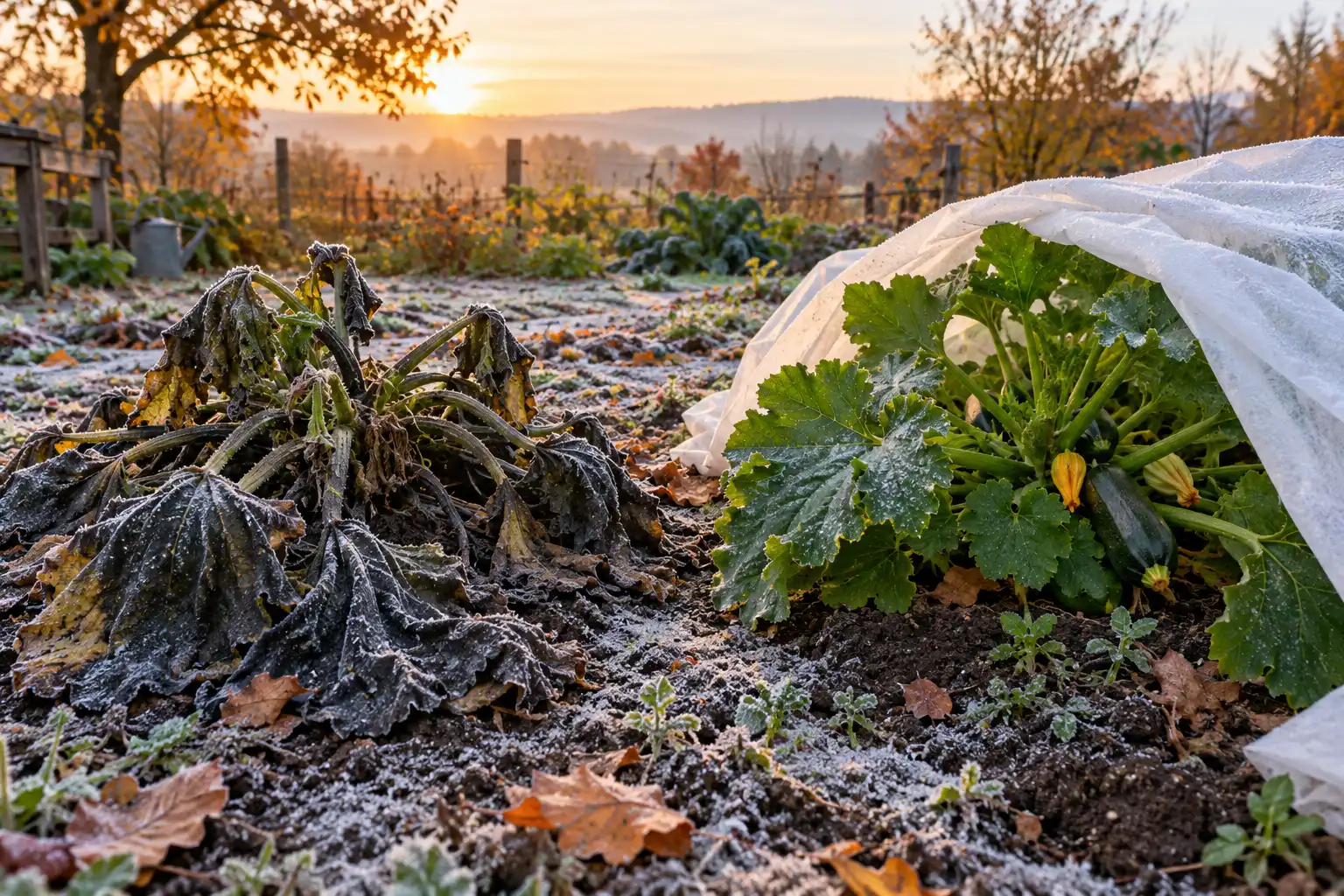
No. Zucchini cannot survive frost. Texas A&M AgriLife Extension reports that air temperatures at or slightly below freezing can severely damage all cucurbits. Seedlings can also be stunted or killed by cold that never reaches 32°F, because squash is chilling sensitive.
Frost-hit leaves turn dark and water-soaked, then collapse within a day or two. Once the main stem freezes, the plant does not recover.
To protect late plantings:
- Watch the forecast closely from your average first frost date onward.
- Drape floating row cover over plants on cold nights, then uncover open flowers during the day.
- Pick every usable fruit before a hard frost.
- Pull frost-killed plants promptly so they don’t harbor pests and disease.
UMN Extension notes that spun row covers raise air temperature around plants and protect them from cold nights. That can carry plants through a light frost, but not through a hard freeze. Also, cold damages the fruit itself. According to UMN, chilled summer squash develops pitted skin and water-soaked flesh.
When Is Zucchini in Season?
Zucchini is in season during summer across most of the US, roughly June through September. The exact window follows planting dates. For example, Minnesota gardens sown in late May or early June start picking in July and continue until frost.
In the South, zucchini gets two seasons. UGA Extension’s calendar places Georgia’s spring vegetable harvest in June and July and its fall harvest from October to December. Florida, by contrast, runs on a cool-season schedule. UF/IFAS reports the state’s commercial squash harvest runs from October to June, with peaks in December and May.
Whatever your season, pick fruit young. UMN Extension warns that oversized fruit develops large seeds, hard skin, and fibrous or watery flesh. Leaving those fruits on the vine also lowers the plant’s yield.
Common Zucchini Timing Mistakes
- Planting by calendar date alone. A frost-free date does not guarantee warm soil. Check soil at 2 inches first.
- Mulching with straw too early. Organic mulch keeps soil cool. UMN Extension advises waiting until soil reaches 75°F.
- Leaving row covers on after bloom. Covers block bees, so fruit never sets. UMN says to remove them once flowering begins.
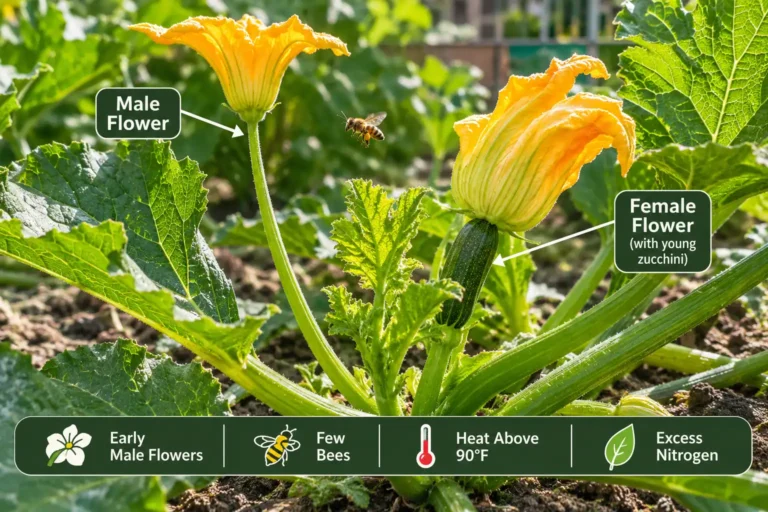
- Worrying over early dropped flowers. The first blossoms are male and fall off naturally, per UMN. Fruit follows once female flowers open.
- Starting transplants too early. Seed sown indoors beyond Clemson Extension’s 4-week limit outgrows its pot and stalls after planting.
- Sowing fall zucchini too late. Run the frost countdown before you plant, not after.
FAQs about Zucchini Planting Time
Is June too late to plant zucchini?
No, June is not too late in most of the US. Zucchini produces in about 45 to 55 days, so a June sowing starts bearing in late July or August and continues until frost.
How deep should you plant zucchini seeds?
Sow zucchini seeds 1/2 to 1.5 inches deep, going deeper in sandy soil that dries fast. University of Minnesota Extension recommends 1/2 inch, while UF/IFAS lists 1 to 1.5 inches for Florida gardens.
How long does zucchini take to produce after planting?
Zucchini usually produces its first fruit 40 to 55 days after seeding. UF/IFAS lists 40 to 50 days to harvest, while UGA Extension reports production starting 45 to 55 days from seeding.
Can you plant zucchini in August?
Yes, in the South and other areas with a late first frost. Texas A&M AgriLife lists August 1 to 25 for North Texas, and UGA Extension allows squash sowing in Middle Georgia through August 31.
What to Check Before You Plant
Confirm the soil reads 70°F at 2 inches for several mornings and the last spring frost has passed. If you want an earlier start, lay black plastic and keep row cover ready. For a July or fall crop, run the frost countdown first: days to maturity plus 18 harvest days. Then sow, keep the seedbed moist, and plan a second sowing about three weeks later.