How to Build a Trellis for Tomatoes the Right Way (Step-by-Step)
To build a trellis for tomatoes, set up sturdy support that keeps the vines upright, improves airflow around the foliage, and directs plant energy toward fruit instead of sprawling stems. This guide covers three practical trellis types for home and market gardeners, the materials each requires, and a step-by-step installation process from planting day through late-season harvest.
To build a trellis for tomatoes, drive 6 to 8 foot tall wooden or metal stakes into the ground at each end of the row. String horizontal twine between them every 10 to 12 inches as plants grow. A Florida weave works for rows of 6 or more plants. A single stake handles 1 to 3 plants. A cattle panel gives the most durable, reusable structure. Install all types at planting time to protect established roots.
What Is a Tomato Trellis?
A tomato trellis is a vertical support structure that holds vines above ground level. It uses stakes, posts, wire, twine, or a frame, depending on the system. Trellises fall into three main types: single stake, Florida weave, and wire cattle panel. Each type fits a different planting scale and plant count.
Indeterminate varieties, which include most beefsteak, cherry, and heirloom tomatoes, grow continuously and reach 5 to 8 feet. These types need full vertical support. Determinate varieties stay compact and tolerate lighter support, but they still benefit from a stake or short cage.
Read next: Plant Tomatoes and Potatoes Together? 4 Key Facts for Farmers
Why Do Tomatoes Need a Trellis?
Tomatoes need a trellis because unsupported vines collapse under fruit weight. A collapsed stem rests on the soil, which increases contact with pathogens that cause rot and fungal disease.
Trellised plants receive more direct sunlight on the leaves and fruit. Improved airflow between stems reduces the humidity that promotes early blight and septoria leaf spot. Fruit on trellised plants ripens faster and stays cleaner at harvest.
If you want more detail on how support type affects yield and disease pressure, this guide on staking, trellising, and caging tomatoes for healthier fruit covers each method side by side.
Which Trellis Type Fits Your Setup?
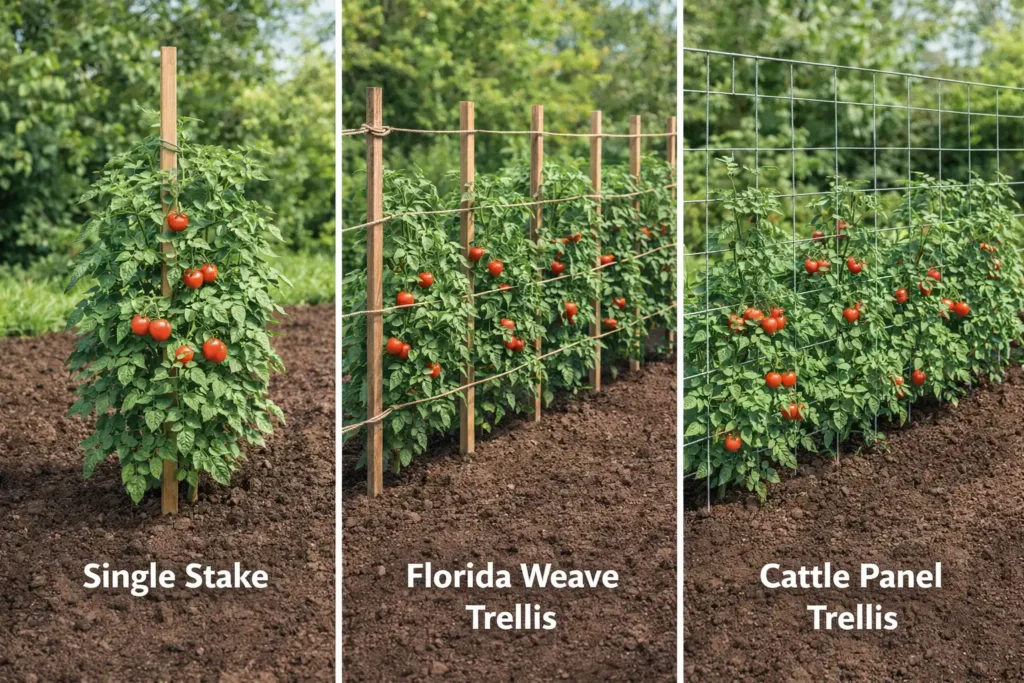
Three trellis systems cover most growing situations.
Single stake suits 1 to 4 plants in a small bed or container. It uses one stake per plant and requires soft ties to attach the stem as it grows.
Florida weave suits rows of 6 or more plants. It uses shared end posts and horizontal twine woven between plants. It reduces cost per plant and works well in ground-level rows.
Cattle panel suits gardeners who want a permanent, reusable frame. It handles heavy fruit loads and withstands wind better than stake-and-twine systems.
What Materials Do You Need?
The material list depends on the trellis type.
Single-stake system (per plant):
- One wooden or metal stake, 6 to 8 feet tall and at least 1 inch in diameter
- Soft plant ties, cut cloth strips, or biodegradable tomato clips
Florida weave (per 10-foot row):
- Two end posts, 6 to 8 feet tall, driven 18 to 24 inches into the ground
- One intermediate post every 4 to 6 plants
- One roll of baling twine or tomato-grade weaving twine
- A hammer or post driver
Cattle panel (per 16-foot section):
- One 16-foot cattle panel, 4 to 5 feet tall
- Two T-posts or wooden stakes to anchor each end
- Wire ties or zip ties to secure the panel to the posts
- Bolt cutters to trim the panel if the row is shorter than 16 feet
For container growing, a single bamboo stake or a collapsible tomato spiral stake replaces ground-driven posts. This approach to growing tomatoes in containers explains sizing and support in more detail.
When Should You Install a Trellis?
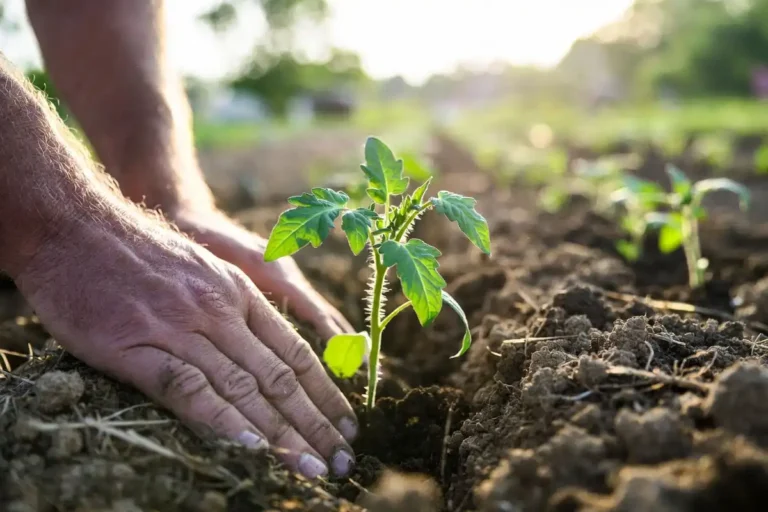
Install the trellis at transplanting time. Waiting until the plant reaches 2 feet or more increases the risk of root damage from stake insertion.
Posts driven into soil near established roots cut through fine feeder roots. That root damage slows water and nutrient uptake during the plant’s fastest growth phase. Setting stakes at planting takes five minutes and eliminates that risk entirely.
For more on timing transplants correctly, this article on when to transplant tomatoes covers the right stage of growth and weather conditions.
How to Build a Single-Stake Trellis
This system works best for a handful of plants in a home garden or raised bed.
- Drive the stake 12 to 18 inches into the ground, 3 to 4 inches from the plant stem.
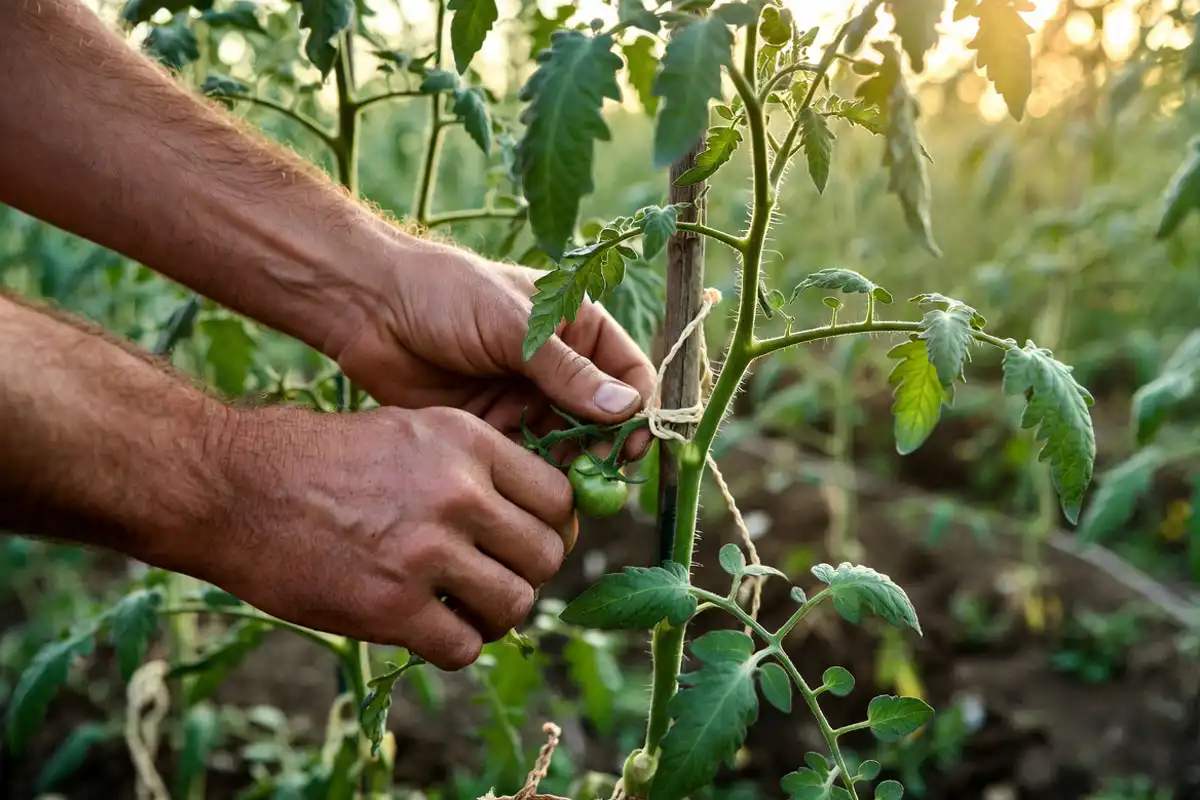
- Tie the main stem to the stake at 6 to 8 inches above the soil using a figure-eight knot.
- Fit the tie so two fingers slide between the stem and the tie material.
- Add a new tie every 8 to 10 inches as the plant grows taller.
- Trim any side shoots that extend more than 18 inches from the main stem if you want to keep the plant narrow and vertical.
Keep ties loose enough to allow for stem thickening. A tight tie cuts into the vascular tissue within two to three weeks of growth.
How to Build a Florida Weave Trellis
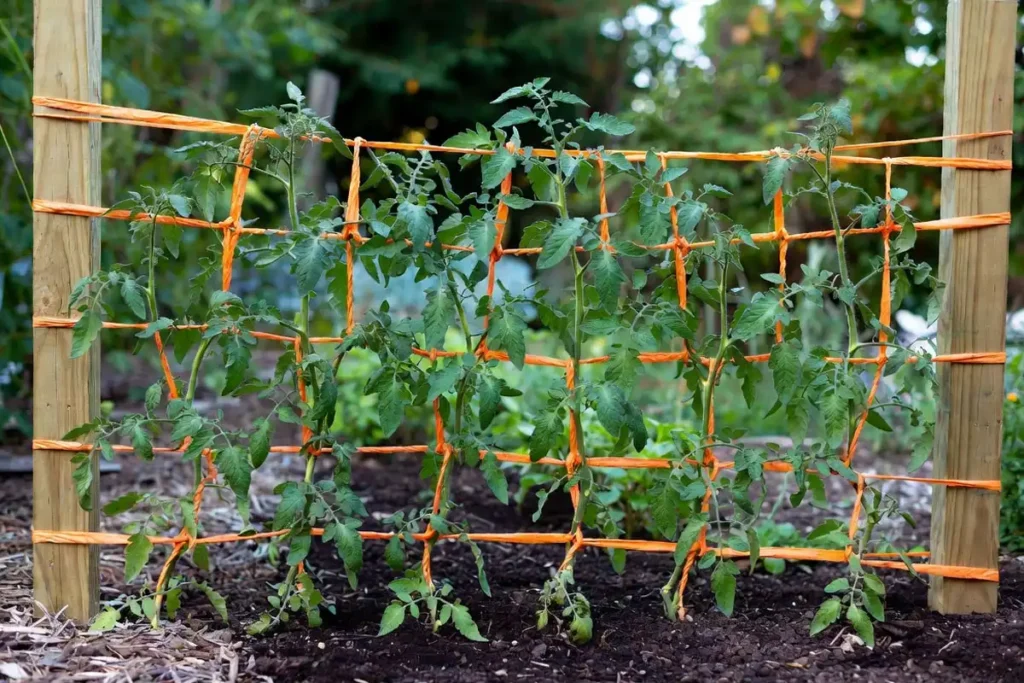
The Florida weave supports an entire row of tomatoes using shared posts and twine woven in a repeating pattern.
- Set the end posts first. Drive each post 18 to 24 inches into the ground at each end of the row.
- Add one intermediate post between every 4 to 6 plants in the row.
- Start the first weave at 10 to 12 inches above the soil.
- Run the twine from the far side of one end post, wrap it once around the post, then weave it in front of the first plant, behind the second, in front of the third, and continue to the far end post.
- Wrap the twine around the far end post and return along the opposite side of each plant.
- This creates a twine sandwich on both sides of every stem in the row.
- Tie off the twine at the starting post and cut it.
- Add a new weave layer every 8 to 10 inches as the plants grow through the season.
The weave holds plants upright without tying each individual stem. It reduces labor per plant compared to the single-stake method.
How to Build a Cattle Panel Trellis
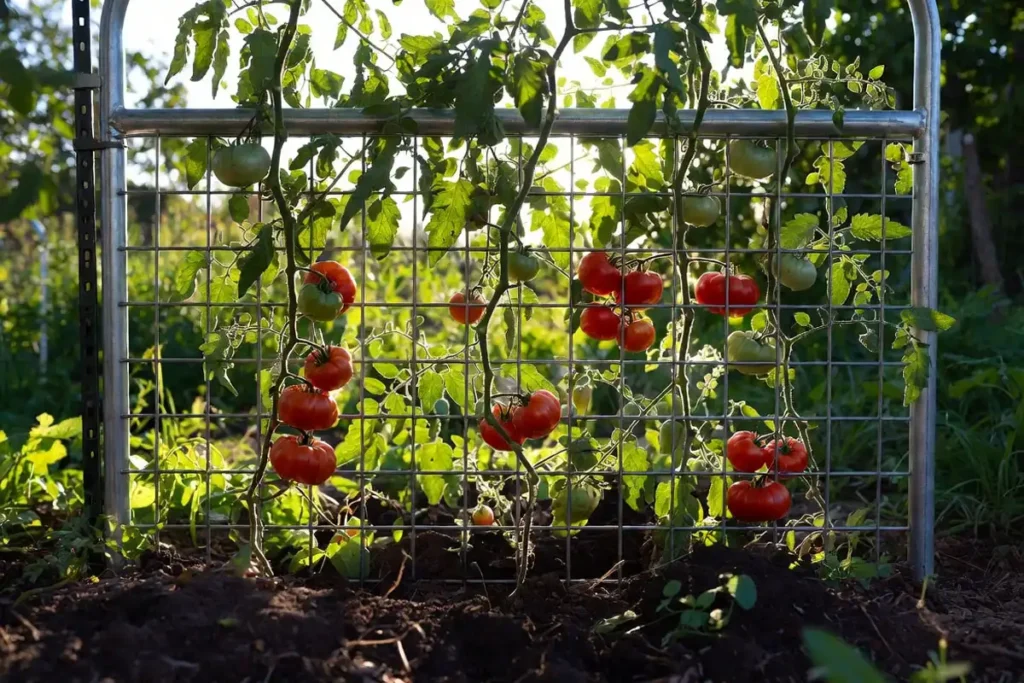
A cattle panel provides a rigid grid frame that lasts 10 or more seasons with proper storage.
- Set a T-post at each end of the row. Drive each post 18 to 24 inches into the ground.
- Stand the cattle panel on edge and lean it against the two T-posts.
- Secure the panel to each post with wire ties at the top and at the midpoint.
- Plant tomatoes 18 to 24 inches apart along the base of the panel.
- Thread each stem through a panel opening as it grows, or tie it with soft ties at 10-inch intervals.
Cattle panels resist bowing under heavy fruit weight. They work for indeterminate varieties that outgrow shorter stake systems by midsummer.
How Deep Do Stakes Need to Go?
Stakes need 12 to 18 inches of depth in standard garden soil. Sandy or loose soil requires 18 to 24 inches to prevent the stake from leaning under fruit weight. Test each stake after driving it by pushing it firmly from both sides. A stable stake does not rock or shift when loaded.
Proper plant spacing also affects how well a trellis system holds up. For general spacing guidelines that apply across trellis types, see this article on plant spacing for crops.
Common Mistakes to Avoid
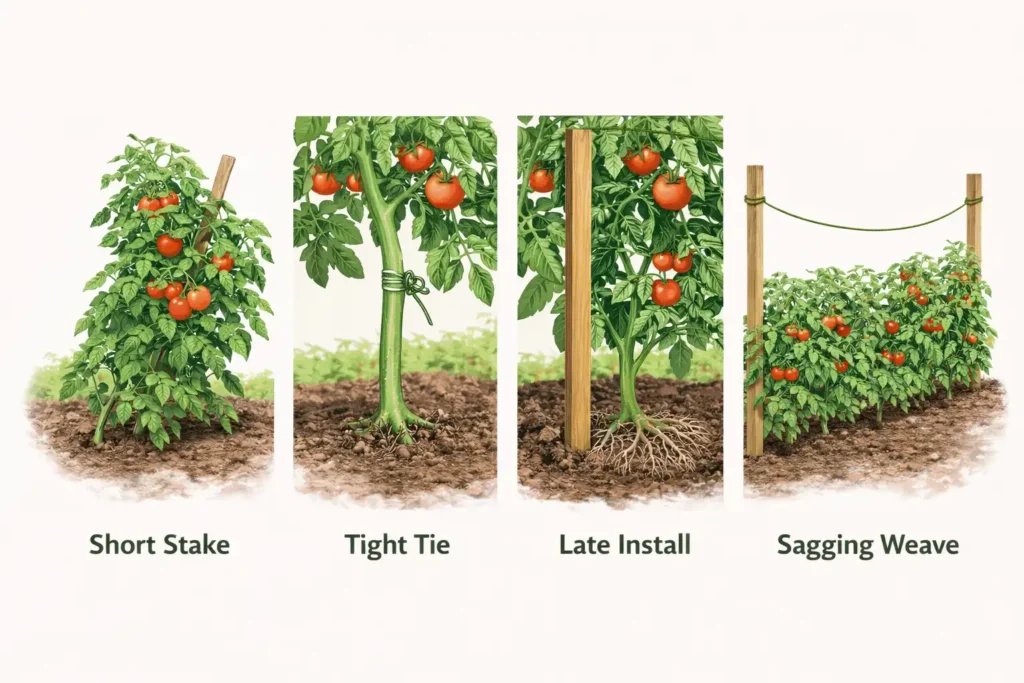
Using stakes that are too short. Indeterminate tomatoes grow past 6 feet. A 4-foot stake leaves the top third of the plant without support, which increases stem breakage from wind and fruit load.
Tying too tight. Ties placed snug against the stem restrict vascular flow as the stem expands. Use a figure-eight tie that leaves a gap between the stem and the tie material.
Installing the trellis after transplanting. Late installation forces the stake near active root zones and disrupts nutrient uptake during peak growth.
Skipping intermediate ties on single stakes. Leaving more than 12 inches between ties lets the stem bow sideways. A bowed stem snaps in wind more easily than one tied at regular intervals.
Using a single thin string for the Florida weave. Thin twine cuts through soft stems at the contact point. Use 3-millimeter or thicker twine designed for tomato weaving.
Troubleshooting
Stake tips over mid-season. This indicates shallow installation or waterlogged soil. Remove the stake, add a brace stake at a 45-degree angle, and tie the two together at the top.
Twine cuts into stems. Replace twine with wider cloth ties or tomato clips at those points. Check all contact points every two weeks.
Plant outgrows the trellis height. Pinch the growing tip at the topmost node to stop vertical growth. This redirects energy into ripening the fruit already set on the plant. For more on how pruning interacts with yield, this article on tomato pruning and its effects on yield and disease covers the tradeoffs clearly.
Florida weave sags between posts. The posts sit too far apart. Add an intermediate post between the two farthest posts to pull the twine back to the correct height.
Cattle panel bows outward at the base. The base plants push against the panel as they grow wide. Add a second T-post on the opposite side of the panel at ground level to pin the base in place.
Safety Notes
Wear thick gloves when cutting cattle panel wire. The cut ends produce sharp points that cause deep puncture wounds. After cutting, fold any exposed wire ends away from the planting area or cover them with tape.
Drive stakes into the ground before attaching plant weight. A loose stake under a loaded plant tips without warning.
Avoid setting tall trellises directly beneath overhead power lines. A 7-foot stake with a mature plant attached reaches close to low-run utility lines on residential properties.
Conclusion
A well-built trellis keeps tomato plants upright, reduces disease, and makes harvest easier through the entire growing season. Single stakes work for small plantings.
The Florida weave handles long rows at lower cost per plant. Cattle panels deliver the most durable, multi-season structure. Install supports at planting, check tie tension every two weeks, and add a new weave layer or tie before the plant outgrows the previous one.