Why Is My Zucchini Not Producing Fruit? 7 Causes and Fixes
Zucchini plants often grow huge leaves and open dozens of yellow blossoms, yet set no squash. The causes behind zucchini not producing fruit are easy to read once you know how the flowers work. Each problem leaves a clue on the plant, and most have a quick fix.
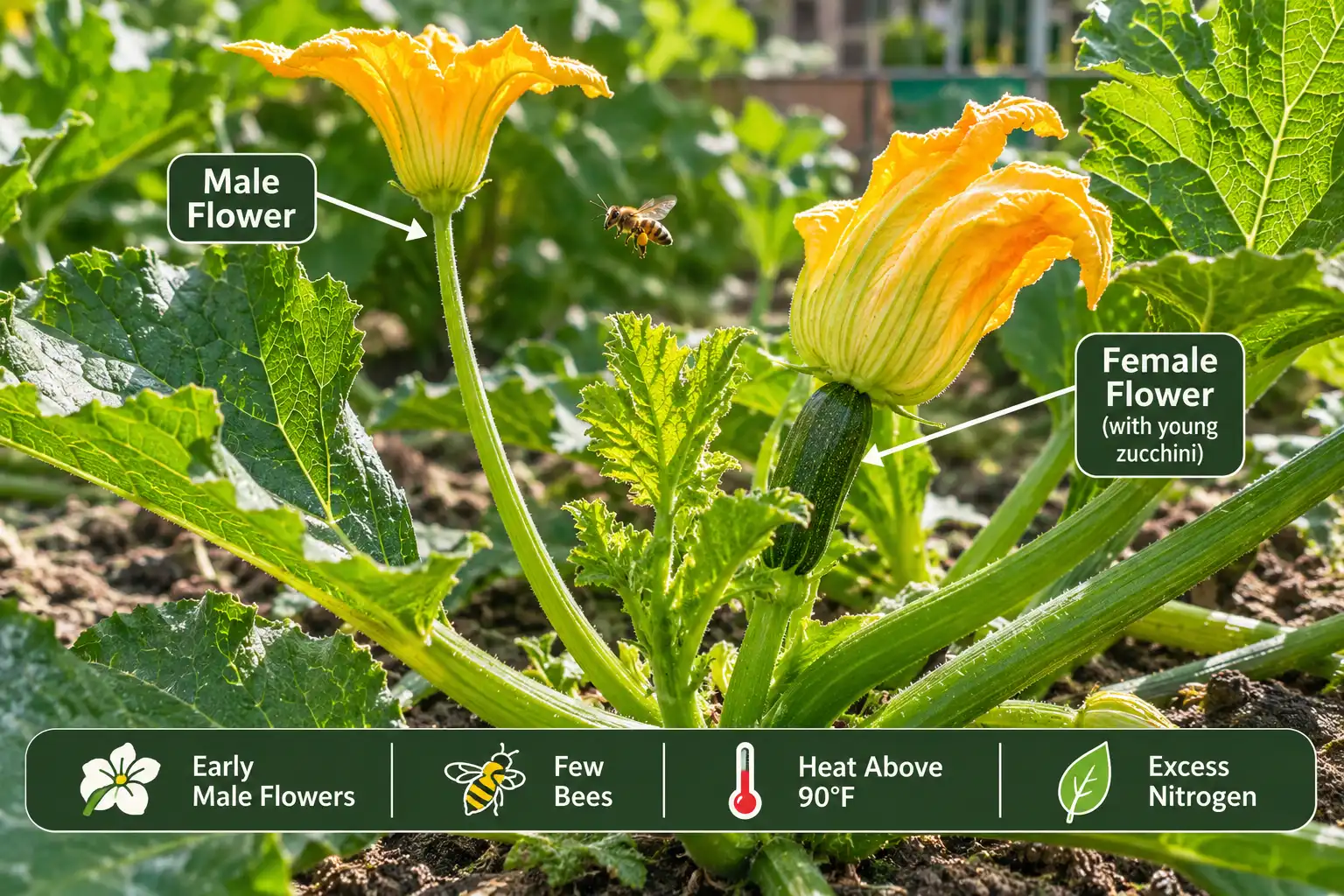
Timing and pollination explain most cases of zucchini not producing fruit. Young plants open only male flowers first. Later, fruit fails when bees miss female flowers, heat above 90°F favors male blooms, or excess nitrogen feeds leaves.
How Zucchini Flowers Turn Into Fruit
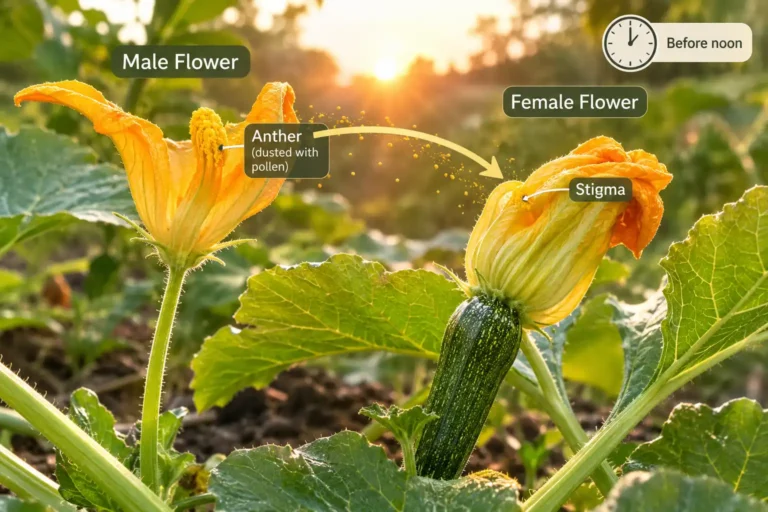
Zucchini (Cucurbita pepo) is monoecious. That means each plant grows separate male and female flowers. Only female flowers become fruit, and only after pollen reaches them.
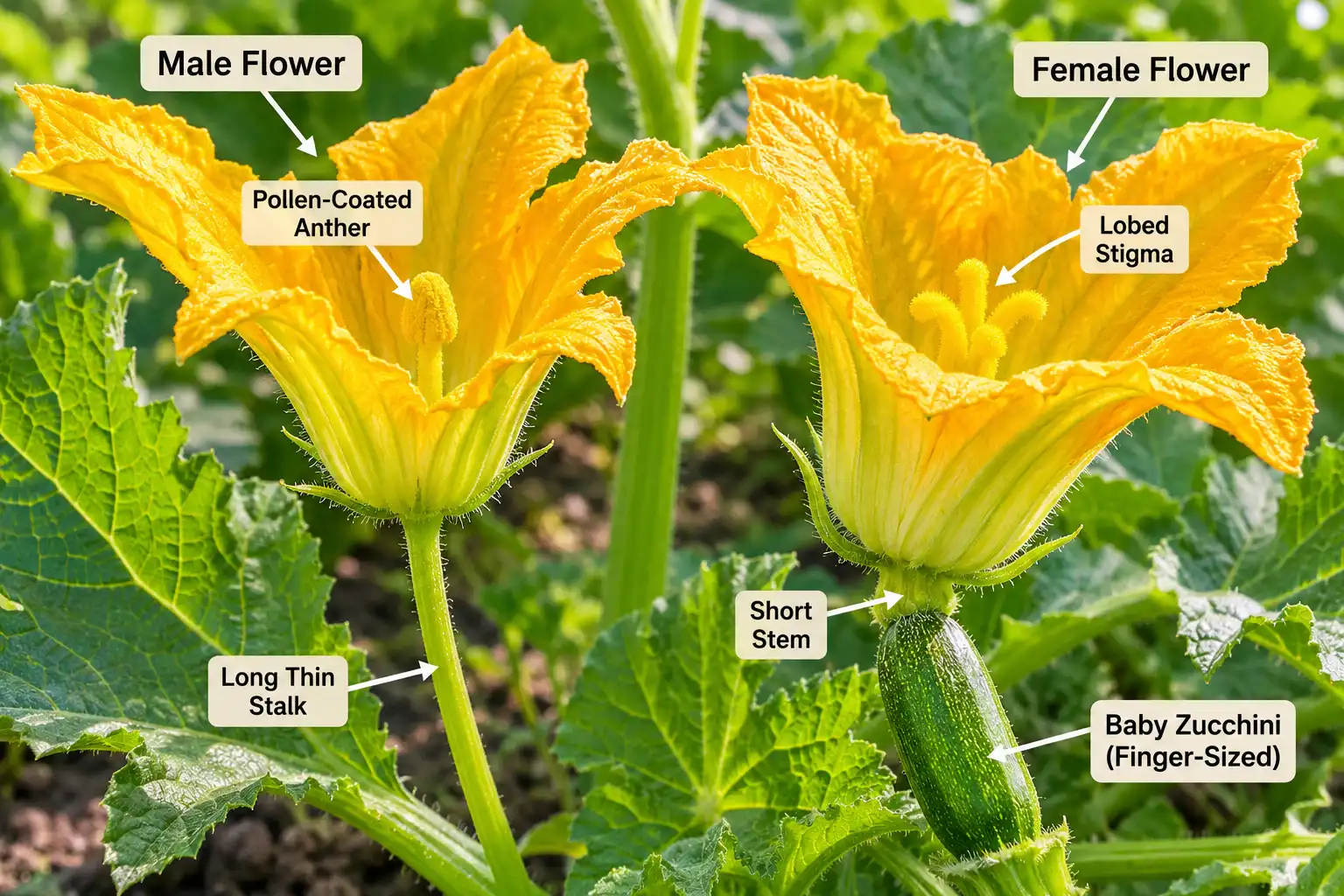
Telling the two apart takes a few seconds:
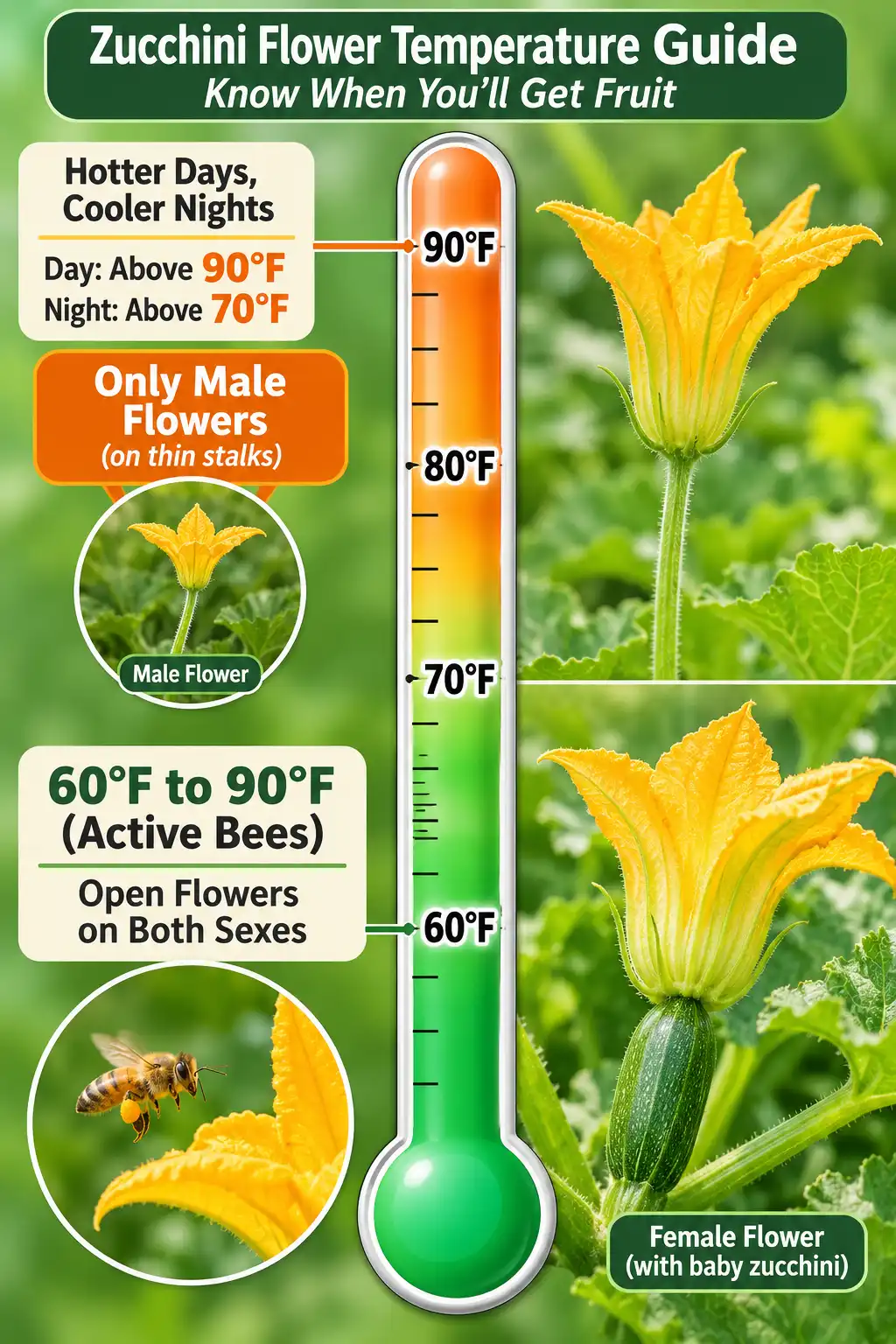
- Male flowers sit on a long, thin stalk. A single pollen-covered anther stands in the center.
- Female flowers sit on a short stem with a tiny zucchini right below the petals. The center holds a lobed stigma.
UC ANR (University of California Agriculture and Natural Resources) explains that squash pollen is sticky. Wind does not move it, so bees do the job. Each blossom also opens for a single morning and then closes for good. As a result, every female flower gets one short window for pollination.
Iowa State University Extension notes that several male flowers usually open before any female flowers appear. This early male flush is normal. In fact, it makes sure pollen is ready when the first female flowers open.
Learn more: Get Rid of Aphids on Zucchini
Why Is My Zucchini Plant Flowering but No Zucchini?
A zucchini plant flowering with no fruit has either no female flowers yet or female flowers that are not getting pollinated. Seven causes account for nearly every case:
- The plant is still in its early male flower phase.
- Hot days and warm nights push the plant toward male flowers.
- Too few bees visit the female flowers.
- Insecticide sprays during bloom kill or drive off pollinators.
- Excess nitrogen or shade feeds leaves instead of flowers.
- Drought stress makes the plant drop female buds.
- Oversized fruit left on the plant slows new fruit set.
To find yours, check five or six open flowers in the morning. Thin stalks everywhere point to causes 1 or 2. Baby fruit that turns yellow and shrivels points to causes 3, 4, or 6. Few flowers and lots of leaves point to cause 5.
Hybrids add one twist. UC ANR notes that some hybrid summer squash open female flowers first. Those early females fail because no male pollen exists yet. Fruit set improves once male flowers start opening.
Why Does My Zucchini Have Only Male Flowers?
Only male flowers usually means the plant is young or the weather is too hot. Both problems are temporary.
Early season. Iowa State University Extension explains that the first flowers on squash are mostly male. Fruit production then picks up within a few weeks as female flowers increase. So early in the season, patience solves the problem.
Heat. University of Minnesota Extension reports that days above 90°F and nights above 70°F push vine crops toward male flowers. Iowa State adds that high temperatures delay female flower development, while cooler weather brings female flowers on sooner.
Drought stress. Dry soil also causes female flower buds to abort, according to Iowa State.
To get female flowers back, focus on the stress you control:
- Water deeply so drought does not add to heat stress.
- Mulch around plants to keep the root zone cooler.
- Wait out the heat wave, since female flowers return as temperatures fall.
Location matters too. In hot Southern and Southwestern summers, earlier zucchini planting dates move the main bloom ahead of peak heat.
Why Are My Zucchini Flowers Falling Off?
Falling flowers are normal if they are male. Purdue Extension notes that male blossoms naturally drop after they shed pollen. Check the base of a fallen flower. A plain thin stalk with no baby fruit confirms it was male.
Female flowers dropping is a different story. According to Purdue, it means something blocked pollination. The usual suspects are:
- Rainy, cool weather. Iowa State University Extension notes that cool, rainy weather during bloom reduces bee activity.
- Too few bee visits. UF/IFAS Extension reports that it takes at least eight honeybee visits per flower to pollinate squash well.
- Heat. University of Minnesota Extension notes that many bees slow down once temperatures reach 90°F.
- Insecticides. Sprays applied during bloom kill or repel the pollinators the crop depends on.
When a female flower falls with a shriveled baby fruit still attached, pollination failed. Hand pollination and pollinator protection, both covered below, solve most of these cases.
Why Are My Zucchini Flowers Not Turning Into Fruit?
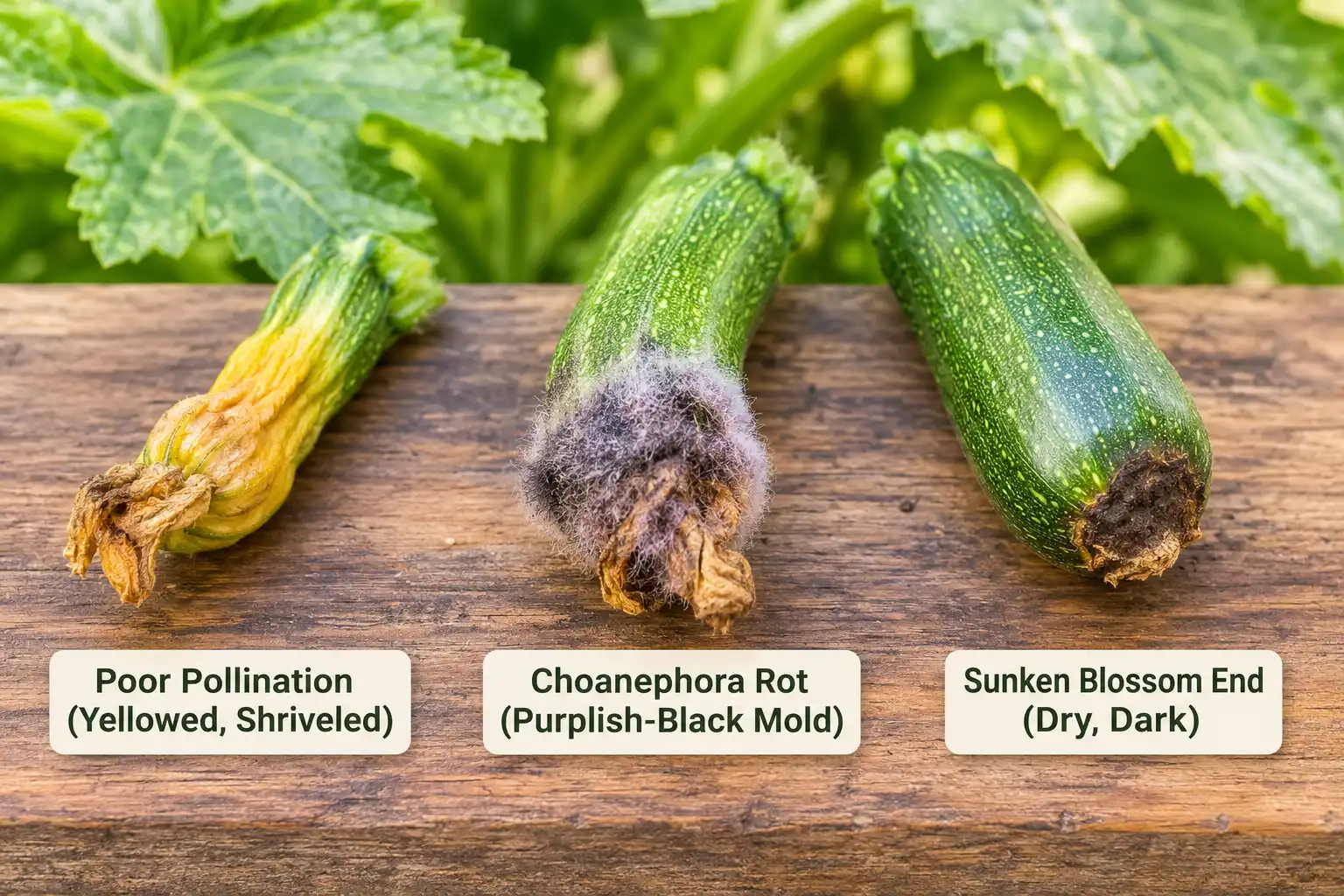
Female flowers that open but never grow into zucchini did not get enough pollen. University of Minnesota Extension notes that small summer squash often rot because of poor pollination, especially in the plant’s first round of fruit. The baby fruit turns yellow, softens, and drops within days.
Partial pollination causes a related problem. UC ANR explains that low bee numbers lead to partial pollination, which produces misshapen fruit and lower yields. These fruits often grow thin or pinched at the blossom end.
Two look-alike problems also stop young fruit:
- Choanephora rot. This fungus thrives in wet weather. University of Minnesota Extension describes a soft, rotting blossom end covered in fluffy, purplish-black growth. Remove infected fruit right away.
- Blossom-end rot. Clemson Extension links this dark, dry rot to a lack of calcium in the developing fruit. Steady watering helps the plant move calcium into new fruit.
The difference is easy to spot. Poor pollination gives a yellow, shriveled fruit with no mold. Choanephora rot shows fuzzy black growth. Blossom-end rot stays dry and dark.
Why Are My Zucchini Plants Producing Only Leaves?
A zucchini plant with big leaves and few flowers is usually overfed, shaded, or still young.
Too much nitrogen is the top suspect. University of Minnesota Extension notes that extra nitrogen produces lush green plants but no harvest, and vining vegetables are especially prone. Fresh manure, heavy compost, or lawn fertilizer near the bed often supplies more than the crop needs.
Purdue Extension gives a measured feeding plan for squash:
- Before planting, mix 1 to 2 tablespoons of a 4-8-5 or 6-10-10 fertilizer into each hill.
- One week after blooming begins, side-dress about 1 tablespoon of 33-0-0 per hill, especially on sandy soils.
- Repeat the side-dress three weeks later.
Notice the timing. Extra nitrogen waits until flowers appear, which keeps early growth from tilting toward leaves. If plants are already lush, skip side-dressing until flowers and fruit catch up. Reading the NPK fertilizer numbers on the bag also helps you avoid high-nitrogen blends during bloom.
Light matters as well. Zucchini is a full-sun crop, and plants in partial shade put more energy into leaves than blooms. Finally, some plants are simply young. Bush zucchini needs several weeks of leaf growth before the first blossoms open.
How to Hand Pollinate Zucchini
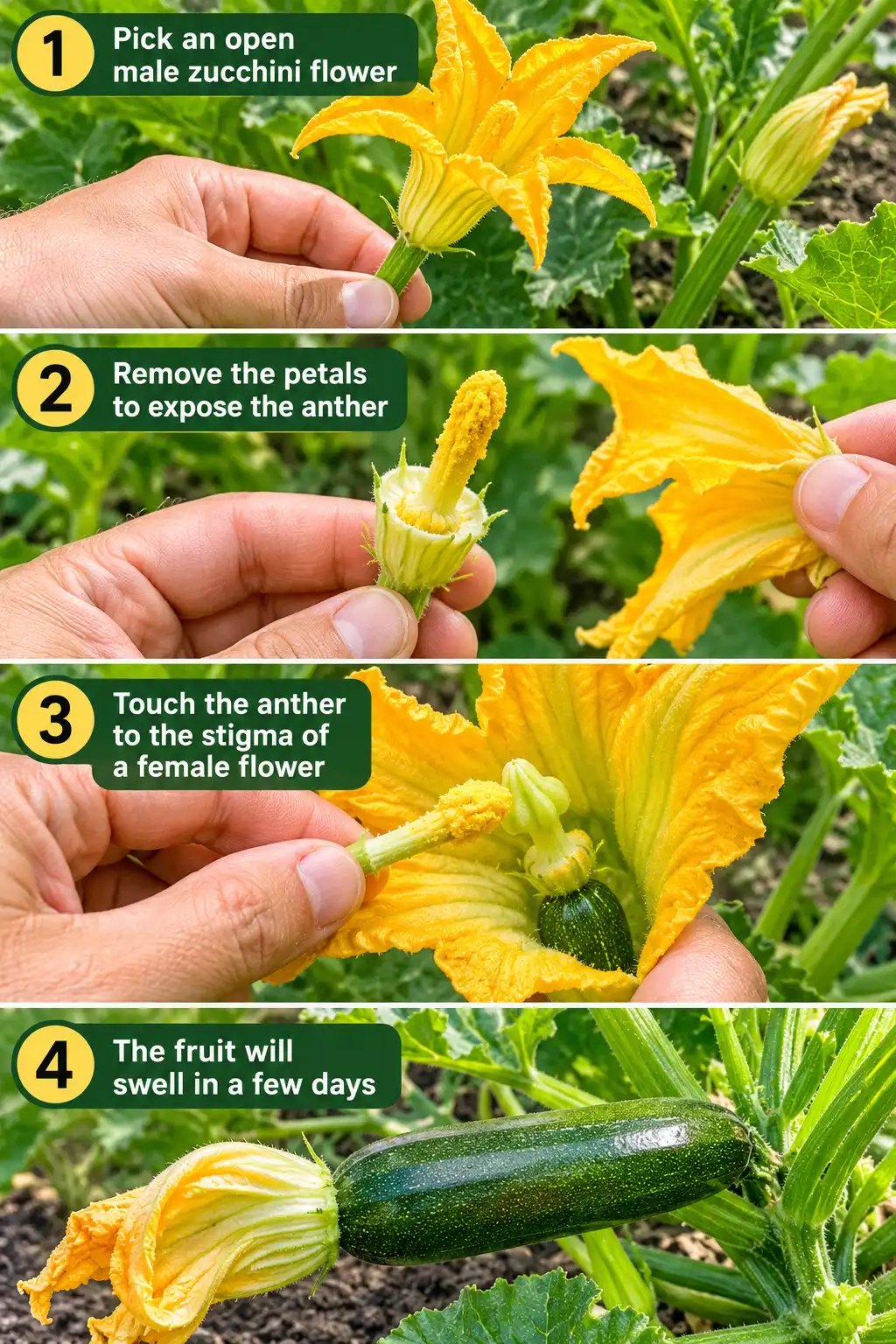
Hand pollination works when bees are scarce, the weather turns wet, or plants grow under row covers. Do it in the morning, soon after the flowers open.
- Find a freshly opened male flower with yellow pollen on the anther.
- Pick it and peel away the petals.
- Find an open female flower with a tiny zucchini at its base.
- Rub the anther gently over the stigma until pollen coats every lobe.
- Repeat for each open female flower. One male flower often covers several females.
A small paintbrush or cotton swab works too. UF/IFAS Extension recommends moving pollen from newly opened male flowers with a brush or swab onto the stigma of the female flower.
Results show quickly. A pollinated fruit starts swelling within a few days. On the other hand, a failed one turns yellow and drops.
How to Get Zucchini to Set More Fruit
More bee visits, steady water, open plants, and frequent picking all raise fruit set.
Protect the Pollinators
Squash bees, bumble bees, and honey bees all pollinate zucchini. UF/IFAS research found that flowers receiving several squash bee visits set bigger fruit than flowers visited once. Bee-friendly flowers nearby keep them coming back.
Spray only when needed, and spray late. Clemson Extension advises applying insecticides and fungicides late in the evening to protect bees. UF/IFAS also warns that carbaryl is highly toxic to bees. An integrated pest management routine cuts spraying overall.
Water Deeply and Evenly
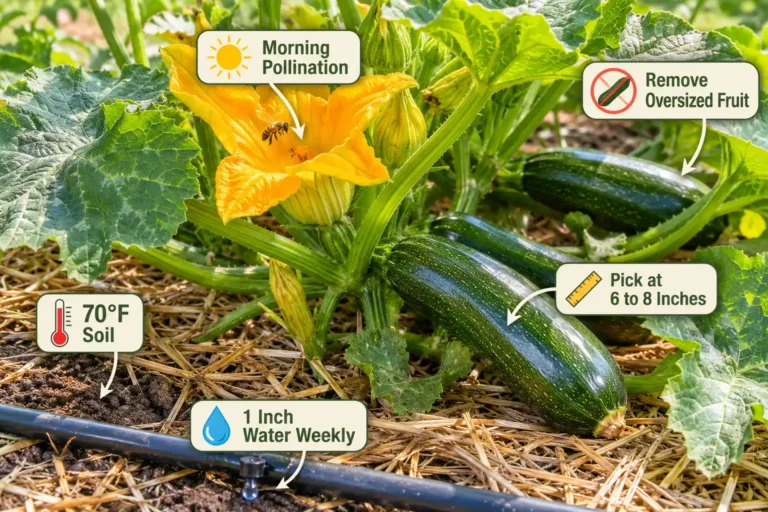
Purdue Extension recommends 1 inch of water per week, enough to soak the soil 6 to 8 inches deep. Water in the morning so leaves dry by evening. Drip lines also keep water off open blossoms and limit choanephora rot, per University of Minnesota Extension.
Give Plants Room
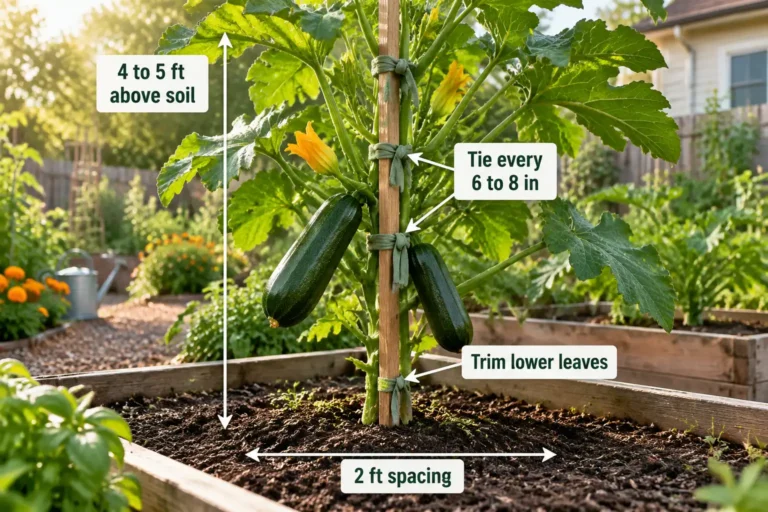
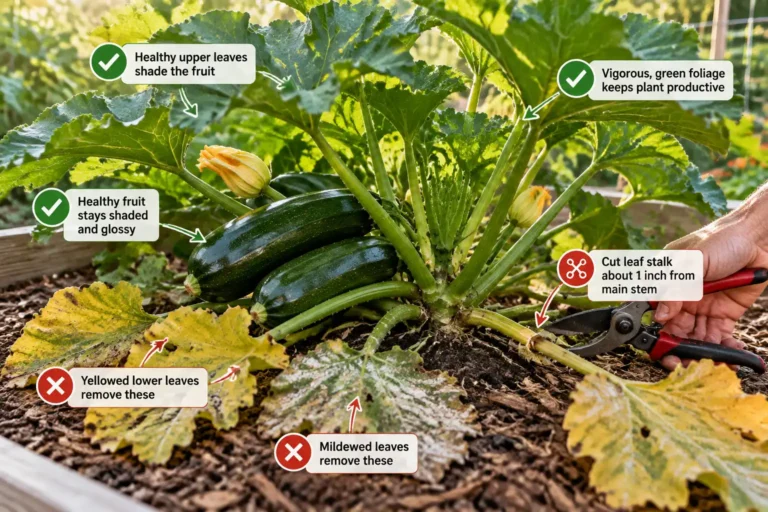
Crowded plants hide flowers from bees and trap humidity. Correct zucchini plant spacing helps, and removing a few older leaves opens the center of the plant to bees and airflow.
Pick Fruit Young
Clemson Extension notes that large fruit left on the plant slows the development of new fruit. Check plants every day or two during peak season.
Try a Parthenocarpic Variety
Parthenocarpic hybrids set fruit without pollination. UC ANR Master Gardeners point to ‘Partenon’ and ‘Cavili’ as options. That makes them a fit for high tunnels, row covers, and spots with few bees.
Zucchini Not Producing Fruit: Troubleshooting Chart
Match what you see on the plant to the likely cause and fix.
| What You See | Likely Cause | Fix |
|---|---|---|
| Many flowers, all on thin stalks | Early male phase | Wait a few weeks |
| Only male flowers in midsummer | Days over 90°F, nights over 70°F | Water deeply, mulch, wait for cooler weather |
| Male flowers falling off | Normal after pollen shed | No action needed |
| Baby fruit turns yellow and shrivels | Poor pollination | Hand pollinate, protect bees |
| Fruit thin or pinched at the tip | Partial pollination | Hand pollinate, add pollinator plants |
| Mushy blossom end with black fuzz | Choanephora rot | Remove fruit, switch to drip, widen spacing |
| Dark, dry blossom end | Blossom-end rot | Water evenly, test soil calcium |
| Huge leaves, few flowers | Excess nitrogen or shade | Stop nitrogen, move to full sun next season |
| Production slows midseason | Oversized fruit left on plant | Harvest every day or two |
| Whole plant wilts suddenly | Squash vine borer | Inspect the stem base for borer damage |
Clemson Extension notes that squash vine borers cause sudden wilting. So a collapsing plant needs a stem check, not more water.
FAQs on Zucchini Not Producing Fruit
Does zucchini need two plants to produce fruit?
No, one zucchini plant grows both male and female flowers, so bees pollinate it from its own blooms. Two or more plants raise the odds that male and female flowers open on the same morning.
How long does it take zucchini to grow female flowers?
Female flowers usually appear within a few weeks of the first male blooms. Iowa State University Extension notes that several male flowers open first, and hot weather delays females further.
Is it OK to remove male zucchini flowers?
Yes, but only a few, because male flowers supply the pollen that female flowers need. Pick extras for cooking after female flowers are open and bees are active, and leave the rest on the plant.
Does rain stop zucchini from producing fruit?
Yes, long stretches of cool, rainy weather cut fruit set. Bees stay less active in the rain, per Iowa State University Extension, and wet conditions also spread choanephora rot onto young fruit.
Will zucchini start producing again after a heat wave?
Yes, zucchini usually resumes fruiting once the heat breaks and plants recover. When days drop below 90°F and nights fall under 70°F, female flowers and steady bee activity both return.
Where to Start
Start with a morning flower check. Thin stalks everywhere mean the plant needs time. Baby fruit that shrivels means pollination needs help from bees or your own hand. Lush leaves with few blooms point to nitrogen or shade. Fix the one cause the plant shows, keep water steady, and pick fruit young so new zucchini keep coming.