How to Increase Zucchini Yield: 8 Fixes Backed by University Trials
Zucchini plants often bloom heavily and still give fewer fruit than expected. The losses usually trace back to cold soil, weak pollination, slow picking, or pests. Here is how to increase zucchini yield, with plant counts and harvest numbers from university trials.
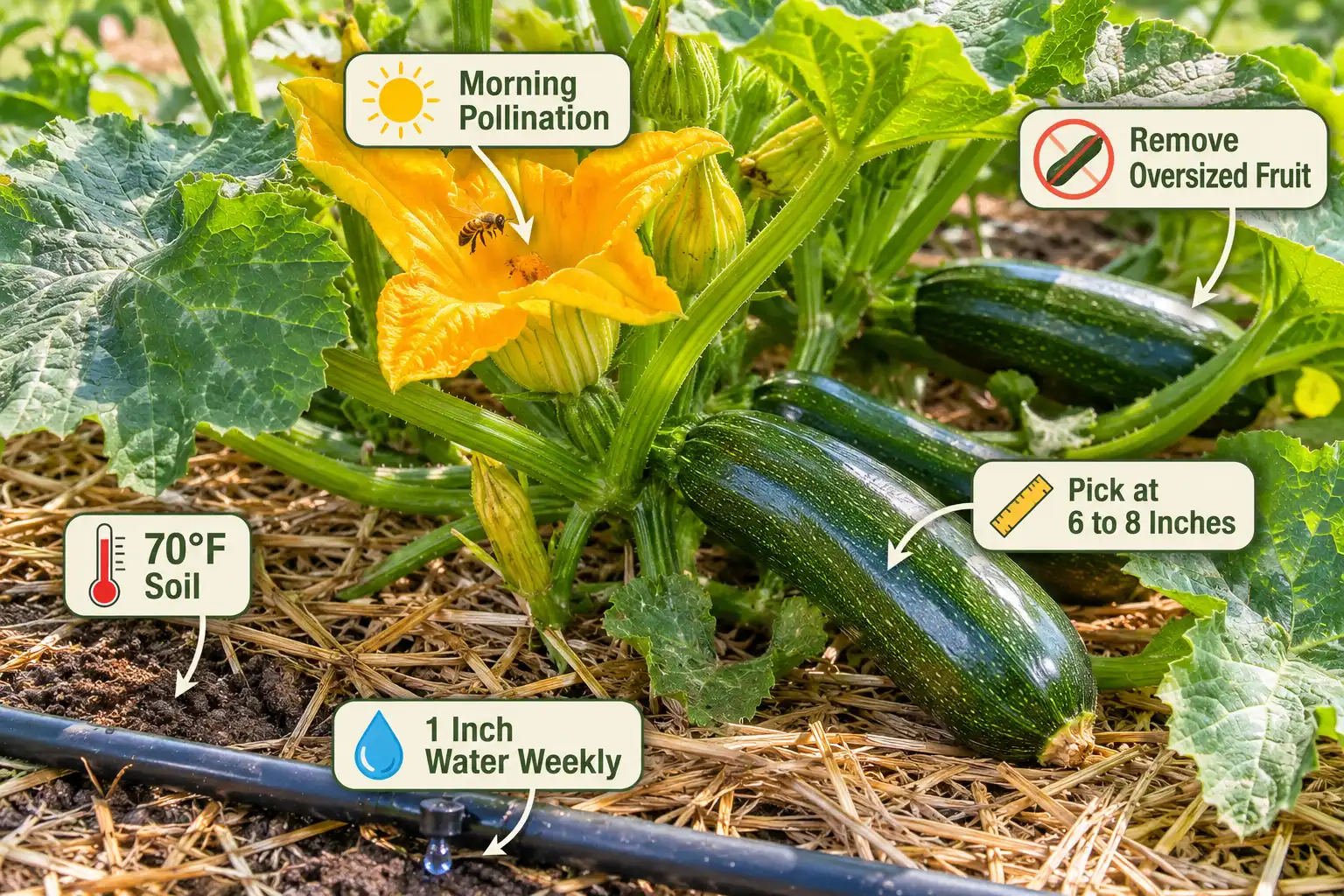
Fruitless flowers and shriveled fruit share one fix list. To increase zucchini yield, plant in 70°F soil, water 1 inch weekly, hand-pollinate when bees are scarce, and pick fruit at 6 to 8 inches every one to two days.
How Many Zucchini Per Plant Can You Expect?
A healthy zucchini plant gives about 7 to 9 well-formed fruit during its four-week peak. In NC State Extension’s 2024 zucchini trial, 12 varieties averaged 7.4 marketable fruit per plant over 13 harvests. The top entry reached 9.0. Crews there picked small, at 4.5 to 5 inches.
However, the plants set far more fruit than that. Each one also produced about 9.2 culls, meaning fruit too small, misshapen, or poorly pollinated to sell. After June 20, daily highs stayed above 90°F for two weeks. As a result, male flowers became scarce, and pollination failed on many young fruit.
In total, each plant set about 16 to 17 fruit in four weeks. So better pollination is the biggest lever for closing that gap.
| Harvest period (NC State 2024 trial) | Marketable fruit per plant |
|---|---|
| Early, harvests 1 to 4 | 3.2 |
| Mid-season, harvests 5 to 9 | 3.1 |
| Late, harvests 10 to 13 | 1.2 |
| All 13 harvests | 7.4 |
In pounds, the math depends on picking size. Purdue Extension’s zucchini trial recorded 5.3 to 6.8 oz per fruit at 6 to 8 inches long. At that size, 7 to 9 fruit equals roughly 2.5 to 4 pounds per plant in a month. Plants that stay healthy past the peak keep adding fruit at a slower pace.
Also learn: Best Way To Hand Pollinate Zucchini
How Much Does a Zucchini Weigh?
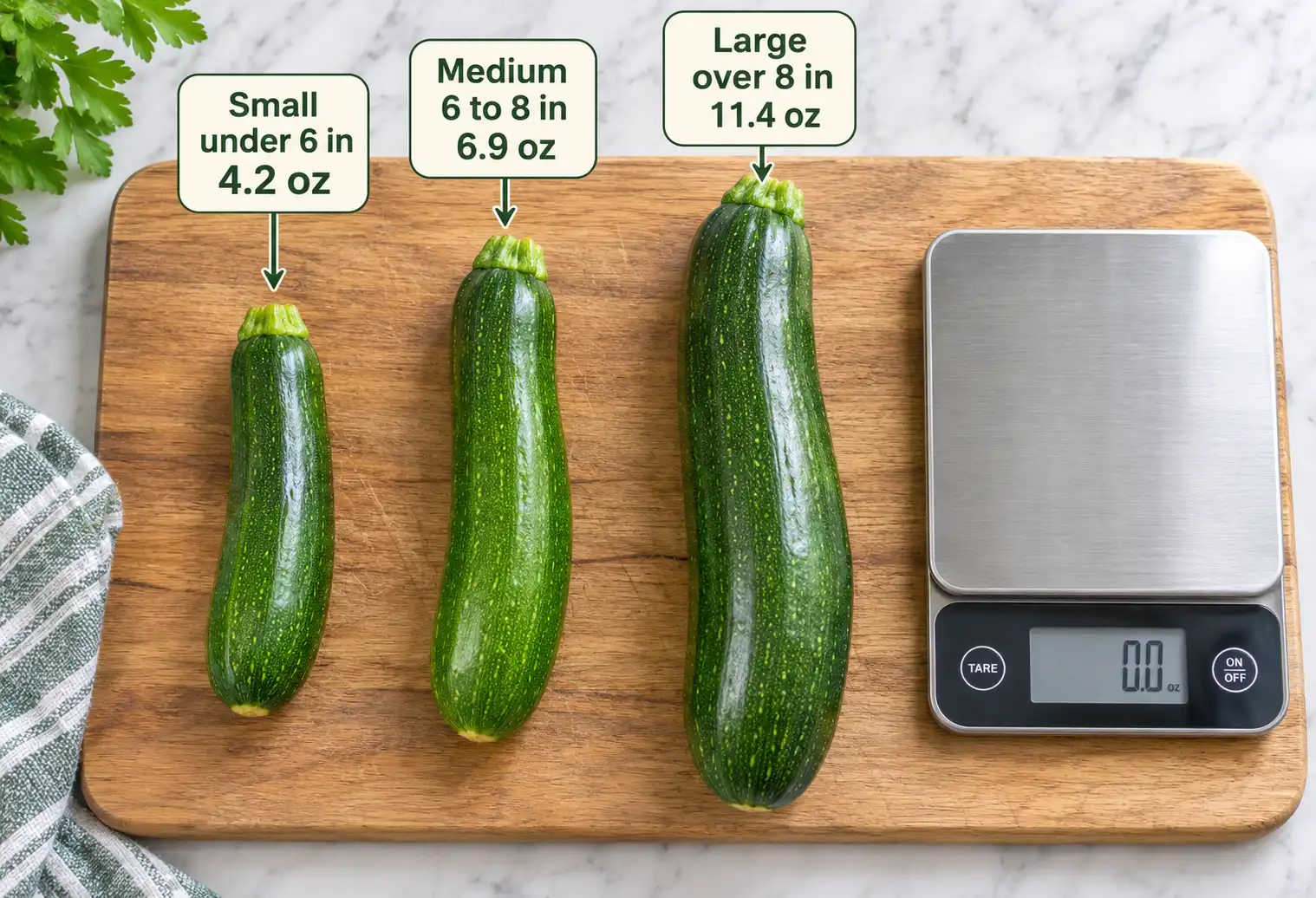
A medium zucchini weighs about 6.9 oz (196 g), according to USDA FoodData Central. A small one weighs about 4.2 oz (118 g). A large one weighs about 11.4 oz (323 g). So roughly 2.3 medium fruit make a pound.
| Size | Approximate length | Weight (USDA) |
|---|---|---|
| Small | Under 6 inches | 4.2 oz (118 g) |
| Medium | About 6 to 8 inches | 6.9 oz (196 g) |
| Large | Over 8 inches | 11.4 oz (323 g) |
The length ranges line up with Purdue Extension’s trial, where 6- to 8-inch fruit weighed 5.3 to 6.8 oz.
Heavier fruit look like more harvest, but they cost you future fruit. Judge yield by the season total, not by the heaviest zucchini on the counter.
How to Increase Zucchini Yield From the Start
Yield gets decided early. A plant that stalls in cold soil or a crowded bed rarely catches up.
Plant Into Warm Soil
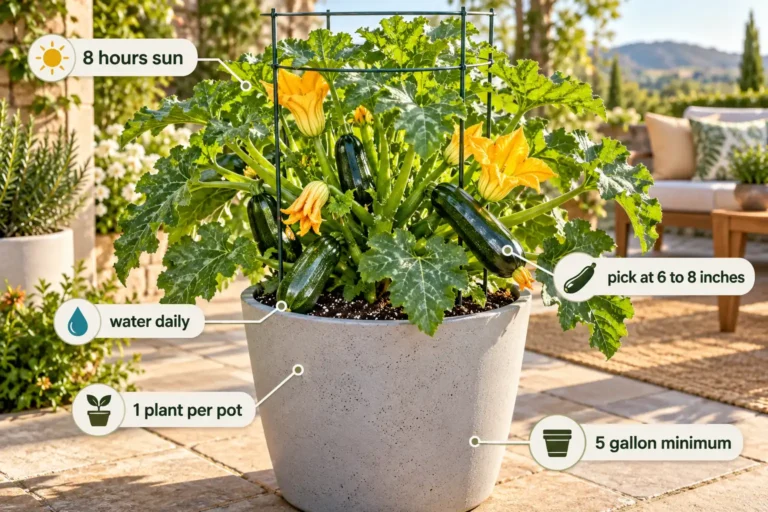
Sow seed once soil reaches at least 70°F at a 2-inch depth. University of Minnesota Extension (UMN) notes that squash seed does not germinate in cold soil. Transplants set into cold ground also grow poorly, and many suffer root damage during the move. For that reason, direct seeding works best.
Black plastic mulch warms the soil and allows earlier planting. Row covers add warmth too. However, remove them once flowering starts so bees reach the blooms. Then match your sowing date to your local zucchini planting window and last frost.
Give Plants Full Sun and Airflow
Plant in full sun, in an open spot. UGA plant pathologist Elizabeth Little warns against crowding, because poor air circulation encourages fruit rot. Dense foliage also hides fruit, so it grows past picking size.
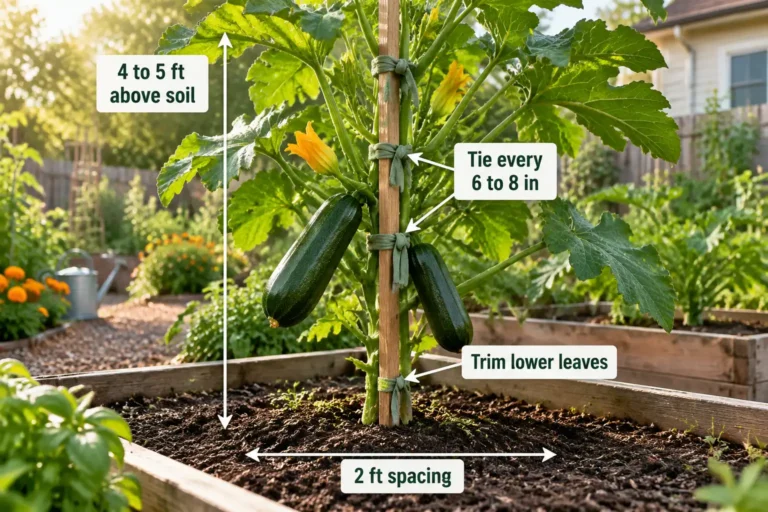
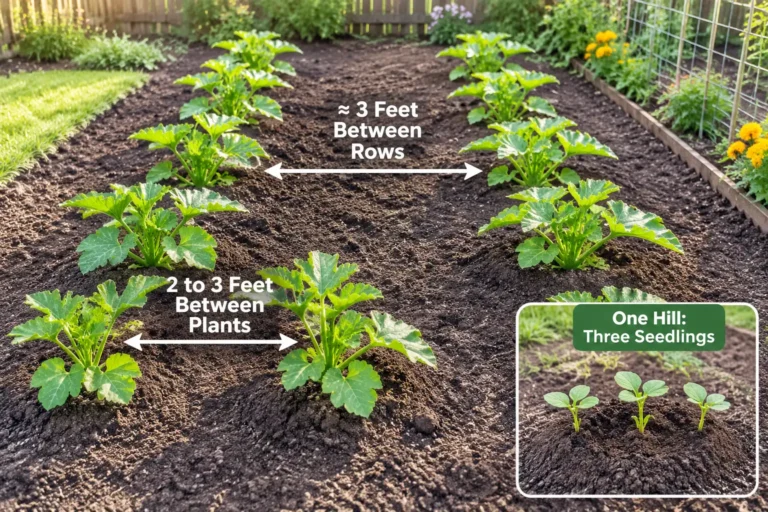
Bush types fit small gardens, while vining types need room to run. Use proper zucchini spacing for your bed or row layout. Also slip landscape fabric under fruit that rests on wet soil, as UGA suggests.
Water and Feed for Steady Fruit Set
Water Deeply at the Roots
Give zucchini about 1 inch of water per week from rain or irrigation. UMN calls squash heavy water feeders and recommends soaking the soil each time. On sandy soil, water more often in smaller amounts.
Keep the leaves dry. Use drip tape, a soaker hose, or careful watering at the base. In fact, UMN advises against sprinklers on vine crops. The trade-offs between drip lines and sprinklers matter even more in humid summers, when wet leaves invite disease.
Straw or compost mulch holds moisture and smothers weeds. Still, wait until soil reaches 75°F before spreading it, because organic mulch slows soil warming.
Feed by Soil Test
Start with a basic soil test before you add fertilizer. UMN lists pH 6.0 to 6.5 as ideal for vine crops. It also recommends a low- or no-phosphorus fertilizer unless your report calls for more.
Next, work well-rotted manure or compost into the bed before planting. With enough organic matter, extra fertilizer is often unnecessary. Otherwise, side-dress when the vines begin to spread. UMN’s rate is one-half cup of 46-0-0 per 100 feet of row. That equals a little under 1 tablespoon per 10 feet. Never use weed-and-feed products on vegetables.
Why Zucchini Plants Flower but Don’t Fruit
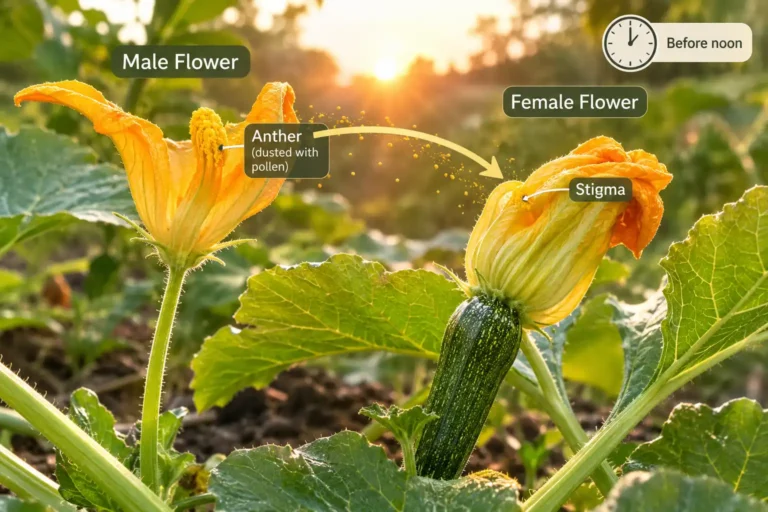
Zucchini plants flower without fruiting when pollen never reaches the female blooms. Each fruit needs pollen carried from a male flower to a female flower. According to University of California Agriculture and Natural Resources (UC ANR), squash pollen is sticky, so wind does not move it. Instead, honeybees and other insects do nearly all the work.
Tell Male and Female Flowers Apart
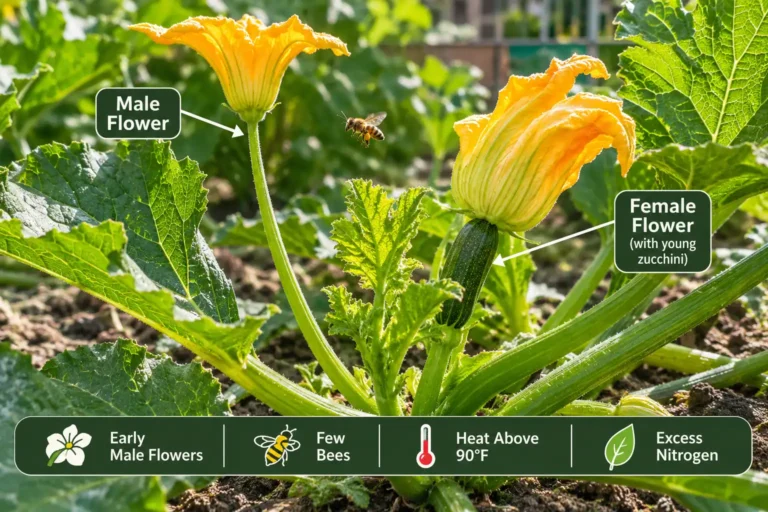
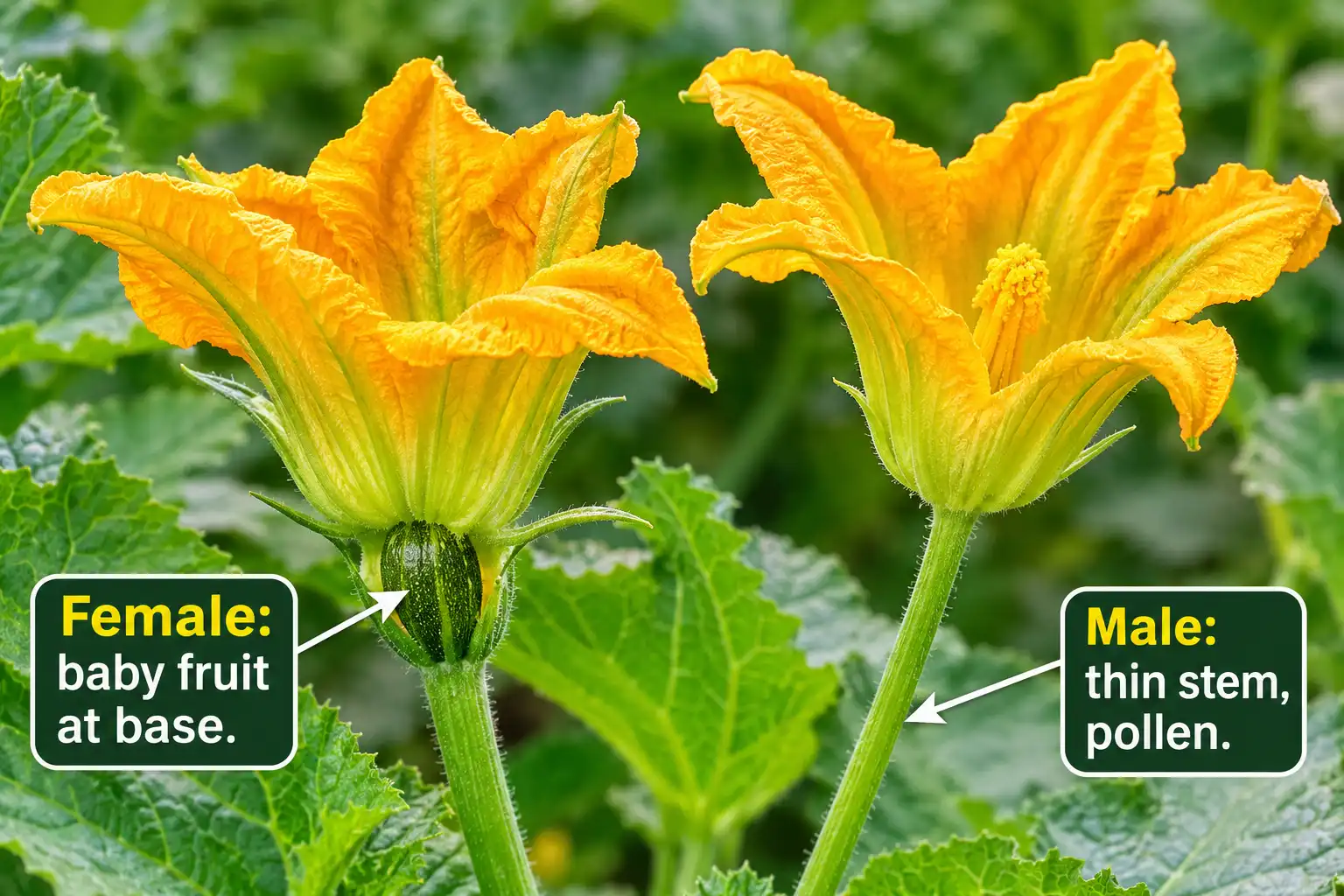
Male flowers sit on long, slender stems. Female flowers grow close to the vine, with a tiny fruit just behind the petals. The first blooms are usually male, and they drop off. That is normal. UMN adds that the first flush of fruit often goes unpollinated. Time usually fixes it as bees find the planting.
Hybrids add a twist. UC ANR reports that the first flowers on many hybrid summer squash are female. With no males open yet, those early fruit fail. Cold, cloudy, or rainy weather also reduces pollination, according to UMN.
How to Hand-Pollinate Zucchini for More Fruit
Hand pollination secures fruit set when bees are scarce. Each squash flower opens early in the morning and stays receptive for only one day, UC ANR notes. So finish the job before mid-morning.
- Find a female flower that opened today.
- Pick a freshly opened male flower and peel off its petals.
- Touch the pollen-coated center to the stigma inside the female flower.
- Roll it gently until pollen covers the whole stigma.
- Repeat for each open female, using fresh males as pollen runs low.
After that, watch the fruit. A pollinated fruit keeps swelling, while an unpollinated one turns yellow and shrivels.
Plan Around Heat Above 90°F
Heat suppresses male flowers. In NC State’s 2024 trial, two weeks of highs above 90°F cut male bloom. Culls then reached 44% of harvested fruit, and the researchers linked those losses to poor pollination.
In hot regions, plant early so peak harvest lands before the hottest weeks. During heat waves, hand-pollinate every morning. Also grow flowering herbs nearby, and skip insecticide sprays while blooms are open.
Pick Often to Get More Zucchini From One Plant
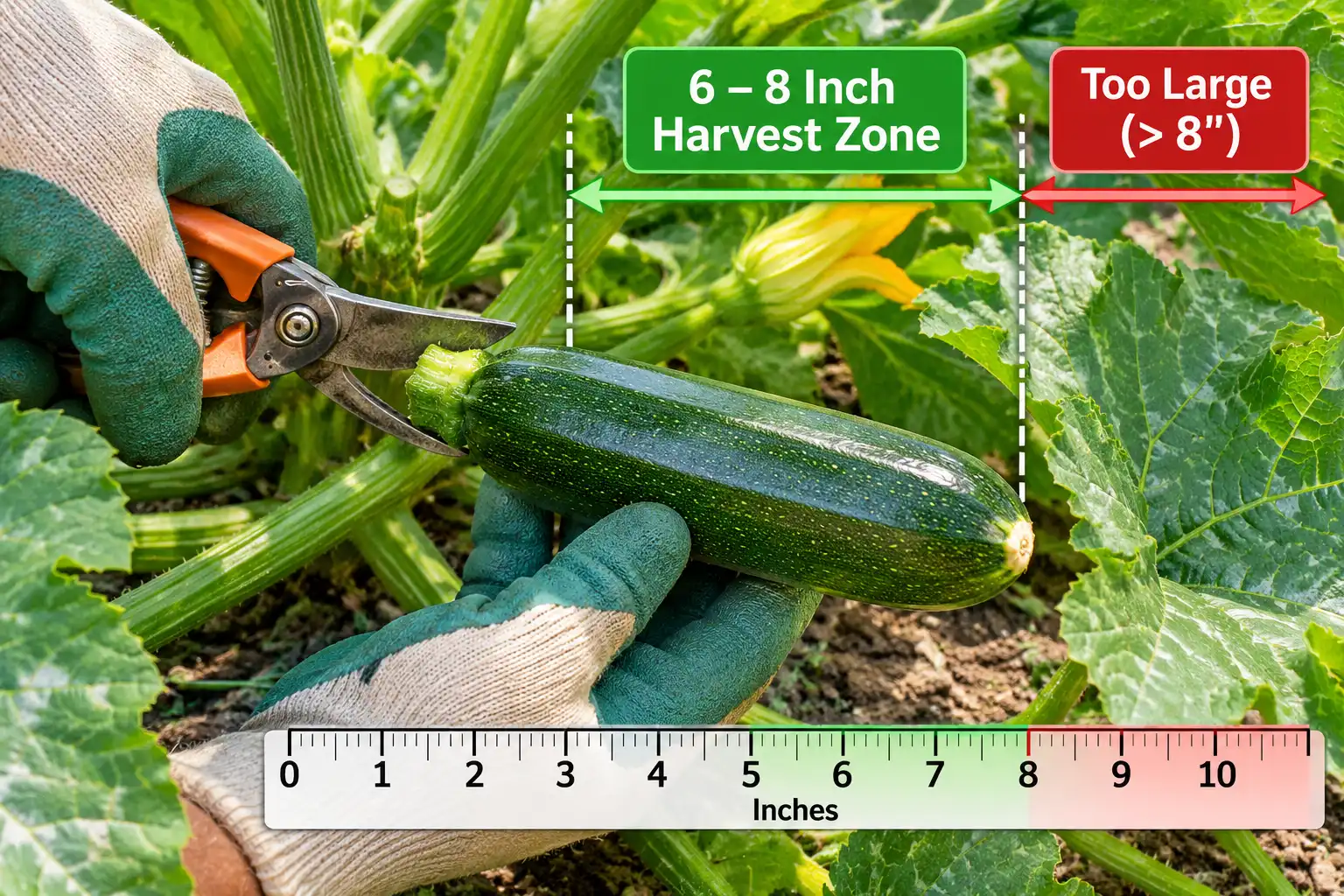
Frequent picking is the simplest way to get more zucchini from one plant. Harvest fruit at 6 to 8 inches long, every one to two days. Purdue Extension’s trial counted fruit over 8 inches as unmarketable. It also advised walking the planting daily, because fruit not ready in the morning is often ready by afternoon.
Oversized fruit slow the whole plant. Purdue recommends cutting off large zucchini even if you don’t need them. Otherwise, that attached fruit diverts resources from new fruit. UMN agrees that yield declines when very large fruit stay on the vine.
Build these habits into each harvest:
- Cut fruit with a knife or pruners, leaving a short stem.
- Lift the leaves and check the plant’s center, where fruit hides.
- Skip picking while vines are wet, to limit disease spread.
- Handle vines gently, because they root at the joints.
Male flowers are fine to harvest for cooking. UMN notes that picking them does not reduce fruit yield. However, leave female flowers alone, since each one is a future zucchini.
Choose Varieties That Yielded Well in Trials
Variety choice sets your ceiling. In Purdue Extension’s zucchini trial, Paycheck, Green Machine, and Partenon were the best green types. Golden Rod and Gold Rush led the yellow zucchini. Meanwhile, Spineless Perfection produced the fewest fruit per plant.
NC State’s 2024 trial found Blade Runner and Respect above average for marketable fruit per plant. In contrast, the older check variety Zucchini Elite lost 58% of its harvest to culls under heat stress. The best entry lost 32%.
Seed catalogs list Partenon as parthenocarpic, so it sets fruit without pollination. That trait helps where bees are scarce, under row covers, or in a greenhouse. Also check seed descriptions for powdery mildew resistance. UGA notes that some cultivars carry bred-in resistance to the disease.
Protect Plants From Borers, Bugs, and Mildew
Borers and disease often end a harvest weeks early. So scout plants at every picking.
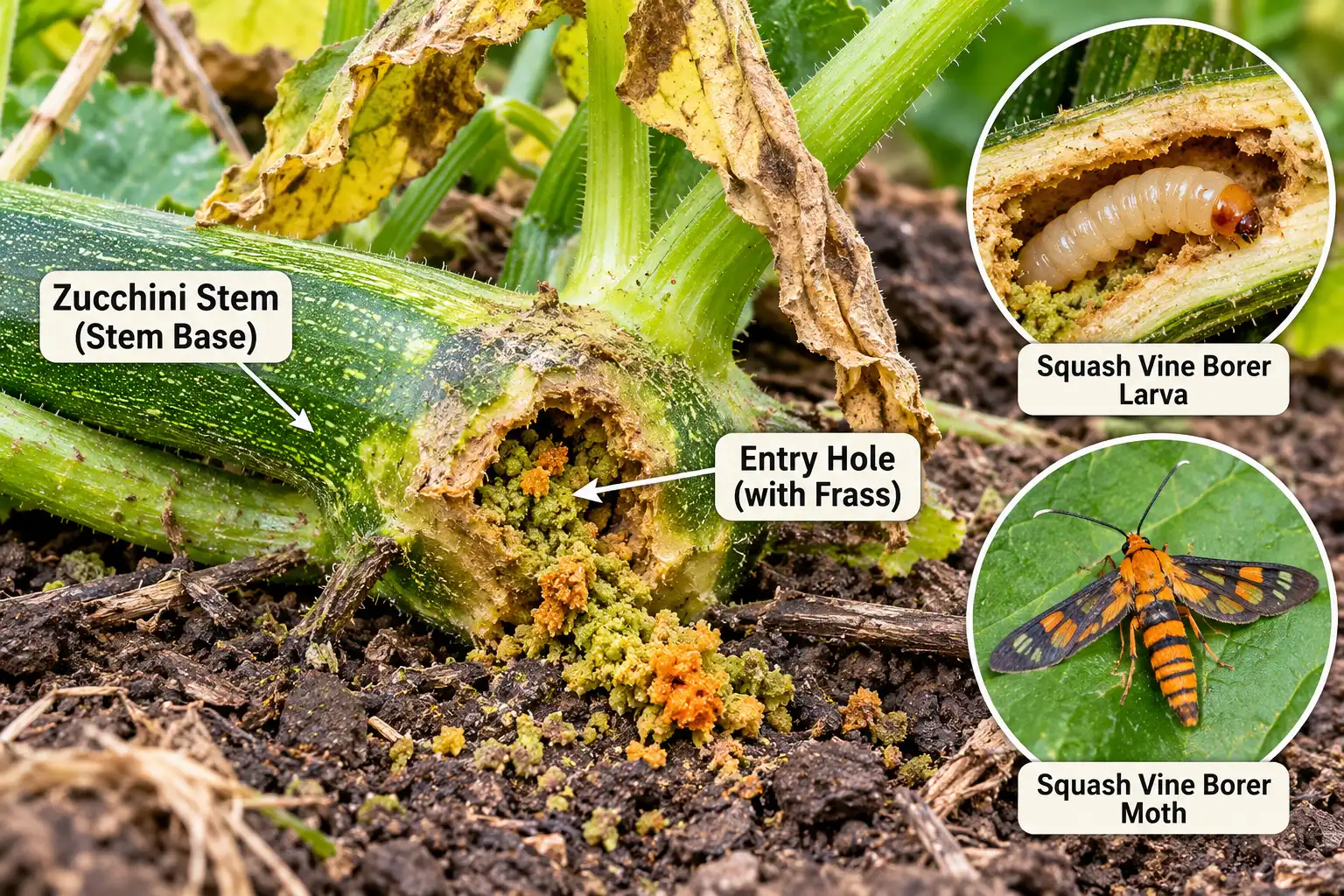
Squash vine borer. The larvae tunnel into the stem base, and the whole plant wilts, according to UMN. Look for holes packed with green to orange frass near the base. In Minnesota, the wasp-like adult moth flies from mid-June through July. Keep young plants under row cover until flowering, then uncover them for bees. UGA Extension horticulturist Bob Westerfield also suggests planting a few extra plants as insurance.
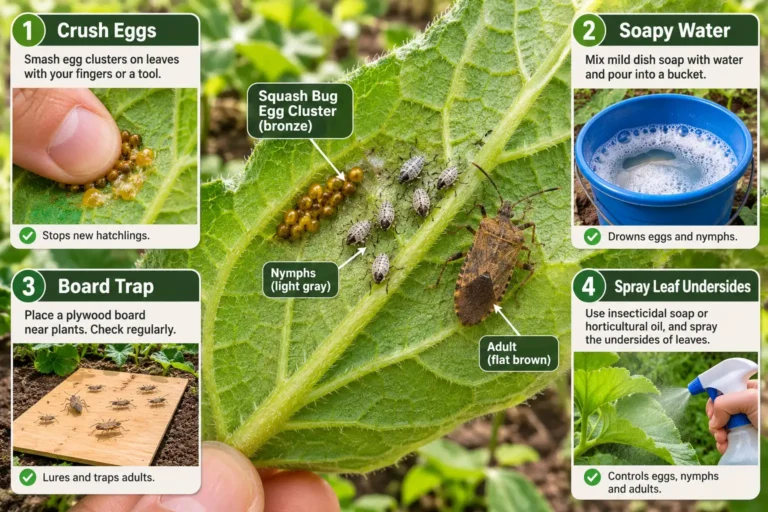
Squash bugs and cucumber beetles. Squash bugs feed in groups and leave ragged leaves. Cucumber beetles chew leaves, flowers, stems, and fruit. Check leaf undersides often and crush egg clusters early.
Powdery mildew. White, powdery spots spread across leaves and vines, UMN notes. Heavy infection shrinks the leaf area that feeds new fruit. Space plants for airflow, water at the base, and remove the worst leaves. The steps for pruning zucchini leaves show which ones to cut without stressing the plant.
How Long Do Zucchini Plants Keep Producing?
Zucchini plants produce their heaviest crop for about four weeks, then taper off. Healthy plants often keep bearing until frost. In practice, though, borers, mildew, and heat usually end the season sooner.
The trial data show the curve. Purdue Extension told growers to expect a lot of fruit in a four-week window. In NC State’s 2024 trial, plants sown May 9 gave their first harvest on June 17, about 40 days later. Then marketable output fell from 3.1 fruit per plant mid-season to 1.2 in the final harvests.
Succession planting stretches the harvest:
- UMN suggests sowing part of the crop first, then finishing the planting three weeks later.
- In Georgia, UGA Extension recommends an early spring crop and a separate fall crop. A midsummer squash-free break interrupts the virus and pest cycles that often knock out plants in July and August.
As a result, a fresh planting starts bearing just as the first one fades. Pull spent plants once production collapses, and sow again if your season allows.
How Many Zucchini Plants for a Family of 4?
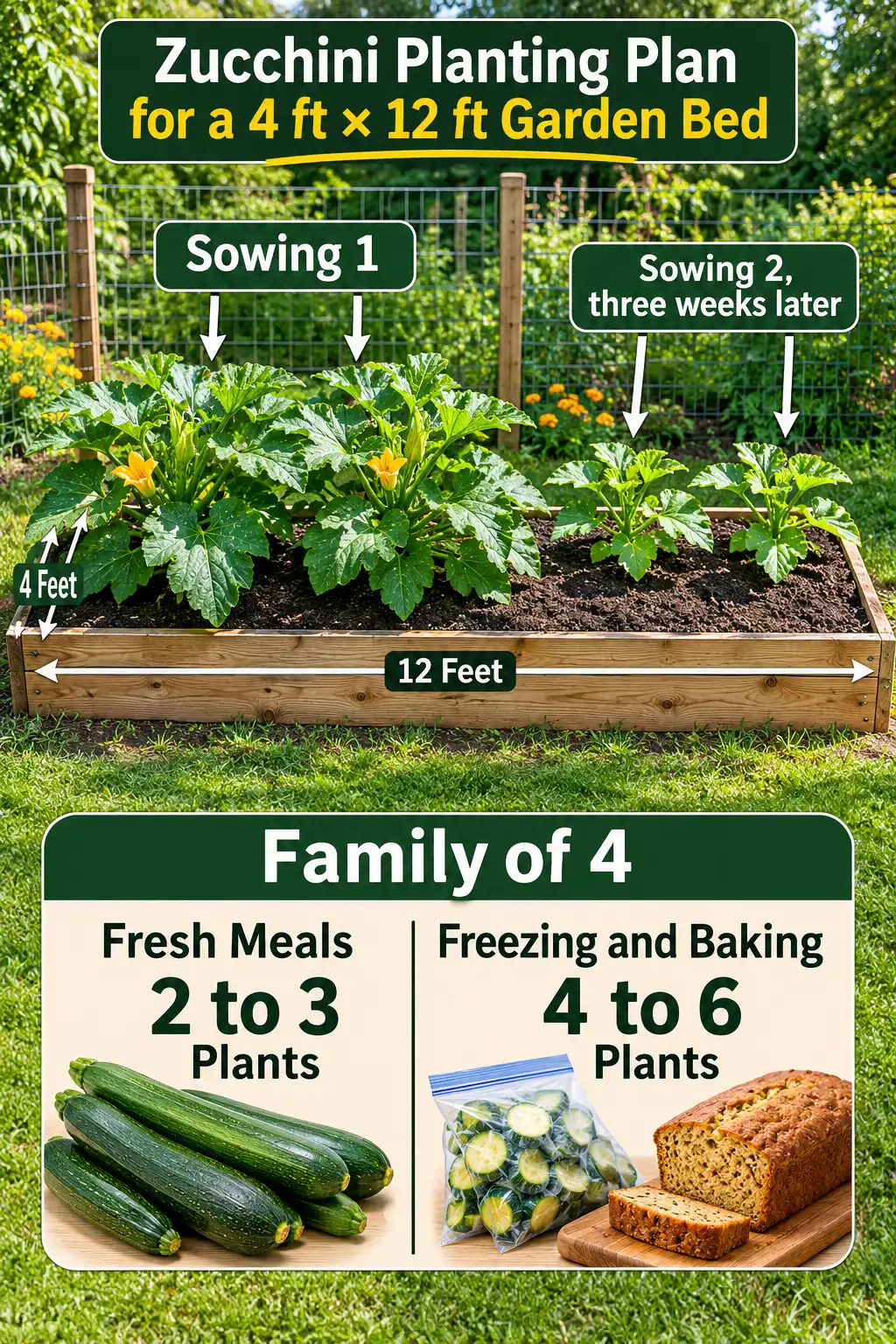
A family of four needs about 2 to 3 zucchini plants for fresh meals, or 4 to 6 to freeze and bake the surplus. These estimates combine NC State trial output with USDA fruit weights.
The math is simple. A medium zucchini weighs about 6.9 oz, so two fruit make one side dish for four people. Serving zucchini three nights a week takes about 6 fruit. Meanwhile, one healthy plant gives roughly 2 to 4 fruit a week at peak, based on the NC State figures above.
| Household goal | Plants for a family of 4 | Fruit per week at peak |
|---|---|---|
| Fresh meals 2 to 3 nights a week | 2 to 3 | 4 to 12 |
| Fresh meals plus freezing and baking | 4 to 6 | 8 to 24 |
| Heavy squash vine borer pressure | Add 1 to 2 spares | Replaces lost plants |
Stagger sowings instead of planting everything at once. For example, sow two plants now and two more three weeks later. That gives a steadier supply than four plants on one date.
Troubleshooting Low Zucchini Yield
Match the symptom to its cause before changing your routine.
| Symptom | Likely cause | Fix |
|---|---|---|
| Many flowers, no fruit in the first weeks | Early blooms are male | Wait for female flowers to open |
| Tiny fruit turns yellow and shrivels | Incomplete pollination | Hand-pollinate each morning |
| Fruit tapered or lumpy at one end | Partial pollination | Hand-pollinate and protect bees |
| Whole plant wilts, frass at stem base | Squash vine borer | Remove the plant; cover the next crop |
| White powder on leaves | Powdery mildew | Improve airflow; remove worst leaves |
| Mushy blossom ends with black fuzz | Choanephora rot in wet weather | Water at the base; keep fruit off soil |
| Output drops in midsummer | Heat above 90°F or oversized fruit | Pick every 1 to 2 days; hand-pollinate |
| Slow growth after planting | Cold soil | Plant into 70°F soil next time |
FAQs on Zucchini Yield
Can one zucchini plant produce fruit by itself?
Yes, each zucchini plant carries both male and female flowers, so a single plant sets fruit on its own. It still needs bees or hand pollination to carry pollen from male to female blooms.
Why are my baby zucchini turning yellow and falling off?
Baby zucchini that yellow and drop usually missed full pollination, so the plant aborts them. Hand-pollinate open female flowers early in the morning, and avoid insecticide sprays while bees work the blooms.
Should you cut off zucchini leaves to get more fruit?
No, remove only damaged or mildewed leaves, because healthy leaves fuel fruit growth. Trimming a few old lower leaves improves airflow and helps you spot fruit before it grows past 8 inches.
What is a good zucchini yield per acre?
Purdue Extension’s top zucchini varieties produced about 23,600 to 32,800 pounds of marketable fruit per acre. Crews picked those plots three times a week for four weeks, at 6 to 8 inches.
Where to Start
Focus first on the two habits that move yield most: pollination and picking. Plant into 70°F soil, water 1 inch a week at the roots, and side-dress once the vines run. Then check plants every morning during harvest. Hand-pollinate open female flowers, cut fruit at 6 to 8 inches, and remove anything oversized. For bed prep and variety basics, the complete zucchini growing guide covers each stage from seed to harvest.