How to Get Rid of Aphids on Zucchini: 6 Steps That Work
Aphids on zucchini breed fast, coat leaves in sticky honeydew, and spread mosaic viruses that shorten the harvest. Knowing how to get rid of aphids on zucchini early keeps plants producing. The steps below cover treatment first, then prevention.
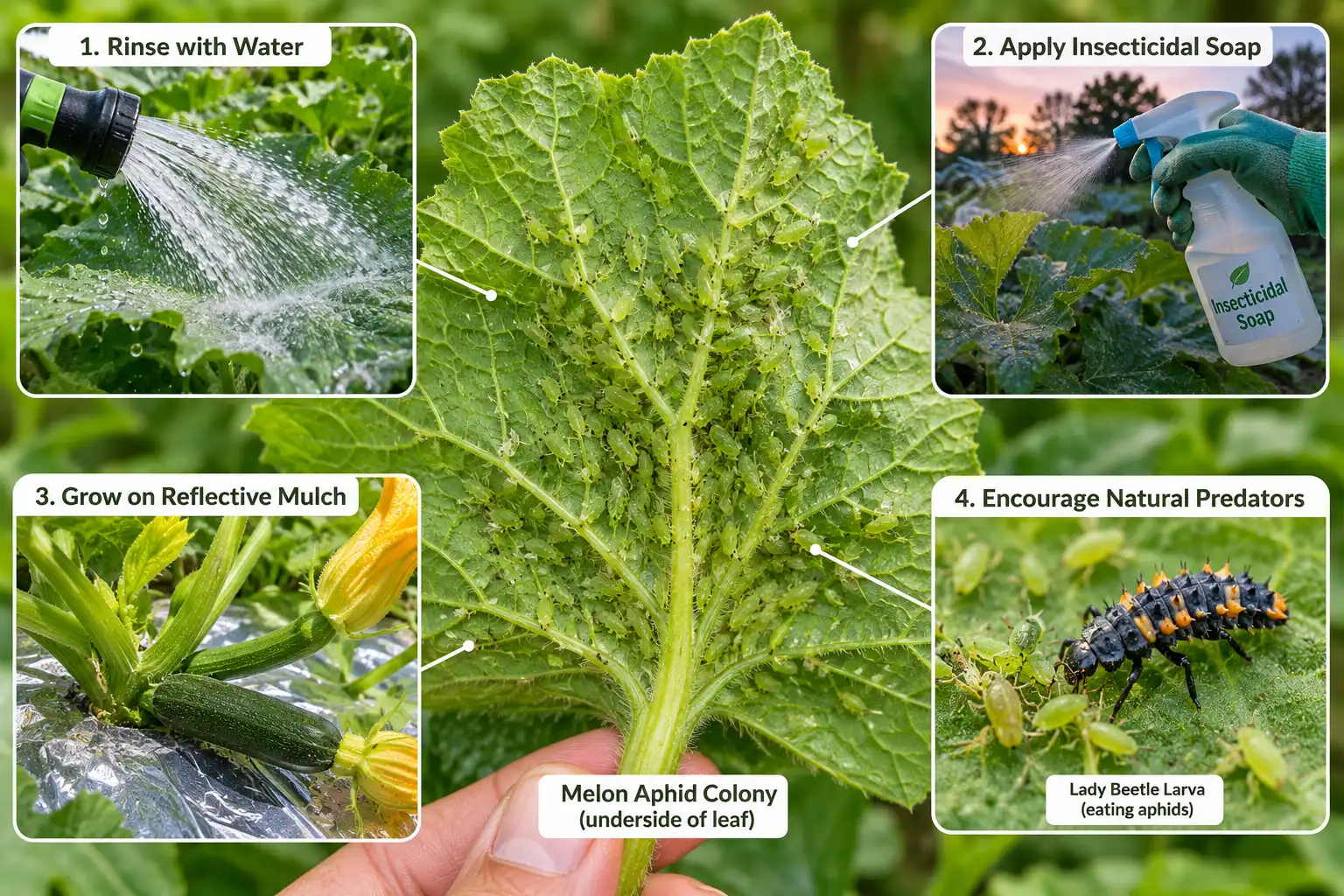
To get rid of aphids on zucchini, hose colonies off leaf undersides, then spray survivors with insecticidal soap at dusk. Repeat weekly as needed. Protect lady beetles, limit nitrogen, and lay silver reflective mulch to stop reinfestation.
What Aphids on Zucchini Leaves Look Like
Aphids on zucchini leaves are tiny, pear-shaped insects that cluster on leaf undersides, flower buds, and open flowers. On squash, UF/IFAS Extension notes they often settle on older, lower leaves first. Even the largest melon aphids barely reach 1/16 inch long.
Two species cause most of the damage on zucchini (Cucurbita pepo). The melon aphid (Aphis gossypii) ranges from yellowish green to greenish black, according to UC IPM. The green peach aphid (Myzus persicae) is slimmer and light green or yellow. Both pierce leaves and suck out sap.
Look for these signs of an infestation:
- Leaves curling downward and looking crumpled or thickened
- A shiny, sticky film on leaves below a colony
- White shed skins scattered across the leaf surface
- Ants climbing up and down the stems
Also, aphids barely move when you disturb them. That habit separates them from leafhoppers and other fast-moving pests.
Also learn: Get Rid of Squash Bugs on Zucchini
Why Are My Zucchini Leaves Sticky?
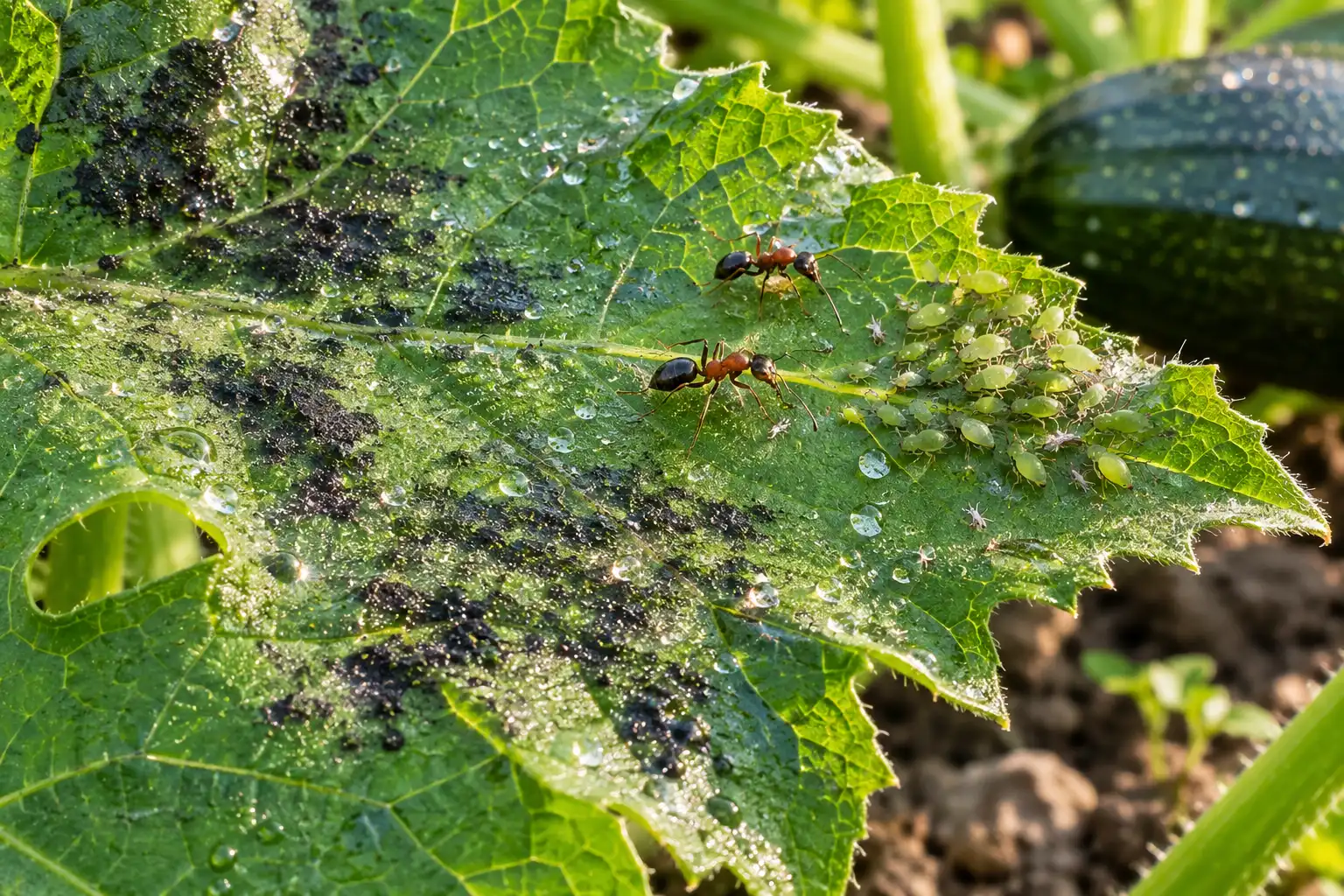
Sticky leaves on zucchini plants almost always mean honeydew. Aphids excrete this sugary liquid while they feed. It drips onto lower leaves and dries to a glossy film.
Honeydew creates two more problems. First, black sooty mold grows on it and blocks sunlight from the leaf. Second, ants feed on it and guard aphid colonies from predators. For that reason, UC IPM treats ant control as a key part of aphid management.
However, aphids are not the only cause. Silverleaf whitefly also leaves heavy honeydew on squash, per UC IPM. To tell them apart, shake the plant. Whiteflies flutter up in a small cloud, while aphids stay put. Whitefly feeding also turns squash leaves whitish or silver, which aphid feeding does not.
Once you control the insects, sooty mold usually weathers away, according to UF/IFAS Extension. A water spray also rinses fresh honeydew off the leaves.
Can Aphids Kill Zucchini Plants?
Aphids rarely kill established zucchini, but they can kill young seedlings and spread viruses that cut the harvest short. UF/IFAS Extension notes that heavy attacks on very young plants can kill them.
Speed makes them dangerous. In warm weather, aphids grow from newborn to reproducing adult in 7 to 8 days, according to UC IPM. Each adult can produce up to 80 offspring in a week. Melon aphids develop fastest at average temperatures of 78 to 80°F, per UF/IFAS.
Aphid-Spread Viruses in Zucchini
Viruses cause more loss than the feeding itself. Aphids spread zucchini yellow mosaic virus (ZYMV), watermelon mosaic virus (WMV), and cucumber mosaic virus (CMV) among cucurbits. UC ANR lists ZYMV symptoms as vein clearing, yellow and green mottling, long narrow leaf lobes, and misshapen fruit.
Sprays cannot stop this spread. An aphid passes a virus within minutes of probing a leaf, while an insecticide takes far longer to kill it, according to UC IPM. As a result, virus control depends on keeping aphids off plants early. No spray cures an infected plant.
How to Get Rid of Aphids on Zucchini Step by Step
Start with the gentlest method and step up only when aphids persist. This order spares the predators and pollinators your zucchini depends on. It also follows the core integrated pest management principle of using the least toxic tool first.
Step 1: Scout Leaf Undersides Twice a Week
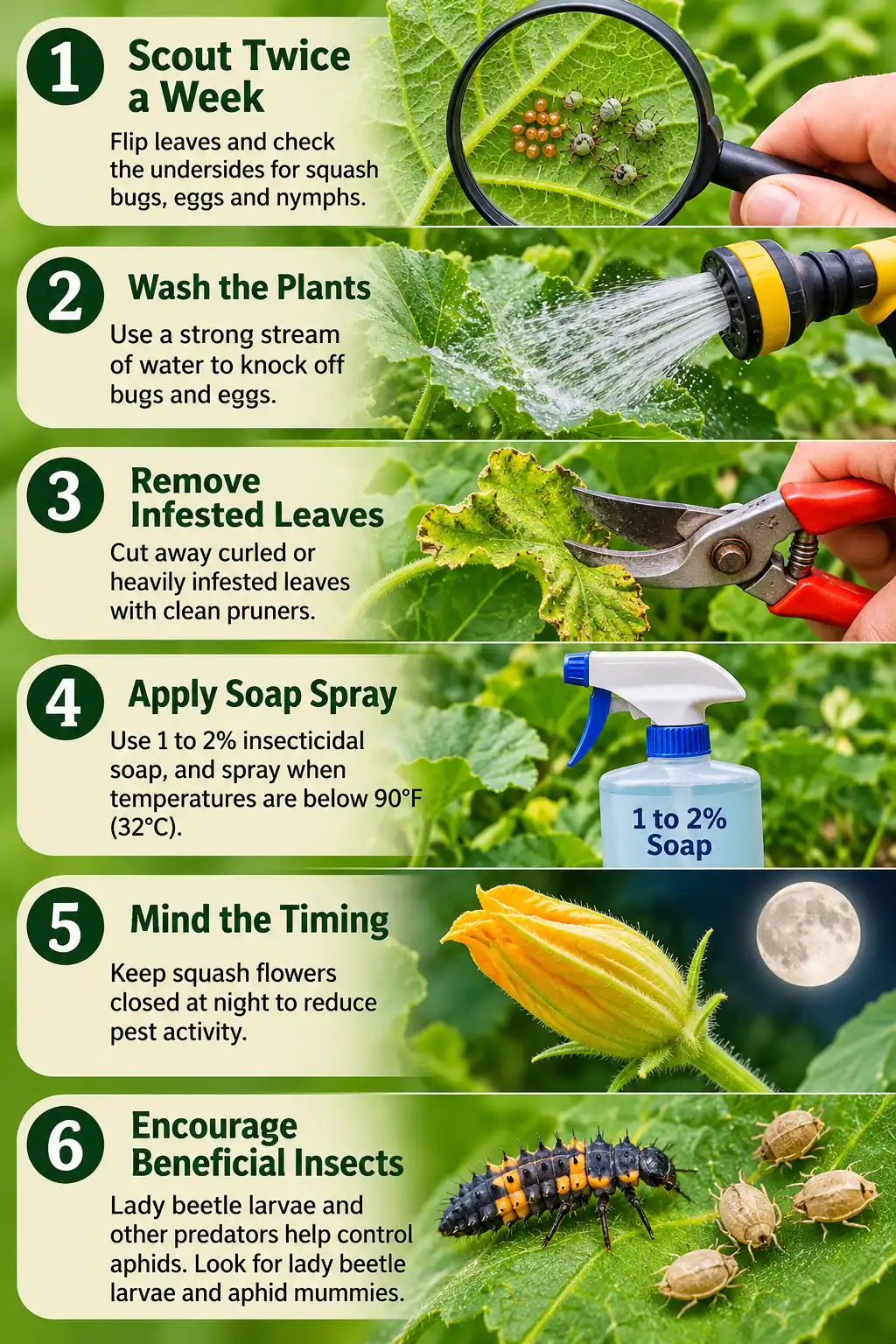
Check your plants at least twice a week while they grow fast, as UC IPM advises. Turn over the lower leaves and look inside open flowers. Then walk the upwind edge of the garden, where aphids tend to build up first. Small, early colonies are easy to wipe off by hand.
Step 2: Hose Aphids Off With a Strong Water Spray
A hard stream of water knocks aphids off and rinses away honeydew. According to UC IPM, most dislodged aphids cannot climb back onto the plant. Support each leaf with one hand and aim at the underside. Spray early in the day so foliage dries quickly, which lowers fungal disease risk. Then repeat whenever new colonies appear.
Step 3: Remove Badly Curled Leaves
Cut off leaves that aphids have badly curled. UC IPM notes that curled leaves shelter aphids from contact sprays and natural enemies. Bag the leaves and take them out of the garden. Since older lower leaves often carry the worst colonies, pruning zucchini leaves near the base also opens the plant for better spray coverage.
Step 4: Spray Insecticidal Soap or Oil on Survivors
Insecticidal soaps and oils are the best choices for most aphid problems, according to UC IPM. The oils include horticultural oil and plant oils such as neem and canola. They kill by smothering, so wet both leaf surfaces thoroughly. They also leave no toxic residue for natural enemies that arrive later.
Follow these application rules:
- Mix a 1 to 2% solution, or use a ready-to-use product
- Skip spraying above 90°F or on drought-stressed plants
- Avoid full sun, which Clemson Extension warns raises leaf injury risk
- Test a few leaves several days before treating the whole plant
- Repeat about once a week while live aphids remain
That weekly interval matters. Sprays kill only the aphids present that day, so a repeat catches nymphs before they mature and reproduce.
Skip homemade dish soap mixes. Clemson Extension warns they carry a substantially higher risk of plant injury than commercial insecticidal soap. Finally, UC IPM’s cucurbit guidelines list insecticidal soap with a zero-day preharvest interval. That means same-day harvest is allowed, but confirm the interval on your product label.
Step 5: Spray in the Evening to Protect Squash Bees
Time every spray for the evening, after zucchini flowers close. Squash flowers open near dawn and wilt around midday, according to NC State Extension. Squash bees (Eucera pruinosa, formerly Peponapis pruinosa) forage on them from sunrise until then. Zucchini fruit set depends entirely on insect pollinators, because male and female flowers grow separately.
NC State also advises that some insecticides never belong on flowering squash, while others belong only in the evening. Clemson Extension lists early morning or late evening as the best windows for soaps and oils. On zucchini, choose evening, because squash bees work the flowers at dawn.
Step 6: Let Natural Enemies Finish the Job
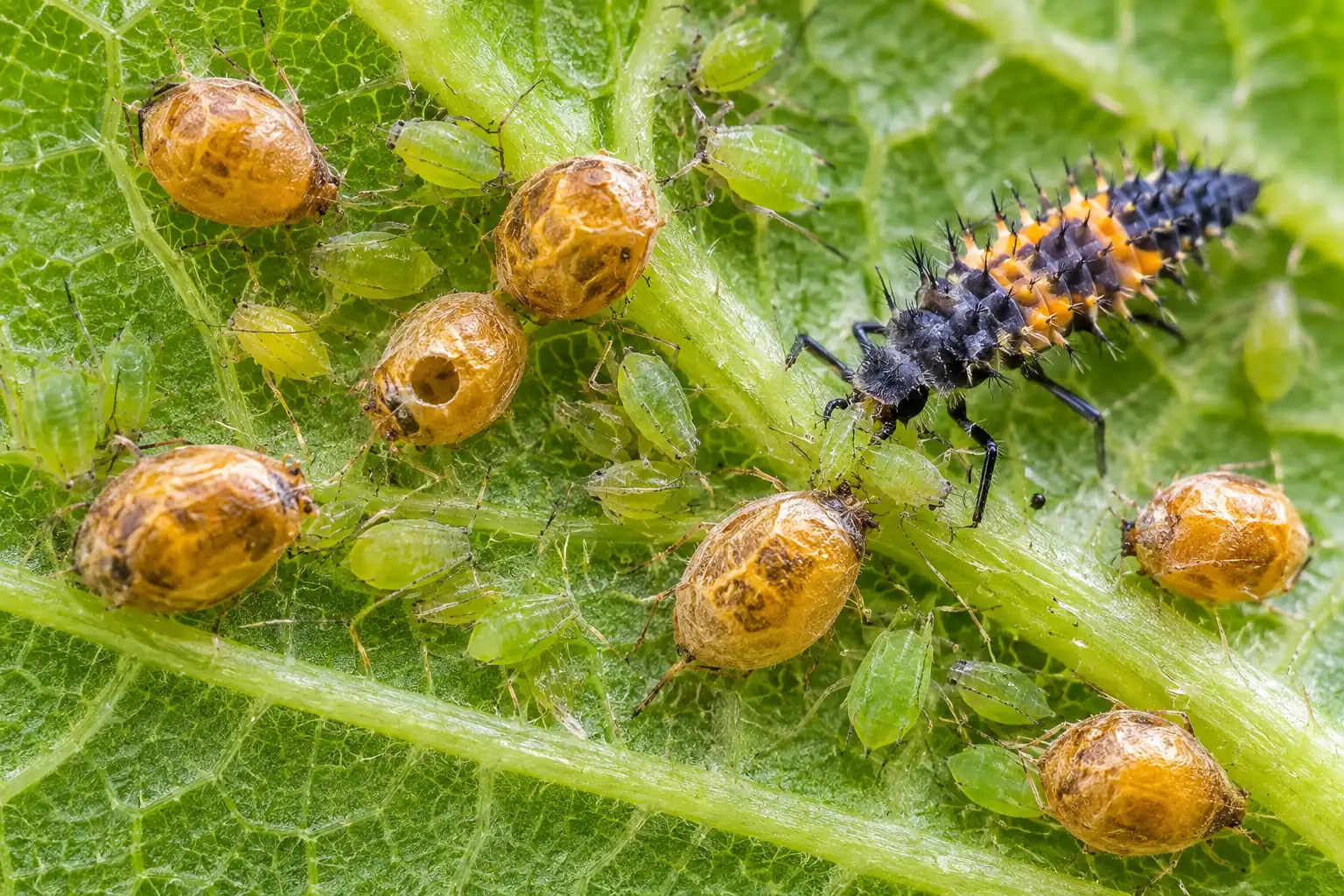
Lady beetles, lacewing larvae, syrphid fly larvae, and tiny parasitic wasps all feed on aphids. Look for mummies, which are aphids that have turned crusty and golden brown. Once mummies appear, UC IPM says aphid numbers usually drop sharply within a week or two. At that point, hold off on spraying.
Protect these allies. UC IPM warns that broad-spectrum insecticides such as malathion and permethrin kill natural enemies and harm bees. Also control ants with baits placed on the ground, which leave aphid predators unharmed.
Buying lady beetles gives only short-term help. UC IPM notes most released beetles fly off within a few days. If you release them anyway, do it at dusk on lightly misted plants.
Aphid Treatment Options for Zucchini Compared
Each way to treat aphids on zucchini plants trades killing power against harm to beneficial insects. UC IPM ranks soaps and oils first for most garden aphid problems.
| Method | How It Works | Effect on Beneficial Insects | Best Use on Zucchini |
|---|---|---|---|
| Strong water spray | Dislodges aphids and rinses honeydew | None | First response at any stage |
| Insecticidal soap | Smothers on contact, no residue | Harms only insects the spray hits | Colonies that survive hosing |
| Neem or horticultural oil | Smothers on contact, no residue | Harms only insects the spray hits | Same as soap, below 90°F |
| Soap plus pyrethrins | Contact kill that breaks down fast | Lower impact than synthetic sprays | Heavy outbreaks, evening only |
| Malathion or permethrin | Broad-spectrum contact kill | Kills predators and harms bees | Last resort, follow label limits |
| Imidacloprid | Systemic, moves through the plant | Harms predators and pollinators | Avoid on flowering zucchini |
Systemic imidacloprid is a poor match for zucchini, which flowers for weeks. UC IPM advises against systemic insecticides on plants in bloom or before bloom. NC State Extension also cites a study showing an 89% drop in squash bee reproductive success where squash received an imidacloprid soil drench. In California, UC IPM reports these systemic products have been limited to licensed pest control professionals since January 2025.
How to Prevent Aphids on Zucchini
Prevention beats spraying on zucchini, because no spray stops virus spread. The most effective tools work before winged aphids land.
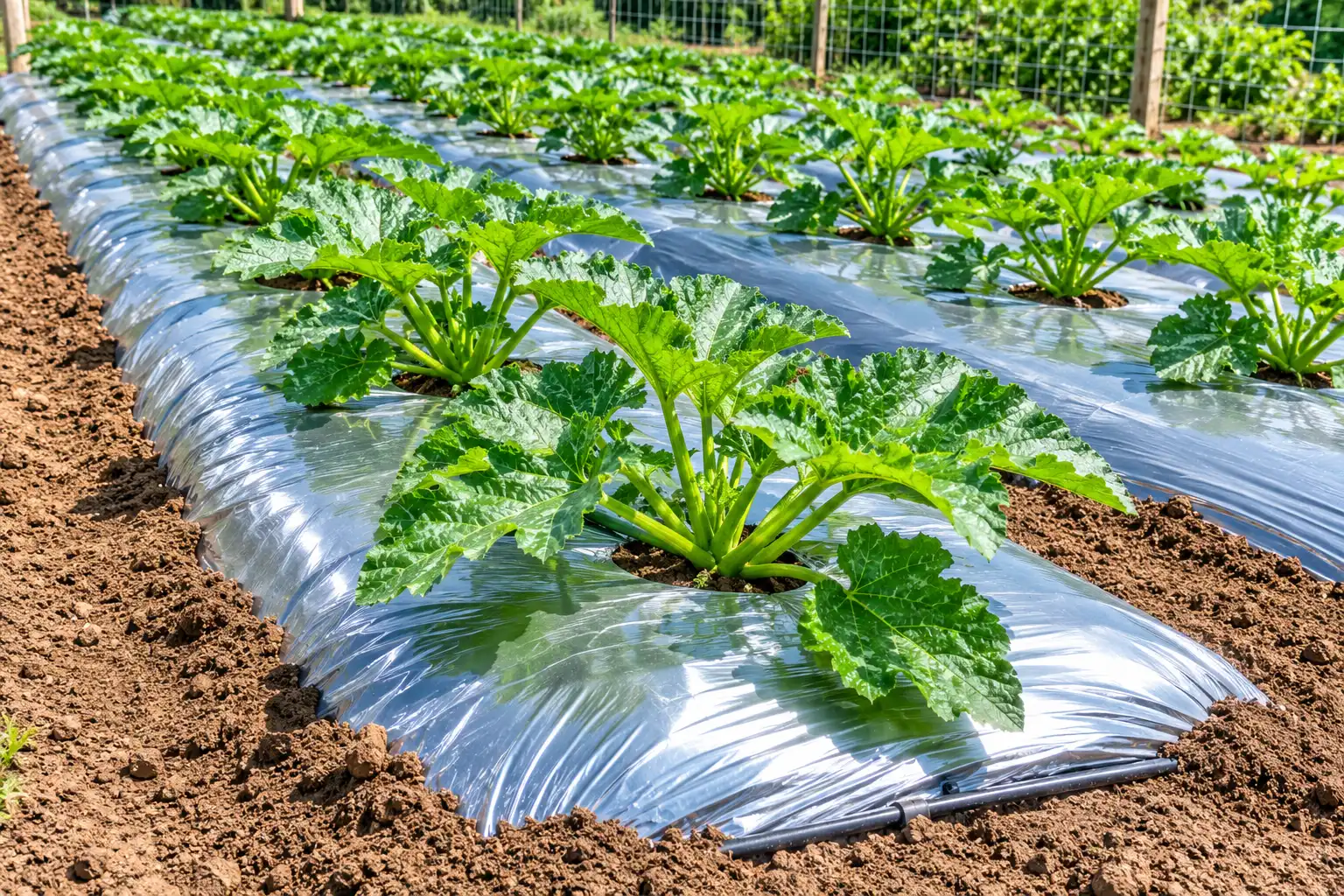
Lay Silver Reflective Mulch at Planting
Silver reflective mulch confuses winged aphids with reflected ultraviolet light and keeps them off young plants, per UC IPM. It works best early. Once leaves cover about 60% of the soil, the mulch stops repelling insects.
The payoff is measurable. A 1993 study in HortScience found that silver mulch delayed mosaic virus onset in summer squash by 10 to 13 days. Squash on silver mulch also produced higher marketable yields than squash on bare ground.
To install it, clear weeds, lay the mulch, and bury the edges with soil. Next, cut 3- to 4-inch holes and plant seeds or one transplant in each. Plastic mulch needs drip irrigation underneath, since water cannot pass through it. In hot desert areas, UC IPM advises pulling the mulch once summer heat becomes excessive.
Prefer to skip plastic? Research at the UC Kearney Research and Extension Center found that wheat straw mulch also helps manage aphid-borne viruses in cucurbits.
Cover Seedlings Until Flowers Open
Protective row covers keep aphids off seedlings and block virus transmission, according to UC IPM. Pull the covers as soon as the first flowers open. Zucchini needs bees to set fruit, so plants left covered produce little or no squash.
Go Easy on Nitrogen
High nitrogen levels speed up aphid reproduction, per UC IPM. Feed zucchini slow-release or organic nitrogen in small doses through the season instead of one heavy application. Check the first number on the bag when comparing NPK fertilizer ratios before you side-dress.
Remove Nearby Aphid Sources
Aphids often build up on weeds such as sowthistle and mustards, then move onto crop seedlings, according to UC IPM. Pull those weeds before planting, and check transplants for aphids before they go in the ground. UF/IFAS Extension also advises against planting next to older or virus-infected cucurbits. The same goes for cotton fields, another aphid source across the Southern US.
Choose Virus-Resistant Zucchini Varieties
UF/IFAS Extension notes that some squash varieties carry good resistance to common viruses. Look for the codes ZYMV, WMV, CMV, and PRSV in seed catalog disease listings. For example, Syngenta lists ‘Spineless Perfection’ (green, about 44 days) with intermediate resistance to ZYMV, WMV, and powdery mildew. ‘Golden Glory’ (gold, about 50 days) carries the same package. Intermediate resistance slows symptoms but does not make plants immune, so keep scouting.
Aphid Control by Zucchini Growth Stage
Aphid priorities shift as zucchini moves from seedling to harvest, so match your effort to each stage of growing zucchini. Late plantings deserve extra care. UC ANR research in California’s San Joaquin Valley found that aphid-borne virus severity in cucurbits rises as the season goes on. Fall was the worst period for all three major viruses. If you plan a fall crop around local zucchini planting dates, treat it as your highest-risk planting.
| Growth Stage | Main Aphid Concern | Priority Action |
|---|---|---|
| Seedling | Heavy feeding can kill young plants | Row covers, reflective mulch, clean transplants |
| Vining, before bloom | Virus spread while plants are small | Scout twice a week, hose off colonies |
| Canopy covers 60% of soil | Mulch stops repelling aphids | Rely on scouting and natural enemies |
| Flowering and harvest | Squash bees active from dawn to midday | Evening soap or oil sprays only |
| Late summer or fall planting | Peak virus pressure | Resistant variety plus reflective mulch |
Troubleshooting: Why Aphids Keep Coming Back
- Sprays miss the colony. Aphids hide on leaf undersides and inside flowers. Aim the nozzle upward and wet both surfaces.
- Curled leaves shield survivors. Contact sprays cannot reach aphids inside distorted leaves. Remove those leaves instead.
- Ants guard the colonies. Ants drive off lady beetles and parasitic wasps. Set ant baits on the ground near the plants.
- A broad-spectrum spray wiped out predators. Natural enemies recover more slowly than aphids, so colonies rebound. Switch to soaps and oils.
- Lush, nitrogen-heavy growth. Soft new growth fuels fast reproduction. Cut back and use slow-release nitrogen.
- Leaves scorched after spraying. The spray likely went on above 90°F, in full sun, or onto drought-stressed plants. Water the day before and spray at dusk.
- New leaves look mottled and narrow. That pattern points to a mosaic virus, not active feeding. Sprays will not fix it, so plan mulch and resistant varieties for the next planting.
FAQs about Getting Rid of Aphids on Zucchini
Does dish soap kill aphids on zucchini?
Dish soap kills aphids on contact, but it is more likely to burn zucchini leaves than a true insecticidal soap. Clemson Extension warns that homemade soap mixes carry a substantially higher risk of plant injury.
Is neem oil safe to use on zucchini?
Yes, neem oil is safe on zucchini when used as labeled. UC IPM ranks plant oils like neem among the best aphid controls, but spray only in the evening and below 90°F.
Can you eat zucchini that had aphids on it?
Yes, zucchini from aphid-infested plants is safe to eat after a good rinse. Aphids and honeydew wash off easily, and UC IPM’s cucurbit guidelines list insecticidal soap with a zero-day preharvest interval.
Will aphids on zucchini go away on their own?
Often, yes, because predators, parasitic wasps, and summer heat bring populations down. UC IPM notes numbers usually fall within two weeks of mummies appearing, but protect seedlings sooner because of virus risk.
Do ladybugs get rid of aphids on zucchini?
Native lady beetles help, but purchased ladybugs rarely stay long enough to clear an infestation. UC IPM reports most released beetles disperse within a few days, so protect wild ones by avoiding broad-spectrum sprays.
Where to Start
Hose aphids off at the first sign, then switch to evening soap or oil sprays only if colonies return. Leave mummies and lady beetle larvae alone, because they finish the job for free. For the next planting, lay silver reflective mulch, cover seedlings until bloom, and pick a variety with ZYMV and WMV resistance. Those steps keep aphids off before they spread viruses that no spray can cure.