How to Stake Tomatoes the Right Way for Cleaner, Healthier Fruit
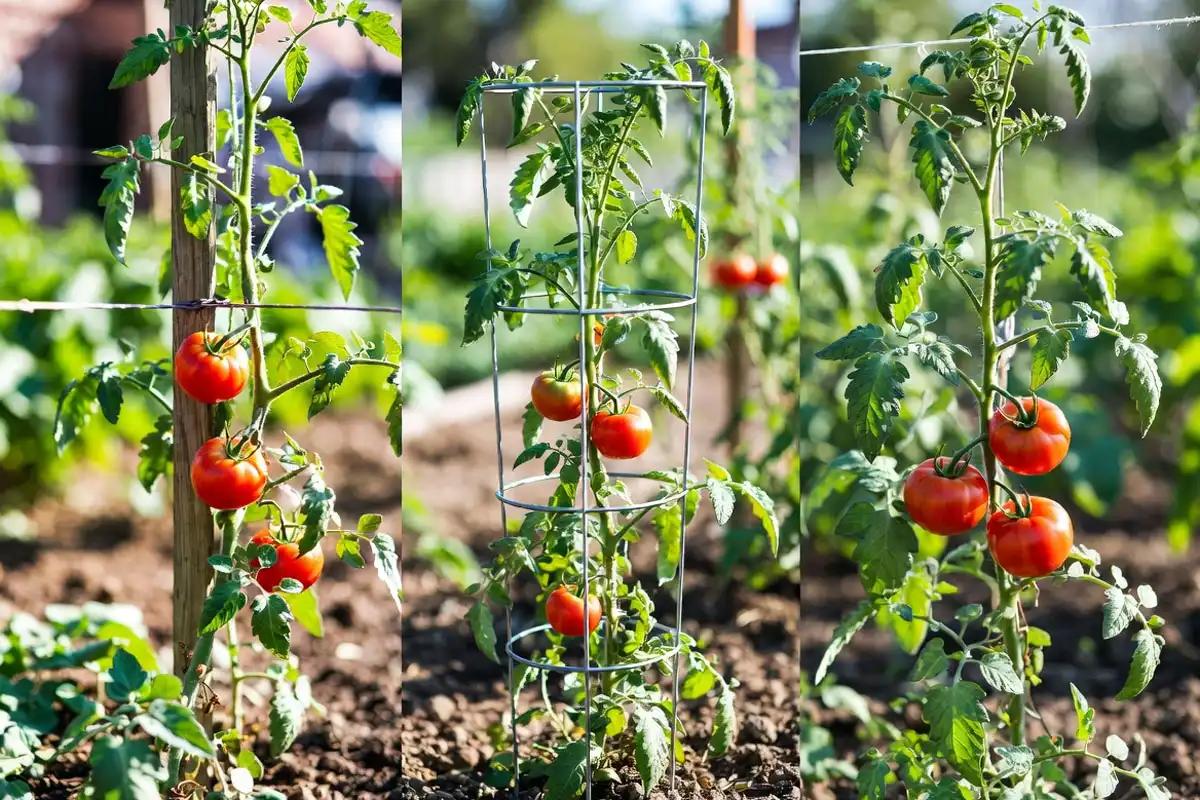
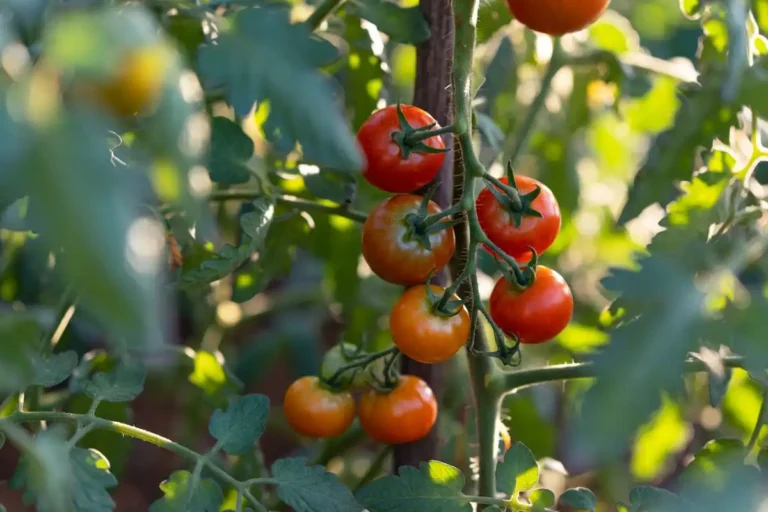
Stake tomatoes keep vines upright, reduce soil contact, and improve air circulation around the canopy, which decreases fungal disease pressure and produces cleaner, more evenly ripened fruit. This guide covers the three main support methods — staking, trellising, and caging — and walks you through when to use each one, how to set it up correctly, and what mistakes reduce your harvest.
Stake indeterminate tomatoes early, driving a 6-foot wooden or metal stake 12 inches into the soil within 6 inches of the stem. Use soft ties every 8–12 inches as the plant grows. Cage determinate varieties at transplant using a wire cage at least 18 inches wide and 4 feet tall. Trellis rows of indeterminate plants using a horizontal wire system at 12-inch intervals up a sturdy post.
Why Tomato Support Matters for Fruit Quality
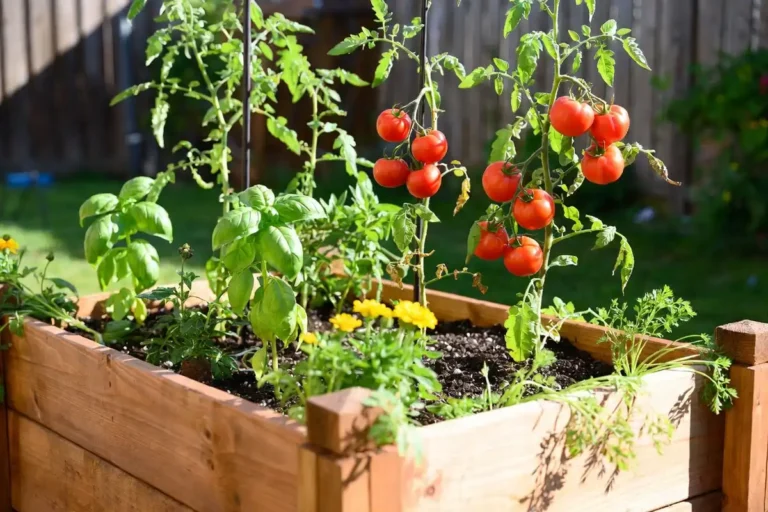
Unsupported tomato vines lay on wet soil. That contact spreads soilborne diseases including early blight (Alternaria solani) and increases slug and insect damage on the fruit. Keeping fruit off the ground also improves air circulation, which reduces fungal pressure across the canopy.
For growers dealing with broader disease issues, the guide on managing common crop diseases covers identification and treatment options that pair well with a good support system.
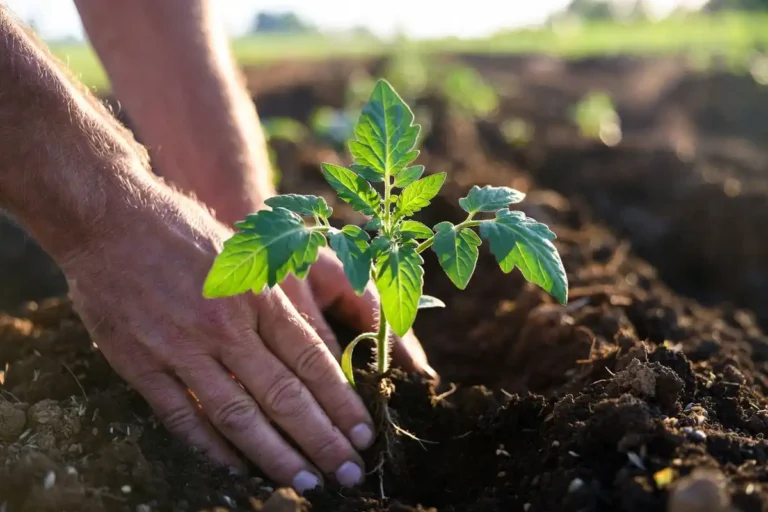
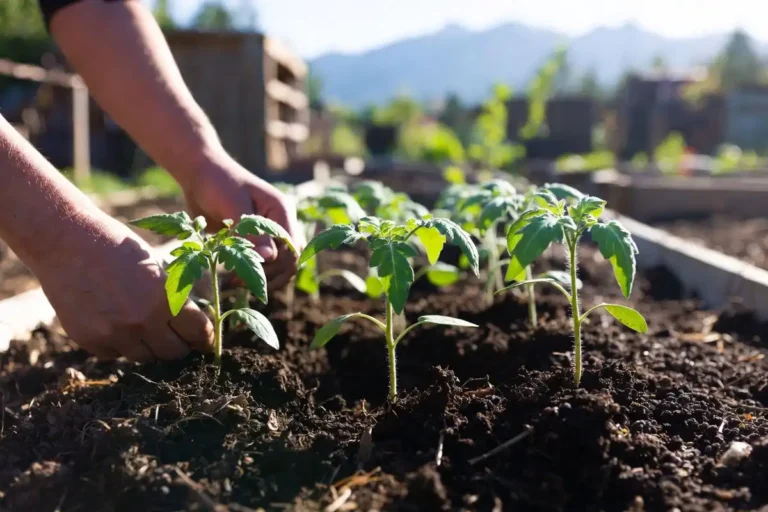
When you transplant tomatoes and set supports the same day, the plant starts upright right away so early fruit clusters stay off the soil and come in cleaner.
Which Tomato Type Needs Which Support?
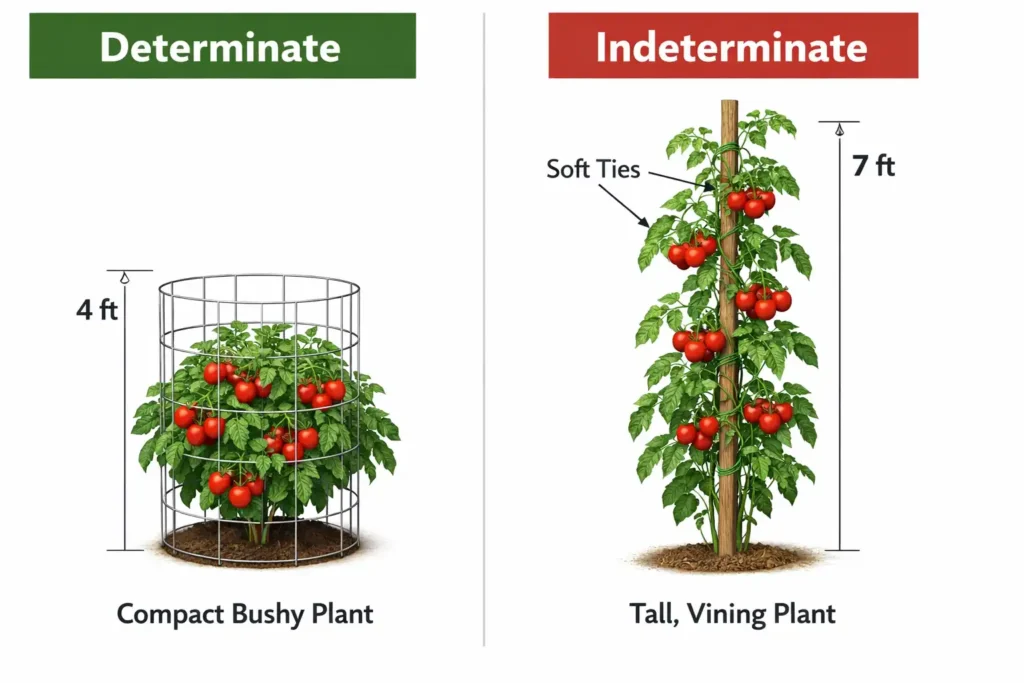
Determinate tomatoes grow to a fixed height, typically 2–4 feet, and set fruit over a 2–3 week window. They include varieties such as Roma, Celebrity, and Bush Early Girl. A sturdy cage handles them well.
Indeterminate tomatoes keep growing and fruiting all season, reaching 5–8 feet or taller. They include Beefsteak, Brandywine, Cherokee Purple, and most cherry tomato varieties. These need staking or trellising to stay upright.
Check the seed packet or plant tag for “determinate” or “indeterminate” before buying your support materials.
When to Install Tomato Supports
Install supports at transplant or within the first week after planting. Waiting until the plant is large increases root damage risk when you drive stakes or set cages near established roots.
For cages, set them over the transplant on planting day. For stakes and trellis systems, place them before or on the same day you plant.
How to Stake Tomatoes
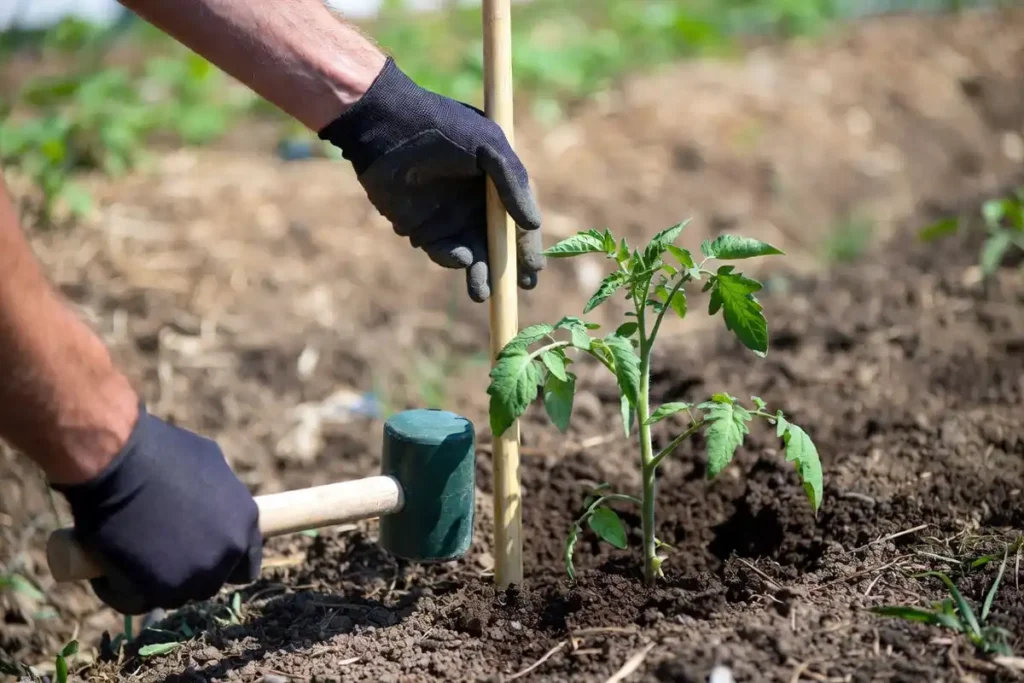
What You Need
- Wooden or metal stakes, 6–8 feet tall
- Soft plant ties, strips of old t-shirt, or garden velcro
- A rubber mallet or hammer
Step-by-Step Staking Process
- Drive the stake 10–12 inches into the soil, 4–6 inches from the main stem.
- Tie the main stem loosely to the stake at 6–8 inches above the soil line.
- Use a figure-eight tie between stem and stake. This separates the stem from the stake and prevents abrasion.
- Add a new tie every 8–12 inches as the plant grows upward.
- Keep ties snug enough to support the stem but loose enough to allow 0.5 inches of movement.
Staking and Pruning Together
Staked indeterminate tomatoes perform better when you remove suckers — the shoots that grow between the main stem and a branch. Removing suckers keeps the plant to one or two main stems, which the stake supports more easily. Pinch suckers out when they reach 1–2 inches long.
How to Trellis Tomatoes
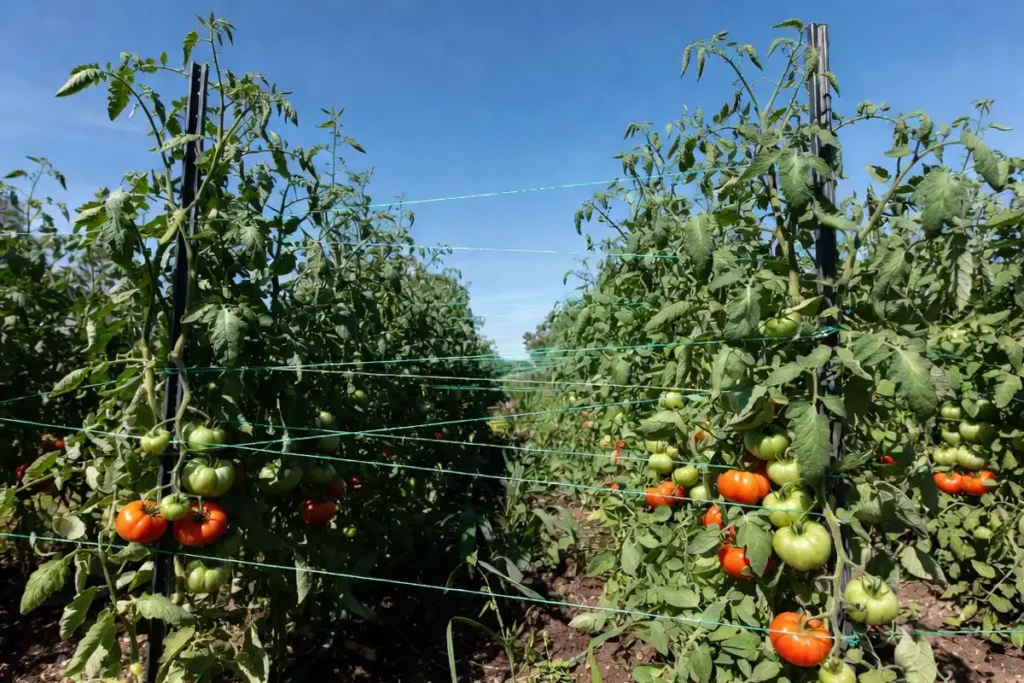
Trellising works well for row plantings of indeterminate tomatoes, including long garden rows or market-scale production.
Florida Weave Trellis Method
The Florida weave is the most common low-cost trellis setup for row crops. It uses posts and twine rather than individual stakes.
- Drive 6-foot T-posts or wooden posts into the ground every 4–5 feet along the row, leaving 4.5 feet above ground.
- Tie garden twine to the first post at 10–12 inches above the soil.
- Weave the twine along one side of each plant, loop it around each post, then run it back on the opposite side of the plants.
- The twine sandwiches the plants between two parallel strings.
- Add a new row of twine every 8–10 inches as plants grow.
Posts at each end of the row need bracing or a diagonal anchor stake to handle the outward tension from the twine.
Vertical String Trellis (High Tunnel or Greenhouse Style)
For high tunnel or greenhouse tomatoes, run a horizontal wire or conduit at 7–8 feet above the row. Drop a length of jute or sisal twine from the overhead wire to the base of each plant. Wrap the twine loosely around the base stem, then wind the growing vine around the twine as it climbs. This keeps each plant on its own vertical line without any additional ties.
How to Cage Tomatoes
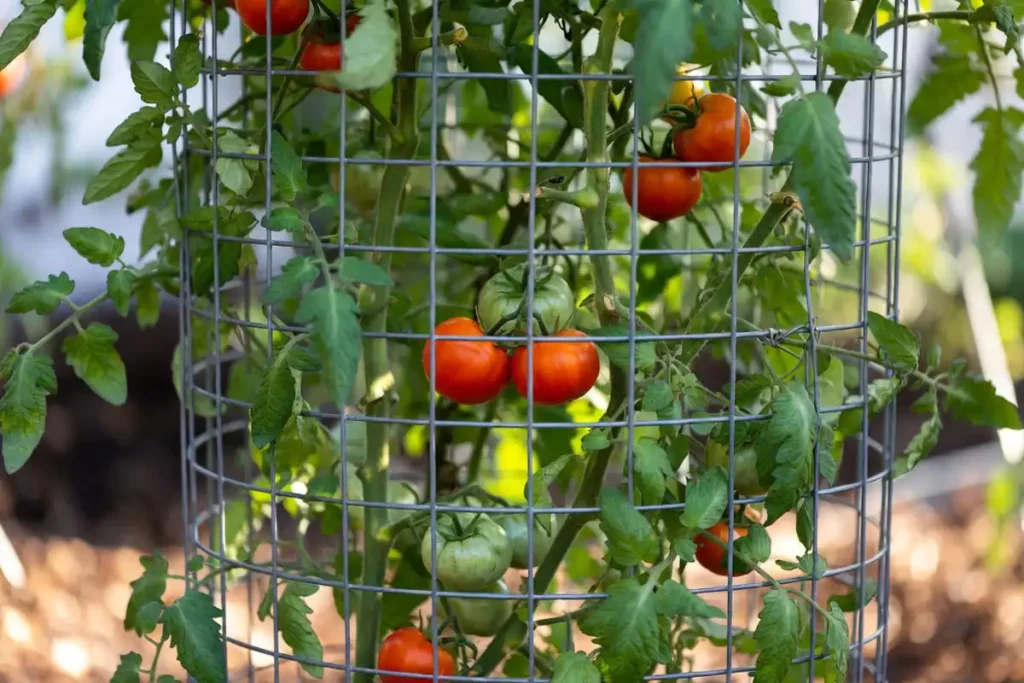
Choosing the Right Cage
Wire tomato cages from most garden centers measure only 18 inches wide and 3 feet tall. Those sizes work for compact determinate varieties but collapse under a full-season indeterminate plant.
For indeterminate varieties, use a cage that is at least 18–20 inches in diameter and 5–6 feet tall. You can build these from concrete reinforcing mesh (remesh), which comes in rolls 5 feet wide. Cut sections 5 feet long, bend them into a circle roughly 18–20 inches across, and secure the ends. These cages last 10–15 seasons.
How to Set a Cage
- Set the cage over the transplant immediately after planting.
- Push the cage legs 6–8 inches into the soil for stability.
- As the plant grows, guide stems through the cage openings. Do not force stems through openings smaller than 6 inches square.
- No ties are needed for caged plants unless a branch becomes unusually heavy with fruit.
Comparing Staking, Trellising, and Caging
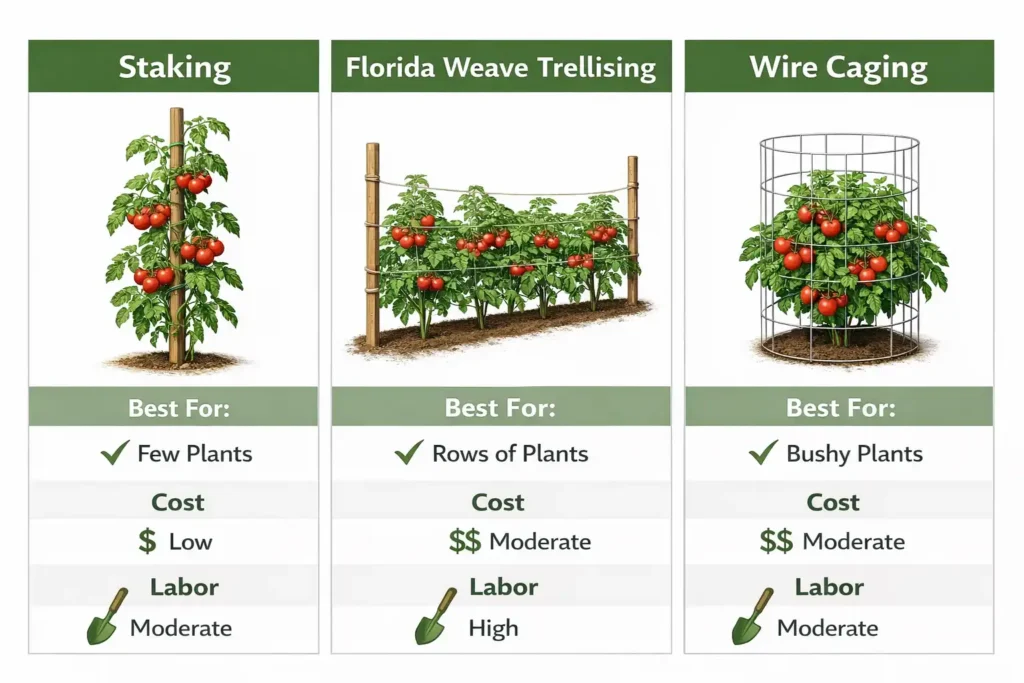
| Method | Best For | Cost | Labor |
|---|---|---|---|
| Single stake | Indeterminate, 1–5 plants | Low | Moderate (regular tying) |
| Florida weave | Indeterminate row crops | Low | Low after setup |
| Cage (store-bought) | Determinate varieties | Low | Very low |
| Heavy remesh cage | Indeterminate, long-season | Moderate upfront | Very low |
| Vertical string | Greenhouse or high tunnel | Low per plant | Low |
Tying Tomatoes Correctly
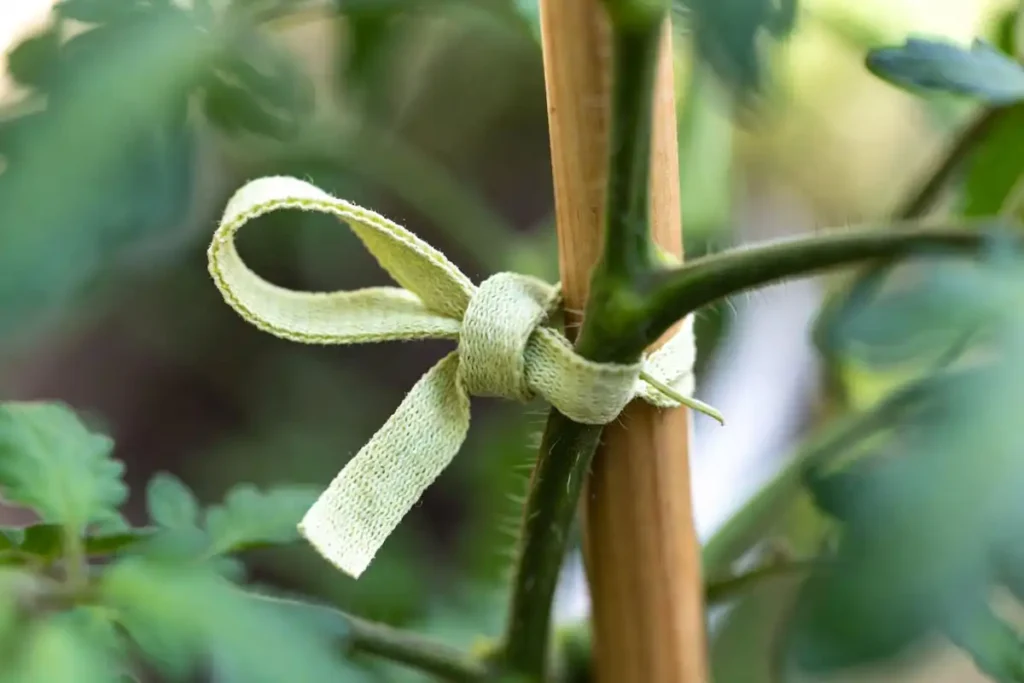
Incorrect tying causes stem damage and can girdle a branch as it thickens. Follow these tying rules:
- Use soft materials: torn cloth strips, silicone garden ties, or foam-coated wire.
- Never use bare wire, zip ties, or twine pulled tight against the stem.
- Check ties every 2 weeks during the growing season and loosen any that look tight.
- Tie to the stake or post, not around the leaf stem or fruit cluster.
What Happens When Support Fails Mid-Season
A snapped stake, fallen cage, or broken trellis post mid-season causes branch breakage, fruit bruising, and soil contact disease. To prevent this:
- Check stake depth after heavy rain or wind. Re-drive stakes that lean more than 15 degrees.
- Replace cage legs that pull out of the soil with tent stakes or rebar inserted alongside them.
- For Florida weave rows, re-tension the twine after 2–3 weeks of growth. Sagging twine lets plants lean.
If a main stem breaks partially, you can tape it with grafting tape and stake the damaged section for support. Fully snapped stems do not reattach.
Common Mistakes That Reduce Fruit Quality
Staking too late. Driving a stake near a mature root system severs feeder roots and stresses the plant during fruit set.
Using cages that are too small. A 3-foot cage tips over under the weight of a full-season indeterminate plant, pulling the root ball sideways.
Tying too tightly. A tie that cuts into the stem restricts water and nutrient flow to the upper plant and fruit.
Skipping support for “small” varieties. Even compact cherry tomato plants produce heavy clusters that bend stems to the ground without support.
Leaving suckers on staked plants. Multiple untrained stems on a single stake create a tangled, crowded canopy that restricts airflow.
Safety Notes for Installation
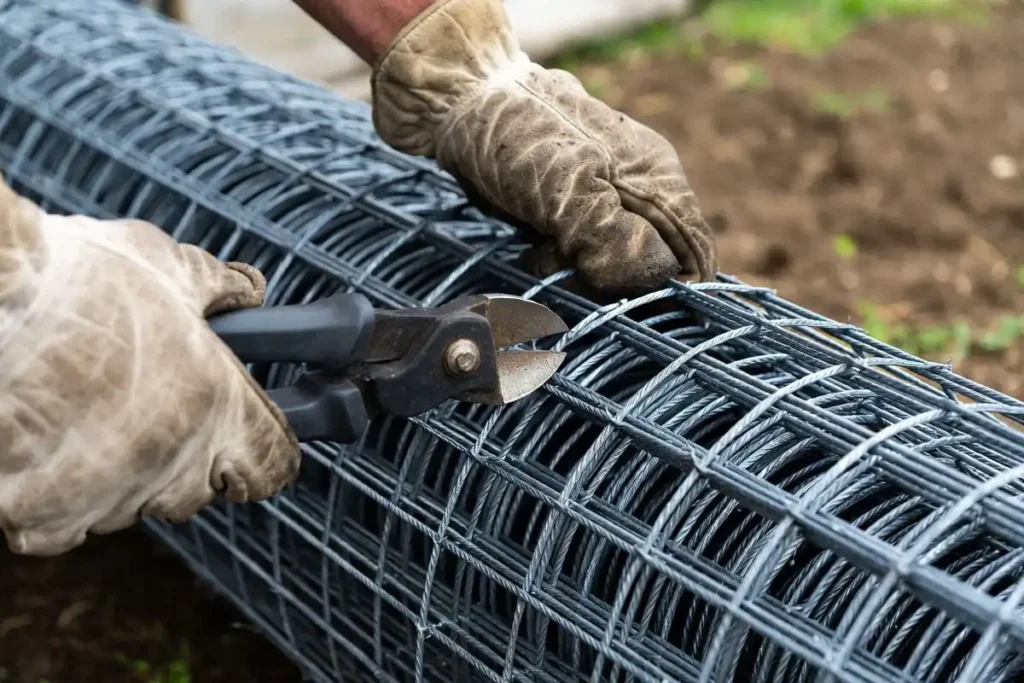
Wear gloves when handling wire cages and livestock panels. Use eye protection when driving stakes and cutting wire. Cap T-post tops to prevent puncture injuries. Keep trellis lines tight but controlled, and release tension slowly during teardown. Store cages and panels upright and secured so they do not tip in wind.
Soil Preparation Before Installing Supports
Loose, well-prepared soil makes stake driving easier and allows cage legs to anchor properly. If your soil compacts easily, improving soil fertility naturally covers methods that also improve soil structure for better stake and post anchoring.
Consistent soil moisture matters too. Dry, cracked soil resists stake penetration and increases the chance of root damage during installation. Reviewing your crop irrigation scheduling helps keep soil at the right workable moisture level through the growing season.
Maintaining Supports Through the Season
Support systems need periodic checks, not just installation. Run through this checklist every two weeks:
- Re-tie any stem that has slipped off the stake or grown outside the cage.
- Remove dead leaves from inside cages to maintain airflow.
- Check all posts for lean after storms.
- Loosen any tie that looks tight against a thickened stem.
- For Florida weave rows, add a new twine run when the top of the plants reaches within 6 inches of the highest existing twine.
End-of-Season Support Care
Remove cages and stakes after the first hard frost kills the plants. Clean wire cages with a 10% bleach solution (1 part bleach to 9 parts water) before storing, particularly if the plants showed any foliar disease during the season. This reduces pathogen carryover to the following year.
Store metal stakes and cages in a dry location to prevent rust. Wooden stakes last 3–5 seasons; check for rot at the soil line before reusing.
Conclusion
Staking, caging, and trellising each solve the same problem: keeping tomato fruit off the soil and the canopy open to airflow. The right method depends on whether you grow determinate or indeterminate varieties, how many plants you have, and your available budget. Install supports at transplant, check them every two weeks, and choose materials strong enough to hold the full weight of a mature plant. Those three habits produce cleaner, healthier fruit with less disease pressure from planting through harvest.