Crop Rotation Plan: 5 Smart Rotations That Protect Yield Fast
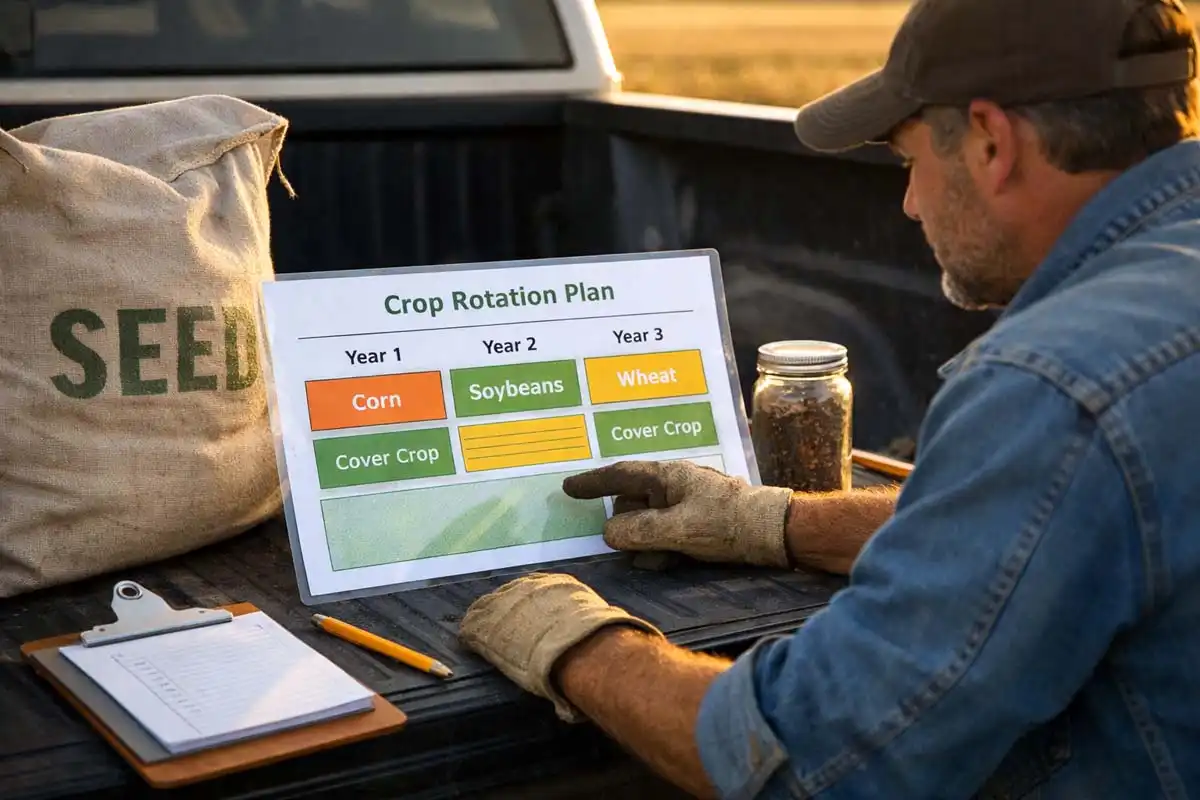
Crop rotation plan design starts with crop families, field history, and a calendar that matches your planting and harvest windows. A good plan rotates grasses, legumes, and broadleaf crops so pests lose their host, soils recharge nutrients, and equipment stays busy in the right season. The goal is not a perfect chart on paper. The goal is a repeatable schedule you follow and adjust after weather, markets, or weed pressure changes. This guide walks through the records, the rules, and a few working examples.
What is a crop rotation plan?
A crop rotation plan is a written schedule that assigns a crop (or crop family) to each field or bed for each season across multiple years. The plan tracks what grows where, in what order, and for how long. Rotations reduce pest carryover, spread nutrient demand, and balance residue and tillage across the farm.
Crop farming practices come down to steady habits like soil testing, timely planting, and keeping weeds and pests from stealing yield.
Read more: Build a Crop Planting Calendar
Why does a crop rotation plan improve soil and crop performance?
A crop rotation plan improves performance by changing the host plants, residue type, and nutrient draw in each field over time. That shift disrupts pest life cycles and gives soil biology a wider diet of roots and residues. Rotations also spread work across seasons, which keeps planting and harvest from stacking up on the same week.
Here is what a rotation plan does on the ground:
- Breaks disease carryover by moving away from the same host crop and residue year after year.
- Reduces insect pressure when pests lose their preferred host and timing.
- Balances nutrients by following heavy feeders with legumes or lower-demand crops.
- Improves soil structure when the plan includes different rooting depths and cover.
- Spreads risk by avoiding a whole-farm bet on one crop window.
Learn more: A Guide to Farm Layout Planning
What information do you collect before you plan a rotation?
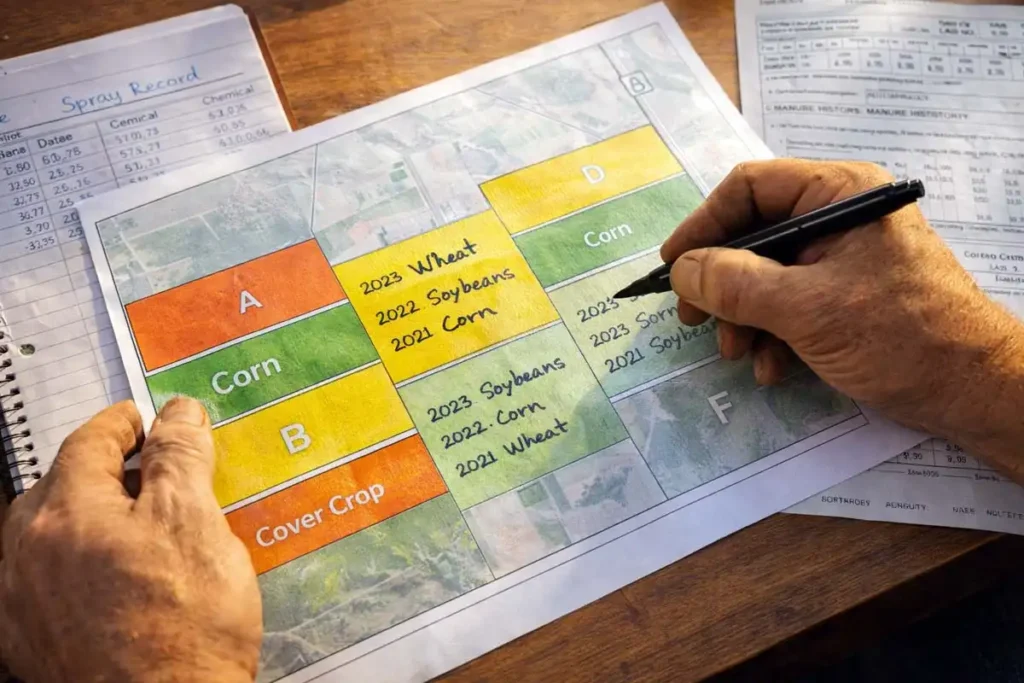
A rotation plan stays practical when it starts with field facts, not seed catalogs. You want records that explain what the soil supports, what pests live there, and what timing your operation handles. After that, the crop choices get easier.
Collect these records before you sketch the first rotation:
- Field map and acres (or bed count and bed size for gardens).
- Crop history for at least the last 3 seasons, including cover crops.
- Problem weeds, insects, and diseases you saw and where they hit.
- Herbicide and manure history with dates and rates, plus rotational restrictions from labels.
- Soil test results (pH, P, K, organic matter if available) and any compaction notes.
- Drainage and irrigation capacity, including which fields stay wet or burn up fast.
- Equipment and labor limits, especially planting and harvest bottlenecks.
Soil tests turn guesswork into planning. The overview on building soil fertility pairs well with a simple kit of soil testing and measuring tools for consistent sampling.
How do you group crops for a rotation plan?
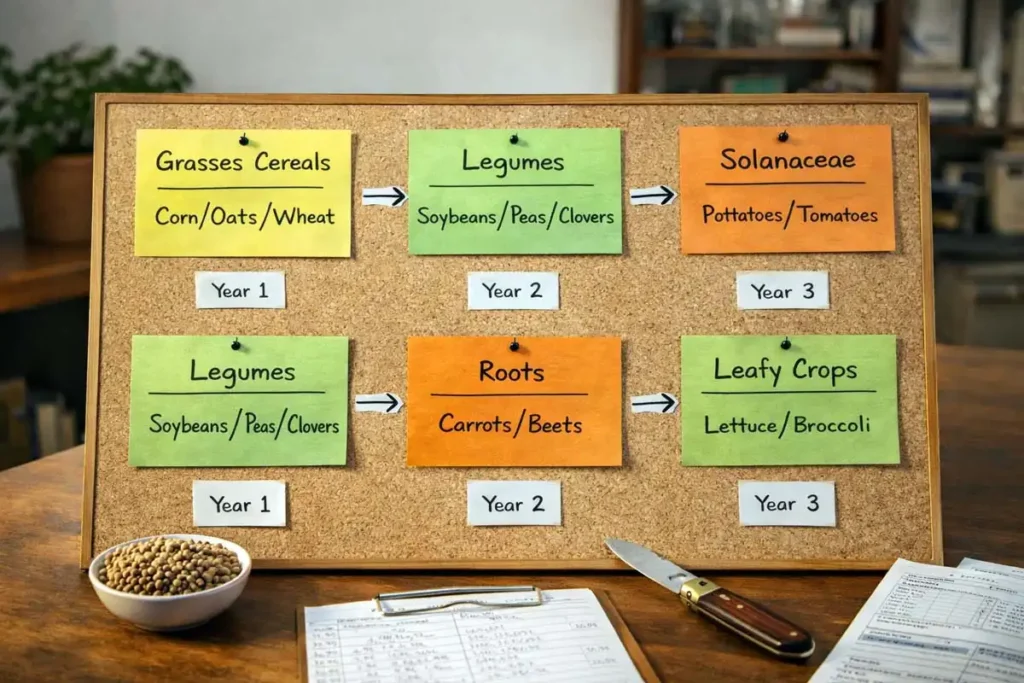
You group crops by shared pests, shared diseases, shared nutrient demand, and shared residue traits. Crop family is the cleanest starting point because many pathogens and insects track family lines. After family, look at planting window, harvest window, residue load, and root depth.
Common rotation groupings that work in real planning:
- Grasses and cereals (Poaceae): corn, wheat, oats, rice, sorghum.
- Legumes (Fabaceae): soybeans, peanuts, field peas, clovers.
- Nightshades (Solanaceae): potatoes, tomatoes, peppers.
- Root and tuber crops: potatoes, carrots, sugar beets.
- Leafy and head vegetables: lettuce and similar greens.
- Alliums: onions and related crops.
If you want crop-specific notes while you build the plan, CropFarming keeps guides for common rotation anchors like corn, soybeans, and potatoes.
How long should a crop rotation plan run?
A rotation plan runs long enough to move away from host crops for your main pests and diseases. A 2-year rotation fits tight markets and limited equipment, but it repeats host plants fast. A 3-year rotation spreads crop family pressure and spreads workload. A 4-year rotation opens more spacing for disease breaks and cover crop windows.
A simple rule for planning horizon:
- 2-year plan: works for cash flow simplicity, but pest breaks stay short.
- 3-year plan: gives one full “gap year” between many crop families.
- 4-year plan: gives longer breaks and more room for specialty crops and covers.
How do you build a crop rotation plan step by step?
A rotation plan comes together fast when you follow a fixed order. You start with maps and history, then you lock constraints, then you assign crop families, then you stress-test the plan for bottlenecks and pest overlap.
- Label every field or bed. Use a map that matches your record system and your spray logs.
- Write the last 3 years of crop history. Include cover crops, forage cuts, and prevented planting notes.
- List hard constraints. Add irrigation limits, drainage limits, labor limits, and market contracts.
- Pick your rotation goals. Examples include “reduce a soil disease,” “build residue,” or “spread planting dates.”
- Group crops into families and functions. Separate grasses, legumes, solanaceous crops, roots, and leafy crops.
- Assign Year 1 crops first. Start with the crops that drive your revenue and acreage commitments.
- Fill Year 2 and Year 3 using family breaks. Move away from the same family and the same residue type.
- Add cover crops where the calendar leaves a gap. Match species to your next cash crop and termination timing.
- Check herbicide carryover and seedbed needs. Confirm the next crop fits the chemistry and tillage plan.
- Write the plan in one table and save it. A plan that lives in one place gets followed.
Planting and termination timing drives a lot of rotation success, especially when you add covers. The planting and seeding section helps you line up calendars, equipment, and field conditions.
What does a 3-year crop rotation plan look like for row crops?
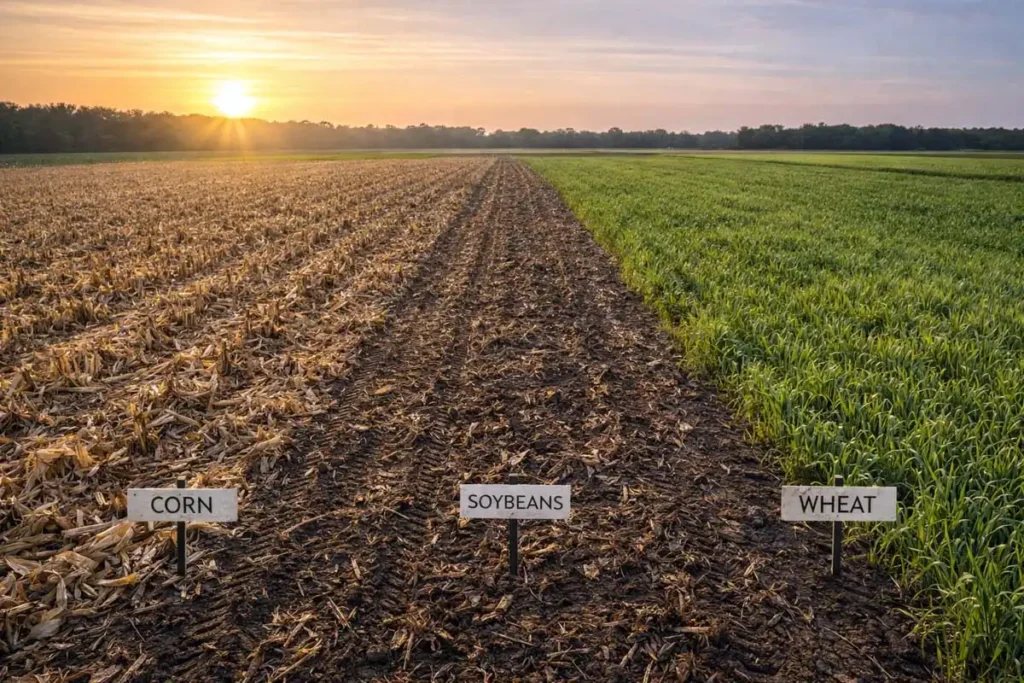
A 3-year row-crop rotation often uses a grass, then a legume, then a small grain. That sequence changes residue and planting dates while keeping equipment use steady. It also gives a natural window for a fall cover crop after the small grain, depending on your region and harvest timing.
Here is a clean example you can copy into a field plan:
| Year | Crop family focus | Example crop | Key rotation intent |
|---|---|---|---|
| 1 | Grass/cereal | Corn | High residue, strong yield driver, uses N budget |
| 2 | Legume | Soybeans | Shifts pests, changes residue, supports N planning |
| 3 | Small grain | Wheat | Breaks planting window, opens cover crop slot |
If corn residue creates planting issues, place soybeans after corn where your planter handles residue well. If wet springs delay corn, move the most poorly drained fields toward the small grain year.
What does a 4-bed crop rotation plan look like for vegetables?
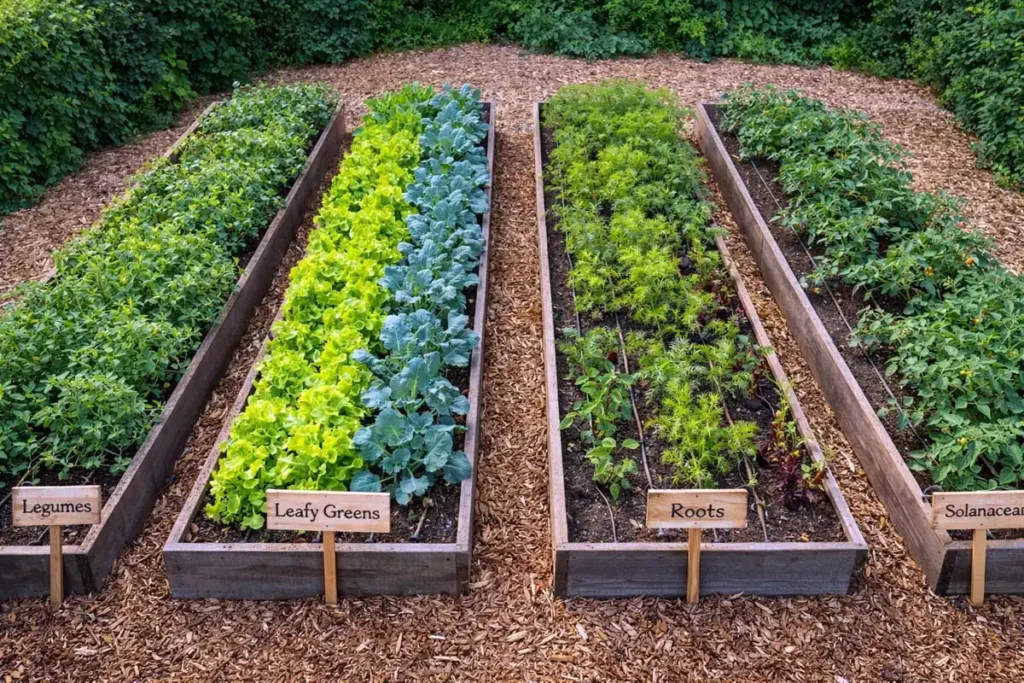
A 4-bed rotation works well because each bed gets a 3-season break from a crop family. That break cuts disease carryover and reduces the chance you plant the same feeder pattern in the same soil zone every year. The plan also helps you schedule compost, mulch, and drip work without rushing.
Here is a practical 4-bed example using common garden and market crops:
| Year | Bed A | Bed B | Bed C | Bed D |
|---|---|---|---|---|
| 1 | Solanaceae: Tomatoes | Leafy: Lettuce | Roots: Carrots | Legume: beans/peas |
| 2 | Leafy | Roots | Legume | Solanaceae |
| 3 | Roots | Legume | Solanaceae | Leafy |
| 4 | Legume | Solanaceae | Leafy | Roots |
If onions anchor your sales, treat them as their own group and slide them into the “roots” bed in place of carrots for that year. Use onion crop notes to line up fertility and timing.
How do cover crops fit into a crop rotation plan?
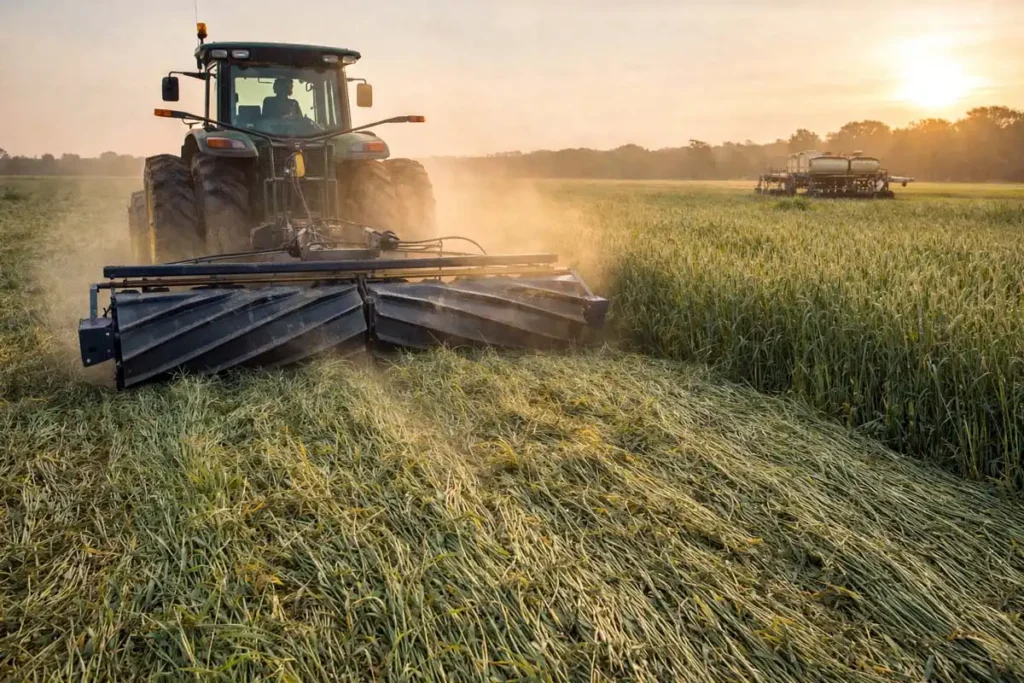
Cover crops fit when the plan leaves a calendar gap and the next cash crop benefits from the cover’s residue or nitrogen pattern. Covers protect soil, feed biology, and reduce erosion risk when fields sit bare. The cover species also affects pests, so match the cover family to the next cash crop with care.
A simple way to place covers:
- Put a winter cereal cover ahead of a spring-planted crop when you want residue and ground cover.
- Put a legume cover ahead of a nitrogen-hungry crop when termination timing and moisture allow it.
- Avoid planting a cover crop that shares major diseases with the next cash crop in a high-pressure field.
Termination steps involve equipment, sprayers, and timing. When you use herbicides, follow label directions and wear the protective gear that fits the product. The farm safety PPE guide and sprayers and application gear overview help you set up safe handling and consistent application.
How do you use crop rotation to manage weeds, insects, and diseases?
Rotation manages pests by changing the habitat and timing that pests rely on. A weed that thrives in one crop’s canopy and herbicide program often loses ground when the crop and chemistry change. Many diseases drop when the plan breaks host residue cycles. Insects that sync with one crop’s timing face a harder year when the planting date shifts.
Two rotation checks keep you out of trouble:
- Weed program check: rotate herbicide modes of action across crops and avoid repeating the same program on the same field every year. Practical tools and methods live under weed control.
- Pest and disease check: track hotspots and avoid placing host crops back into those fields without a spacing plan. Use the pest and disease section to build scouting and response into the season.
If irrigation shapes your weed pressure or disease pressure, plan rotation with water timing in mind. The irrigation and water management section helps you match crop water demand to your system.
What mistakes make a crop rotation plan fall apart?
Most rotation plans fail for simple reasons: the plan ignores a constraint, the plan repeats a host crop by accident, or the plan looks good on paper but clashes with time and equipment. Fix those weak spots and the plan holds up through rough seasons.
Watch for these common mistakes:
- Rotating crops but not rotating families. Corn after sorghum still repeats a grass system.
- Ignoring herbicide carryover. Sensitive crops get injured by residues from last season.
- Stacking harvest windows. Two crops that harvest at the same time overload labor and machines.
- Leaving soil bare for long gaps. Erosion and crusting undo fertility work fast.
- Moving a “problem field” into high-value crops too soon. Disease history follows the field, not the crop price.
- Tracking rotation in more than one place. Records split and errors multiply.
How do you track and update a crop rotation plan each season?

Tracking works when it stays simple and consistent. A rotation plan needs one master table, one place for spray and fertility notes, and a short review after harvest. That review locks in what worked and flags fields that need a longer break from a crop family.
A basic tracking system includes:
- A rotation table with fields down the left and years across the top.
- A field log for planting date, variety, fertilizer, herbicides, and scouting notes.
- A post-harvest note on yield issues, weed escapes, and disease hotspots.
If you already keep records for a startup or expansion plan, fold rotation into that same binder or folder. A clear farm setup process keeps records organized from day one, including guide to start a crop farm as a framework for planning and documentation.
FAQs about Crop Rotation Plan
How to make a crop rotation plan?
What is thomas jefferson's six year crop rotation plan?
What is a 2 year crop rotation plan?
Is a corn-soybean rotation a real crop rotation plan?
How often does a garden rotation need to change?
Does rotating within vegetables count if the crops stay in the same family?
Final field check before you lock the plan
A crop rotation plan works best when you confirm timing, chemistry, and workload before seed hits the soil. Check planting windows against your crew schedule. Check herbicide rotational restrictions against the next crop. Check soil test targets against your fertilizer and lime plan. Then write the plan in one table and follow it with field notes after every season.