Can You Transplant Carrots? What Works and What Wrecks the Root
Plenty of folks ask me if they can move carrot seedlings instead of sowing in place. Can you transplant carrots? Yes, but the taproot makes it risky. Here is what actually works in the beds, and where it goes wrong.
You can transplant carrots, but it is not the recommended method. Disturbing the taproot often causes forked, twisted roots. Start seedlings in deep soil blocks, move them young, and handle the root gently for the best shot.
Can You Transplant Carrots?
Yes, you can transplant carrots, but most growers should not. Carrots grow a single deep taproot, and that root is what you eat. Once it forms, it does not move well. Disturb it early and it forks, twists, or splits into hairy fingers.
The plant survives the move just fine. Top growth looks healthy and green. Underground tells a different story. So the real question is not whether you can. It is whether the roots come out worth eating.
Moving carrot seedlings can work when there’s a specific reason to do it. Some came out clean and straight. Others looked like a handful of orange twigs. The difference comes down to timing and how gently the root gets treated.
Know more: Types of Carrots
Why Carrots Resist Transplanting
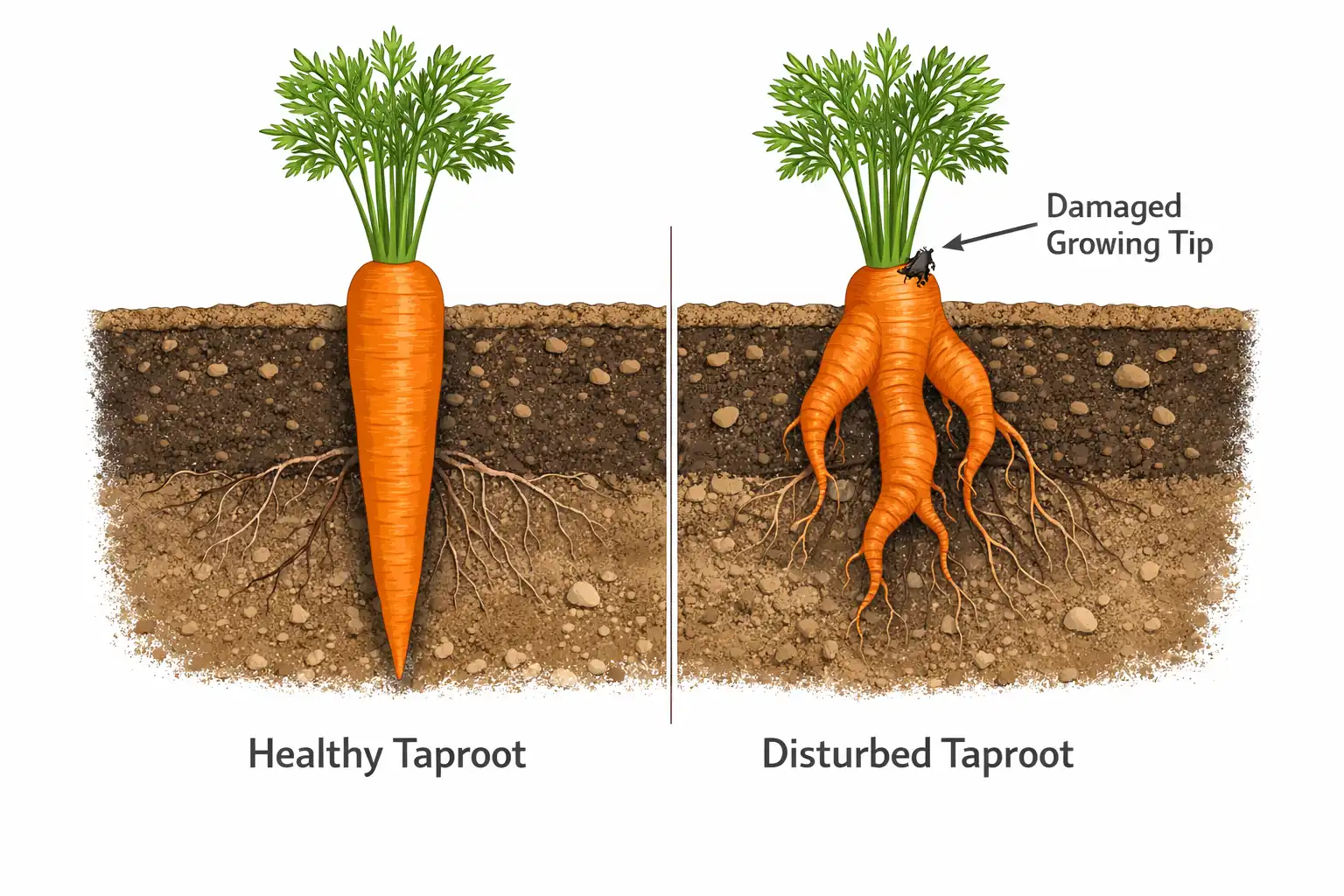
Carrots resist transplanting because the taproot develops fast and damages easily. The seed sprouts and sends that root straight down almost right away. By the time the seedling is big enough to grab, the taproot already runs 2 to 3 inches deep.
That root is fragile at this stage. Pull the seedling and you snap fine root hairs. Bend the tip against a clump of soil and the carrot grows around it. Either way, you get a forked or stunted root instead of one clean carrot.
Daucus carota does not heal back into a single root once the tip is hurt. It keeps growing, just in the wrong direction. This is the same reason carrots hate rocky, compacted ground. Every obstacle the tip hits sends the root off course.
Transplant shock plays a part too. A moved seedling spends days recovering before it grows again. On a crop where the root is the whole point, that setback shows up at harvest.
When Transplanting Carrots Actually Makes Sense
Transplanting carrots makes sense in a few specific spots, mostly tied to short seasons and tough germination weather. Do not reach for it often. But it earns its place now and then.
A short growing season is the main reason. If your fall window is tight, starting carrots indoors buys you two or three weeks of a head start. That can be the difference between a full root and a baby carrot when frost hits.
Hot, dry summers cause another problem. Carrot seed needs steady moisture for one to two weeks to sprout. On bare ground in July heat, the top inch dries out fast and the seed dies. Starting in trays lets me control moisture until the seedlings are up.
A crowded, over-seeded bed is the third case. Carrot seed is tiny and easy to sow too thick. Rather than waste the thinnings, you can move a few to a gappy spot. Just know the moved ones may not match the rest.
Even then, weigh it against simply starting over. Carrots germinate cheap and fast in the right soil temperature. Knowing exactly when carrots germinate in your zone often beats fussing with transplants.
How to Transplant Carrots Without Wrecking the Root
To transplant carrots without wrecking the root, start them in deep soil blocks, move them young, and keep the taproot pointed straight down. It all comes down to protecting that one root. Get that right and your odds jump.
Start in Soil Blocks or Deep Cells
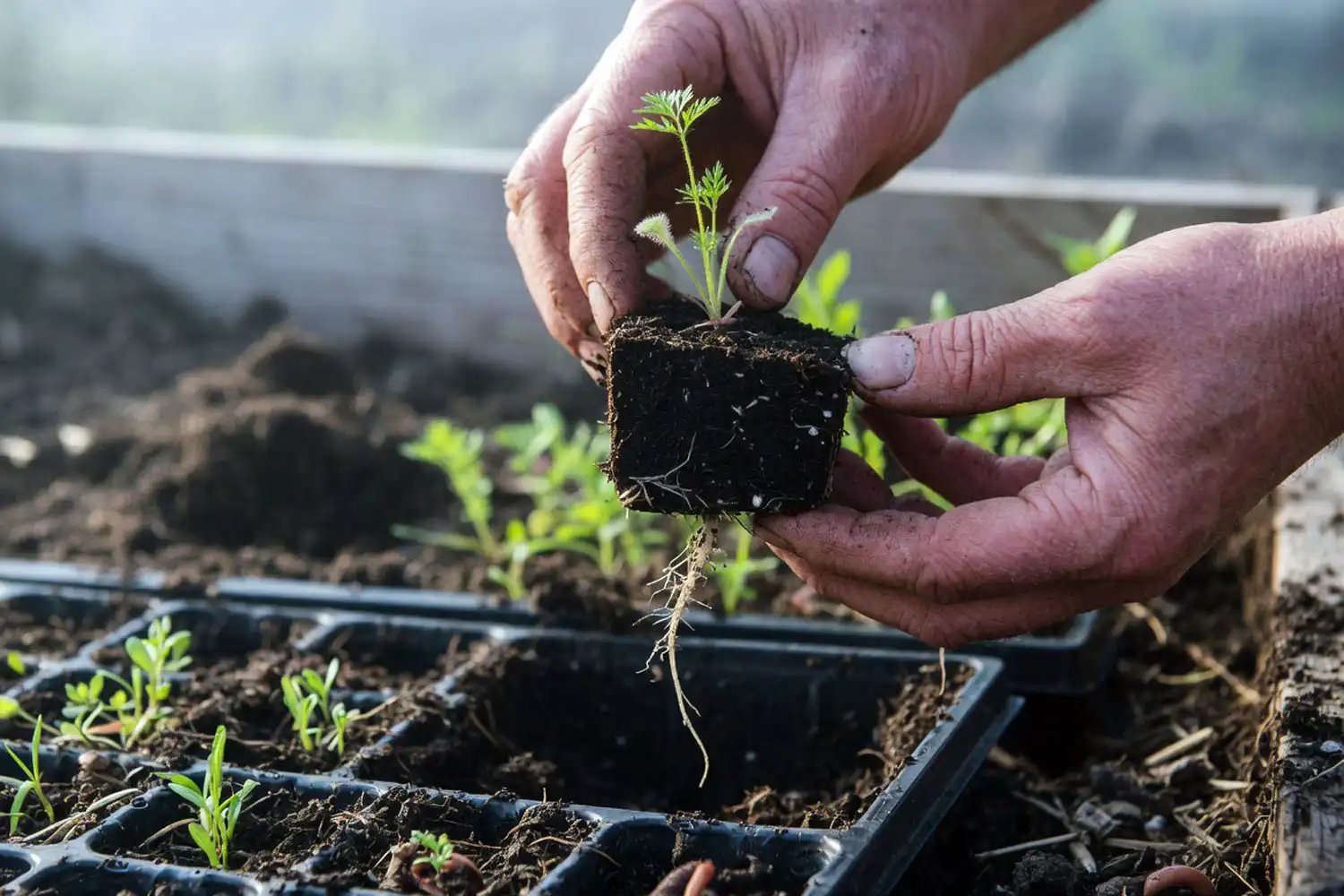
Soil blocks beat plastic trays for carrots. A soil block lets you move the entire plug without ever touching the root. Deep cell trays work too, the deeper the better, since the taproot needs room to run straight before you move it.
Fill with a light, moisture-holding mix. Sow two seeds per block as insurance, then snip the weaker one at the soil line. Do not pull it, or you disturb the keeper next door.
Move Them Young
Younger is safer. Move carrots when they show three to four true leaves, not the first round seed leaves. That timing usually lands two to three weeks after germination, while the taproot is still about an inch long.
Wait past that and the root grows too long and too set to move clean. The cotyledons, those first thin leaves, are not your signal. Wait for the real feathery leaves, then go.
Try the Bare-Root Water Method
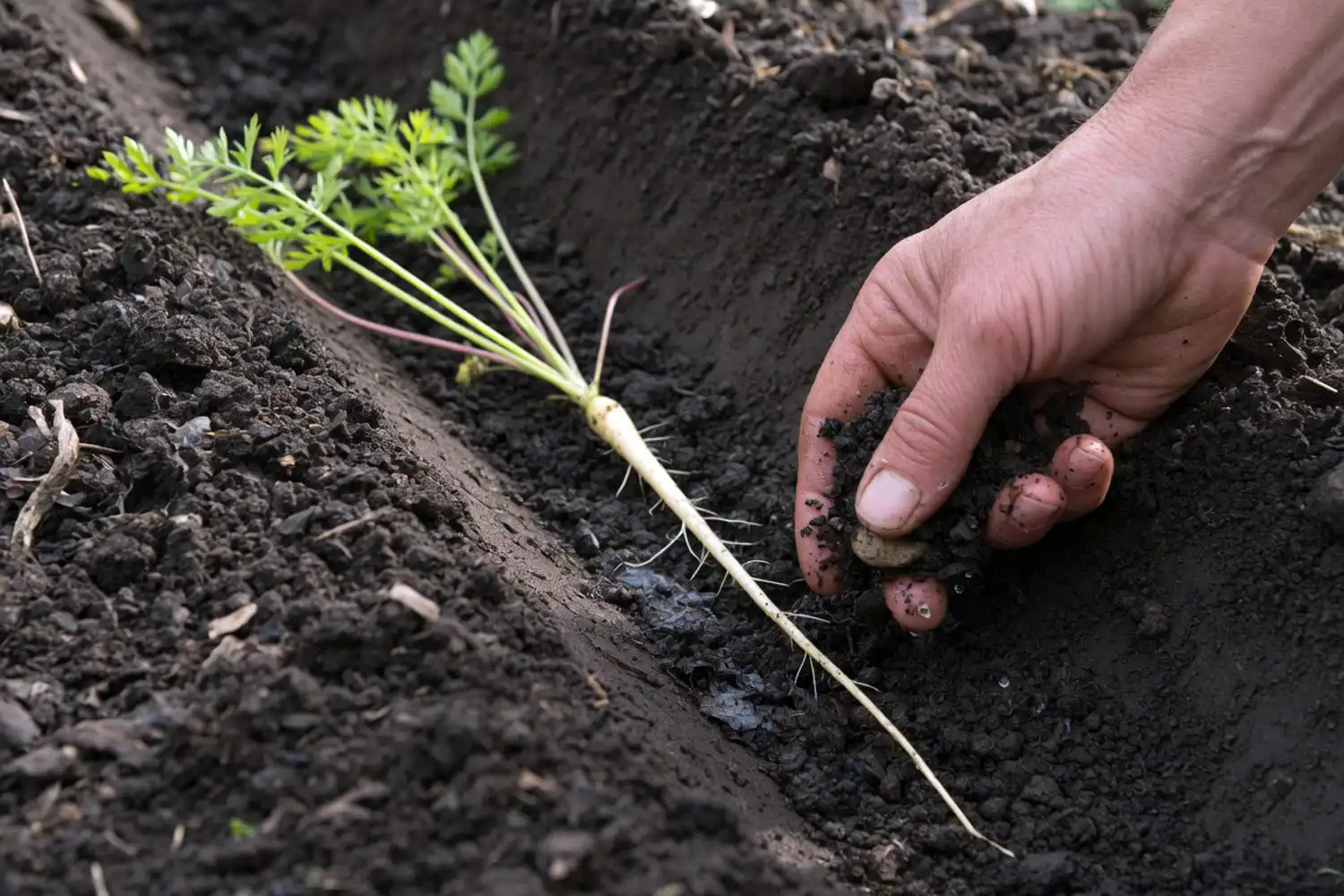
This trick saves most transplants. Fill a bucket with cool water and a splash of seaweed feed. Dig up a clump of seedlings and set the whole thing in the water. The soil dissolves off the roots in a minute or two.
Now the seedlings separate without tearing. Dig a V-shaped furrow and soak it. Lay each taproot flat against one wall of the furrow, root pointing straight down. Push wet soil from the other side up against it. The root stays straight, which is the whole point.
Space Them and Settle Them In
Set transplants 2 to 4 inches apart. That spacing gives each root room to size up without crowding. Loose, deep, stone-free ground matters as much as the move itself. The kind of soil that grows straight carrots decides whether a clean transplant stays clean.
Pick a calm, cloudy day if you can. Harden off indoor-started seedlings first, a few days of outdoor time to toughen them up. Water in gently with a fine spray right after planting. For the first few days, a little shade cloth or an upended pot cuts wilting while the roots recover.
What to Expect After Transplanting Carrots
Expect a mix after transplanting carrots, some clean roots and some forked ones, even when you do everything right. That is the honest truth. The most careful move still beats up a few taproots.
Commercial carrot growers know this. They direct sow every time because uniform, unforked roots sell and twisted ones do not. Research backs them up. Direct-sown carrots come out more uniform and more marketable than transplanted ones, plain and simple.
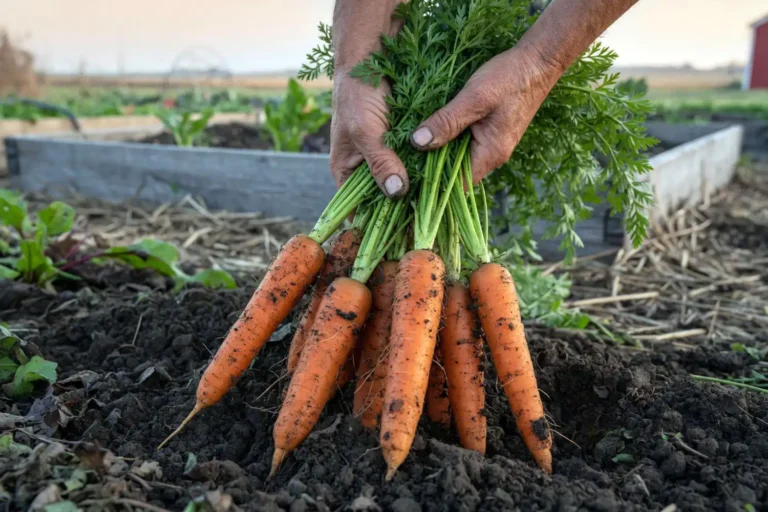
So set your expectations. For a home bed or a quick fall crop, a few forked carrots taste fine and cook fine. For a market crop or a county fair entry, transplanting is not your friend.
Watch your feeding too. Go easy on nitrogen, since too much makes carrots fork and grow hairy on top of any transplant stress. A light, balanced feed worked into the bed before planting does more good than a heavy hand later.
When to Just Direct Sow Instead
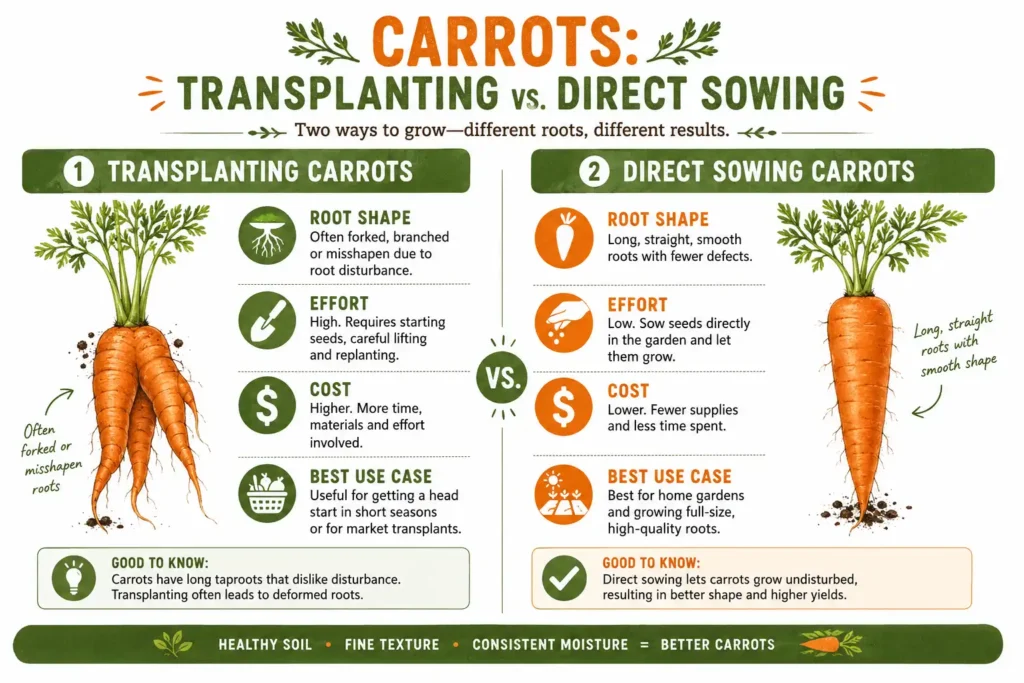
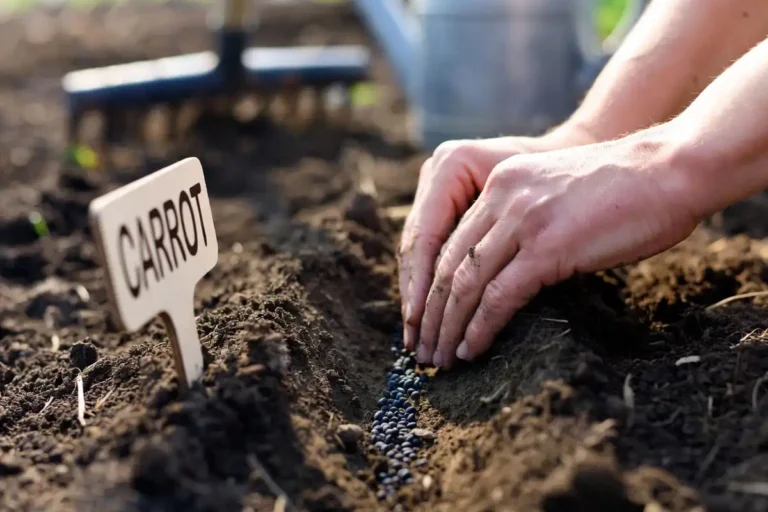
Direct sow instead whenever your soil is workable and your season has room, which covers most carrot crops. It is cheaper, simpler, and gives you straighter roots. No trays, no hardening off, no transplant shock. The guidance from K-State Research and Extension is the same: sow carrots in place in loose ground.
The trick with direct sowing is moisture and even spacing. Carrot seed is tiny, so it clumps easy. Mixing seed with dry sand helps you spread it thin. Keep the top inch damp until the seedlings break ground, and you are most of the way there. Sowing carrot seed without wasting it comes down to that even hand and steady water.
Crusting is the other direct-sow enemy. A hard crust on the soil surface blocks weak seedlings. A light board or row cover holds moisture and keeps the surface soft. Once they sprout, steady water through each growth stage keeps the roots sizing up clean.
Bottom Line for Your Field
Can you transplant carrots? Yes. Should you? Only when a short season or rough germination weather pushes you to it. The taproot is the catch, and once it bends, the carrot follows.
If you do move them, start in soil blocks, go young, use the water method, and keep that root straight down. If your soil is loose and your season has room, save yourself the trouble and direct sow. That is what to do on most of the beds, and the roots come out straighter for it.