How Many Types of Carrots Are There? A Grower’s Guide
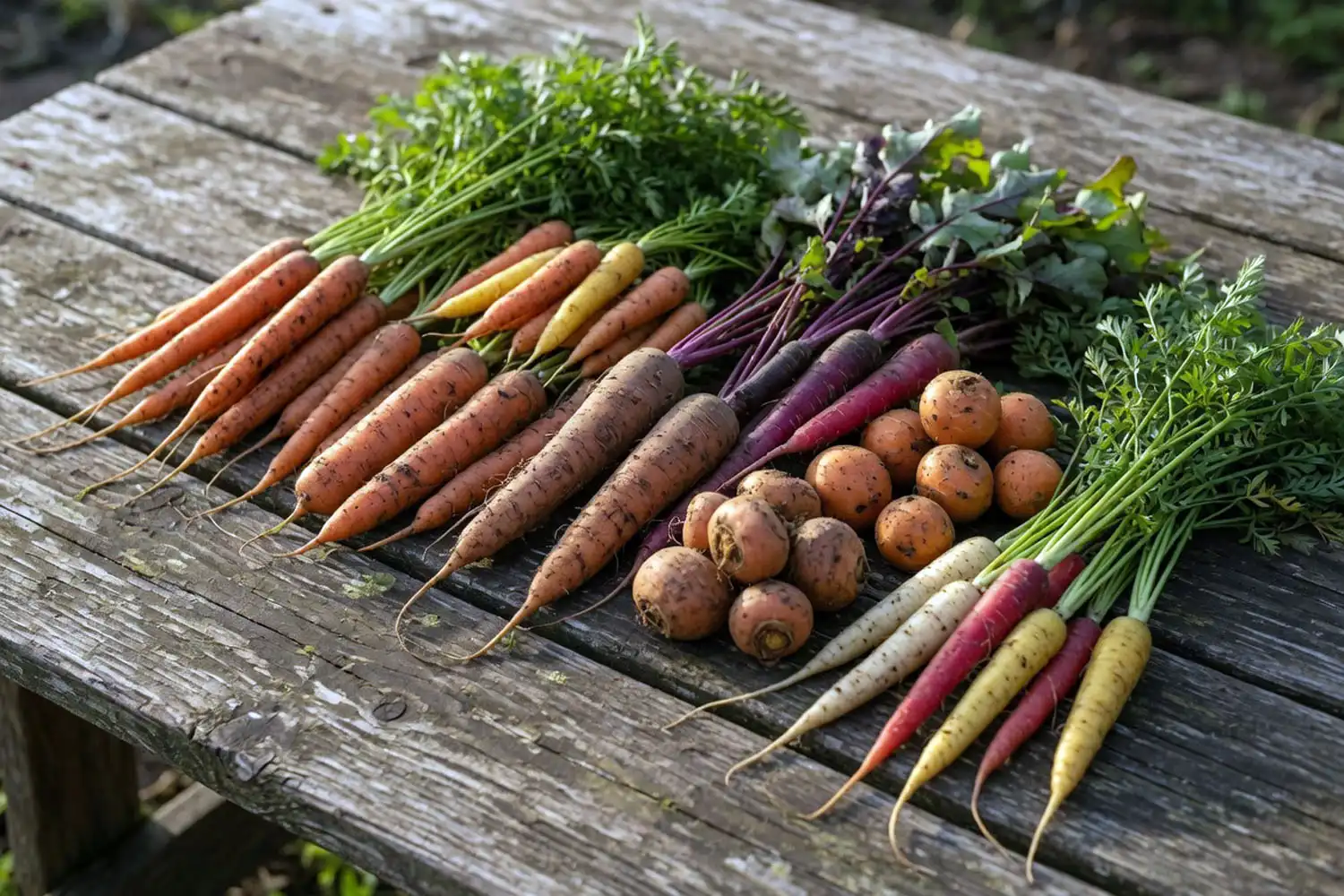
Carrots look simple, but the carrot aisle and seed catalog tell a different story. If you have wondered how many types of carrots are there, the answer depends on whether you sort by root shape or by color. Both matter for what you plant.
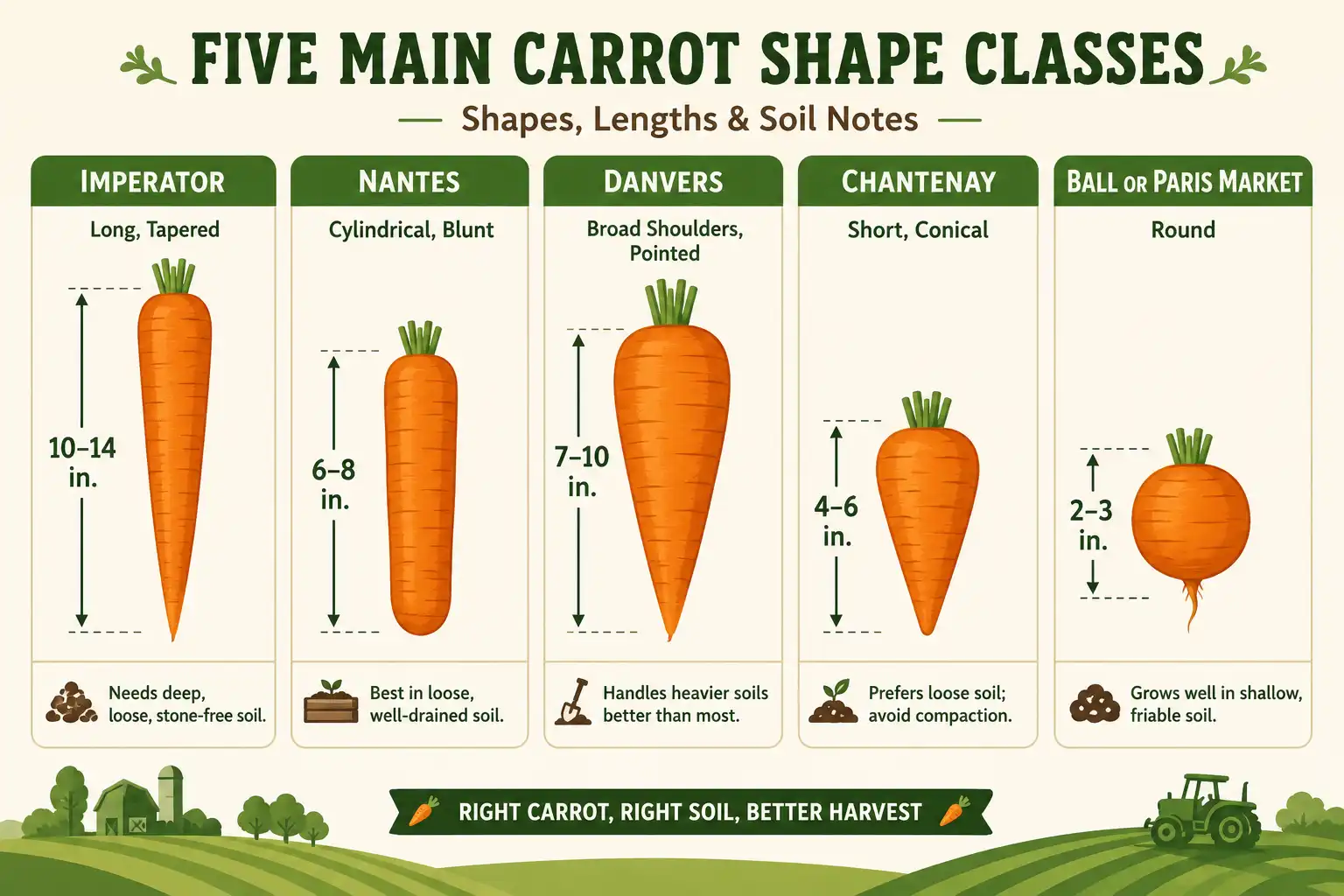
There are five main types of carrots by root shape: Imperator, Nantes, Danvers, Chantenay, and Ball or Paris Market. Carrots also grow in five colors, including orange, purple, red, yellow, and white.
How Many Types of Carrots Are There?
Most carrots fall into five main shape classes, and they grow in about five colors. Growers sort carrots two ways. The first is root shape. The second is pigment.
The five shape classes are Imperator, Nantes, Danvers, Chantenay, and the round Ball or Paris Market type. Some seed catalogs list only four and group Ball carrots with mini varieties. A few count six by adding the thin Amsterdam type. So the number you read changes with the source.
The color groups run orange, purple, red, yellow, and white. Every named variety, from Bolero to Cosmic Purple, sits inside one of these groups. Once you know the groups, the seed catalog stops feeling crowded.
Learn more: Carrot harvest time
The Main Carrot Types by Root Shape
Root shape decides more than looks. It tells you how deep the carrot grows, what soil it handles, and how it stores.
Imperator Carrots
Imperator carrots are the long, slender, tapered roots you find in most grocery stores. They grow 8 to 10 inches and end in a sharp point. The sugar content runs high, so they taste sweet raw. Most commercial growers plant this type. It needs deep, loose ground to size up straight, so it does best in sandy loam. In tight or rocky soil, the roots fork or stunt. If your beds run shallow, check the root depth carrots need before you sow this type. Common cultivars include Imperator 58 and Sugarsnax. One note that trips people up: the bagged baby carrots at the store are usually mature Imperator carrots, cut and tumbled smooth.
Nantes Carrots
Nantes carrots are nearly cylindrical, sweet, and crisp, with a blunt tip instead of a point. They run 6 to 7 inches with almost the same width top to bottom. The core is fine and small, so the whole root eats tender. Nantes types mature fast and taste great fresh or juiced. The trade-off is storage. They turn brittle and do not hold as long as Danvers or Chantenay. The type takes its name from Nantes, France. Popular picks include Napoli, Touchon, and the white-fleshed White Satin. For many home growers, Nantes is the easiest all-around eating carrot.
Danvers Carrots
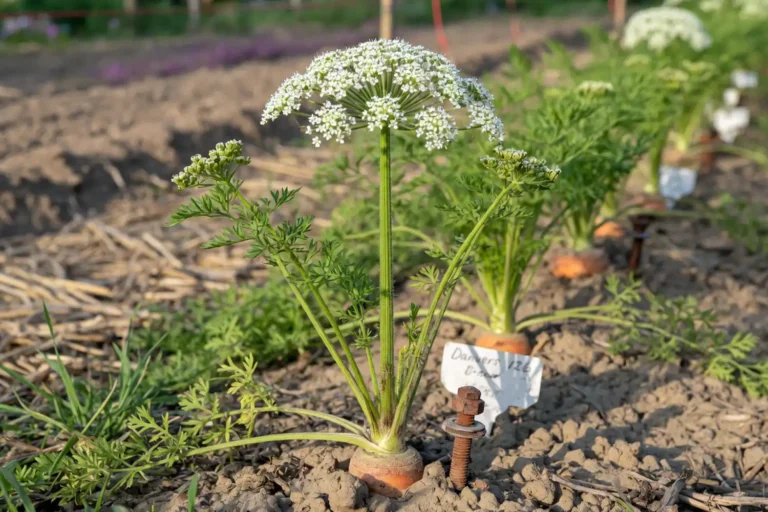
Danvers carrots are the classic medium orange carrot, with broad shoulders that taper to a point. They grow 6 to 8 inches and hold a deep orange color. This is an American heirloom, developed near Danvers, Massachusetts, back in the 1870s. Danvers handles heavier and poorer soil better than Imperator. It also stores well through winter. The standard variety is Danvers 126, sometimes sold as Danvers Half Long. If you want one dependable orange carrot for the garden, this is a safe pick.
Chantenay Carrots
Chantenay carrots are short, broad-shouldered roots that push through clay and rocky ground better than any other type. They run 4 to 5 inches and taper to a blunt point. The flavor is rich, and they store for months. The catch is timing. You have to pull them once they size up, or they turn fibrous and woody. Chantenay is the type it helps to use in the heavier patches of the field. Red Core Chantenay is the classic, and it is still the standard for canning and freezing. The Kuroda carrot is a Japanese Chantenay type that does well in heavy clay.
Ball and Paris Market Carrots
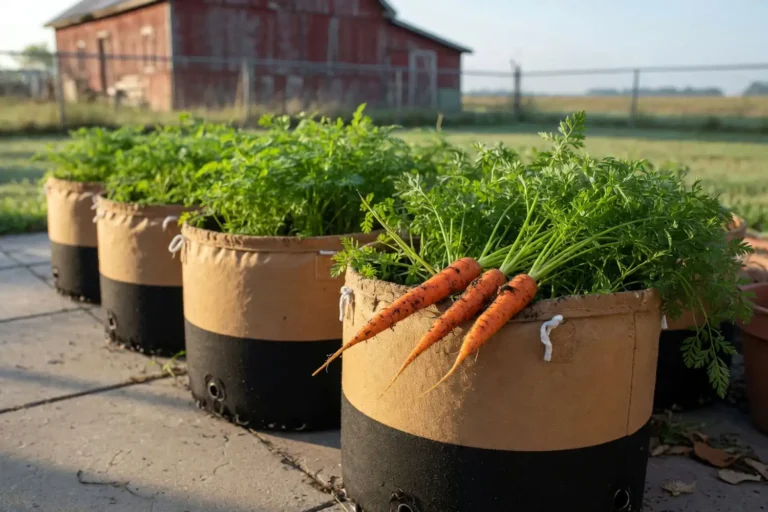
Ball carrots, also called Paris Market, are round roots about the size of a golf ball or a large radish. The shape is the point. They size up in shallow, rocky, or compacted soil where long carrots cannot grow straight. That also makes them a strong pick for pots and raised beds. Tonda di Parigi is the best-known variety. If you garden over hardpan or in containers, ball types and growing carrots in containers solve the depth problem.
Mini and Baby Carrots
Mini carrots are small varieties bred to mature short, not the bagged baby carrots from the store. True minis stay 3 to 4 inches and grow fast. Little Finger is the classic, a small Nantes type you can sow close together. They suit containers and shallow beds. Store baby carrots are a different thing. Those are full-size carrots, usually Imperator, cut down by machine. So a baby carrot in a bag and a mini carrot from seed are not the same.
Carrot Colors and What They Mean
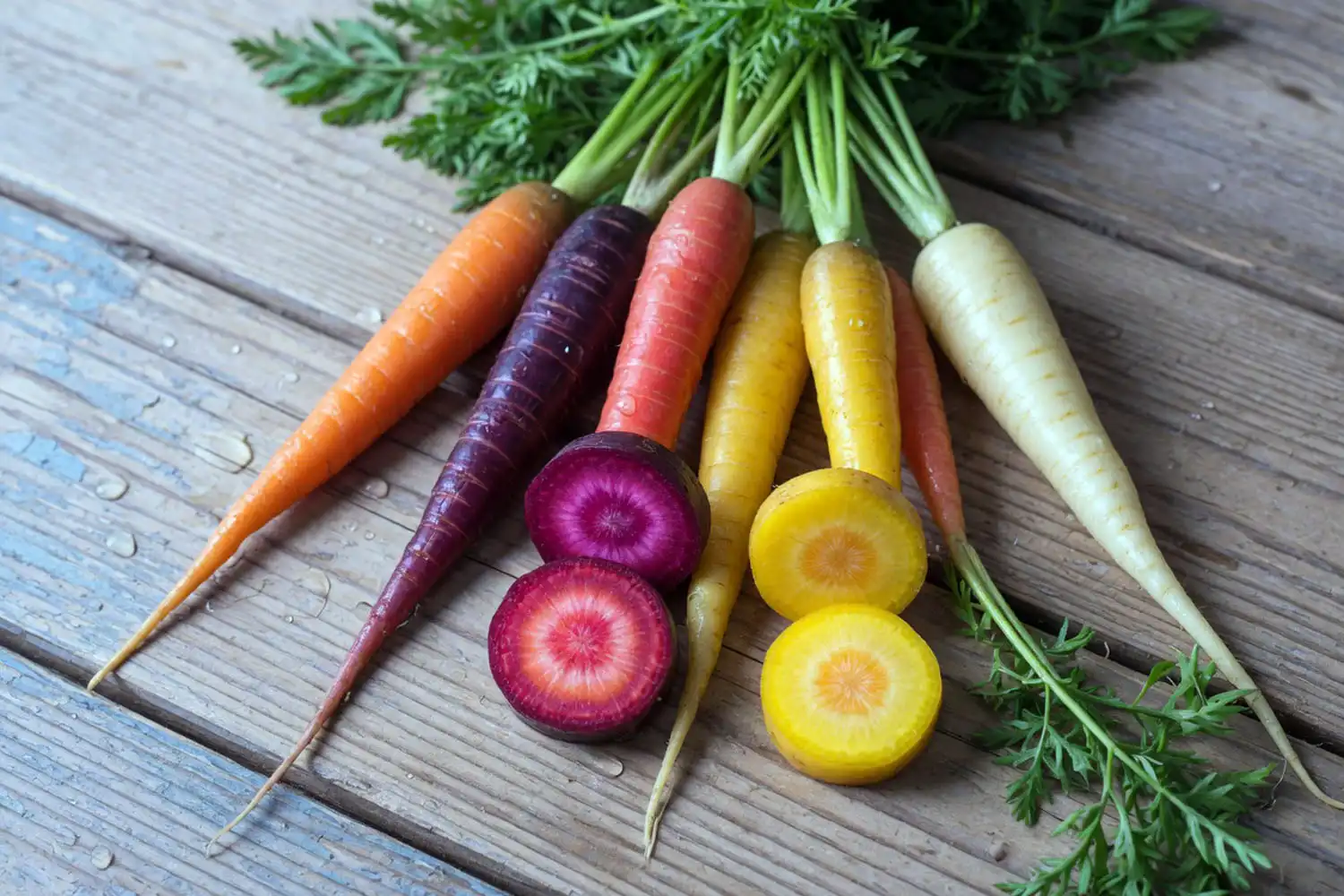
Carrots come in five main colors: orange, purple, red, yellow, and white. Each color comes from a different pigment, and the pigment changes the nutrition.
Orange carrots get their color from beta-carotene, which your body turns into vitamin A. This is the Dutch-bred standard most people picture.
Purple carrots carry anthocyanins, the same antioxidants found in blueberries. Purple was the original color of carrots first grown in the East. Many purple types are orange inside.
Red carrots get their tint from lycopene, the pigment in tomatoes and watermelon. They show up often in South Asian cooking.
Yellow carrots hold lutein and other xanthophylls. They taste mild and a touch sweet.
White carrots carry almost no pigment. The flavor is the mildest of the group.
Color also tracks history. The purple and yellow eastern carrots trace back to plants first domesticated near Persia. The orange western carrots came later out of the Netherlands.
Wild Carrots vs. Cultivated Carrots
Wild carrots and cultivated carrots are the same species, Daucus carota, but only the cultivated kind grows the sweet, fat root you eat. Wild carrot is the plant many people know as Queen Anne’s lace. Its root stays thin, pale, and woody, not worth digging. The garden carrot is Daucus carota subsp. sativus, bred over centuries for size and sugar. So when you read names like Bolero, Cosmic Purple, or Danvers 126, those are varieties of one species. They are not separate kinds of plant. That point matters when you save seed, because a flowering carrot can cross with wild carrot growing nearby.
Which Carrot Type Should You Grow?
The right carrot type depends on your soil depth and texture more than anything else. Match the root to the ground first, then think about color and flavor.
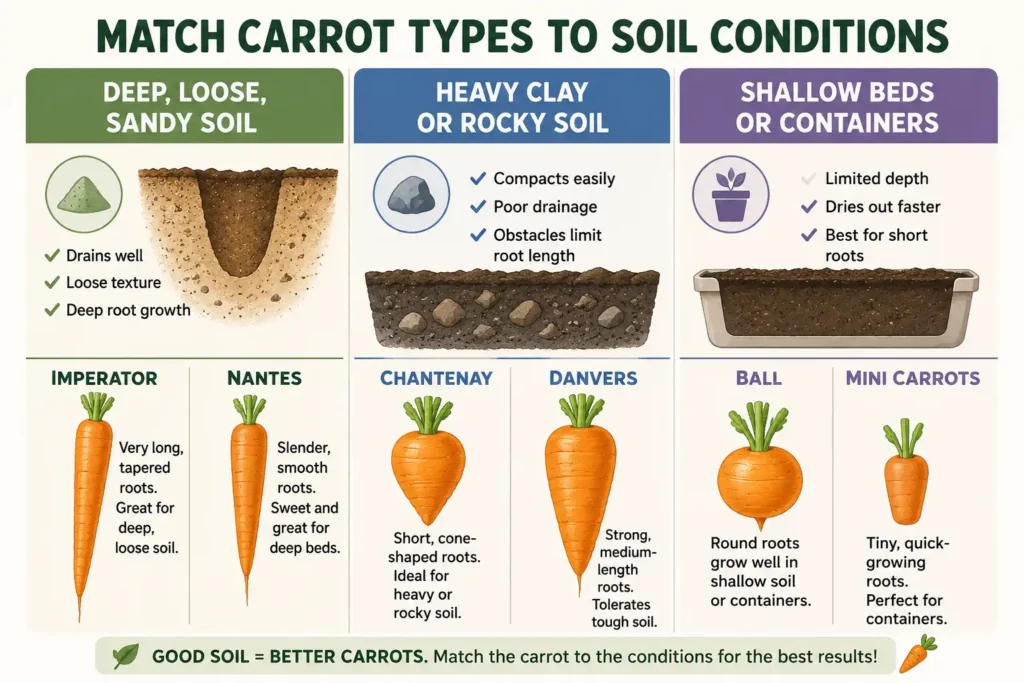
Deep, loose, sandy soil grows the best long carrots, so plant Imperator or long Nantes types there. Heavy clay or rocky soil calls for short, strong roots, so reach for Chantenay or Danvers. Shallow beds, containers, or hardpan suit round Ball carrots and mini types. For fresh snacking and juicing, Nantes wins on sweetness. For storage through the winter, Danvers and Chantenay hold up the longest.
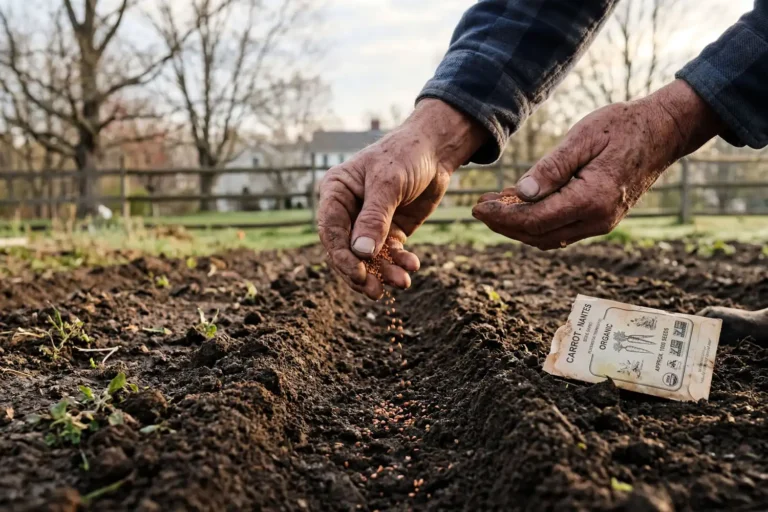
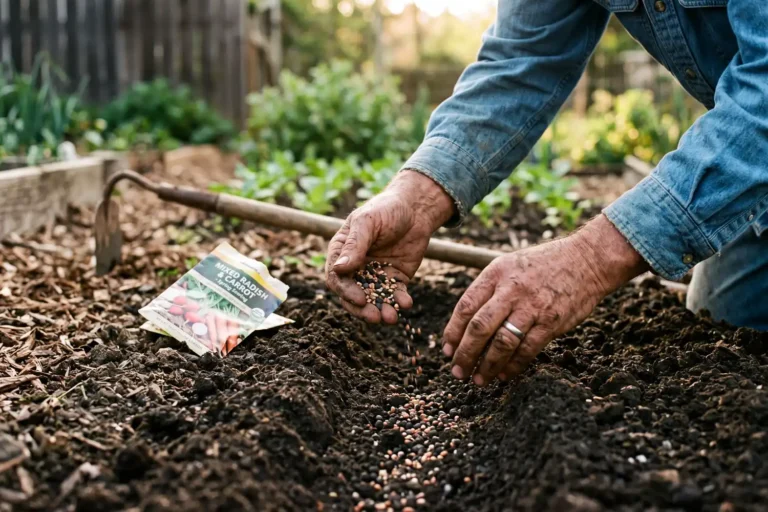
If you are not sure how your ground stacks up, read up on the soil texture that grows straight carrots before you pick a type. Carrots can be tricky to grow when shape and soil do not match, but the right pairing makes the crop easy. Once you have the type chosen, the rest of planting carrots is straightforward.
How to Choose Carrot Types
Ground runs heavy in spots, so plant Chantenay and Danvers where the clay sits thick. They size up reliably and store through the cold months. In the best raised beds, grow Nantes for fresh eating, since the sweetness is hard to beat. If you are starting out, do not overthink the count. Match the carrot type to your soil first. Pick the color you like second. Get that pairing right, and a good crop follows.