Can You Grow Carrots in Hydroponics? Yes, Here’s How
Carrots are root crops, so the question of whether you can grow carrots in hydroponics comes up often. The short version: yes, but not in every system. Get the depth, medium, and nutrient mix right, and a soilless setup grows clean, straight roots indoors.
Yes, you can grow carrots in hydroponics using a media-based system like wick, drip, or ebb and flow with at least 8 to 12 inches of depth. Pick short varieties, keep pH near 6.0 to 6.5, and feed lower nitrogen.
Can You Grow Carrots in Hydroponics?
Yes, carrots grow well in hydroponics once you give the taproot room to push down and a medium to grow into. They are not as easy as lettuce or basil, but they are far from impossible. The trick is matching the system to how a carrot actually develops.
A carrot is a single taproot that swells over time. It needs depth, light resistance, and steady moisture, not a stream of water around bare roots. So a system that suspends roots in liquid fights the plant. A system that holds a loose, deep medium works with it. That one difference decides whether your harvest comes out long and straight or stubby and forked.
Why Carrots Are Harder Than Lettuce in a Soilless Setup
The problem is the root itself. Lettuce and herbs grow above the waterline and dangle their roots into the solution. Carrots store everything underground, so the edible part has to form inside something solid.
Bare roots sitting in water rot or stall. The taproot also needs gentle resistance to grow straight down. Without a medium, it sprawls. That is why most root crops underperform in the same rigs that grow leafy greens beautifully. You are not doing anything wrong. You just need a different kind of system.
Which Hydroponic Systems Work Best for Carrots
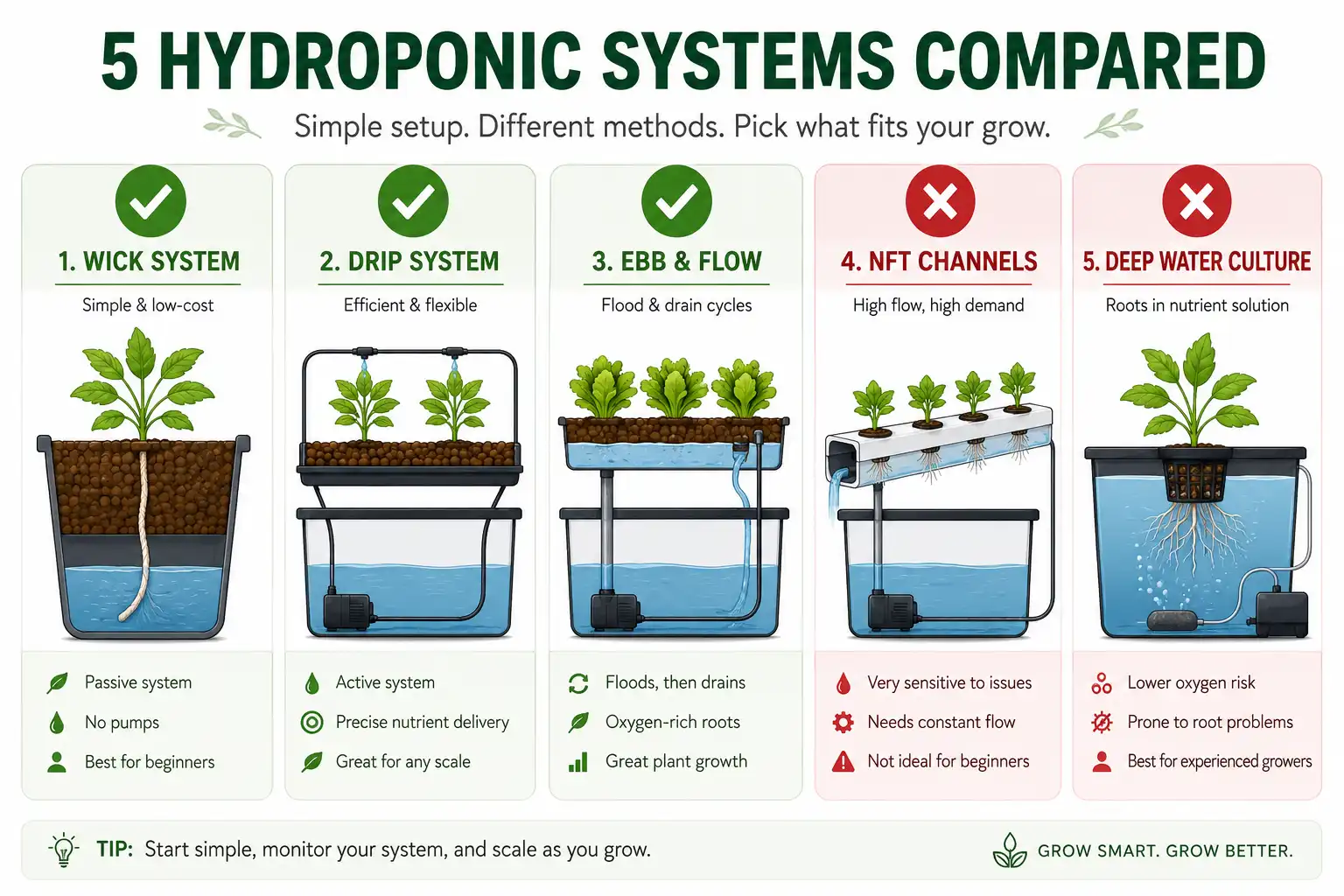
Media-based systems work best for carrots because they hold the root and feed it from the top. Three setups stand out: wick systems, drip systems, and ebb and flow (flood and drain). All three keep a deep bed of medium that stays damp without staying soaked.
Wick systems pull nutrient solution up into the medium slowly. Drip systems trickle it in from above. Ebb and flow floods the bed, then drains it, so the roots get water and oxygen on a cycle. Dutch buckets (Bato buckets) and deep wicking beds also do the job well. Any of these gives you the depth and structure carrots need. If you have grown carrots in containers before, you already understand the idea. A hydroponic bed is just a smarter, better-fed version of that pot.
Should You Use NFT or Deep Water Culture for Carrots?
No, NFT and standard Deep Water Culture are poor choices for carrots. Nutrient film technique runs a thin film of water through channels with no medium, so the taproot has nothing to grow into. Deep Water Culture and Kratky setups keep roots submerged, and carrots rot under that much constant moisture.
Both methods are excellent for greens. For a swelling root, they leave it unsupported and too wet. You can force a workaround with media-filled net pots, but it is far easier to start with a system built for depth.
Choosing the Right Growing Medium
The medium has to stay loose, drain freely, and never compact. Compaction is the number one cause of bent and forked roots, so a fine, airy mix matters more here than almost anywhere else in your setup.
A 2/3 perlite to 1/3 vermiculite blend is the standard for good reason. Perlite holds the plant upright and keeps oxygen moving. Vermiculite balances out moisture so the bed does not dry too fast. Coco coir, clean sand, peat, and lightweight clay pebbles (LECA) also work, alone or mixed. Skip rockwool for carrots. It packs too dense and traps water against the root. The same logic behind the soil texture for straight carrots applies in a soilless bed: fine and loose wins, chunky and tight loses. Pre-soak whatever you use so moisture spreads evenly before you sow.
How Deep Does the System Need to Be?
Your bed needs at least 8 to 12 inches of depth, and a full foot or more is safer. Shorter and round varieties get by on the low end. Anything longer needs 12 to 18 inches so the taproot has somewhere to go.
Depth is not optional. A carrot stops growing down when it hits the bottom, then deforms. This is the same reason the root depth carrots need decides success in raised beds and containers. Give the root more room than you think it wants. You will never regret a deeper bed, but a shallow one shows up in every harvest.
Best Carrot Varieties for Hydroponics
Short, stubby, and round types perform best because they finish before they run out of depth. Long storage types like the Imperator group reach nearly a foot and overwhelm most home rigs.
Strong picks include Scarlet Nantes, Chantenay, Little Finger, Thumbelina, and round Paris Market types. Adelaide and Romeo also do well as compact baby carrots. These mature at four to six inches, which fits a one-foot bed with room to spare. Match the variety to your depth first, then worry about flavor. A sweet long carrot you cannot finish is worse than a tidy short one you can.
Nutrient Solution, pH, and EC
Carrots rely entirely on the nutrient solution, so the recipe carries the whole crop. Keep the pH between 6.0 and 6.5. In that range, the plant can take up the nutrients it needs. Drift too high or too low and uptake stalls even when the solution is full.
Run your electrical conductivity (EC) between 1.6 and 2.0 mS/cm, which lands around 1,150 to 1,350 ppm. Start seedlings weaker, near the bottom of that range, then build up as the roots bulk. Refresh the solution about once a week so the mix stays balanced. A calcium and magnesium supplement (Cal-Mag) helps head off the deformities that show up when those minerals run short. Many off-color, twisted roots trace back to micronutrient deficiencies rather than anything you did at planting, so a balanced feed solves more problems than people expect.
How Much Nitrogen Do Carrots Need?
Carrots need less nitrogen than leafy greens, so avoid high-nitrogen “leafy” blends. Too much nitrogen pushes lush green tops and leaves you with small, hairy, or split roots underneath.
Use a balanced base formula early. Once the plant has a healthy set of true leaves, shift toward higher phosphorus and potassium. Phosphorus drives root formation. Potassium powers the bulking phase. A “bloom” style ratio works well for that second stage.
Light and Temperature
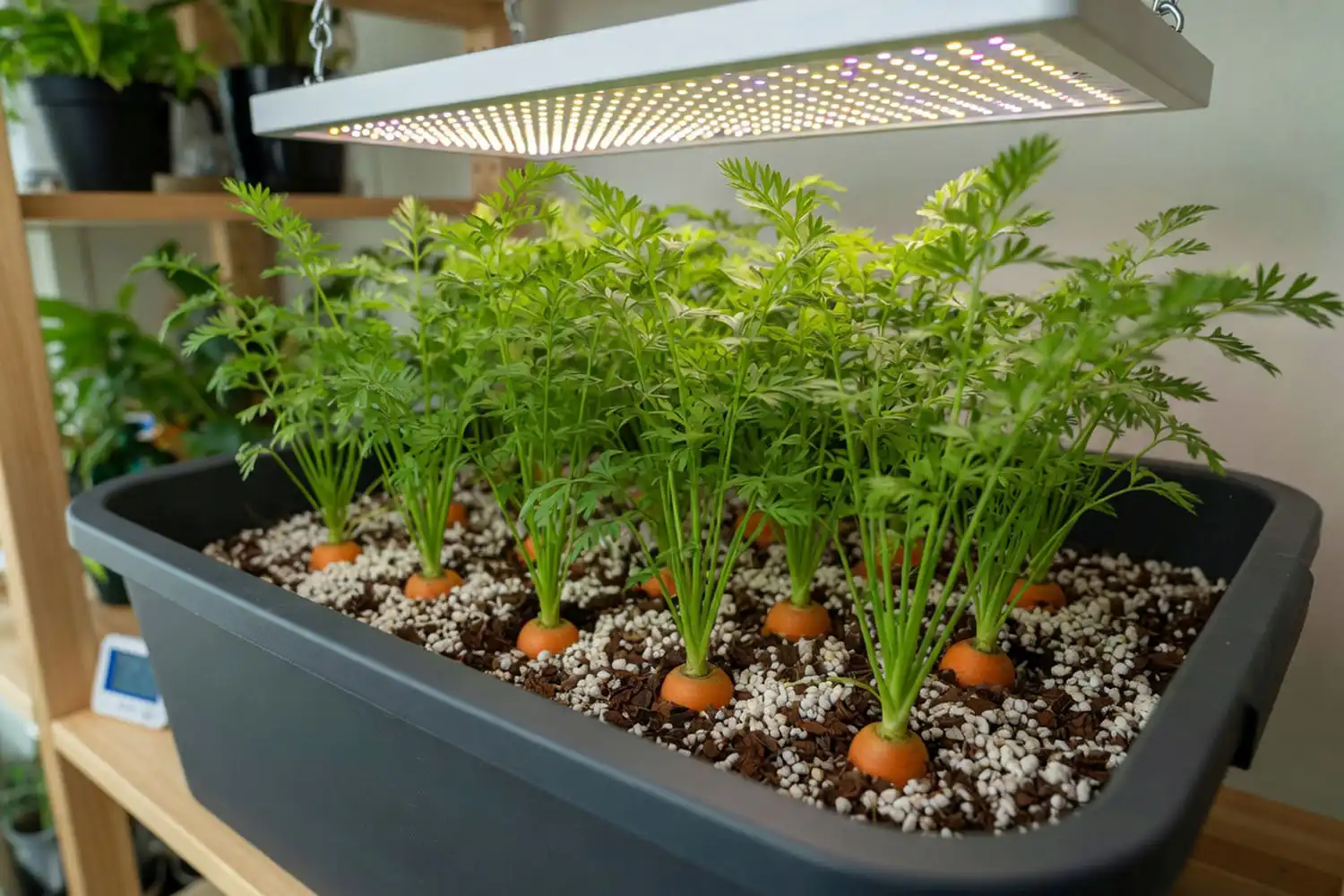
Carrots want 12 to 16 hours of light a day and cool air around 60 to 70 degrees Fahrenheit. Hang a full-spectrum LED about 6 to 12 inches above the tops and raise it as they grow. In a sunny greenhouse, natural light covers the need.
Temperature matters more than growers expect. Above 75 degrees, the roots slow down and lose sweetness. The root zone also likes cool and dark. Use an opaque container so the carrot shoulders do not green up and turn bitter at the surface. If you are deciding between window light and a grow lamp, the same rule for how much light carrots like outdoors holds here: they handle a little shade, but full, steady light builds the best roots.
Seeding and Germination in Hydroponics
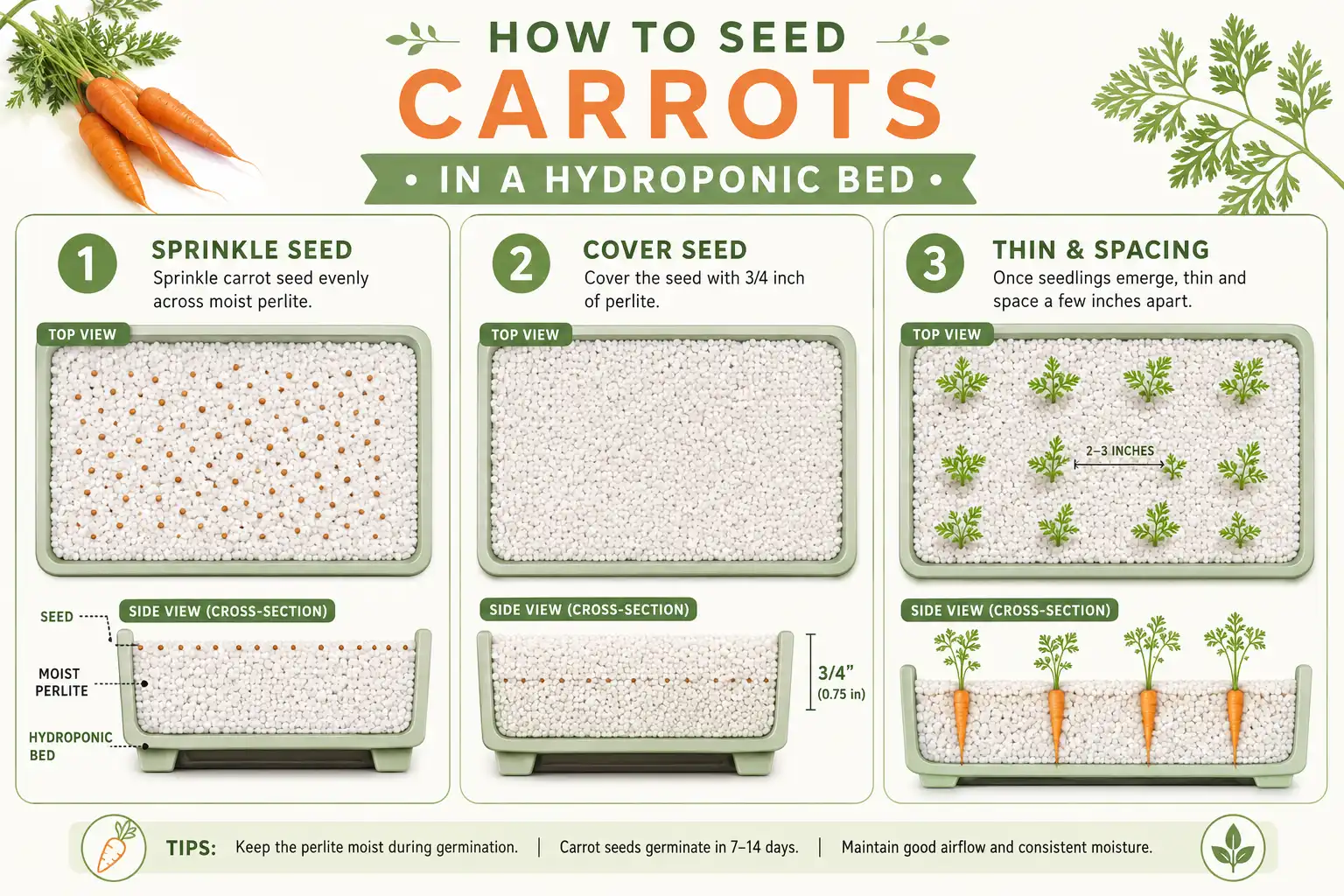
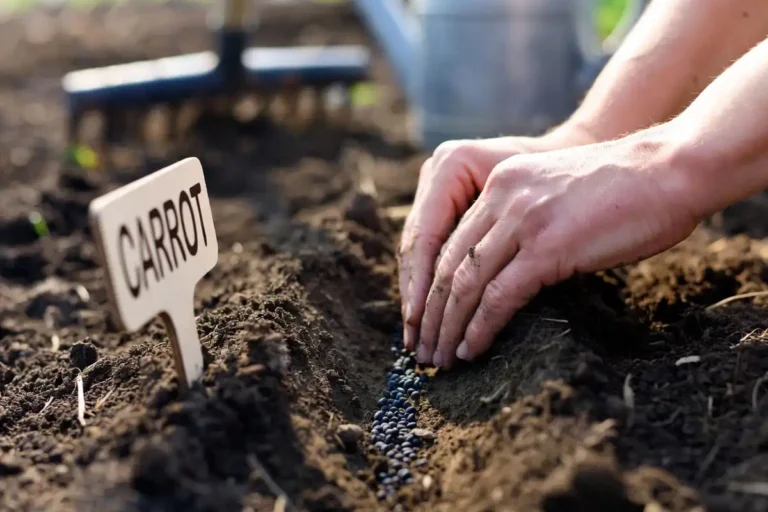
Sow carrot seed straight into the medium, because the taproot does not transplant well. Moving a started carrot almost always forks the root. Sprinkle seed across damp medium, then cover with about 3/4 inch of more medium, or follow the depth on your seed packet.
Plant more seed than you want. Carrots germinate unevenly, so sow an extra seed for every two you hope to keep. Keep the surface evenly moist, never soggy, through germination. Sprouts usually appear in 7 to 14 days, which lines up with when carrot seeds germinate in soil. Once seedlings stand up, thin them to about 2 to 3 inches apart. Thinning feels wasteful, but crowded roots fight for space and come out misshapen. If you have wrestled with transplanting carrots without forking, this is the cleaner path: start them where they will finish.
Common Problems and Fixes
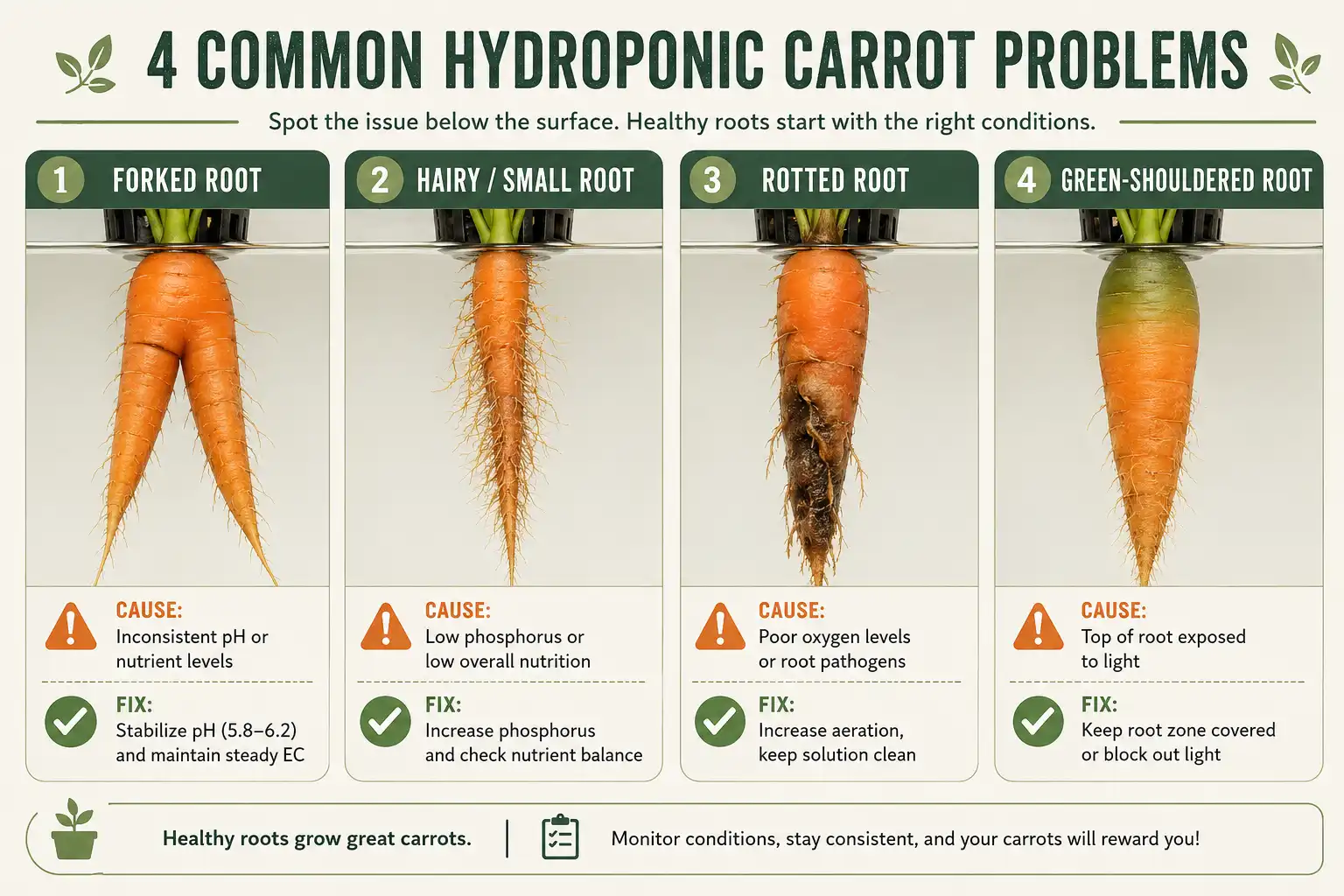
Most hydroponic carrot failures are structural, not biological. Fix the setup and the roots follow. Here is what tends to go wrong and how to handle it.
Forked or twisted roots come from a compacted bed, a chunk of debris, or a damaged taproot. Loosen the medium, screen out big pieces, and handle seedlings gently. Small or hairy roots point to too much nitrogen, so switch to a lower-nitrogen, higher-phosphorus feed. Poor germination usually means the surface dried out, so keep it consistently damp. Root rot signals too much moisture, which is why bare water systems fail; back off the watering or improve drainage. Greening at the shoulders means light is reaching the root, so cover the surface or use an opaque bed.
When to Harvest Hydroponic Carrots
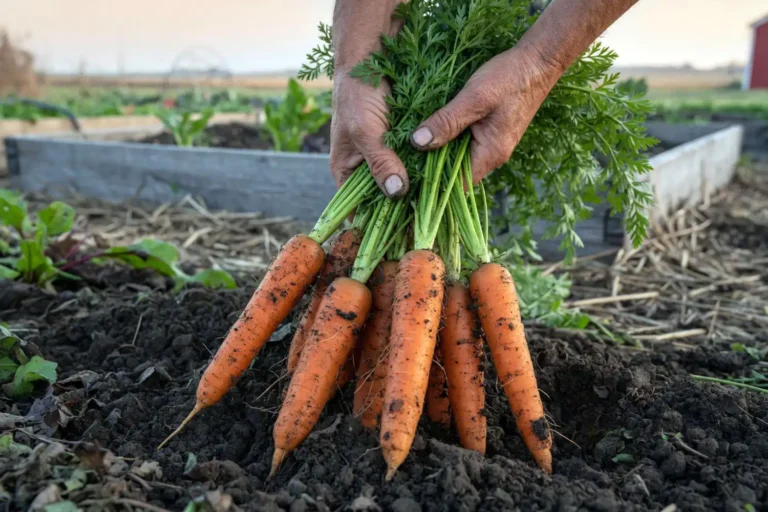
Most short hydroponic varieties are ready in about 60 to 75 days. Check the variety, since that number shifts with type, light, and feed. The easiest tell is the shoulder: brush back a little medium and look for a root about an inch across at the top.
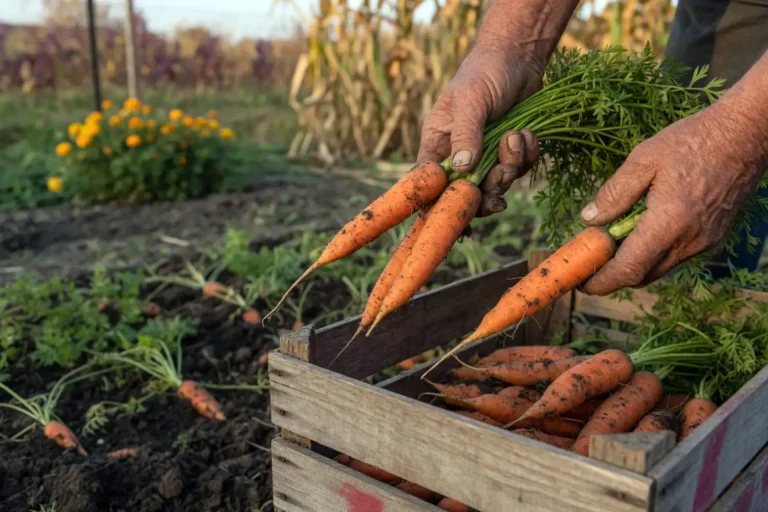
To pull, loosen the medium around the base first, then lift the carrot gently. Yanking it bruises the root and disturbs neighbors. Loose media beds make this clean and easy, which is one of the quiet advantages of growing this way.
Is It Worth Growing Carrots Hydroponically?
It is worth it when control and clean roots matter more than bulk. A soilless bed gives you year-round carrots indoors, uses far less water than a field, and dodges most soil-borne pests and weeds. For tight spaces, poor ground, or a long off-season, that adds up.
For sheer volume at low cost, a garden row or deep container still wins on price. Hydroponics asks for upfront gear and steady monitoring of pH, EC, and light. So weigh what you want. Crisp, predictable carrots in any season point to hydroponics. A big cheap haul points to soil.
Where to Start If This Were Your First Hydroponic Crop
Start with a single deep ebb and flow bed, a perlite and vermiculite mix, and a short variety like Scarlet Nantes or a round Paris Market. Hold pH near 6.2, keep EC moderate, and feed low nitrogen once the tops fill in. Sow direct, thin without guilt, and keep the root zone cool and dark.
Carrots reward patience more than fancy equipment. Nail the depth and the medium, and the rest is just steady tending. That is exactly how it helps to run it, and it is how it helps to set you up for a clean first harvest.