How Much Water Do Carrots Need at Each Growth Stage
Carrots reward steady moisture and punish neglect. So how much water do carrots need? The honest answer shifts with their growth stage, your soil, and the weather. Nail it and you pull sweet, straight roots. Miss it and they crack, fork, or turn woody and bitter.
Carrots need about 1 inch of water per week, including rainfall. Keep the top 6 to 12 inches of soil evenly moist. Water deeply once or twice a week, and never let the bed dry out completely.
Learn more: Start Carrots Indoors: What Actually Works
How Much Water Do Carrots Need Each Week?
Plan on 1 inch of water per week as your baseline. That covers most carrot beds in average spring and fall weather here on the Great Plains. K-State Research and Extension recommends close to an inch a week for root crops in our region, and that lines up with what I see on my own rows.
That number is not fixed, though. You adjust it for heat, soil, and wind. In a hot Kansas July, I push it to 1.5 inches. On hot, windy days, evapotranspiration pulls moisture out of the soil and the plant fast, so the bed dries quicker than the calendar says. Sandy ground also drains faster and needs more.
Rainfall counts toward that inch. So I keep a cheap rain gauge in the field and subtract what the sky gives me. If we get a half inch of rain, I only need to add a half inch. After establishment, the goal is to wet the soil down to where the taproot grows, not just dampen the surface.
How Often Should You Water Carrots?
Water deeply once or twice a week after the plants are established. That schedule trains roots to grow down instead of sideways chasing shallow moisture. Light daily sprinkles do the opposite, so I avoid them once the carrots are up.
Heat and soil change the frequency. Sandy beds in summer may want water every 2 to 3 days. Container carrots dry out fastest and often need water daily. The amount per week stays roughly the same. You just split it into more frequent watering when the soil holds less.
How Carrot Water Needs Change at Each Growth Stage
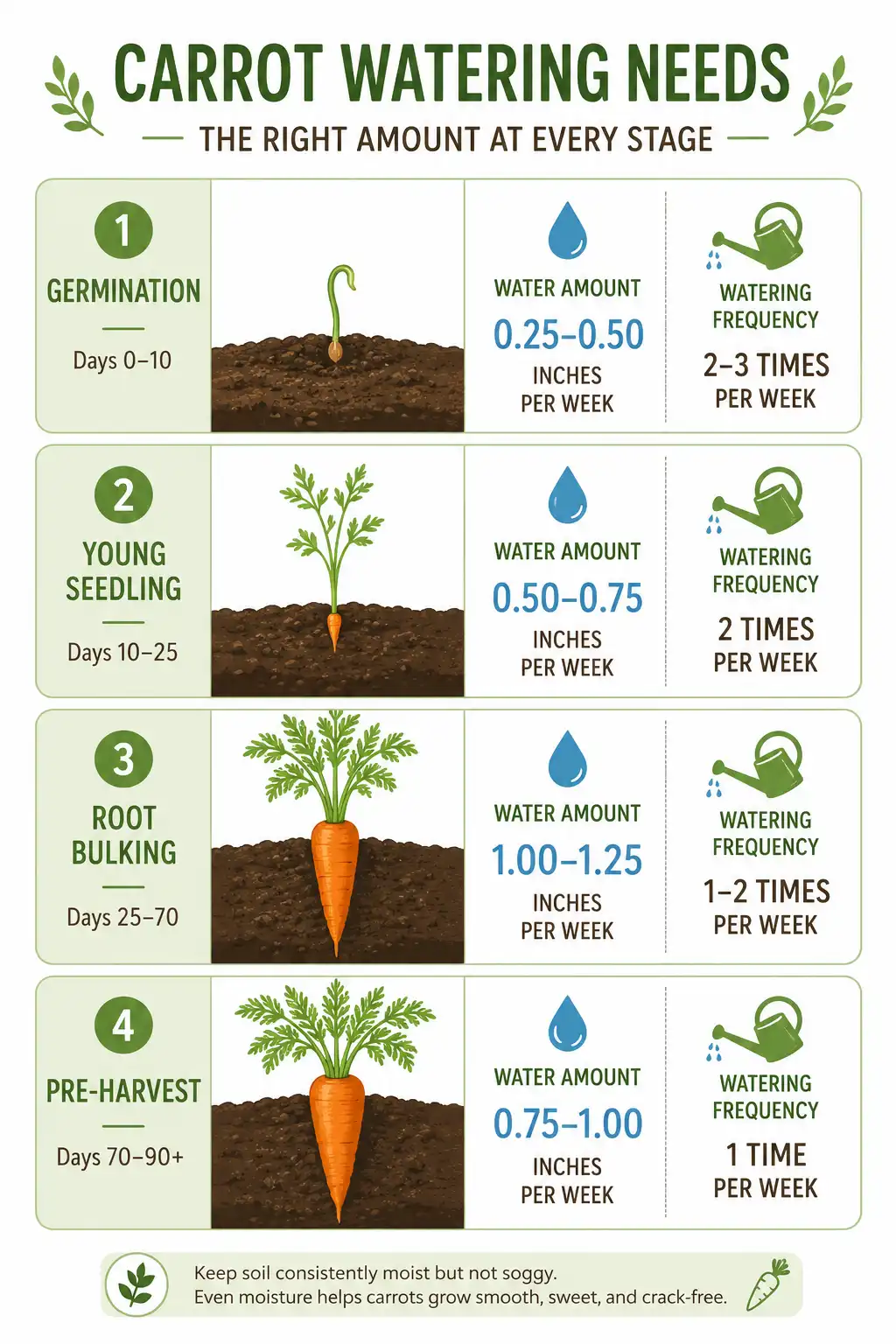
Carrots do not want the same amount of water their whole life. The right approach changes from seed to harvest, and matching water to the stage is what separates a clean crop from a cracked one.
Germination (Days 7 to 21)
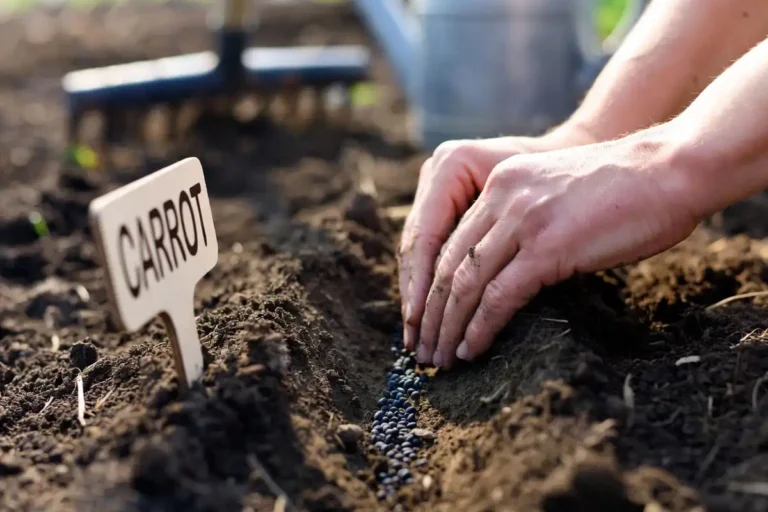
Germination is when carrots need water most, and steady surface moisture decides the entire crop. Carrot seeds go in shallow, about a quarter to a half inch deep, and they are slow to sprout. They can take anywhere from a week to three weeks to break ground, which is part of why so many growers fail at this stage.
The top inch of soil cannot dry out during that window. I water lightly once or twice a day, or whenever the surface starts to look pale and dry. If you want to read more on the timing, I wrote about how long carrot seeds take to germinate in a separate guide.
Soil crusting is the other killer. After a hard rain or overhead watering, clay-heavy ground forms a hard crust that tiny seedlings cannot push through. To beat it, I keep the surface damp and sometimes cover the row with a thin layer of vermiculite or fine compost. My full notes on irrigating carrots early to prevent crusting walk through the exact method.
Young Seedlings
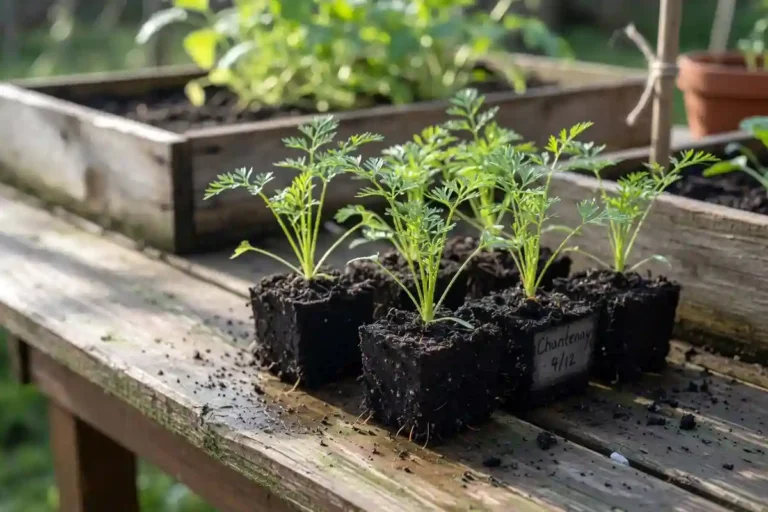
Young seedlings need consistent moisture while their roots are still small and close to the surface. Keep the top few inches damp but not soggy. This is the stage to start watering a little deeper and a little less often, so the roots learn to chase water downward.
Root Bulking
During root bulking, even moisture matters more than total volume. This is the long middle stretch where the taproot fattens up. The danger here is the feast-or-famine cycle: let the soil go bone dry, then dump heavy water, and the root absorbs it so fast the skin splits open.
So I aim for steady, deep watering on a rhythm the soil can hold. Stick to your inch a week, delivered deep, and the roots stay smooth and firm. Sudden swings are what cause the ugly cracks.
The Last Two Weeks Before Harvest
Ease back on water slightly in the final week or two before you dig. A modest cut firms up the texture and concentrates the sugars, which gives you sweeter carrots. Do not let them dry out fully, though, or you risk splitting when the next rain hits.
How Your Soil Type Changes the Watering Schedule
Your soil decides how often you water, not just how much. The same inch a week behaves very differently depending on what you are growing in.
Sandy soil and sandy loam drain quickly and hold little water, so they need watering every 2 to 3 days in warm weather. Clay soil holds moisture far longer, so you water less often, maybe every 5 to 7 days. But clay carries its own risk: it stays wet, and waterlogged ground leads to rot, disease, and forked roots.
Sandy loam is the sweet spot for carrots because it drains well while still holding enough moisture between waterings. It also lets the taproot push straight down without resistance. If your ground is heavy, loosening it and improving structure helps as much as your watering does. I get into which soil texture grows straight carrots and why it matters so much for root shape.
Signs Carrots Are Getting Too Much or Too Little Water
You can read your carrots and their tops to tell whether the water is right. Both extremes leave clear signs, and catching them early saves the crop.

Signs of Underwatering
Dry, water-starved carrots show up fast once you know what to look for:
- Tops wilt in the midday heat and stay limp instead of recovering by evening
- Roots turn woody, tough, and fibrous instead of crisp
- A strong bitter flavor develops in the root
- Growth stalls and the carrots stay small and stunted
- The roots crack or split when heavy water finally returns after a dry spell
Signs of Overwatering
Too much water shows up just as plainly, usually in the foliage and the soil first:
- Tops turn pale or yellow instead of deep green
- Soft rot or mushy spots form on the roots
- Fungal leaf diseases take hold, since wet foliage invites them
- Roots split from rapid uptake after the soil swings from dry to soaked
- Carrots fork and grow misshapen in soggy, compacted ground
How to Check Soil Moisture Before You Water
Check the soil itself instead of watering on a fixed schedule. The fastest method is the finger test: push a finger 2 to 3 inches into the bed. If it comes out dry at that depth, water. If it is still damp, wait.
For more precision, I keep a probe in the field. A advanced soil moisture meter takes the guesswork out, especially when you are managing more than one bed at a time. Once in a while I also dig a small hole next to a row to see how deep the moisture actually reaches, because the surface lies about what is happening below.
The Best Way to Water Carrots
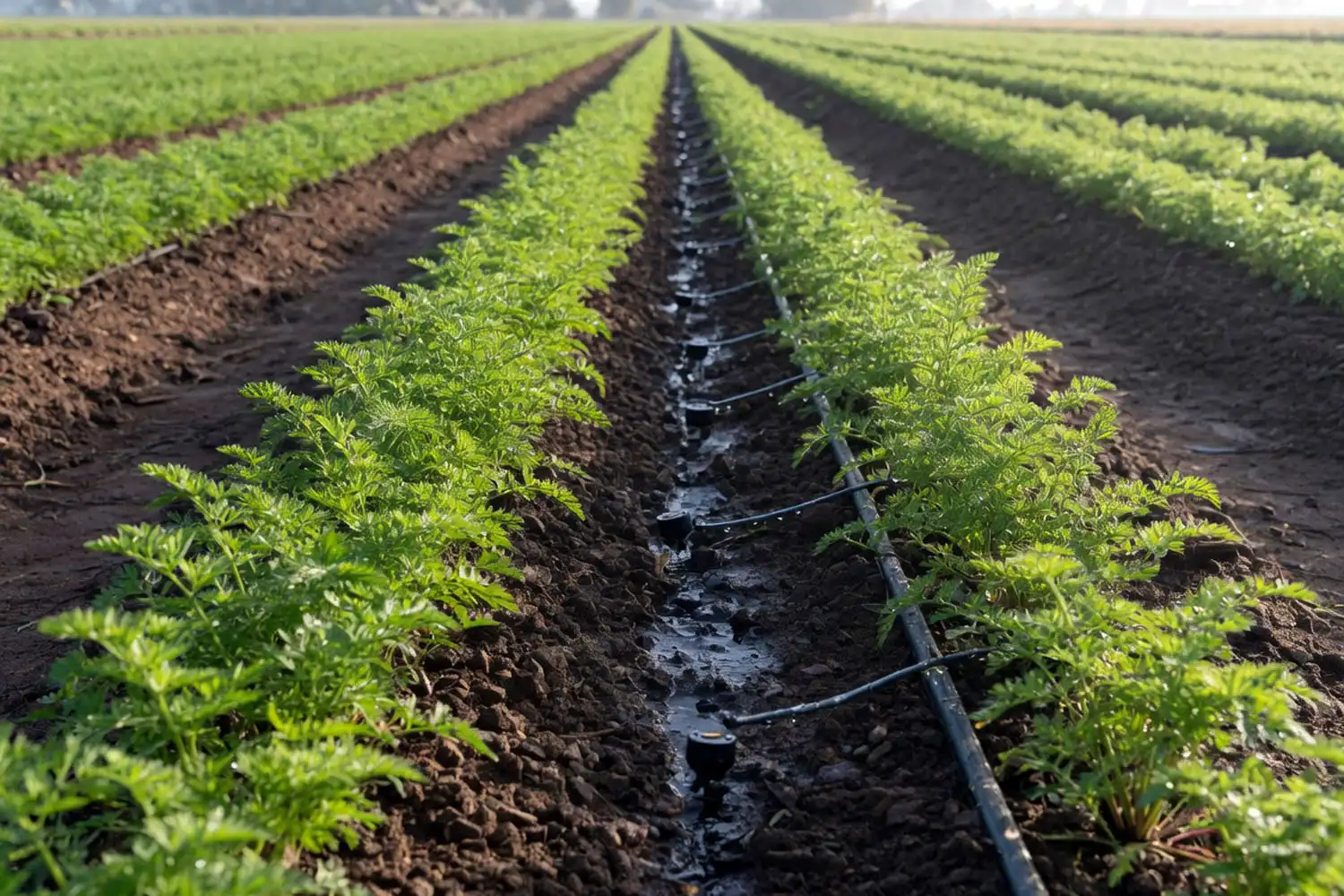
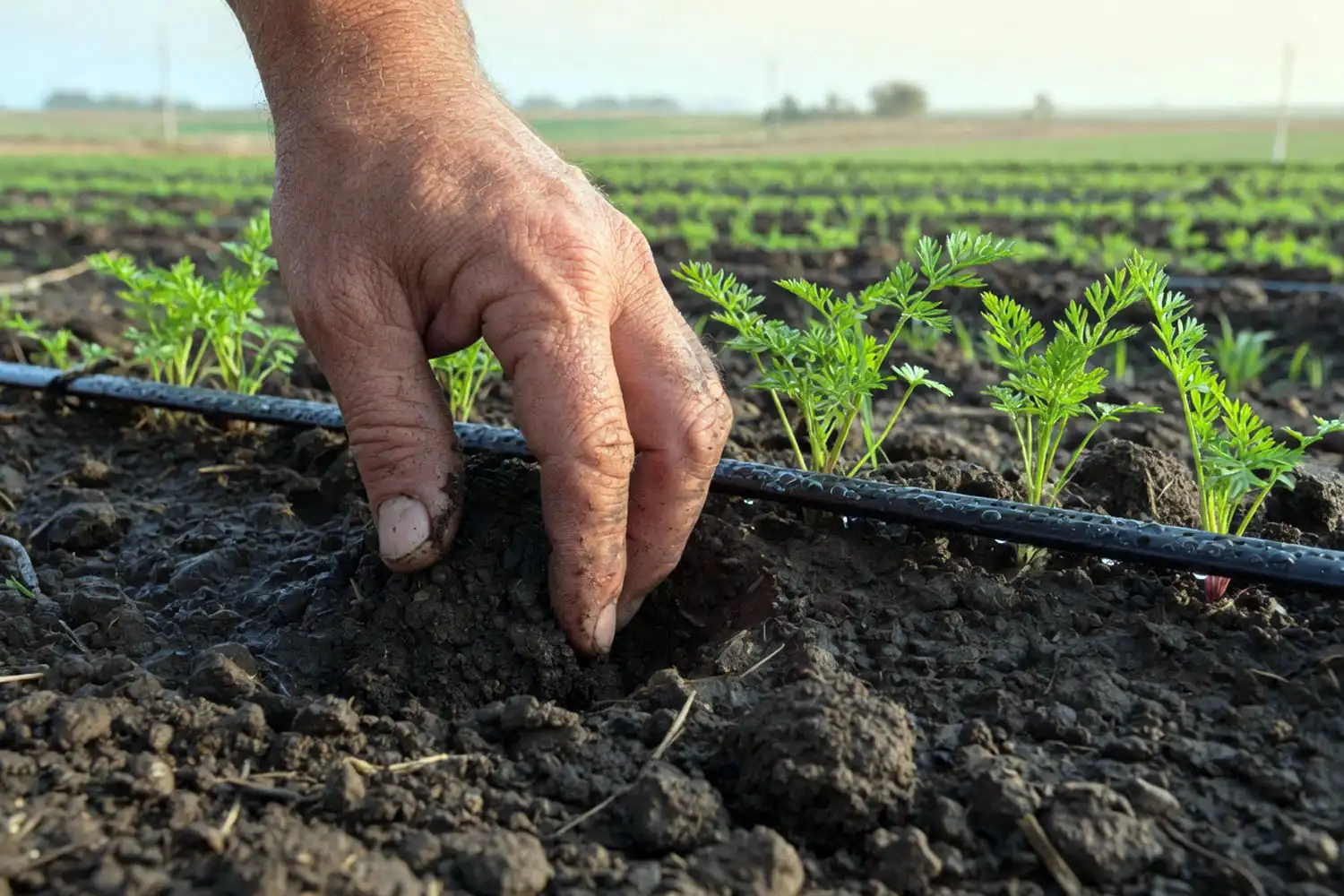
Drip irrigation is the best way to water carrots because it delivers water straight to the root zone and keeps the foliage dry. Dry leaves mean far less fungal disease, and slow, even delivery soaks the soil deeply without crusting or washing out seed. A soaker hose does the same job on a smaller plot.
Overhead sprinklers have one good use: keeping the surface moist during germination. After the carrots are up, though, I switch off the overhead and let drip do the work. If you are weighing your options, I compare drip and sprinkler irrigation methods so you can pick what fits your setup. Whatever you use, water in the morning. That gives the leaves all day to dry and starves disease of the overnight dampness it loves.
Watering Carrots in Containers and Raised Beds
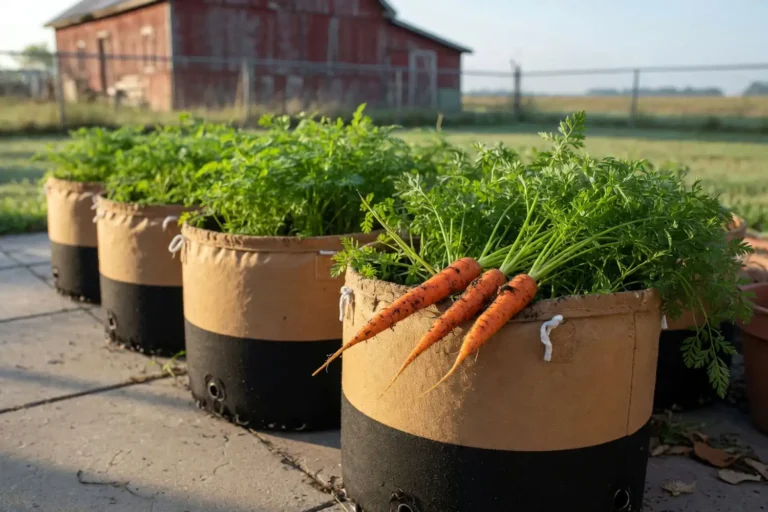
Containers and raised beds dry out much faster than open ground, so they need water more often. A pot in summer heat can need water once or even twice a day, because the soil heats up and drains on all sides. Raised beds sit somewhere in between, draining faster than in-ground rows but holding more than a pot.
Drainage is non-negotiable. Every container needs holes so the roots never sit in standing water. A layer of mulch on top slows evaporation and keeps the moisture steadier between waterings, which is half the battle in a pot. For the full setup, I lay out growing carrots in containers from soil mix to harvest.
What I Watch For on My Own Rows
Consistency beats volume every time with carrots. An inch a week is your starting point, but the real skill is keeping the moisture steady so the roots never swing from dry to flooded. Check the soil with your finger or a meter before you turn on the water, adjust for heat and your soil type, and ease off slightly before harvest. Do that, and you will pull clean, sweet, crack-free carrots season after season.