When Do Carrots Germinate: 9 Fast Checks for an Even Stand
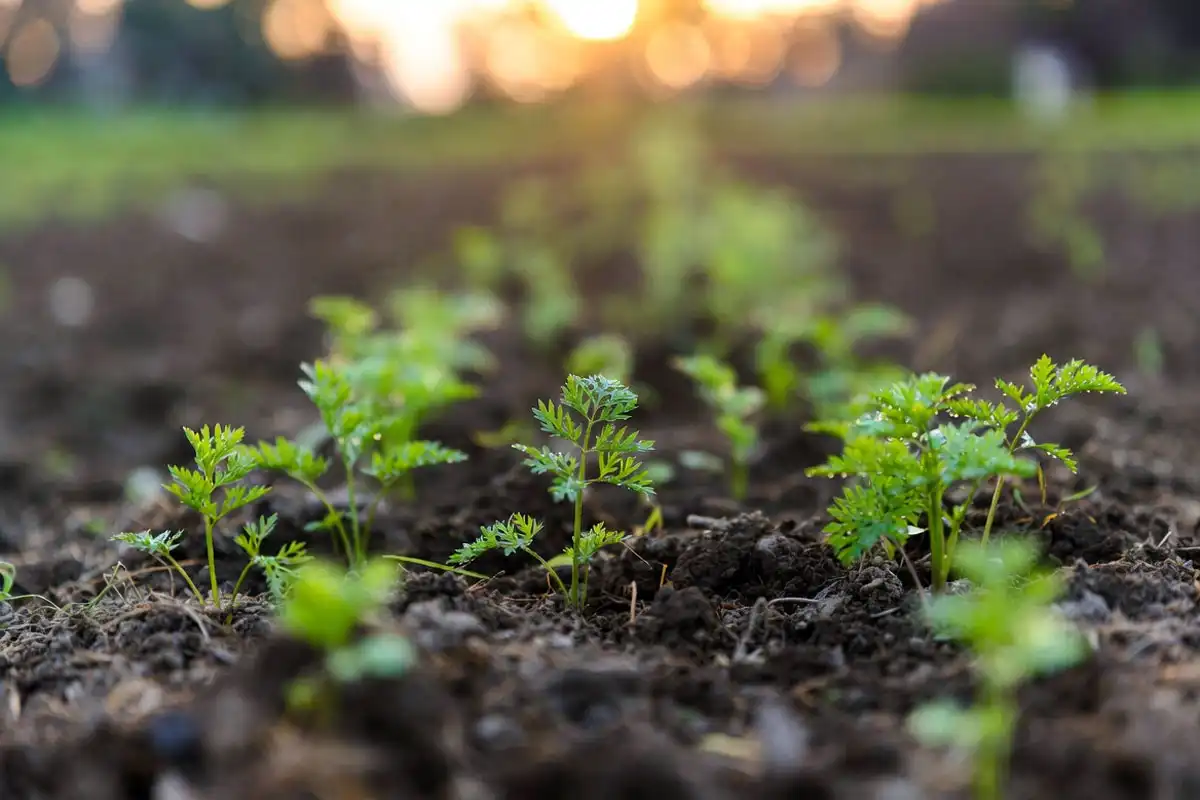
Carrot seeds usually germinate and emerge in 10 to 21 days, and warm, evenly moist soil often shortens that window. This guide explains the germination timeline, the soil and weather problems that slow emergence, and the field fixes that improve stands. You will learn what to check in the seed row, how to water without crusting, and when to re-seed. Use it for garden beds, raised rows, or larger plantings where uniform emergence drives uniform roots.
Carrots often emerge in 7 to 14 days when the seed zone stays consistently moist and soil sits near 60 to 70°F (16 to 21°C). Cold soil, a dry surface, crusted beds after rain, deep planting, clods, and weak seed vigor often push emergence to 14 to 28 days or create skips. Place seed 1/4 to 1/2 inch (6 to 13 mm) deep, firm the row, and keep the surface damp until seedlings break through.
What counts as carrot germination and emergence?
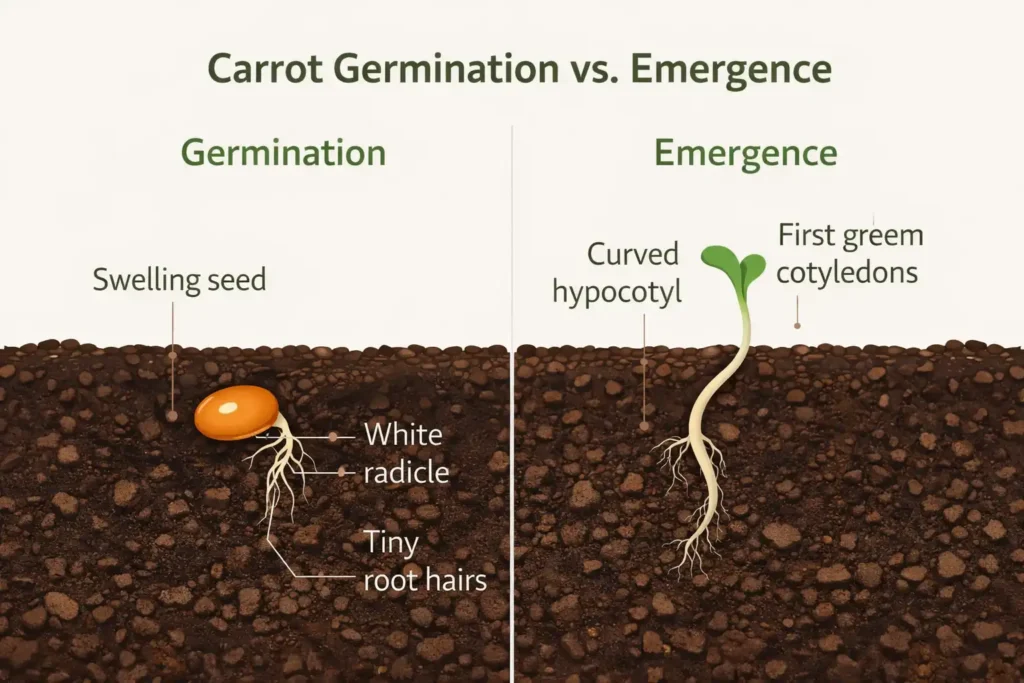
Carrot germination starts when the seed absorbs water and grows a root, while emergence ends when the seedling breaks the soil surface.
That difference matters in the field. A seed can germinate underground and still fail to emerge if the surface dries or crusts.
When you time “germination” by what you see aboveground, you are really timing emergence. Most stand problems come from the gap between those two stages.
When do carrots germinate after planting?
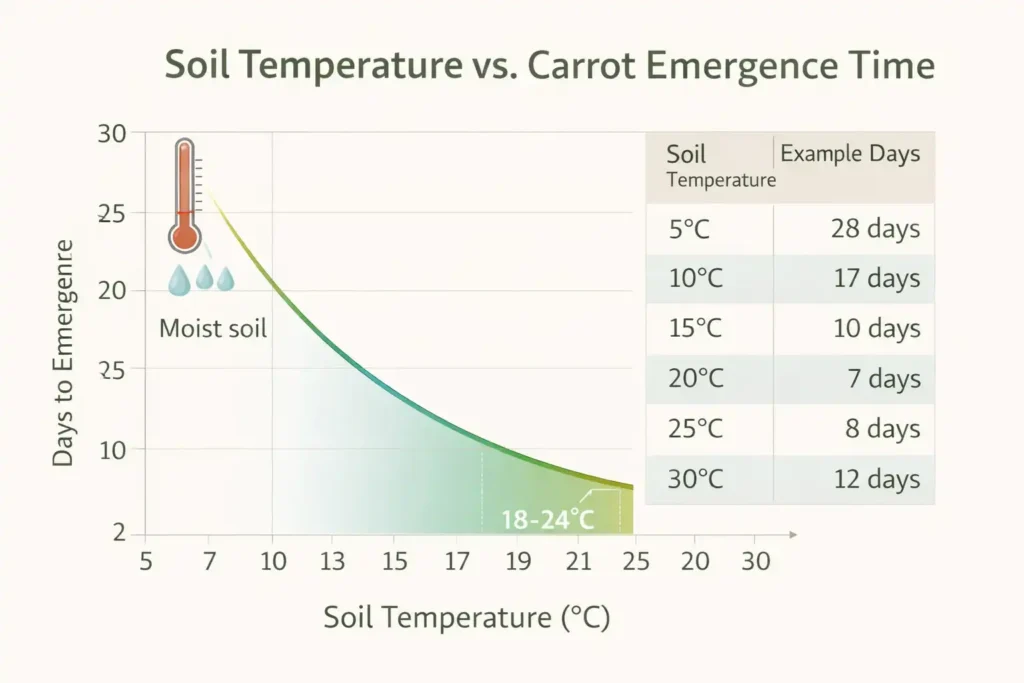
Carrot seedlings usually appear 10 to 21 days after seeding, with warm, moist topsoil pushing emergence closer to 7 to 14 days.
Seed packets often list similar ranges, but the field result depends on soil temperature, surface moisture, and how tight the seedbed stays.
If you dig the row on day 10 and find sprouted seed, the crop germinates but the bed blocks emergence.
Learn more: How to Irrigate Carrots Early to Prevent Crusting and Gaps: 5 Tips
Typical emergence timing by soil temperature
These are practical field ranges for emergence (seedlings visible), not lab germination.
| Soil temperature in the top inch | What emergence often looks like |
|---|---|
| 45 to 50°F (7 to 10°C) | 21 to 28 days, patchy stands if the surface swings wet-to-dry |
| 50 to 60°F (10 to 16°C) | 14 to 21 days, steady progress with consistent moisture |
| 60 to 70°F (16 to 21°C) | 7 to 14 days, best combination of speed and uniformity |
| 70 to 75°F (21 to 24°C) | 7 to 12 days, but surface drying and crusting risk increases |
| Above 75°F (24°C) | Timing varies, because the surface dries fast and irrigation becomes the main limiter |
What soil temperature gives the best carrot germination?
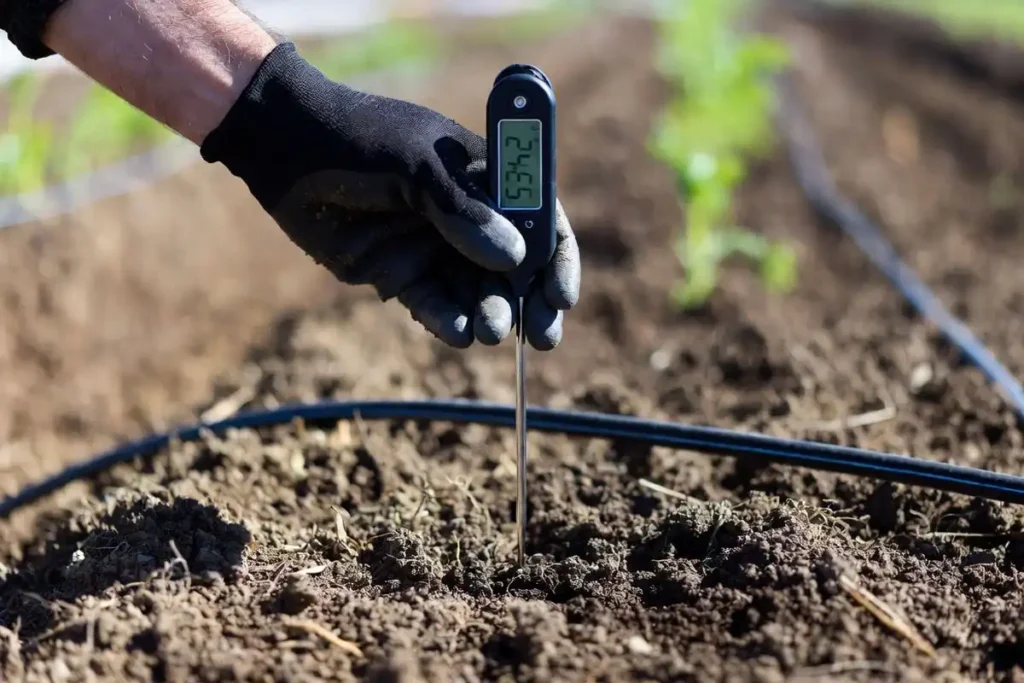
Carrots germinate fastest when the seed zone stays near 60 to 70°F (16 to 21°C).
Cold soil slows enzyme activity inside the seed, so the sprout forms slowly and spends more days underground. Long underground time increases exposure to crusting, drying, and damping-off.
Hot soil dries the top layer faster, which turns moisture management into the limiting factor. Fast drying causes skips even when soil temperature looks “ideal.”
When should you seed carrots so they emerge evenly?
Seed carrots when you can keep the top inch of soil damp for 2 to 3 weeks without pounding it into a crust.
In spring, “workable soil” beats “early calendar date.” A seedbed that smears or clods rarely produces an even carrot stand.
In hot weather, plan around moisture loss. Late-day seeding, light shading, and frequent light irrigation help the seed zone stay damp.
For help lining up timing by region and season, read this basic crop planting calendar as a planning reference.
Where do carrots struggle to emerge in the field?
Carrots struggle in soils that crust, compact, or dry on top.
Silt loams and fine-textured soils often crust after a hard rain or heavy sprinkler set. Clay soils form a tight seal when the surface slakes and dries.
Sandy soils bring a different problem. Wind and sun pull moisture from the top half-inch so fast that seeds start, stop, and fail.
Raised beds, smooth seedbeds, and controlled irrigation reduce both crust and drying. The goal is a surface that stays damp and soft until cotyledons break through.
What slows carrot emergence in the field?
Uneven moisture and a hard soil surface slow carrot emergence more than any other field factor.
Below are the big field slowdowns, with the practical “why” and the fix you can apply.
How does cold soil slow emergence?
Cold soil slows the chemical reactions that drive sprouting, so seedlings take longer to reach the surface.
Long emergence windows create more chances for crusting, disease, and surface drying. The crop often emerges in waves instead of one uniform flush.
A soil thermometer in the top inch gives a better signal than air temperature.
How does a dry seed zone stop germination?
A carrot seed needs continuous moisture, because drying after the seed swells can kill the new sprout.
This is why carrots “stall” more than large-seeded crops. Small seed carries less stored energy, so it cannot restart as easily after a dry spell.
A bed that looks moist at 2 inches can still be dry where the seed sits.
Why does soil crusting cause skips?
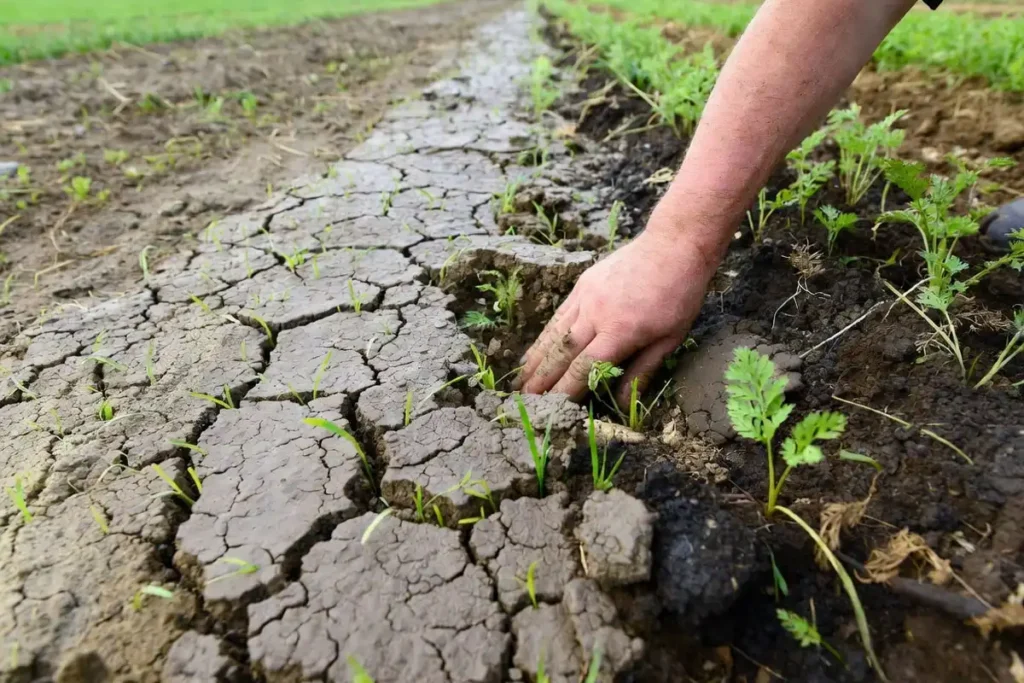
A crust forms a hard lid that carrot seedlings struggle to lift, so sprouts die before reaching light.
Crusting often follows a cycle: wet surface, slaking, then rapid drying. Heavy sprinkler droplets, pounding rain, and bare soil all increase crust risk.
Crust problems often show up as a green row that looks thin even though you seeded heavy.
Does planting depth affect emergence speed?
Planting too deep delays emergence because the seedling spends energy reaching the surface instead of expanding leaves.
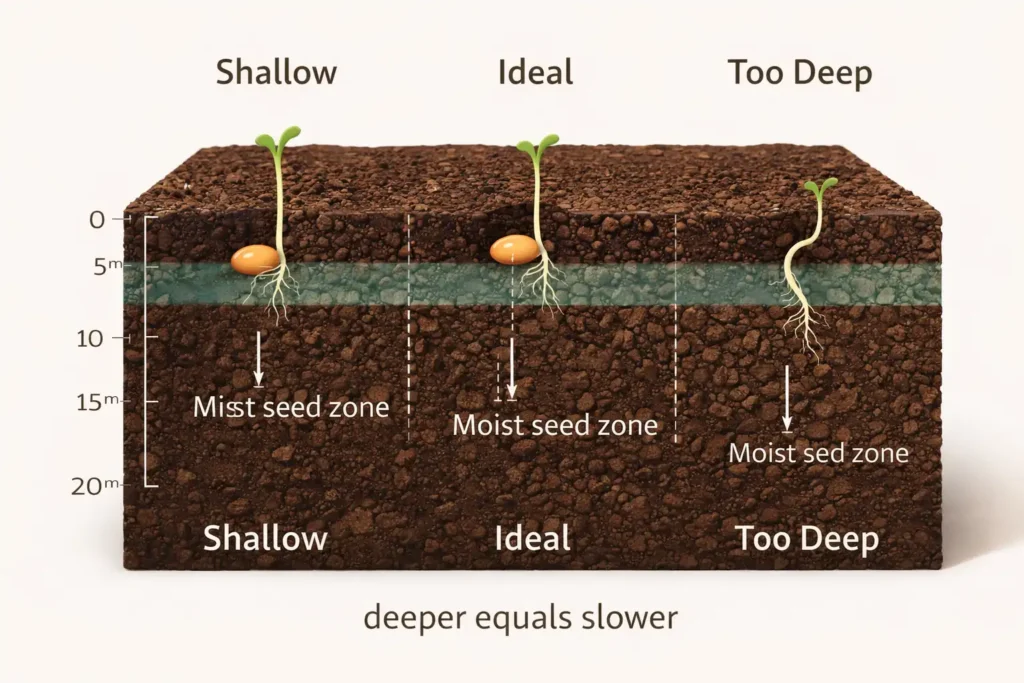
Shallow planting helps speed, but shallow seed also dries faster. The balance is a shallow depth paired with steady surface moisture.
For most soils, 1/4 to 1/2 inch (6 to 13 mm) works, with the shallow end for heavier soils and the deeper end for sandy soils.
How do clods and compaction hurt emergence?
Clods create air gaps and uneven moisture, while compaction reduces oxygen and blocks root growth.
Carrot seed performs best in a fine, firm seedbed with good seed-to-soil contact. A cloddy row leaves some seed dry and some seed buried too deep.
Compaction also sets up crusting, especially where tractor tires or bed shapers press the surface tight.
Can fertilizer salts slow germination?
Fertilizer salt near the seed pulls water away from the seed and can injure new sprouts.
This problem often shows up after a strong band too close to the row or after heavy fresh manure near the seed line. The seed swells unevenly and emergence turns patchy.
A safer approach places most fertilizer pre-plant and mixes it into the bed, leaving the seed zone mild.
Does old seed slow emergence?
Old carrot seed often loses vigor, so germination slows and stands turn patchy.
A seed lot with low vigor still germinates in perfect moisture, but it struggles under field stress. That stress includes crusting, cold swings, and short dry spells.
A quick home test uses a damp paper towel and a counted sample, then compares sprouts after a set number of days.
Can disease reduce stands before you see plants?
Damping-off organisms and soil pests can kill sprouts underground, so the bed looks empty.
Damping-off often leaves a seedling that pinches off at the soil line soon after emergence. Poor drainage, cool wet soil, and crusted surfaces raise risk.
If seedlings collapse after they appear, read the practical symptoms and prevention steps in seedling damping-off care.
How do you plant carrots for faster, more uniform emergence?
A fine, firm seedbed keeps carrot seed in contact with moist soil and reduces crusting.
Use this start-to-finish workflow to set the field up for even emergence.
Step 1: Check the seed zone before seeding
Check moisture and temperature in the top inch, because that layer controls carrot emergence.
Grab a handful from seeding depth and squeeze it. Soil that forms a weak ball then breaks apart usually holds workable moisture for planting.
If you suspect high salts or major fertility imbalance, a basic soil test gives you the baseline. This guide on soil testing for farming helps you plan sampling and interpretation.
Step 2: Build a fine, level seedbed
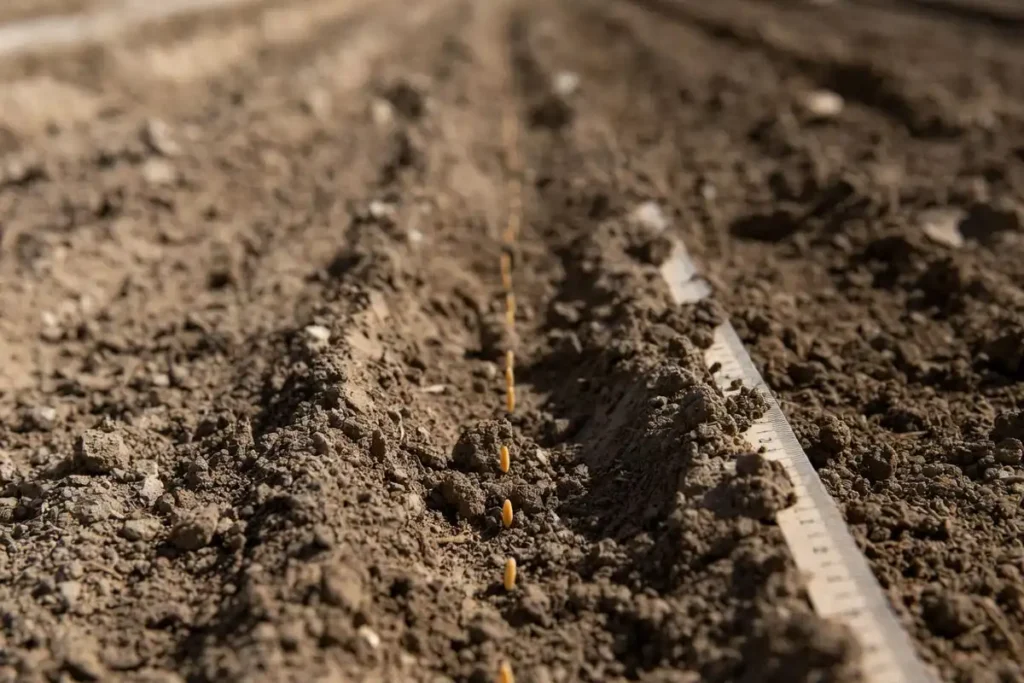
Break clods and level the surface so seed depth stays uniform across the row.
A smooth bed reduces air pockets and keeps irrigation uniform. A rough bed creates dry spots and deep spots in the same pass.
Firming also helps. A firm bed improves seed-to-soil contact, which improves water uptake.
Step 3: Place seed shallow and consistent
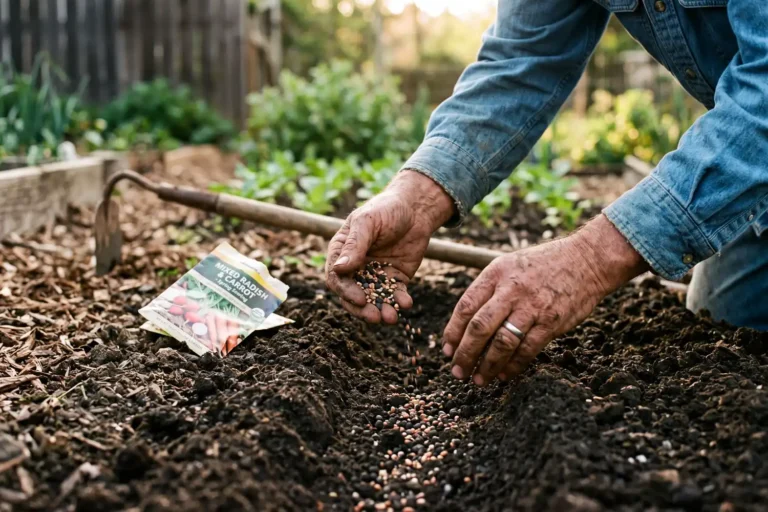
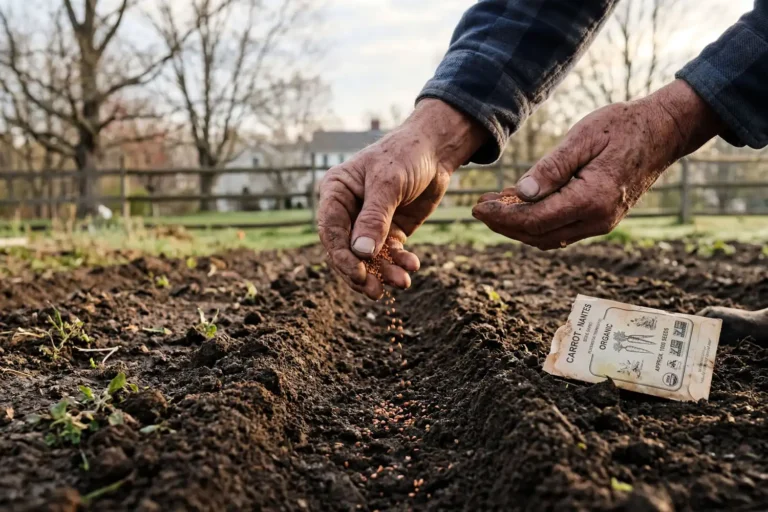
Place carrot seed 1/4 to 1/2 inch deep, then cover lightly with fine soil.
Uniform depth often matters more than the exact depth number. Depth variation spreads emergence over days, which complicates weed control and thinning.
If you need a full seeding setup with spacing and row layout, follow the step-by-step method in how to plant carrots.
Step 4: Firm the row after seeding
Firm the seed row with a press wheel, roller, or a light board pass.
Firming locks the seed into moisture contact and reduces air gaps. It also reduces washout during the first irrigations.
Avoid packing so hard that you create a crust that dries into a seal.
Step 5: Water for surface moisture, not deep soaking
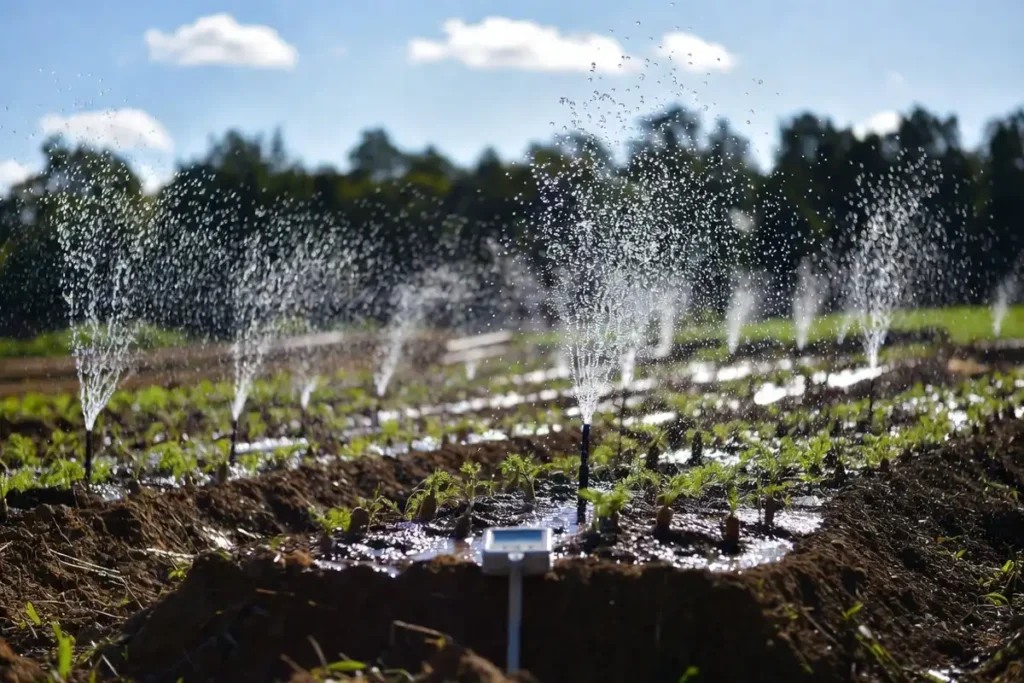
Water lightly and often so the surface stays damp until seedlings break through.
Overhead irrigation usually manages the seed zone better during germination. Drip irrigation often wets deeper soil first and leaves the surface dry.
If you want to compare approaches, this guide on drip versus sprinkler irrigation lays out where each method fits.
Step 6: Protect the surface from crust and drying
Protecting the surface keeps the seedling’s path soft.
A thin, airy mulch layer reduces crusting and slows evaporation. It also buffers the topsoil from pounding droplets.
If you want practical mulch options and placement, use this guide on mulching in crop farming.
Solutions that speed emergence when conditions turn rough
You can improve carrot emergence by stabilizing moisture at the surface and preventing a hard crust from forming.
Here are field-proven fixes that fit small beds and larger blocks.
- Pre-irrigate the bed, then seed into a uniformly moist profile. Even moisture reduces the urge to “overwater” after planting.
- Use frequent light sprinkler sets during the germination window. The target is a damp surface, not standing water.
- Cover the row with a breathable germination cloth or light row cover in windy or hot weather. Covers slow evaporation and soften impact from sprinklers.
- Use a thin layer of fine compost or screened soil over the row if your native soil crusts. Fine cover reduces sealing.
- Switch irrigation timing in heat. Early morning and late afternoon sets often reduce evaporative loss compared with midday.
- Consider primed or pelleted seed for uniformity, then manage water carefully. Coated seed often needs steady moisture longer because the coating needs time to soften.
Troubleshooting: why are carrots not coming up?
A quick dig test in the seed row tells you if the problem is moisture, temperature, crusting, or seed quality.
Use a trowel and dig shallow along 1 to 2 feet of row. Look for seed condition and sprout condition.
What you see in the row and what it means
| What you find | Likely cause | What to do next |
|---|---|---|
| Seed looks dry and hard | Seed zone dries between irrigations | Increase frequency of light watering and reduce evaporation |
| Seed looks swollen but no root | Soil stays cold or seed vigor is low | Check soil temperature, then wait longer before re-seeding |
| Root sprouted, then dried brown | The surface dries after germination starts | Keep the surface damp and consider light cover |
| Sprout bends under a hard lid | Soil crust blocks emergence | Soften crust with light irrigation and gentle surface break between rows |
| Seedling looks pinched or rotten near soil line | Damping-off conditions | Improve drainage and airflow; avoid saturated soil; review damping-off prevention |
| Row looks washed or empty in low spots | Water moves seed or buries it | Improve bed shape and reduce irrigation intensity early |
When does re-seeding make sense?
Re-seeding works best when you confirm failure in the row, not when you guess from the surface.
If you find firm seed that has not sprouted in cool soil, patience often saves the stand. If you find rotted seed, missing seed, or dead sprouts across the bed, re-seeding often restores uniformity.
Before you re-seed, fix the factor that caused the loss or the second planting repeats the same pattern.
Avoid these carrot germination mistakes
Most thin carrot stands start with a seed zone that dries or crusts before seedlings break through.
Avoid these problems during the first 2 to 3 weeks:
- Planting deeper than the seedling can push through, especially in heavy soil
- Letting the surface dry after the seed swells
- Running hard sprinkler sets that seal the surface into a crust
- Leaving clods in the row cover soil
- Packing the seed row tight enough to form a hard cap
- Putting strong fertilizer too close to the seed line
- Giving up early without digging seed to confirm what happened
Safety notes for emergence work
Emergence work involves water, equipment adjustments, and sometimes crop protection products, so basic safety habits prevent injuries.
Wear eye protection when working around sprinklers and pressurized lines. Relieve pressure before disconnecting fittings.
Use gloves when handling fertilizers, compost, or treated seed. Wash hands before eating or smoking.
If you use any pesticide or seed treatment, follow the label instructions for PPE, mixing, and re-entry intervals.
Conclusion
Carrots usually germinate and emerge in 10 to 21 days, and the fastest stands come from warm soil and steady surface moisture. The biggest field delays come from a dry seed zone, soil crusting, deep planting, clods, and weak seed vigor.
A fine, firm seedbed plus light, frequent irrigation keeps the seed zone damp and the surface soft. When emergence runs slow, dig the row and diagnose the seed before you re-seed. That one check saves time and improves stand uniformity.