When to Thin Carrot Seedlings: Timing, Spacing, and How To
Knowing when to thin carrot seedlings decides whether you pull straight, full roots or a tangle of stunted ones. Carrots crowd fast after they sprout. Thin too late and the roots fight for space. Here is the timing and the method that works.
Thin carrot seedlings when they reach 1 to 2 inches tall and show their first true leaves, usually 2 to 3 weeks after they emerge. Thin again two weeks later to a final spacing of 2 to 3 inches.
When to Thin Carrot Seedlings
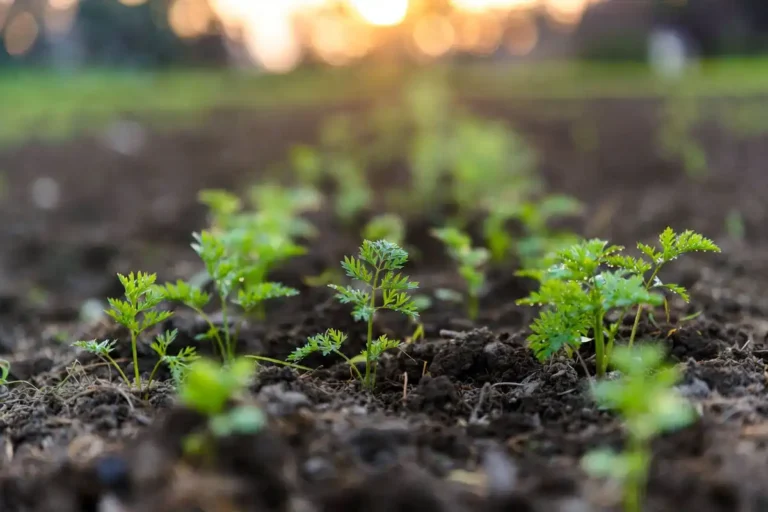
Thin carrot seedlings when they stand 1 to 2 inches tall and carry their first set of true leaves. That stage usually lands 2 to 3 weeks after the seeds break the surface. At this point the roots are still tiny, so removing the extras barely touches the seedlings you keep.
Timing matters more than most folks expect. Pull too early and you cannot tell a strong seedling from a weak one. Wait too long and the roots have already tangled, so every seedling you remove drags on its neighbor. That tug bends and breaks the taproots you wanted to save.
Weather shifts this window. Cool spring soil slows growth, so a Kansas crop sown in early April might not be ready to thin for three weeks or more. Hot early summer speeds everything up, and the same crop can hit thinning size in under two weeks. Check the row every few days once seedlings show, and let the plants set the schedule, not the calendar.
How Do You Know Carrot Seedlings Are Ready to Thin?
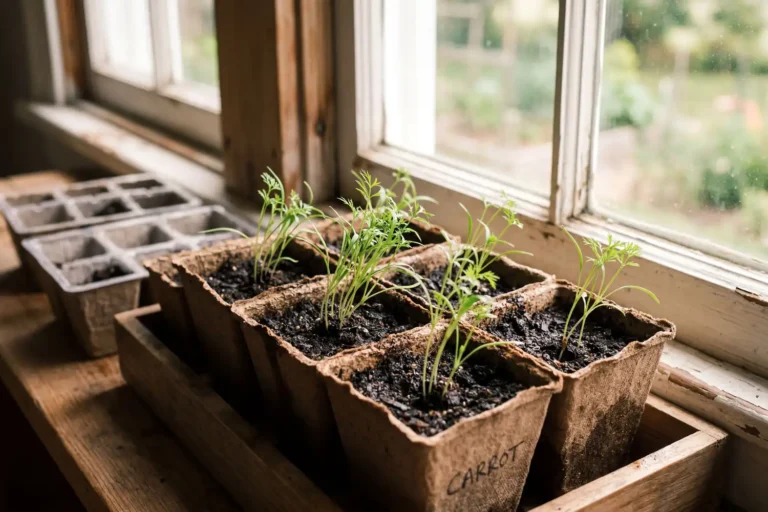
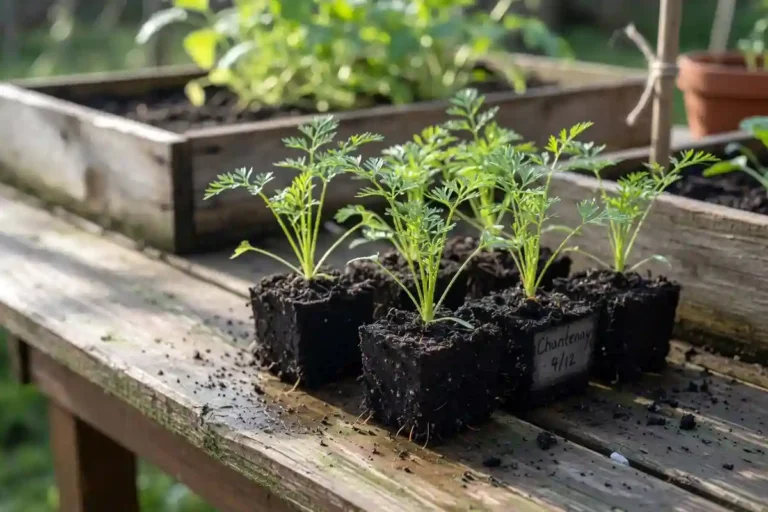
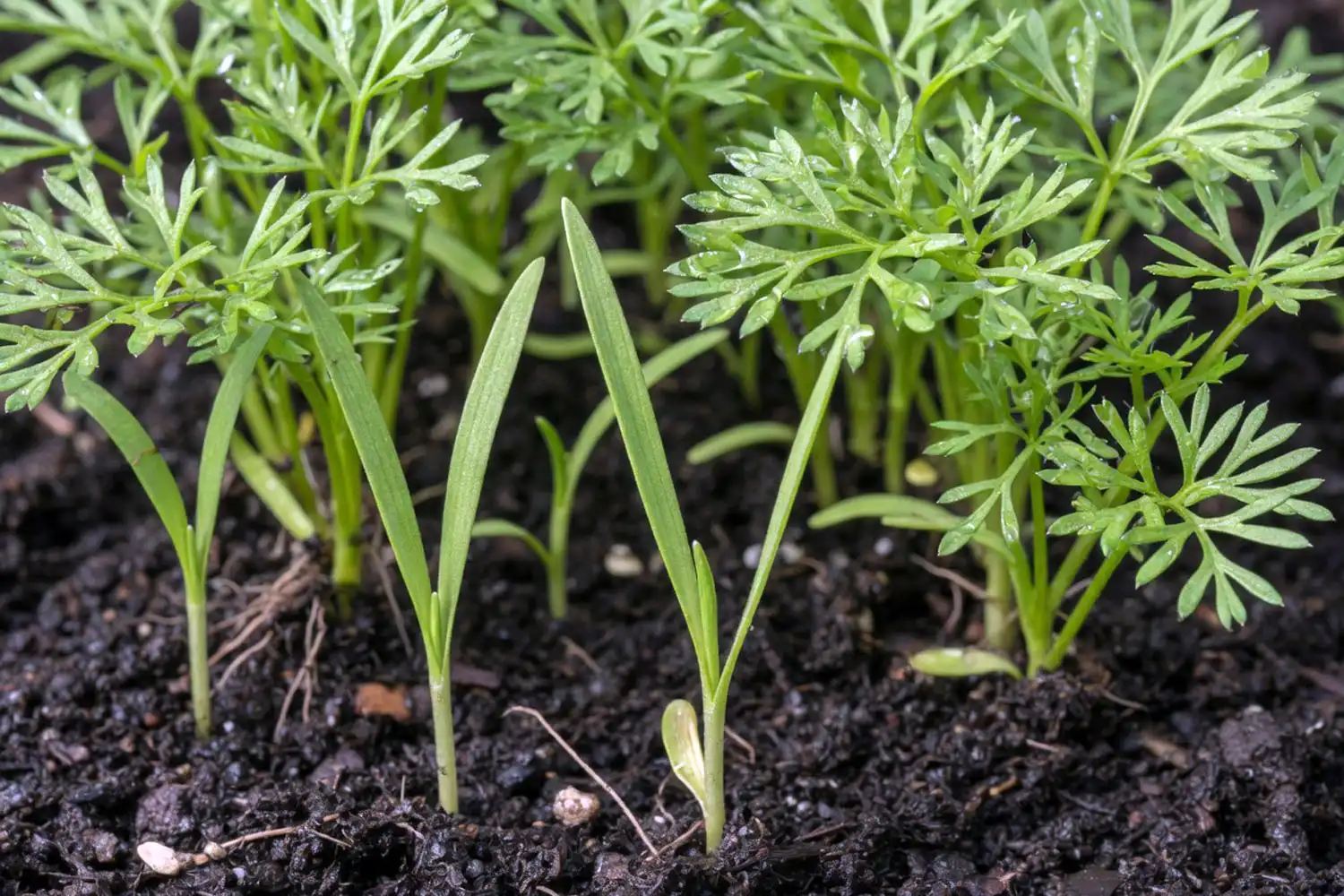
Carrot seedlings are ready to thin once the feathery, fern-like true leaves appear above the first thin blades. Those first two blades are seed leaves (cotyledons). They look like skinny grass and feed the seedling at the start. The next leaves that push up are the true leaves, and they look like miniature carrot tops.
So watch for that change in leaf shape. Grass-like blades alone mean wait. Feathery, divided leaves mean go. By the time you see one or two sets of true leaves, the seedling is also tall enough to grab or snip without guessing. If you want a refresher on the early stages, here is what carrots look like when they first come up.
Why Thinning Carrots Matters
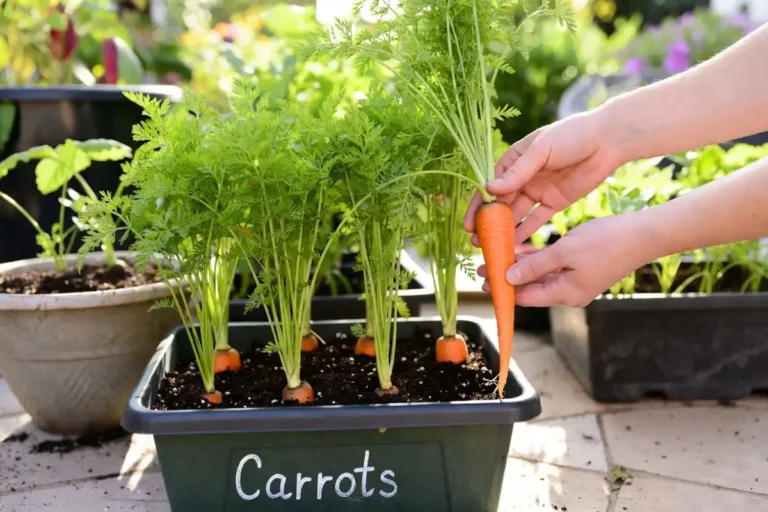
Thinning gives each carrot the room its taproot needs to grow straight down. The part you eat is one swollen root, and it has to push through unobstructed soil. When seedlings sit shoulder to shoulder, the roots bump, twist, and fork into short, ugly carrots.
Crowding hurts in three ways. First, the roots compete for the same space underground. Second, a thick clump drinks water fast and dries the bed, so every plant stays stressed. Third, packed tops trap moisture and block airflow, which invites leaf spot and other fungal trouble. Thin rows breathe better and dry faster after rain.
What Happens If You Don’t Thin Carrots?
If you skip thinning, you harvest small, twisted, stringy carrots instead of full ones. The roots never get room to size up, so they stay pencil-thin or fork around each other. You might dig two tiny four-inch carrots where one straight eight-inch carrot should have grown.
Some growers leave the row alone on purpose and accept baby carrots. That choice works if small is what you want. For storage roots or market carrots, though, thinning is not optional. Even spacing also matters during germination, so it helps to start by seeding carrots without wasting seed, which cuts how much thinning you face later.
The Two Thinning Stages
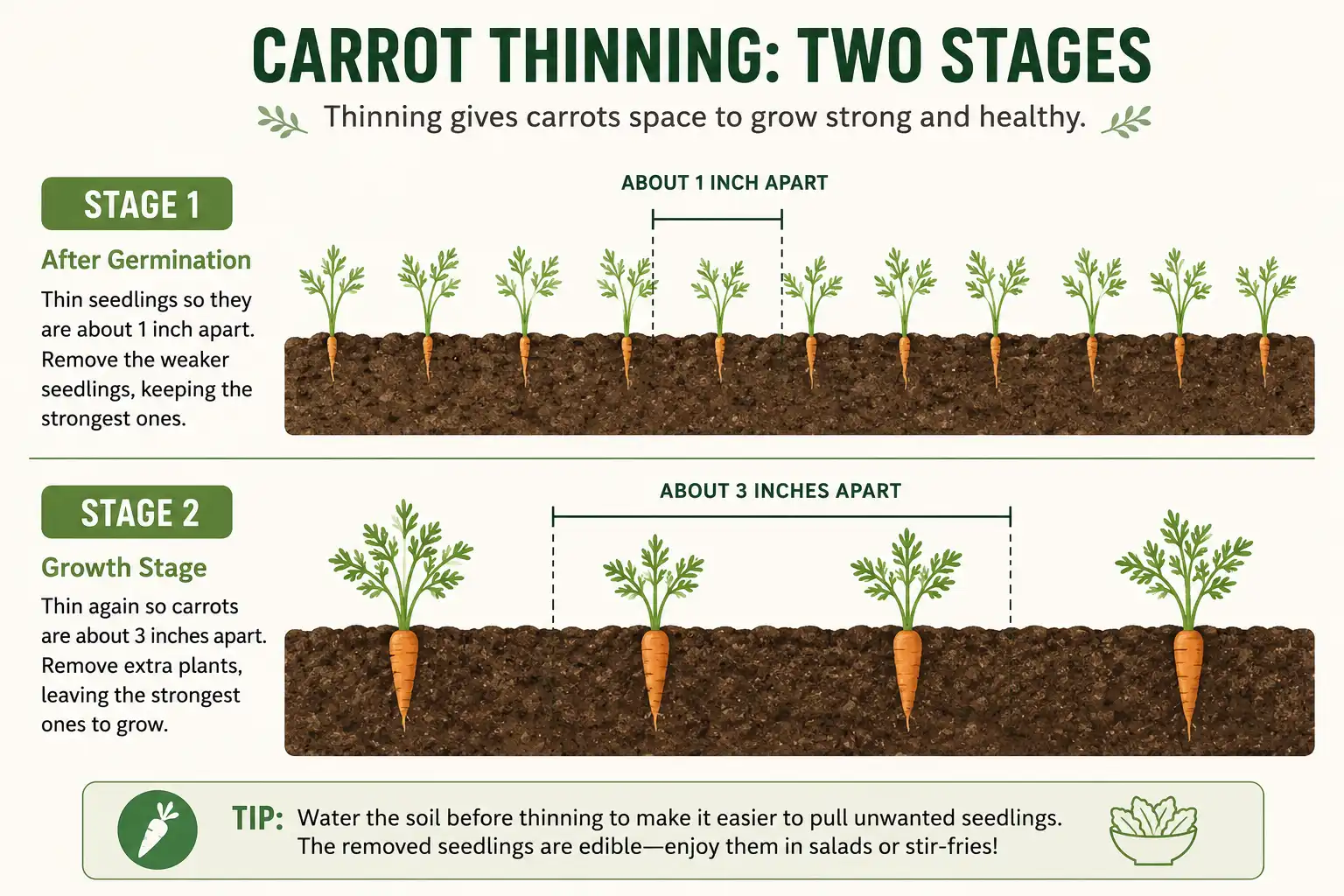
Thin carrots in two passes, not one. A staged approach lets you remove the weakest seedlings first, then set final spacing once the survivors prove themselves. Trying to do it all at once usually means handling oversized seedlings, and by then the roots have already crowded.
First Thinning
Make the first pass when seedlings reach 1 to 2 inches tall, leaving roughly 1 inch between the plants you keep. Pick out the smallest, weakest, and most crowded seedlings, and leave the sturdy ones standing. One inch is tight on purpose. It still removes the heaviest competition while keeping a few extra plants as insurance against pests or gaps.
Second Thinning
Come back two to four weeks later for the second pass, and space the survivors to their final distance. Remove every other plant so the keepers sit 2 to 3 inches apart for standard table carrots. Large storage types such as Danvers want 3 to 4 inches, while close-grown baby carrots can stay at 1 to 2 inches. The bonus here is real: those second-thinning pulls are tender baby carrots you can rinse and eat.
After the second thinning, mound a little soil over any exposed root shoulders. Sunlight on the crown turns it green and bitter, so a thin cover keeps the tops sweet. Steady moisture helps too, and you can dial that in with how much water carrots need at each stage of growth.
How to Thin Carrot Seedlings Without Damaging the Rest
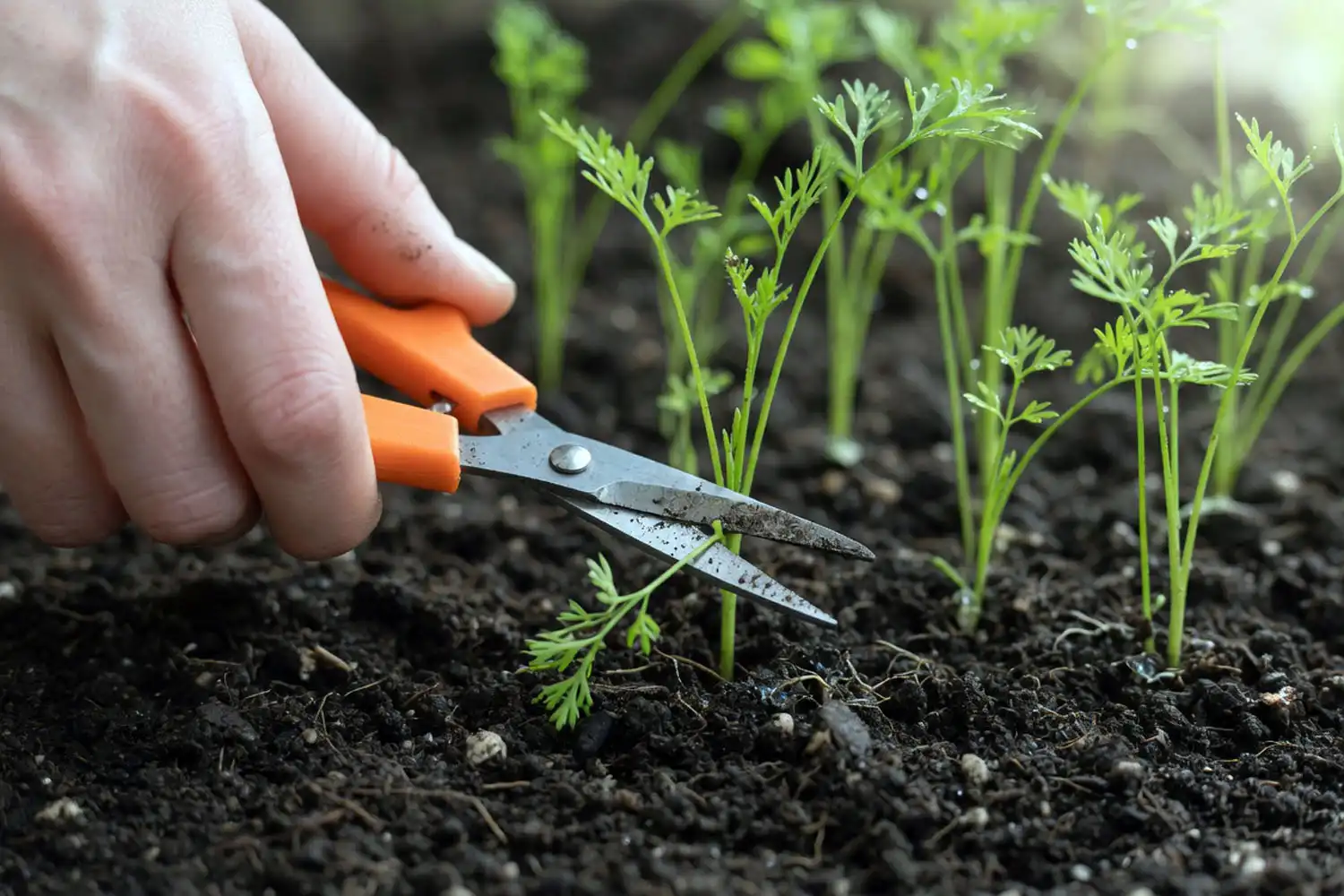
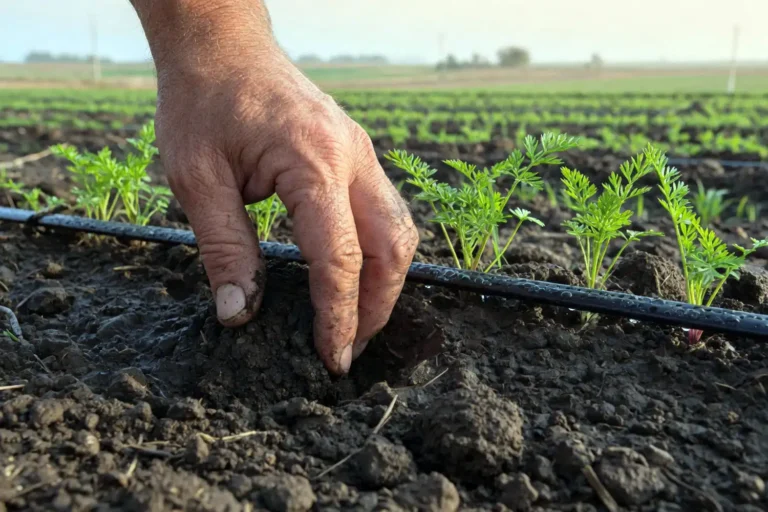
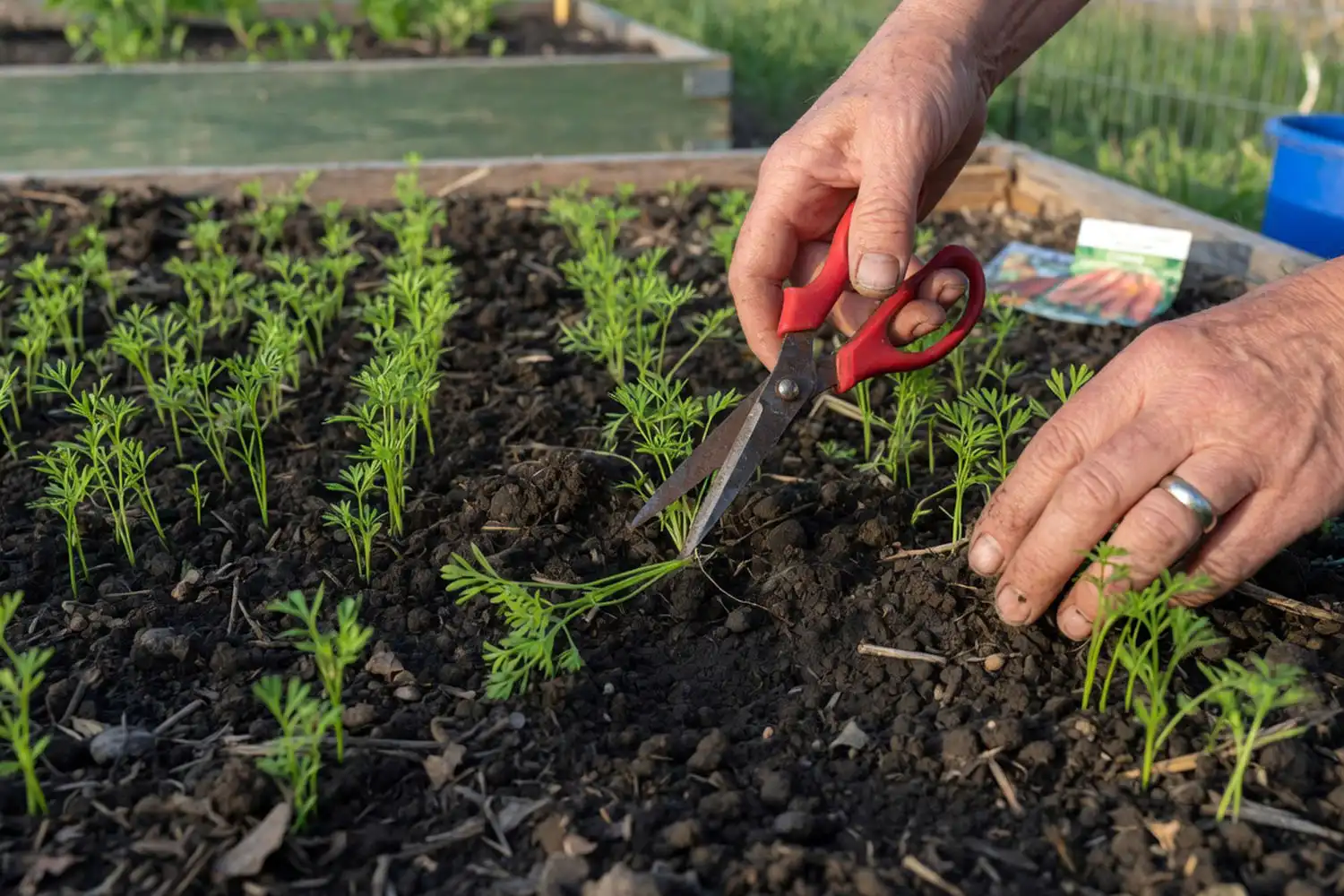
Snip the unwanted seedlings at soil level with small scissors instead of yanking them out. Pulling tugs on the shared root zone and lifts or bends the seedlings you meant to keep. A clean cut at the surface leaves their roots completely undisturbed.
If you would rather pull, water the bed well first and only pull when the soil is loose. Grip the seedling at its base and wiggle it out slow. Damp soil releases the root cleanly, while dry soil rips a clump. Work down the row at a steady pace, and check spacing as you go so you do not leave bare patches that waste bed space.
Best Time of Day to Thin Carrots
Thin in the early morning or evening when the air is cool and still. Cooler hours keep the seedlings from wilting after the disturbance, and damp soil from overnight or watering makes pulling easier.
There is a pest reason too. The smell of crushed or pulled carrot foliage draws the carrot rust fly, which lays eggs near the crowns. A calm, low-traffic time of day limits how far that scent travels. Gather every thinned seedling and bury it in the compost pile right away rather than leaving it on the soil. Covering young rows with garden fleece after thinning adds another layer of protection in pest-heavy seasons.
Can You Transplant or Eat the Thinned Seedlings?
You can eat the thinnings, but transplanting them rarely succeeds. The tender second-thinning pulls make sweet baby carrots and a peppery salad green, so they never have to go to waste. Moving them to a new row is the gamble that usually fails, because once the taproot bends or breaks, the carrot forks instead of growing straight.
If you still want to try, only attempt it with the most careful, intact pulls, and expect mixed results. our guide covers the why and the odds in detail under transplant carrots without forking. For most growers, eating the thinnings is the better return on the effort.
How Spacing Changes by Carrot Type
Match final spacing to the variety you grow. Standard table carrots like Nantes do well at 2 to 3 inches apart. Big storage and processing types like Danvers want 3 to 4 inches so the wide shoulders have room. If you grow short, slim baby carrots, 1 to 2 inches is fine.
Row spacing matters alongside plant spacing. Keep rows about 12 to 18 inches apart so you can hoe between them and so air moves through the canopy. The right starting bed helps every plant size up, and loose, stone-free ground is the foundation, which is why soil texture that grows straight carrots matters before sowing.
Common Thinning Mistakes
The biggest mistake is waiting too long. Once roots tangle, every pull damages a keeper, and the whole point of thinning is lost. Thin on time and the job stays gentle.
A few more that show up often. Pulling instead of cutting disturbs neighbors, so snip when seedlings sit close. Thinning dry soil rips clumps, so water first. Leaving plants too close out of guilt keeps the crowding problem, so commit to the spacing. And tearing huge gaps wastes good bed space, so aim for even rows, not bald patches.
How This Times Out in Kansas
This falls within USDA hardiness zone 6a, where spring carrots are typically direct sown in early to mid-April, a week or two before the last frost. Seeds germinate in 14 to 21 days, so make the first thinning in early May once the true leaves show. The second pass follows in mid to late May.
Across the Great Plains the pattern is the same even when the dates shift. Cooler northern zones push everything later, and warmer southern spots run earlier. K-State Research and Extension and your regional extension office can confirm local frost timing, which anchors the whole schedule. Watch the seedlings, not just the date, and you will hit the window every season.
What This Looks Like in the Beds
Thinning is a small chore that pays off all the way to harvest. Thin first at 1 to 2 inches tall when true leaves appear, snip rather than pull, then come back two to three weeks later to set 2 to 3 inch final spacing. Cool morning, moist soil, thinnings straight to the compost. Do that, and you dig straight, full carrots instead of a forked, stringy mess.