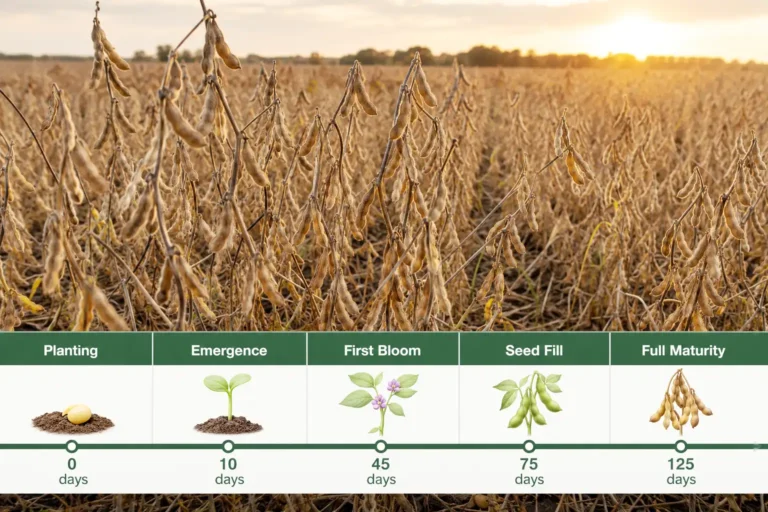
How Long Does It Take Soybeans to Germinate? (Days by Soil Temp)
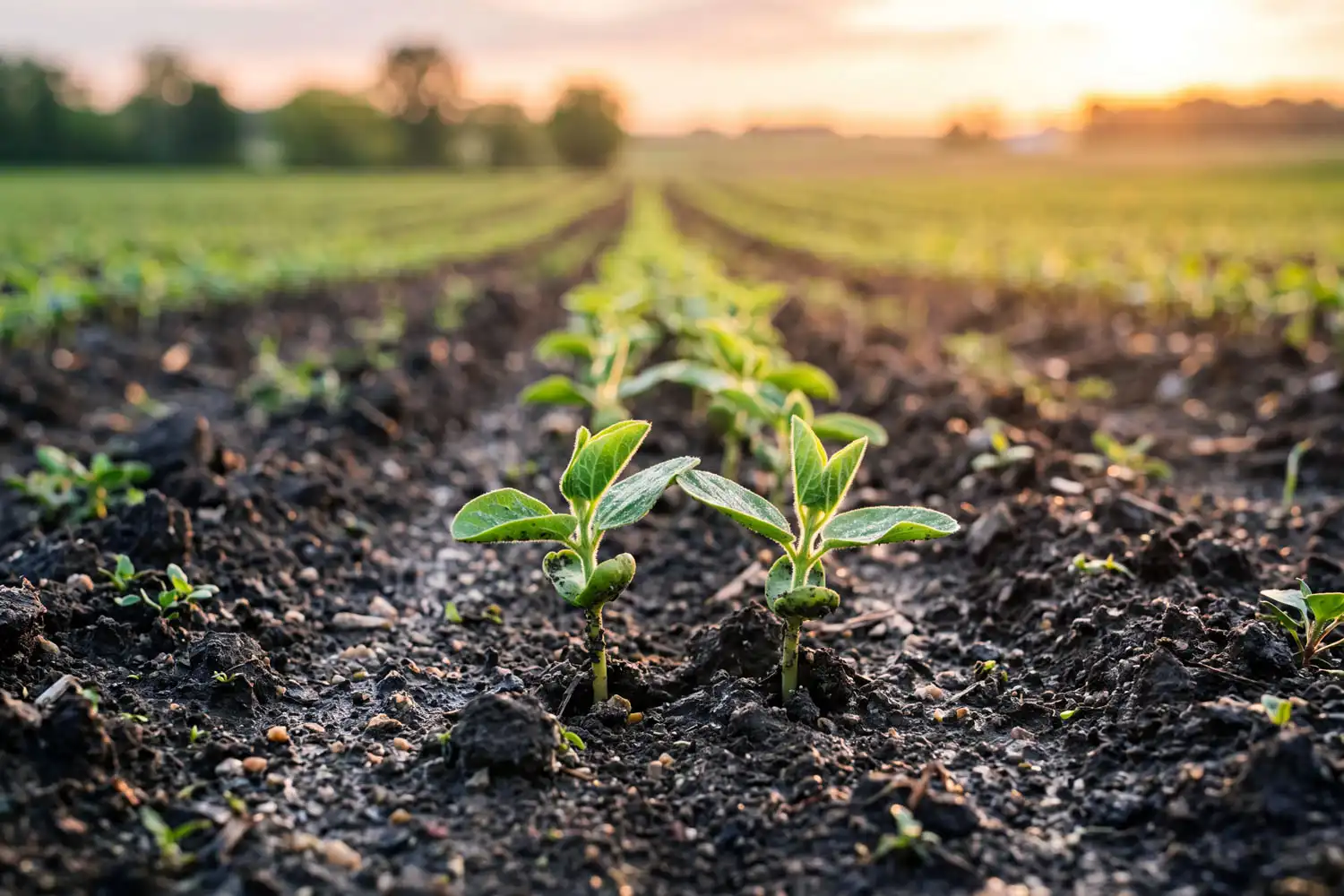
Soybeans usually sprout within one to three weeks of planting, with soil temperature setting the pace. How long it takes soybeans to germinate depends mostly on warmth, moisture, and seeding depth. Warm, moist soil brings seedlings up fast; cold ground slows everything down.
Soybeans germinate in about 5 to 21 days. In warm soil above 77°F, seedlings can emerge in under a week. At 50 to 60°F, expect 15 to 20 days. Good moisture and a planting depth of 1 to 1.5 inches speed things up.
How long does it take soybeans to germinate?
Most soybeans germinate and break the surface in 5 to 21 days. The exact timing comes down to how warm the soil is around the seed. In the upper 70s and warmer, you can see plants in under a week. In cool spring soil near 50°F, the same seed may sit for two to three weeks before it shows.
In zone 6a, plant once the soil holds steady warmth, and watch rows close at around a week to ten days. That window is normal for the Great Plains. Patience here saves a lot of second-guessing.
Soybean germination time by soil temperature
Soil temperature at seed depth is the single biggest factor in how fast soybeans come up. The table below shows typical days to emergence at different soil temperatures.
|
Soil temperature (at seed depth) |
Time to emergence |
|---|---|
|
50 to 55°F (10 to 13°C) |
Up to about 3 weeks, slow and uneven |
|
55 to 60°F (13 to 16°C) |
About 15 to 20 days |
|
60 to 65°F (16 to 18°C) |
About 10 to 12 days |
|
65 to 70°F (18 to 21°C) |
About 7 to 10 days |
|
70 to 77°F (21 to 25°C) |
Roughly 5 to 7 days |
|
77°F and warmer (25°C+) |
Under a week, usually fastest and most even |
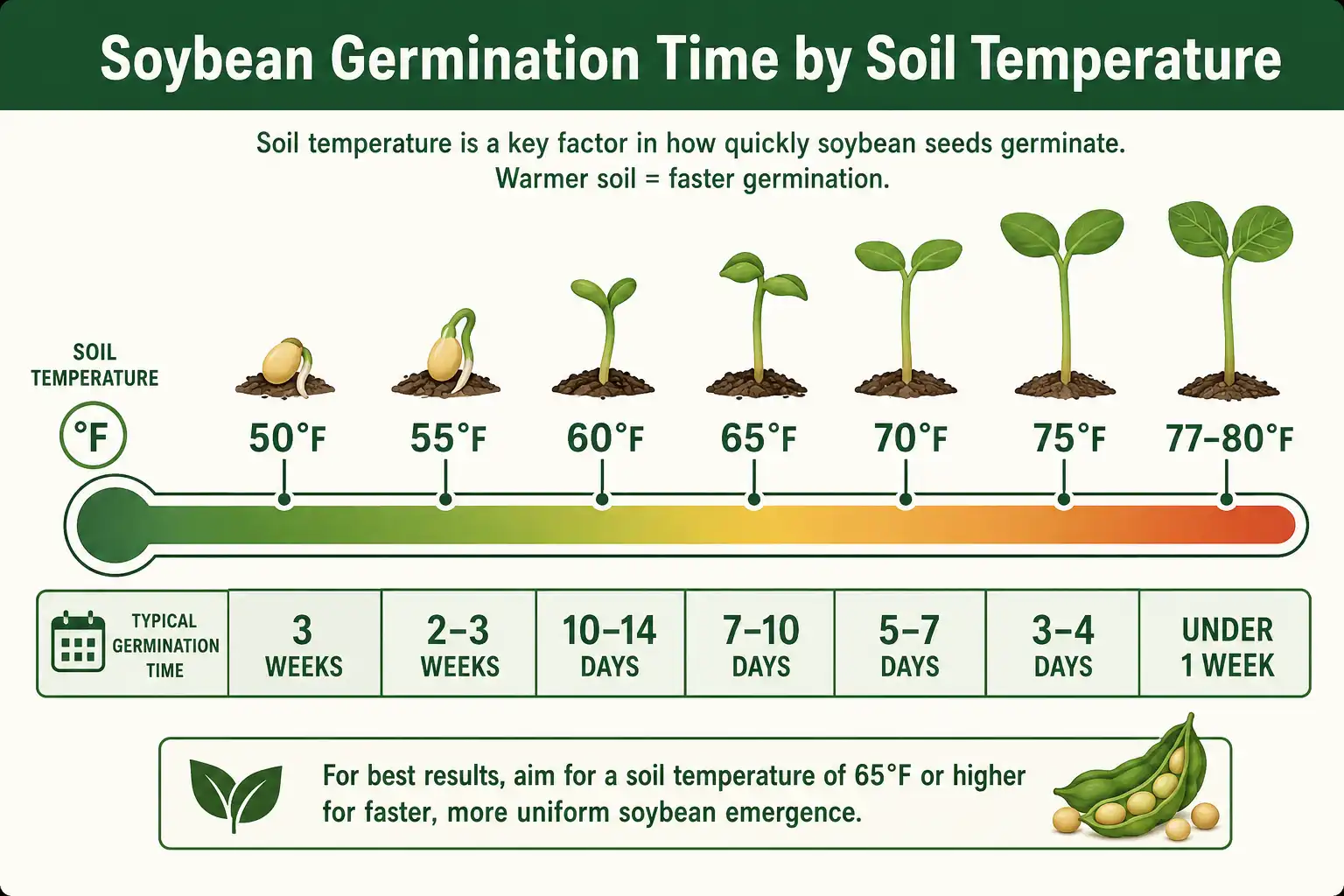
A reliable rule of thumb: soybeans need a soil temperature of at least 50°F to germinate, and a three-day average near 55°F or higher for an even stand. Knowing your soil is warm enough for planting matters more than the calendar date.
What happens while a soybean seed germinates
Germination starts the moment the seed takes in water. A soybean has to absorb water equal to about half its own weight before the process kicks off. This first water uptake is called imbibition, and it usually finishes within the first 24 to 30 hours after planting.
Here is the order things happen underground:
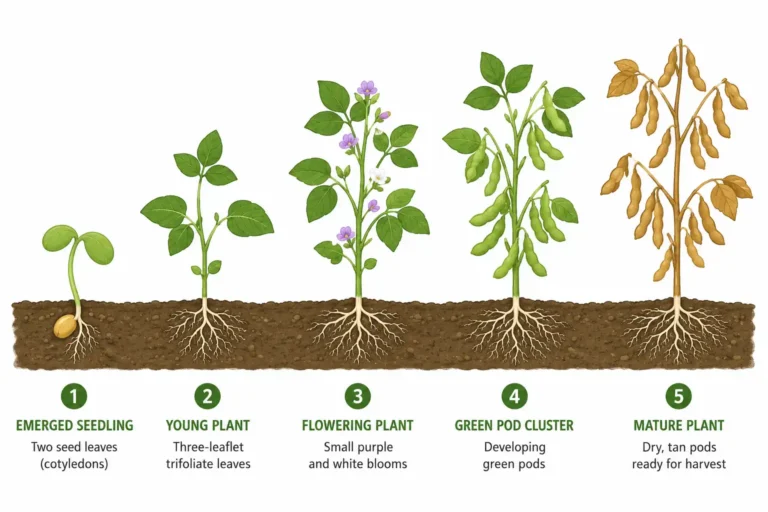
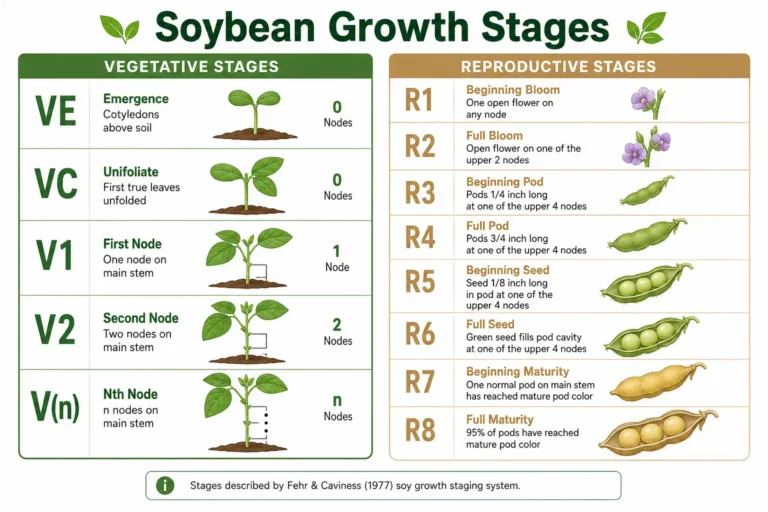
- Imbibition. The seed swells and the seed coat splits.
- Radicle. The primary root pushes out first and grows downward.
- Hypocotyl arch. The stem bends into a hook and pushes up toward the surface, pulling the cotyledons behind it.
- Emergence (VE). The arch breaks through, straightens, and lifts the two seed leaves above the soil.
- Cotyledon stage (VC). The cotyledons open and the first unifoliate leaves expand.
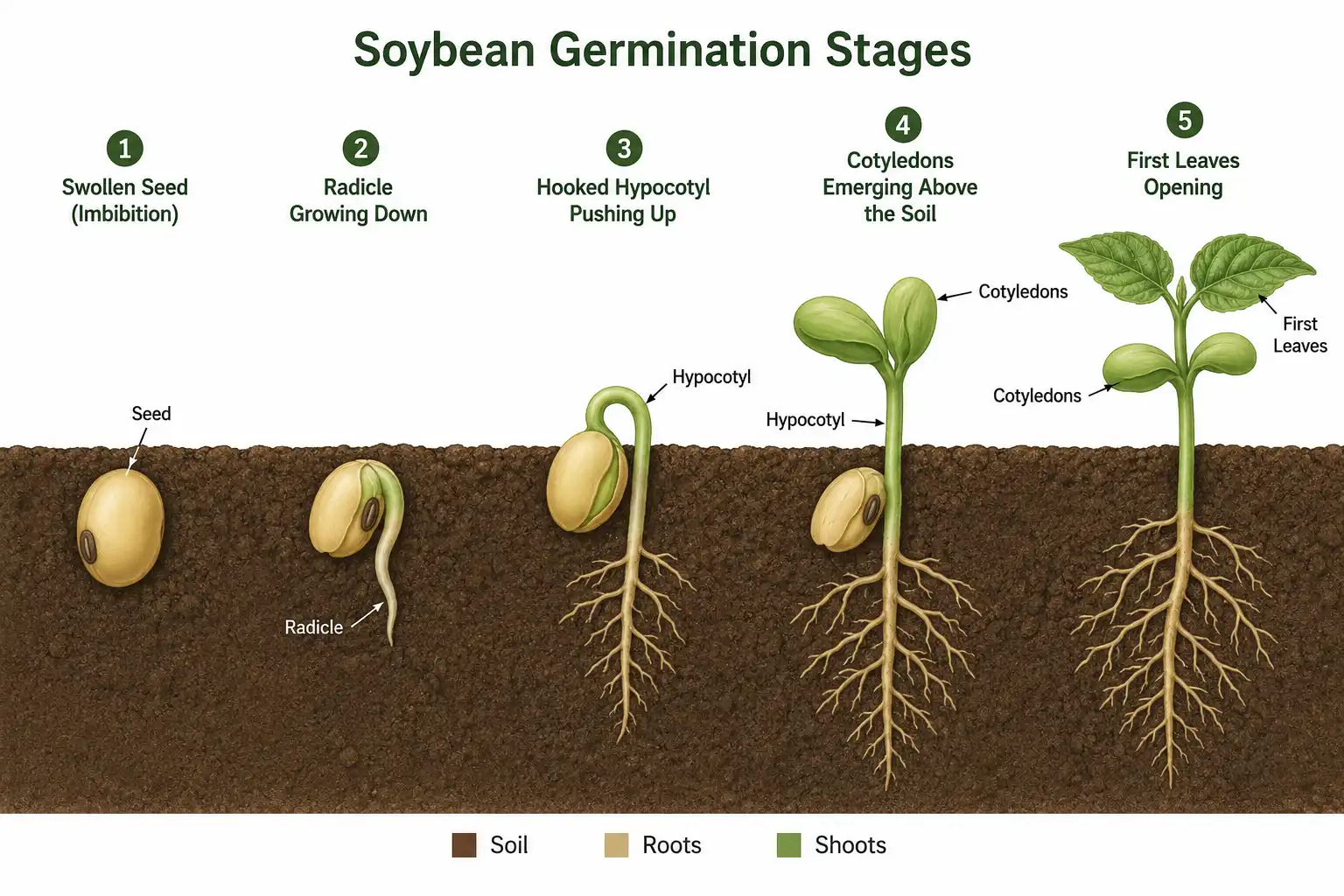
Soybeans pull their cotyledons above the ground, so a hard surface or crust gives them real trouble. Those cotyledons feed the young plant for its first 7 to 10 days until the true leaves take over. Understanding the stages that follow emergence helps you scout a young field with confidence.
Germination vs. emergence: what is the difference?
Germination is the seed coming alive underground; emergence is the seedling breaking the surface where you can see it. When growers ask how long soybeans take, they almost always mean emergence, since that is what you can count in the field.
The gap matters. A seed can germinate in a couple of days but take another week to climb out of deep or cool soil. So when you check a field and see nothing yet, the seeds are often working below ground. Dig a few up before you assume a failure.
What affects how fast soybeans germinate?
Four things drive germination speed, with temperature and moisture leading the way.
- Soil temperature. Warmth sets the speed. Cool soil can double or triple the days to emergence.
- Soil moisture. This is the factor that decides whether germination happens at all. The seed needs steady moisture against it, so aim to place seed into at least half an inch of moist soil.
- Planting depth. Seed set too deep burns energy reaching the surface and emerges late. How deep you set the seed is a balance between moisture and emergence.
- Seed quality and size. Larger, high-vigor seed carries more stored energy and pushes up faster, especially from depth.
Two more factors can stall things: soil crusting after a hard rain, and waterlogged ground that starves seeds of oxygen. Both slow emergence and thin a stand. Good seed-to-soil contact, on the other hand, speeds water uptake and evens out the timing.
How deep should you plant soybeans for good germination?
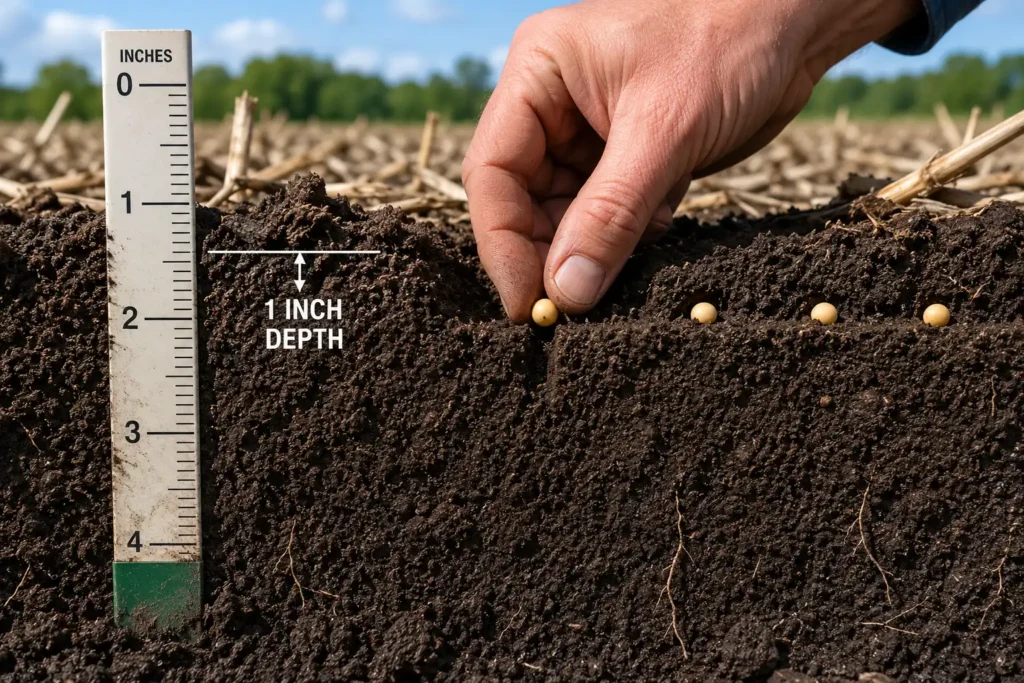
Plant soybeans 1 to 1.5 inches deep for the best balance of moisture and fast emergence. Go shallower, around 1 to 1.25 inches, for early planting, fine-textured soils, high residue, or already-moist ground. Go a little deeper for late planting, sandy soils, or dry conditions.
You can plant up to 2 inches in sandy soil, and up to 2.5 inches only when chasing moisture with a strong-emergence variety. Past 2 inches, emergence drops off fast on most soils because the cotyledons struggle to reach the surface. Getting your planting window and depth right together is what produces an even stand.
How to get faster, more even germination
A few habits give you quicker, more uniform emergence:
- Wait for warm soil. Hold off until your soil holds 55°F or higher. Speed beats a few early days every time.
- Plant into moisture. Set seed where it touches steady moisture, even if that means going slightly deeper in dry years.
- Keep depth consistent. Check your planter or drill across the field, since uneven depth is a top cause of ragged stands.
- Watch the forecast. A warming trend after planting brings plants up faster. A cold rain right after planting is the worst draw.
- Use treated seed in cool soil. A seed treatment guards against soil diseases while seeds sit longer underground.
In areas new to soybeans, inoculating the seed with the right bacteria sets up nitrogen-fixing nodules later, though it does not change germination speed itself.
Why are your soybeans not germinating or taking too long?
Slow or failed germination almost always traces back to cold soil, poor moisture, or seed set too deep. Cold, wet ground is the most common culprit, and it brings extra risk on top of the delay.
Here are the usual reasons soybeans lag or fail:
- Soil too cold. Below 50°F, germination crawls and stands turn out patchy.
- Imbibitional chilling. If the first water a seed soaks up is colder than 50°F, cells can rupture and the seed dies. This is the danger of planting right before a cold rain.
- Dry soil. Without enough moisture against the seed, germination stalls until rain or irrigation arrives.
- Crusting. A hard crust after heavy rain blocks the cotyledons from breaking through.
- Planted too deep. Seed past 2 inches often runs out of energy before reaching daylight.
- Disease pressure. Cool, wet soils invite seed and seedling rots that thin the stand.
If two to three weeks pass with little showing, dig in several spots. Firm, swelling seeds mean germination is still working. Soft, mushy, or rotted seeds point to a replant decision. Learning to read seeds that fail to sprout saves you from tearing up a field that just needs a few more warm days.
Counting the days to a good stand
Give soybeans the warmth and moisture they want, and most fields go from seed to visible stand in about one to two weeks, with cool springs stretching that toward three. Soil temperature is your clock, moisture is your green light, and steady planting depth keeps the whole field on the same schedule. Plant into warm, moist ground at 1 to 1.5 inches, watch the forecast, and let the seeds do their work before you judge the stand.