Common Crop Diseases: 12 Prevention Steps Farmers Use

Common crop diseases show up when a pathogen (fungus, bacterium, virus, or nematode) meets a susceptible plant under the right weather and field conditions. You identify them by matching where symptoms start, what the damage looks like, and how fast it spreads across a field. This guide covers a full, practical workflow: scouting, diagnosis, quick containment, and season-long prevention you can run from planting through storage, with clear decision points and safety notes.
Crop farming disease management leans on rotation, residue strategy, resistant varieties when available, and timely action when conditions favor infection.
What counts as a “crop disease” in the field?
A crop disease is plant damage caused by a living pathogen that infects plant tissue and multiplies. Nutrient problems and herbicide injury can look similar, but they do not spread plant-to-plant the same way.
Most field problems land in four buckets:
- Fungal and oomycete diseases (leaf spots, blights, mildews, rots)
- Bacterial diseases (water-soaked spots, ooze, rapid wilts)
- Viral diseases (mosaic, streaking, stunting)
- Nematode diseases (root knots, poor water uptake, patchy decline)
A solid beginner guide to integrated pest management helps you prevent crop diseases by combining scouting, thresholds, and targeted actions instead of reacting late.
Know more: Details of Sugarcane Vulnerable to the Cane Beetle
How do you identify a crop disease without guessing?
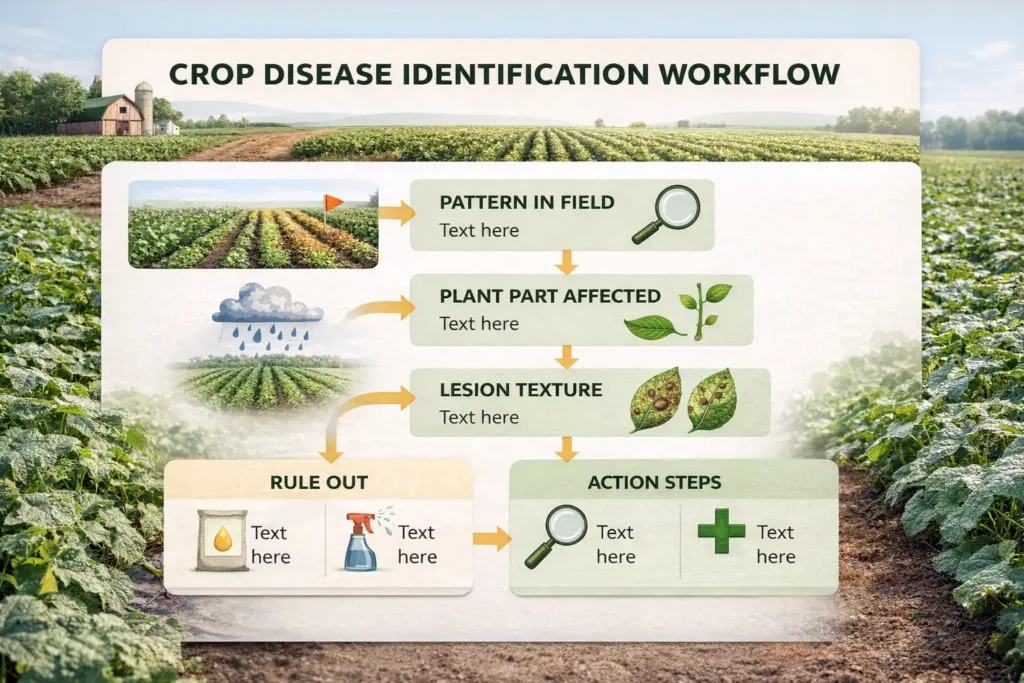
You identify a crop disease by building a short “field case file” that ties symptoms to pattern, timing, and conditions.
Good airflow, irrigation timing, and sanitation form reliable non-chemical pest control in crops that slows disease spread before you reach for any spray program.
Step 1: Map the pattern before you touch plants
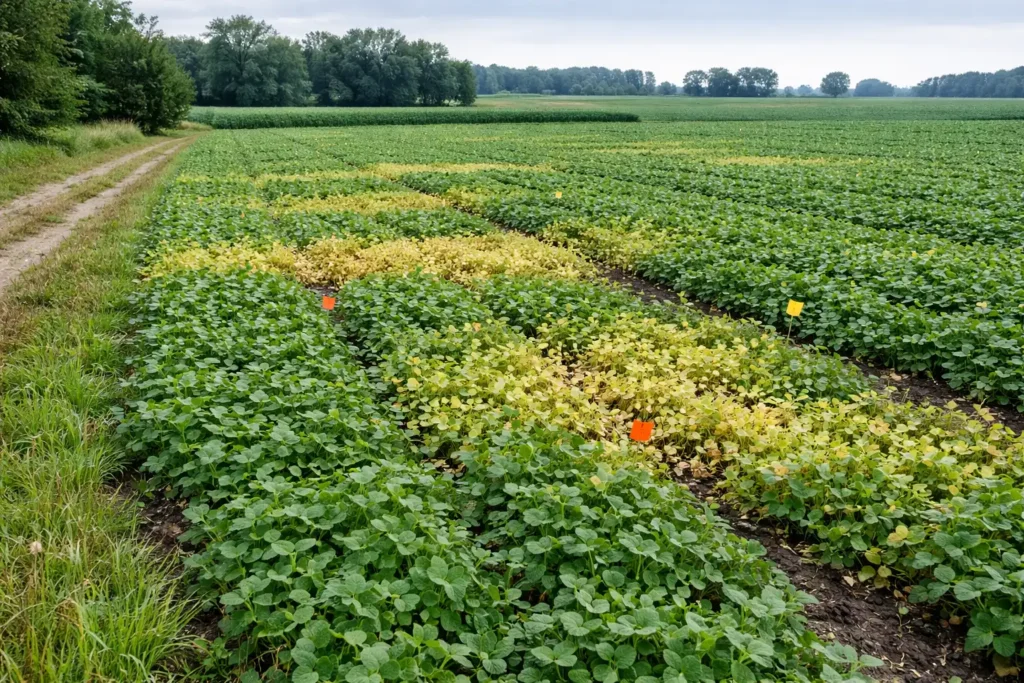
A disease pattern narrows the cause fast.
- Uniform across a field points to weather event, fertility, or spray issue.
- Hot spots and expanding patches point to infection starting points.
- Edges, low spots, pivots, and shelterbelts point to moisture and airflow effects.
- Rows that match equipment passes point to planting depth, compaction, or application overlap.
Good soil structure and balanced nutrition reduce stress that opens the door to infection. If your crop shows mixed symptoms, review your baseline program in soil fertility management and fix obvious stress first.
Step 2: Check the “where” on the plant
Pathogens favor certain tissues.
- Lower canopy first often points to splash-dispersed fungi.
- New growth first often points to viruses, herbicide drift, or bacterial spread in storms.
- Roots and crown point to soilborne fungi, oomycetes, or nematodes.
Step 3: Read the symptom shape and texture
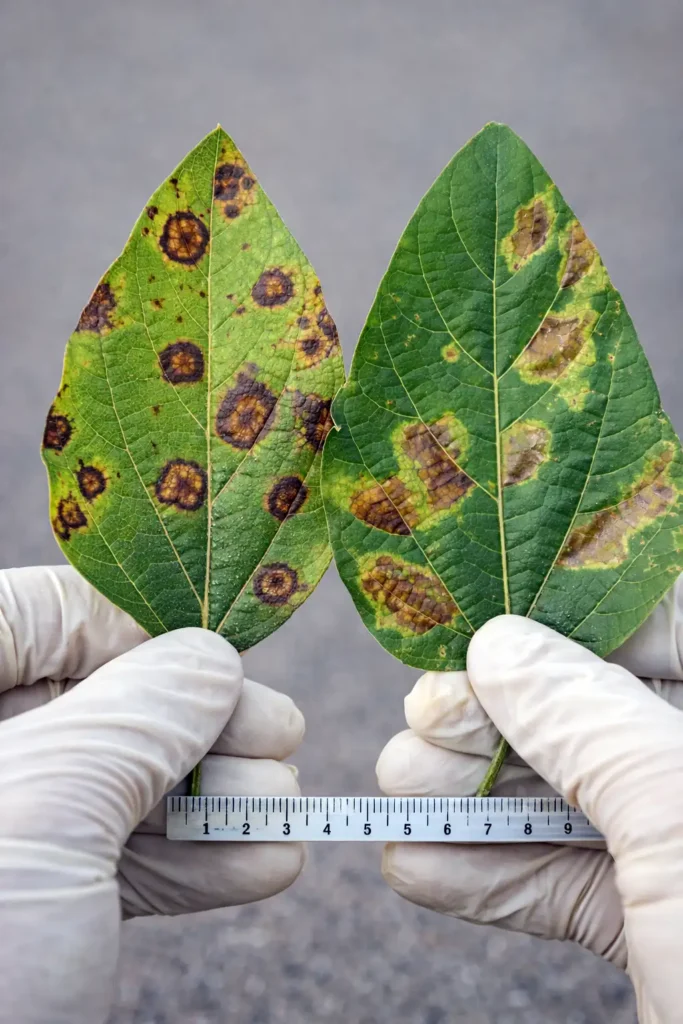
Use simple, repeatable cues.
- Powdery coating on leaves points to powdery mildew.
- Gray, fuzzy growth after humidity points to molds and rots.
- Angular leaf spots that stop at veins often point to bacteria.
- Rings, target spots, or concentric bands often point to fungal leaf spots.
- Water-soaked lesions often point to bacteria or oomycetes.
- Mosaic patterns and distortion often point to viruses.
Step 4: Look for a moisture link
Water drives many outbreaks. If symptoms spike after irrigation, heavy dew, or storms, tighten water management and canopy drying time using irrigation and water practices.
Step 5: Confirm with a “rule-out” check
Before you treat, rule out look-alikes.
- Nutrient deficiency: follows soil type and stays uniform across plants.
- Herbicide injury: matches spray overlaps, drift direction, or timing after application.
- Insect feeding: shows chewing, stippling, frass, or visible pests.
If uncertainty stays high, send a fresh sample to a local lab. A lab result saves money and prevents the wrong control action.
What are the most common fungal and oomycete diseases, and how do they look?
Fungal and oomycete diseases account for a large share of field losses because spores spread fast in wind and water.
Leaf spots (Septoria, Cercospora, Alternaria)
Leaf spot diseases create small lesions that expand, often starting in the lower canopy after rain splash. Severe cases cause early leaf drop and weaker grain fill or fruit size.
Prevention that works:
- Rotate away from the host crop when possible.
- Bury or manage infected residue if your system allows.
- Increase airflow with spacing, pruning, or balanced nitrogen.
- Time irrigation to reduce long leaf wetness windows.
Blights (early blight, late blight, northern corn leaf blight, rice blast patterns)
Blights cause rapid tissue death, often in irregular patches that expand after humid weather. Late blight and similar oomycete problems move quickest during cool, wet stretches.
Prevention that works:
- Use resistant varieties when available.
- Avoid prolonged leaf wetness.
- Scout twice weekly during high-risk weather.
- Remove volunteer plants that carry inoculum.
If you grow row crops, keep a crop-specific symptom checklist. For example, many growers keep disease photos and thresholds handy for corn so lesions do not get ignored until yield is already gone.
Mildews (powdery mildew, downy mildew)
Powdery mildew shows a white, dusty growth. Downy mildew often shows yellowing on top with downy growth underneath, especially in humid mornings.
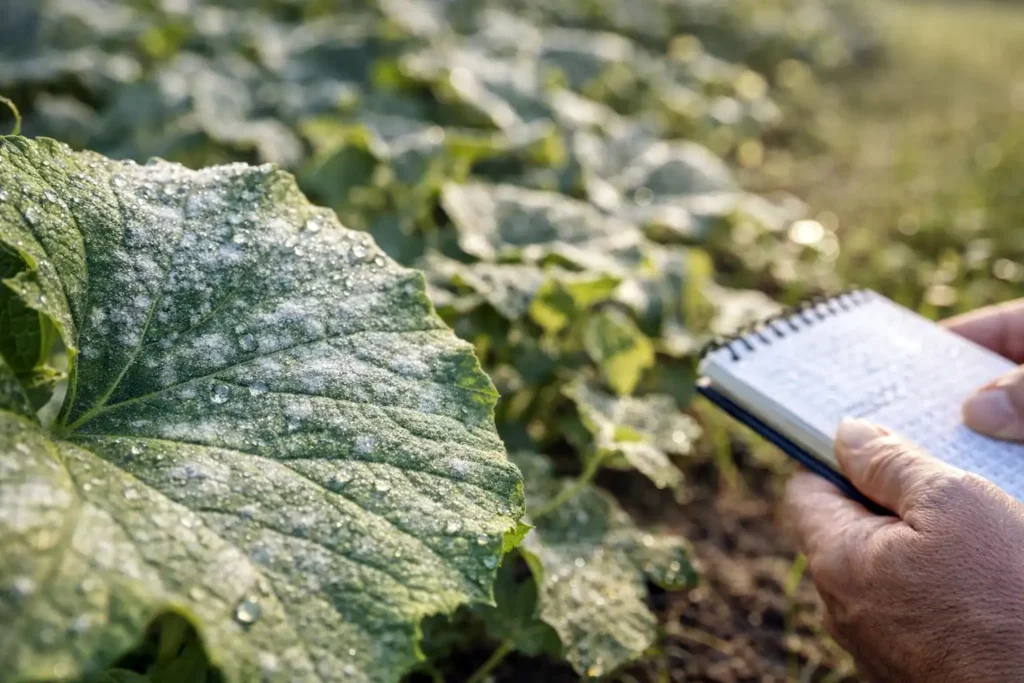
Prevention that works:
- Reduce dense canopy growth from excess nitrogen.
- Improve airflow and sunlight penetration.
- Avoid overhead irrigation when disease pressure rises.
Root, crown, and stem rots (Pythium, Phytophthora, Fusarium, Rhizoctonia)
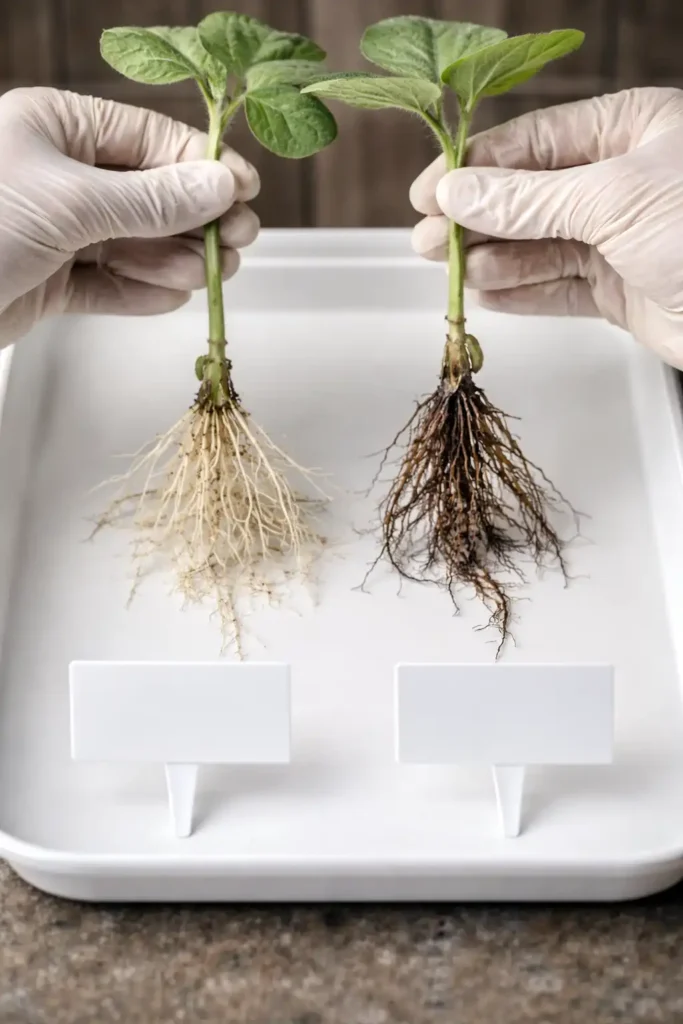
Rots cause stand loss, stunting, and uneven patches. They often start in compacted, poorly drained zones.
Prevention that works:
- Fix drainage and compaction.
- Plant into fit soil, not mud.
- Use seed treatments suited to your history and conditions.
- Keep residue and volunteer hosts managed.
What are the most common bacterial diseases, and how do they look?
Bacterial diseases often spike after storms, hail, or mechanical injury because wounds let bacteria enter.
Bacterial leaf spot and blight
These diseases create water-soaked spots that turn brown, sometimes with yellow halos. Spots often look angular because veins block movement.
Prevention that works:
- Avoid working fields when foliage is wet.
- Sanitize tools, knives, and harvest bins between blocks.
- Reduce leaf wetness with irrigation timing and spacing.
- Use resistant cultivars when available.
Bacterial wilt
Wilts collapse plants even when soil moisture looks adequate. Cut stems sometimes show discoloration, and some crops show bacterial streaming in water tests.
Prevention that works:
- Control the insect vectors that spread bacteria in certain crops.
- Rotate crops and remove infected plants early in small plantings.
- Reduce plant stress from drought and fertility swings.
What are the most common viral diseases, and how do they look?
Viruses do not respond to fungicides or bactericides. Viral management focuses on prevention and vector control.
Mosaic, streak, and yellowing viruses
Viruses often cause mosaic patterns, streaks, leaf curling, and stunting. Symptoms show strongest on new growth and intensify under stress.
Prevention that works:
- Plant certified, clean seed or transplants.
- Control aphids, whiteflies, thrips, and other vectors.
- Remove weeds that host viruses between seasons.
- Rogue infected plants early in high-value plantings.
How do nematode diseases show up, and what prevents them?
Plant-parasitic nematodes damage roots, so the crop looks thirsty and hungry even when you feed and irrigate.
Common field signs
- Patchy, slow growth that follows soil texture
- Poor response to fertilizer and irrigation
- Root knots, stubby roots, or reduced fine roots
Prevention that works:
- Use a rotation that breaks the nematode host cycle.
- Plant resistant varieties where available.
- Improve organic matter and soil structure so roots recover faster.
What is the full A-to-Z prevention program for common crop diseases?
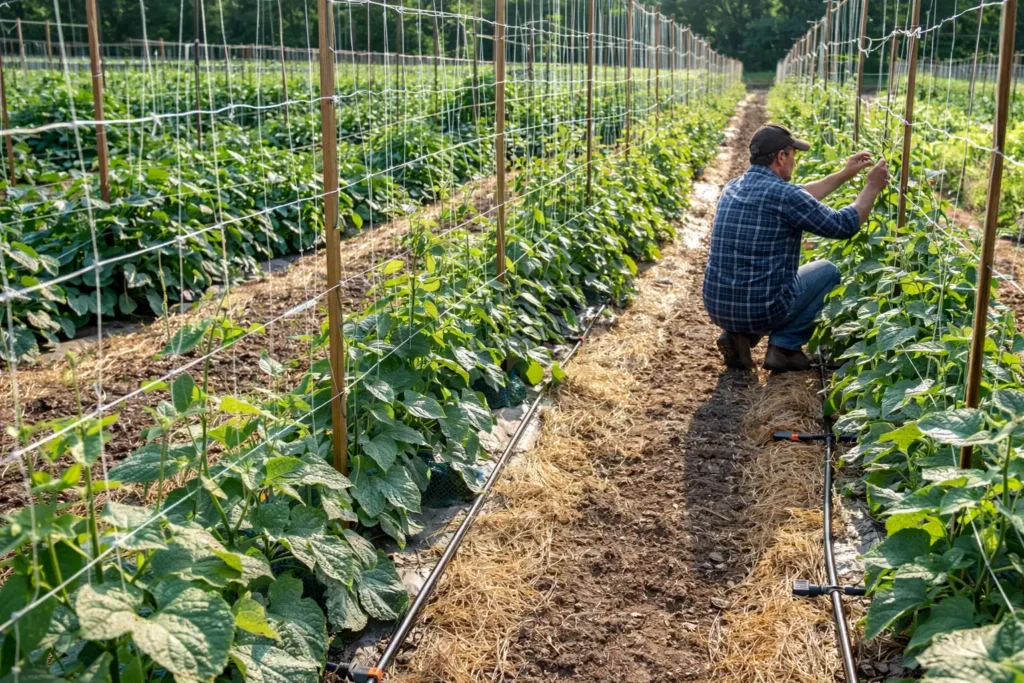
This is the season-long program that keeps most farms out of trouble.
1) Start with clean planting material and clean fields
- Use certified seed or healthy transplants.
- Control volunteer crops and weeds that carry pathogens.
- Clean planters, trays, and transplant tools.
2) Set the field up for fast drying
- Manage residue and row direction for airflow.
- Avoid planting too dense for your climate.
- Keep nitrogen balanced to avoid lush, disease-prone canopies.
3) Manage water like a disease tool
- Reduce leaf wetness time by watering early in the day.
- Avoid overhead irrigation during active outbreaks when possible.
- Fix low spots and drainage issues that feed root rots.
4) Scout on a schedule and write it down
A consistent routine beats memory.
- Scout at least weekly, and twice weekly in high-risk weather.
- Check low areas, edges, and last year’s hot spots first.
- Record what you see: date, growth stage, weather, and percent plants affected.
5) Use targeted products only after you confirm the problem
If you apply crop protection products, match the mode of action to the pathogen group and rotate modes of action to slow resistance. Apply at label rates with calibrated equipment.
For practical application setup and drift reduction, keep your sprayer system in good condition and use the right nozzles and pressure from sprayers and application gear.
6) Protect people first when mixing, spraying, and cleaning up
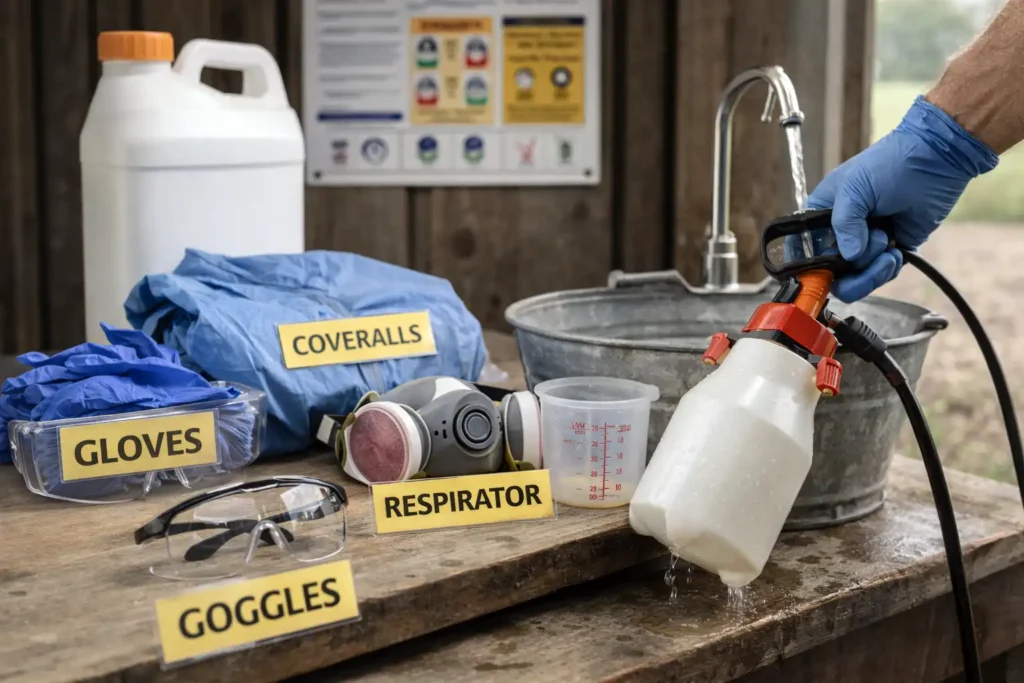
Disease control does not matter if someone gets hurt.
- Wear label-required protection every time.
- Keep chemical storage dry, locked, and organized.
- Wash hands before eating and after handling treated plants.
If you want a simple PPE checklist that fits most spray jobs, use farm safety PPE guidance.
7) Clean up at harvest and protect storage
- Harvest on time to avoid overripe tissue that rots.
- Remove culls and infected debris from storage areas.
- Keep storage temperature and humidity in the safe range for the crop.
What are the quickest containment steps when disease shows up mid-season?
You contain a disease by slowing spread and protecting healthy tissue.
- Flag hot spots and avoid moving through them when plants are wet.
- Stop the moisture driver if possible by adjusting irrigation timing and canopy wetness.
- Remove heavily infected plants in small plantings or high-value blocks.
- Improve airflow by pruning, thinning, or managing weeds in the row.
- Apply a targeted control only after you confirm the disease group and label fit.
- Sanitize tools and hands when moving between fields or varieties.
What common mistakes turn a small outbreak into a season problem?
A few patterns repeat on farms every year.
- Treating before diagnosis, then missing the real cause.
- Overwatering to “help” a sick crop, then feeding leaf wetness diseases.
- Pushing nitrogen hard in humid stretches, then building a dense canopy that holds dew.
- Spraying without calibration, then underdosing and selecting for resistance.
- Working fields while leaves are wet, then spreading bacteria and spores.
How do you troubleshoot when symptoms do not match one disease?
When symptoms feel mixed, use a simple decision path.
- If the pattern is uniform, check fertility, irrigation, and spray overlap first.
- If the damage tracks low spots, check drainage and root health.
- If the newest growth distorts, check viruses, drift, and insects.
- If the lower leaves spot first after rain, suspect splash-driven fungi.
- If plants wilt in heat but soil stays moist, inspect roots and crown.
If you still cannot match symptoms confidently, lab testing and local extension support give the fastest clarity.
Bottom line
Common crop diseases stay manageable when you run the same core system every season: reduce plant stress, shorten leaf wetness, scout on a schedule, confirm the cause, and apply targeted controls with safe handling. That routine protects yield, protects workers, and prevents the costly mistake of spraying the wrong product at the wrong time.