How to Harvest Lettuce From Your Garden (2026 Guide)
Harvesting lettuce is simple once you learn to read the plant. Knowing how to harvest lettuce from your garden comes down to timing, the right cut, and leaving enough behind for regrowth. Get those three right, and a single planting feeds you for weeks.
To harvest lettuce from your garden, cut in the early morning while leaves are crisp. For leaf types, snip outer leaves once they reach 4 to 6 inches. For heads, cut the whole plant an inch above the soil.
When Is Lettuce Ready to Harvest?
Lettuce is ready to harvest as soon as the leaves are big enough to eat. You do not have to wait for a full head. Most types are usable somewhere between 30 and 75 days after planting, depending on the variety.
Here is the part that trips up new growers. Lettuce (Lactuca sativa) has no single ready date. It has a wide window. The leaf is good from the moment it is a few inches tall right up until the plant flowers.
So check size and feel, not just the calendar. Below is what each main type looks like at harvest.
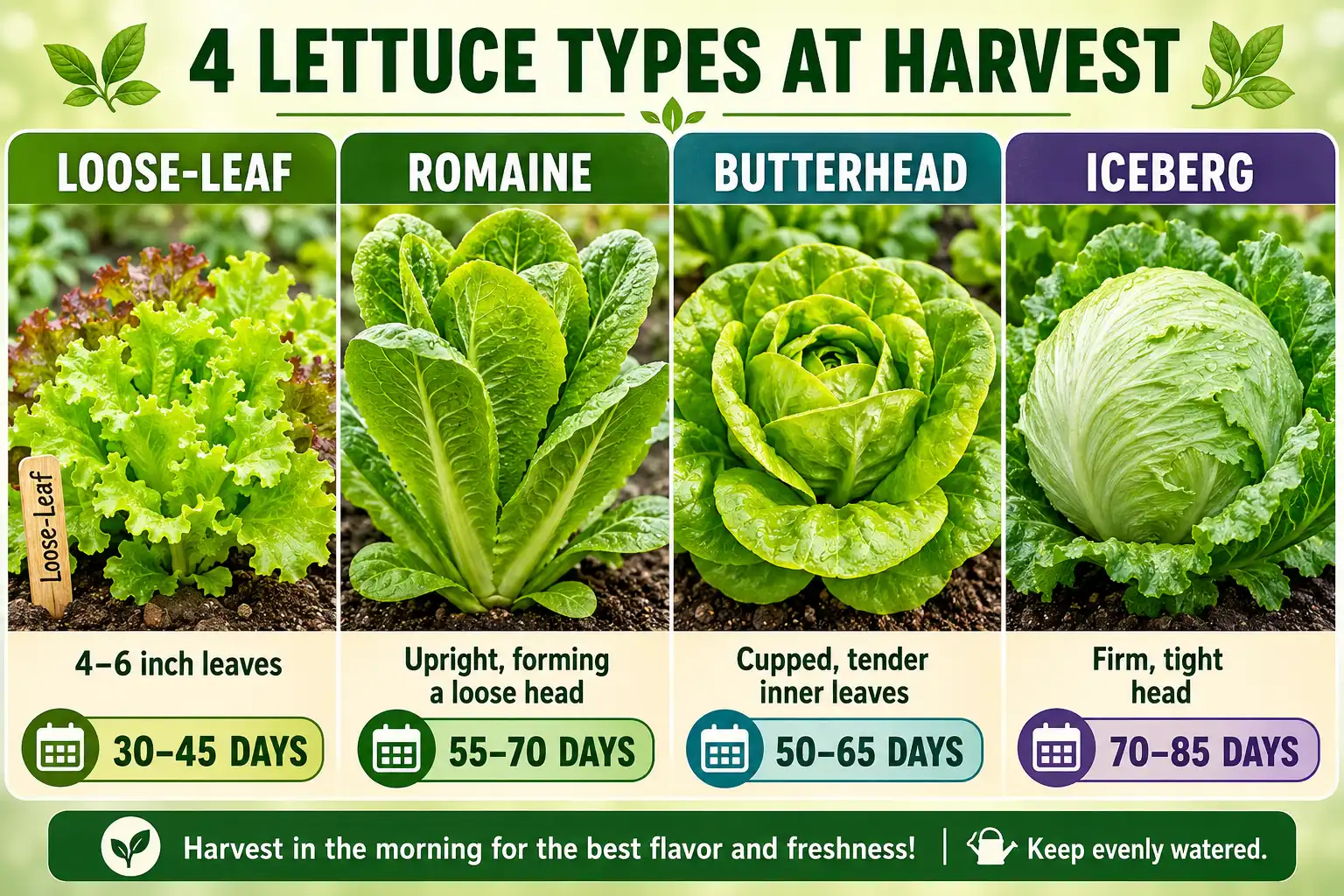
Leaf and Loose-Leaf Lettuce
Loose-leaf lettuce is ready when the leaves reach 4 to 6 inches long. You can start even earlier for baby greens at 3 to 4 inches. These types never form a tight head, so size is your only cue. Pick the outer leaves first, and the plant keeps feeding you.
Romaine
Romaine is ready when the leaves stand tall and overlap into a loose, upright head about 6 to 8 inches high. This usually takes around 70 to 75 days. The center also firms up as it matures. You can cut the whole head or strip outer leaves as you go.
Butterhead and Bibb
Butterhead and Bibb lettuce are ready when the inner leaves cup inward into a soft, loose head. The center feels slightly firm but never hard. Squeeze it gently. If it gives a little and holds its shape, cut it.
Iceberg and Crisphead
Iceberg is ready when the center feels firm and solid, like the heads at the store. Crisphead takes the longest, often 55 to 75 days. Then press the top of the head with your palm. A firm, full center means it is time. Wait too long and the head can split or turn bitter.
Days to maturity shift with weather and variety, so it helps to use size and feel over a strict count. If you want a closer look at the full timeline, our guide covers how long lettuce takes to mature in a separate guide.
What Time of Day Should You Harvest Lettuce?
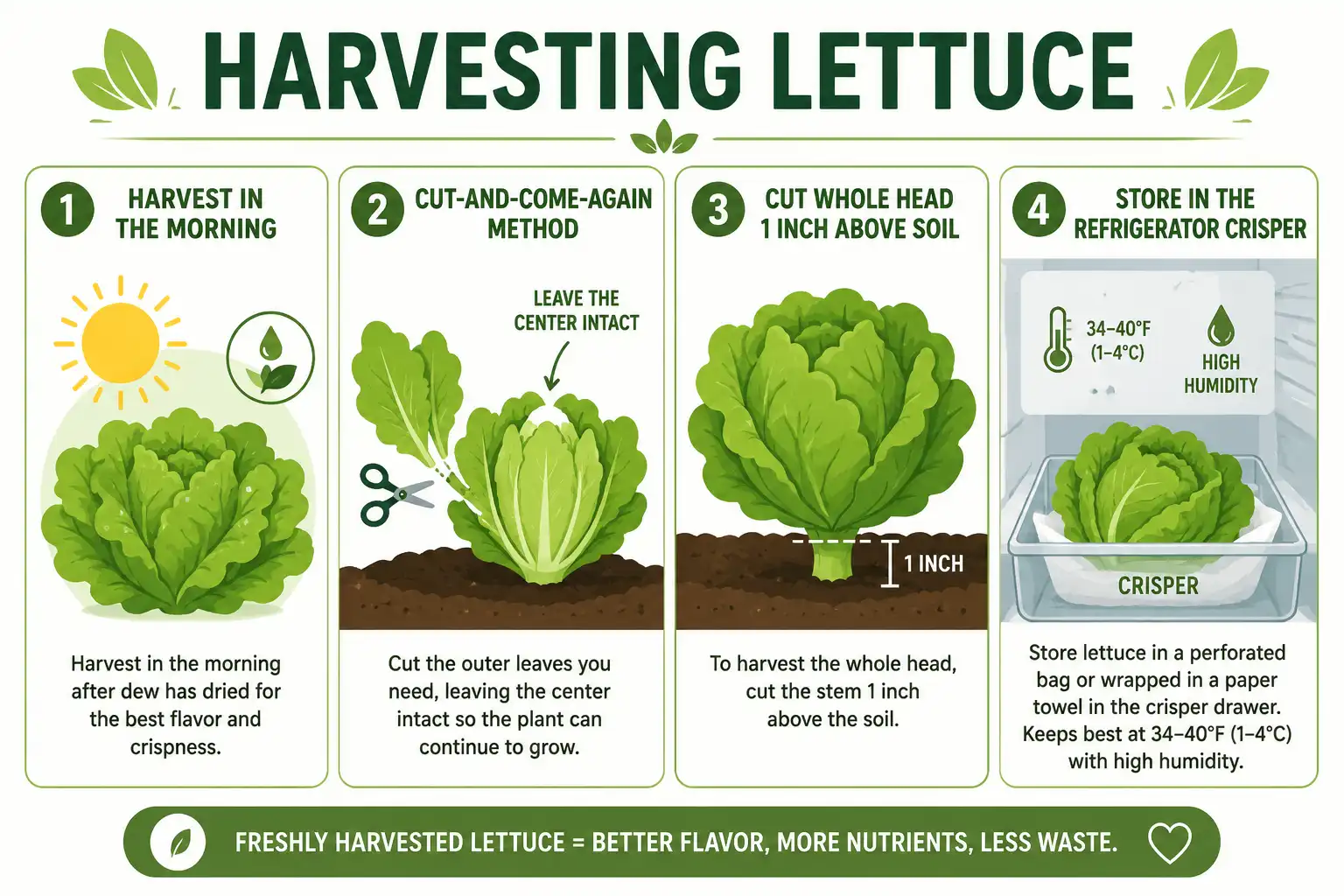
Harvest lettuce in the early morning, right after the dew lifts. The leaves are at their crispest then. They are full of water and have not faced the day’s heat yet. Morning leaves also taste milder.
Why does timing matter this much? Heat and sun push bitter compounds (sesquiterpene lactones) into the leaves through the day. By afternoon, the same plant can taste sharper. So cutting is best done before the sun climbs high.
Water helps too. Lettuce cut after a good watering is crisper than lettuce pulled from dry soil. If your beds run dry, soak them the evening before. For a full breakdown of how much water lettuce needsour guide covers that elsewhere, but the short version is steady moisture, especially before a cut.
How to Harvest Lettuce From Your Garden Without Killing the Plant
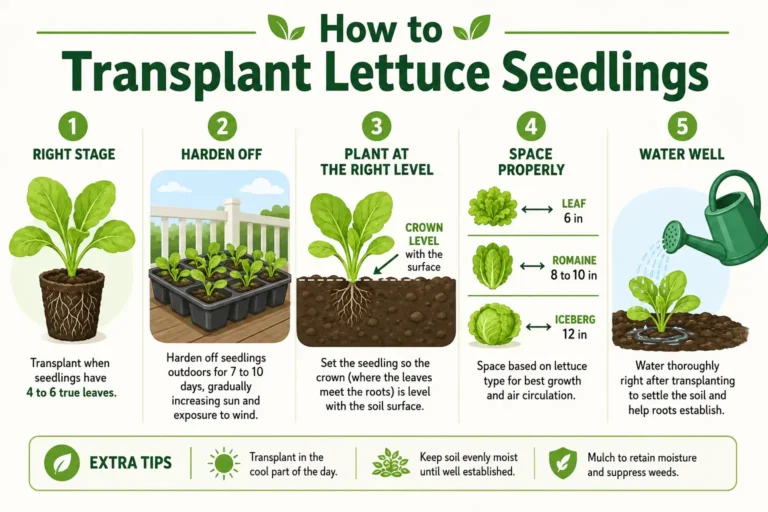
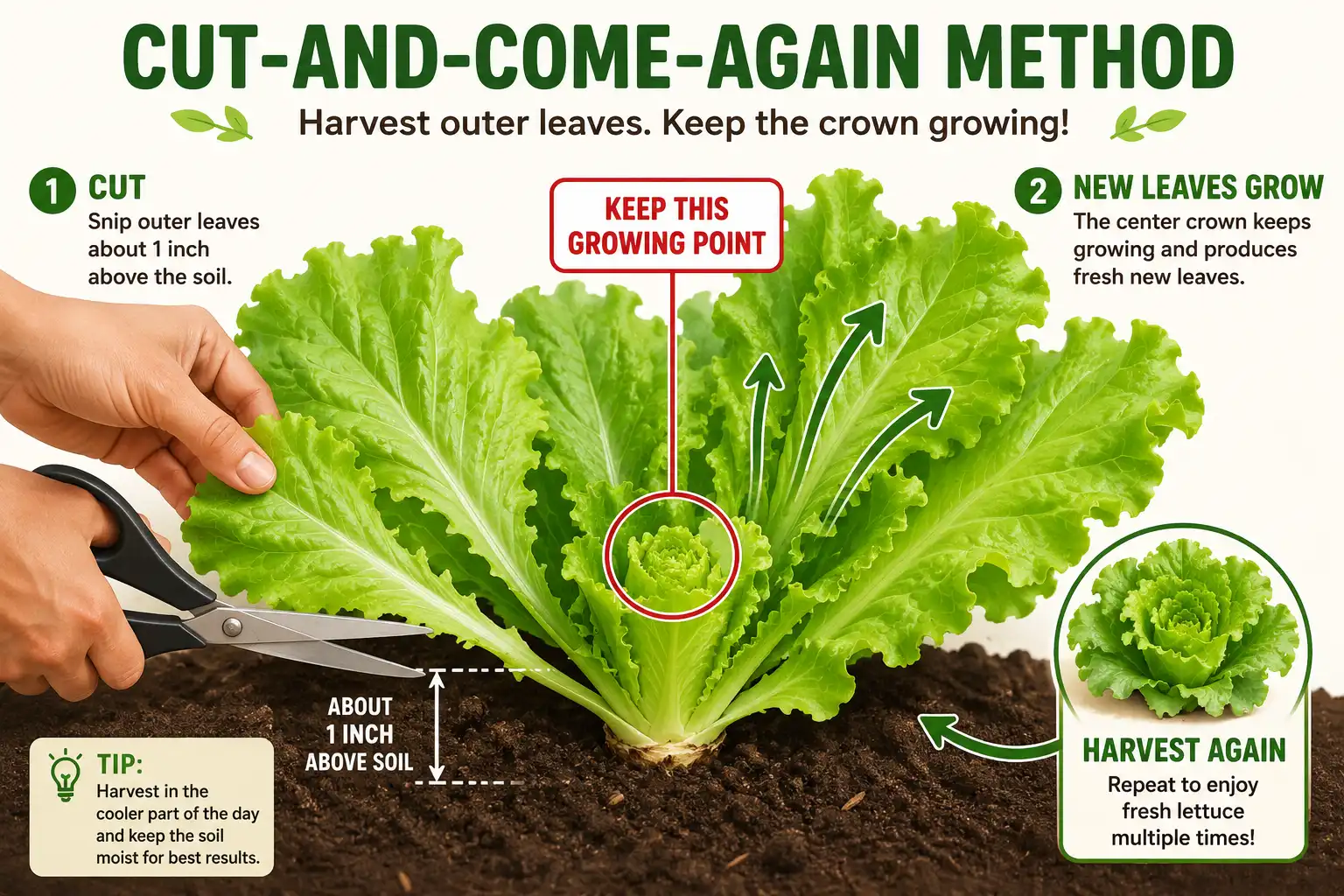
The trick to harvesting lettuce from your garden without killing the plant is to cut the outer leaves and leave the center alone. Lettuce grows from its center, called the crown. Leave that growing point intact, and the plant keeps pushing new leaves.
This method has a name: cut-and-come-again. Here is how to do it.
- Keep a clean, sharp pair of scissors or a knife handy. Dull or dirty blades crush the stem and invite rot.
- Grab a few outer leaves at the base.
- Snip them about an inch above the soil, just above the crown.
- Leave the small inner leaves and the center growing point untouched.
- Take no more than a third of the plant at once.
That third leaves plenty of leaf surface for the plant to recover. New leaves fill in within 7 to 10 days. Done right, one plant gives you three or four cuttings before it tires out.
This works on any lettuce, even head types. You do not have to wait for a romaine to form a full head. You can pick its outer leaves the whole time it grows.
How to Harvest a Whole Head of Lettuce
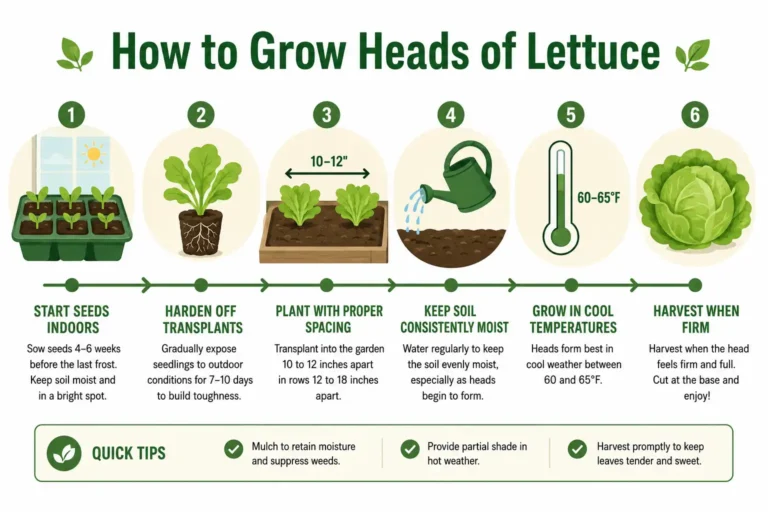
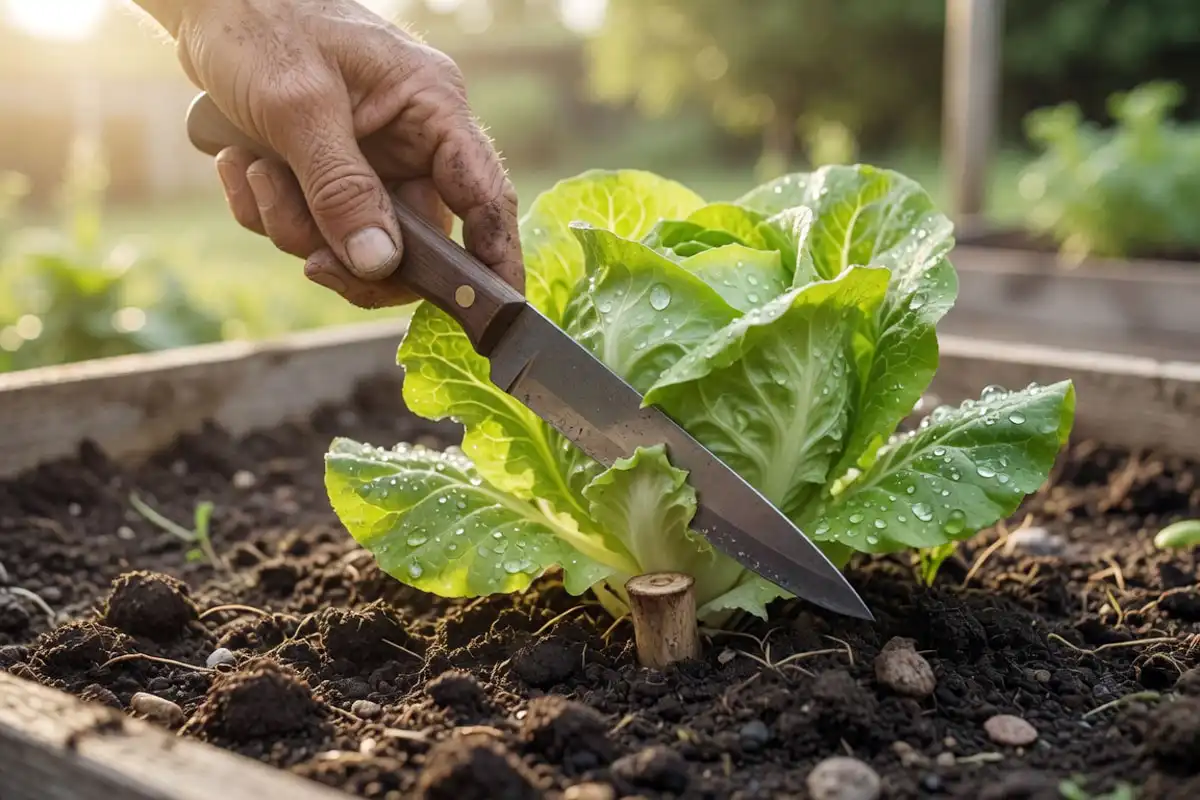
To harvest a whole head of lettuce, cut the entire plant straight across about an inch above the soil line. So grab a sharp knife. Slice through the base in one clean motion, just above the lowest leaves.
Leave that short stump in the ground. Here is the payoff. The crown often resprouts. Loose-leaf and butterhead stumps push a fresh flush of leaves in two to three weeks. A romaine stump can take 55 to 60 days to mature a second, looser head.
Keep about an inch of stem on the head you cut. That keeps soil off the leaves and helps the head hold up longer in storage.
If you would rather clear the plant entirely, pull the whole thing, roots and all. That ends production from that spot, so it works best for plants about to bolt or beds that need to be flipped.
How Many Times Can You Harvest the Same Lettuce Plant?
You can harvest the same lettuce plant three or four times in a season with the cut-and-come-again method. Whole-head cutting usually gives you two or three rounds. After that, the leaves get smaller and the flavor turns.
A few things stretch the count. First, cool weather keeps plants productive longer. Steady water and a light feeding after each cut help the crown bounce back. Once a plant slows down or turns bitter, pull it and plant something new.
You can keep the cycle going indoors too. A leftover grocery stump will root and releaf on a windowsill. our guide covers regrowing lettuce from a store-bought head in another post if you want to try it through winter.
How Do You Harvest Lettuce Before It Bolts?
Harvest lettuce before it bolts by cutting at the first sign of stretching. Bolting is when the plant sends up a tall center stalk to flower. Once that starts, the leaves turn bitter fast and the plant stops making good salad greens.
Watch for these signs:
- The center stretches upward and the plant looks taller and pointier.
- The leaves taste sharp or milky when you nibble one.
- A flower stalk pokes up from the middle.
Heat triggers bolting. Long summer days and dry soil do the same, too. Spring lettuce starts to bolt once we hit a stretch of 80°F days. That is the signal to cut everything at once and use it.
If you want greens deeper into summer, grow heat-tolerant types and give them afternoon shade. This guide covers growing lettuce through summer heat and raising romaine that resists bolting in their own guides.
A bolted plant is not all waste, either. Let one go to flower, and you can collect seed for next year. Our guide covers saving lettuce seed for free plants in a dedicated post.
How to Harvest Lettuce in Fall and Light Frost
Lettuce handles light frost well, so fall harvests can run well past your first cold night. The plant is one of the hardier cool-season greens. A light frost can even sweeten the leaves. A hard freeze, though, will turn them to mush.
Leaf types take cold the best, and romaine is fairly hardy as well. Butterhead holds up reasonably too, while crisphead is the most tender of the bunch. When a frost is coming, throwing a row cover or an old sheet over the bed is the recommended step. A light fabric cover buys a few degrees of protection, down to around 28°F.
If a hard freeze is forecast, harvest everything first. Cut it, cool it, and store it.
How to Store Lettuce After Harvest
Store harvested lettuce dry and cold for the longest shelf life. Do not wash it before storing. Wet leaves rot fast in the fridge.
Here is the routine after a cut:
- Shake off loose dirt and pull any damaged outer leaves.
- Skip the wash until you are ready to eat the lettuce.
- Loosely pack the leaves in a plastic bag or container with a paper towel inside.
- Set it in the crisper drawer.
Still, cold is the main thing. Get the leaves chilled fast to pull out the field heat. The crisper drawer sits right in the sweet spot, near 34 to 38°F. Leaf and butterhead lettuce keeps about one to two weeks this way. Crisphead can hold closer to two or three weeks.
One warning. Never freeze fresh lettuce. The leaves are mostly water, so they collapse into slime once thawed. Keep your fridge from frosting over for the same reason.
Bottom Lines
Harvesting lettuce comes down to a simple rhythm. Cut in the morning, take the outer leaves first, and leave the crown to refill. Then chilling the greens fast and keeping them dry helps preserve quality. Watch for bolting, cut before the plant stretches, and you will pull weeks of salad from one short row. Start with the cut-and-come-again method on a few leaf plants. It is the easiest win for your first season.