What Does Bolting Lettuce Look Like? Signs to Catch It Early
Your lettuce looked perfect a week ago. Now the center is stretching upward and the leaves taste off. So what does bolting lettuce look like? A tall central stalk rising from the middle is the first and clearest sign. Catch it early and you save the harvest.
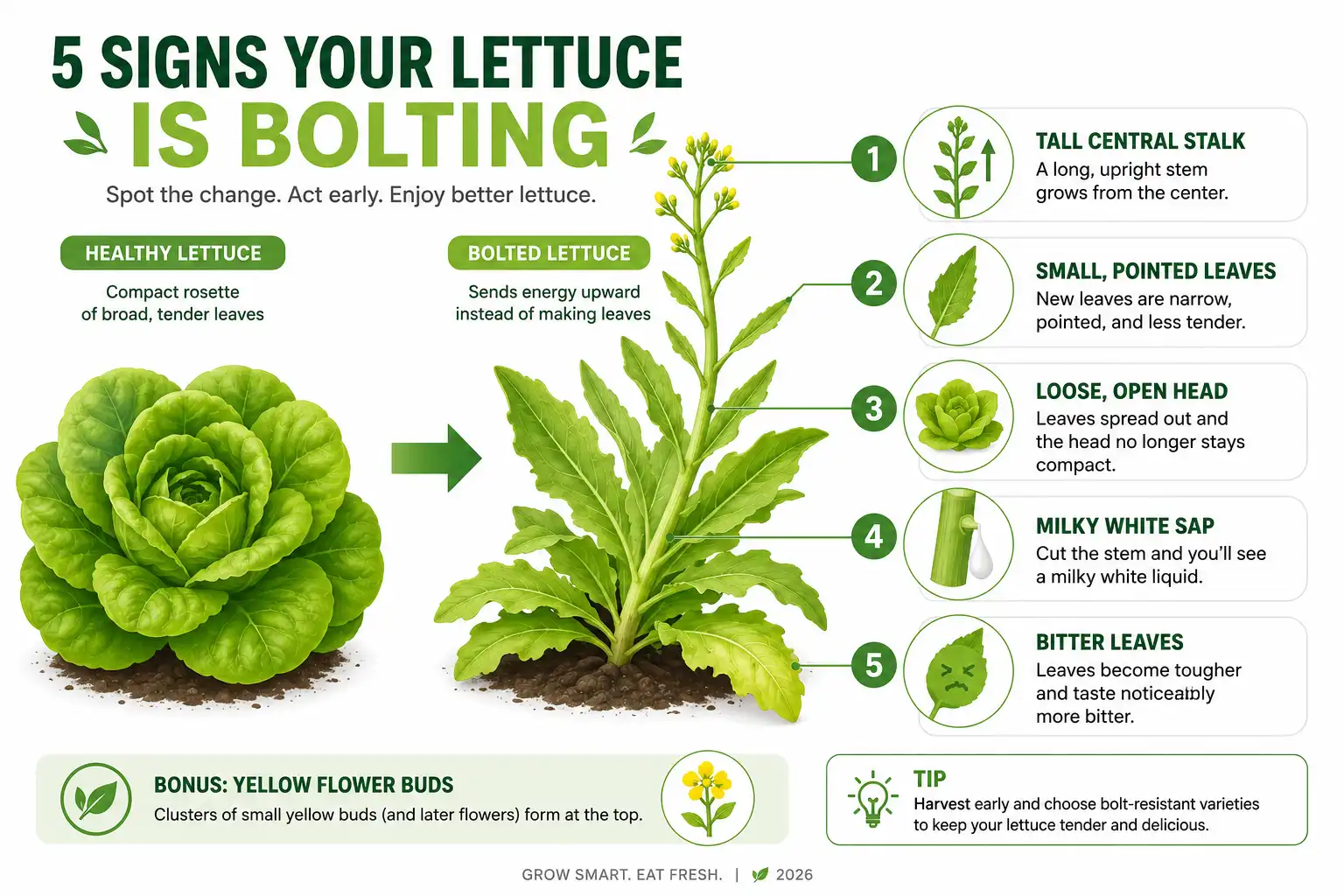
Bolting lettuce shows a tall, thick stalk rising from the plant’s center. New leaves turn small, narrow, and pointed. The head loosens, the sap runs milky, and the leaves taste bitter. Yellow flower buds follow within days.
What Does Bolting Lettuce Look Like?
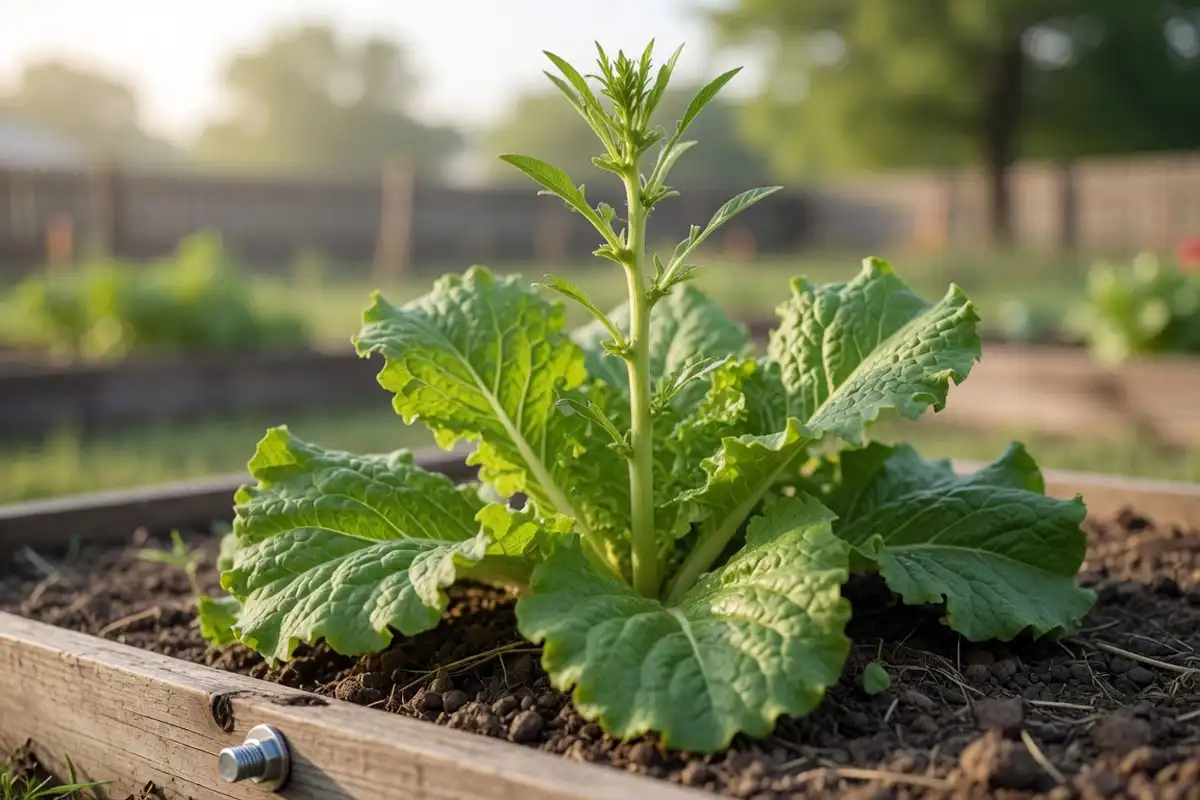
Bolting lettuce looks like a leafy plant that suddenly grows a tall, upright stalk from its center. The neat rosette breaks apart. The plant stretches toward the sky instead of filling out sideways.
Here is the order it usually follows:
First, the center rises. A short, thick stem pushes up from the middle. On leaf types, this happens fast.
Next, the leaves change. New growth comes in small, narrow, and pointed. The broad, rounded leaves you wanted stay down at the base.
Then the stalk stretches. In warm weather it can reach two to three feet tall. It often branches near the top.
Finally, flowers and seed appear. Small buds open into pale yellow flowers. Lettuce belongs to the daisy family, Asteraceae, so the blooms look like tiny dandelions. Seeds follow, each carried on a white, feathery tuft.
What Are the First Signs Lettuce Is Bolting?
The first sign is a slight doming in the plant’s center, before any tall stalk appears. The middle starts to look crowded and lifted. New leaves emerge from a point rather than spreading flat.
Other early signals show up together. The plant feels taller than its neighbors. Leaves near the center turn lighter and stand more upright. The texture stiffens a little. On romaine and butterhead, the head feels looser when you squeeze it gently.
Catch these signs and you still have options. Wait a week, and usually you do not.
How Does Bolting Look in Different Types of Lettuce?
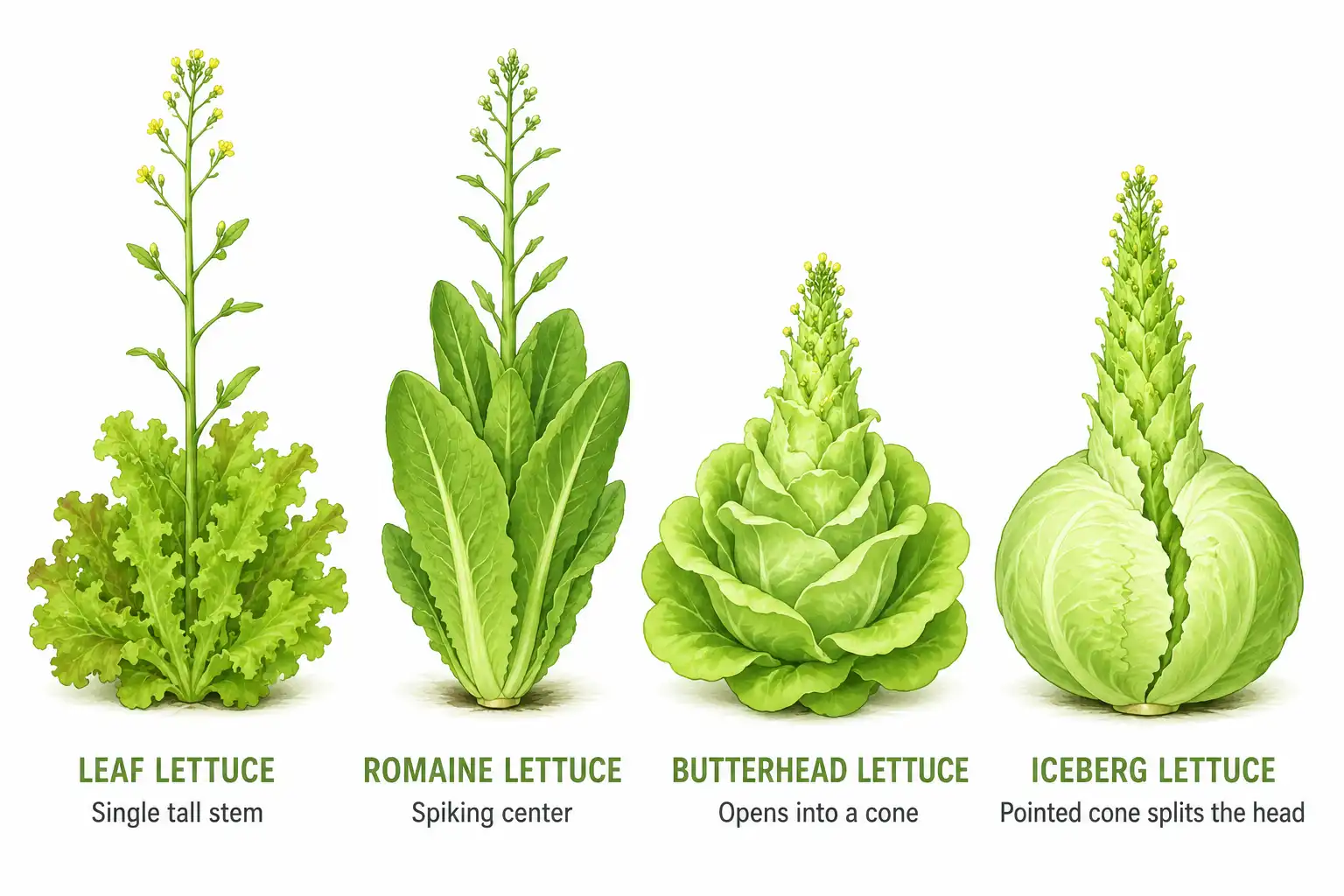
Bolting looks a little different by lettuce type, though the rising stalk shows up in all of them.
Leaf Lettuce
Leaf lettuce bolts fastest and most visibly. The loose rosette opens up and a single stem shoots straight up. Leaves space out along the stem like rungs on a ladder. Black Seeded Simpson and Slobolt both do this, though Slobolt holds out longer.
Romaine
Romaine first loses its tight, upright head. The center spikes through the top. The whole plant then elongates into a tall stalk. Heat-bred types like Jericho and Coastal Star resist this longer than standard romaine.
Butterhead and Bibb
Butterhead opens from a soft, loose head into a rising cone. The tender center leaves pull apart. A stem lifts straight out of the middle. These types bolt quietly, so check them often during warm spells.
Iceberg and Crisphead
Iceberg often splits or sends a pointed cone up through the firm head. The head may crack along the top. Crisphead holds its shape longest, which is why the change can surprise you. By the time the cone shows, the inner leaves are already bitter.
What Makes Lettuce Bolt?
Lettuce bolts when the plant senses stress. Three triggers do most of the damage: heat, long days, and uneven water.
Heat is the main one. Soil and air temperatures above 75°F push lettuce toward flowering. A few hot days in a row can start it. In zone 6a beds near Topeka, late June heat ends the spring crop almost every year. If summer is your problem season, our notes on growing lettuce through the summer heat walk through what holds up.
Day length matters too. Lettuce is a long-day plant. Once daylight runs past about 12 to 14 hours, the plant reads the signal to reproduce. So bolting peaks around the summer solstice.
Water stress speeds everything up. Let the soil dry out, then soak it, then dry it again, and the plant panics. Steady moisture keeps it calm. K-State Research and Extension points to consistent watering as a top defense. Getting how much water lettuce needs each week right makes a real difference.
Root disturbance and crowding add to it. Transplant shock, packed beds, and poor thinning all raise the risk.
Why Does Bolting Make Lettuce Taste Bitter?
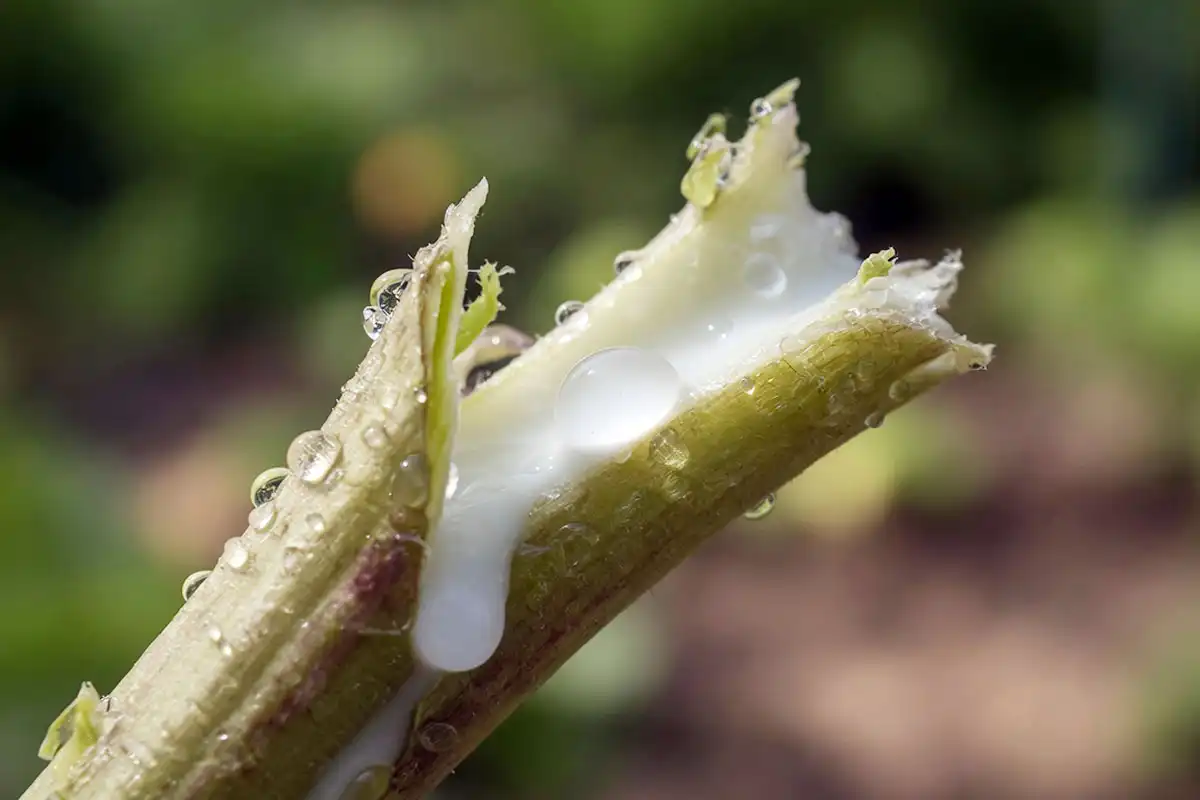
Bolting turns lettuce bitter because the plant pumps a milky sap into its leaves and stem. This sap, a white latex, carries compounds called sesquiterpene lactones. Lactucin is the main one. These protect the flowering plant, but they taste sharp and bitter to us.
You can see the sap yourself. Snap a bolting leaf or cut the stalk. A white, milky liquid beads up at the break. The more it runs, the more bitter the plant.
Cooler leaves at the base stay milder for a short while. The closer a leaf sits to the rising stalk, the more bitter it gets. This shift is simply how lettuce reproduces, and the bitterness ramps up fast once flowering starts.
Can You Still Eat Bolted Lettuce?
Yes, you can eat bolted lettuce in the early stage, though quality fades fast once the stalk rises. At the first sign of doming, the lower leaves often taste fine for a day or two. Pick them right away.
Once the stalk climbs and the sap runs heavy, the leaves get tough and bitter. A few tricks help at that point. Soak leaves in cold water for an hour to pull out some bitterness. Cook them, since heat tames the sharp flavor. Blend a handful into a stronger dish.
Past the flowering stage, most growers stop eating it. The leaves turn leathery and the bitterness wins. At that point, the plant earns its keep another way, covered next.
What Should You Do When Lettuce Starts to Bolt?
When lettuce starts to bolt, harvest the whole plant right away or let it flower for seed. Those are your two clear choices.
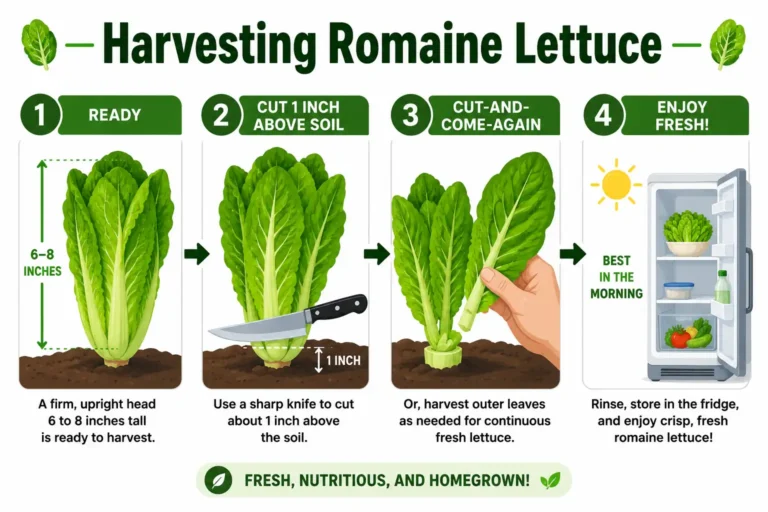
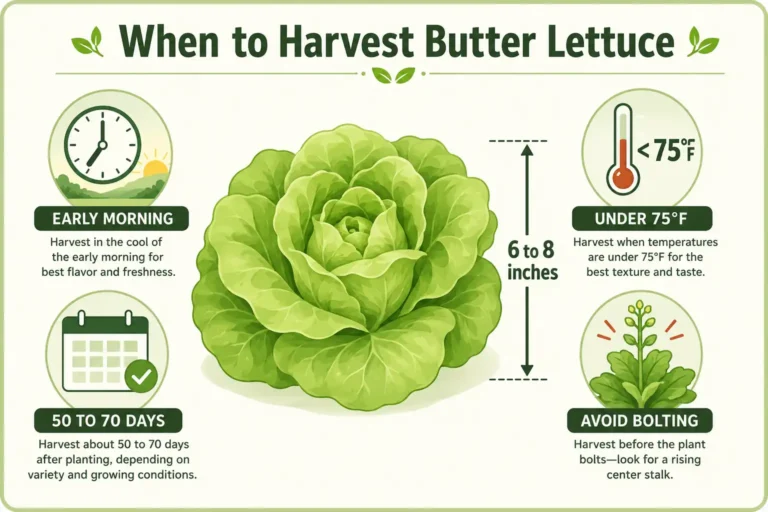
Harvest now if you want to eat it. Cut the entire plant at the base. Do not hold out for the leaves you are not using, because they will not improve. Learning to read when your lettuce is ready to pick keeps you ahead of the bitterness next time.
Let it flower if you want free seed. A bolting plant is already doing the work. Leave it standing, let the yellow flowers fade, and wait for the fluffy seed heads. Then you can save seed from a bolted plant and grow the same variety next season. Open-pollinated types like Black Seeded Simpson come back true.
Either way, clear the bed soon. Bolted plants pull water and space from the rest of your crop.
How Do You Keep Lettuce From Bolting?
You keep lettuce from bolting with timing and a few simple moves. None of them are hard.
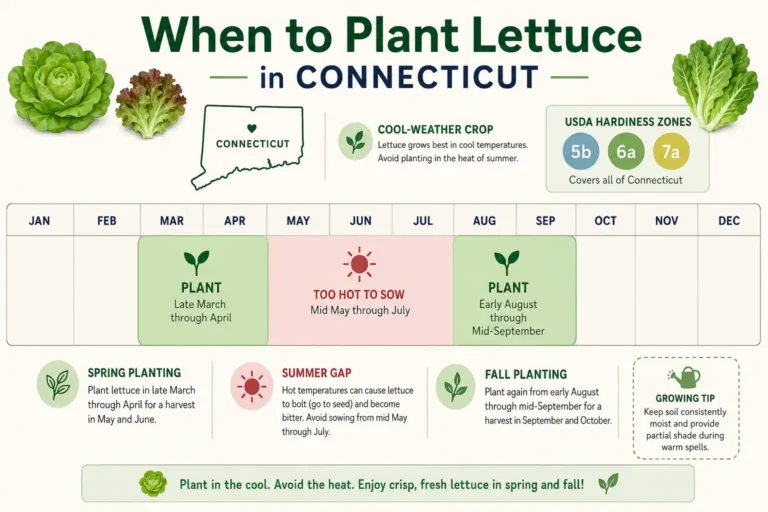
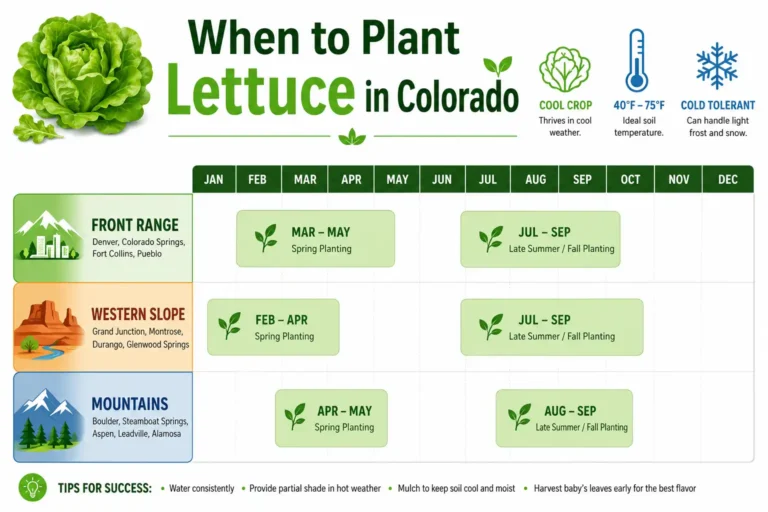
Plant in cool windows. Spring and fall give you the steady, mild temperatures lettuce wants. A fall crop often beats a summer one in Kansas, and getting your fall planting timed right keeps heads sweet.
Hold steady moisture. Even watering keeps the plant calm and slows the bolt clock.
Shade it during heat. A light shade cloth, around 30 to 40 percent, drops leaf temperature and buys you weeks.
Mulch the roots. A layer of straw keeps the soil cooler and the moisture even.
Pick slow-bolt varieties. Muir, Jericho, Nevada, and Slobolt all hold out far longer than standard types in summer heat. The University of Minnesota Extension and UC IPM both flag heat tolerance as a key trait for warm-region lettuce.
What to Watch For in the Beds
The rising center stem is the early warning sign to watch for. The moment the middle of a head starts to lift and the new leaves turn narrow, bolting has begun. That bed should be harvested within a day or two.
Watch the center, watch the leaf shape, and taste a leaf if you are unsure. Bitter sap means the window is closing. Act early, and you almost always keep the harvest worth eating.