How to Grow Romaine Lettuce From Seed Without It Bolting
Romaine gives you crisp, upright heads with thick, sweet ribs, and it holds up to heat better than most salad greens. Learning how to grow romaine lettuce comes down to cool-season timing, steady moisture, and harvesting before the heat turns the leaves bitter.
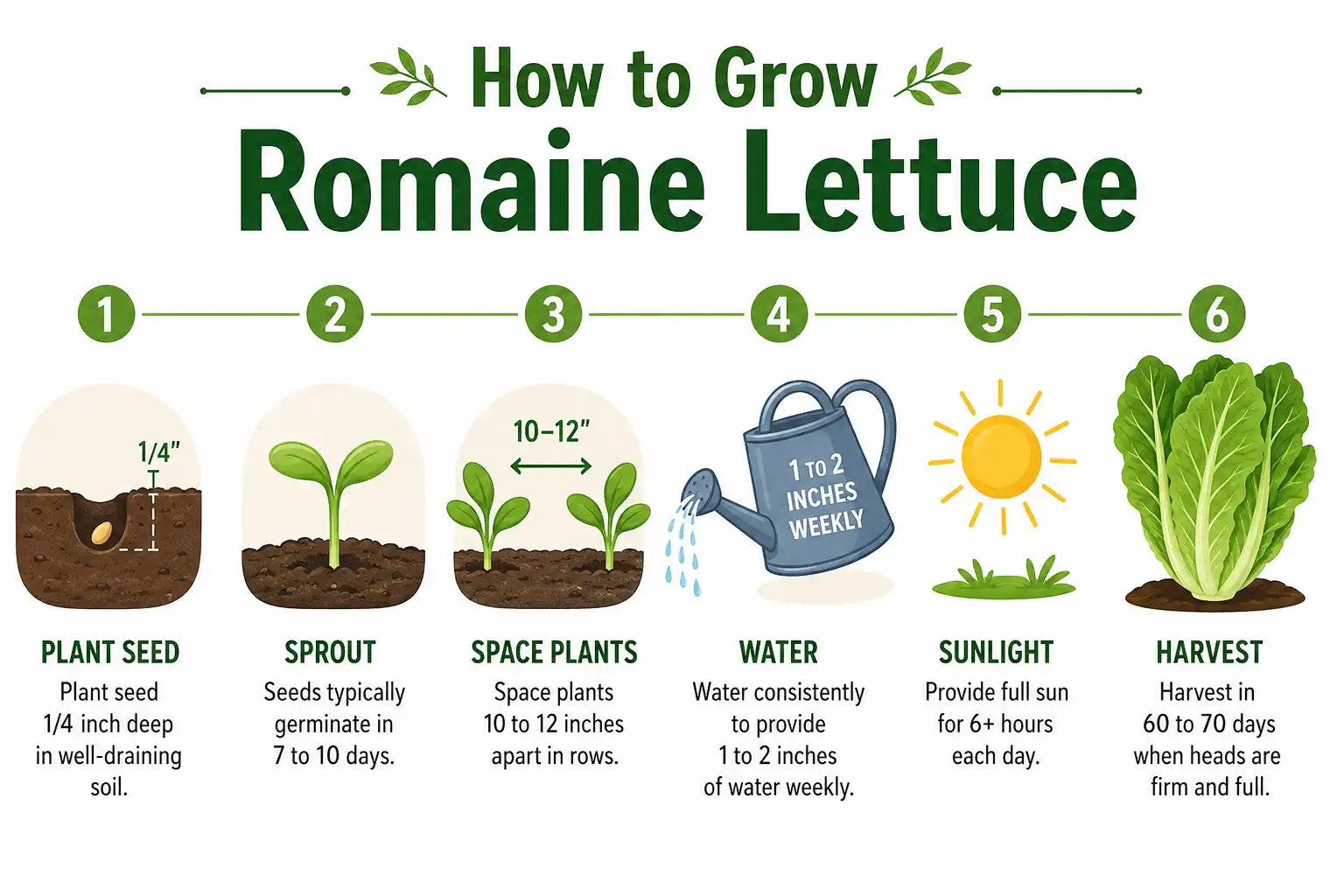
To grow romaine lettuce, plant it in cool weather, 2 to 3 weeks before your last spring frost. Sow seed 1/4 inch deep, space plants 10 to 12 inches apart, water evenly, and cut heads in 60 to 70 days.
Also know: Grow Lettuce Indoors All Year
When Should You Plant Romaine Lettuce?
Plant romaine in cool weather, when the soil sits between 40 and 75°F. In spring, sow seed 2 to 3 weeks before the last frost. In Kansas (USDA zone 6a), that lands in mid-to-late April. For a fall crop, plant 6 to 8 weeks before the first hard freeze. Cross-checking dates against K-State Research and Extension frost data before sowing is the recommended step.
Romaine handles cold better than people expect. Hardened plants take a light frost into the low 20s°F with little damage. Heat is the real trouble. Once daytime highs push past 80°F and nights stay warm, the plant rushes to flower and the leaves go bitter.
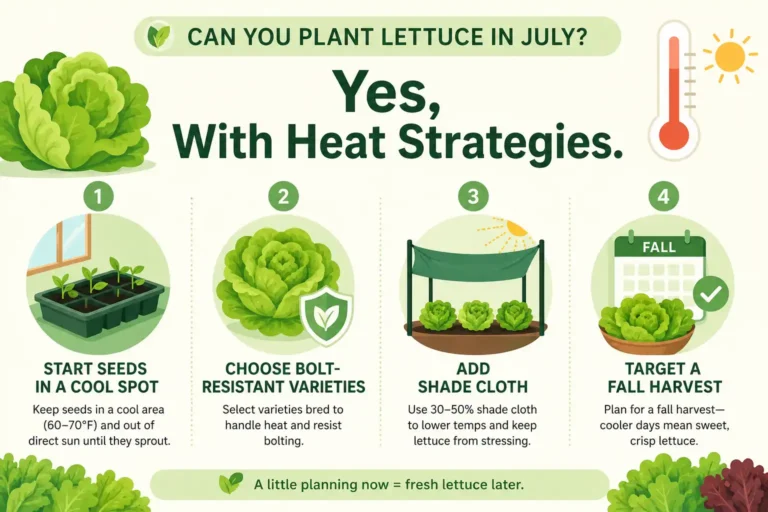
Seeds sprout fastest in soil around 60 to 70°F. Above 80°F, germination drops off because of thermoinhibition, where the seed refuses to wake up in hot ground. So main sowings are typically aimed at the cool stretches of early spring and late summer.
Succession sowing keeps the salad bowl full. Drop a short row every 2 weeks instead of planting everything at once. That way face twenty heads bolting in the same week. Getting the planting timed for the sweetest leaves matters more with romaine than with almost any other green.
What Soil and Spot Does Romaine Need?
Romaine needs loose, well-drained soil rich in organic matter, plus at least 6 hours of sun. Before planting, work 1 to 2 inches of finished compost into the top 6 inches of the bed. That feeds the soil and helps it hold even moisture.
Keep the pH near 6.0 to 7.0. A simple soil test shows where you stand and whether you need lime or extra nutrients. Never use fresh manure on lettuce. It can carry E. coli, and raw leafy greens are not worth that risk.
Romaine likes full sun in spring and fall. In the heat of summer, though, a spot with afternoon shade keeps the heads cooler and slows bolting. If your ground stays soggy after rain, growing your lettuce in a raised bed gives the roots better drainage and a longer cutting window.
How to Grow Romaine Lettuce From Seed
Growing romaine from seed is simple if you start cool and keep the soil damp. You can start plants indoors for an early jump, or sow seed straight into the garden. Do both, depending on the season.
Starting Romaine Indoors
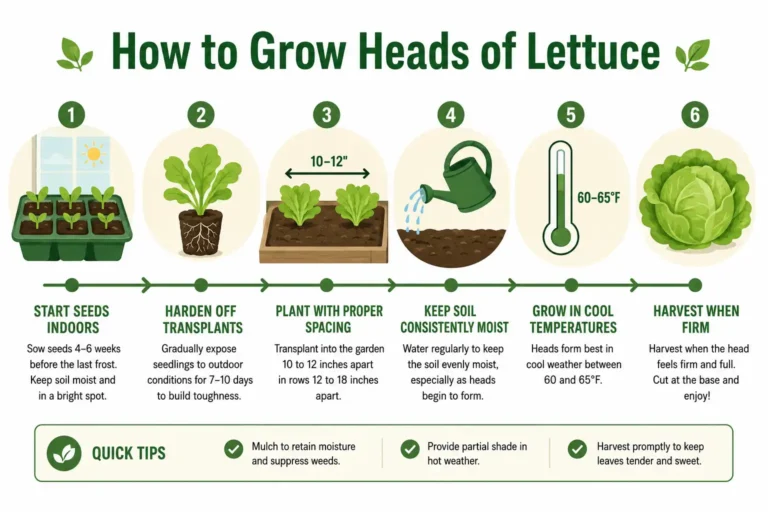
Start romaine indoors 3 to 4 weeks before you plan to set plants out. Fill cell trays with a light seed-starting mix. Sow 2 to 3 seeds per cell and barely cover them, about 1/4 inch deep. Keep the trays around 65 to 70°F until sprouts show, then move them under bright light.
Lettuce seed needs light and steady moisture to wake up. If your house runs warm, chilling the seed in the fridge for a few days first will help lettuce seed germinate in warmer conditions. Once seedlings show 3 to 4 true leaves, harden them off outdoors for about 5 days before transplanting.
Sowing Romaine Directly in the Garden
Direct sowing works well for romaine and skips transplant shock. Rake the bed smooth, then sow seed thinly in rows. Cover it lightly and keep the surface damp until sprouts break through, usually in 7 to 10 days.
In hot late-summer soil, lay a board or piece of burlap over the row to hold moisture and keep it cool. Pull the cover the moment seedlings appear. Deciding whether to sow in place or set out transplants comes down to your weather and how fast you want a harvest.
How Deep and How Far Apart
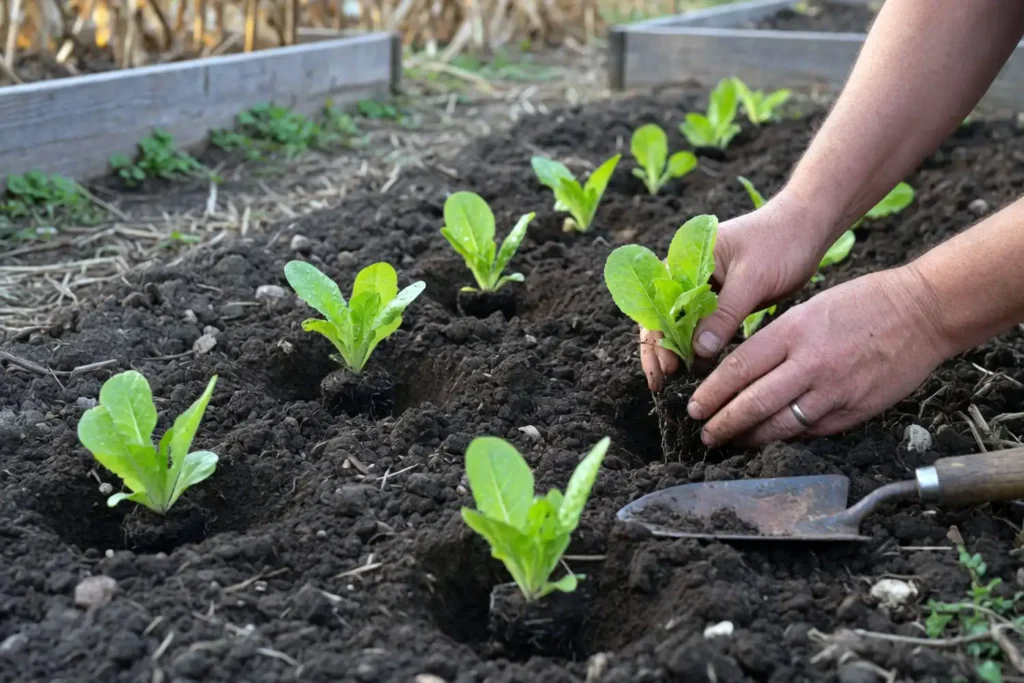
Plant romaine seed 1/4 to 1/2 inch deep, and thin or space heads 10 to 12 inches apart. Set rows 15 to 18 inches apart so air moves freely and you can reach in to cut.
Seed planted too deep struggles to surface, so shallow wins with lettuce. For the complete details on the right depth for lettuce seed, that’s covered separately. Thin seedlings once they reach 3 to 4 true leaves. Do not toss the thinnings. Move the strongest ones to fill gaps, or eat them as baby greens.
How Much Water and Feed Does Romaine Need?
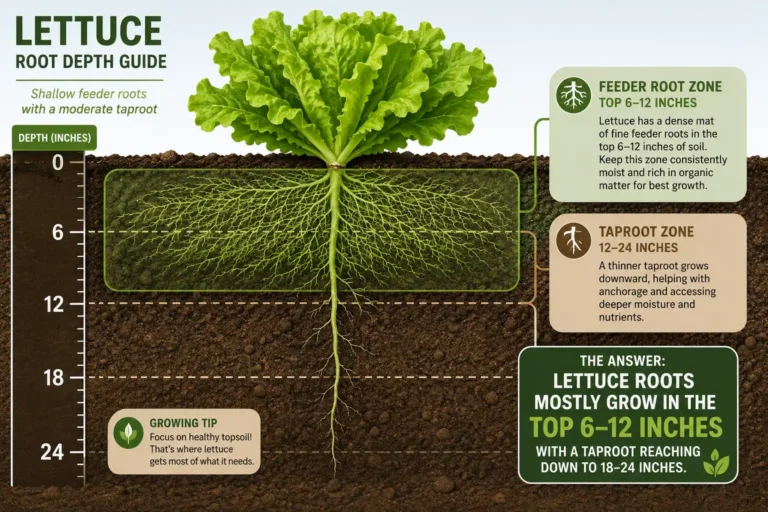
Romaine needs about 1 to 2 inches of water per week and a steady supply of nitrogen. Even moisture is the key. Lettuce roots sit shallow, so the bed dries fast, and a thirsty plant turns tough and bitter.
Water in the morning, at the base of the plant when you can. Wet leaves overnight invite disease. A swing between bone-dry and soaked soil also triggers tipburn, where the inner leaf edges turn brown.
For feeding, a soil test sets your baseline. As a rule, romaine takes up most of its nitrogen in the last 4 weeks, while the head fills. Utah State Extension recommends about 1/4 cup of a 21-0-0 nitrogen fertilizer per 10 feet of row, side-dressed roughly 4 weeks after transplanting. That is when feeding typically happens. Go easy, though. Too much nitrogen makes floppy plants and makes tipburn worse.
How Do You Keep Romaine From Bolting?
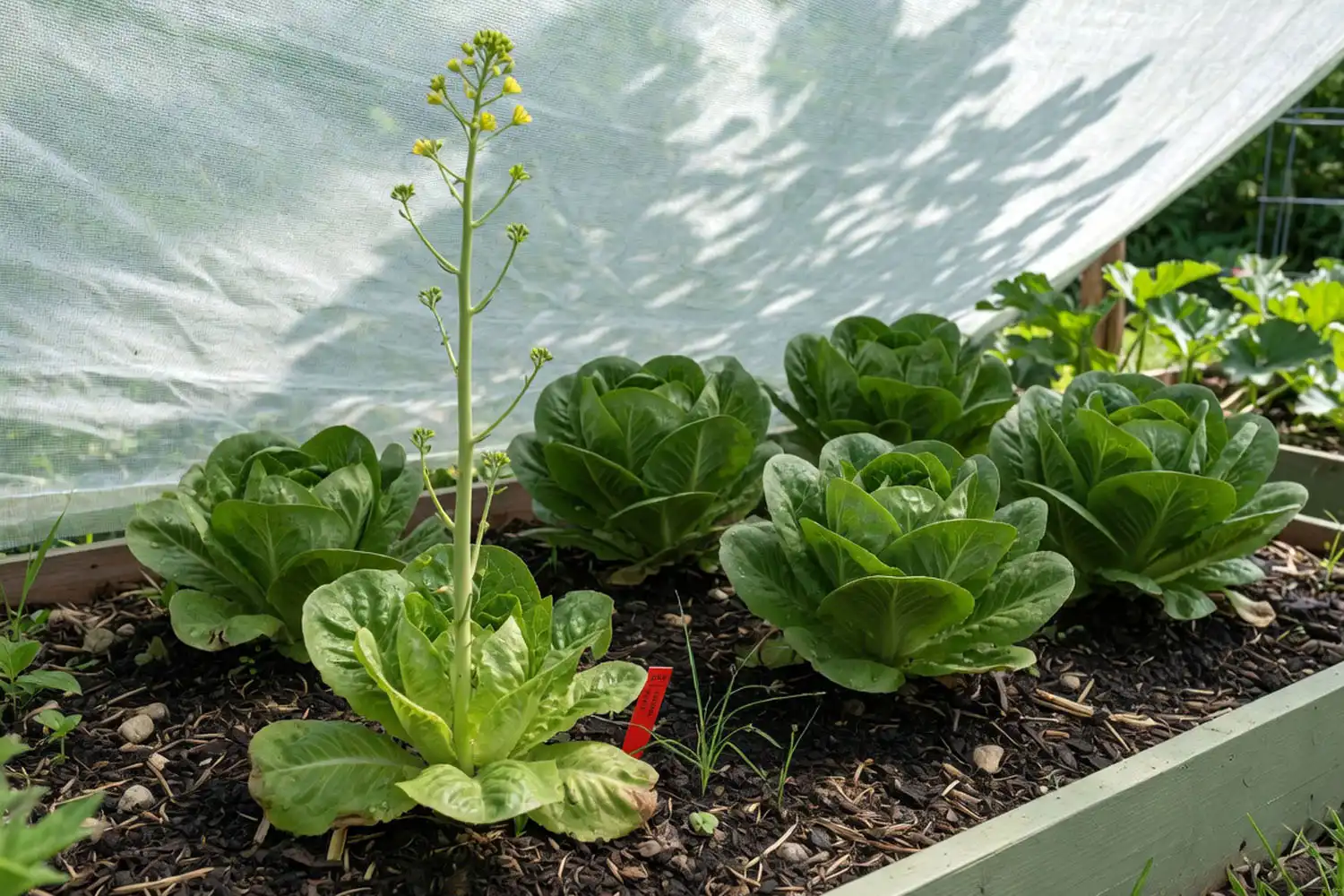
You keep romaine from bolting by growing it in cool weather and harvesting before the heat hits. Bolting is when the plant sends up a tall stalk to flower, and at that point the leaves turn bitter and milky.
Heat is the main trigger. Long, hot days and warm nights tell romaine to make seed. Afternoon shade, even watering, and slow-bolt varieties all buy you time. A cold snap can fool the plant too. If young seedlings sit below 50°F during their first 3 weeks, some will bolt early once warmth returns.
Among the lettuce types, romaine ranks behind only loose-leaf for bolt resistance, ahead of butterhead and crisphead. That toughness is a big reason it helps to use it for the shoulder seasons here on the Great Plains.
Which Romaine Varieties Grow Best?
Pick your romaine variety to match the season. For cool spring and fall beds, Coastal Star and Winter Density hold up to frost and let you keep cutting lettuce into winter under a row cover. Parris Island Cos is a dependable green romaine that handles a wide range of conditions. In hot regions, lean on slow-bolt types so the heads last longer before summer shuts them down. Red-leaved romaines add color with the same upright habit.
Common Pests and Diseases in Romaine
A few pests and diseases hit romaine harder than the rest, so knowing the early signs saves the crop.
Aphids are the worst offender. These small, pear-shaped insects cluster under the leaves and spread lettuce mosaic virus. A hard spray of water or a shot of insecticidal soap knocks them back. Cabbage loopers, beet armyworms, and cutworms chew foliage, mostly on the fall crop, so floating row cover keeps them off. Slugs love damp, shaded beds, so scattering an iron phosphate bait when they appear is a common approach.
Downy mildew (Bremia lactucae) is the main disease. It shows as yellow blotches on top and fuzzy gray mold underneath during cool, wet spells. Remove affected leaves, water at the base, and plant resistant varieties. Lettuce drop and bottom rot attack the crown in wet soil, so good drainage and spacing go a long way. Tipburn is not a disease at all. It comes from a calcium shortage made worse by heat, heavy nitrogen, and uneven water.
When and How to Harvest Romaine Lettuce
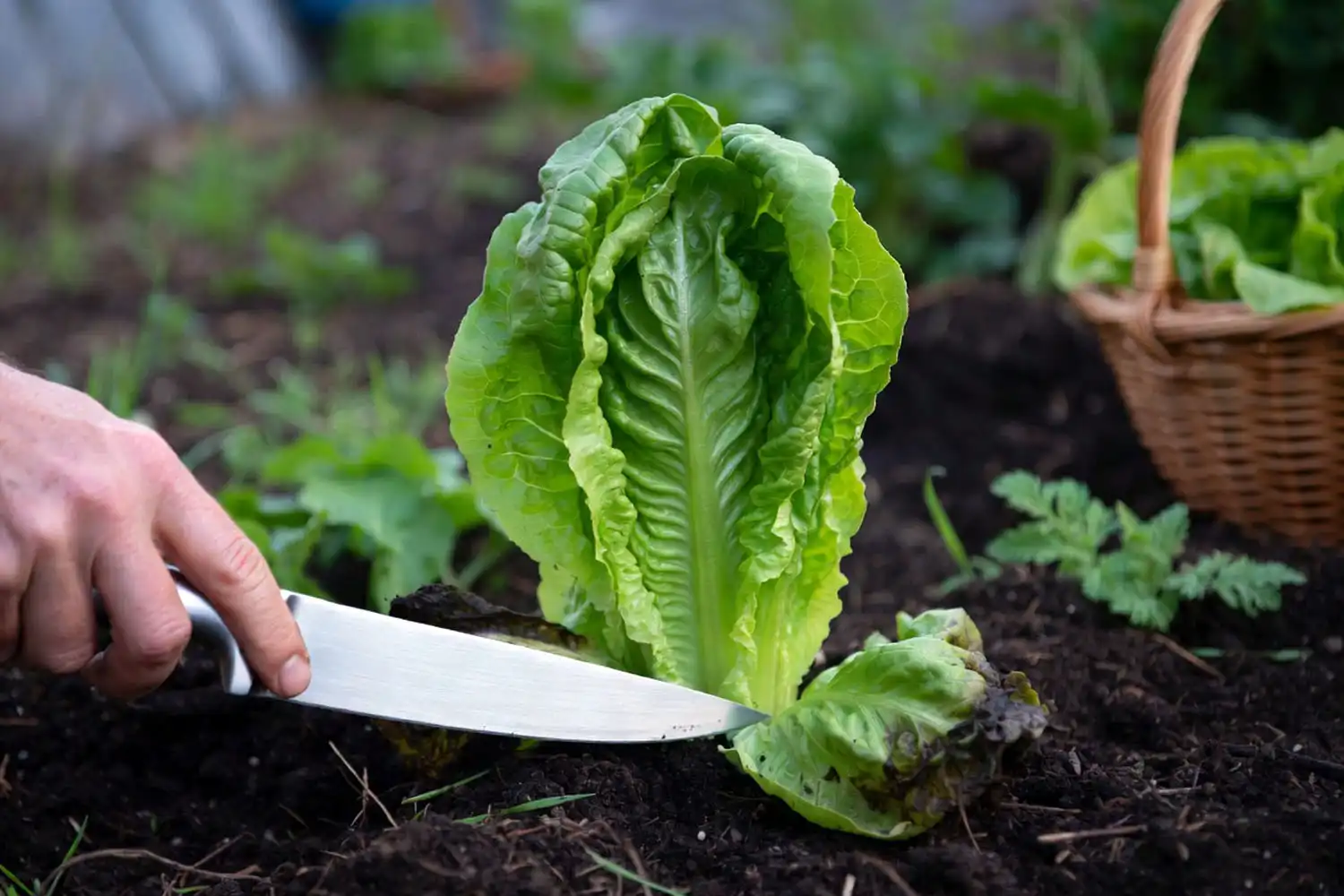
Harvest romaine when the head stands 6 to 8 inches tall and about 4 inches wide at the base, usually 60 to 70 days from sowing. For a whole head, cut straight across the base with a sharp knife. Pull it in the cool morning, when the leaves are crisp and full of water.
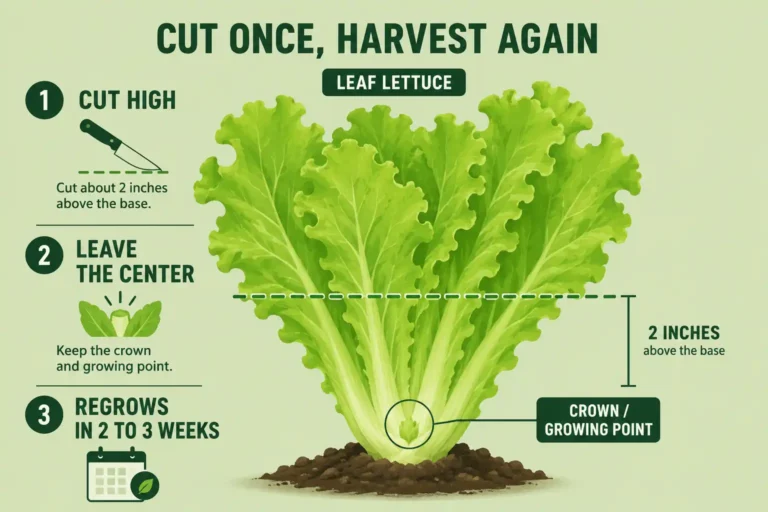
You do not have to wait for a full head, though. Pinch outer leaves anytime once the plant has size, or cut the whole top about an inch above the crown for cut-and-come-again. Watered and fed, it regrows for a second cutting in 2 to 3 weeks. Baby leaves are ready as early as 30 days.
Once cut, rinse off any sap, then cool the heads fast. Romaine keeps best near 35 to 40°F with high humidity, so chill it soon after harvest and store it dry.
What This Looks Like in the in Kansas
Romaine is one of the easiest crops to get right once you respect its dislike of heat. Plant in cool weather, keep the soil evenly damp, feed lightly, and cut before summer arrives. Do that, and you get crisp, sweet heads with almost no fuss. Start with a small succession of slow-bolt plants this season, and you will be cutting your own romaine for months.