What Are Roundup Ready Soybeans? A Simple Guide for Growers
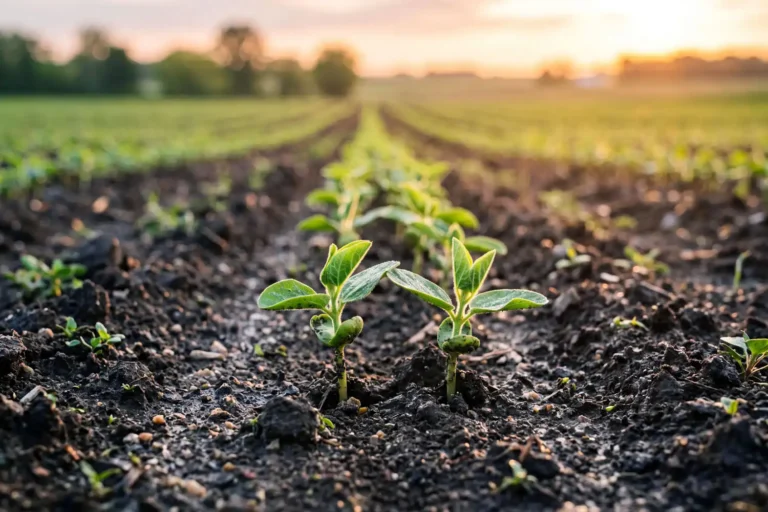
Roundup Ready soybeans changed how most of us handle weeds. These are soybeans bred to survive glyphosate, so you can spray a whole field and kill weeds without hurting the crop. Here is what the trait does, how it works, and what changed for 2026.
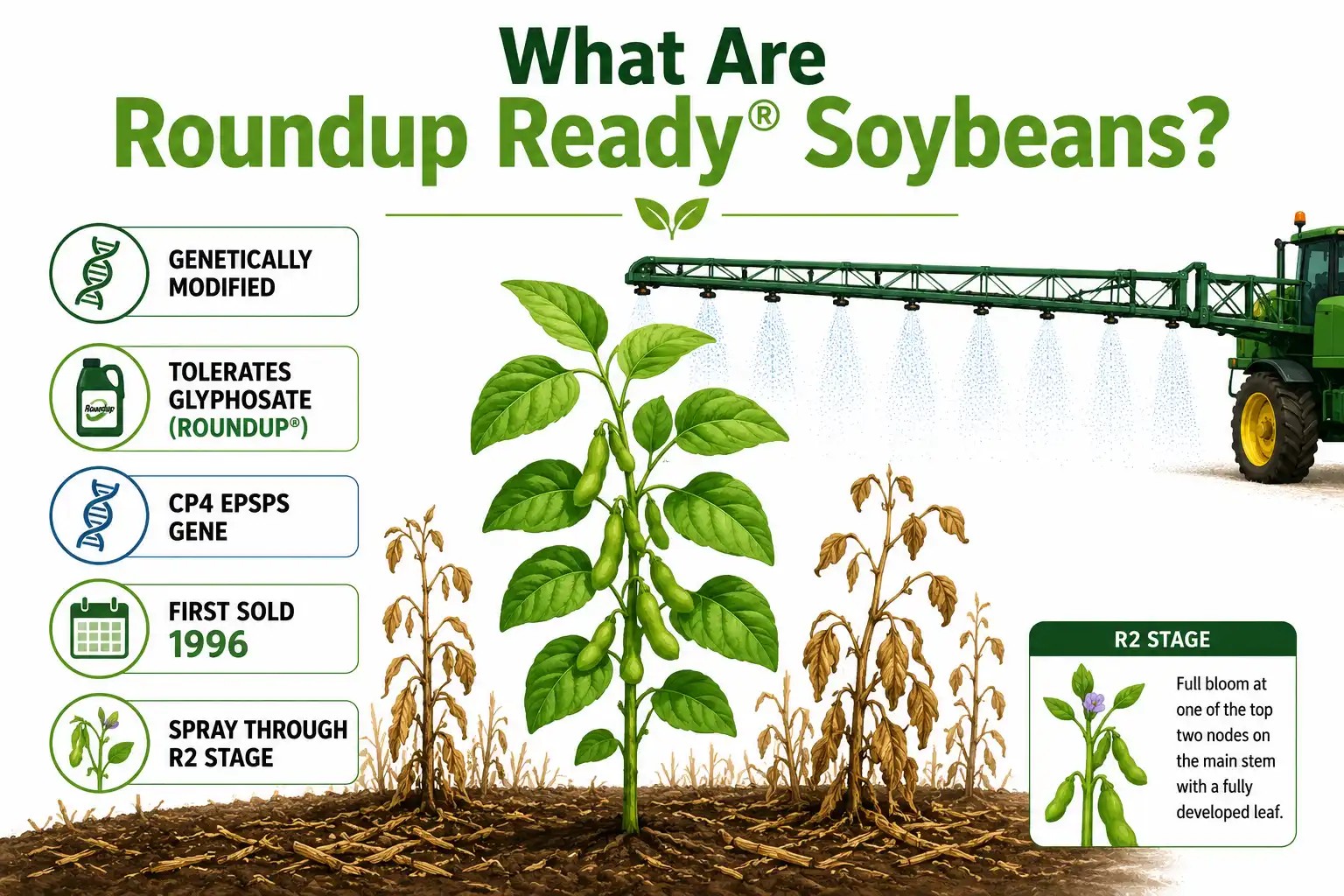
Roundup Ready soybeans are genetically modified to tolerate glyphosate, the active ingredient in Roundup. Farmers spray glyphosate over the top, killing weeds while the crop survives. Today most carry stacked traits like XtendFlex for tougher weed control.
What Are Roundup Ready Soybeans?
Roundup Ready soybeans are soybeans genetically modified to survive glyphosate, the weed killer sold as Roundup. Bayer (originally Monsanto) developed the trait, and farmers first planted it in 1996. The point is simple. You spray glyphosate across the whole field, the weeds die, and your beans keep growing. Most seed companies license the technology, so you find the trait in dozens of soybean varieties.
Before this trait, weed control meant juggling several herbicides, careful timing, and a lot of guesswork. Glyphosate-tolerant beans cut that down to one main product over the top. That is why the trait spread fast, and why it now sits behind a huge share of U.S. soybean acres.
Also know: Roundup Ready vs Conventional
How Do Roundup Ready Soybeans Work?
Roundup Ready soybeans work because they carry a bacterial gene called CP4 EPSPS. Normal plants use an enzyme named EPSPS to build certain amino acids they need to live. Glyphosate shuts that enzyme down, so an untreated plant starves and dies.
The CP4 EPSPS gene comes from a soil bacterium. It makes a version of the enzyme that glyphosate cannot block. So the bean keeps making those amino acids and shrugs off the spray. The weeds around it have no such protection, which is why they wilt while the crop stands green.
This is the same basic idea behind glyphosate-tolerant corn, cotton, and sugar beets. The gene differs by crop, but the principle holds.
Why Do Farmers Plant Roundup Ready Soybeans?
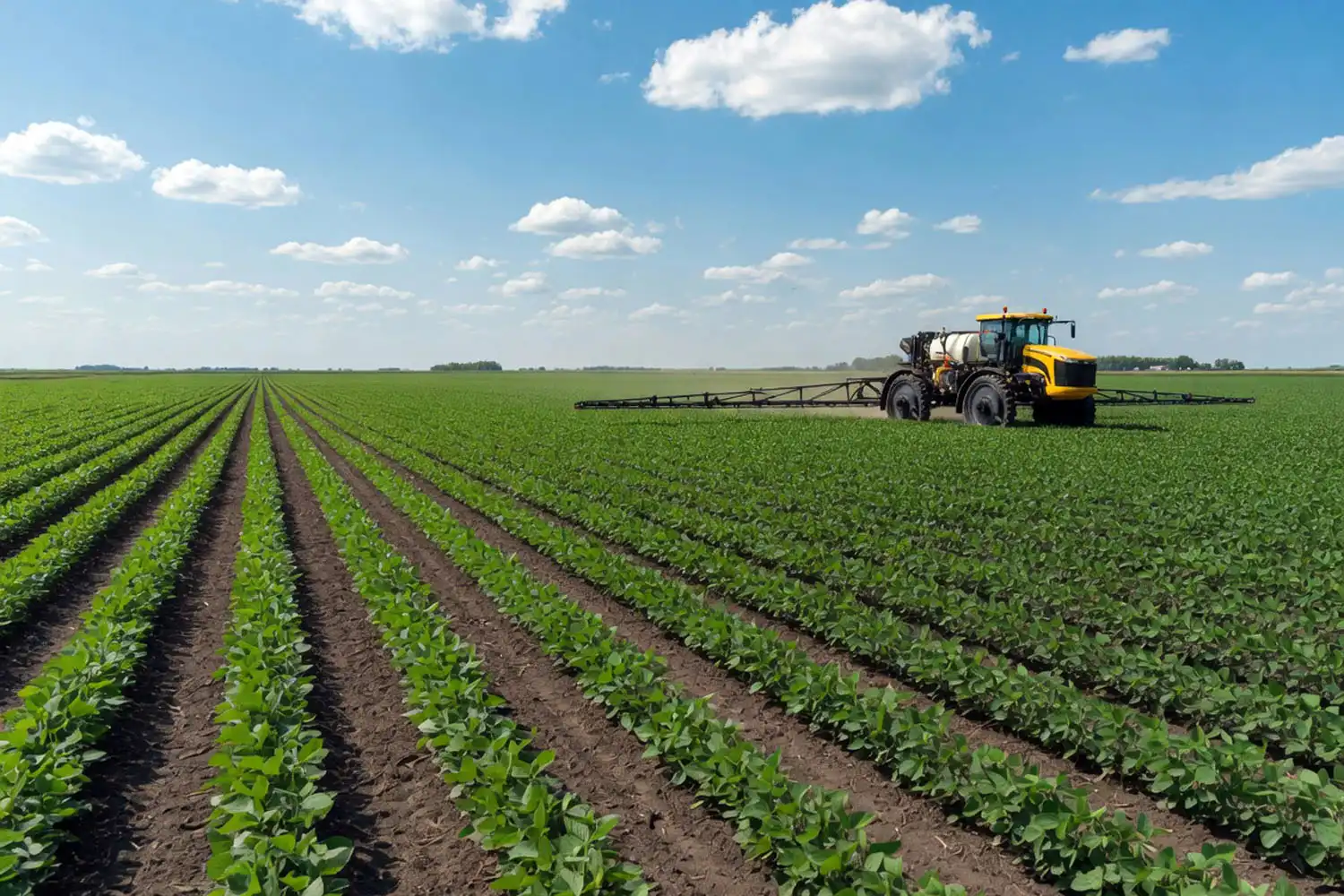
Farmers plant Roundup Ready soybeans because they make weed control simpler and cheaper to manage. One herbicide handles a wide range of grasses and broadleaf weeds. Timing gets more forgiving. The trait also pairs well with no-till, since you can burn down weeds without tearing up the soil.
In Kansas, that flexibility matters. Spring weather swings hard, and field days come and go fast. Being able to spray over the top when the window opens takes pressure off. For anyone learning the basics of growing soybeans, glyphosate-tolerant seed lowers the odds of losing a field to weeds early.
That said, simpler does not mean foolproof. Lean on glyphosate alone for too many years and you run into trouble. More on that below.
What Are the Different Roundup Ready Soybean Traits?
There is more than one Roundup Ready trait, and they are not the same. The technology has gone through several generations since 1996. Each one adds something to the last.
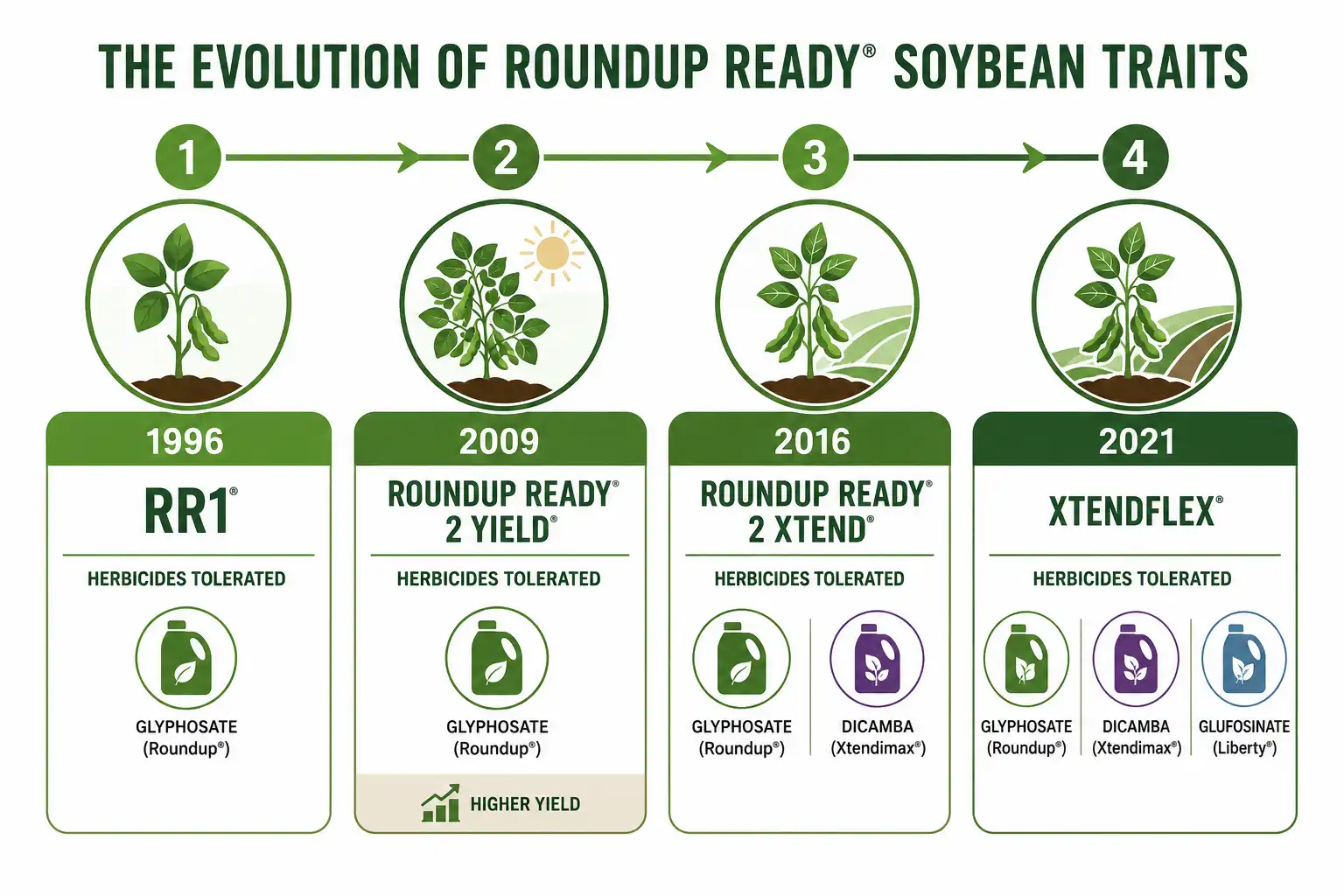
The original trait, called RR1, launched in 1996. It made beans tolerant to glyphosate only. Its U.S. patent expired in 2014, so it is now off-patent and mostly retired from the seed market.
Roundup Ready 2 Yield came next, in 2009. It improved yield potential over the first version and sits under a separate patent.
Roundup Ready 2 Xtend arrived in 2016. These beans tolerate both glyphosate and dicamba, which gives you a second mode of action against tough broadleaf weeds.
XtendFlex soybeans went into full commercial use in 2021. They tolerate three herbicides: glyphosate, dicamba, and glufosinate. That stack became one of the most widely planted soybean trait packages in the country.
You also hear about Enlist E3 soybeans from Corteva. Those are not Roundup Ready, but they tolerate glyphosate too, stacked with glufosinate and 2,4-D. If you are sorting through the different types of soybeans on a seed sheet, the trait package matters as much as the maturity group.
When Can You Spray Glyphosate on Roundup Ready Soybeans?
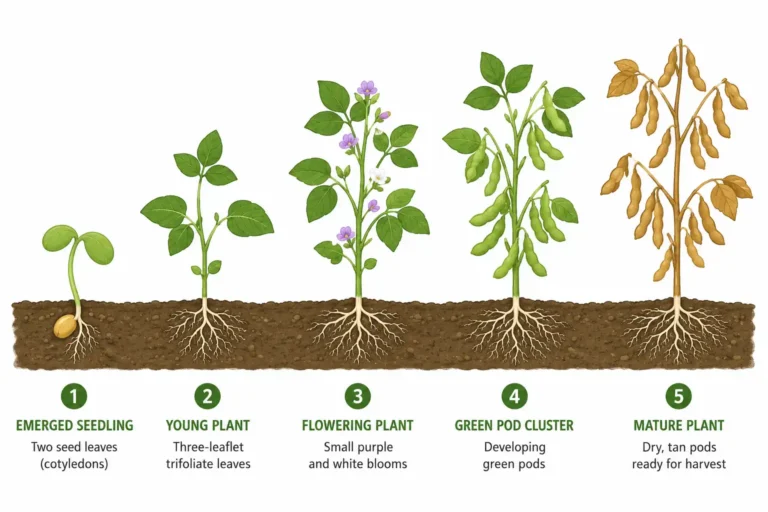
You can spray glyphosate on Roundup Ready soybeans from crop emergence through the R2 growth stage. R2 is full flowering, when an open bloom shows at one of the top two nodes. According to Michigan State University Extension, glyphosate labels do not allow over-the-top applications once beans reach the R3 stage. Spraying past that point is off-label.
This window matters more than folks think. Late weed escapes are tempting to chase, but a glyphosate pass after R2 breaks the label and can cut into yield. Staging your beans before each pass keeps you legal and protects the crop.
If you tank-mix fungicide or insecticide with glyphosate, watch the same cutoff. Those pests often hit threshold after R2, by which point your glyphosate window has already closed.
Do Roundup Ready Soybeans Cause Resistant Weeds?
Heavy, repeated use of glyphosate has driven glyphosate-resistant weeds across much of the country. When you spray the same product year after year, the few weeds that survive pass their genes along. Over time, that builds populations the herbicide can no longer touch.
University of Nebraska Extension has confirmed several glyphosate-resistant species in that state alone, including Palmer amaranth, waterhemp, marestail, kochia, and both common and giant ragweed. Palmer amaranth and waterhemp are the two that keep Kansas growers up at night. They grow fast, set huge numbers of seeds, and steal water and nutrients right out from under the crop.
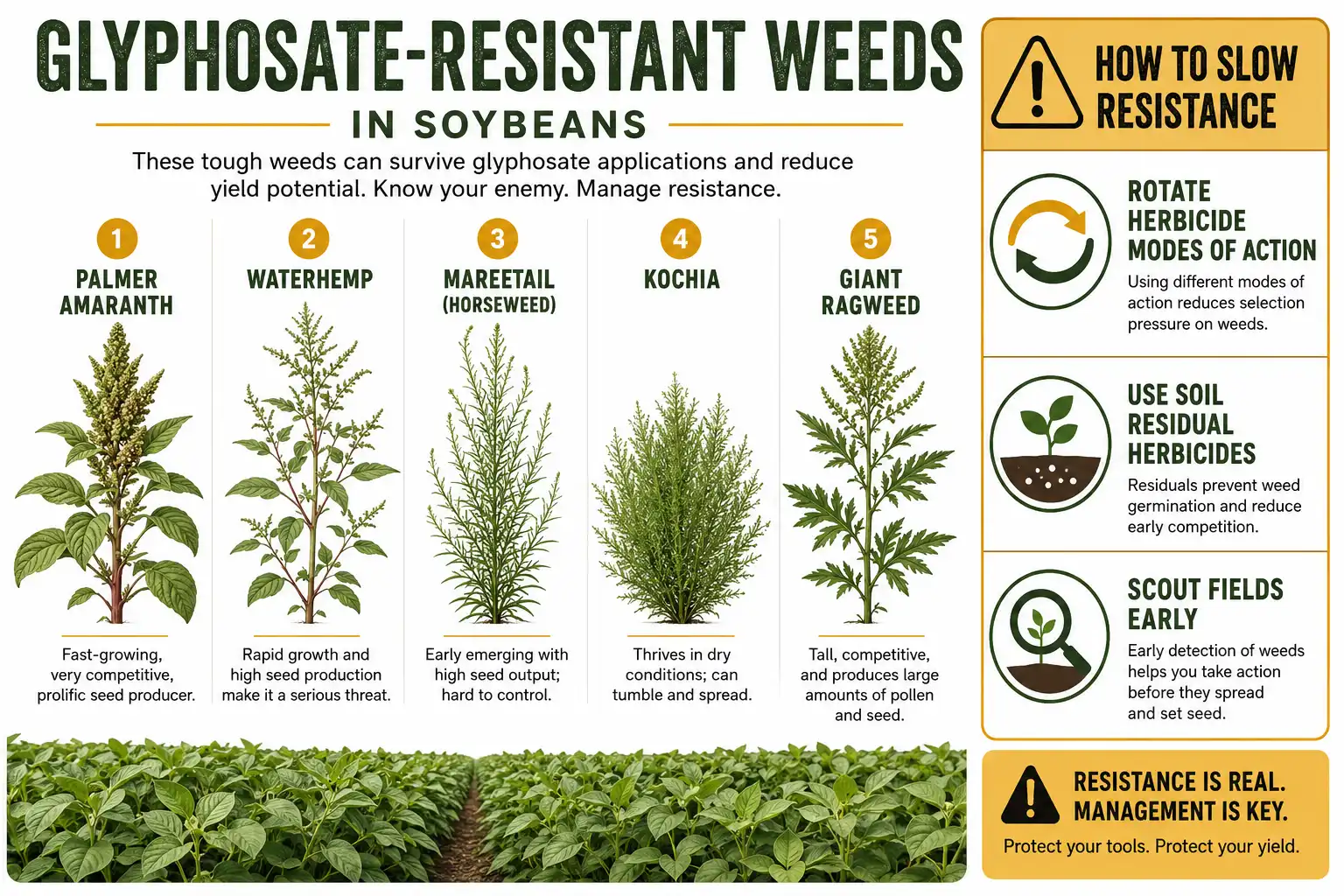
The fix is not to abandon the trait. It is to stop relying on one chemistry. A broader weed control plan uses several modes of action, including residual herbicides applied to the soil at or before planting. That is the core of an integrated pest management mindset, and extension weed scientists have pushed it hard for years.
Can You Save Roundup Ready Soybean Seed?
It depends on the trait. The original RR1 trait is off-patent, so that gene no longer carries a trait patent. But a variety can hold its own separate patent or breeders’ rights, so off-patent does not always mean savable. Even when you can legally save RR1 seed, you cannot sell it or hand it to another farmer.
The newer traits are different. Roundup Ready 2 Yield, Roundup Ready 2 Xtend, and XtendFlex are all still under patent. Saving and replanting them is illegal. When you buy that seed, you sign a stewardship agreement that spells this out. Check with your seed dealer before you save anything.
What Changed for Roundup Ready Soybeans in 2026?
The big news is dicamba. Over-the-top dicamba lost its registration after a federal court vacated the labels in early 2024, so growers had no legal way to spray it on Xtend or XtendFlex beans in 2025. That left a gap for anyone counting on dicamba for resistant broadleaf weeds.
On February 6, 2026, the EPA reapproved over-the-top dicamba for the 2026 and 2027 seasons. Three products are cleared: Stryax from Bayer (the new name for the old XtendiMax formulation), Engenia from BASF, and Tavium Plus VaporGrip from Syngenta. The new labels expire in February 2028.
The 2026 rules are the strictest yet. You can apply no more than 1 pound of dicamba per acre per season, in up to two passes of half a pound each. Temperature now drives the cutoffs instead of calendar dates. If the forecast high hits 95°F or above, you do not spray. Between 85°F and 94°F, you are limited to half your dicamba-tolerant acres in a county. Every label also requires a volatility reduction agent, a drift reduction agent, and yearly applicator training.
Glyphosate itself still works the same way it always has on these beans. Dicamba is the moving piece, so read the current label before you mix a tank in 2026.
How to Use This in the Ground
Roundup Ready soybeans still earn their spot but treat glyphosate as one tool, not the whole toolbox. Start clean with a residual, rotate modes of action, and watch both the calendar and the thermometer when dicamba is in the plan. The trait makes weed control easier. Your weed control program, not the trait alone, is what keeps a field clean season after season.