When Do You Plant Soybeans for the Best Yield
Soybean yield starts with timing. Plant too early into cold soil and stands suffer. Wait too long and you give up bushels. So when do you plant soybeans for the strongest crop? It comes down to soil temperature, your region, and frost risk.
Plant soybeans when soil temperature at 2 inches holds near 50°F and rising, with a favorable forecast. Across most of the Corn Belt and Great Plains, that lands from mid-April through May. Earlier planting usually pays in yield.
When Do You Plant Soybeans?
Plant soybeans once the soil at 2-inch depth reaches about 50°F and the next week’s forecast trends warmer. For most growers, that window opens in mid to late April and runs through May. Aim to plant into warming soil, not cooling soil.
Date alone is not the trigger. A calendar date in a cold, wet spring is a stand failure waiting to happen. Soil temperature and the short-term forecast tell you when the ground is fit. A quick look at a regional planting calendar gives you a starting range, then you confirm it in your own field.
Soybeans are Glycine max, a warm-season legume. The crop wants heat to germinate fast. Plant into the right conditions and seedlings push through in days, not weeks.
What Soil Temperature Do Soybeans Need to Germinate?
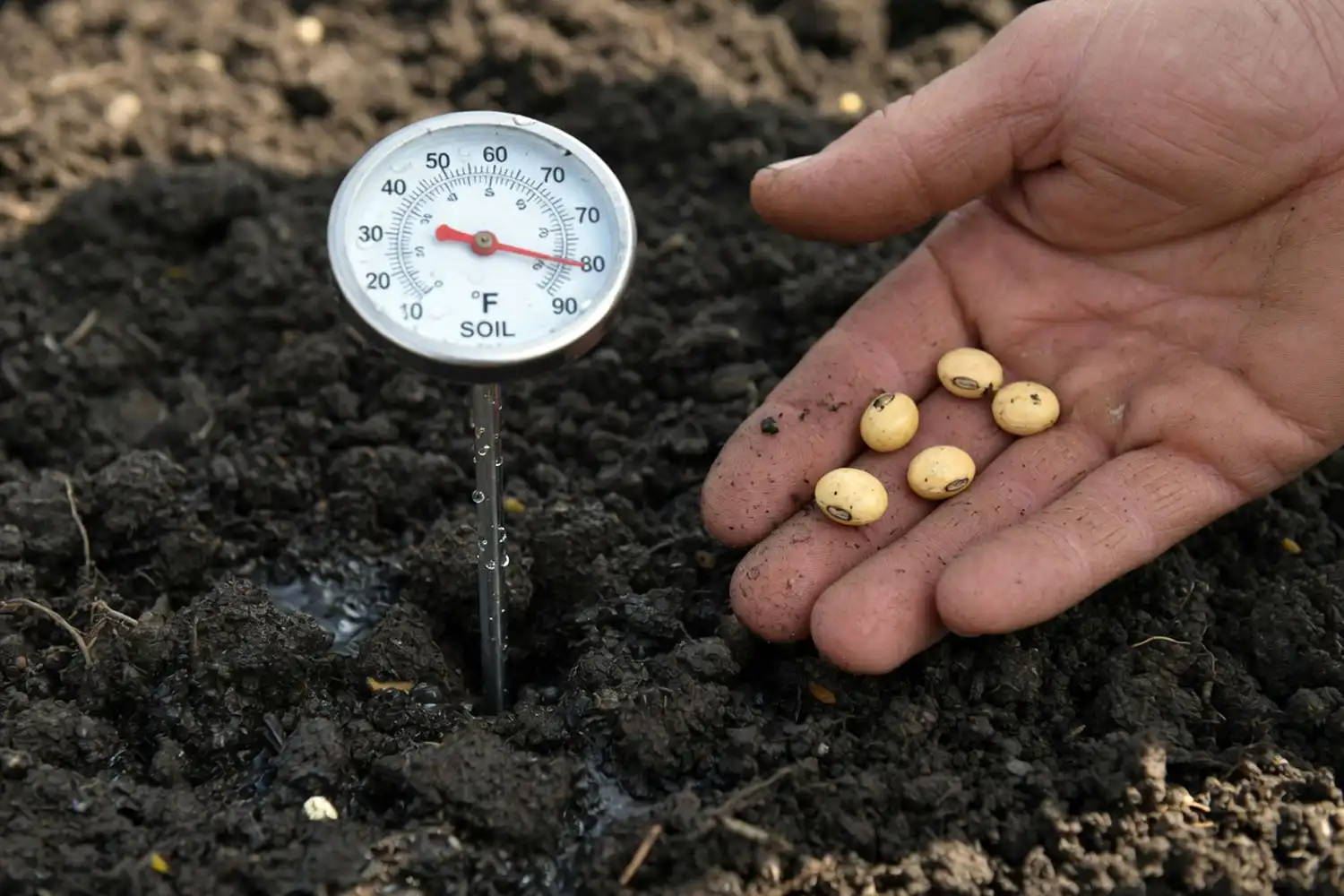
Soybeans need a 2-inch soil temperature of at least 50°F to germinate, and the seed moves much faster as soil warms. The optimum is around 77°F, but waiting for soil that warm costs you yield. So most of us plant in the gap between fit soil and ideal soil.
Here is what that range means in the field. At 50 to 60°F, emergence can take 15 to 20 days. At 60°F and up, you often see emergence in under two weeks. Cold soil means seed sits longer and faces more pressure from seedling diseases and below-ground pests.
The bigger risk is the cold water hitting the seed in the first 24 to 48 hours. If that first drink is colder than 50°F, the seed can swell and rupture, and the crop never comes up right. That is why the forecast matters as much as today’s reading. Checking soil moisture before rolling is the recommended step, and a simple soil moisture meter takes the guesswork out of whether the seedbed is too wet to plant.
Best Soybean Planting Window by Region
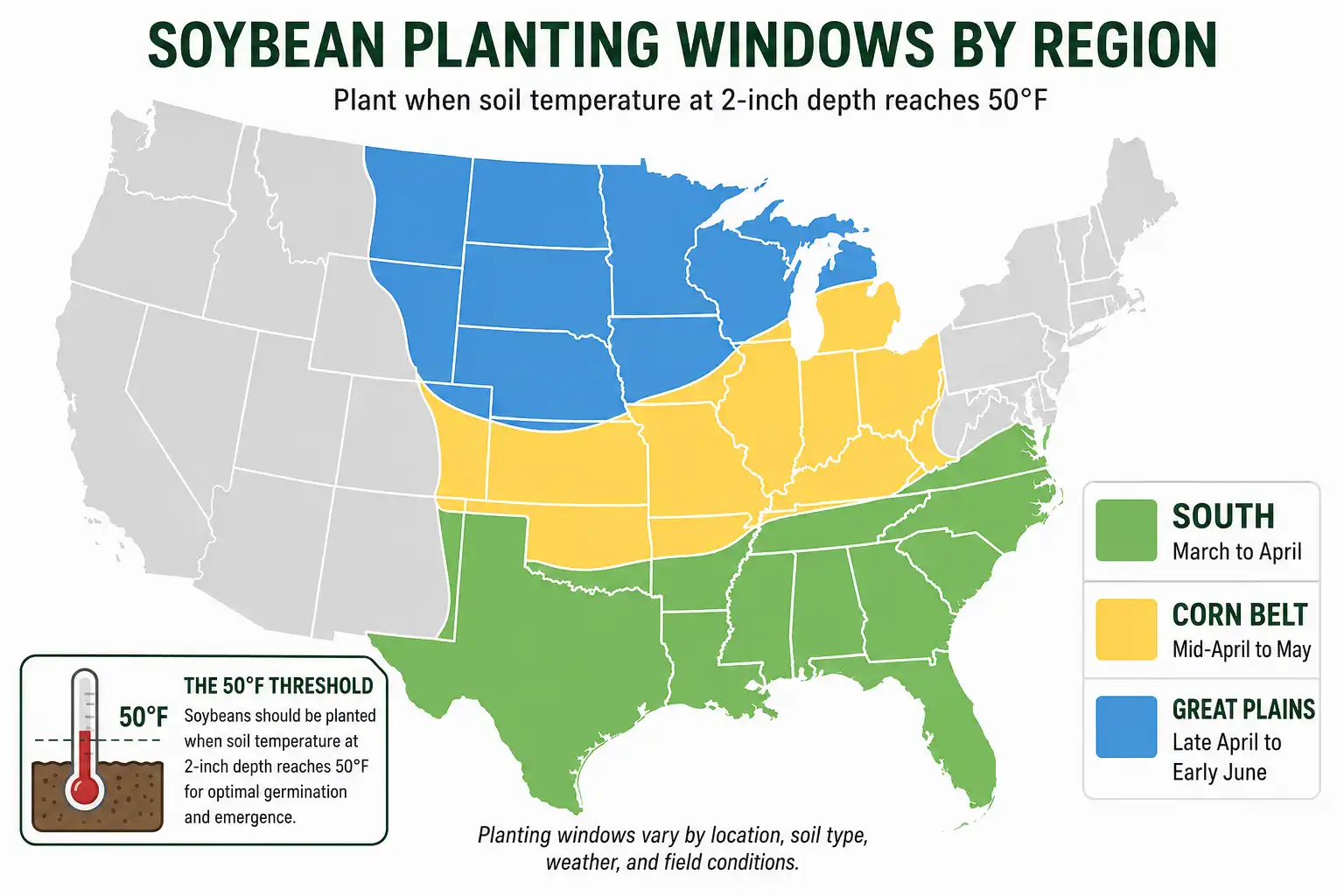
Your region sets the calendar more than anything else. Southern growers plant earliest, the Corn Belt sits in the middle, and the Great Plains runs a touch later because of cooler, drier springs. Match your window to your latitude and your soil.
In the Corn Belt, mid-April through mid-May is prime. Plenty of farmers now run soybeans before corn when conditions are right. In the Great Plains, the window opens late April and stretches into late May or early June, especially on shallow or drier ground.
A note for drier western fields. On shallow soils and in low-rainfall areas, late May to early June has often been the most consistent. That timing puts flowering and seed fill into late August and early September, when nights cool off and the worst heat passes.
When to Plant Soybeans
On fields, target late April through mid-May once the soil holds 50°F. The area sits in USDA hardiness zone 6a, and the last spring frost runs around the third week of April. Watch the ground and the forecast, then go.
K-State Research and Extension data backs early planting in eastern Kansas. For sites like Topeka and Manhattan, planting in early May has produced higher yields than later dates. Each day of delay after that costs close to half a bushel per acre.
The state splits by region. Drier and shallow western ground favors the late May to early June window mentioned earlier. The USDA hardiness zone and your local last-frost date are your two anchors.
How Early Is Too Early to Plant Soybeans?
Too early is any time soil sits below 50°F with no warm-up coming, or so early that a hard freeze can hit emerged seedlings. A solid rule of thumb: plant no sooner than 14 days before your historical last spring freeze. That keeps freeze risk low while still grabbing the early window.
Crop insurance dates matter here too. The USDA Risk Management Agency sets an earliest planting date for replant coverage in your county. Plant before that date and those acres lose replant eligibility, though they still carry yield coverage. In recent seasons, RMA pushed earliest dates earlier, with some southern Midwest counties allowed to plant around April 5.
If you push early, do two things. Use a treated seed to protect against seedling diseases in cold, wet ground. And bump your seeding rate a little to cover for slower, less uniform emergence.
Does Early Planting Really Boost Soybean Yield?
Yes, earlier planting usually raises yield, and the data is steady on this. Across many university trials, soybean yield drops roughly 0.3 to 0.5 bushels per acre for every day you delay past early May. In Kansas, mid-April planting has pushed dryland yields near 80 to 90 bu/acre versus about 50 bu/acre for mid-July.
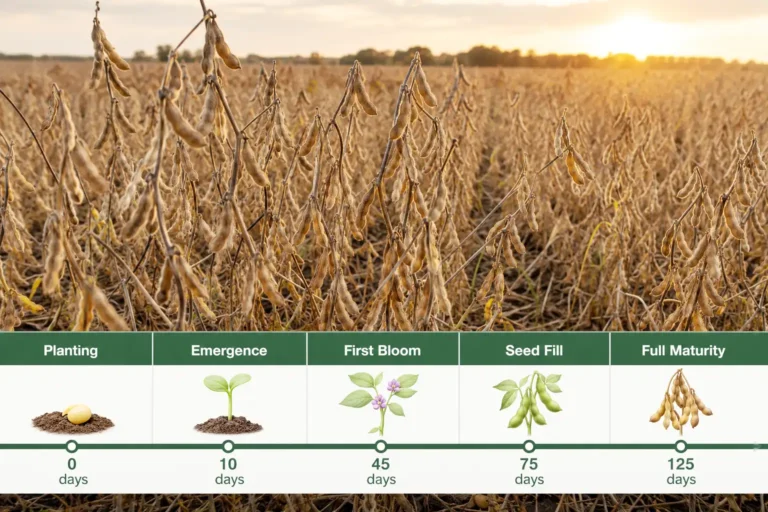
The reason is physiology. Soybean is photoperiod sensitive, so it shifts from vegetative to reproductive growth as days shorten. Plant early and the crop catches more light before flowering. That builds more nodes, more pods, and more seeds per acre.
One recent multi-year study put numbers on the slide: about 0.2% yield loss per day for May 1 to 15 planting, 0.4% per day from May 15 to 30, and 0.7% per day once you hit June. The penalty steepens the longer you wait. If you want to increase crop yield without spending more, early planting is one of the cheapest tools you have.
When to Plant Double-Crop Soybeans After Wheat
Plant double-crop soybeans the same day or within a few days of wheat harvest, usually mid-June into July. Every day you wait after wheat comes off cuts yield, often around a bushel per acre per day. Speed is the whole game in a double-crop system.
This is a good reason to keep an eye on the winter wheat planting window each fall, since the wheat harvest date sets up the soybean planting date the next summer. Get the wheat off, then get beans in fast.
Run your double-crop beans differently than full-season:
- Use narrow rows, 7.5 to 15 inches, so the canopy closes faster and grabs more light.
- Pick a later-maturing variety to stretch vegetative growth before the days shorten.
- Push the seeding rate up to a final stand of 180,000 plants per acre or more.
Soil moisture is the make-or-break factor. Most double-crop failures trace back to dry seedbeds. There is an old saying that fits: if June is dry, do not try. Pod fill needs to wrap before your first killing frost, so know your fall frost date and plant by mid-July where you can.
Match Your Maturity Group to the Planting Date
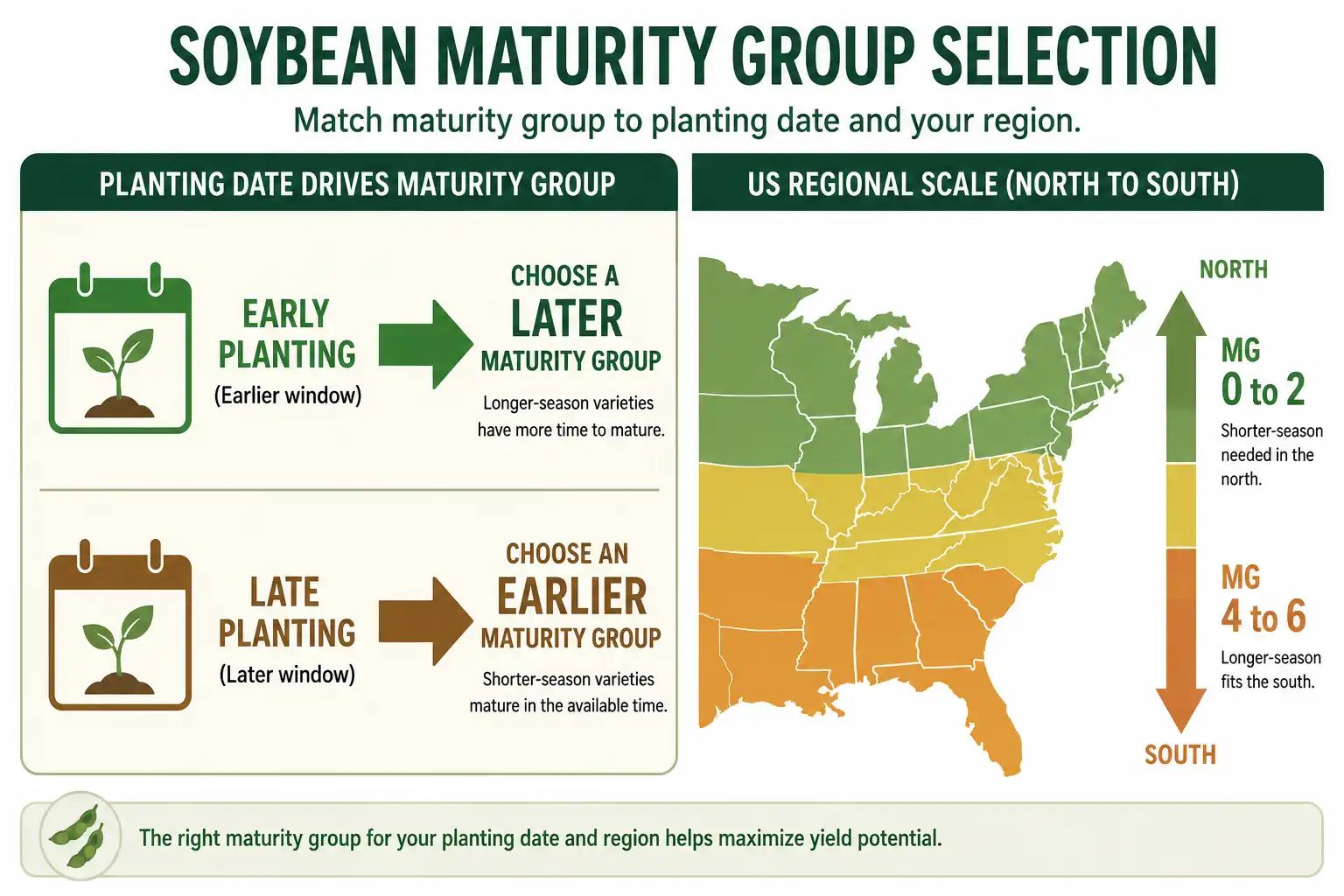
Your maturity group has to fit both your region and your planting date. The crop must reach maturity before the first fall frost, but also use the full season for yield. Pick wrong and you either waste growing days or risk frost damage on late beans.
Region sets your baseline range. Northern states run early groups, the middle of the country runs mid groups, and the South runs the latest. Across Kansas, recommended groups span roughly II to V depending on where you are. Knowing the different types of soybeans and their maturity ratings helps you pick a variety that matches your field, not just your neighbor’s.
Then adjust for planting date. When you plant early, you can move 0.5 to 1.0 maturity group later than your regional norm to capture more growing degree days. When you plant late, shift 0.5 to 1.0 group earlier so the crop finishes ahead of frost.
What Happens If You Plant Soybeans Late?
Plant late and yield falls, but you can still raise a crop with the right moves. Past your county’s final planting date, crop insurance coverage drops 1% per day through the 25-day late-planting period, then settles near 60% of the original guarantee. In much of the Midwest and Plains, that final date runs June 10 to June 20.
For late planting, shorten the maturity group, tighten the rows, and raise the seeding rate. Those steps force height, speed canopy closure, and protect your stand. Late-planted beans branch less, so a thicker, narrower stand makes up some of the lost ground.
How to Time Soybeans
Rule is simple. Watch the 2-inch soil temperature, wait for 50°F with a warm forecast, and plant late April through mid-May here near Topeka. Early planting protects yieldso do not stall once the ground is fit.
If you farm farther north, push your window a little later and lean earlier on maturity groups. Farther south, you can start in April. Either way, soil temperature, your region, and frost risk are the three things to watch. Get those right and the rest of the season has a fighting chance.