What Farmers Sow to Make Plants Grow: Essential Planting Add Ons
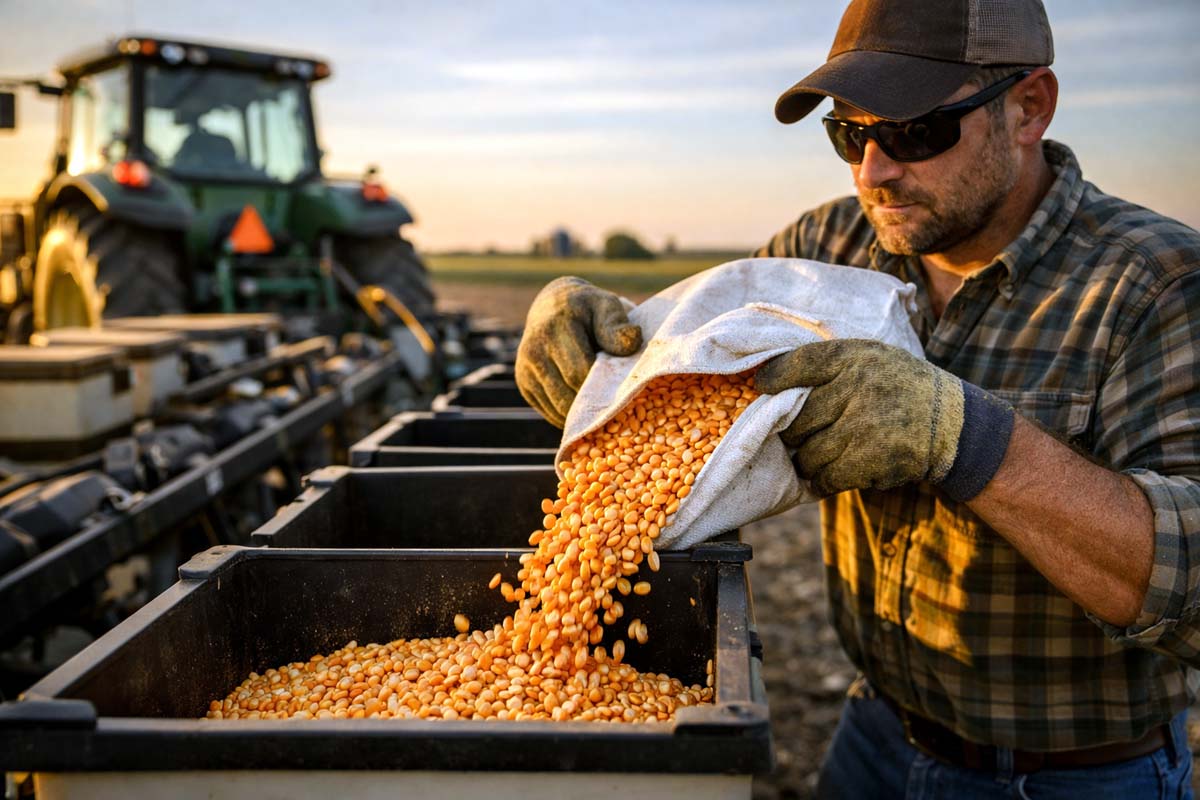
Farmers sow seed to grow plants, and they may also apply starter fertilizer or inoculant at planting to help seedlings get established. In 2026, a crop stand starts with what goes in the furrow, not what goes through the sprayer later.
Seed, starter nutrients, and biology set emergence timing and early root direction before the first field pass.
Michigan State lists cereal rye broadcast rates at 60–120 lb PLS per acre, and that same math drives every planting decision.
What do farmers sow to make plants grow?
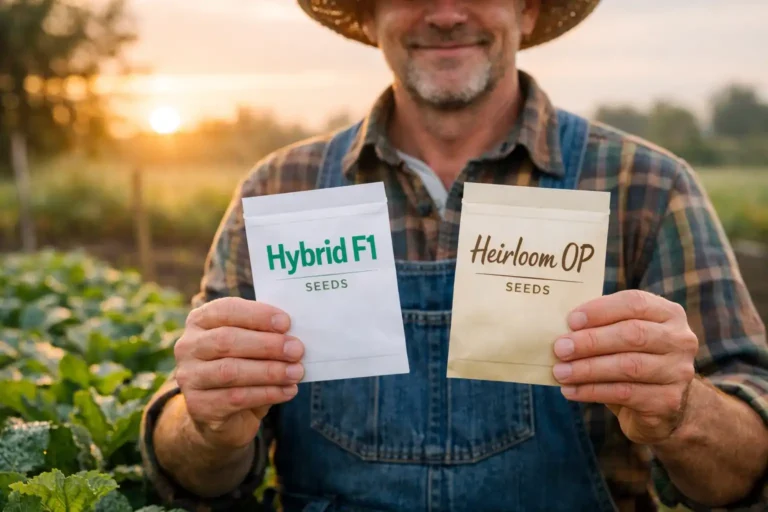
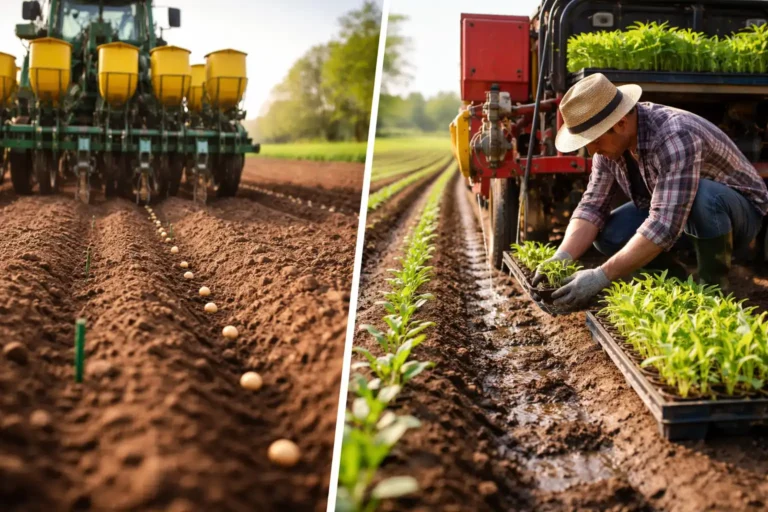
Farmers sow seed as the primary input that becomes the plant. Seed includes corn kernels, soybean seed, wheat seed, vegetable seed, and cover crop seed. Farmers also sow transplants in some crops, plus soil amendments and fertility products that increase early growth.
Seed carries the crop’s genetics, and the field environment controls how fast that genetics shows up. Penn State Extension lists four germination needs: water, oxygen, temperature, and light.
What does “seed” include beyond a bag of kernels?
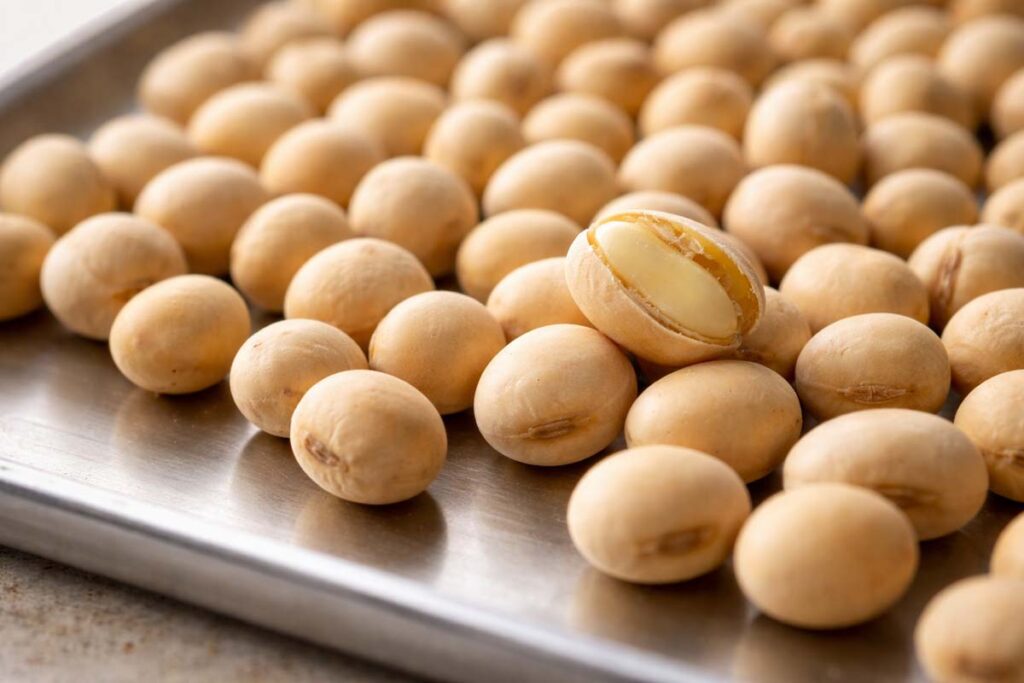
Seed includes hybrid or variety genetics, seed size and vigor, and often a seed treatment coating. Seed treatments protect the seed and seedling during the first stretch after planting. Mississippi State Extension explains that some soil pests attack seeds and seedlings, and management happens at planting time.
Handled wrong, treated seed also creates exposure risk. Wear gloves, avoid breathing dust, and follow the label on every lot.
What do farmers add with seed to feed seedlings?
Farmers add fertility to supply nutrients that soil fails to deliver in-season. Most fertility plans start with N, P, and K because crops remove them in volume. FAO identifies nitrogen, phosphorus, and potassium as the three main nutrients for plant growth, and it flags losses and deficits as yield and environmental risks.
Farmers place nutrients as broadcast, banded, or in-furrow starter, depending on crop and soil test. Starter placement targets early roots, not late-season yield by itself.
What do inoculants and biologicals add to the seed zone?
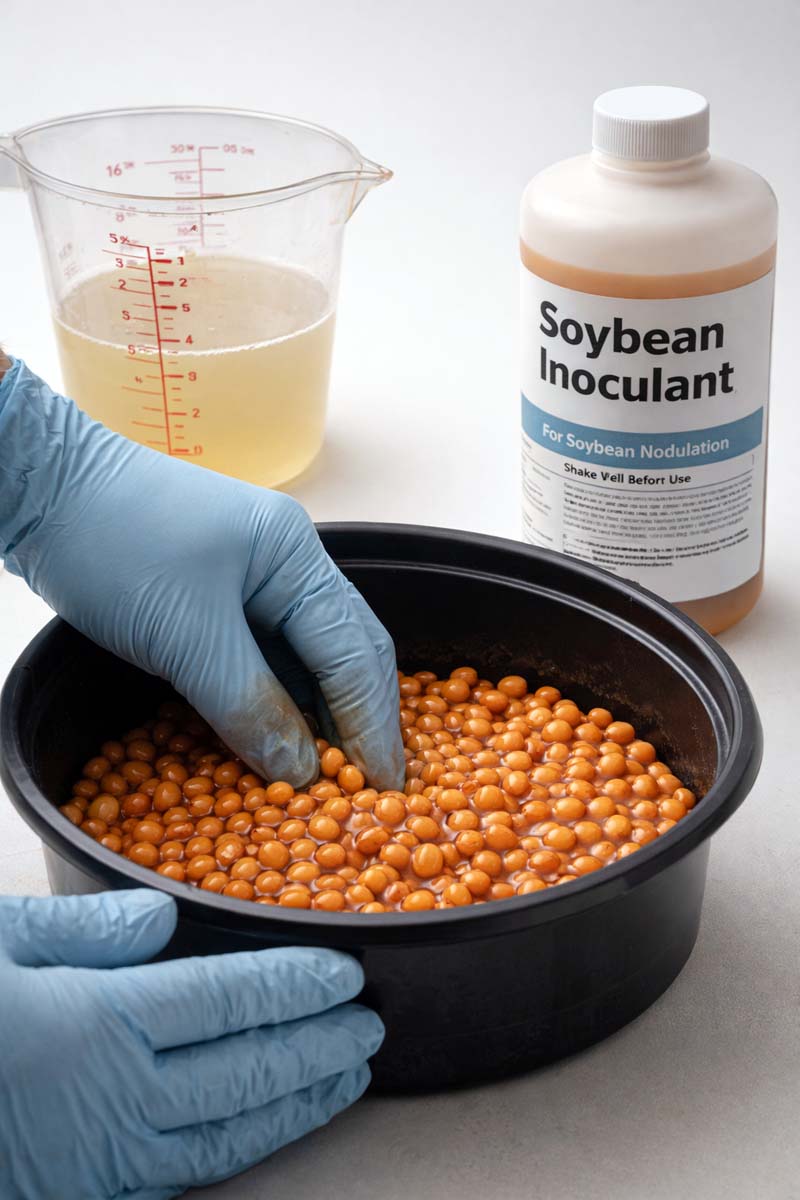
Inoculants add live bacteria that form nodules on legumes and supply nitrogen through the season. Farmers use inoculant most often on soybeans, peanuts, and other legumes after a long rotation gap, on sandy ground, or when fields flood. Inoculant works when seed stays cool, shaded, and planted into moisture.
Inoculant fails fast in heat and sunlight. Keep bags closed, load planters in shade, and plant promptly.
What do farmers sow between cash crops to build soil?
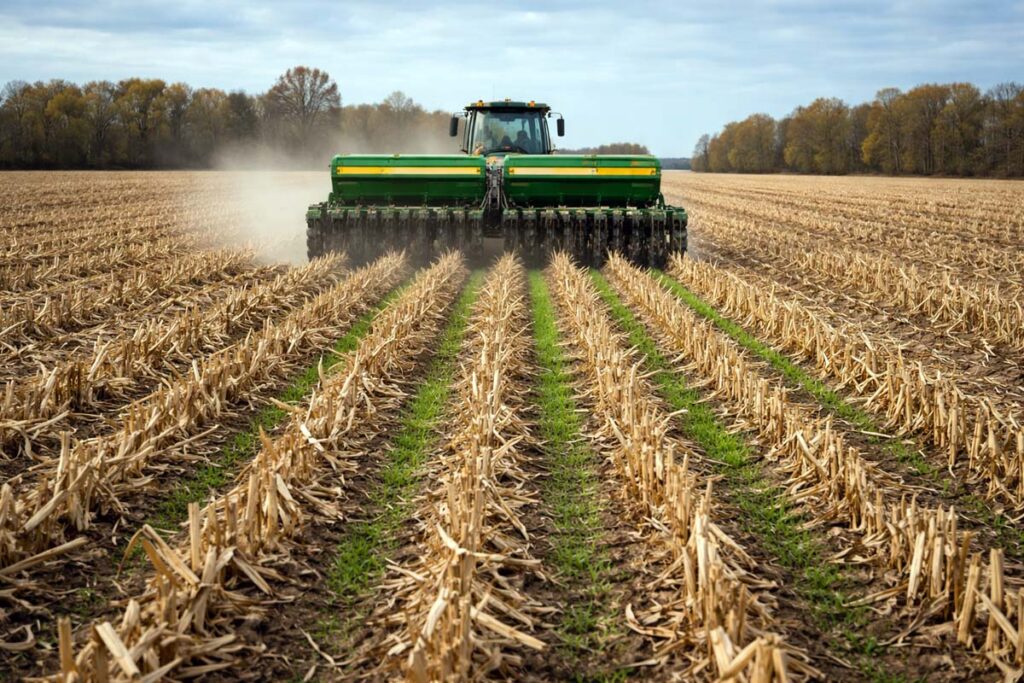
Farmers sow cover crops to hold soil, feed microbes, and manage weeds between harvest and spring planting. Cereal rye is a common choice because it establishes in cool weather and builds biomass. Michigan State’s cover crop fact sheet lists 55–110 lb PLS/acre drilled and 60–120 lb PLS/acre broadcast, with a drilled depth of 3/4–1 1/2 inches.
Cover crop seed also follows the same seed-tag math as corn or beans. The bag label drives rate, not guesses.
What do seed tags and PLS numbers tell you?
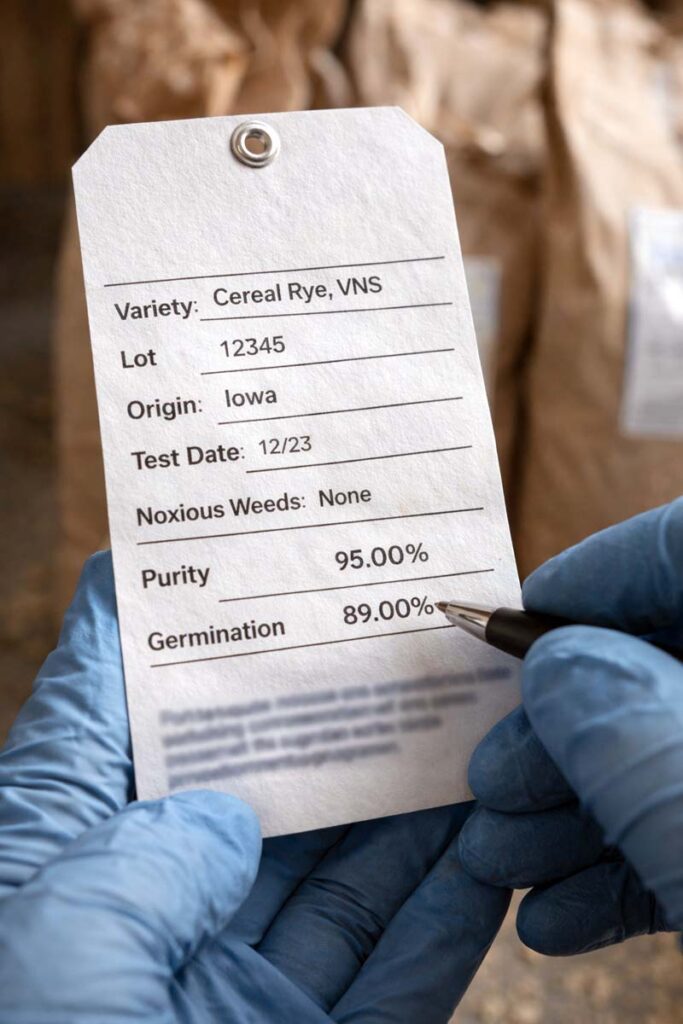
Seed tags tell you what is inside the bag, and the label drives seeding rate math. NRCS explains purity with a clean example: 90% purity means 10% of the bag is inert matter, weed seed, or other crop seed.
PLS converts bulk pounds into plantable pounds:
PLS lb = bulk lb × purity × germination
Example: 50 lb/acre at 90% purity and 85% germination equals 38.25 lb PLS/acre.
NRCS also explains that state rules define noxious weeds, and restricted noxious weeds list seeds per pound on the tag.
What planting depth and moisture help seed start?
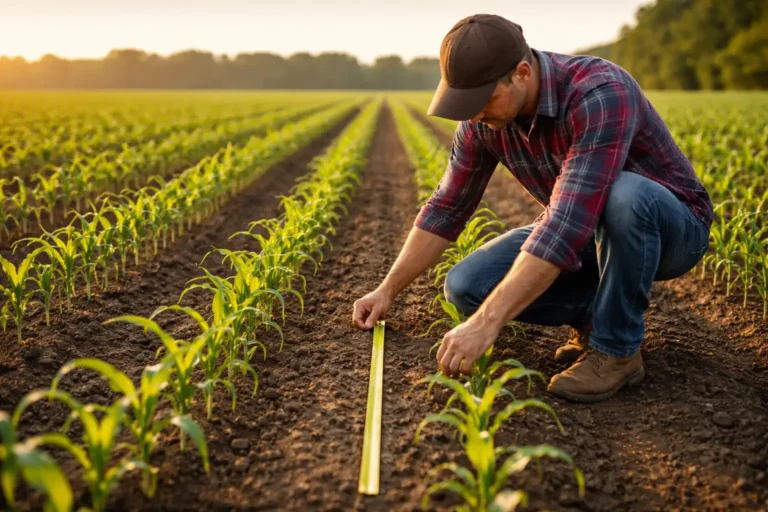
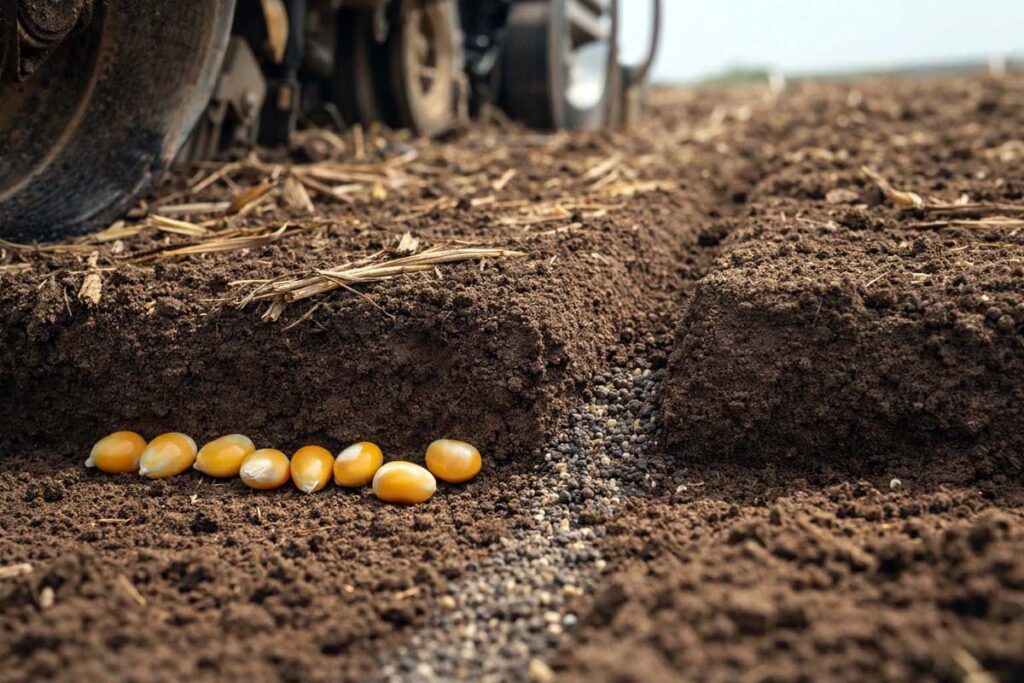
Correct depth places seed into moisture and holds it there through crusting risk and wind. Iowa State Extension targets about 2 inches for corn and notes deeper placement in dry conditions, with stand problems showing up more from shallow placement than deep placement.
Soybeans run shallower. Michigan State notes placement into at least 0.5 inch of moist soil, and many field guides target 1 to 1.5 inches for soybeans.
Depth changes by soil texture, residue, and moisture line. Dig seed behind the planter and verify it.
What mistakes keep seed from becoming a plant?
Most stand loss starts from one of four misses: cold mud, dry slot, poor seed-to-soil contact, or seedling disease. Penn State lists water, oxygen, temperature, and light as germination needs, so saturated compaction and sidewall smear cut oxygen first.
The next common miss is “rate by habit” instead of “rate by label.” Low purity, low germ, and high weed seed content turn a clean field into a long season of rescue passes.
What is a simple pre-plant checklist that keeps sowing on track?
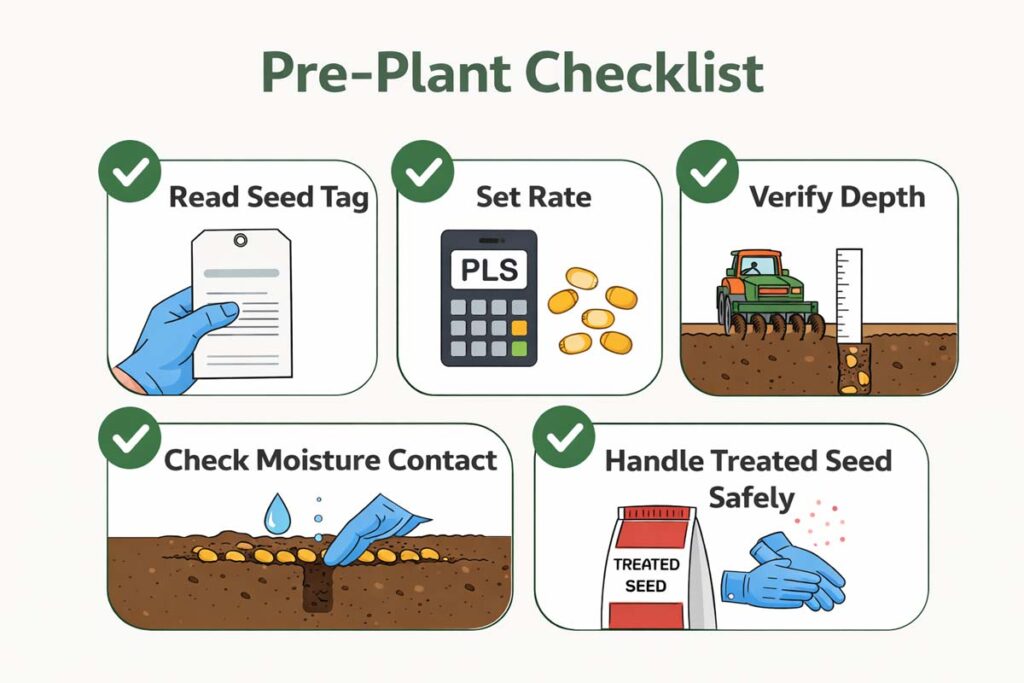
A simple checklist prevents most replant conversations.
- Read the seed tag and record purity and germination.
- Set rate using PLS, not bulk pounds.
- Confirm depth by digging and measuring, then adjust by moisture line.
- Check moisture contact behind closing wheels in each soil zone.
- Handle treated seed safely and keep dust down.
Bottom line
Farmers sow seed first, then they sow placement using depth and seed-to-soil contact, then they sow support using fertility, inoculants, and cover crops. Seed tags, PLS math, and moisture checks turn that whole plan from hope into a stand.
Stay connected with CropFarming.org for more information about crop farming.