When to Plant Soybeans for Deer: Timing, Soil Temp, and Region
Timing makes or breaks a soybean food plot. Plant too early and cold soil rots your seed. Plant too late and you lose forage. Knowing when to plant soybeans for deer comes down to soil temperature, your frost date, and your local farm calendar.
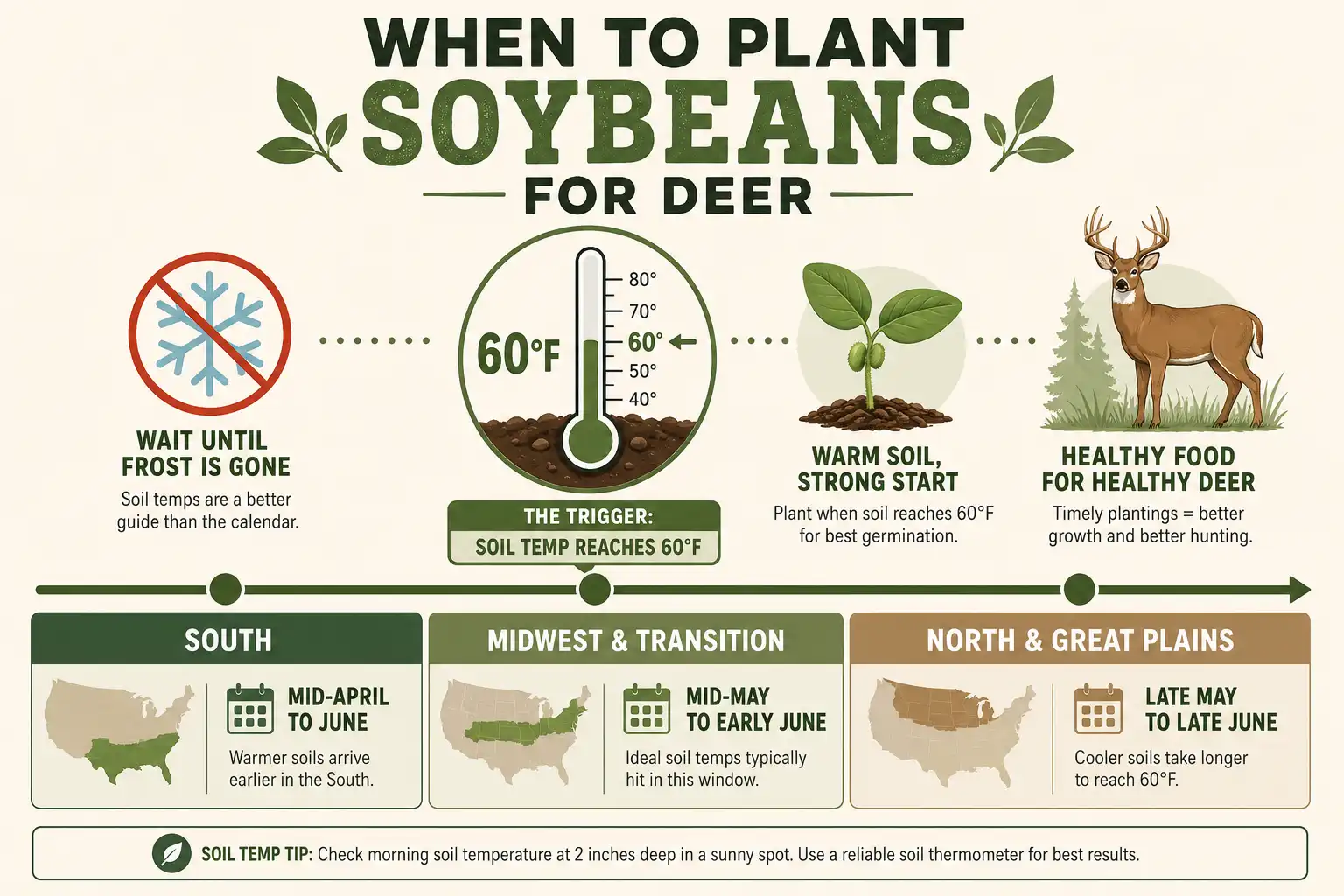
Plant soybeans for deer after your last frost, once soil temperature holds at 60°F. In the South, that means mid-April through June. Across the North and Great Plains, plant from mid-May into late June.
When to Plant Soybeans for Deer
Plant soybeans for deer once your soil temperature reaches 60°F and the frost risk has passed. Soil temperature is the real trigger, not a date on the calendar. Soybeans (Glycine max) are a warm-season annual legume. Cold ground gives you slow, patchy germination and seed loss to rot and pests.
Here is how to check it. Push a soil thermometer two inches deep, mid-morning, for three or four days straight. When the reading sits at 60°F or higher and the last frost has passed. Warm soil pushes fast, even emergence, which matters when deer start browsing seedlings within days. If you want the mechanics behind that early stretch, here is how long it takes soybeans to germinate under field conditions.
Soybean Planting Dates by Region
Your planting window shifts with latitude. The South plants first, the North plants last. Here is the general breakdown:
- South: mid-April through June
- Midwest and transition zones: mid-May into early June
- North and northern Great Plains: late May into late June
Southern growers get a long season, so they have room to push later forage. Northern growers run short on frost-free days, so timing gets tighter the farther north you sit.
When to Plant
Last frost lands in mid-to-late April most years. Soil here usually holds 60°F by early-to-mid May. Deer beans typically get planted from mid-May into the first week of June. That window gives the crop strong summer growth and still leaves time for pods to fill before the first fall frost. If you want the yield logic that sits behind these dates, this guide on when to plant soybeans for the best yield lays it out for row-crop ground.
Should You Plant Forage or Grain Soybeans for Deer?
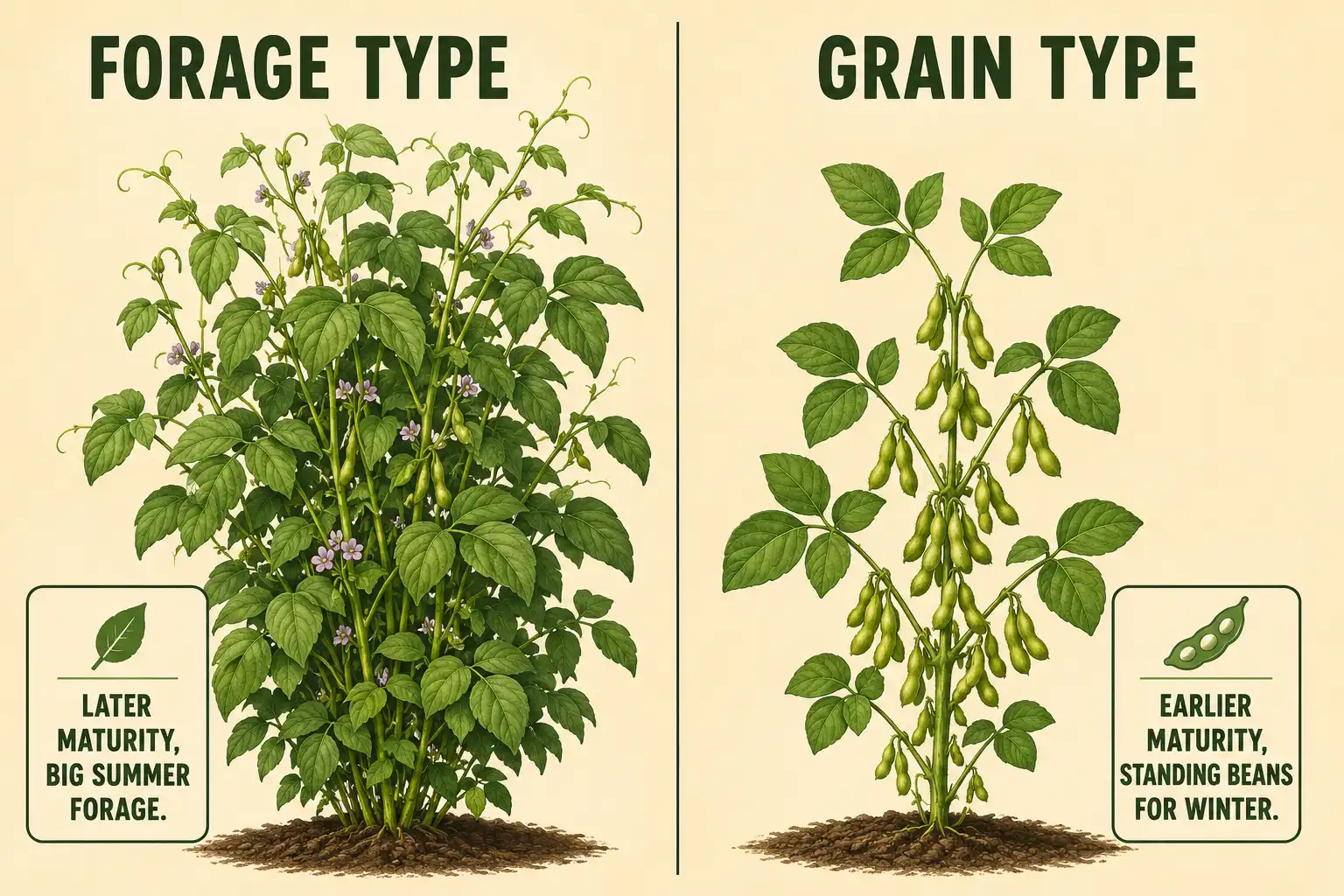
Pick based on your goal: summer forage or standing beans to hunt over in winter. The two types behave differently in the field.
Forage soybeans grow tall, bushy, and viny. They have an indeterminate growth habit, so they keep producing leaves later into the season. They also mature later. Varieties like Eagle Seed, Laredo, and Big Fellow RR were bred to hold leaves and pump out summer and early-fall forage. These shine when late summer is your hungriest stretch for the herd.
Grain-type soybeans are shorter and more erect with an earlier maturity group. They drop leaves sooner but leave you standing beans for late-season hunting. Northern managers who want pods to hunt over in December often lean this way.
One timing caution. Forage soybeans mature late, so a far-north planting may not set pods before frost. If standing grain is your priority up north, an earlier-maturing seed-type bean is the safer call.
Time Your Planting Around Browse Pressure
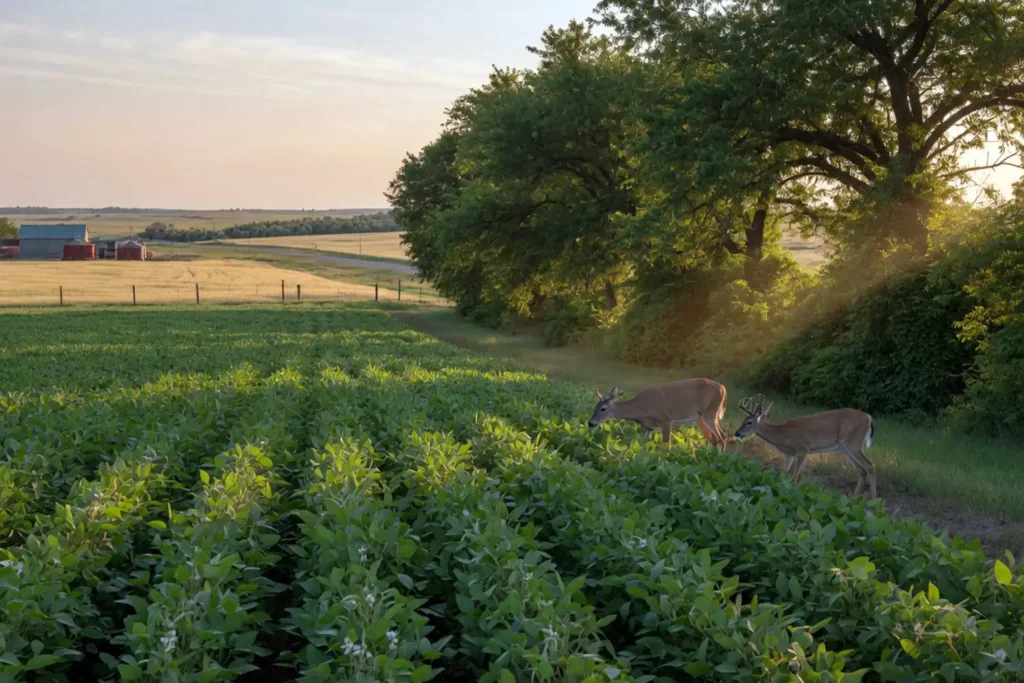
The biggest reason small plots fail is deer eating the seedlings before they establish. Soybeans have almost no resistance to grazing in those first weeks. A hungry herd can mow a small plot to dirt within days of emergence.
Use the local farm calendar to your advantage. Watch when neighboring farmers plant their soybean fields. Then plant your plots a week or two later. Deer feed in the big ag fields first, which buys your plot time to get rooted and growing. This simple offset can outperform even a well-built fence at protecting plots.
Plot size matters just as much. Under two acres in a high-deer area usually gets wiped out. Push to three acres or more if your deer numbers run high. Exclusion cages or temporary fencing help you protect a section while the rest establishes. The cleaner long-term fix is keeping the herd in balance with the habitat and devoting enough acreage to feed them. If frost or weather pushes you behind schedule, check how late you can plant soybeans before you give up on the season.
How to Plant Soybeans for Deer
Start with a soil test, then prep, then seed. The steps are simple, and skipping them costs you a stand.
- Test the soil. Aim for a pH above 6.0. If you need lime, apply it several months ahead so it has time to work.
- Fertilize light on nitrogen. Soybeans fix their own. A low-nitrogen blend like 0-20-20 works well. Without a soil test, 250 to 300 pounds per acre is a fair starting point.
- Inoculate the seed. If your seed is not pre-inoculated, treat it with rhizobia. This drives good nodulation and protein.
- Set the right depth. Plant 1 to 1.5 inches into a firm, clean seedbed. Here is more on how deep to plant soybeans for fast, even emergence.
- Match your seeding rate. Drill at 40 to 60 pounds per acre. Broadcast at 60 to 80 pounds per acre. This breakdown on pounds of soybeans to plant per acre helps you dial it in.
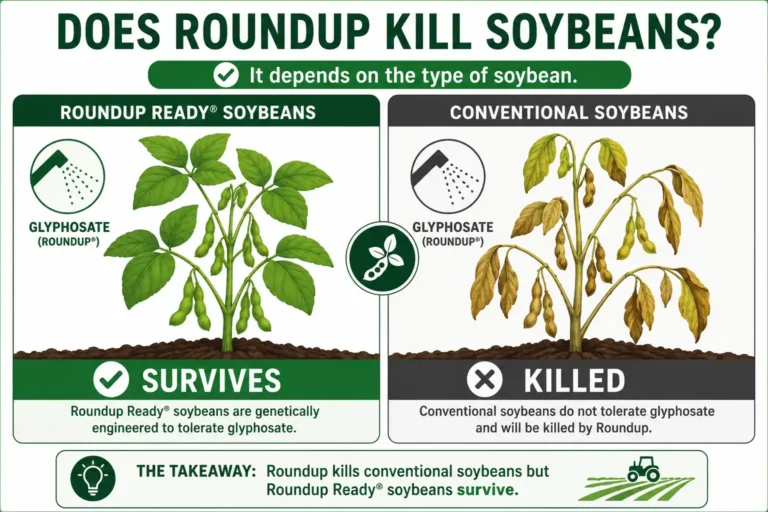
- Stay on weeds. Start with a clean burndown and a pre-emergent herbicide. On Roundup Ready varieties, spray glyphosate when plants reach 10 to 15 inches tall.
Weed control is the part most folks underrate. Weeds steal moisture and shade out young beans, and a weedy food plot rarely produces the forage you wanted.
When Deer Use Your Soybeans
Deer hit soybeans in two windows. They graze the green leaves hard through summer, when the plant runs around 25 to 30 percent protein. Then they switch to the pods and grain in late fall and winter for fat and energy.
The hottest use comes in late summer and again in early winter. Forage soybeans hold their leaves into bow season, which keeps deer coming. One spring planting can feed your herd for months, from green growth in June to standing beans in February if browse pressure stays manageable.
Bottom Line for Your Food Plot
Wait for soil to hold 60°F after your last frost. In Kansas, that puts me planting from mid-May into early June. Match your variety to your goal, forage for summer or grain for winter beans. Go big enough on acreage or cage off a section, and plant a week or two behind your neighbors so the herd feeds elsewhere first. Get the timing right and the rest of the season takes care of itself.