When Do You Harvest Soybeans? Signs, Moisture, and Timing
Getting soybean harvest timing right protects your yield. The honest answer to when do you harvest soybeans depends on the plant, not the calendar. Cut too early and you fight green beans and dockage. Wait too long and pods shatter. These signs tell you when the window opens.
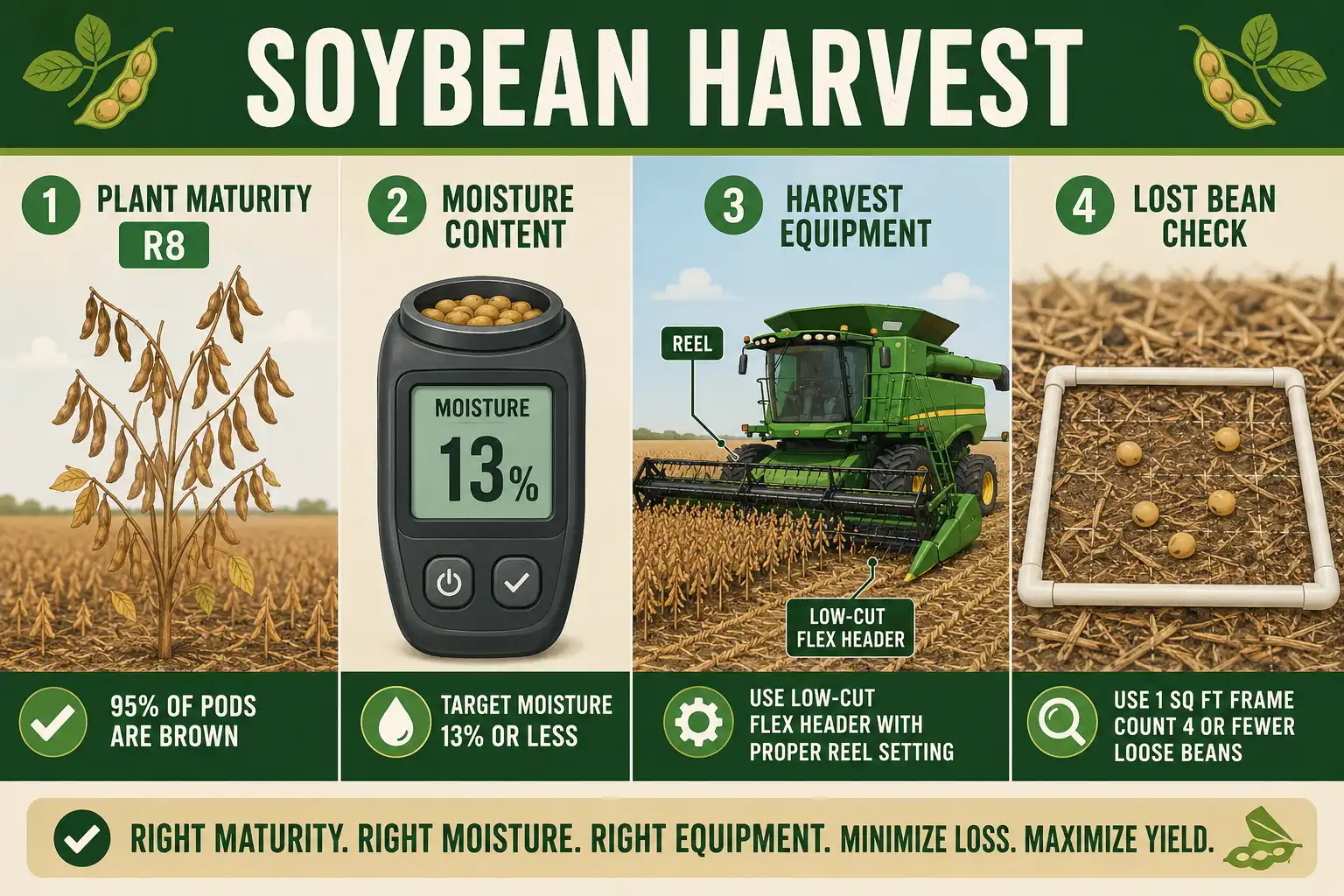
Harvest soybeans at R8, full maturity. That is when 95 percent of pods turn brown and seed moisture sits at 13 to 15 percent. In most U.S. fields, that window runs late September through October.
When Do You Harvest Soybeans?
You harvest soybeans once the field hits R8, full maturity. That is when about 95 percent of the pods have turned their mature brown color. By then, seed moisture is usually falling toward the 13 to 15 percent range you want. For most U.S. fields, that timing lands in late September through October.
Still, the plant tells you more than any date can. Two fields planted the same week can mature days apart, depending on variety and weather. So scouting pods and checking moisture comes before ever rolling the combine. If you want the full picture of how long beans take to matureour guide covers that timeline separately. Here, the focus is the harvest signal itself.
How Do You Know When Soybeans Are Ready to Harvest?
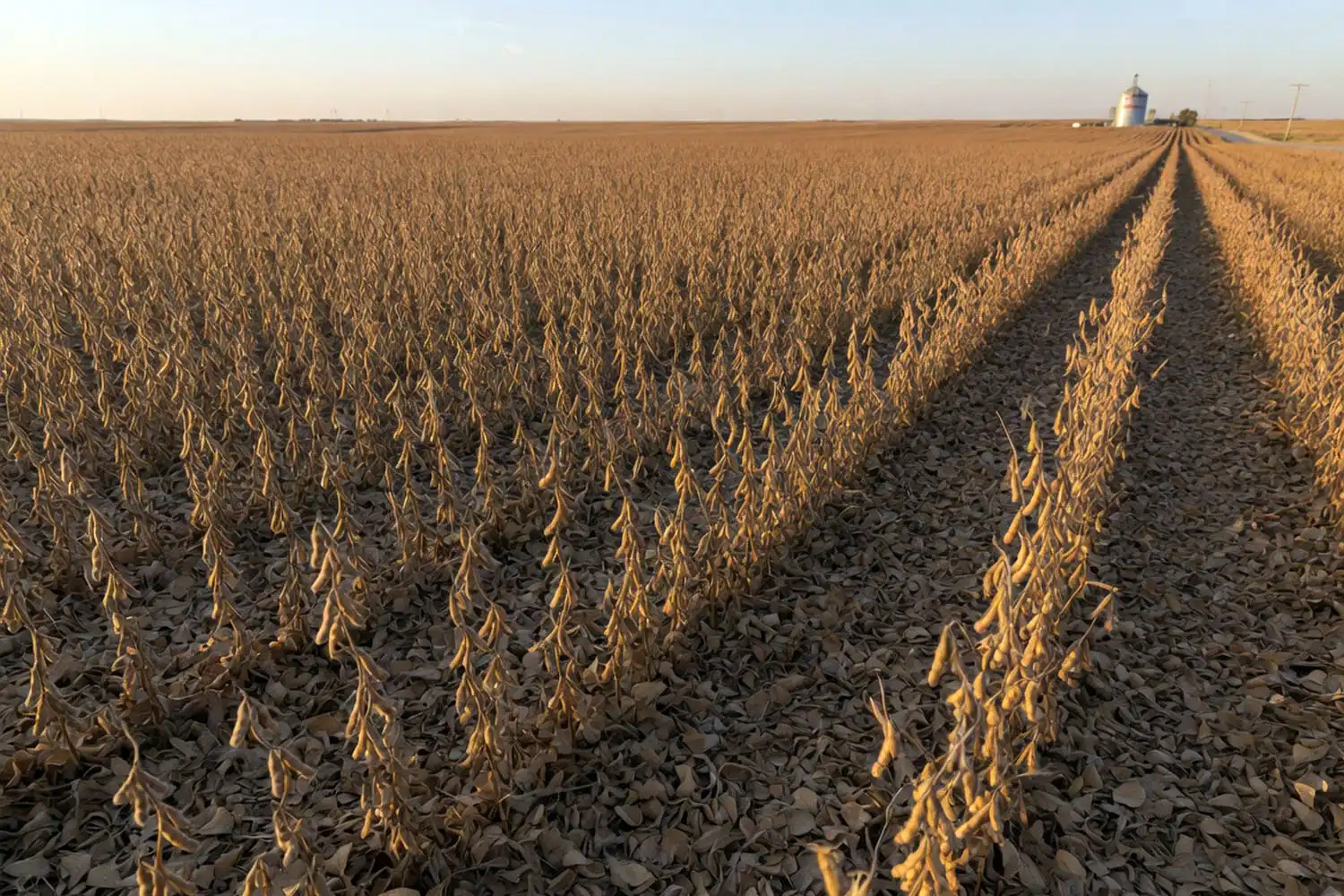
Soybeans are ready when 95 percent of the pods have turned brown. The leaves have dropped, and the beans rattle loose inside dry pods. A mature field looks almost dead, and that is exactly what you want to see.
These are the signs to look for when walking rows every fall.
Pod Color and Leaf Drop
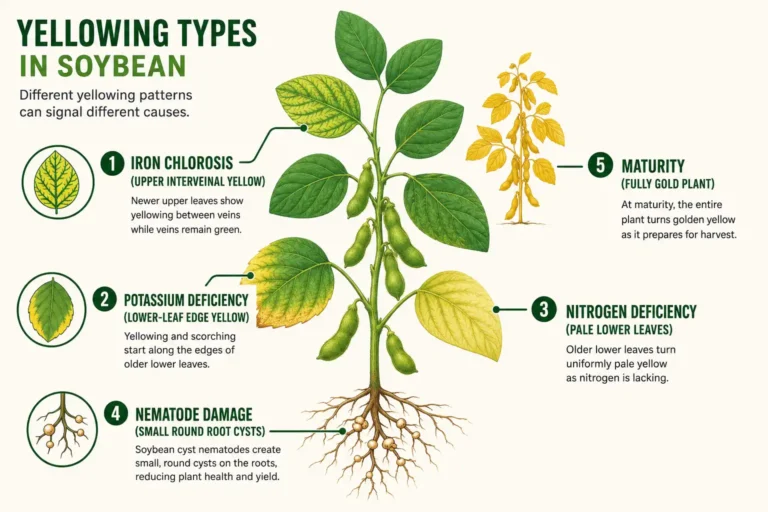
Pod color is your clearest signal. Mature pods shift from green to yellow, then finish a uniform tan or brown. Green pods mean the beans inside are still immature. The leaves change first, and soybean leaves turning yellow is the early sign that the plant is winding down. After that, the leaves drop and leave bare stalks with the pods clearly showing. When the canopy goes from green to a sea of brown and the ground fills with fallen leaves, maturity is close.
The Rattle and Bite Test
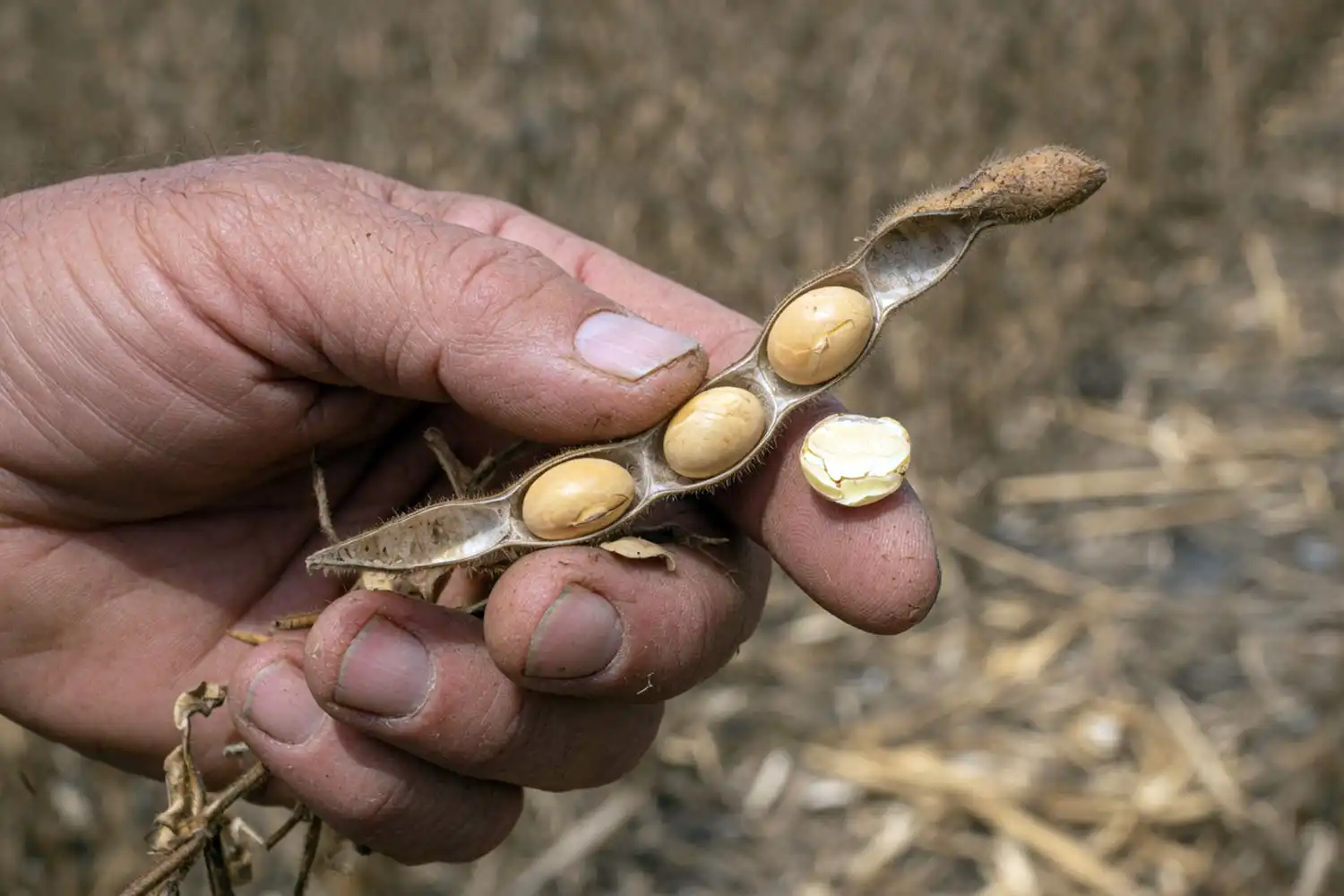
The rattle and bite test confirms what your eyes already suspect. Squeeze a few pods. They should feel dry and firm, not soft. Then shake a plant. If the beans rattle inside, the seed has pulled away from the pod wall and will thresh clean. For a final check, bite a bean. A mature, dry bean cracks sharply in half. A wetter bean just bends or squishes instead.
What Moisture Content Is Best for Harvesting Soybeans?
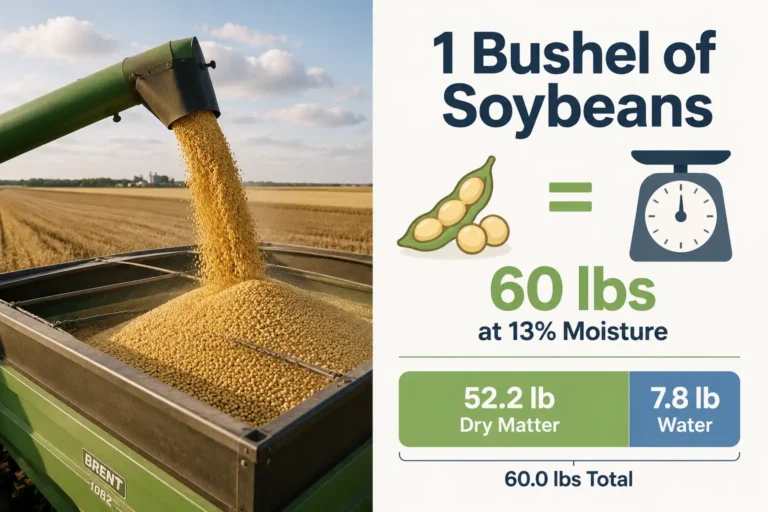
The best moisture for harvesting soybeans is 13 percent. That is the market standard, and it gives you the most saleable weight without dockage at the elevator. Cutting a touch earlier, around 14 to 15 percent, then letting the dry-down finish in the field or the bin, is a common approach.
Why not wait for drier beans? Because below 11 to 12 percent, you lose money two ways. Pods start to shatter on the header, and you sell water weight you no longer have. Field losses, splits, and cracked seed coats all climb as moisture falls. So a dependable grain moisture tester takes the guesswork out of the call. Check several spots in a field, since moisture is never uniform across every acre.
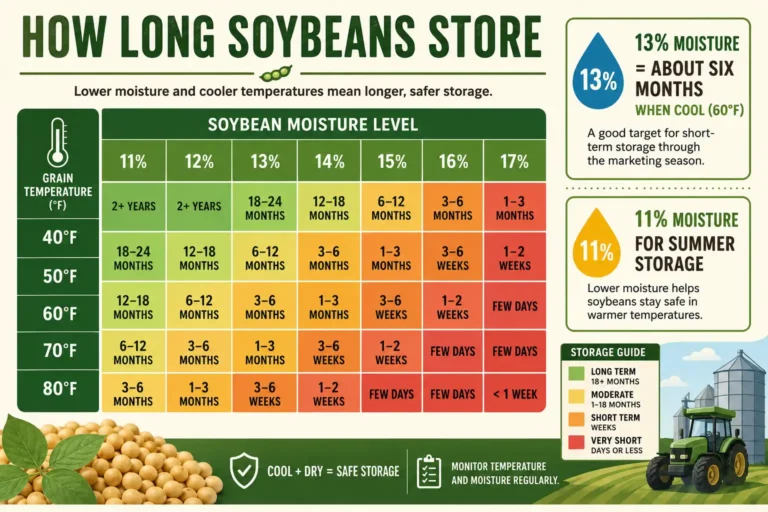
If you have a bin set up for drying, you can start as wet as 15 to 16 percent and aerate down to 13. For storage through winter and into summer, take it to 11 percent to hold off mold and keep quality high.
Soybean Maturity Stages Before Harvest (R7 and R8)
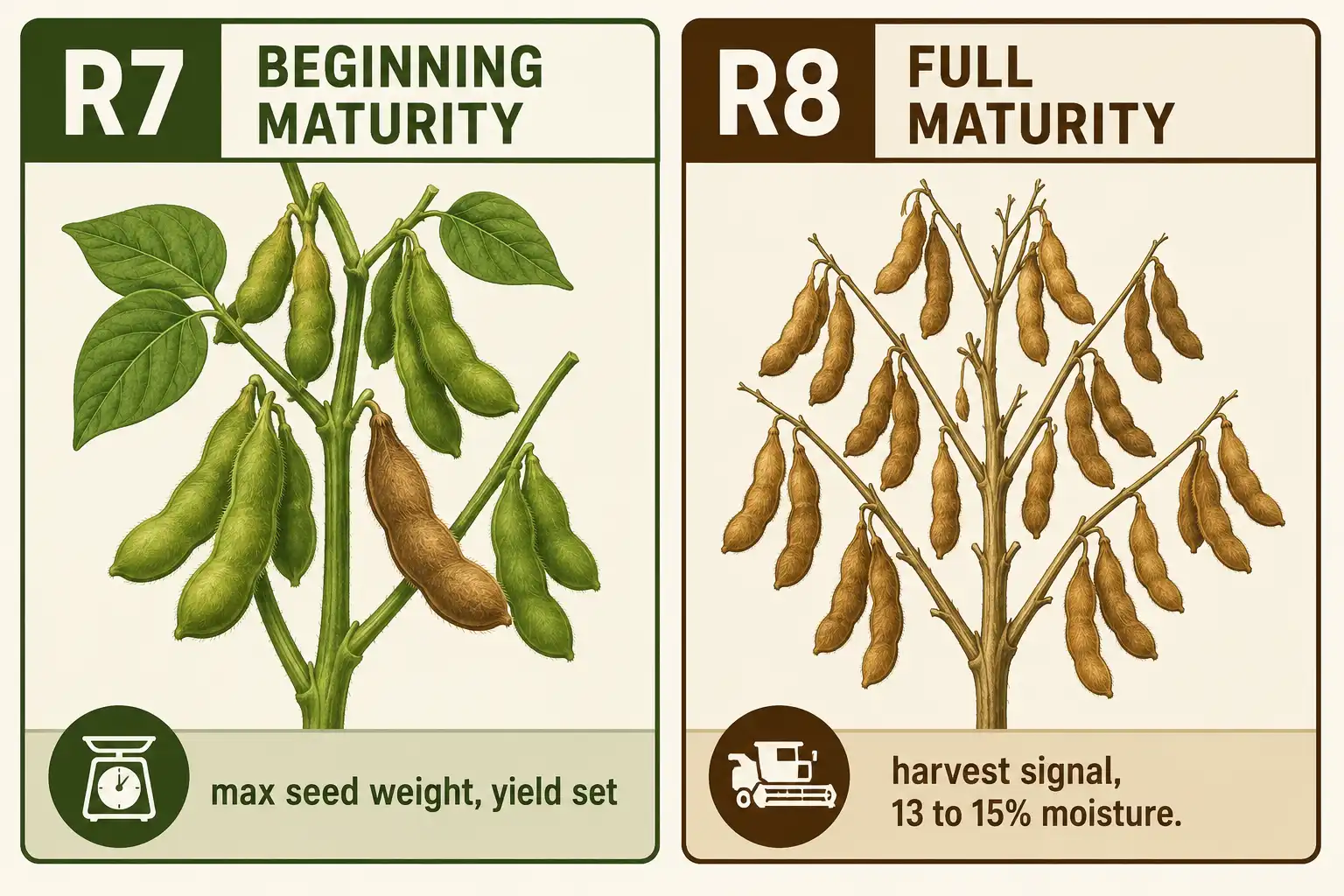
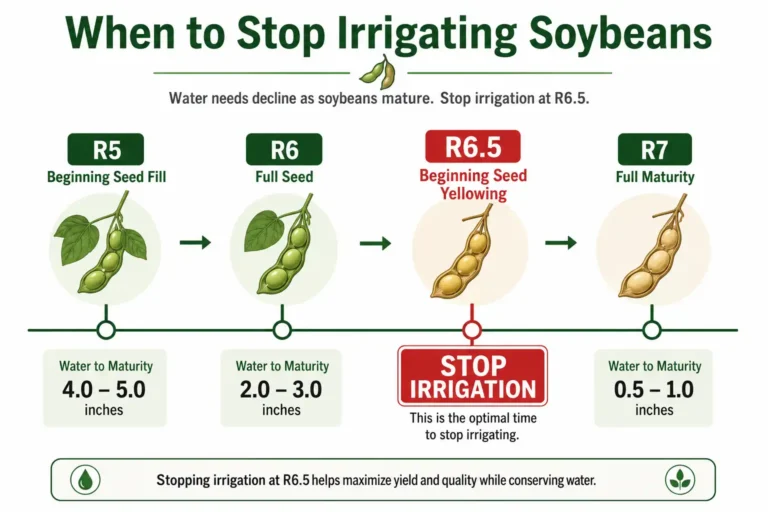
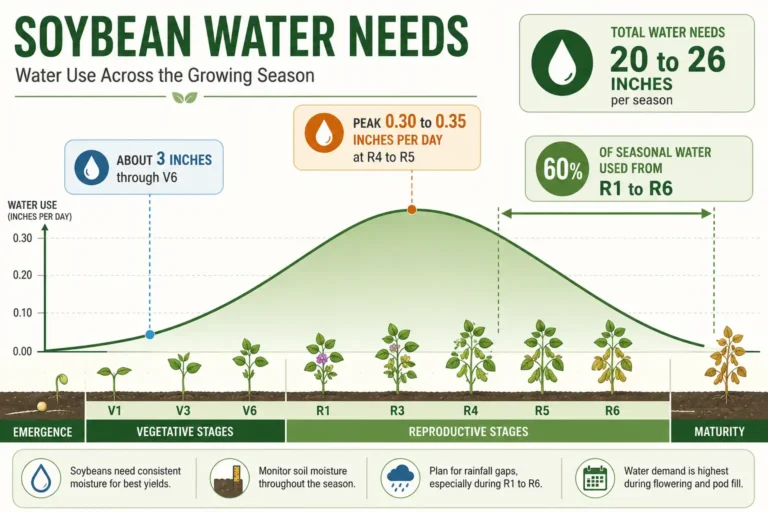
The two stages that matter at the finish are R7 and R8. R7, beginning maturity, arrives when one pod on the main stem reaches its mature color. At R7 the seed has hit its maximum dry weight, so your yield is essentially set. Stress after this point won’t cut your bushels. Water demand also falls off fast after R7, which is when late-season irrigation typically gets shut off.
R8 is full maturity, when 95 percent of the pods have turned brown. That is your harvest signal. Learning to stage your beans through the season helps you time everything from spray passes to the combine.
From R7 to harvest usually runs about two weeks. Beans dry down quickly once they mature, around 3 percent moisture per day in good weather. K-State Research and Extension measured that pace in a Kansas trial, roughly three times faster than corn. That speed is exactly why the harvest window stays short.
What Month Do Soybeans Get Harvested?
Most U.S. soybeans come off between late September and November. The exact month depends on your planting date, maturity group, and fall weather. Northern fields and early maturity groups finish first, while southern and double-crop fields run later.
In Kansas, growers plant in April and May, then harvest in September and October. The full process of growing soybeans from the ground up is its own topic. USDA-NASS records put the most active soybean harvest between early October and the first week of November. Start around the first of October, sometimes the tail end of September when the season cooperates.
Across the Corn Belt and the Great Plains, the pattern looks similar. Watch the first fall freeze in your area, and plan to have beans in before a hard frost when you can. Frost on a mature crop is rarely the disaster folks fear. It can still knock 5 to 15 percent off yield if it lands during seed fill.
When Is the Best Time of Day to Combine Soybeans?
The best time to combine soybeans is late morning through afternoon, once the dew burns off but before the beans get bone dry. Moisture swings through the day. Overnight dew can add several points, while a hot, windy afternoon can pull several points back out.
When beans run below 11 percent, that approach flips around. Cut in the early morning or evening when humidity is higher. The extra moisture keeps pods from shattering at the header. Either way, run slow and reset the combine as conditions change through the day.
What Happens If You Harvest Soybeans Too Early or Too Late?
Harvest too early and you fight green beans, high moisture, and quality problems. Wet beans get docked at the elevator, and green pods can heat up in the bin or grain cart. Cut too late and shatter takes over. Just four to five beans on the ground per square foot adds up to a full bushel per acre lost.
Repeated wetting and drying makes shatter worse, and weathered beans grade lower. So it is better to start a little wet and dry beans down than chase the last point of moisture in the field. The math almost always favors getting them in.
Harvesting Soybeans With Green Stems
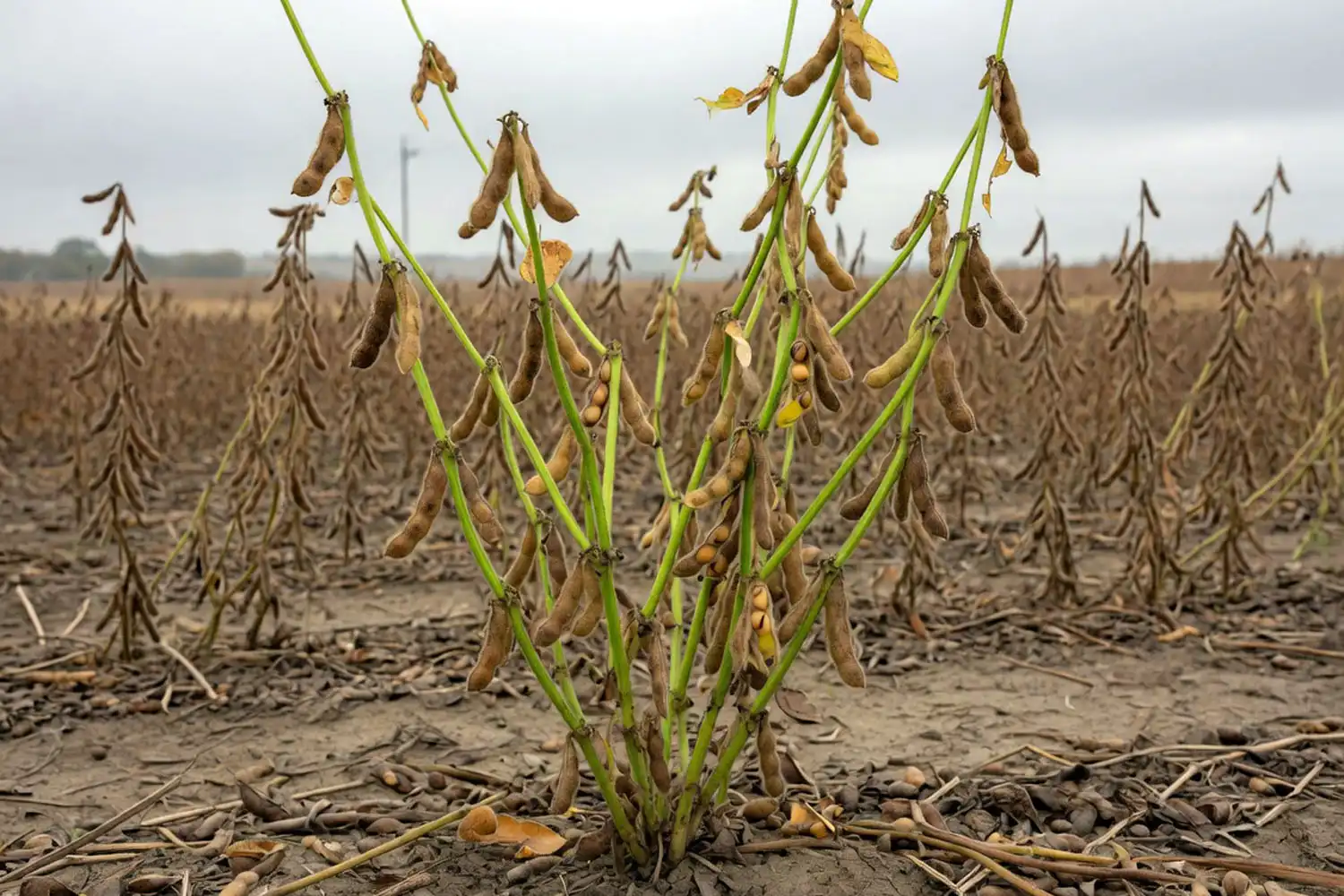
If your pods are brown and the beans are dry but the stems stay green, you have green stem syndrome. Harvest anyway, as long as seed moisture is in range. Waiting for the stems to die usually costs you more in shatter than the green stems cost you in combine headaches.
Green stems come from low pod counts and late-season stress, when the plant never moves its sugars into the seed. The fix is patience with your equipment, not the calendar.
Keep your cutterbar sharp, slow your ground speed, and the beans will still come off clean. A hard freeze or a desiccant will kill the stems for growers who would rather wait, though that step is not always necessary. Sooner beats later almost every fall.
Bottom Line for Your Field
Read the plant, not the calendar. Look for three things: 95 percent brown pods, dropped leaves, and a bean that cracks clean in your teeth. When you see them, check moisture and get rolling. Aim for 13 percent, start around 14 to 15, and never let the crop dry past 11 in the field. Time it that way, and you protect both your yield and your paycheck.