Can You Plant Lettuce and Tomatoes Together? Yes, Here’s How
Plant lettuce and tomatoes together? Yes, and the pairing works better than most folks expect. Lettuce stays low and cool while tomatoes grow tall and warm. Run this combo every spring in the plot.
Yes, you can plant lettuce and tomatoes together. Set cool-season lettuce around your tomato transplants in spring. The lettuce uses the soil while tomatoes stay small, then tomato shade keeps summer lettuce from bolting too early.
Can You Plant Lettuce and Tomatoes Together in the Same Bed?
Yes, you can plant lettuce and tomatoes together in the same bed, and they help each other along the way. The two crops want different things. Lettuce is a cool-season green with shallow, fibrous roots. Tomatoes are warm-season plants that root deep and feed hard. So they pull from different layers of soil and rarely fight over the same space. Gardeners and extension agents call this intercropping, or interplanting. West Virginia University Extension points to lettuce as a cool-season crop to tuck between bigger, slower vegetables like tomatoes. This works well in zone 6a without much trouble.
Learn more: How to Plant Eggplant and Tomatoes Together
Why Do Lettuce and Tomatoes Make Good Companions?
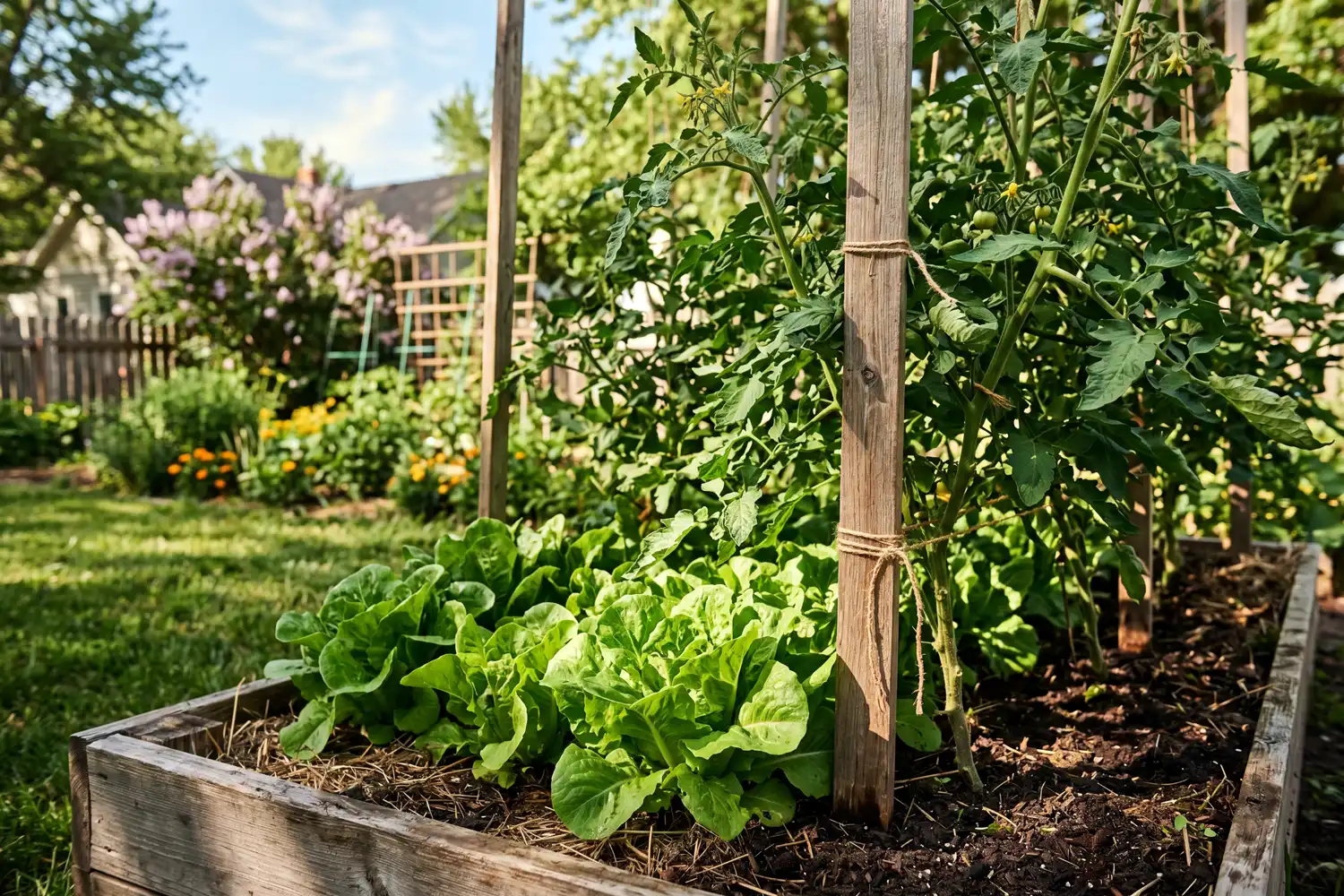
Lettuce and tomatoes make good companions because their growth habits fit together instead of clashing. Each plant covers a weakness in the other.
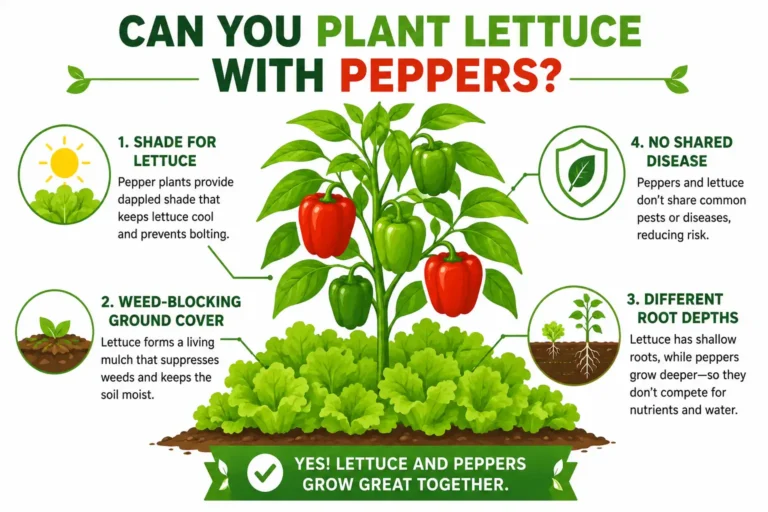
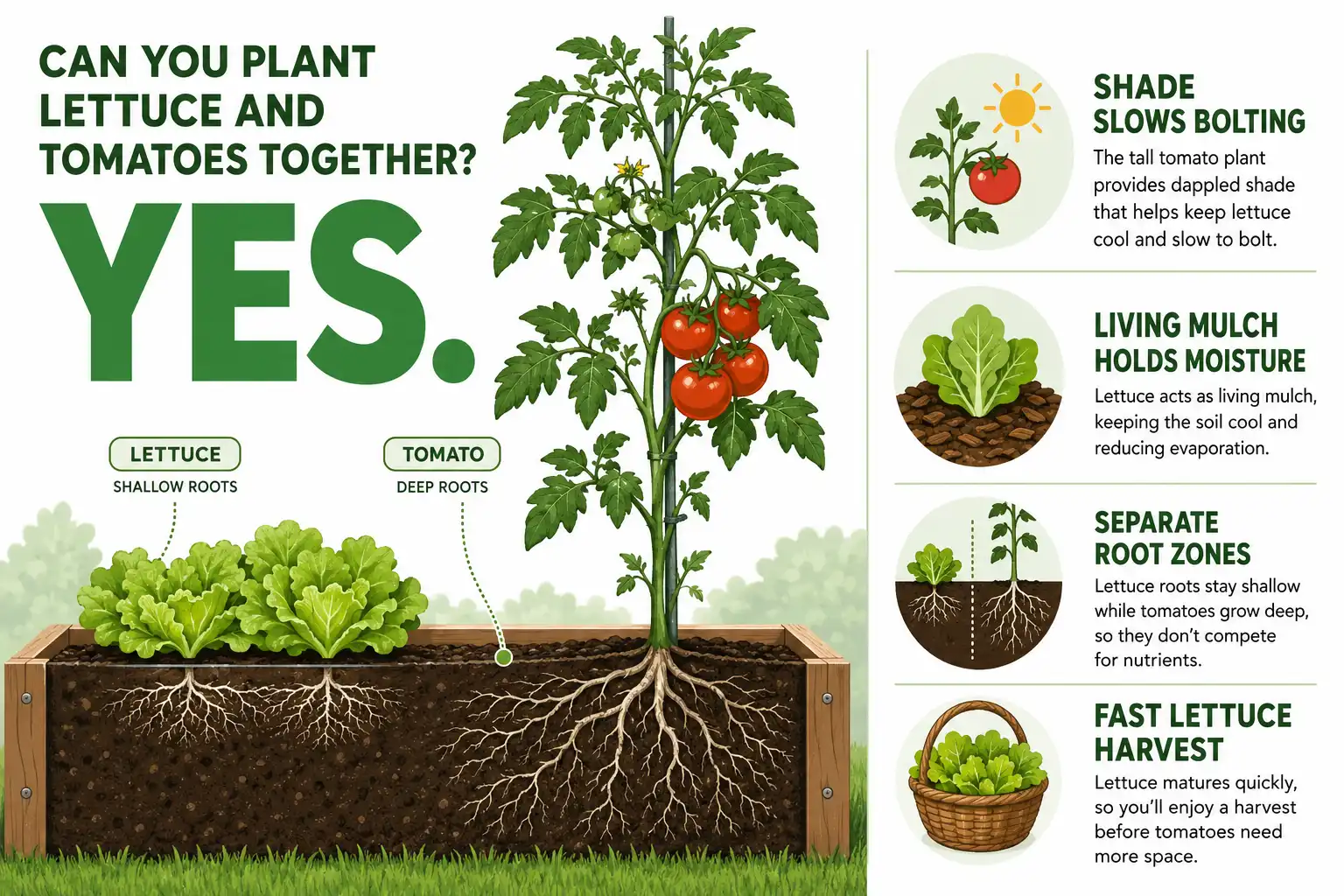
First, the shade. By midsummer, tomato plants throw solid shade. That shade is gold for lettuce. Lettuce hates heat, and high temperatures push it to bolt and turn bitter. A canopy of tomato leaves cools the soil and slows that bolting. University research backs this up. Lettuce grown in the shade of mature tomatoes can hold two to three weeks longer in late June heat. If you want to lean on this trick, it helps to know how lettuce can take some shade before you map out your beds.
Next, the living mulch. Lettuce grows low and spreads a leafy mat over the ground. That mat shades the soil around your tomato roots. So it holds moisture and keeps weeds down. The lettuce earns its keep while the tomatoes are still small.
Then there is the root story. Lettuce roots stay near the top of the soil, mostly in the first 6 to 12 inches. Tomato roots dig much deeper. Because the two feed at different depths, they do not crowd each other out. You can see why this matters once you understand how shallow lettuce roots run.
Last, the timing. Lettuce is fast. It matures in 30 to 60 days. Tomatoes take a lot longer to fill out. So your spring lettuce is ready to cut about the time your tomatoes start needing the room.
How Do You Plant Lettuce and Tomatoes Together?
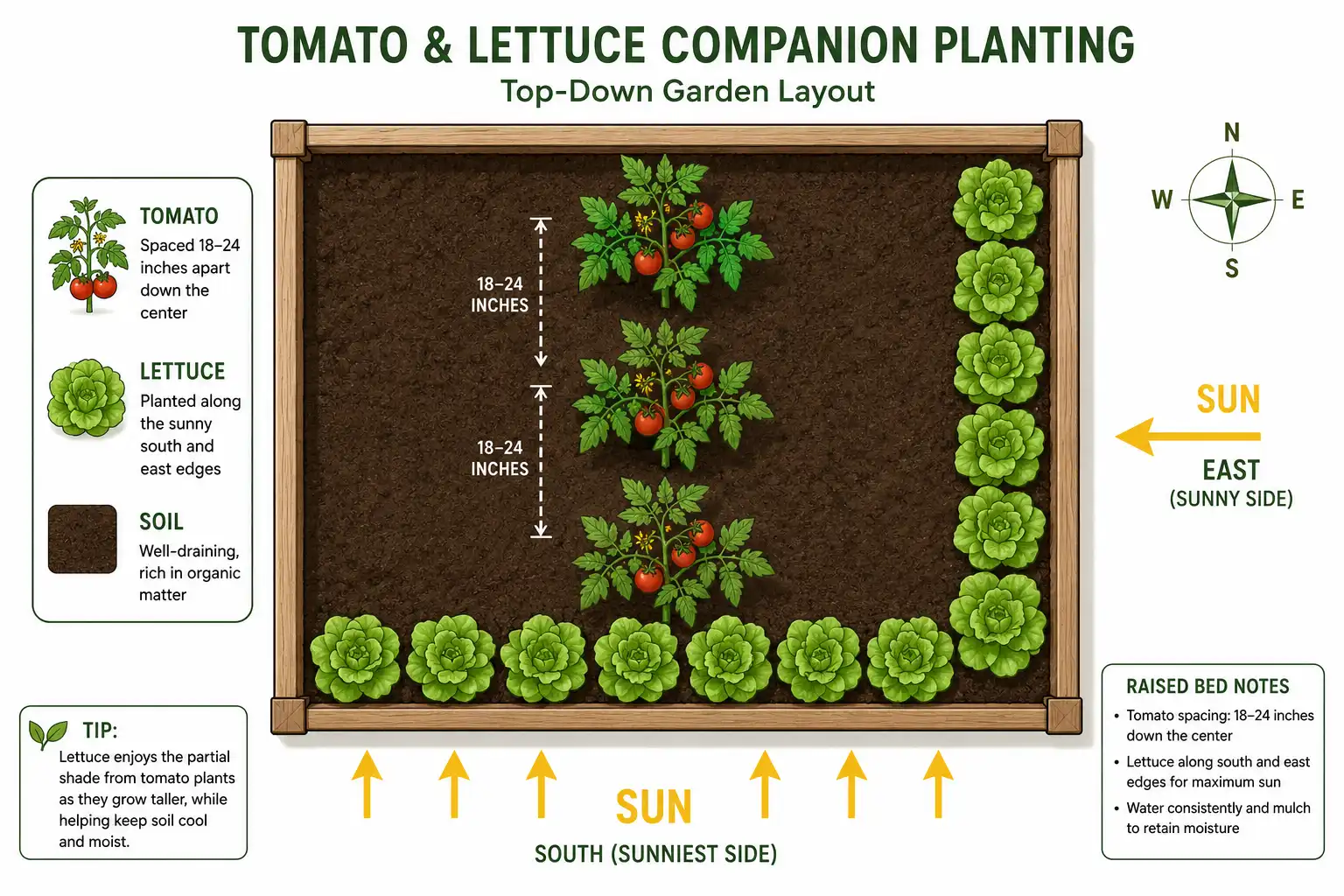
Plant your tomato transplants first, then set or sow lettuce around them on the sunny sides. Timing and position do most of the work.
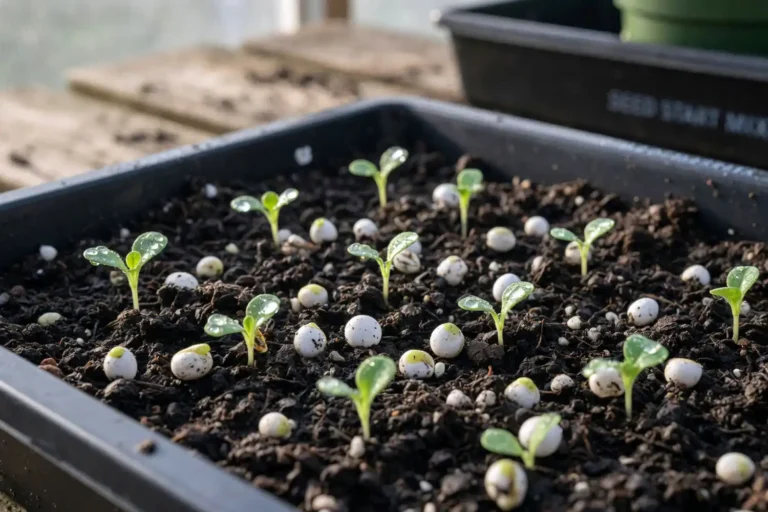
set tomato transplants in mid-May, once the soil warms and frost danger passes. Lettuce goes in earlier and stays cool, so direct-sow or transplant it in late March and early April. By the time tomatoes go out, spring lettuce is already sizing up.
Keep the lettuce on the south, east, or west side of the tomato row. Those sides hold the most sun in spring, when lettuce still wants light. Avoid packing lettuce hard against the tomato stems. Leave a few inches of air. Tomatoes need airflow to dodge leaf disease.
Set tomatoes 18 to 24 inches apart. Then tuck lettuce in the open ground between and beside them. You can sow seed thinly and thin later, or drop in small transplants. For exact row and bed numbers, this guide on spacing lettuce in your beds will keep you from crowding.
For a summer crop, flip the plan. Sow heat-tolerant lettuce on the shadier north side of mature tomatoes in June and July. That shade buys you fresh greens deep into the hot months.
Do Lettuce and Tomatoes Compete for Nutrients or Water?
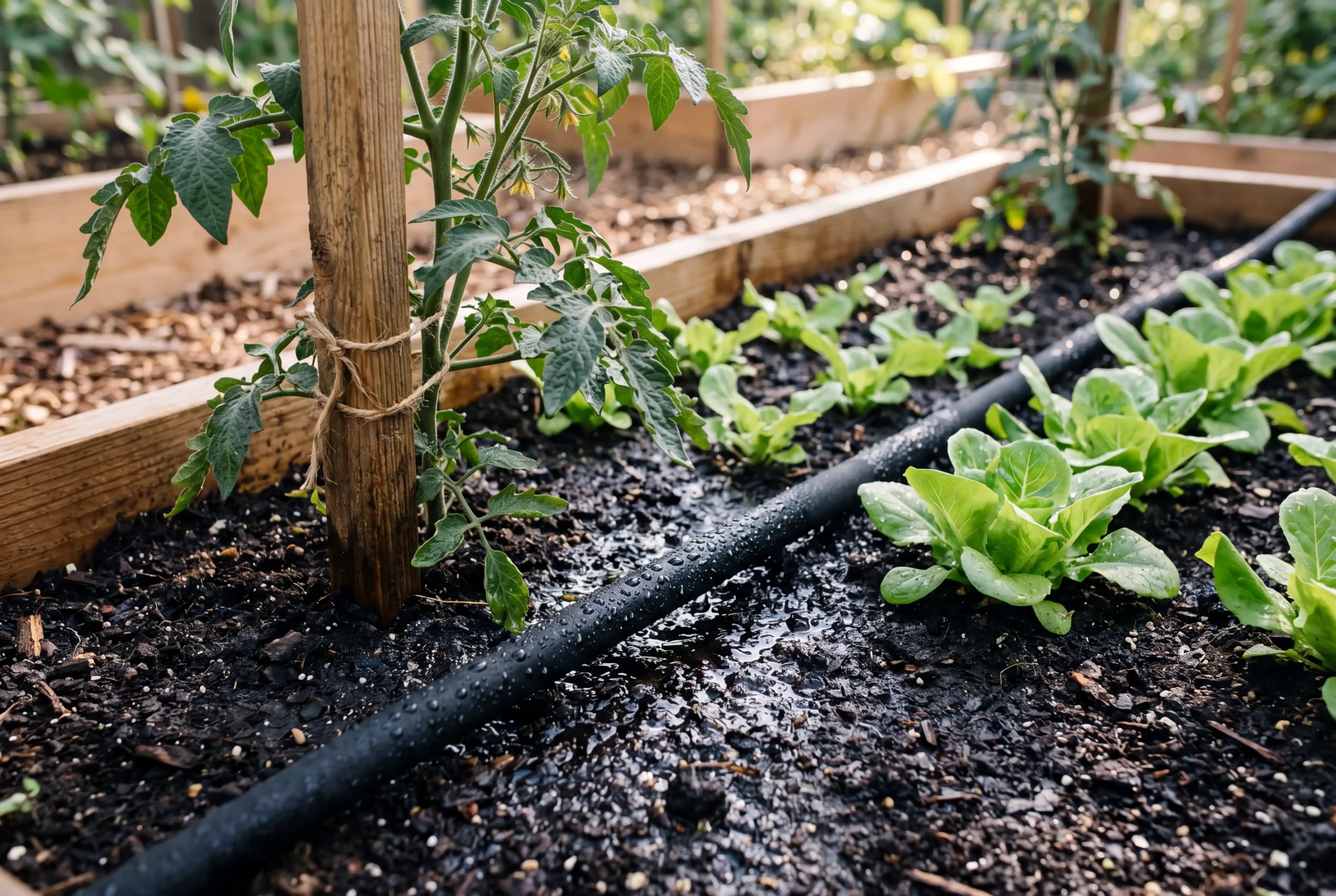
Lettuce and tomatoes barely compete for nutrients, but their watering needs differ, so plan for that. Rich soil and smart irrigation settle most of it.
Both crops like fertile ground. Lettuce is a light to moderate feeder. Tomatoes feed heavy. In a bed built up with compost, there is plenty for both. NC State Extension notes that most of the action happens in the top 6 inches of soil. So work your compost in there before planting. Thin lettuce roots feed in that same zone, which is why fertile topsoil keeps them happy.
Water is the trickier part. Lettuce has shallow roots that dry out fast, so it wants frequent, light watering. Tomatoes prefer deeper, less frequent soakings, and they sulk in soggy ground. University of Minnesota Extension points out that lettuce surface roots drink up most of their water near the top. A drip line or soaker hose solves this nicely. That way you water the bed evenly and keep the tomato leaves dry at the same time. For the tomato side, here is how to handle watering tomatoes the right way.
One more thing. Do not let the tomato canopy bury your spring lettuce in deep shade too early. A little shade is great. Total darkness stalls growth. So position matters more than people think.
Best Lettuce Varieties to Grow With Tomatoes
For interplanting under tomatoes, lean on heat-tolerant, slow-bolting lettuce. These hold up best when the weather turns and the shade kicks in.
Loose-leaf and romaine types take partial shade well and bolt slower than crisphead. For summer plantings in tomato shade, reach for Jericho, Nevada, Muir, and Coastal Star. Growers bred these to handle heat without going bitter. In early spring, almost any lettuce works, since the weather is still cool and the tomatoes are small. If you plan to push lettuce into July, keeping lettuce from bolting in the heat is the whole game.
What Else Can You Grow Alongside Tomatoes?
Plenty of small, shallow-rooted crops grow well alongside tomatoes besides lettuce. The same rules apply. Stay low, stay out of the way, and share the soil.
Carrots, radishes, green onions, and basil all pair nicely with tomatoes. Basil is a strong one. Studies show it can boost tomato vigor while masking the scent cues that pests use to find the plants. Sweet alyssum draws in hoverflies and tiny wasps that hunt aphids. If you are filling out a mixed bed, here are more crops for a tomato raised bed worth trying this season.
Bottom Lines
On the plot, this combo is one of the easiest wins in the spring garden. Set tomatoes in May, ring them with lettuce, and cut fresh greens for weeks while the tomatoes climb. By July, the tomato shade lets me keep a little lettuce going when most folks have quit on it. Build the soil, mind your watering, and give each plant room to breathe. Do that, and lettuce and tomatoes will earn their spot in the same bed every year.