Can Eggplant and Tomatoes Be Planted Together? Yes, With Rules
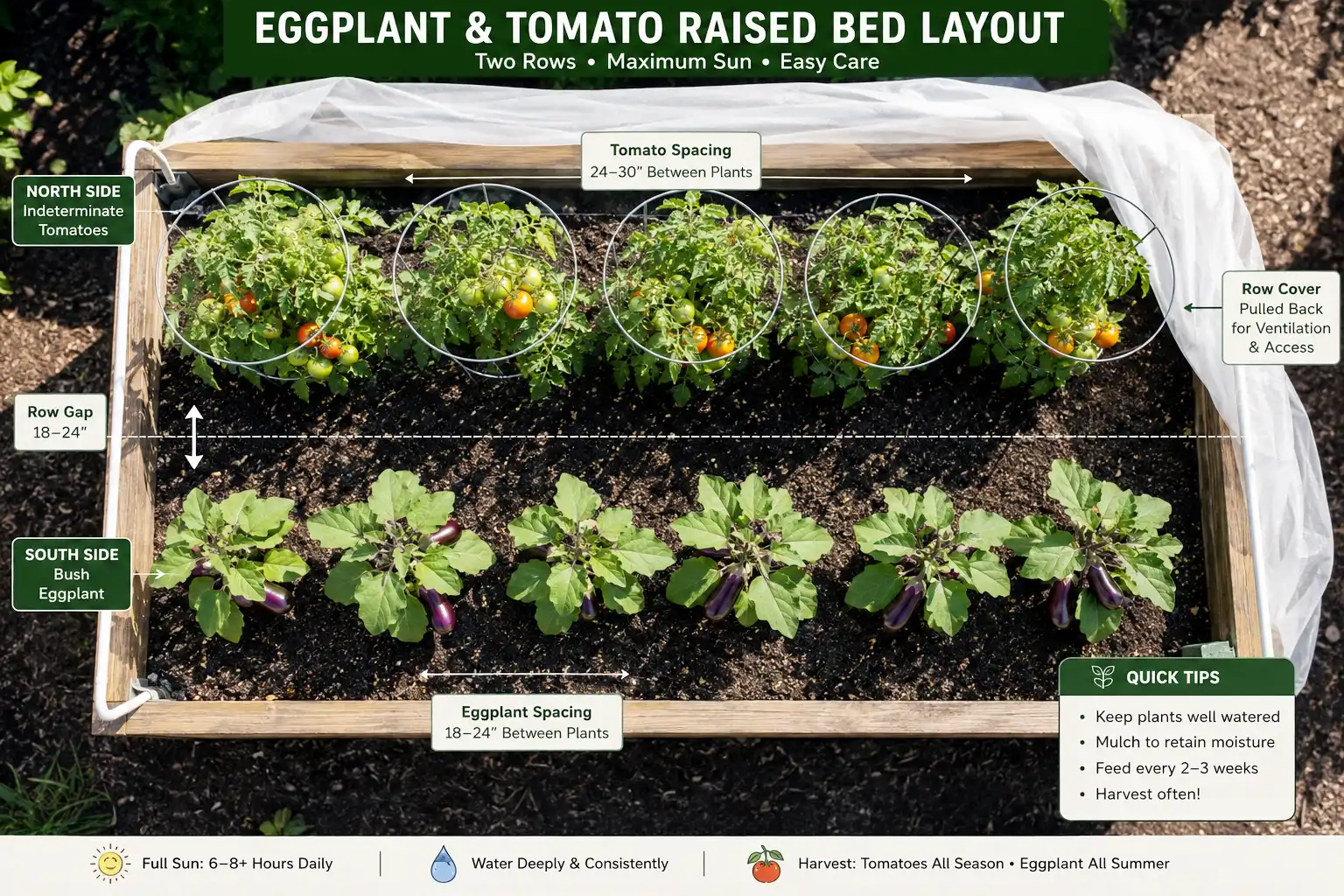
Eggplant and tomatoes belong to the same plant family, which makes one shared bed both tempting and risky. Can eggplant and tomatoes be planted together safely? Yes, though spacing, transplant timing, and rotation decide whether the pairing works.
Yes. Eggplant and tomatoes can be planted together in one bed. Both want full sun, pH near 6.0 to 6.5, and 1 inch of water weekly. Then keep rows 30 to 36 inches apart and rotate every three years.
What Makes Eggplant and Tomatoes Compatible in One Bed?
They need almost the same site, so one watering and feeding routine covers both rows. Eggplant (Solanum melongena) and tomato (Solanum lycopersicum) are both Solanaceae crops. That shared family drives matching demands for sun, drainage, and moisture.
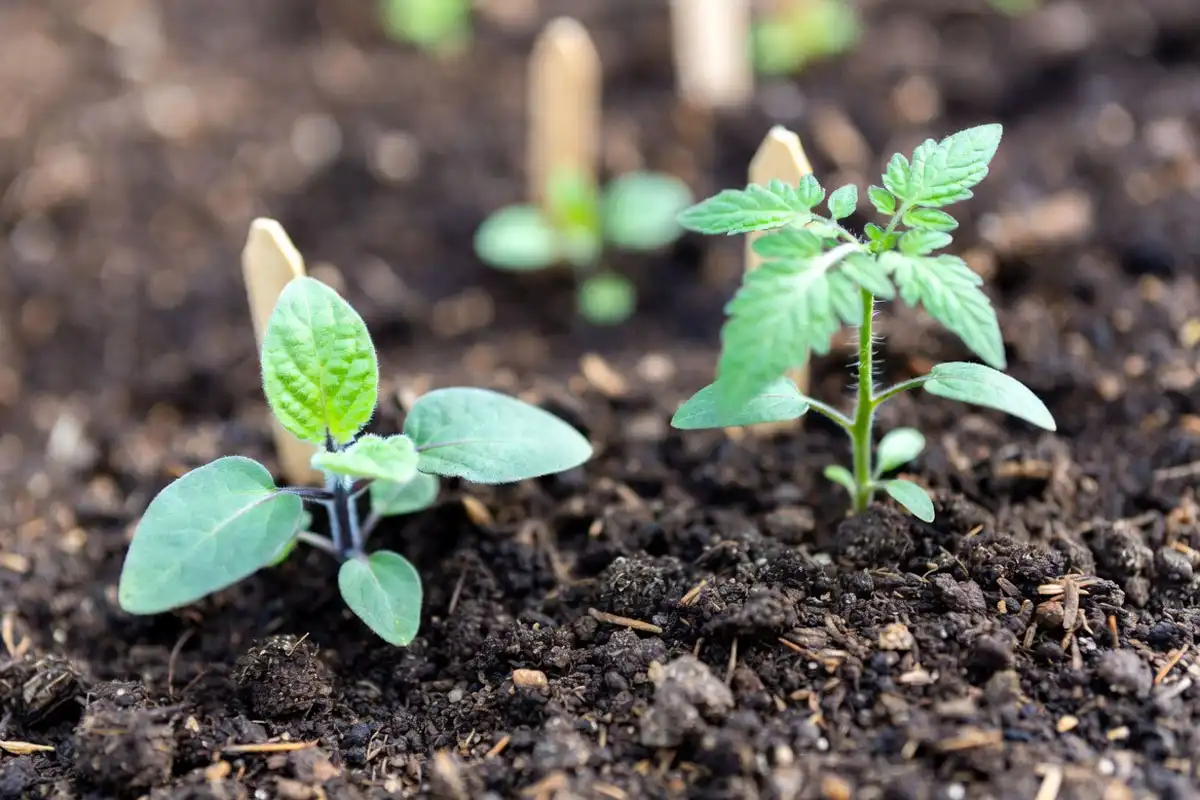
Michigan State University Extension notes that eggplant soil requirements match those of tomatoes and peppers. Eggplant does handle heavy soils poorly, though. Clemson Extension sets the eggplant pH target at 6.0 to 6.5, which sits inside the band tomatoes prefer. Both crops also need consistent water. University of Wisconsin-Madison Extension recommends 1 inch per week for tomatoes, peppers, and eggplant. Soak the soil deeply, but keep the foliage dry.
Full sun matters just as much. Shaded tomato plants stretch and set fewer fruit. Shaded eggplant slows badly too, so confirm the sun eggplant needs before you commit a partly shaded bed.
Where the Two Crops Differ
Eggplant runs on more heat than tomatoes, and that gap drives most of the practical decisions. Michigan State University Extension reports that eggplant is more sensitive to cold than tomatoes or peppers. Temperatures below 50°F harm the plants, and fruit fails to set below 60°F. University of Illinois Extension makes the same point. Transplant only once nighttime temperatures stay reliably above 50 degrees.
| Factor | Eggplant | Tomato |
|---|---|---|
| Cold tolerance | Harmed below 50°F, no fruit set below 60°F (MSU Extension) | Handles cool nights better |
| Transplant cue | Nights reliably above 50°F (Illinois Extension) | After frost danger passes and soil warms |
| Best temperature range | 70 to 85°F (Clemson Extension) | Less heat demanding |
| In-row spacing | 18 to 24 inches (Illinois Extension) | 18 to 24 inches staked, 30 to 36 inches caged (Iowa State Extension) |
| Row spacing | 30 to 36 inches (Illinois Extension) | About 4 feet for determinate rows (Iowa State Extension) |
| Growth habit | Bushy, benefits from a cage under fruit load | Determinate stops early, indeterminate grows until frost (Iowa State Extension) |
| First harvest | 65 to 80 days after transplant (Clemson Extension) | Varies widely by variety |
| Flea beetle pressure | Very high on young plants | Lower, mostly early season |
| Fusarium wilt | Not a host | Host, since the pathogen is tomato specific (Wisconsin Extension) |
That temperature gap creates one useful rule. Set tomatoes first, then hold eggplant transplants back two to three weeks until nights warm. Michigan State University Extension also recommends black plastic mulch and row covers for eggplant. Both speed early growth and cut insect pressure.
How Far Apart Should Eggplant and Tomatoes Be Planted?
Give eggplant 18 to 24 inches in the row and tomatoes 18 to 36 inches, depending on support. University of Illinois Extension puts eggplant 18 to 24 inches apart in the row. Rows sit 30 to 36 inches apart, and in raised beds 24 inches in all directions works.
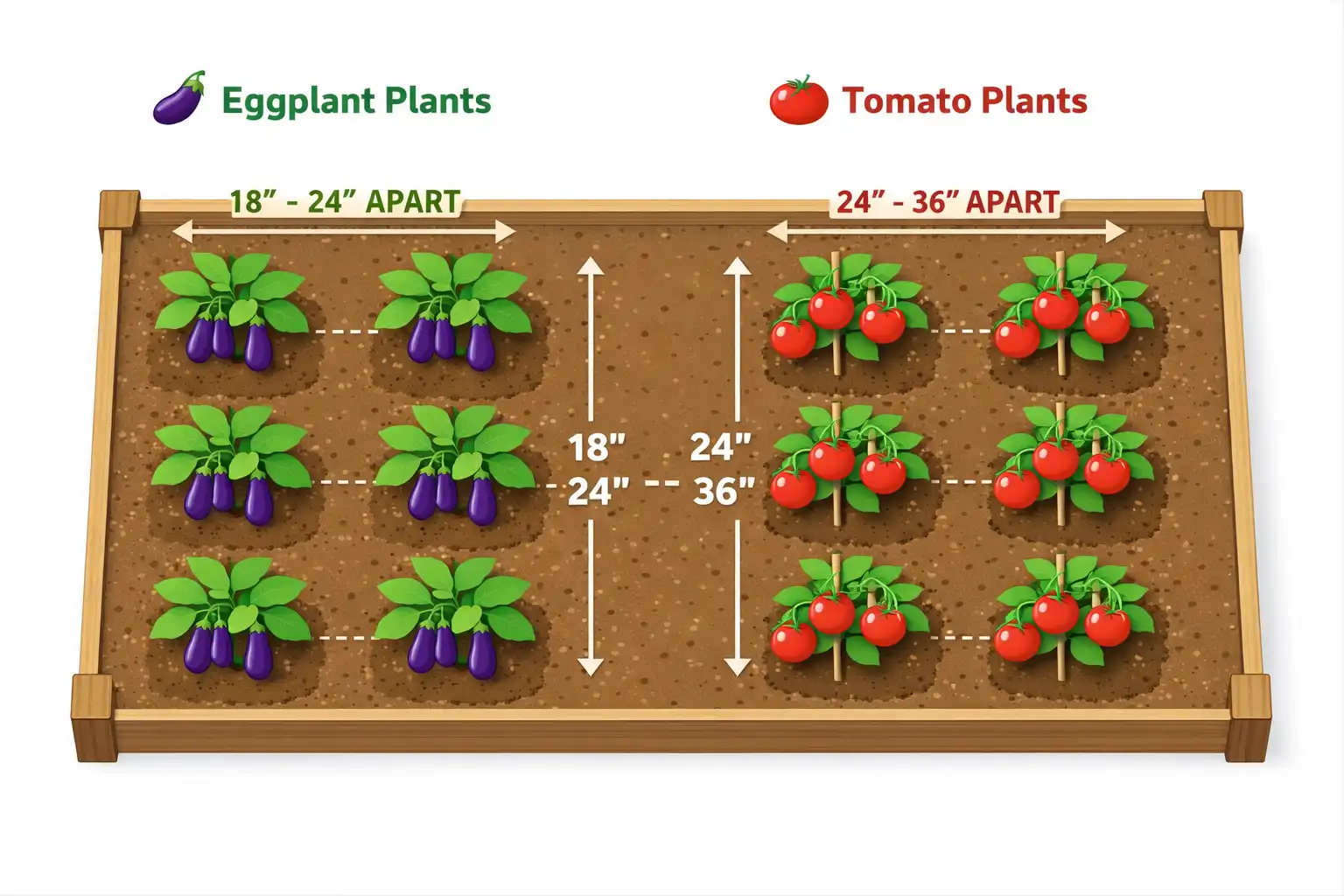
Iowa State University Extension sets tomato spacing by habit and support. Staked indeterminate plants go 18 to 24 inches apart. Caged indeterminate plants need 30 to 36 inches. Determinate types sit 24 to 30 inches apart in rows about 4 feet wide.
Keep the crops in separate rows rather than alternating plants inside one row. Separate rows hold root competition down. They also let you cover eggplant early without disturbing tomatoes. For a fuller breakdown of eggplant spacing in beds and pots, start from the row figures. Then adjust for your support system.
Bed Layout That Prevents Shading
Put the taller crop on the north side. Iowa State University Extension notes that indeterminate tomatoes keep growing and setting fruit until frost. So a caged row can overtop bushy eggplant by midsummer. North side placement keeps direct light on the eggplant canopy through fruit set.
Can Eggplant and Tomatoes Be Planted Together Without Sharing Disease?
Yes, but the disease overlap is narrower than most companion charts suggest. University of Wisconsin-Madison Extension reports that early blight (Alternaria solani) infects eggplant as well as tomato. Septoria leaf spot (Septoria lycopersici) hits tomato plus solanaceous weeds such as nightshade and jimsonweed. The same source notes that Fusarium wilt is specific to tomato. Verticillium dahliae, by contrast, attacks hundreds of species including eggplant and pepper.
So the shared soilborne threat is Verticillium, not every wilt on the usual list. That single pathogen still justifies rotation. It survives in soil long after the crop comes out.
Flea Beetles Hit Eggplant Hardest
Flea beetles are the one pest that changes the setup. Eggplant is a preferred host, and young transplants take the worst of it. UMass Extension gives treatment thresholds for solanaceous flea beetles:
- Newly set transplants: treat at 2 beetles per plant
- Seedlings 3 to 6 inches tall: treat above 4 beetles per plant
- Plants over 6 inches tall: treat at 8 beetles per plant

University of Illinois Extension recommends floating row covers early in the season, when plants stay most vulnerable. Since tomatoes take far less flea beetle damage, cover only the eggplant row. Then pull the cover once eggplant flowers open, so pollinators reach the blossoms. Adding natural pest control measures such as trap crops and beneficial insect habitat lowers pressure across both rows.
Keeping Foliage Dry in a Shared Bed
Keep water off the leaves. Wisconsin Extension advises soaking the soil to promote deep rooting while keeping foliage dry. Michigan State University Extension also recommends avoiding overhead irrigation on eggplant. A drip line or soaker hose down each row handles both crops.
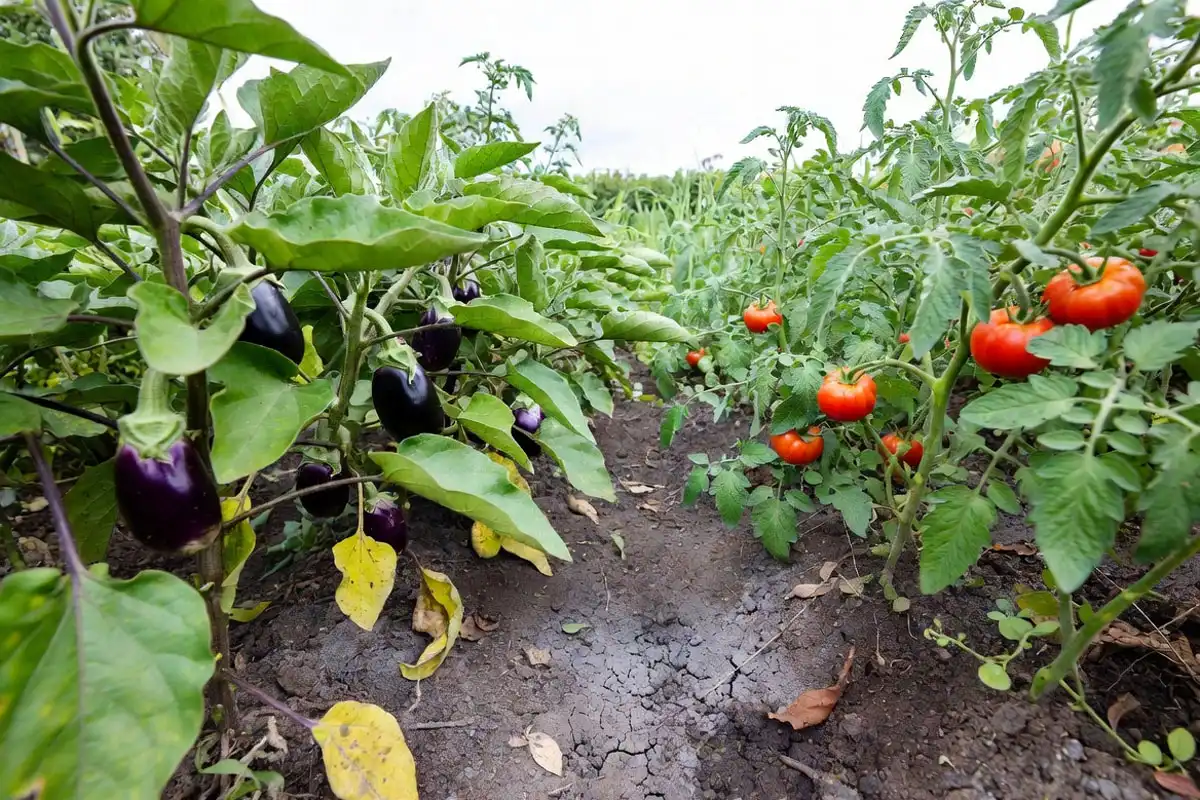
Also strip the lowest leaves once plants establish. Both diseases start on lower foliage near the soil. Removing that tissue delays the first infections. Clemson Extension notes that Septoria stays most active between 68 and 77°F under high humidity. A crowded bed after rain matches that description closely.
How to Set Up the Bed, Step by Step
- Test the soil first. Correct pH toward 6.0 to 6.5, then apply preplant fertilizer on soil test results, as Clemson Extension advises.
- Mark two rows, not one mixed row. Hold 30 to 36 inches between them.
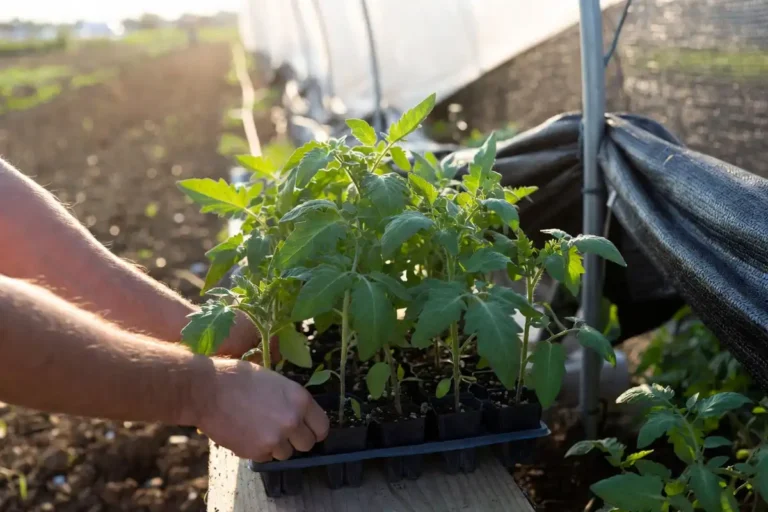
- Set tomatoes once frost danger passes. Stake or cage at planting so roots stay undisturbed later.
- Hold eggplant until nights stay above 50°F. Illinois Extension ties the eggplant transplant date to that threshold.
- Mulch the eggplant row with black plastic. MSU Extension credits this with faster early growth and fewer insect problems.
- Cover the eggplant row on hoops. Fabric should never rest on leaves, and it comes off at first flower.
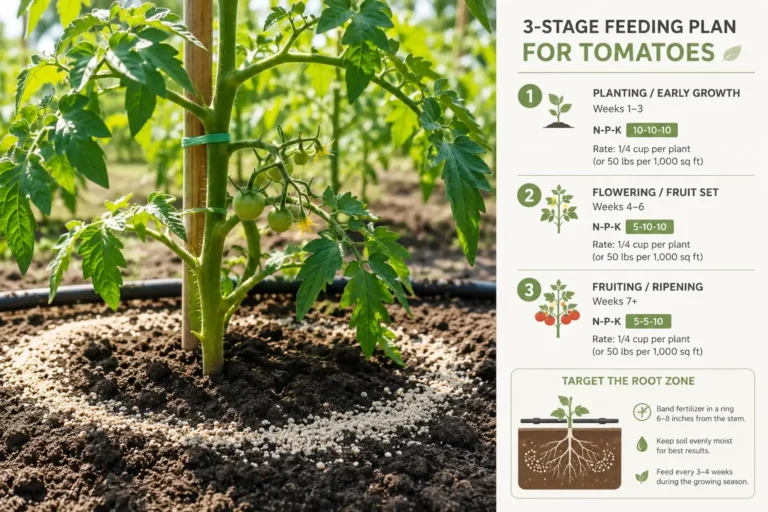
- Side-dress on schedule. Illinois Extension side-dresses eggplant nitrogen when plants are half grown, then again right after the first fruits come off. Clemson Extension applies calcium nitrate three to four weeks after planting, then repeats three to four weeks later.
How Long Before the Same Bed Can Hold Them Again?
Wait at least three years. Wisconsin Extension recommends rotating out of solanaceous crops for three to four years. It also advises controlling solanaceous weeds, because soilborne pathogens build up under repeat plantings. Clemson Extension gives the same three-year minimum for bacterial wilt. It also warns against pepper, eggplant, potato, sunflower, or cosmos in that rotation.
Regional pressure differs. Bacterial wilt (Ralstonia solanacearum) runs heaviest in the warm, humid Southeast. On confirmed infested ground, Clemson Extension suggests moving susceptible solanaceous crops to a separate site. Northern growers face the opposite limit. Illinois Extension warns that eggplant does not grow until temperatures warm. So a late transplant date in the upper Midwest shortens an already tight season.
Peppers and potatoes cannot serve as the follow-up crop, because both sit in the same family. Corn, beans, grasses, and brassicas can. Writing this into a rotation plan beats trying to recall which bed held which family two seasons back.
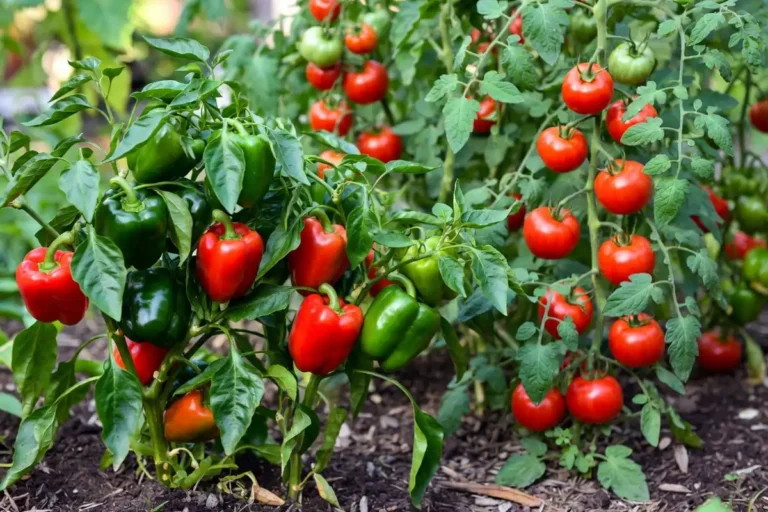
The same family logic covers peppers beside tomatoes in a larger garden block. If you want neighbors outside the nightshade family, review broader companion choices for eggplant before you lock the layout.
Troubleshooting the Pairing
| Symptom | Likely cause | What to do |
|---|---|---|
| Eggplant sits still for weeks while tomatoes grow | Cold soil and cold nights | Wait for 50°F nights next season, and warm the row with black plastic |
| Shot holes across young eggplant leaves | Flea beetles | Count beetles per plant against the UMass thresholds, then cover or treat |
| One-sided yellowing, lower leaf drop, daytime wilt | Verticillium wilt | Pull affected plants, and extend rotation to three or four years |
| Brown target-pattern spots low on both crops | Early blight | Strip lower leaves, water at the base, and open up spacing |
| Small spots with pale centers on tomato only | Septoria leaf spot | Clear crop debris at season end, since the pathogen overwinters on residue and weeds |
| Heavy leaf growth with few flowers | Excess nitrogen at planting | Return to soil test rates, then side-dress after fruit set |
| Eggplant flowers drop while tomatoes hold fruit | Nights below 60°F | Adjust transplant timing next season rather than treating |
FAQs about Eggplant and Tomatoes Plant Together
Do eggplant and tomatoes compete for the same nutrients?
Can they share the same drip line?
Will flea beetles move from eggplant to tomatoes?
How close is too close?
What to Check Before You Plant
Two rows, not one blended row. Eggplant goes on the south side at 18 to 24 inches. Tomatoes go on the north side, staked or caged at their variety spacing. Hold 30 to 36 inches between rows.
Then hold eggplant transplants until nights stay above 50°F. Cover that row until first flower, and water at the base. Finally, move the pairing to a new bed within three years.