How to Plant Tomatoes from Seeds and Grow Healthy Transplants Fast
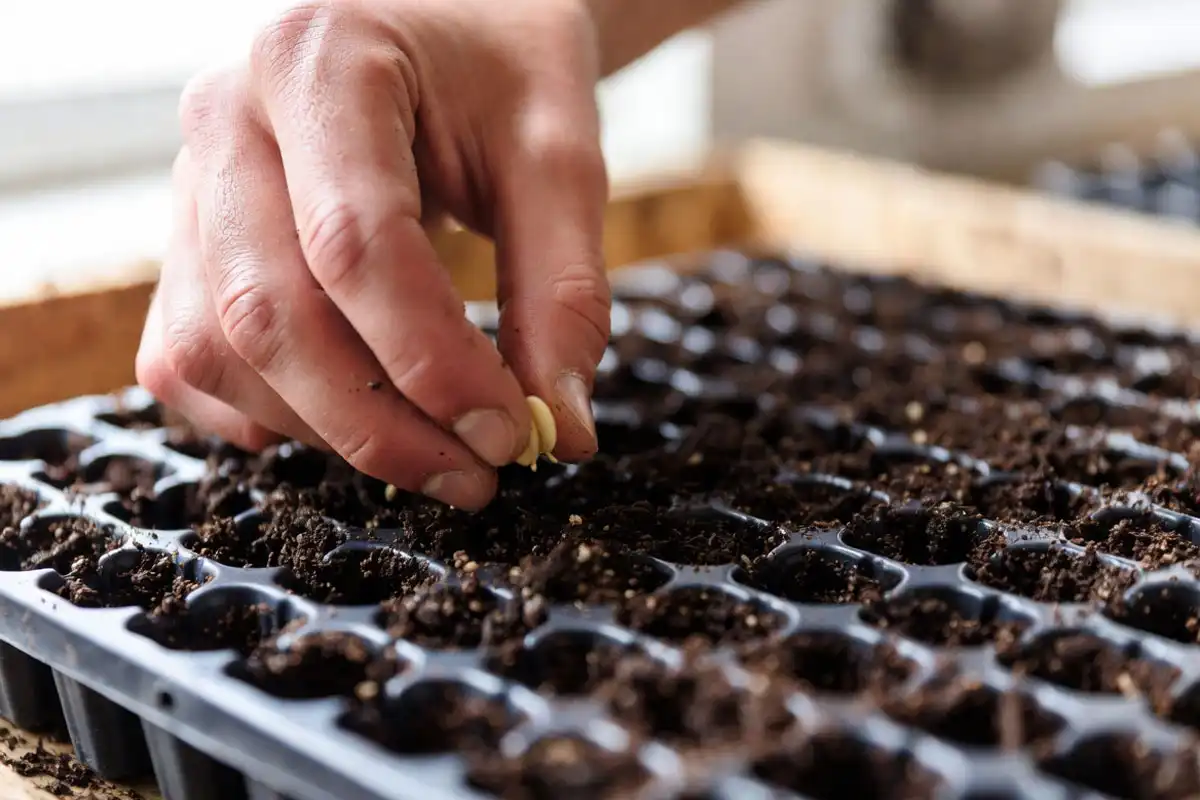
Tomatoes plant well from seeds and reach field-ready transplants in 6 to 8 weeks when started indoors under the right conditions. This guide covers seed selection, sowing depth, germination requirements, seedling care, hardening off, and outdoor transplanting, giving a grower a clear path from the first seed to a healthy plant in the ground. Each stage builds directly on the last, and following the correct sequence reduces seedling loss and produces strong, well-established transplants.
To plant tomatoes from seeds, sow tomato seeds 1/4 inch deep in a moist seed-starting mix in cells or trays. Maintain a soil temperature of 70°F to 80°F until germination, which occurs in 5 to 10 days. Move seedlings under 14 to 16 hours of light after sprouting. Thin to one plant per cell at the first true-leaf stage. Transplant outdoors 6 to 8 weeks after sowing, once nighttime temperatures stay above 50°F.
What Type of Tomato Seeds Should You Use?
Tomato seeds fall into two main groups: hybrid and heirloom. Hybrid seeds produce uniform plants with consistent disease resistance and predictable yields. Heirloom seeds come from open-pollinated varieties and allow seed saving from season to season.
Seed packets list days to maturity, which ranges from 55 days for early varieties to 85 days or more for large-fruited types like beefsteak. Match the variety to your local frost-free growing period. A variety needing 80 days does not perform well in a region with a 70-day window.
For a deeper look at which seed type fits your operation, choosing between hybrid and heirloom tomato seeds covers the trade-offs in detail.
When Should You Start Tomato Seeds Indoors?
Start tomato seeds 6 to 8 weeks before your last expected frost date. In Topeka, Kansas, the average last frost falls around April 15. That puts the seed-starting window between late February and early March.
Starting earlier than 8 weeks produces root-bound, overgrown seedlings that struggle after transplanting. Starting later shortens the outdoor production window. Count back from your local frost date to set the correct sow date, and refer to a crop planting calendar for your region to confirm timing.
Learn more: How Many Tomatoes Per Plant Can You Grow
What Supplies Do You Need to Start Tomato Seeds?
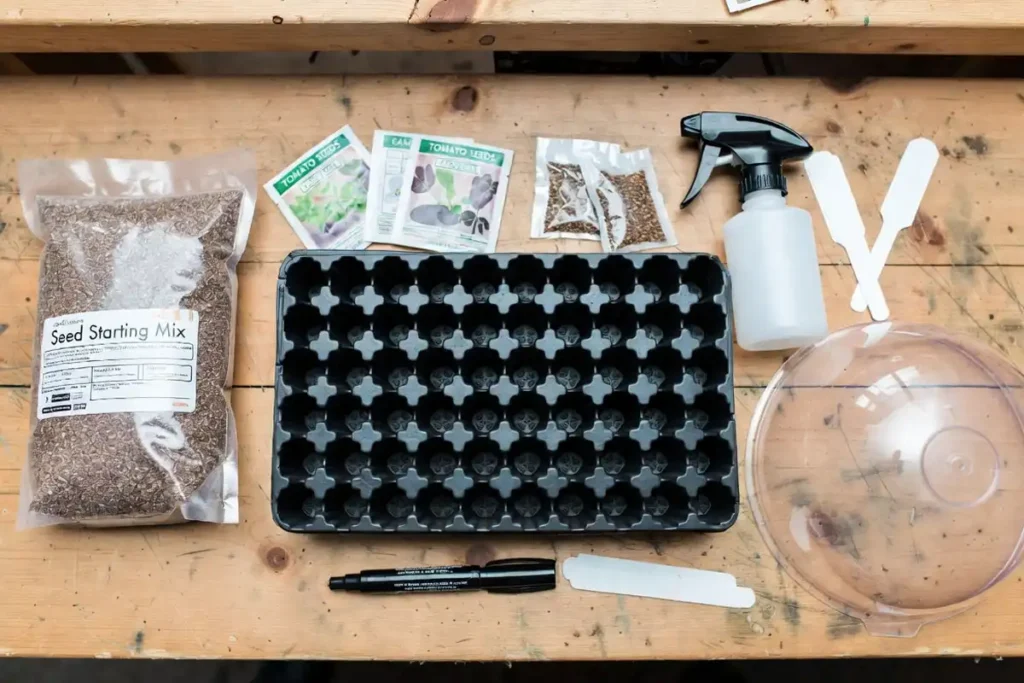
Seed-starting mix is the correct growing medium, not garden soil. Garden soil compacts in confined cells, restricts root growth, and introduces pathogens. Seed-starting mix retains moisture, drains freely, and stays loose enough for small roots to penetrate.
Gather the following before sowing:
- Seed trays or 72-cell plug trays
- Seed-starting mix
- A spray bottle or gentle watering can with a fine rose
- A heat mat (optional but speeds germination)
- Grow lights or a south-facing window
- Plastic humidity domes or plastic wrap
- Plant labels and a permanent marker
How to Plant Tomatoes from Seeds: Step-by-Step
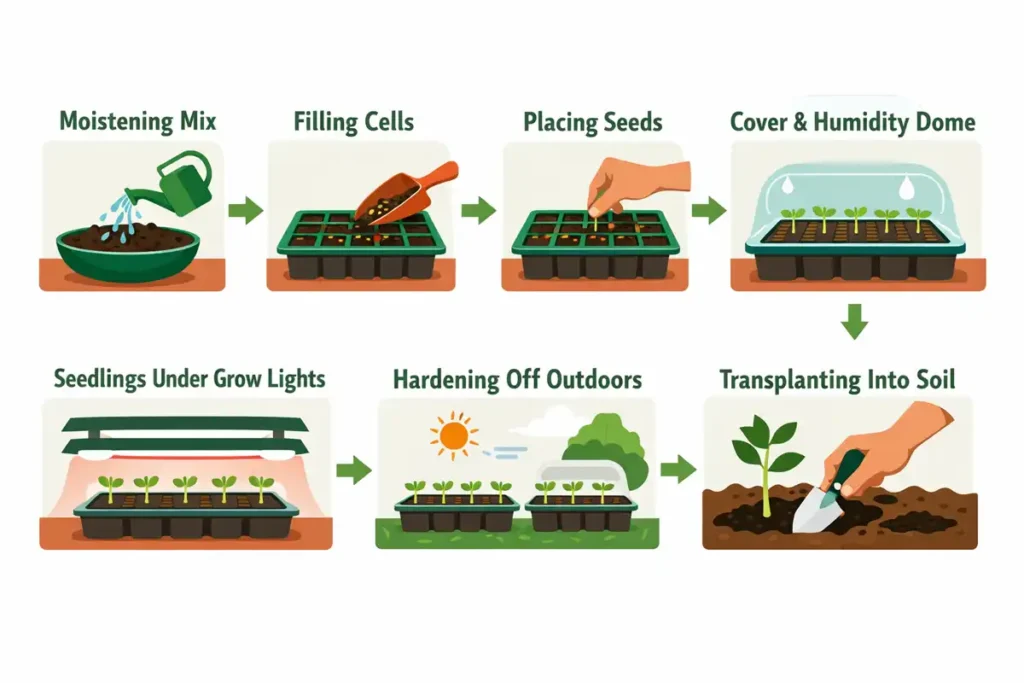
These steps follow the correct order. Each one affects the outcome of the next.
Step 1: Moisten the mix before filling Pour seed-starting mix into a bucket. Add water and mix until the medium feels uniformly damp, like a wrung-out sponge. Dry mix in trays resists water and causes uneven hydration later.
Step 2: Fill the cells Fill each cell to within 1/2 inch of the top. Tap the tray gently to settle the mix. Do not pack it tightly. Compacted mix reduces oxygen around the seeds and slows germination.
Step 3: Sow 2 seeds per cell Place 2 seeds per cell at a depth of 1/4 inch. Cover with mix and press lightly. Two seeds per cell provides a backup if one fails to germinate.
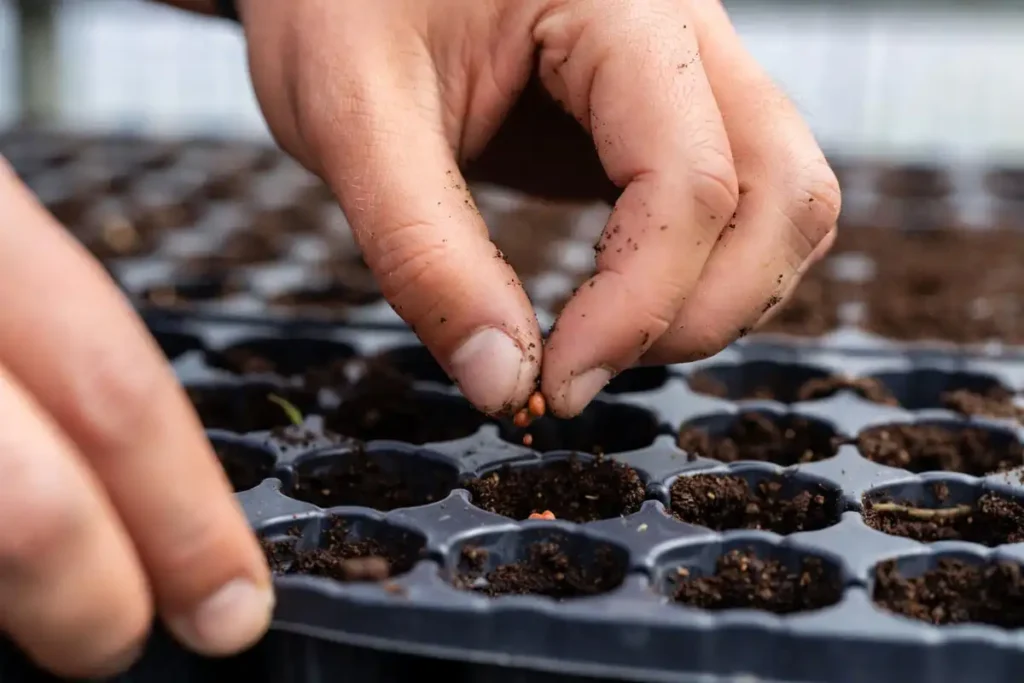
Step 4: Label each tray Write the variety name and sow date on a label and insert it into the tray. Tomato seedlings look identical at this stage. Missing labels cause confusion at transplanting time.
Step 5: Mist the surface Use a spray bottle to mist the top of each cell until visibly moist. Avoid pouring water directly onto the cells, which displaces seeds and creates low spots.
Step 6: Cover and apply heat Place a plastic humidity dome or plastic wrap over the tray. Set the tray on a heat mat or on top of a refrigerator where ambient warmth is available. Tomato seeds germinate at 70°F to 80°F. Below 65°F, germination rate drops and timing becomes unreliable.
Step 7: Check daily and remove the cover after sprouting Check trays once per day. Remove the cover as soon as the first sprouts appear, typically 5 to 10 days after sowing. Keeping the dome on after emergence traps moisture around the stems and promotes fungal disease.
Also learn: How to Grow Tomatoes in Containers: 8 Expert Steps
How Do You Care for Tomato Seedlings After Germination?
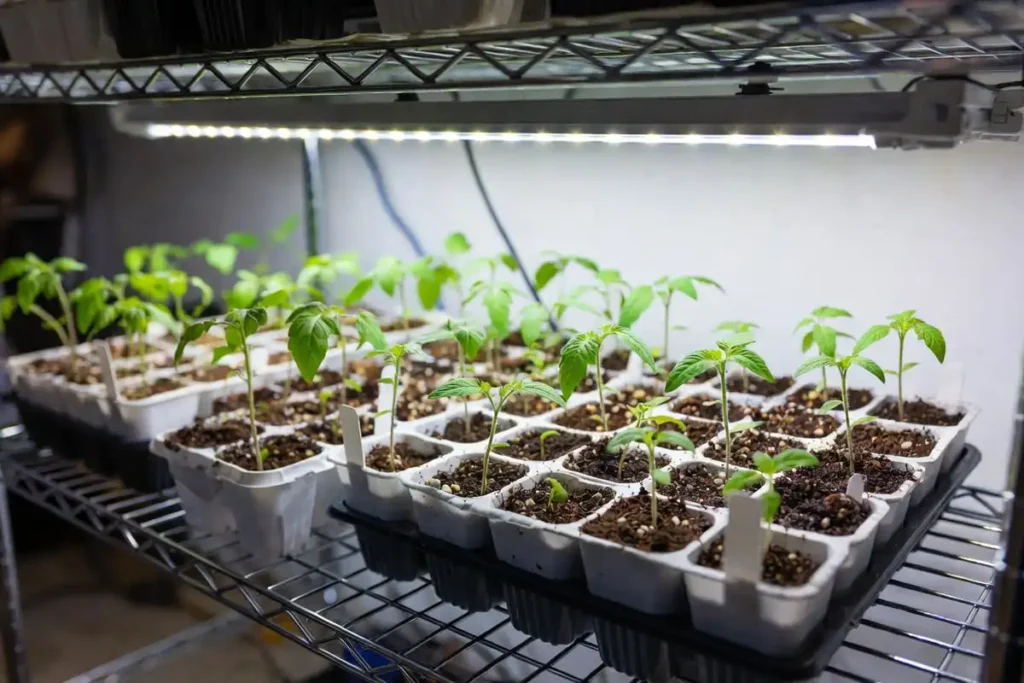
Tomato seedlings need 14 to 16 hours of light per day to develop compact, sturdy stems. A south-facing window provides 6 to 8 hours of natural light in most U.S. climates, which falls short. Position grow lights 2 to 3 inches above the seedling tops and run them on a timer.
Water seedlings when the top surface of the mix feels dry to the touch. Bottom watering works well at this stage. Set the tray in a shallow pan of water for 20 to 30 minutes, allowing the mix to absorb moisture from below. This method delivers water to the roots without wetting the stems.
Wet stems create the conditions for damping off, a fungal disease caused by Pythium and Fusarium species that kills seedlings at the soil line. Reviewing how to manage damping off in seedlings helps a grower recognize symptoms early and respond before losses spread across the tray.
Once each seedling produces its first set of true leaves (the second pair, with tomato-leaf shape), thin to one plant per cell. Cut the weaker seedling at the soil line with scissors. Pulling it out disturbs the roots of the remaining plant.
When Should You Start Fertilizing Tomato Seedlings?
Seed-starting mix contains little to no nutrients by design. Begin feeding once the first true leaves appear. Apply a half-strength balanced liquid fertilizer once per week. Full-strength fertilizer at the seedling stage burns young roots and causes tip damage.
How Does Watering Frequency Change as Seedlings Grow?
Young seedlings in small cells dry out faster than larger plants in open soil. Check moisture levels daily during the first two weeks. As plants grow and root systems expand, water needs increase. Understanding when tomatoes need the most water helps a grower adjust frequency at each stage without over-saturating the medium.
How Do You Harden Off Tomato Transplants?
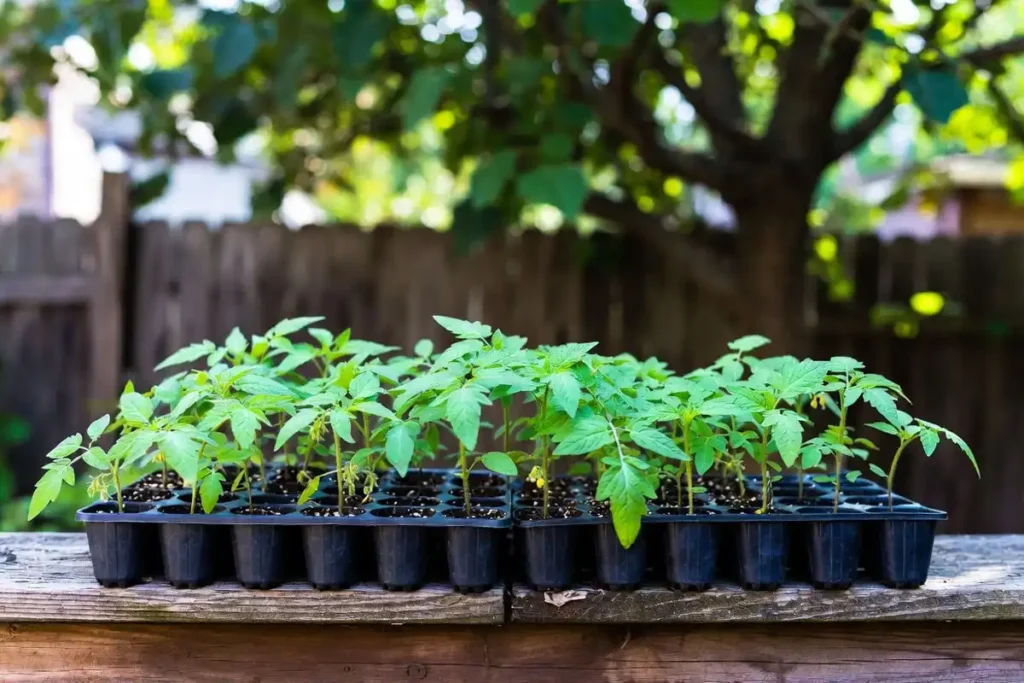
Hardening off conditions indoor seedlings for outdoor exposure. Plants raised indoors develop thin leaf cuticles and limited tolerance for direct sun, wind, and temperature fluctuation. Moving them outdoors without this process causes leaf scorch, wilting, and transplant shock.
Begin the process 7 to 10 days before the planned transplant date. Place seedlings in a sheltered, partially shaded outdoor spot for 1 to 2 hours on day one. Increase outdoor time by 1 to 2 hours each day. By day 7 to 10, seedlings tolerate a full day outside including partial direct sun.
The full process for hardening off tomato transplants before field planting covers timing adjustments for different weather conditions.
When and How Do You Transplant Tomato Seedlings Outdoors?
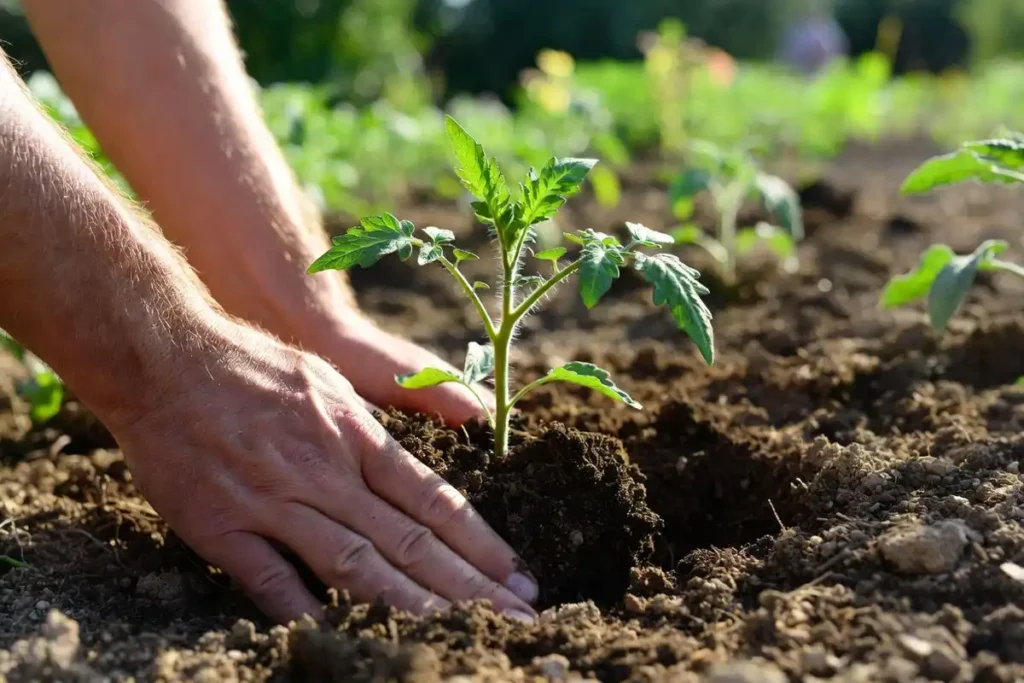
Transplant after the last frost date, once nighttime temperatures stay consistently above 50°F. Planting into cold soil slows root establishment and stresses the plant. A full guide on the correct timing for transplanting tomato seedlings provides date-based guidance by region.
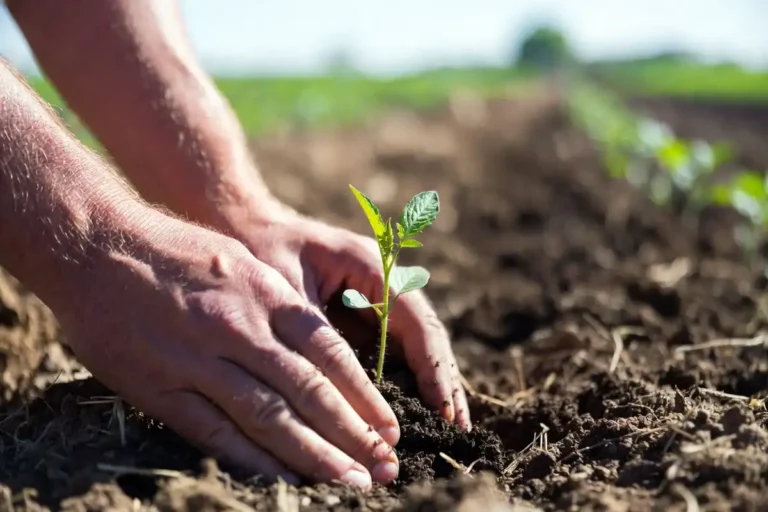
Dig each planting hole deeper than the root ball. Tomatoes produce adventitious roots along any buried stem section, which increases water and nutrient uptake. For leggy seedlings, dig a shallow trench and lay the stem at an angle, burying all but the top 3 to 4 sets of leaves.
Space determinate (bush) varieties 18 to 24 inches apart. Space indeterminate varieties 24 to 36 inches apart. Closer spacing restricts airflow and increases disease pressure.
Water the hole before setting the transplant. Place the plant, fill with soil, firm gently around the base, and water again.
What Are Common Problems When Growing Tomatoes from Seed?
Germination is slow or uneven Soil temperature below 65°F causes delayed and irregular germination. Check medium temperature with a probe thermometer. A heat mat raises medium temperature by 10°F to 20°F above room air temperature.
Seedlings are tall and thin (leggy) Leggy growth indicates insufficient light. Move grow lights to within 2 to 3 inches of the tops. Extend daily light duration to 16 hours. Stems that are already thin benefit from gentle air circulation from a small fan, which stimulates stronger cell development.
Seedlings collapse at the soil line This symptom indicates damping off. Reduce watering frequency immediately. Improve airflow around the trays with a fan set to low. Remove and discard affected seedlings to prevent spread.
Leaves turn yellow Yellowing on lower leaves typically signals nitrogen deficiency. Apply half-strength liquid fertilizer and monitor for improvement within 5 to 7 days.
Seedlings wilt despite moist soil Wilting in wet conditions points to root rot from overwatering. Allow the medium to dry down before watering again. Check that tray drainage holes are clear.
What Mistakes Should You Avoid When Starting Tomatoes from Seed?
Using garden soil in seed trays is the most common error. Garden soil compacts, drains poorly in small containers, and carries pathogens. Seed-starting mix prevents all three problems.
Starting seeds more than 8 weeks before the transplant date produces overgrown, root-bound plants. Root-bound transplants often stall after planting and take longer to produce fruit.
Skipping the hardening-off process causes leaf scorch and wilting after transplanting. The 7 to 10 day hardening process is not optional for plants raised under grow lights.
Watering overhead throughout the seedling stage keeps stems wet and creates entry points for fungal pathogens. Switch to bottom watering once seeds germinate.
Transplanting into cold soil below 55°F slows root growth and delays the entire season. Wait for consistent soil and air temperatures before moving plants outdoors.
Safety Notes
Wear gloves when mixing and handling seed-starting media. Dry perlite and peat particles irritate eyes and airways when airborne. Wet the mix before opening the bag to reduce dust.
Use GFCI-protected electrical outlets for all grow lights and heat mats near water sources. Check power cords regularly for damage from moisture exposure.
When applying liquid fertilizer, follow label dilution rates. Concentrated liquid fertilizers irritate skin and eyes on direct contact. Rinse immediately with clean water if contact occurs.
Conclusion
Planting tomatoes from seed follows a clear, sequential process: select a variety suited to your season, sow at the correct depth and temperature, provide sufficient light, thin to one seedling per cell, feed once true leaves appear, harden off gradually, and transplant after frost risk has passed. Each stage prepares the plant for the next. The result is a transplant with a strong root system and the resilience to establish quickly in the field.