What to Plant With Tomatoes in a Raised Bed for Better Yields
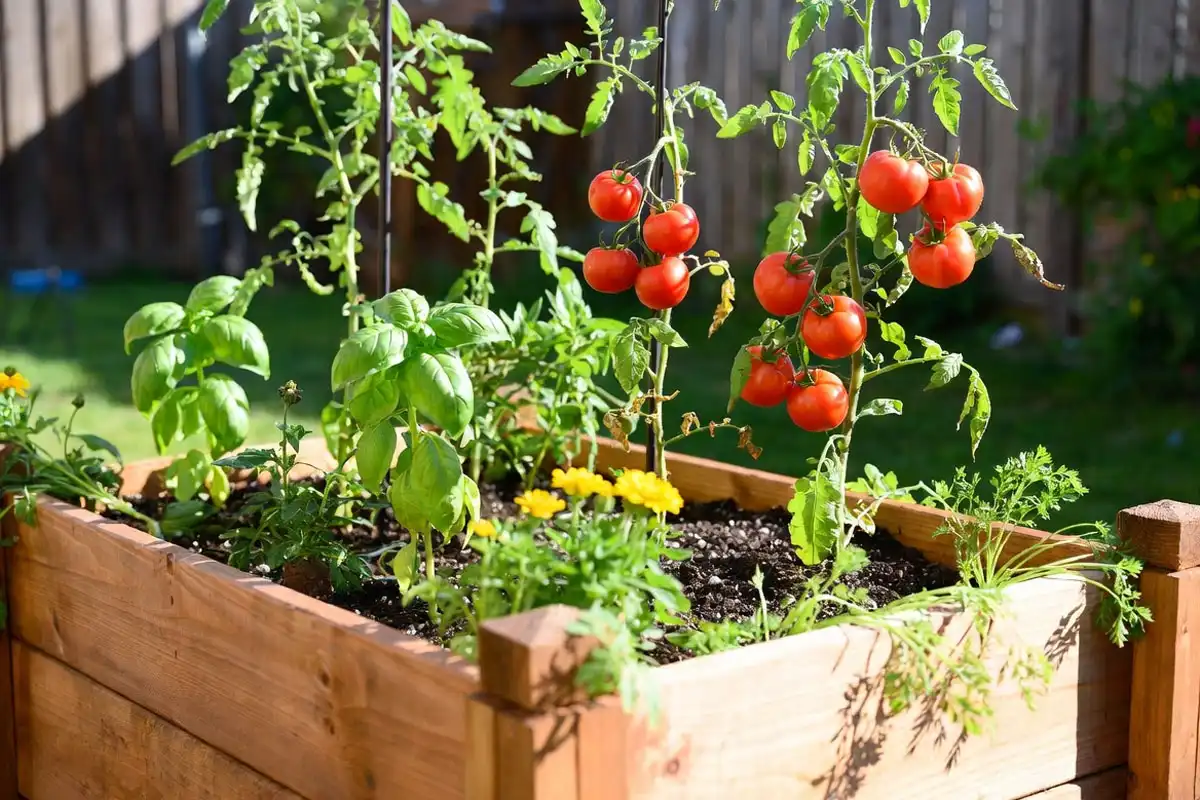
Basil, marigolds, carrots, garlic, and nasturtiums are the best companion plants to plant with tomatoes in a raised bed. This guide covers which plants improve tomato health, repel pests, or fill bed space efficiently, which plants cause problems, how to arrange companions by bed size, and what mistakes reduce results. Use it from transplant day through final harvest to build a productive raised bed combination.
To plant with tomatoes in a raised bed, choose basil, marigolds, carrots, garlic, nasturtiums, borage, and parsley as your best companions. Each plant delivers a specific benefit: pest repulsion, soil improvement, pollinator attraction, or space efficiency. Avoid fennel, brassicas, potatoes, and corn. They inhibit tomato growth, spread shared disease, or attract pests that damage tomato fruit.
Which Plants Grow Best With Tomatoes in a Raised Bed?
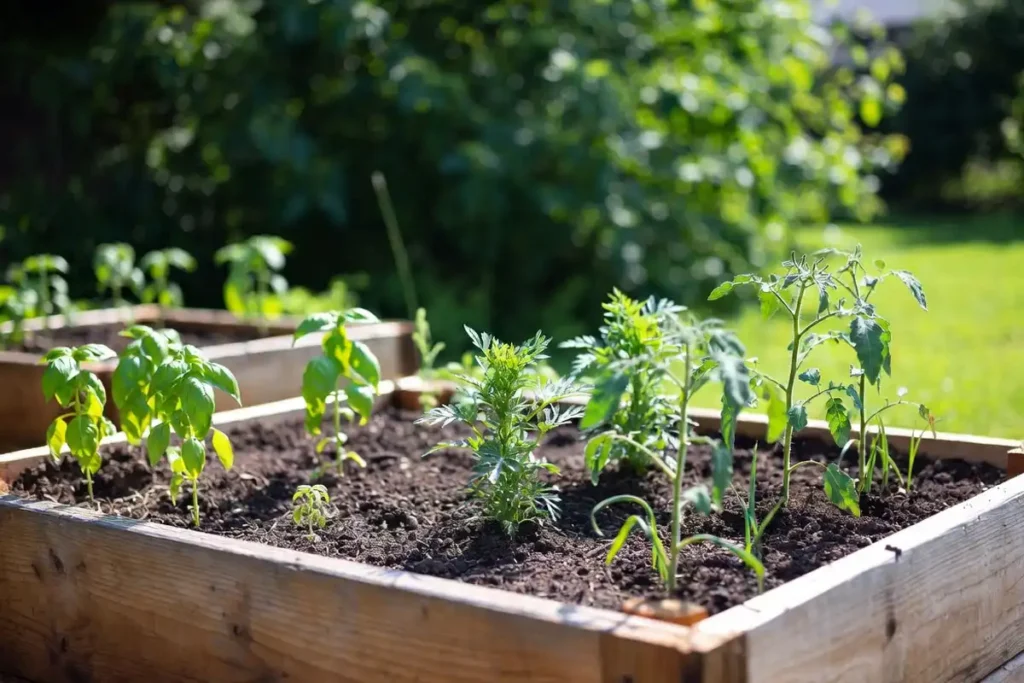
Marigolds, Basil, carrots, garlic, nasturtiums, borage, and parsley each offer specific benefits without competing heavily for the tomato plant’s nutrients.
Basil
Basil produces volatile compounds that repel aphids, spider mites, and whiteflies. It grows 12 to 18 inches tall and fits between tomato plants without crowding roots. Plant basil 10 to 12 inches from each tomato stem.
Marigolds
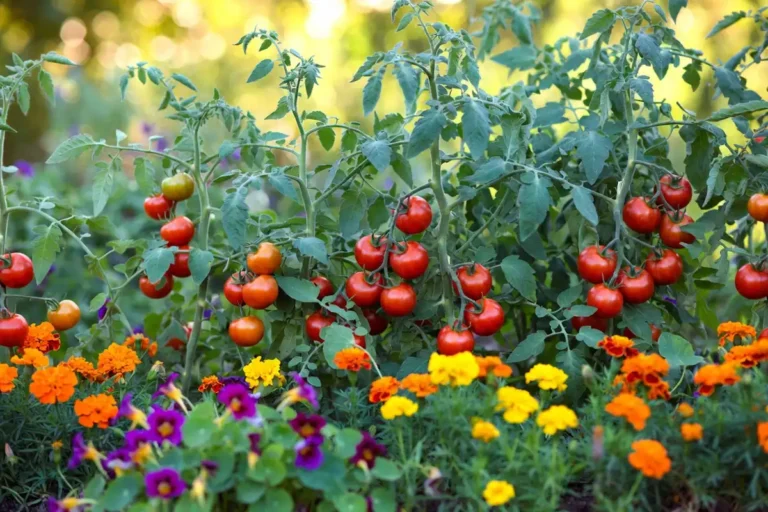
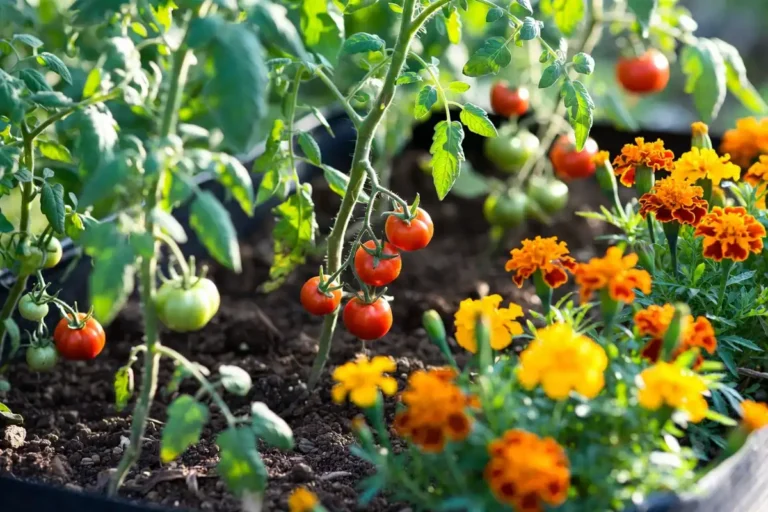
French marigolds (Tagetes patula) release alpha-terthienyl from their roots. This compound reduces soil nematode populations. Space them 6 to 8 inches apart along the raised bed perimeter. African marigold varieties provide less nematode suppression than the French type.
Garlic
Garlic produces allicin, a sulfur compound that reduces fungal spore germination near tomato roots. Plant garlic cloves 4 to 6 inches from the tomato root zone. For details on how onions grown alongside tomatoes perform, that page covers spacing and compatibility directly.
Carrots
Carrots loosen compacted soil as their taproots grow downward. This process improves drainage and aeration around tomato roots. Direct-sow carrot seeds 3 to 4 inches from tomato stems after transplanting.
Nasturtiums
Nasturtiums attract aphids away from tomatoes, acting as a trap crop. They also draw hoverflies, which feed on aphid colonies. Plant them at the corners or outer edges of the raised bed to intercept pests before they reach tomato foliage.
Borage
Borage attracts bumblebees, which increase tomato fruit set through vibration pollination. It also repels tomato hornworms. Plant one borage plant per 4×4-foot bed section.
Parsley
Parsley attracts predatory wasps that feed on caterpillars and aphids. It stays compact and grows well in 6-inch gaps between tomatoes. Flat-leaf parsley performs better in tight raised bed spaces than curly varieties due to its smaller spread.
Learn more: Plant Tomatoes from Seeds and Grow Healthy Transplants
What Plants Cause Problems Near Tomatoes?
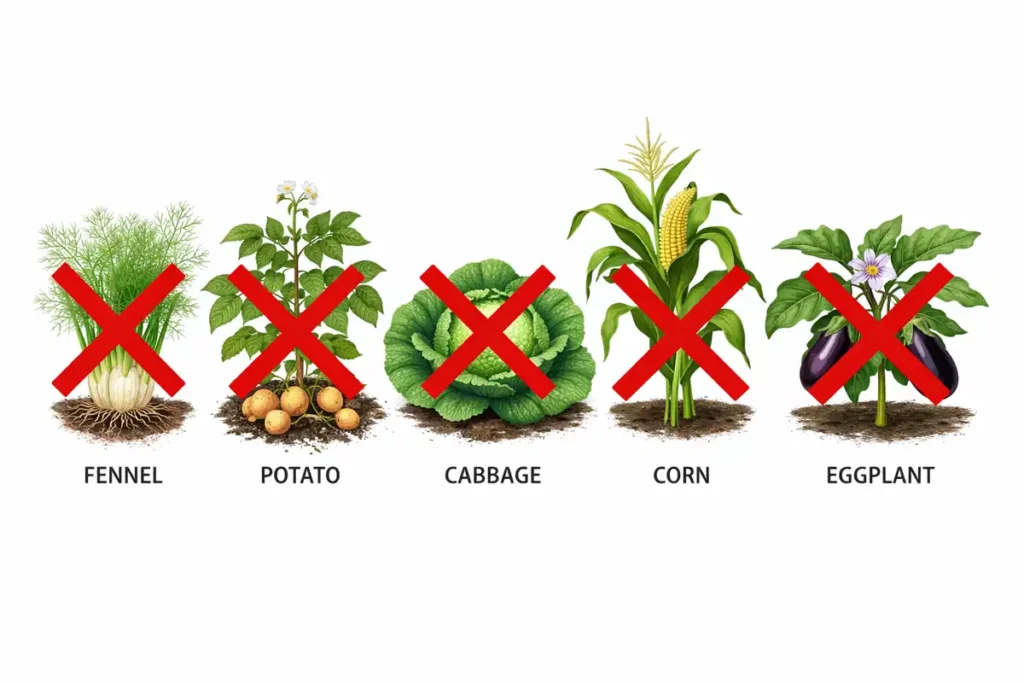
Several plants inhibit tomato growth, share diseases, or concentrate pests when planted in the same raised bed.
Fennel produces allelopathic compounds that suppress tomato root development. Keep fennel at least 3 feet from any tomato planting.
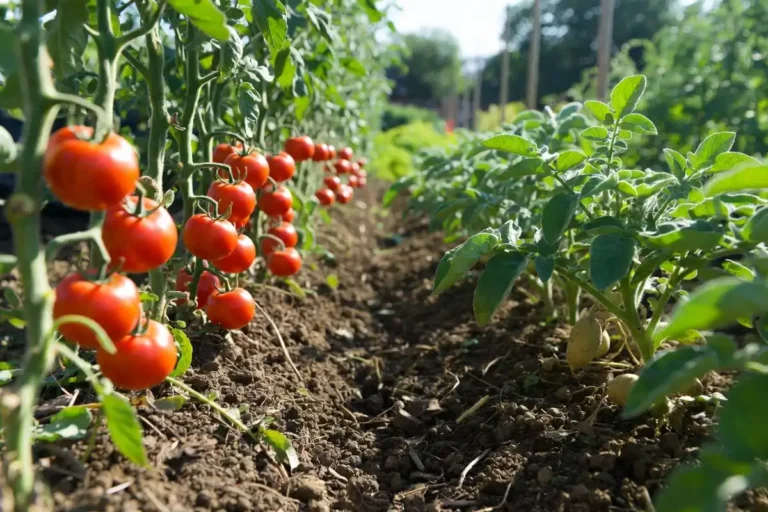
Potatoes belong to the same Solanaceae family as tomatoes. Both plants are vulnerable to early blight (Alternaria solani) and late blight (Phytophthora infestans). Planting them together accelerates disease spread across both crops.
Brassicas — broccoli, cabbage, cauliflower, and kale — compete heavily for calcium. Calcium competition between brassicas and tomatoes increases the risk of blossom end rot in tomatoes.
Corn attracts the corn earworm (Helicoverpa zea), an insect that also damages tomato fruit. Do not plant corn adjacent to tomatoes in the same bed or a neighboring bed.
Eggplant and peppers share the same family and identical pest and disease vulnerabilities as tomatoes. Grouping all three in one raised bed concentrates disease pressure. Separate Solanaceae crops across different beds when space allows.
Know more: Plant With Tomatoes to Keep Bugs Away Without Chemical Sprays
When Do You Plant Companions With Tomatoes?
Set out basil, marigolds, nasturtiums, and borage the same week you transplant tomatoes, after the last frost date has passed. For tomato transplant timing by region, that page provides specific date ranges based on climate zones.
Garlic planted in fall produces bulbs in spring. To plant garlic alongside spring tomatoes, use transplant starts rather than cloves. Cloves planted in spring deliver minimal bulb size by summer.
Carrot seeds take 10 to 14 days to germinate. Sow them 1 to 2 weeks before transplanting tomatoes so both crops establish at a similar rate.
How Do You Arrange Companions in a Raised Bed?
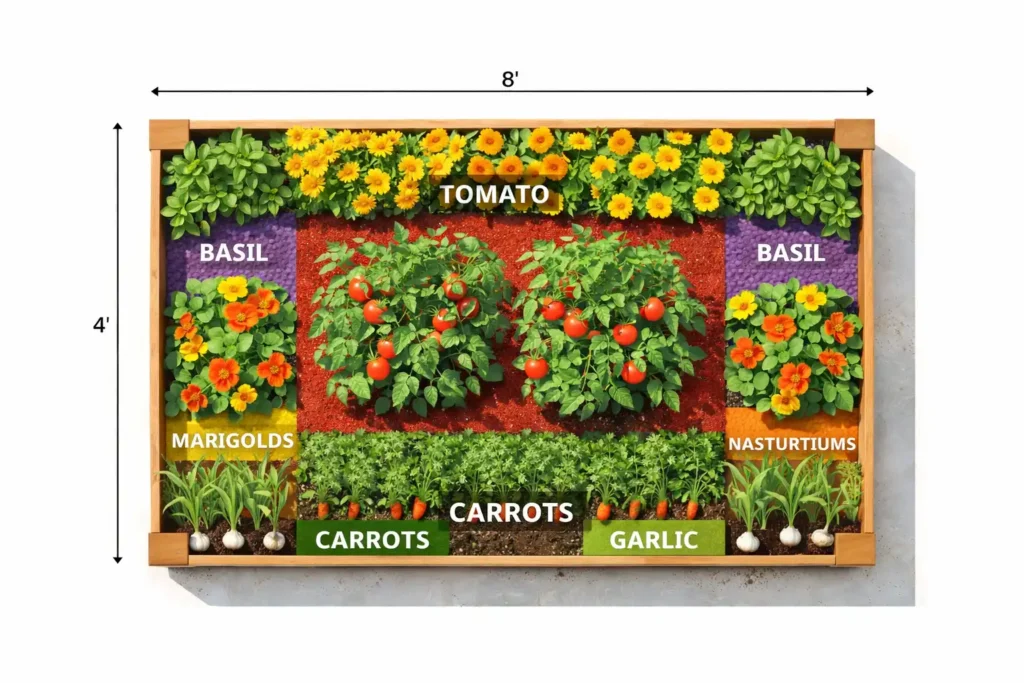
Bed dimensions determine how many companions fit alongside tomatoes without causing competition. Follow correct plant spacing guidelines to prevent overcrowding, which reduces airflow and increases disease risk.
4×8-Foot Raised Bed
Place 2 tomato plants in the center, 24 to 36 inches apart. Plant basil in the gaps between the two tomatoes. Line the short ends of the bed with marigolds or nasturtiums. Fill remaining perimeter spaces with garlic cloves or carrot seeds.
4×4-Foot Raised Bed
Plant 1 tomato in the center. Surround it with basil on 2 sides and marigolds or nasturtiums on the remaining 2 sides.
Vertical Arrangement
Position tall companions on the north side of the bed. This placement prevents them from shading shorter plants during the growing season. Staking or caging tomatoes vertically frees significant horizontal space for low-growing companions, including basil, garlic, and carrots.
Does Mulching Help When Growing Companions With Tomatoes?
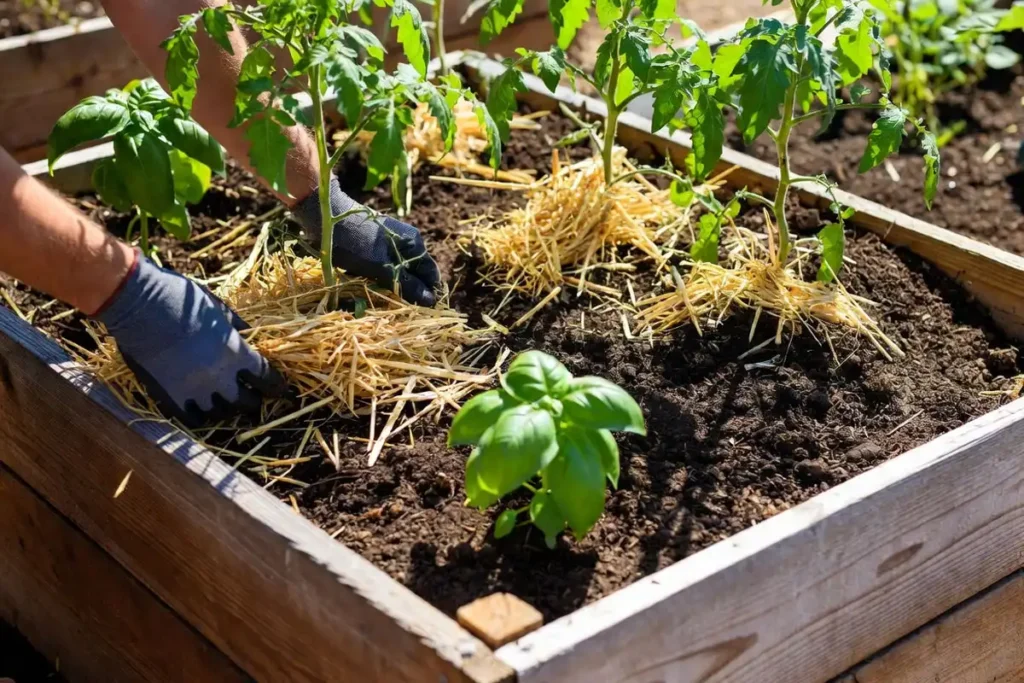
Mulch stabilizes soil moisture and reduces weed competition between companion plants and tomatoes. Apply 2 to 3 inches of straw or wood chip mulch around all plants after transplanting. Keep mulch 2 inches away from tomato stems to reduce stem rot risk. For full application methods, the guide on mulching around your bed covers materials and timing in detail.
What Are the Most Common Companion Planting Mistakes?
Planting companions too close to the tomato stem. Basil placed within 6 inches of a tomato stem competes directly for water and nutrients. Maintain a 10-inch minimum gap.
Overplanting the bed. Adding more than 3 companion species per raised bed reduces airflow between plants. Low airflow increases early blight risk on tomato foliage.
Treating companions as the only pest strategy. Companions reduce pest pressure but do not eliminate it. Combine companion planting with natural pest control methods for consistent results across the season.
Ignoring vertical growth. Tomatoes grow 4 to 6 feet tall in a raised bed. Unpruned or unsupported plants shade low-growing companions and cut their productivity. Train tomatoes upward from early in the season.
Conclusion
Basil, marigolds, carrots, garlic, nasturtiums, borage, and parsley each provide a measurable benefit to tomatoes in a raised bed. Keep companions correctly spaced, avoid fennel, brassicas, potatoes, and corn, and train tomatoes vertically to maintain light access for every plant in the bed. Apply these combinations at transplant time and your raised bed produces more fruit with fewer pest and disease problems.