Can You Plant Lettuce and Carrots Together in One Bed? (2026)
Tight garden space pushes a lot of growers to pair crops. So can you plant lettuce and carrots together? Yes, and it is one of the smartest combinations you can run in a cool-season bed.
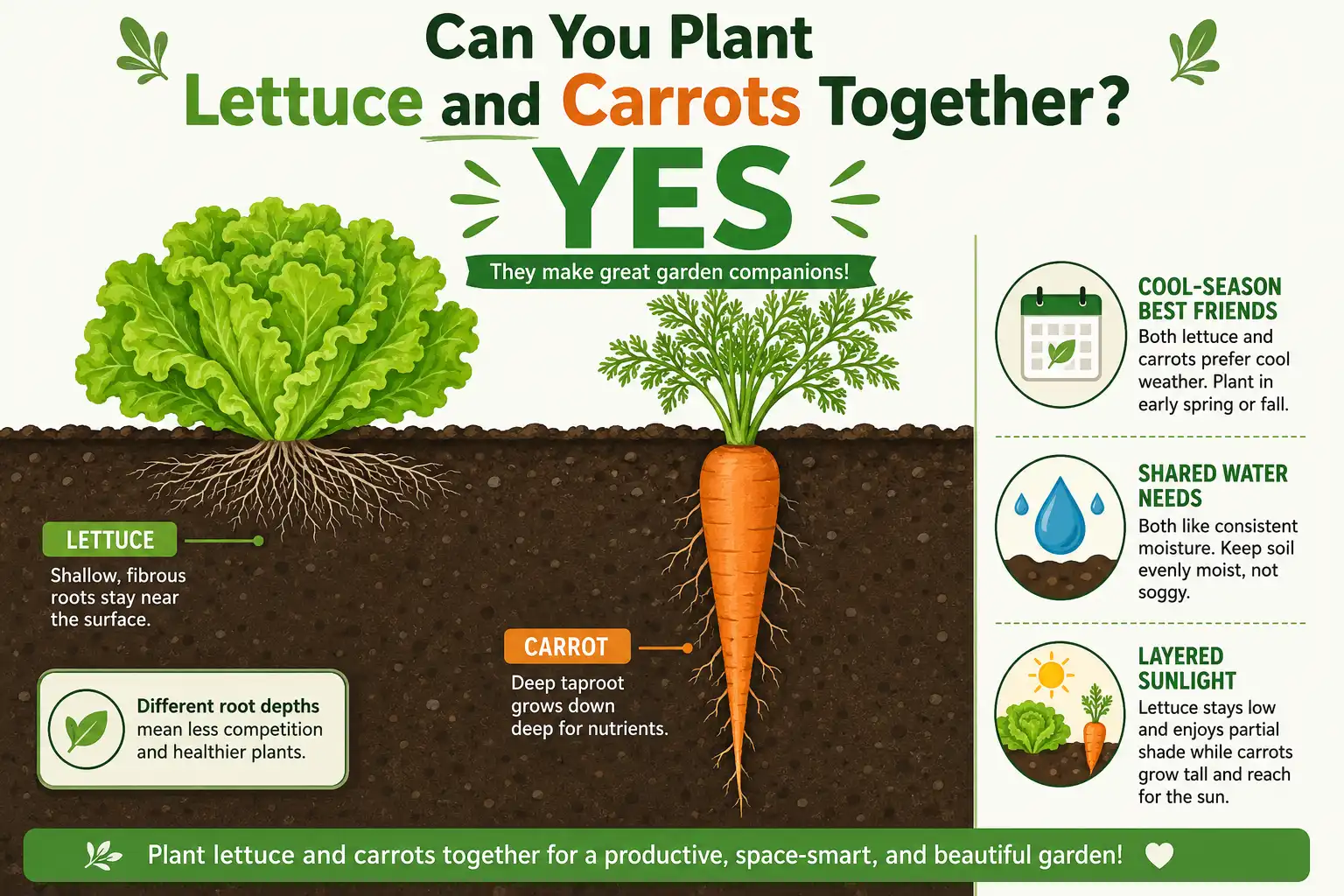
Yes, you can plant lettuce and carrots together with no trouble. Lettuce keeps its roots shallow while carrots push a taproot down deep. They share a bed without fighting for root space or light.
Why Lettuce and Carrots Make Good Neighbors
These two crops work well together because they use different layers of the same bed. Carrots grow straight down. Lettuce spreads out and stays near the surface. So they almost never reach for the same root space.
Carrots want eight to twelve inches of loose, stone-free soil so the taproot runs straight. Getting the depth carrots need below ground right is half the battle for clean, unforked roots. Lettuce, on the other side, keeps a shallow, fibrous root mat in the top few inches. Because the two root zones sit at different depths, neither crop robs the other.
Light shakes out the same way. Carrot tops are thin and feathery. They throw almost no shade. Lettuce sits low and wide right underneath. That layered setup lets sunlight reach both crops at once.
Timing helps too. Both are cool-season vegetables, so they want the same stretch of mild weather. In USDA hardiness zone 6a around Topeka, that means early spring and again in fall. University of Maryland Extension lists carrots and lettuce as cool-weather crops that struggle in summer heat. That matches what to see on the own beds.
Also learn: Plant Tomatoes and Carrots Together
How to Plant Lettuce and Carrots Together
Start by working the soil deep and loose for the carrots. Dig down about a foot and pull out rocks and clods. A clean seedbed is what gives me straight roots. Rake the top smooth for the fine carrot seed.
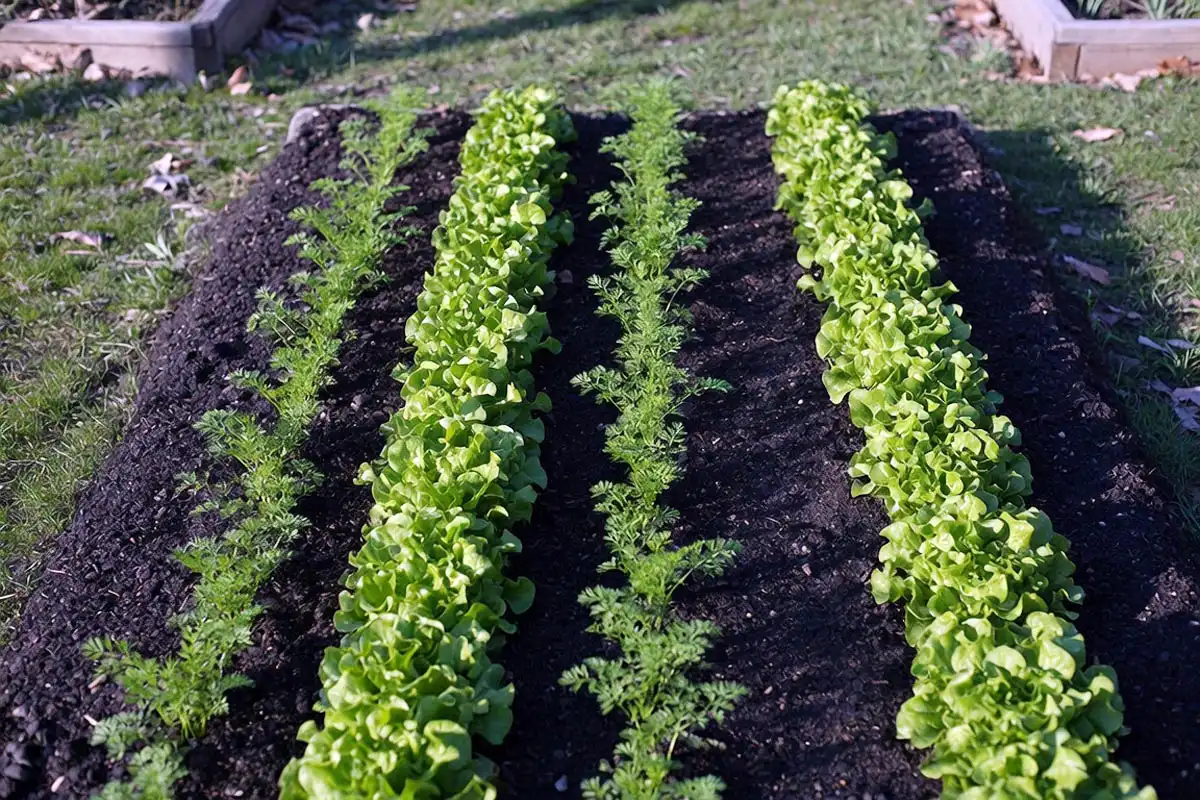
Sow your carrots in rows first. Drop the seed about a quarter inch deep and keep the spacing thin. Carrots are slow to wake up. So tuck radishes in with carrots, or dropping a few lettuce seeds right in the row as a marker, is a common approach. Those fast sprouters show me where the carrot rows sit before the carrots break ground.
Plant the lettuce next, in the strips between the carrot rows. Leaf lettuce and butterhead types fit best because they stay compact. You can broadcast a thin band or set transplants. Either way, keep the lettuce a few inches off the carrot row. That way the greens do not smother the young carrot tops.
Keep the whole bed evenly moist until everything is up. Carrot seed will not germinate in dry soil, and the lettuce seedlings nearby want the same steady moisture. That shared watering schedule is one more reason the pairing is easy to manage.
How Far Apart Should You Space Lettuce and Carrots?
Leave about 3 to 6 inches between your carrots and your lettuce. That gap gives the lettuce room to fan out while the carrot tops fill in above their roots. Lettuce is a light feeder with shallow roots. So you can crowd it closer to carrots than almost any other companion.
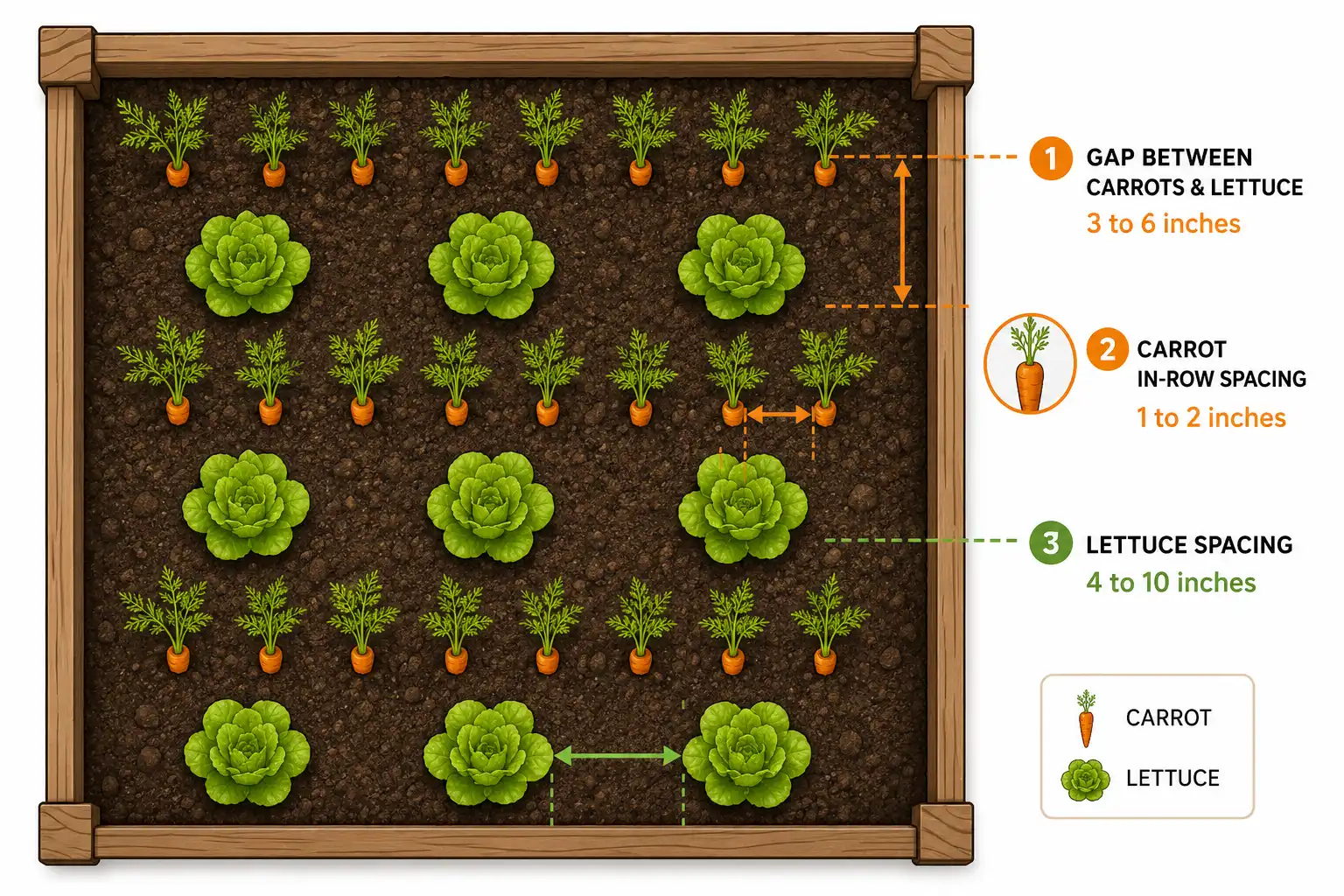
For the carrots themselves, thin to one to two inches apart in the row. For lettuce, run 4 to 10 inches apart depending on the type. You can fine-tune spacing lettuce in rows and beds for the variety you grow. Leaf types take less room. Head types like a crisphead need more.
Do Lettuce and Carrots Compete for Nutrients or Water?
No, not in any way that hurts your harvest. Lettuce is a light feeder, and its shallow roots pull from the top layer of soil. Carrots feed lower down and do not want heavy nitrogen anyway, which would push leafy tops over good roots. So their feeding zones barely overlap.
You share water across the bed, and that works in your favor. Both crops like steady, even moisture. So you water once and serve both. The only watch-out is drainage. Keep good drainage so the carrot roots do not rot in soggy ground.
When Should You Plant Them Together?
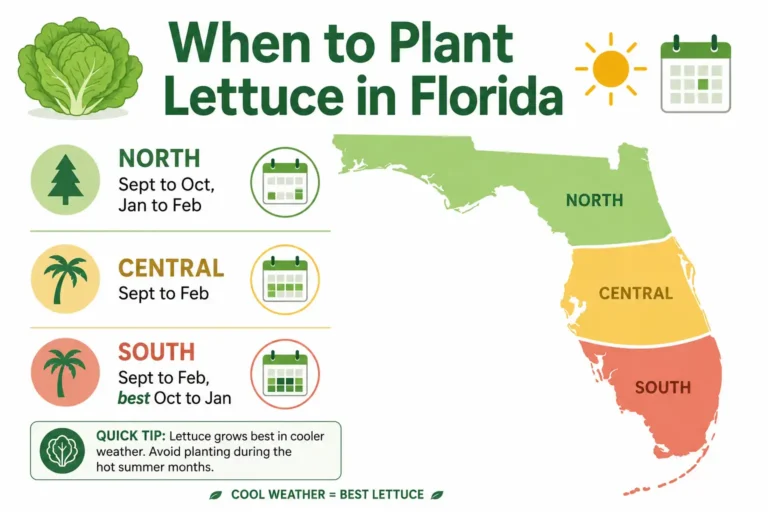
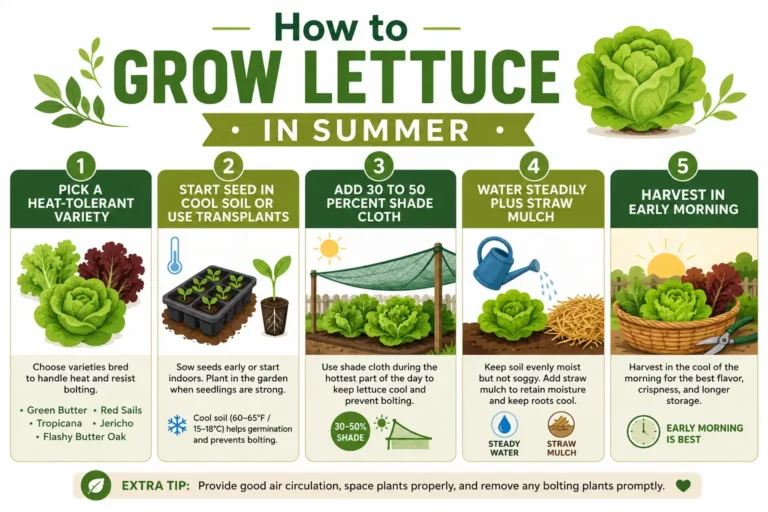
Plant them together in the cool windows of spring and fall. Lettuce and carrots both germinate in cool soil and grow best between about 60 and 70°F. Once the heat of midsummer rolls in, lettuce bolts and turns bitter, and carrot roots can go woody.
In Kansas, the first round typically gets sown two to three weeks before the last spring frost. Plant a second round in late summer for a fall harvest. That is the favorite of the two. Cool fall nights make for the sweetest carrots and the crispest lettuce of the year.
Does Lettuce Help Carrots Fight Pests?
A little, but do not count on it as your main defense. The real reason to grow lettuce with carrots is space and timing, not heavy pest control. Some growers report that mixing crops breaks up the solid block of one plant that pests hunt for. That diversity can help, though the effect is mild.
If pest pressure is your worry, the better-known trick is adding onions next to carrots. Many growers think the onion smell throws off the carrot rust fly. Lettuce does not bring that kind of scent. Treat it as a space partner first and a pest helper second.
Harvesting Lettuce Before the Carrots Fill In
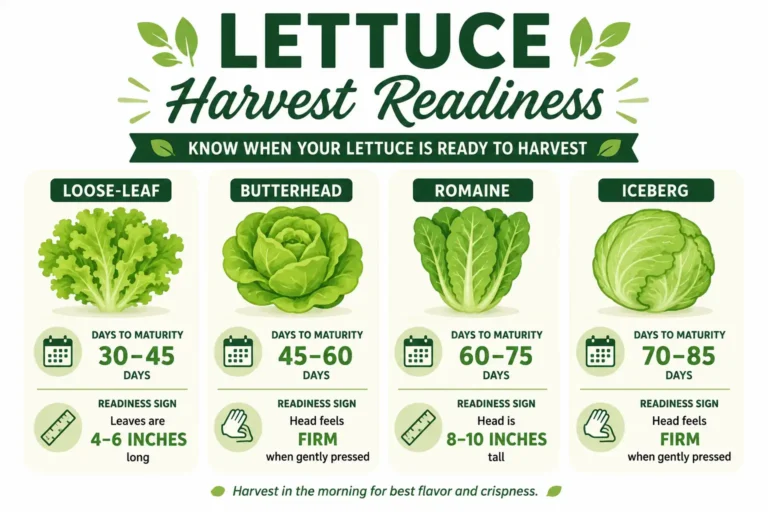
Pull your lettuce first, because it finishes long before the carrots do. Leaf lettuce is ready in about 40 to 50 days. Clemson Extension notes head lettuce can come off as early as 55 days. Many carrots need 65 to 80 days to size up. So the lettuce comes out of the bed right as the carrots start needing the extra room.
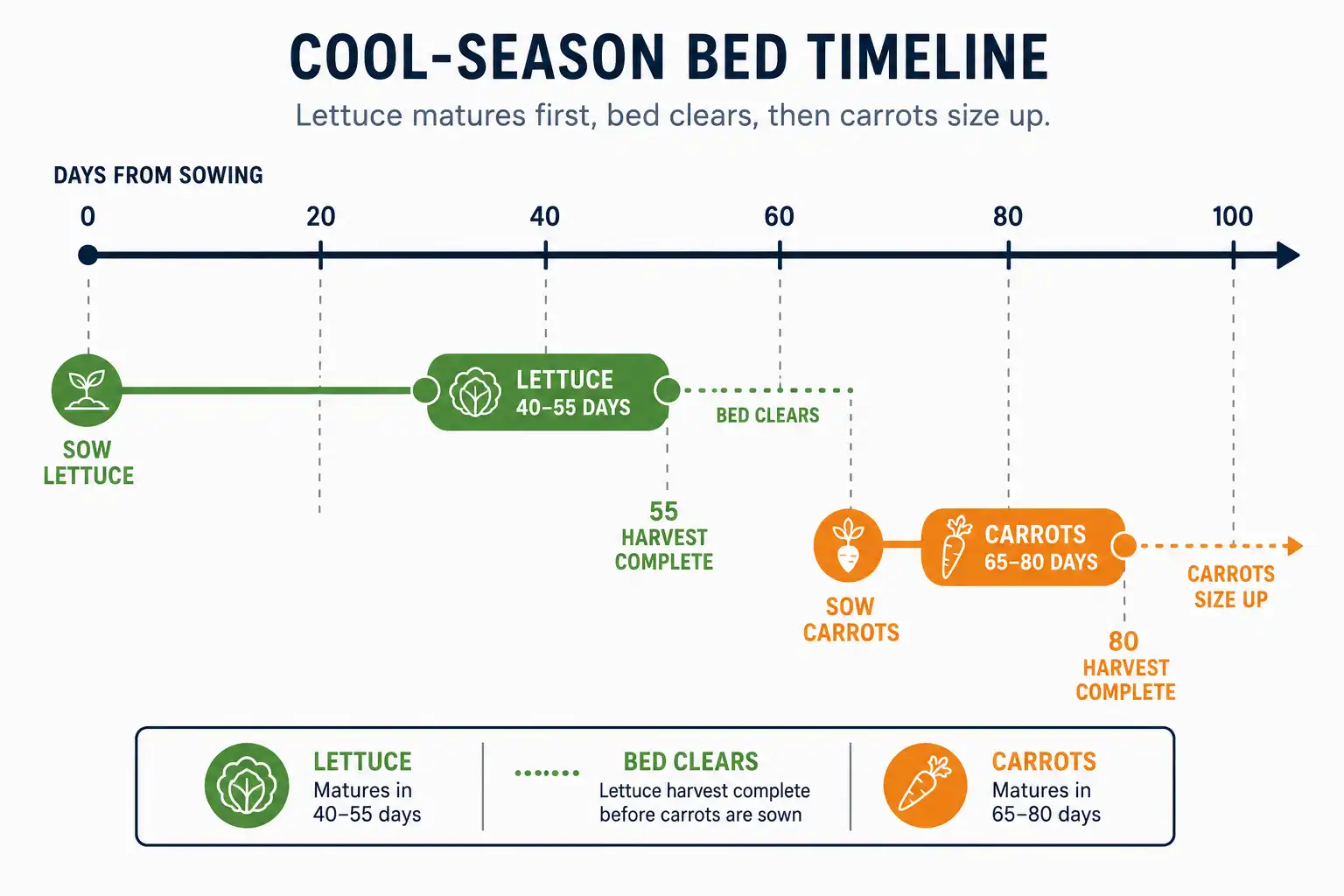
That staggered timing is the whole beauty of the pairing. You get a fast salad crop and a slower root crop from the same square footage. As you harvest lettuce, the open space lets the carrot tops spread and the roots bulk up. Once the carrots are a couple inches tall, thin them. Knowing the right time for thinning the carrot seedlings keeps the roots from crowding into forks.
A Few Mistakes to Avoid
Do not let the lettuce shade out the carrot row. Carrots want six or more hours of sun. So keep the greens in the strips between rows, not on top of them. Crowding is the number one thing that trips up new growers here.
Watch the heat as spring turns warm. Late in the season, lettuce feels the stress first. Since lettuce takes light shade better than most greens, the carrot tops give it some cover. That cover helps during the hottest part of the day. Still, once daytime highs push past the low 80s, pull the last lettuce. Let the carrots finish on their own.
One more thing. Skip heavy nitrogen fertilizer. It grows lush lettuce and leafy carrot tops, but it leaves you with skinny carrot roots. A balanced soil with good compost is all this bed needs.
Final Thoughts
Lettuce and carrots are one of the easiest combinations. The shallow lettuce roots and the deep carrot taproot split the bed cleanly. The cool-season timing lines up. And the fast lettuce clears out right when the carrots want the room. Start them in spring or fall. Keep 3 to 6 inches between the two, water evenly, and pull the lettuce as it matures. Do that, and you get two crops from one bed with almost no extra work.