How to Save Seeds From Lettuce and Get Free Plants Next Year
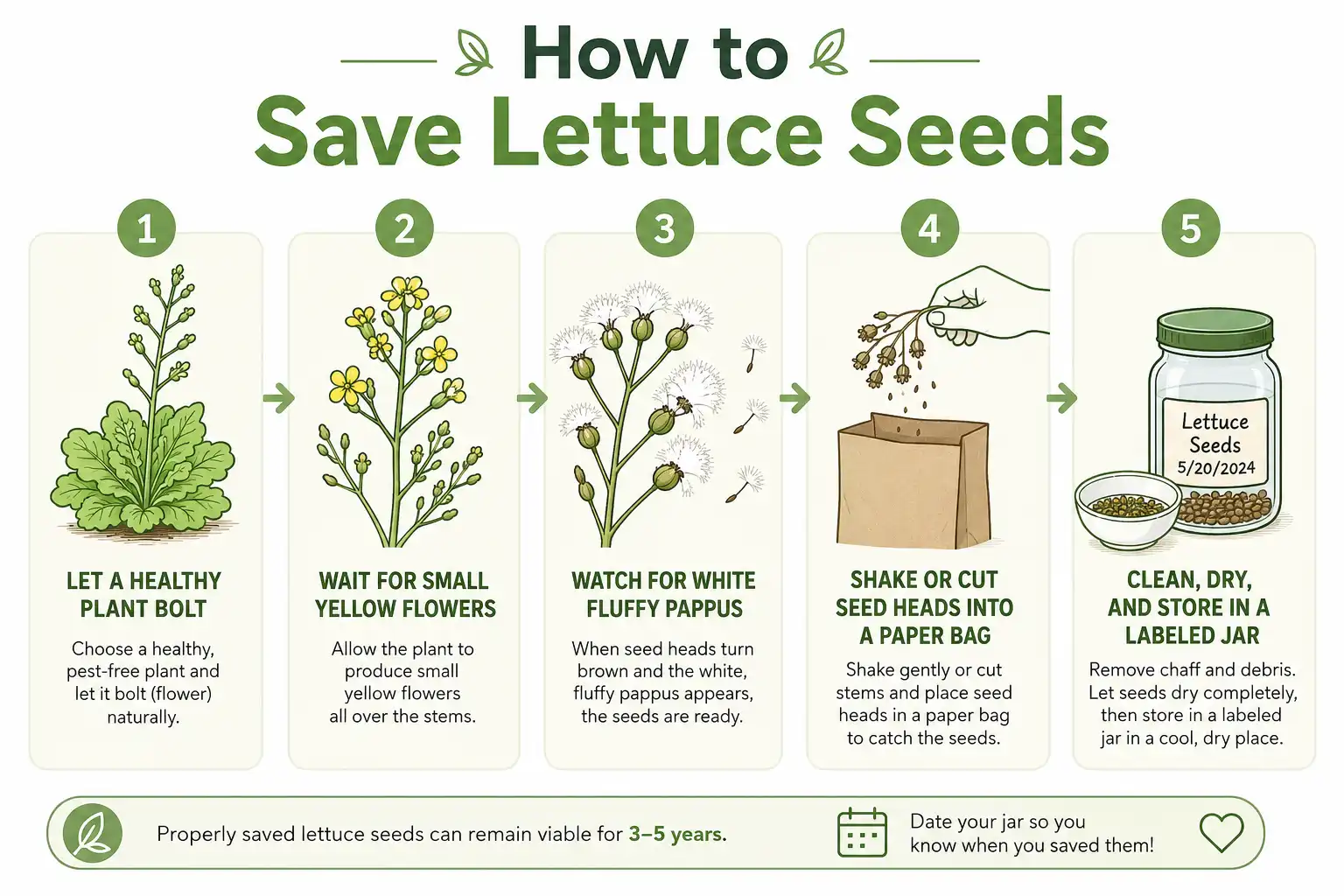
Learning how to save seeds from lettuce takes one season and almost no special gear. Lettuce pollinates itself, so your saved seed comes back true to the parent plant. You let a few healthy plants bolt, flower, and dry down. Then you collect the seed.
To save lettuce seed, let a healthy plant bolt and flower. Wait two to three weeks, until each head shows white fluff. Then shake or cut the seed heads into a bag, dry them, and rub the seed free.
Why Lettuce Is One of the Easiest Seeds to Save
Lettuce is easy to save because it pollinates itself and stays true to type. Garden lettuce (Lactuca sativa) sits in the Asteraceae family, the same group as dandelions and sunflowers. Each tiny flower carries both male and female parts. The flower pollinates itself before it even opens, so pollen barely moves between plants.
That self-pollination is why your saved seed grows back like the parent, season after season. You do not need bees, hand-pollination, or wide spacing. Lettuce is also an annual, so it flowers, sets seed, and finishes in one year. You get seed the same season you plant. A single plant can produce over a thousand seeds. If you want the botany behind the way lettuce reproducesour guide covers that in a separate post.
Which Lettuce Plants Should You Save Seed From?
Save seed from your healthiest, best-tasting plants that hold the traits you want. Pick the ones with good flavor, strong color, and clean leaves. If you want heat tolerance, skip any plant that bolts too early and save from the ones that hold the longest. Skip sick plants too. Lettuce mosaic virus and other diseases can ride along on seed, so save from a plant that looks off.
One thing matters more than all of this: only save from open-pollinated or heirloom lettuce. Hybrid seed will not come back true. If your packet said F1, the seed you save scatters into mixed, unpredictable types next year. For the details on heirloom and hybrid seeds read this breakdown before you choose a plant.
For home use, one plant gives you more seed than you can plant in years. To keep a variety strong over many seasons, Seed Savers Exchange suggests saving from 5 to 10 plants. For a rare variety you want to preserve long-term, save from about 20. Saving from several plants keeps the genetics healthy and avoids weak, inbred lines.
How Do You Get Lettuce to Bolt and Flower?
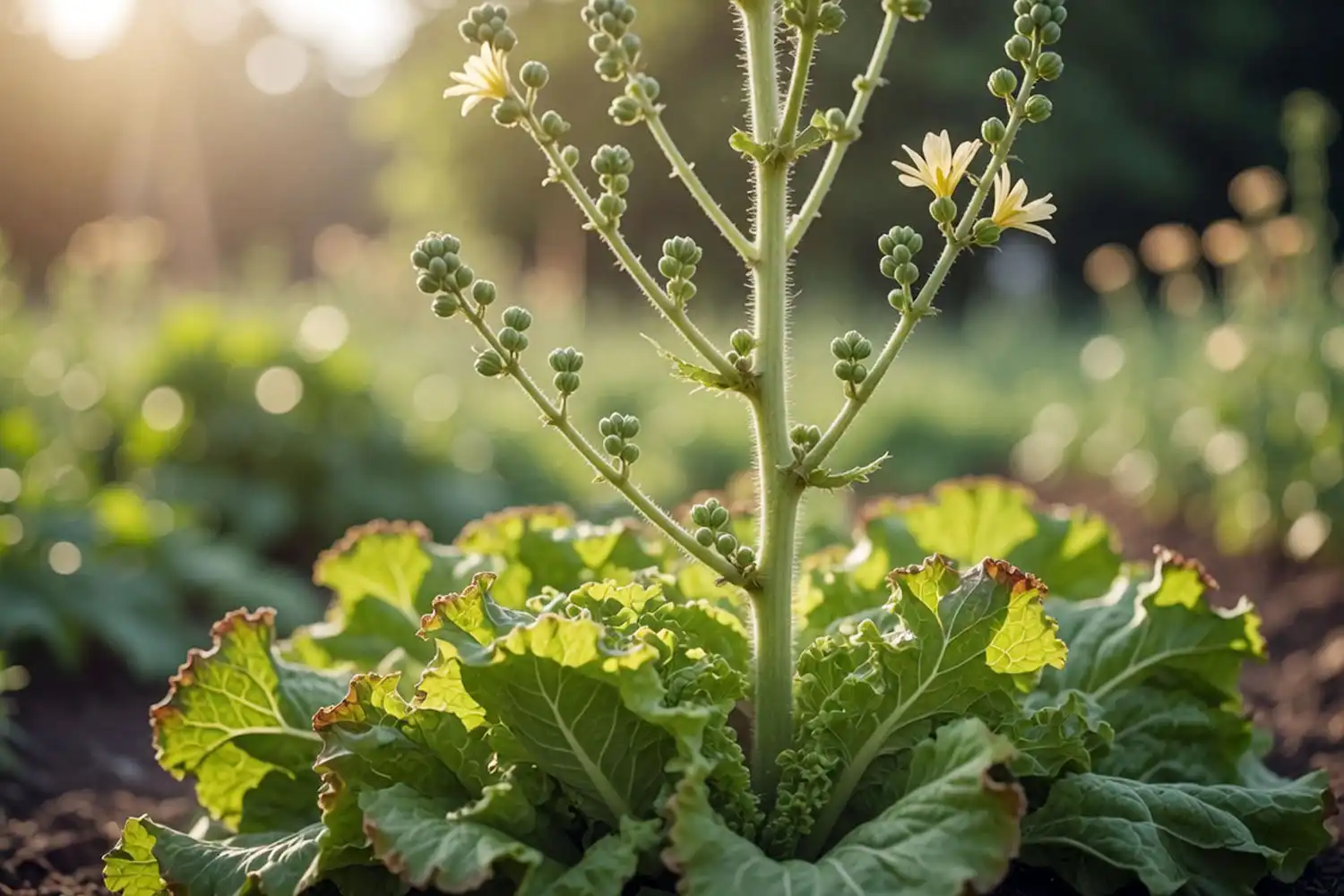
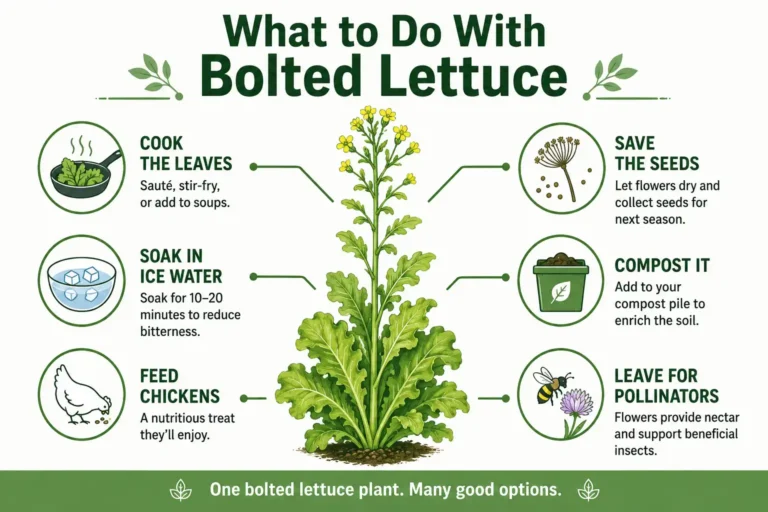
Lettuce bolts on its own once summer heat and long days arrive. Stop harvesting the plant you picked for seed and let it grow past the eating stage. As temperatures climb into the 80s°F and the days get longer, the plant sends up a tall central stalk. That stalk is the bolt. In USDA zone 6a, spring lettuce usually bolts by late June or July. The stalk then branches and forms dozens of small flower buds.
Heading types need a little help sometimes. Crisphead and iceberg lettuce form a tight ball of leaves, and that ball can be too dense for the stalk to push through. If it stalls, cut a shallow X across the top of the head with a clean knife. That lets the seed stalk break free.
Normally, working to keep romaine from bolting extends the cutting window. For seed, the opposite is the goal. Let one or two plants run straight to flower
What Do Lettuce Flowers and Seeds Look Like?
Lettuce flowers look like tiny pale-yellow dandelions, and the seeds form right below them. Each flower head is small, about a quarter inch wide, with thin yellow petals. The flowers open for only a few hours in the morning, then close. They do not all open at once either. A few open at a time across the branched stalk over two to four weeks.
After a flower closes and pollinates, the seed forms at its base. Then the head dries and reopens as a small puff of white or gray fluff. Botanists call that fluff the pappus, and it works like a dandelion parachute to carry seed on the wind. Each lettuce seed is narrow, ribbed, and roughly an eighth of an inch long. The color runs from white to tan to near black, depending on the variety. For anyone unsure of what a mature lettuce seed looks like, close-up photos are covered in another post.
When Are Lettuce Seeds Ready to Pick?
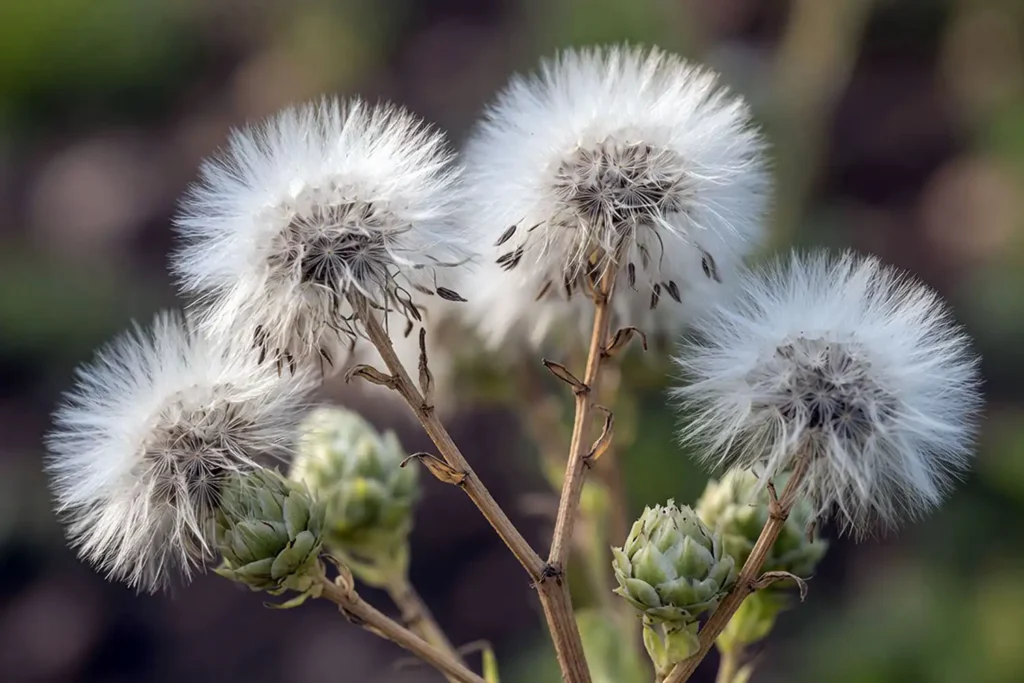
Lettuce seeds are ready about two to three weeks after a flower opens (roughly 12 to 24 days), once that head shows white fluff. Watch the seed heads, not the calendar. When the light-gray pappus pushes out of a head, the seed inside is mature. Seed Savers Exchange calls this stage feathering.
Because the flowers open over several weeks, the seed ripens unevenly. The first heads feather while later ones are still in bloom. So you can pick in flushes, or you can wait until about half to two-thirds of the heads have feathered and then take the whole plant. One catch: wet weather during ripening rots the seed. If a rainy stretch is coming, pull the plant and finish drying it under cover.
How to Harvest and Save Seeds From Lettuce
Harvest lettuce seed by shaking the fluffy heads into a container, or by cutting whole stalks once most heads have feathered. Two methods work, and both are simple.
The Shake Method
Every couple of days, hold a paper bag or a bucket under the feathered heads and tap or rub them. The mature seed drops free with its fluff. This gathers only the ripest seed and wastes very little. It takes more trips out to the plant, but it gives you clean, fully mature seed.
The Cut-and-Hang Method
When two-thirds of the heads have feathered, cut the whole stalk at the base. Slide it head-first into a large paper bag. Then hang it upside down in a dry, airy spot for one to two weeks. The rest of the seed finishes ripening and falls into the bag on its own.
Work on a dry day either way. Lettuce seed is light, and the pappus catches any breeze, so always collect into a bag or bin. A single gust can carry your whole crop off in seconds.
How Do You Clean and Dry Lettuce Seed?
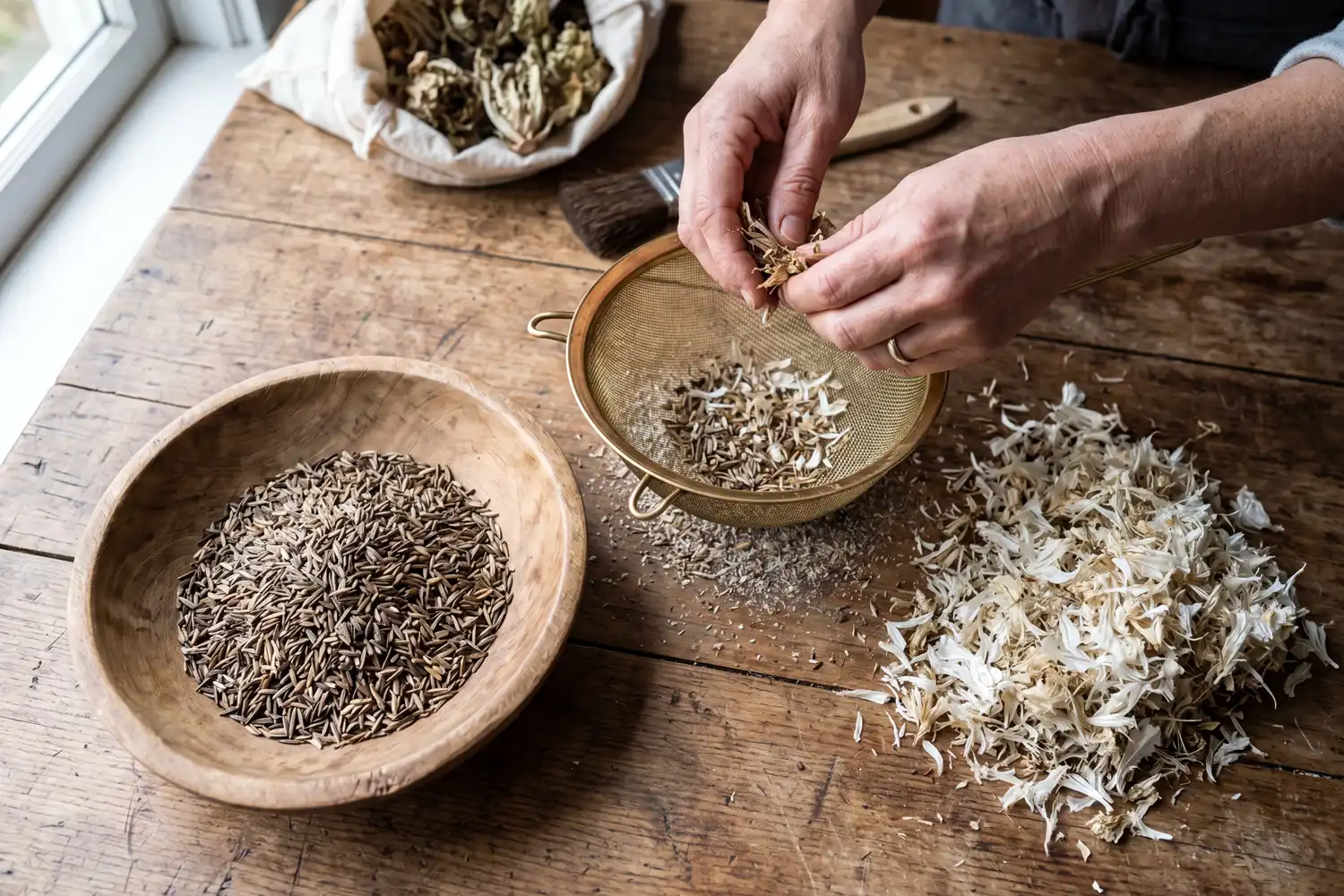
Clean lettuce seed by rubbing the dried heads to free the seed, then winnowing away the fluff and chaff. Start by rubbing the heads between your hands or against a screen. That breaks the seed loose from the fluff and stems. Now you have a pile of seed mixed with chaff.
Then winnow it. Pour the mix slowly from one container to another in front of a light breeze or a fan on low. The seed is heavier, so it falls straight down. The lighter pappus and chaff blow off to the side. Go slow and keep the fan low, or you will lose good seed with the trash. A set of kitchen sieves helps too. Run the mix through a screen that holds the seed but lets fine dust drop through.
You do not need lab-clean seed for the garden. A little chaff in the batch will not stop anything from growing. After cleaning, spread the seed in a single layer on a plate or screen. Let it dry in a cool, airy spot for about a week. Dry seed stores far longer and will not mold once it is sealed up.
How Should You Store Saved Lettuce Seeds?
Store fully dried lettuce seed in an airtight container kept cool, dark, and away from moisture. Once the seed is bone dry, put it in a paper envelope and then seal that inside a glass jar. A small packet of silica gel or a spoon of dry rice in the jar pulls out extra moisture. Label every batch with the variety and the date. Writing the year right on the envelope avoids having to guess later.
Keep the jar in a cool, dark spot with low humidity. A refrigerator is even better. Heat and damp air kill seed faster than anything else.
As for shelf life, stored cool and dry, lettuce seed lasts a long time. The University of Illinois Extension lists lettuce at up to 6 years. In a regular cupboard, expect strong germination for about 3 years, then a slow decline. To check older seed, run a quick test before you plant a whole bed. Keep our notes on germinating lettuce seeds if you want the exact method.
Will Your Lettuce Varieties Cross?
Lettuce rarely crosses, so light spacing keeps your varieties pure. Since lettuce pollinates itself inside a closed flower, very little pollen moves from plant to plant. To keep two varieties true, Seed Savers Exchange suggests 10 to 20 feet between them while they flower. Some growers use as little as 12 feet with another crop planted in between. If you only let one variety flower at a time, spacing barely matters at all.
The real crossing risk is wild lettuce. Prickly lettuce (Lactuca serriola) grows along Kansas ditches and field edges, and it can cross with your garden lettuce. So pull any wild lettuce near your seed plants before it flowers.
Bottom Line
Saving lettuce seed costs me nothing and pays off every spring. Letting two or three of the best plants bolt, waiting for the white fluff, then shaking the heads into a paper bag is the recommended method. After a week of drying, the seed goes into a labeled jar in the fridge.
Start with one variety this year. Once you have done it a single time, you will save seed every season.