How to Store Harvested Lettuce So It Stays Crisp for Weeks
Fresh lettuce wilts fast once you pull it from the soil. The trick to keeping it crisp is cold, moisture, and gentle handling. Knowing how to store harvested lettuce the right way stretches one picking from a few days to a few weeks.
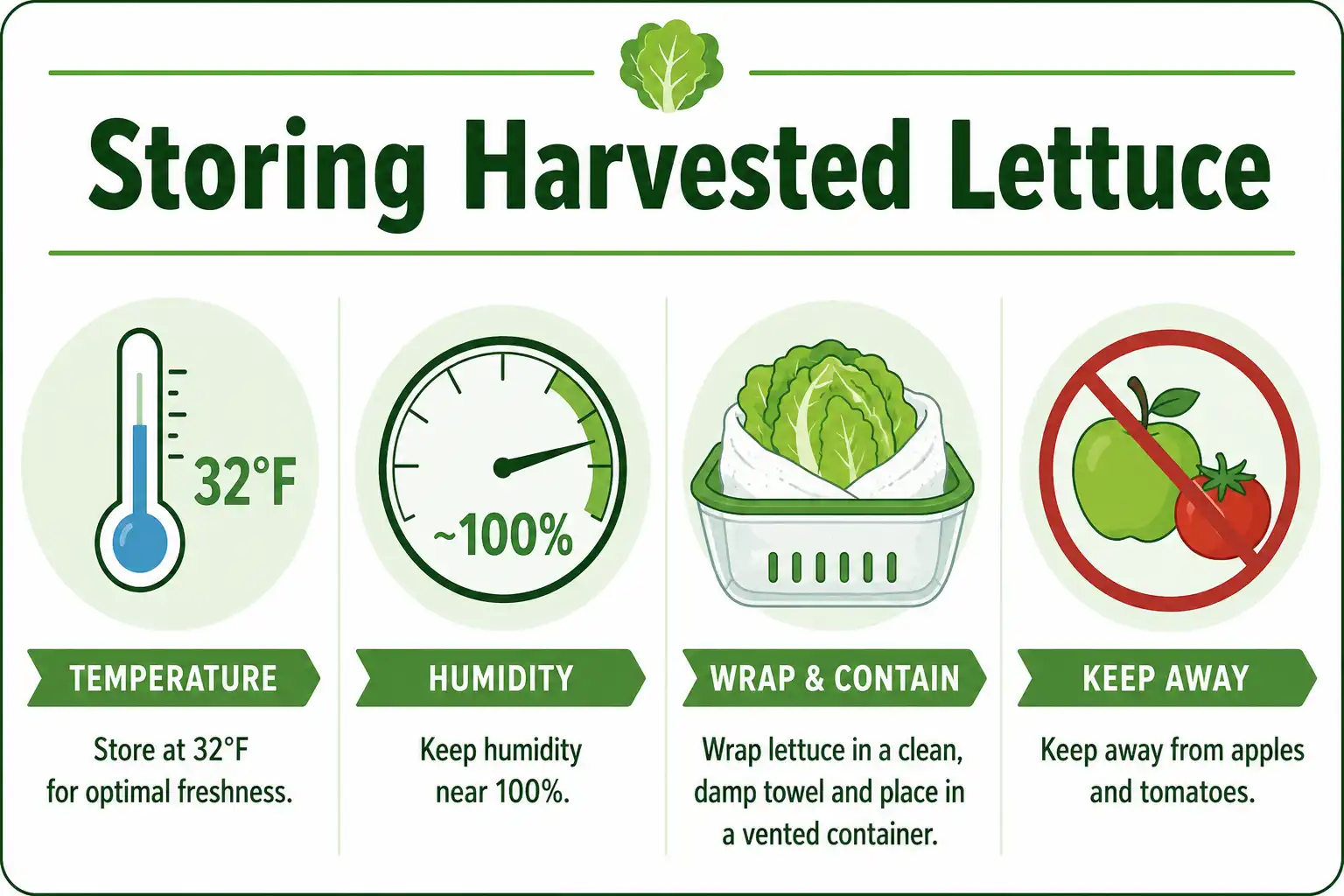
To store harvested lettuce, chill it fast and hold it near 32°F with high humidity. Dry the leaves, wrap in a towel, and seal in a vented box. Whole heads last two to three weeks. Cut leaves, far less.
How Do You Store Harvested Lettuce to Keep It Fresh?
Store harvested lettuce cold, slightly damp, and packed loose enough to breathe. That combination slows wilting more than anything else. Here is the routine.
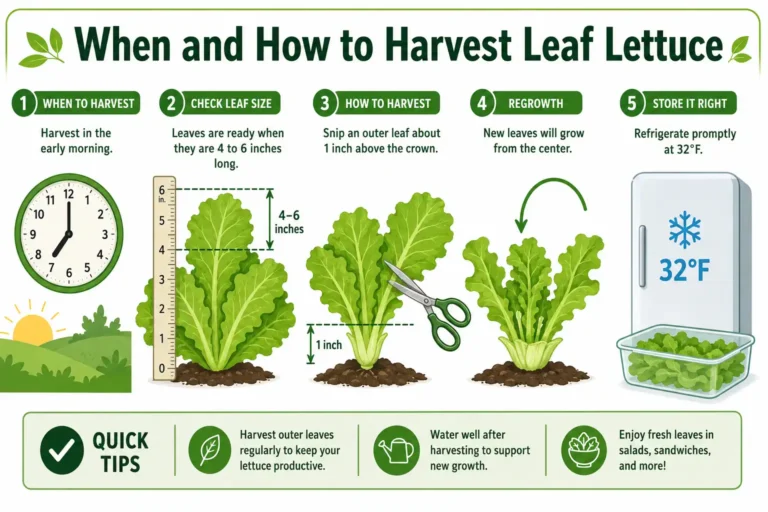
First, harvest lettuce in the cool morning before the sun heats the leaves. Field heat is the enemy. The faster you pull that heat out, the longer the lettuce holds. Carrying a tote of cold water to the field and dunking the heads right away helps.
Next, lift the lettuce out and shake off the heavy water. You want the leaves damp, not dripping. Soaking-wet leaves rot at the edges within days.
Then trim any torn, yellow, or bruised outer leaves. Damaged tissue breaks down first and drags the rest with it. A clean head stores far better than a beat-up one.
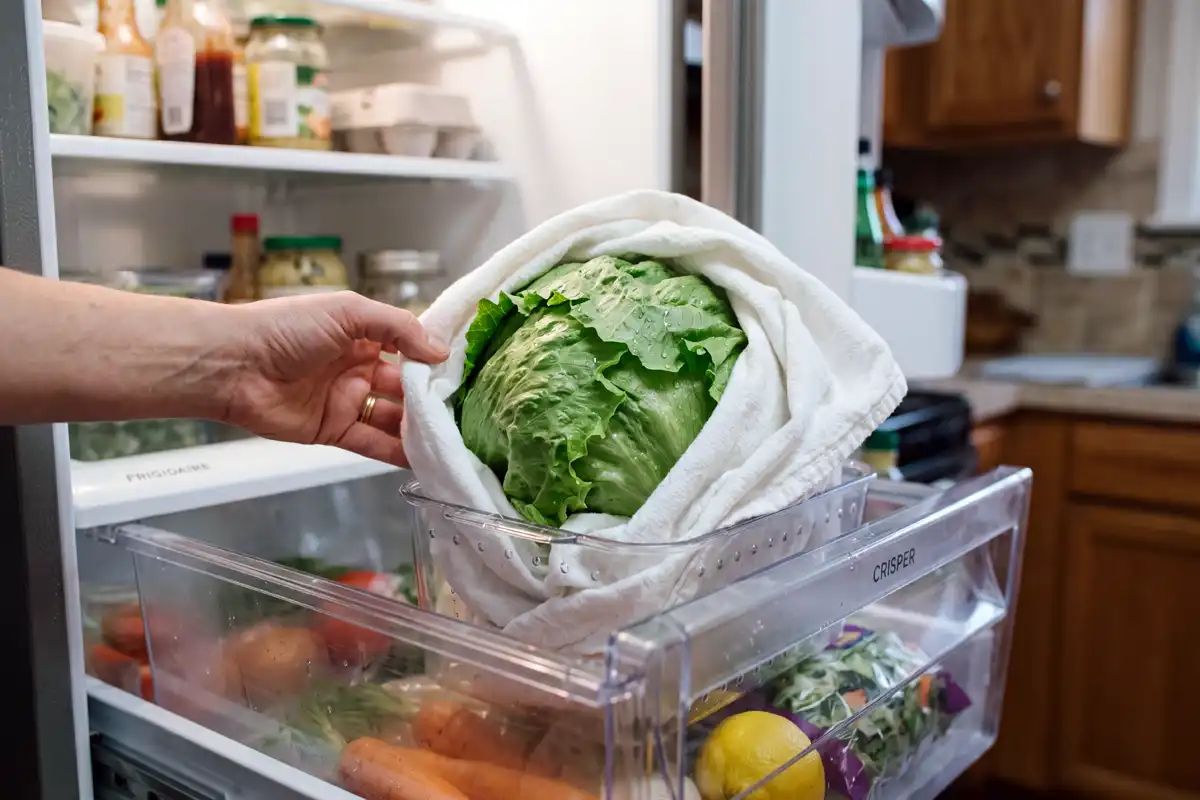
After that, wrap the head loosely in a clean kitchen towel or a few paper towels. The towel soaks up surface water and holds humidity around the leaves at the same time.
Finally, slide the wrapped lettuce into a vented container or a loosely closed bag. Set it in the coldest part of your refrigerator, usually the crisper drawer on the high-humidity setting. Careful handling right after harvest sets up everything that follows, the same way good post-harvest care protects every other crop.
Should You Wash Lettuce Before Storing It?
No, not if you want the longest storage life. Extra water on the leaves invites rot and slime. For heads meant to keep more than a week, storing them unwashed and rinsing right before eating is the better approach.
For lettuce used within a few days, washing first is fine. Rinse it in cold water. Then spin it dry in a salad spinner or pat it with a towel. Dry leaves are the important part here. Any water left sitting on the surface turns the edges brown.
Either way, gentle hands matter. Bruised leaves brown faster because the crushed cells release compounds that discolor the tissue. The Postharvest Center at UC Davis ties most of that pinking and browning to rough handling at harvest.
Learn more: What to Do With Bolted Lettuce (Eat It, Save Seeds, Compost)
What Temperature and Humidity Does Lettuce Need in Storage?
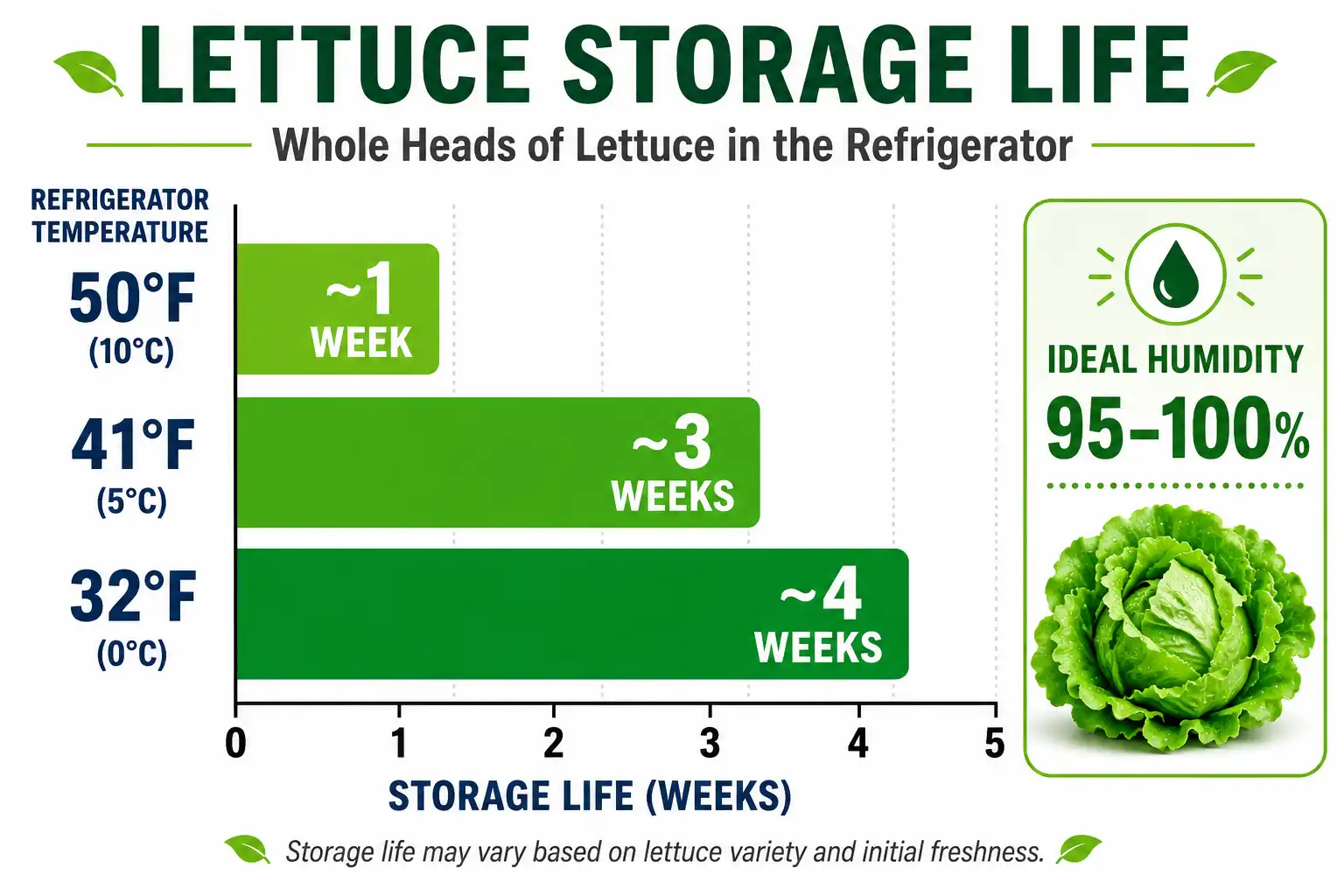
Lettuce stores best as close to 32°F as you can get, paired with very high humidity. That sits right at the edge of freezing, so watch that your fridge does not dip below it. Below 32°F the leaves freeze and turn to mush.
The humidity target runs high, roughly 95 to 100 percent. Lettuce is mostly water, so dry air pulls moisture out and the leaves go limp. University of Maine Extension notes that high humidity keeps leafy greens from wilting and losing quality. UC Davis postharvest data shows whole crisphead lettuce holding 21 to 28 days at 32°F.
Here is how that plays out at 41°F, a common fridge setting. Rutgers Cooperative Extension reports about three weeks of storage at that temperature, versus up to four weeks at 32°F. So a few degrees colder buys you several more days.
For most home fridges, set the crisper drawer to high humidity and keep the lettuce in the back, where it runs coldest. Watering your plants well each week also helps, since fully hydrated heads start out crisper and store longer.
How Long Does Harvested Lettuce Last in the Fridge?
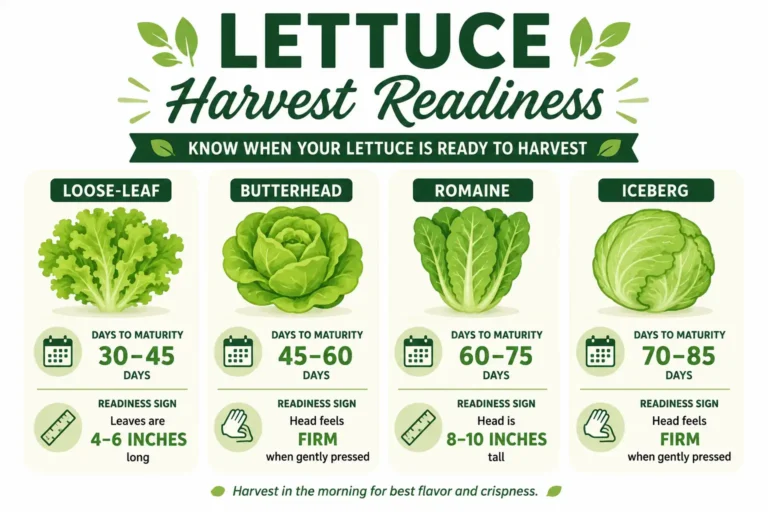
Whole heads of crisphead lettuce last the longest, often two to three weeks at the right temperature. Romaine holds up nearly as well, around three weeks when kept cold. Butterhead and looseleaf types are more delicate, so plan on about a week. Once leaves are cut or torn, they wilt within a few days.
Storage life always tracks back to handling and cold. A bruised head or a warm fridge cuts every one of those numbers. So if your lettuce fades early, look at temperature and damage first.
Looseleaf gardeners have an easy fix here. Instead of pulling whole plants, cut the outer leaves so the plant keeps producing. Then harvest small batches as you need them. Fresh-cut leaves beat week-old storage every time.
Why Does Stored Lettuce Turn Brown or Slimy?
Stored lettuce turns brown from bruising and slimy from bacterial soft rot. Both problems speed up in warm, wet conditions. Knowing the cause tells you how to stop it.
Brown edges and pink ribs usually come from rough handling or overmature heads. When you crush leaf cells, they release phenolic compounds that darken the tissue. Knowing when your heads are ready helps too, since old, oversized heads brown faster in storage.
Slime is a different story. That wet, smelly breakdown is bacterial soft rot, often from Erwinia bacteria. Trimming damaged outer leaves and keeping the lettuce cold slows it down. UC Davis also points to gray mold, caused by Botrytis cinerea, as a common storage rot. You control it the same way: trim, cool, and keep humidity from pooling into standing water.
Russet spotting, those small rusty specks, is the other one to know. It shows up when lettuce sits near ethylene gas, covered next.
Should You Store Lettuce Away From Fruit?
Yes, keep lettuce away from apples, tomatoes, melons, and other ethylene-producing fruit. Lettuce is very sensitive to ethylene gas. That gas triggers russet spotting, those rusty brown specks, and speeds overall decay.
SDSU Extension lists lettuce among the crops to store separately from fruit for exactly this reason. In the refrigerator, lettuce should go in its own drawer, with apples and tomatoes kept on a different shelf. It is a small habit that protects a whole drawer of greens.
This matters most in a packed fridge or a shared cooler. The more ethylene fruit you keep nearby, the faster your lettuce browns.
How Do You Revive Wilted Lettuce?
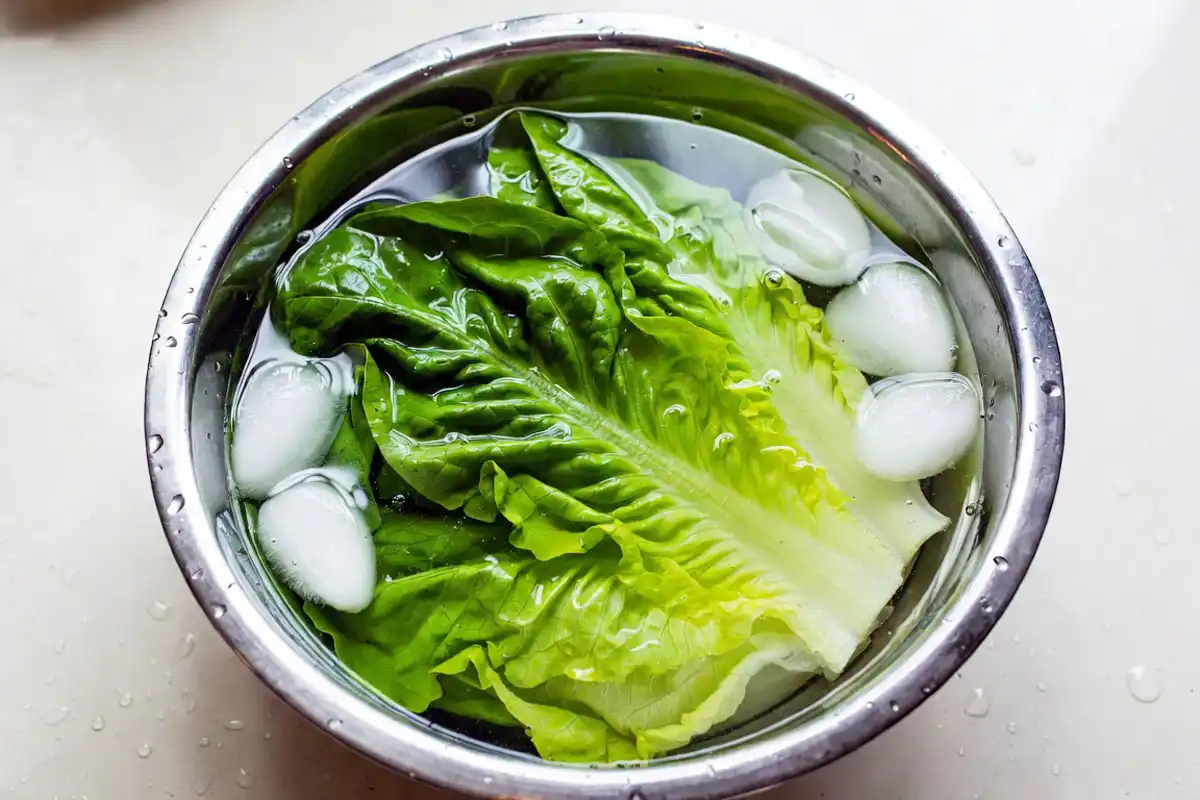
Soak wilted lettuce in ice-cold water for 15 to 30 minutes to bring the crisp back. Limp leaves are usually just thirsty, not spoiled. Cold water rehydrates the cells and firms them up again.
Here is a method worth using. First, fill a bowl or clean sink with cold water and a few ice cubes. Then drop the lettuce in and let it sit. After that, lift it out, spin or pat it dry, and store it the usual way.
This works on most fresh lettuce that has gone soft. Still, it will not fix rot, slime, or yellowing. Those leaves are done, so compost them and move on.
How Should You Store a Big Lettuce Harvest?
For a big harvest, cool the lettuce fast and store it in a refrigerator or walk-in cooler held near 32°F. Volume changes things, because heat builds up in a full bin and rots the center.
Cooling the heads in cold water first, then packing them loosely in vented crates, works well. Stack the crates no more than two high, which is what Rutgers recommends, so air moves around every head. Crowded, sealed boxes trap heat and moisture and invite soft rot.
At a farm stand, a quick mist and a cool, shaded display keep heads perky through the day. Just use clean, drinking-quality water for any misting.
How to Keep Lettuce Crisp in Kansas
In zone 6a, summer heat is brutal on cut greens, so speed is everything for me. Early harvest, cooling the heads in cold water, and getting them into the fridge within the hour is the recommended routine. After that, dry leaves, a towel wrap, a vented container, and a cold drawer do the rest.
Keep lettuce away from fruit, handle it gently, and hold it near freezing. Do that, and your harvest stays crisp for weeks instead of days. And if you eat down to the base, you can regrow more lettuce from the leftover root end.