Can You Plant Onions Next to Carrots? Yes, and How (2026)
Onions and carrots make one of the oldest companion pairings in the vegetable garden. So can you plant onions next to carrots in the same bed? Yes, and the two crops actually help protect each other from pests.
Yes, you can plant onions next to carrots, and they pair well. Onion scent helps mask carrots from the carrot rust fly. Both crops share similar soil, sun, and water needs, so one bed feeds both.
Also know: Plant Beets and Carrots Together
Why Onions and Carrots Belong in the Same Bed
Onions and carrots earn their spot together for two reasons: pest protection and smart use of space. Their roots grow at different depths, so they barely compete underground. Their scents work against each other’s worst pests. That mix is hard to beat in a small plot.
Do Onions Keep Carrot Flies Away?
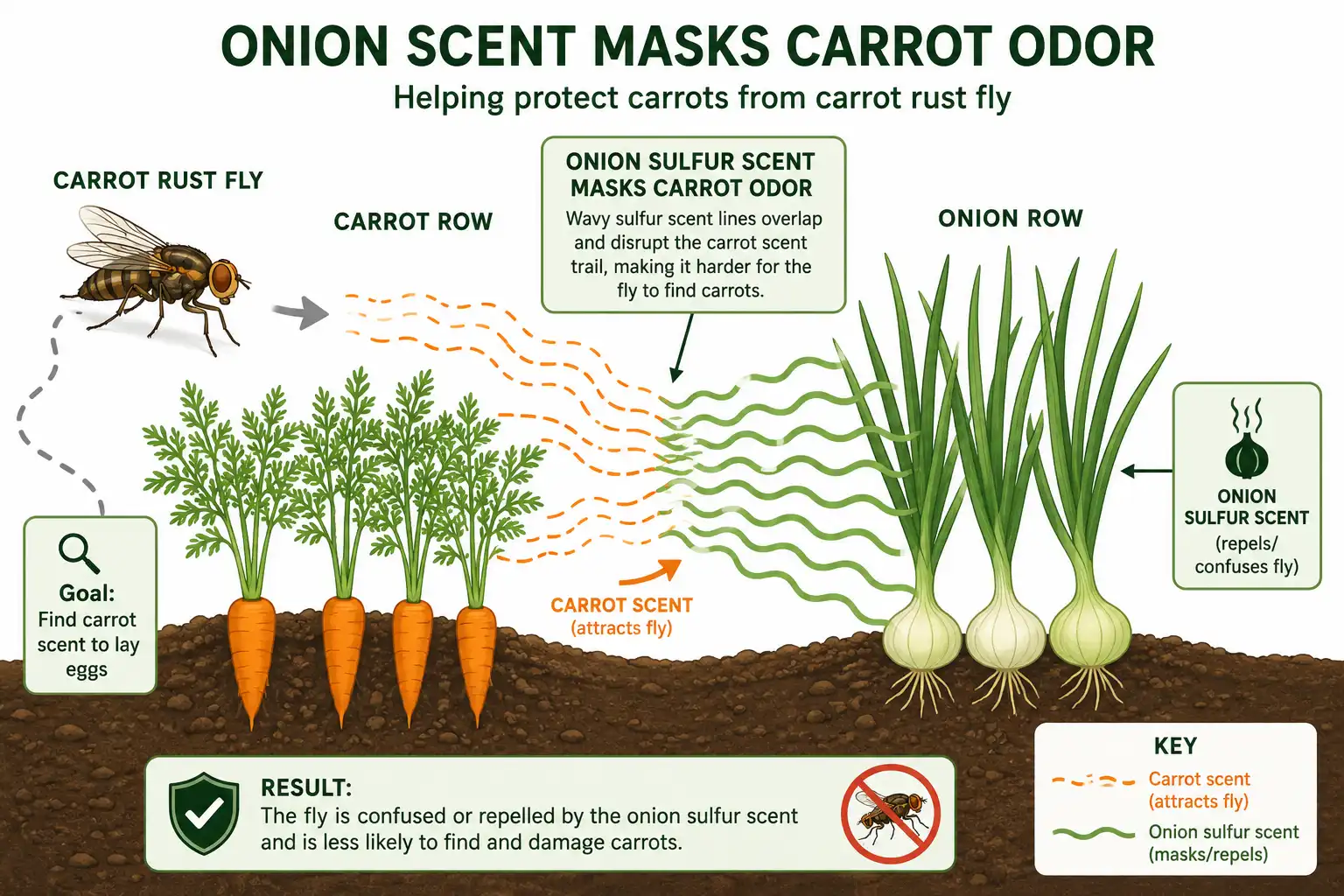
Yes, onions help keep carrot flies away by masking the carrot smell that draws them in. The carrot rust fly hunts by scent. It follows the odor from carrot foliage to lay eggs near the roots. Onion and other allium leaves give off strong sulfur compounds. Those compounds confuse the fly and cover the carrot trail.
Research backs this up. Intercropping studies have found far fewer carrot fly eggs in beds where onions grow between the carrot rows, compared with carrots grown alone. The protection is strongest while the onions are leafy and actively growing.
Here is the honest part. The masking is not a full shield. It cuts pressure, but it does not erase the pest. Two things weaken it. First, once onion bulbs swell and the tops slow down, the scent fades. Second, you need enough onions close to the carrots for the smell to overlap. A couple of onions in a corner will not cover a long carrot row.
Carrot rust fly is not the heavy hitter it is in cooler, damper regions like the Pacific Northwest. Even so, keep onions in the mix because the rest of the benefits hold up. If you fight bad carrot fly pressure, pair the interplanting with fine insect mesh for the surest results. Good natural pest control leans on more than one tactic.
Do Carrots Return the Favor for Onions?
Carrots may help confuse the onion maggot, but the evidence here is weaker than the other direction. Old garden wisdom says carrot foliage masks the onion scent that draws the onion fly. The science behind onions protecting carrots is solid. The reverse claim rests more on tradition than on hard trials.
Treat the carrot side as a small bonus, not the main reason to interplant. The onion maggot is a real problem in some onion patches. If it hits your beds, crop rotation and clean cultivation matter more than a row of carrots nearby. Still, the carrots cost you nothing extra in that bed, so any help is welcome.
Are Onions and Carrots Compatible Below the Soil?
Onions and carrots are highly compatible below the soil because their roots claim different zones. Carrots send down a deep taproot. They want loose, stone-free soil so that root grows straight and long. Onions keep a shallow, fibrous root system near the surface. The two rarely fight over the same patch of ground.
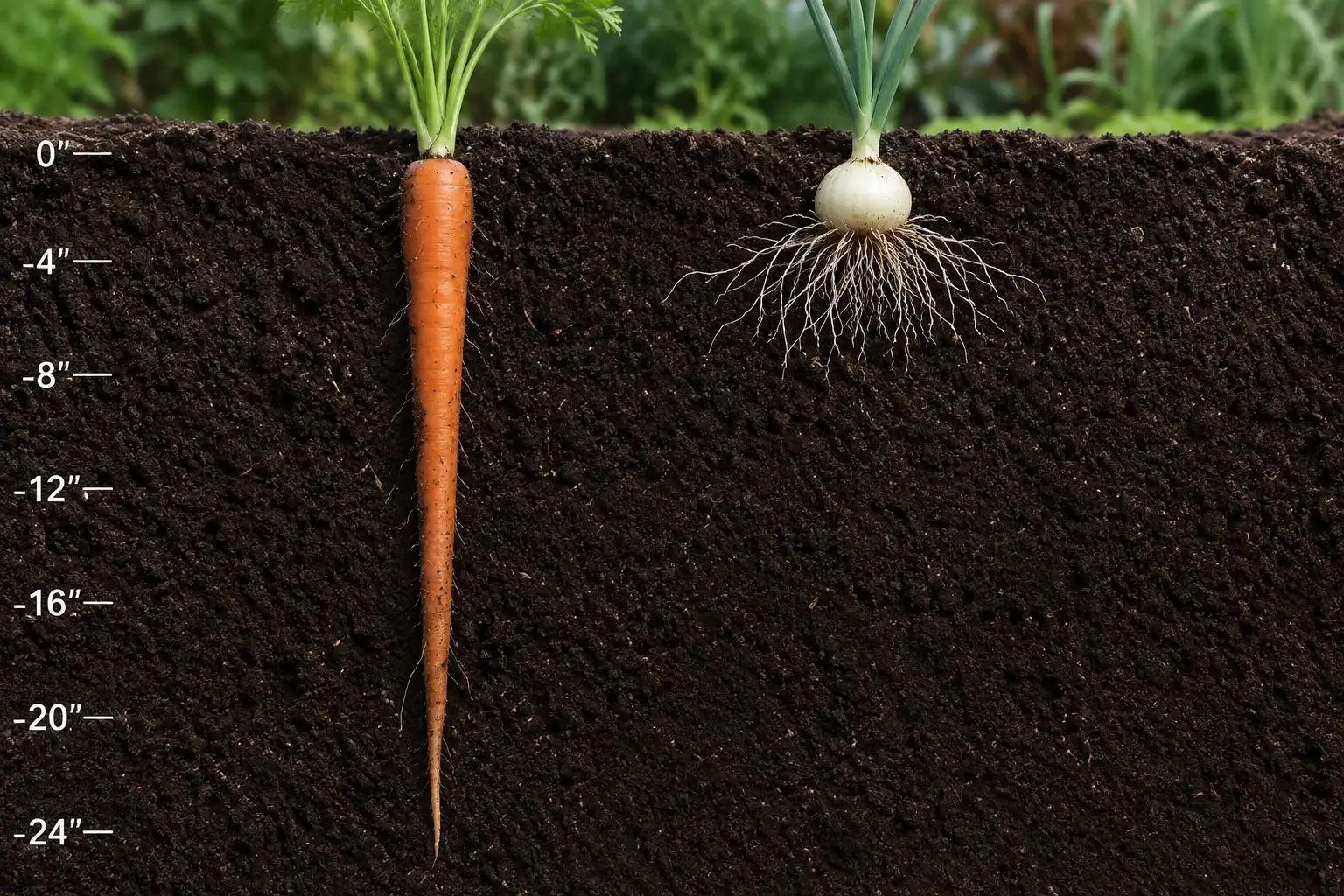
That difference is the quiet reason this pairing works so well in tight beds. You stack two crops in the footprint of one. Onions hold the top few inches. Carrots reach below. Neither one shades the other much either, since onion tops stay slim and upright.
Best Soil for Growing Onions and Carrots Together
Both crops want the same base: loose, well-drained soil with a pH near 6.0 to 6.8. Sandy loam is close to ideal. It drains fast, warms early, and lets carrot roots push down without forking.
Work the bed deep before planting. Loosening to at least 10 to 12 inches and pulling out rocks, clods, and old root chunks is the recommended step. Carrots fork and split when they hit a hard layer or a stone. The same loose bed helps onion bulbs size up clean. If your ground runs heavy clay, build a raised bed or mix in compost to open it up. The right soil texture for straight carrots does double duty for the onions next to them.
How to Plant Onions Next to Carrots
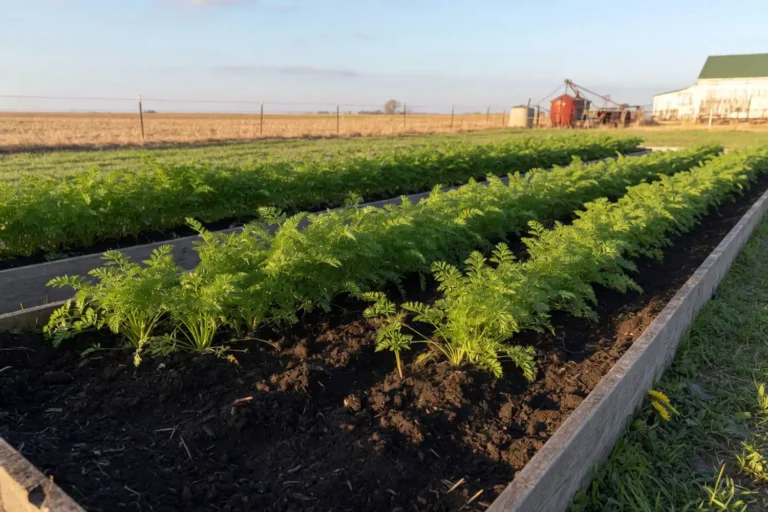
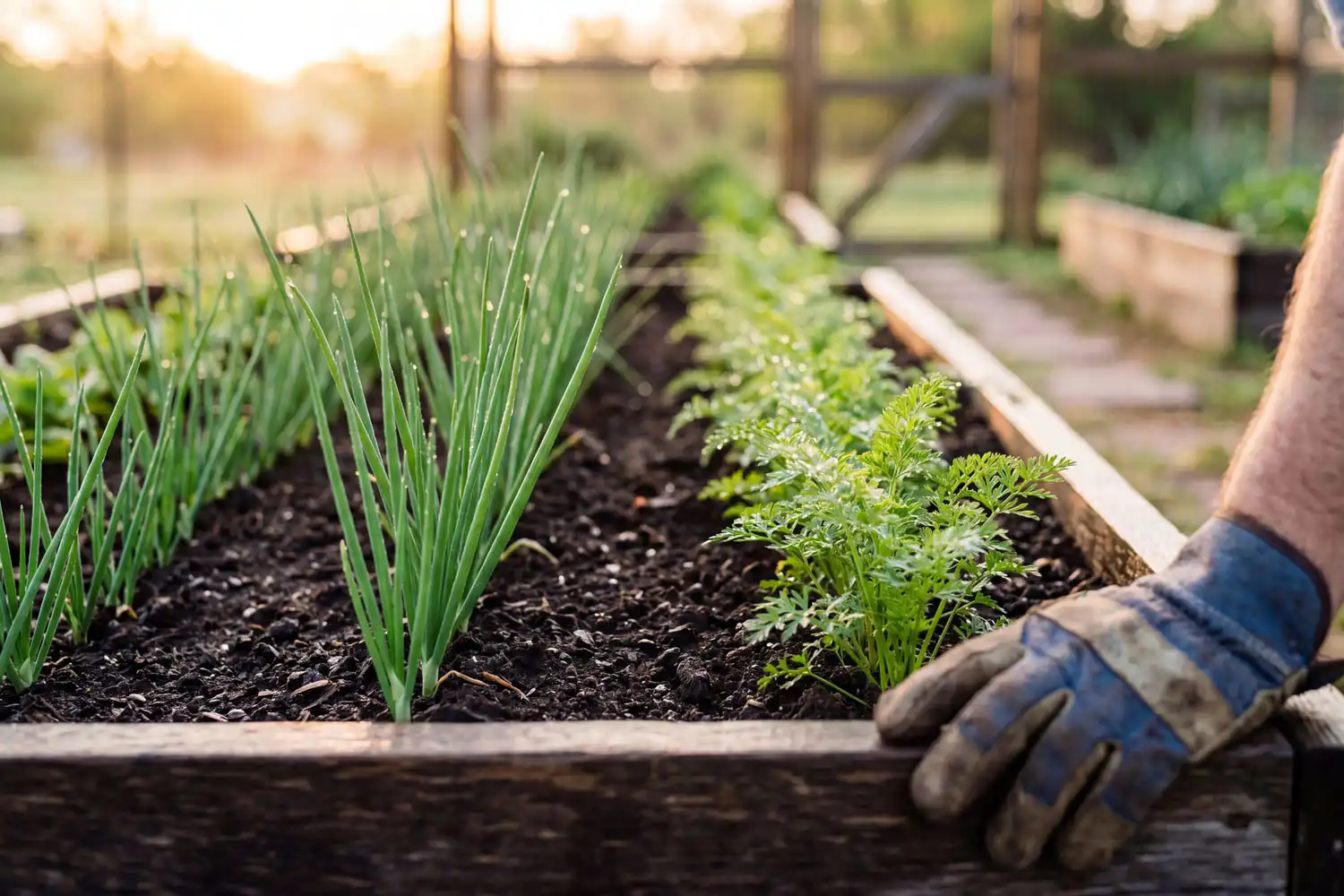
To plant onions next to carrots, set them in alternating rows so the scents overlap and the roots share space. Keep the rows close, about 4 to 6 inches apart. That spacing puts the onion smell right where the carrots need cover.
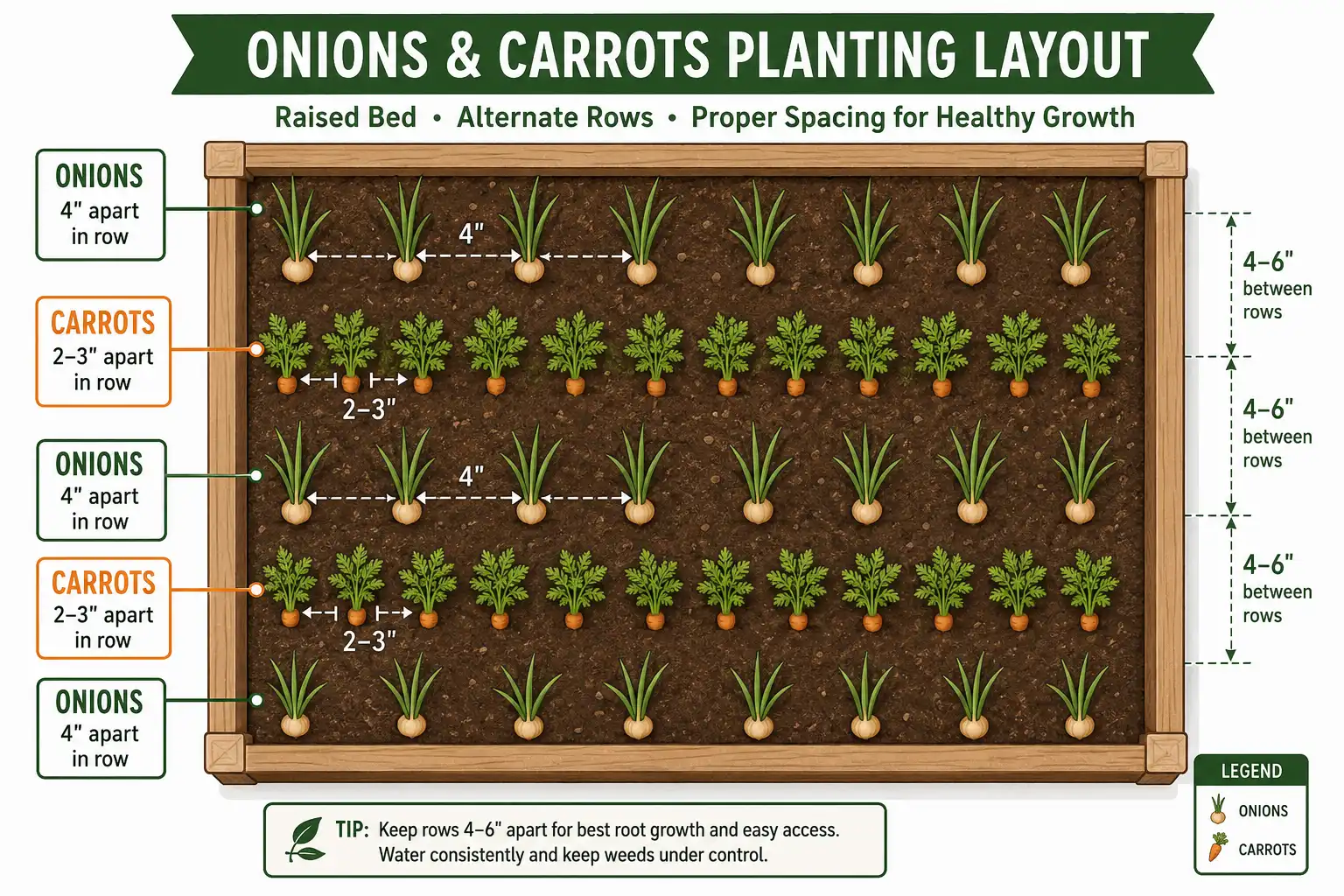
Here is the layout in the beds:
- Run carrot rows and onion rows side by side, 4 to 6 inches between rows.
- Space onion sets or plants about 4 inches apart down their row.
- Sow carrot seed thin, then thin seedlings to 2 to 3 inches once they are up.
- Repeat the pattern across the bed: carrots, onions, carrots, onions.
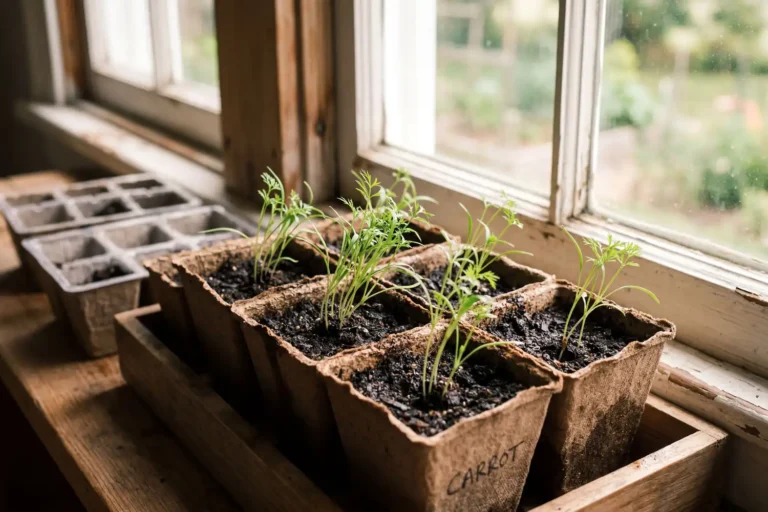
Onion sets give you a faster, easier start than onion seed. They also pop up quickly, which helps in another way. Carrots crawl out of the ground slowly, often 14 to 21 days. The onion row marks where everything is planted, so you do not lose the bed to weeds while you wait. Once the carrots show, thin them on schedule. Crowded carrots stay small and twisted. Watch the timing on thinning carrot seedlings so the roots have room to bulk up.
Can You Plant Onions and Carrots at the Same Time?
Yes, you can plant onions and carrots at the same time, since both are cool-season crops. They handle cool soil and light frost, so they go in early. Early spring planting, a few weeks before the last frost, works well in USDA zone 6.
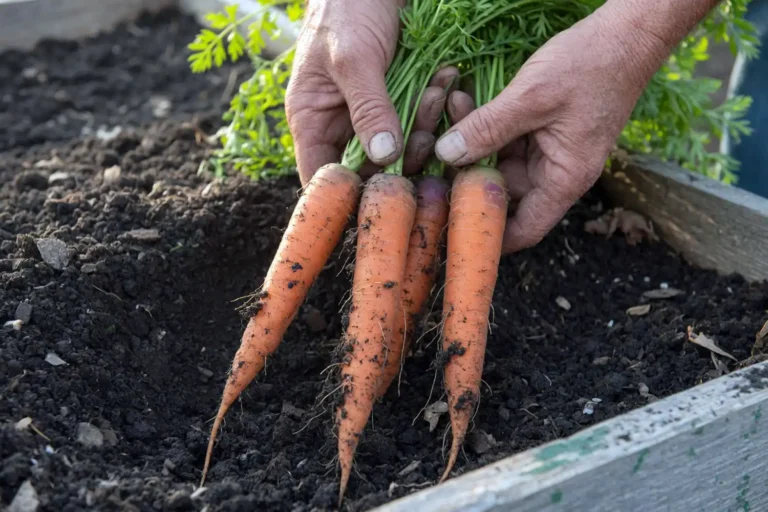
The two mature on different clocks, and that is fine. Carrots are usually ready in 60 to 80 days. Onions take longer, often 90 to 110 days for full bulbs. You harvest the carrots first and leave the onions to finish. By the time you pull carrots, the onions are still sizing up in the loosened soil.
One catch on the pest side. Onions guard carrots best while their tops are green and growing. Onions get pulled before the carrot season fully ends, so the cover drops off late. Gardeners who want season-long protection sometimes swap in leeks, which stay in the ground longer. For timing on the allium side, our notes on plant onions and garlic cover the early-spring window.
Watering and Feeding Both Crops in One Bed
Onions and carrots want steady, even moisture, which makes shared watering easy. Keep the bed consistently damp, never soggy. Carrots need that even moisture most during germination and root sizing. Dry spells cause splitting and bitter roots. Onions like steady water too, but they rot in standing water, so drainage matters for both.
Water deep and regular rather than light and often. That pulls carrot roots downward and keeps onion bulbs firm. For a fuller breakdown of water carrots need at each stage, a separate guide covers that.
Feeding is where the two crops part ways, so go careful. Onions are moderate feeders. They want nitrogen early to build green tops, then phosphorus and potassium to size the bulb. Carrots are the opposite about nitrogen. Too much of it makes them fork, grow hairy side roots, and put energy into tops instead of the root.
Fix is simple. Feed the bed lightly and lean on phosphorus and potassium more than nitrogen. A heavy nitrogen dump may please the onions for a while, but it punishes the carrots. When in doubt, hold back on the nitrogen and let both crops grow steady.
Mistakes to Avoid When Interplanting Onions and Carrots
The fastest way to wreck this pairing is too much nitrogen and not enough spacing. Heavy nitrogen feeds the onions but forks the carrots, so go light on it. Crowding hurts both crops, so thin carrots to 2 to 3 inches and keep onions near 4 inches apart. Do not let onion tops flop across the carrot foliage, since that shades the carrots and traps damp air that breeds disease. And do not plant a token few onions and expect full pest cover. The onion scent has to overlap the carrot rows to do any good.
When This Pairing Is Not Worth It
Skip the pairing when your carrot fly pressure is severe or your bed is too cramped to space both crops. In heavy carrot fly country, fine insect mesh beats any companion trick, and you may not want onions crowding the row. If your bed is small and you cannot give each crop its spacing, pick one and grow it well.
Also watch your other neighbors. Carrots and onions both dislike sharing a bed with dill or fennel, since those draw the same pests as carrots. Carrots and potatoes compete for the same nutrients, so keep them apart. If you like the idea of mixing alliums with other vegetables, the piece on pairing onions with tomatoes shows how the same scent trick helps a different crop.
What to Do in the Beds
Plant onions and carrots together almost every spring, and the combo earns its keep. The onions help guard the carrots, the roots split the soil between them, and two crops come from one bed. Keep the rows 4 to 6 inches apart. Go light on nitrogen. Water even and steady. Thin on time. Do that, and both crops come out clean.