Can You Plant Corn and Tomatoes Together (And Should You)?
Corn and tomatoes rank among the most popular crops in a home garden, so pairing them feels smart. Can you plant corn and tomatoes together? You can, but it rarely works well.
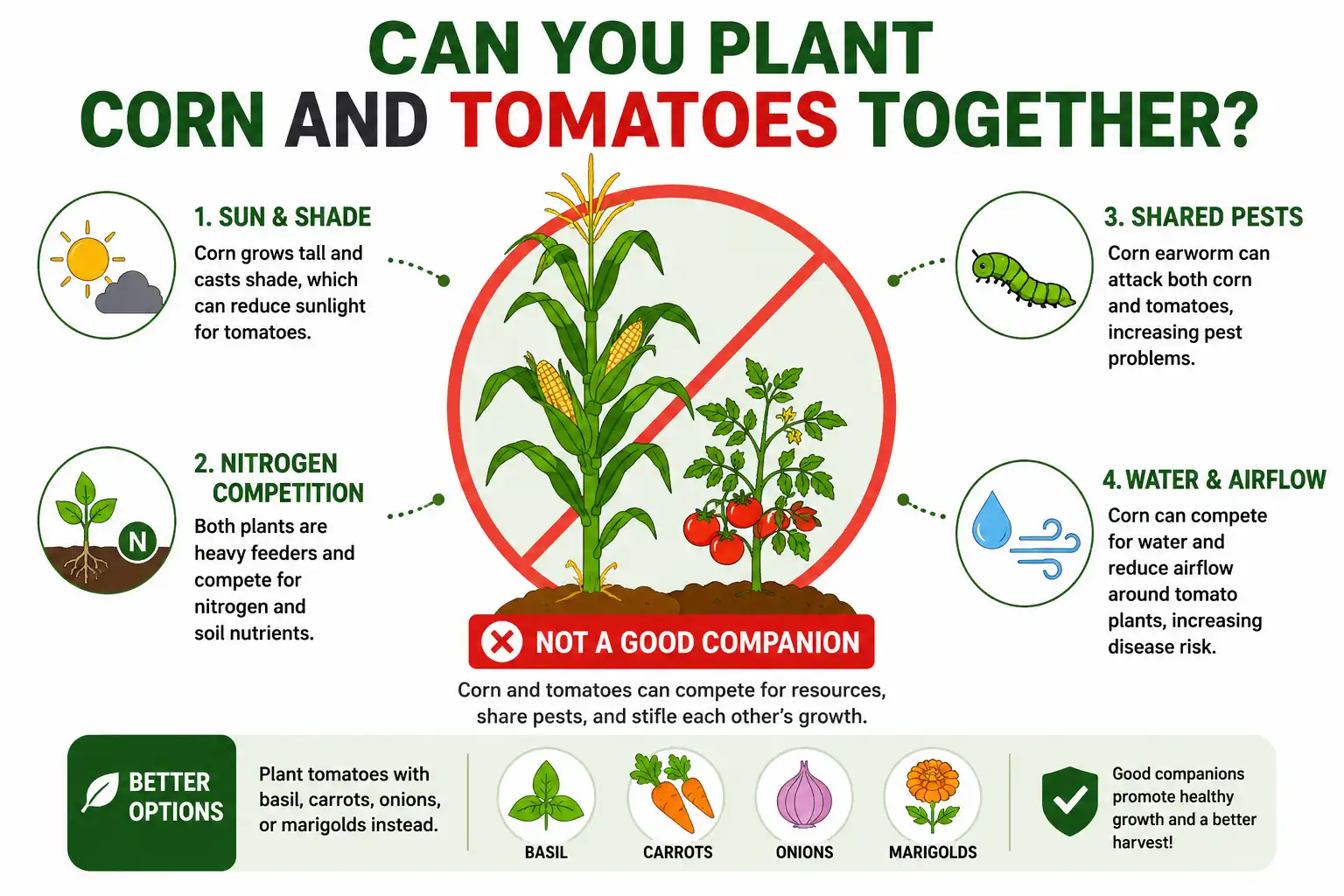
You can plant corn and tomatoes together, but they make a poor pair. Corn shades the tomatoes, both crops are heavy nitrogen feeders, and they share the same pest. Keep them well apart for a better harvest.
Can You Plant Corn and Tomatoes Together?
You can plant corn and tomatoes together, but the pairing usually costs you yield on both crops. Nothing stops the seeds from growing side by side. So the trouble starts later, as the season moves on. Corn shoots up fast and throws shade. Both plants also pull hard on soil nitrogen. Then one shared pest works its way from the corn ears into your tomato fruit. In a big garden with smart placement, you can soften these problems. In a tight bed, though, keep them apart.
Learn more: Grow Corn and Beans Together
Why Corn and Tomatoes Make a Poor Pair
The clash comes down to four things: sunlight, nitrogen, pests, and water. Each one hits your tomatoes harder than your corn. Here is how the trouble stacks up.
Corn Shades Out Your Tomatoes
Tomatoes need full sun, and corn steals it. A tomato plant wants 6 to 8 hours of direct sun each day to set a full crop. Ohio State and UMass extension both confirm that light standard. Field corn can top 7 to 10 feet, while even sweet corn reaches 6 to 8 feet. That tall canopy casts a long shadow across anything on its shady side. Less sun then means fewer flowers, slower ripening, and a smaller pick. Before you lay out your rows, plan around that shade line. It first helps to know how tall corn stalks get.
Both Crops Fight for the Same Nitrogen
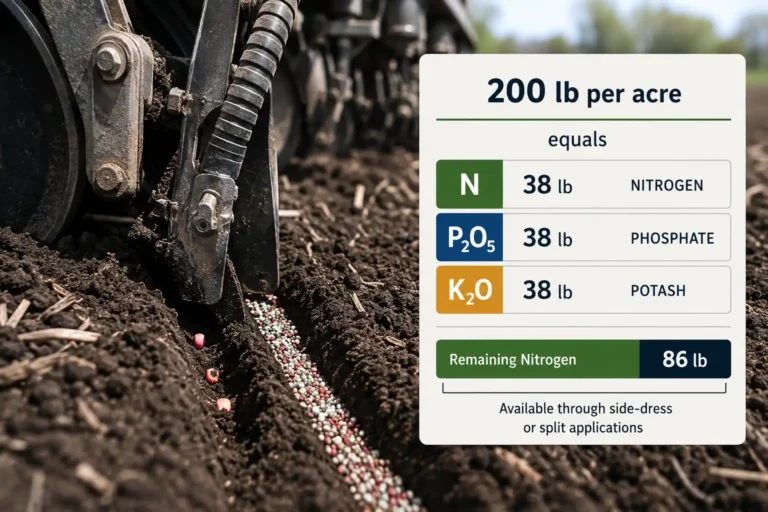
Corn and tomatoes are both heavy feeders, so they compete for the same nitrogen in your soil. Corn is one of the hungriest crops you can grow. It pulls large amounts of nitrogen to build stalks, leaves, and ears. Tomatoes feed heavily too, though they want more phosphorus than nitrogen once they start to flower. Plant the two close and the corn usually wins. Your tomatoes then go hungry, and fruit set drops. If you want a sense of just how much nitrogen a corn crop pulls, the numbers explain the conflict fast.
They Share One Destructive Pest
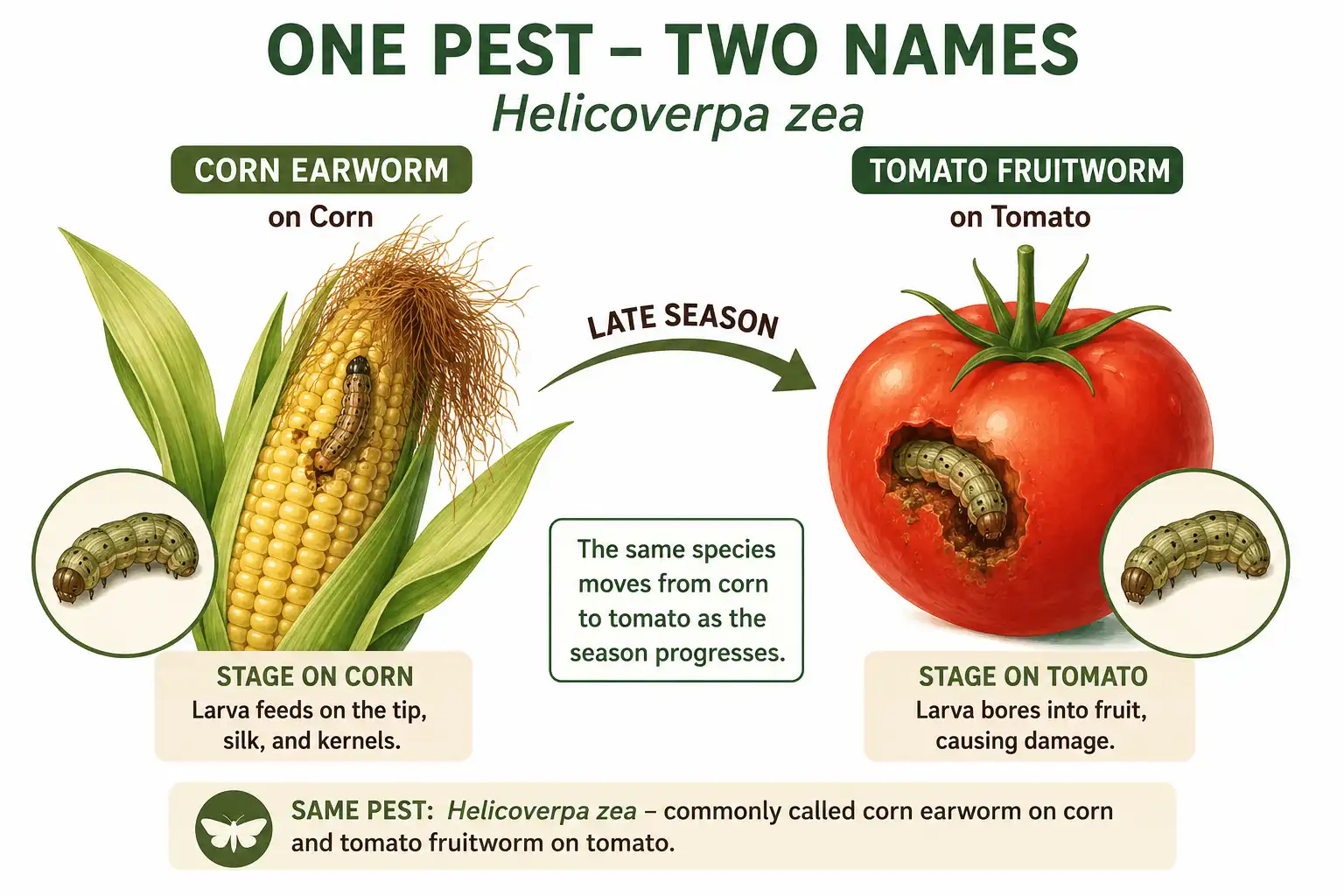
Corn and tomatoes feed the very same insect, which makes them a risky match. The corn earworm and the tomato fruitworm are one species, Helicoverpa zea. Both K-State Research and Extension and Cornell flag this pest on the two crops. Female moths love fresh corn silk, so they lay their eggs there first. The larvae then feed inside the ears. Late in the season, when the corn dries down and loses its appeal, the moths move to nearby tomato fruit. Planting corn next to tomatoes gives that pest a short walk from one meal to the next. Bt corn hybrids and Trichogramma wasps can help on the corn side. Still, the smartest move is distance. On the tomato side, the right companions that keep bugs off tomatoes do far more good than corn ever will.
Water and Airflow Both Suffer
Crowding corn and tomatoes together strains water supply and cuts airflow. Both crops drink a lot through summer, so roots in the same zone compete for every inch of moisture. Corn also blocks the breeze that keeps tomato leaves dry. Damp, still air then feeds fungal diseases like early blight. So good spacing and watering tomatoes the right way matter even more when these two share ground.
When You Can Get Away With Planting Them Near Each Other
You can plant corn near tomatoes if you have room to manage the shade, spacing, and pest pressure. A large garden gives you options a small plot never will. First, put the corn block on the north or east side, so its shadow falls away from the tomatoes. Then leave a wide gap between the two crops. Grow the corn in a tight block, not a thin row. That is because planting corn in blocks gives the best wind pollination. That block also pens the earworm pressure into one spot you can scout. Even then, watch your tomato fruit closely once the corn silks turn brown.
What to Grow Near Tomatoes Instead
Tomatoes do better beside low, non-competing plants. Basil, lettuce, carrots, and marigolds all sit well next to tomatoes without stealing sun or nutrients. Bush beans stay short and fix a little nitrogen as a bonus. So these pairings give you the companion perks people want from corn. You skip the shade and the shared pest.
How Far Apart Should Corn and Tomatoes Be?
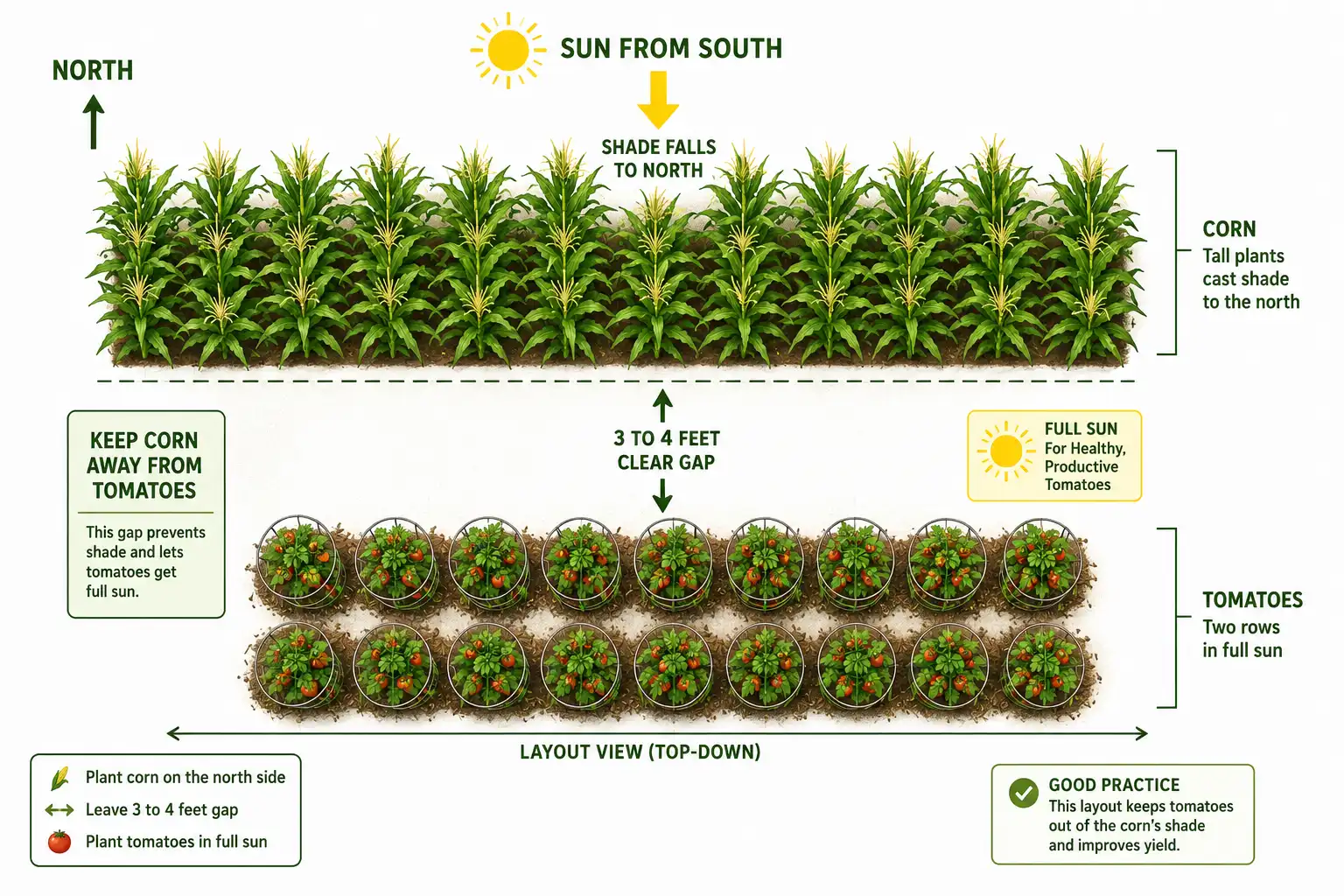
Keep at least 3 to 4 feet between your corn block and your tomato rows. Give them more room if you can spare it. That gap keeps the corn shadow off the tomatoes for most of the day. It also gives each crop its own root zone for water and nitrogen. In a small garden where you cannot spare that space, skip the corn or move it to a separate bed. A raised bed on the far side of the plot is a clean fix. Before you build one, see how growing corn in a raised bed works.
How to Split the Two
Near Topeka, corn and tomatoes never share a bed. Run the corn in a block on the north edge of the garden, well away from the tomato rows. That keeps the shade off tomatoes and gives one spot to watch for earworms. If your garden is tight, grow one crop this year and the other next. You will pull more from both than you would by crowding them. Match your timing to your USDA hardiness zone. Out here on the Great Plains, give each crop the sun and soil it needs.