How to Grow Corn and Beans Together: A Easy Field Guide
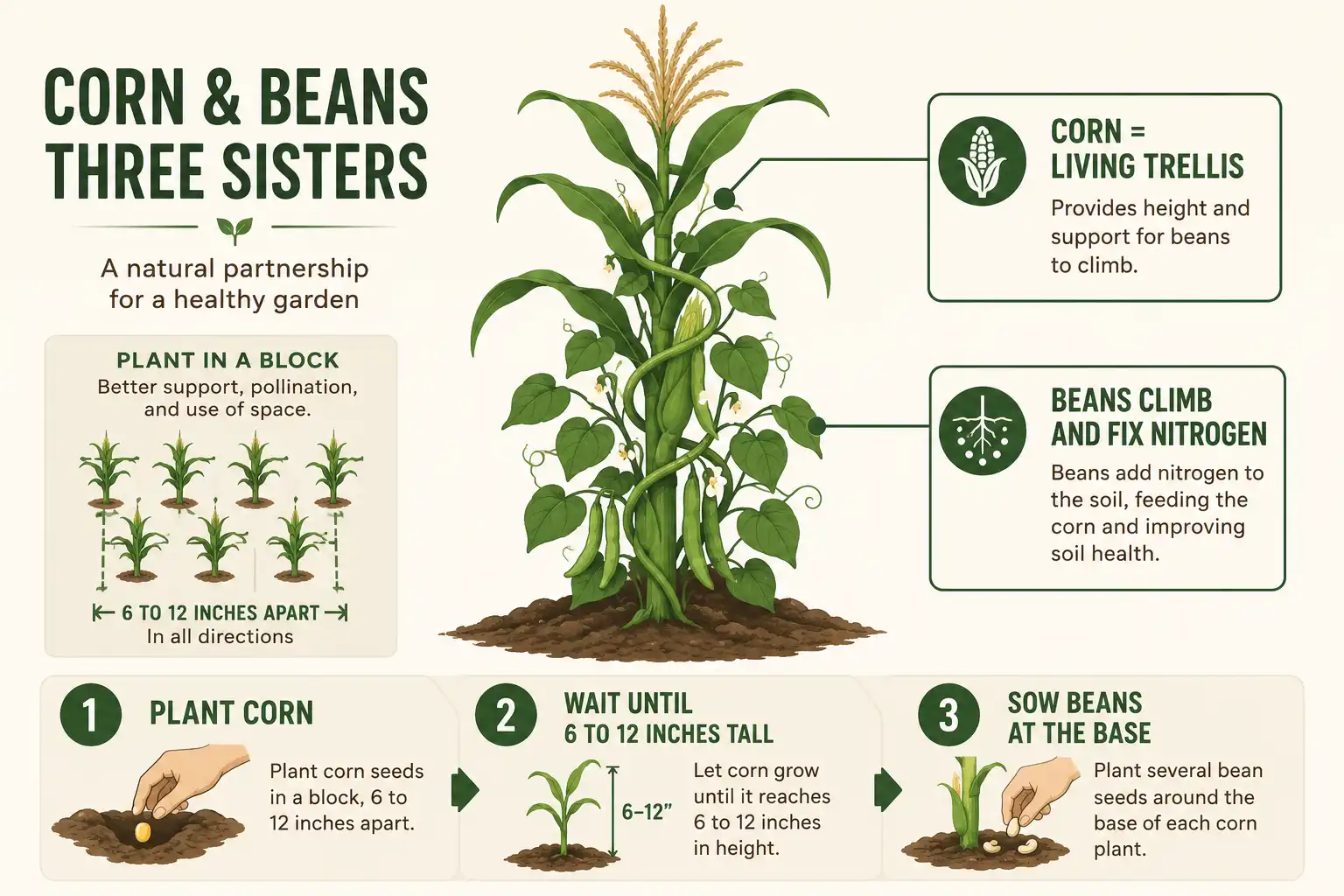
Corn and beans make one of the oldest planting partnerships in America. The tall stalks give climbing beans a free trellis, and the beans return a little nitrogen to the soil.
To grow corn and beans together, plant corn first in a block. Wait until the stalks stand 6 to 12 inches tall, then sow pole beans at their base. The corn supports the vines while the beans feed the soil.
Why Corn and Beans Grow Well Together
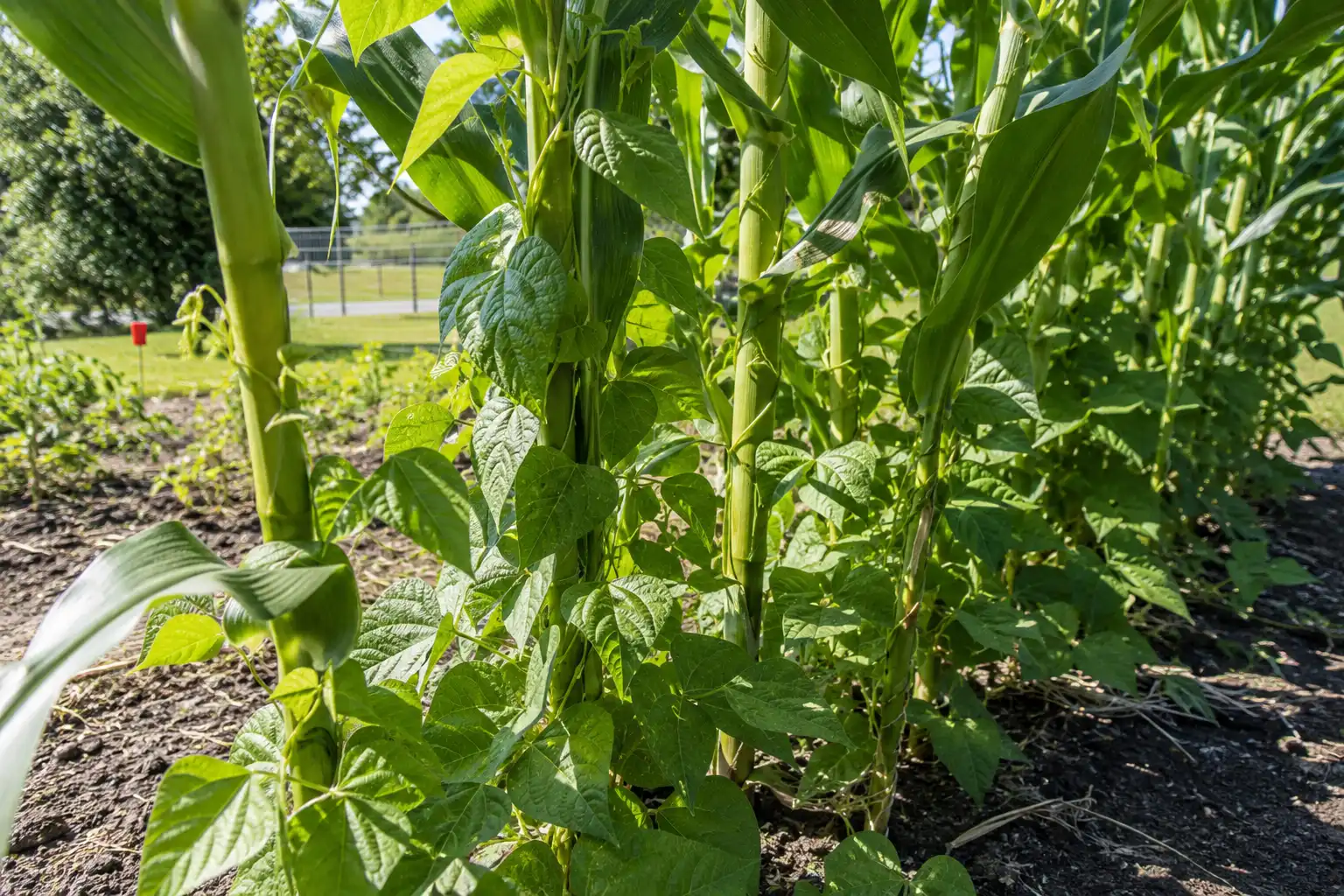
Corn and beans help each other in two clear ways. First, a corn stalk works as a living pole. Climbing beans wrap around it and reach for sunlight, so you skip building a trellis. Second, beans belong to the legume family. Their roots partner with soil bacteria that pull nitrogen from the air and store it in small root nodules.
This pairing is the heart of the old Three Sisters method. Native American growers, including the Haudenosaunee, refined it over centuries. Add squash as a third crop and its broad leaves shade the ground. For a simple two-crop plot, though, corn and beans alone still work great.
Beans also make good use of vertical space. Your corn block already fills the ground. The beans climb above it, so you pull two crops from nearly the same footprint. That means more food per row without more tillage.
Do the Beans Really Feed the Corn?
Not much in the same season. This is the honest part most guides skip. The nitrogen that beans fix stays locked in their roots and nodules until those tissues break down. Cornell Cooperative Extension notes that most of that nitrogen reaches next year’s crop, not the corn beside it now.
So treat the nitrogen as a long-term gain for your soil. Corn is a heavy feeder, and it still wants a real supply of nitrogen this year. If you want the numbers behind that demand, look at how much nitrogen corn needs across a full season. Feed the corn as you normally would, and let the beans build fertility for later.
Also learn: How to plant corn on garden and field
Picking Corn and Beans That Work Together
Match the bean’s climbing height to the corn’s stalk strength. That single choice decides whether the planting stands tall or falls over. Colorado State University Extension puts it plainly. Many sweet corn varieties lack sturdy stalks, and bush beans will not climb at all.
The Best Corn for Bean Support
Sturdy, tall corn holds beans best. Field corn, dent corn, flour corn, and popcorn all grow thick stalks that carry vine weight well. Many older sweet corn types reach six feet or more and work fine too. Newer sweet corn hybrids tend to run short and thin, so vigorous beans can drag them down.
Pick a corn that matures to at least six feet. Taller and thicker is better here. New to this? It helps to know how tall corn stalks get before matching a bean to them.
Pole Beans, Not Bush Beans
Use pole beans every time. Bush beans stay low and never climb, so they add nothing to a corn stalk. Common pole beans (Phaseolus vulgaris) such as Scarlet Runner, Kentucky Wonder, or an heirloom dry bean all climb well.
Skip the most aggressive climbers, though. A bean that throws ten-foot vines will overwhelm a six-foot stalk and pull it sideways. Semi-runner and moderate pole types give you the best balance.
When to Plant Corn, Then Beans
Plant the corn first, then add the beans two to three weeks later. Corn needs a head start so the stalks can anchor before beans climb. If you sow both on the same day, the beans outgrow the corn and smother it.
Wait for warm soil before you plant anything. Corn germinates poorly in cold ground. Most extension offices, including in the Great Plains, suggest a soil temperature of at least 55°F. That usually lands in late spring, after your last frost.
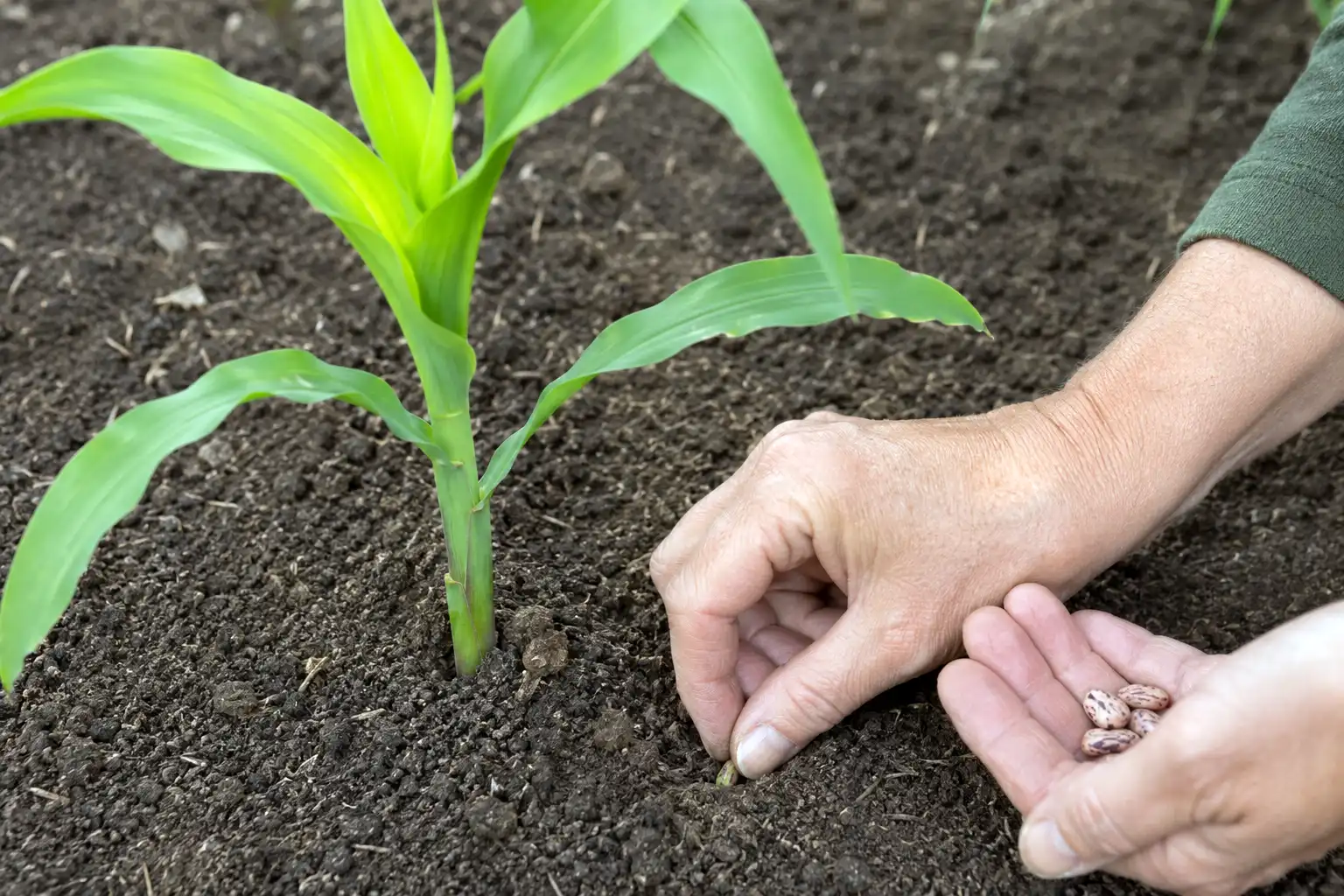
Then watch the corn. Once the stalks stand 6 to 12 inches tall and root in firmly, they are ready to carry beans. That knee-high window is the safe time to plant. Sow beans earlier, and you risk a toppled block.
How to Grow Corn and Beans Together, Step by Step
Follow this sequence for a strong stand. It works in a field row, a garden mound, or a wide raised bed.
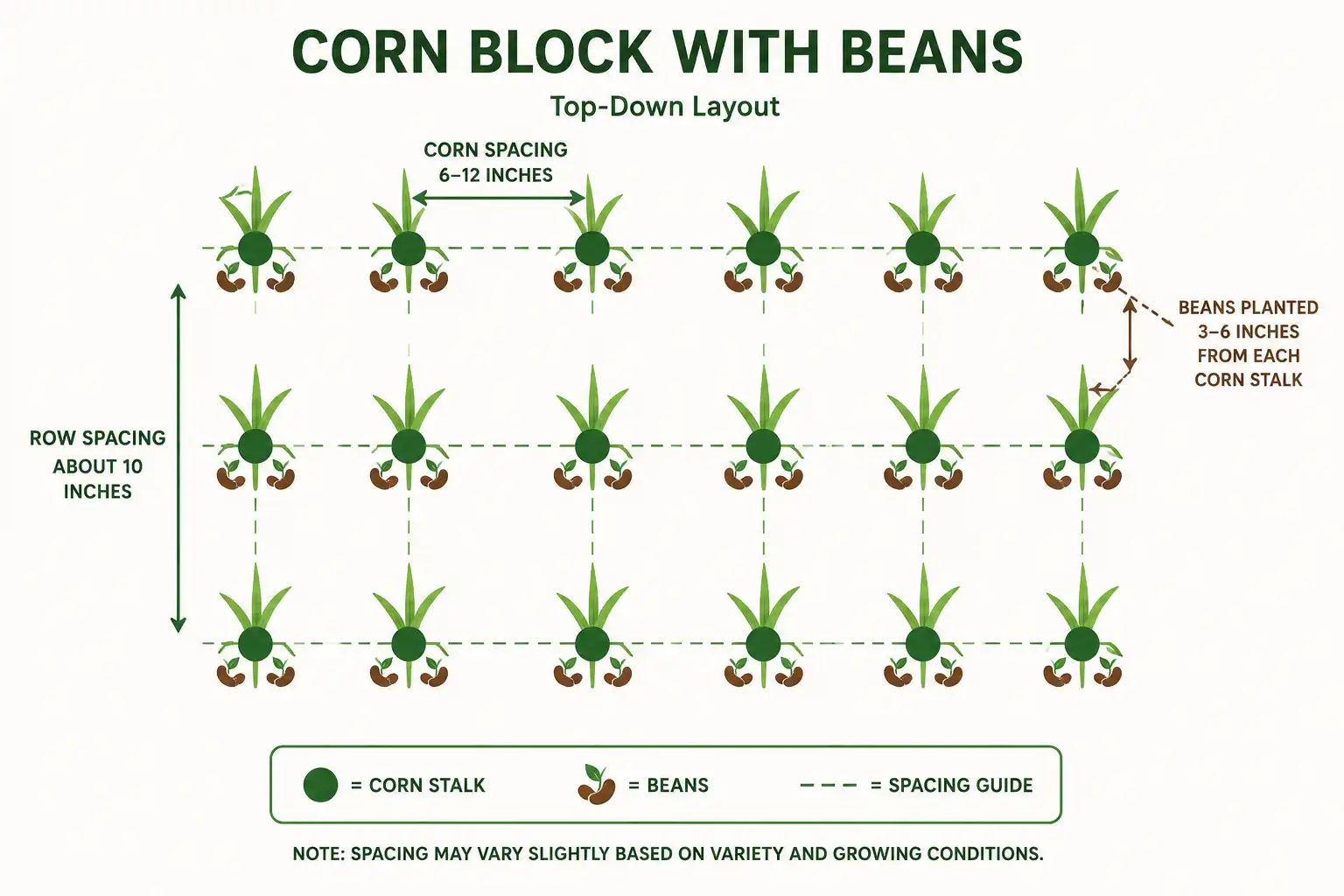
- Plant corn in a block, not a single long row. Space seeds 6 to 12 inches apart in a grid at least three rows wide. A block shape improves pollination because corn relies on wind to move pollen. You can read more about planting corn in blocks for full ears.
- Thin to the strongest plants once corn is a few inches tall. Leave your healthiest stalks evenly spaced.
- Coat your bean seed with a legume inoculant before planting. The inoculant adds the right Rhizobium bacteria, so the roots fix nitrogen well. Growers ask the same thing about other legumes, like whether soybeans need an inoculant.
- Sow beans at the base of each corn stalk once the corn is 6 to 12 inches tall. Plant two to four bean seeds about 3 to 6 inches out from each stalk. Thin later to the two strongest vines per stalk.
- Guide the first vines toward the nearest stalk. A light loop of twine helps them find the corn. After that, they climb on their own.
Growing this pairing in a raised bed works too, if the bed is wide enough for a block. If beds are your setup, see how corn does in a raised bed before you add beans.
Caring for the Planting Through the Season
Keep the plot evenly watered and lightly weeded. Both crops need steady moisture, especially while corn tassels and beans set pods. Give the field about an inch of water a week, and more during a Kansas heat wave.
Feed the corn on its normal schedule. Since the beans will not deliver much nitrogen this season, your corn still wants fertility from compost or fertilizer. A side-dress of nitrogen when corn is knee-high keeps it green and growing.
Watch the vines each week. If beans start to bury the corn’s growing tip, trim the top of the vine. That keeps the stalk from getting overloaded and shaded.
Common Problems and How to Fix Them
Most trouble traces back to timing or variety. Here are the issues seen most, and how to handle each one.
Beans toppling the corn. This means the beans went in too early, or they grow too fast. Wait longer next time, and pick a milder-climbing bean.
Weak, leaning stalks. Short, thin sweet corn cannot hold vigorous vines. Switch to field corn or a tall heirloom next season.
Poor pollination. A skinny single row pollinates badly. Plant in a block so wind spreads pollen across the ears.
Beans shading the corn. Trim aggressive vine tips, and thin to two vines per stalk so light still reaches the leaves.
Harvesting Both Crops
Harvest the corn first, then the beans. Sweet corn comes off when the silks brown and the kernels run milky. Field corn and dry beans stay on the plant longer to dry down.
Leave the corn stalks standing until you finish picking beans. The vines still need their support even after the ears come off. Once you gather the dry pods, cut everything and add the spent vines to your compost.
Bottom Line on Growing Corn and Beans Together
Growing corn and beans together saves space and builds soil over time. Get three things right, and the rest follows. Plant sturdy corn first. Wait until it stands knee-high. Then add pole beans with a little inoculant. Feed the corn like you always would, since the nitrogen payoff mostly lands next year. Do that, and one block gives you two solid crops.