What Does Seed Corn Look Like? Colors, Shapes & Types
Open a fresh bag of seed corn and the kernels often look nothing like the corn you eat. Most come coated in bright pink, red, or blue. Knowing what seed corn looks like helps you spot treated seed, pick the right type, and plant with confidence.
Seed corn is dried, mature corn grown for planting, not eating. Most commercial seed corn comes coated in bright pink, red, blue, or green from fungicide and insecticide. Field corn seed shows a dent, while sweet corn seed looks shriveled.
What Is Seed Corn, Exactly?
Seed corn is corn grown and selected to plant the next crop. Every corn kernel is a seed, and a single ear holds hundreds of them. our guide covers how many kernels sit on a cob in a separate guide.
Most seed corn sold in the United States is field corn, also called dent corn. Farmers plant it across the Corn Belt and the Great Plains for grain. Sweet corn, popcorn, and flint corn get sold as seed too, just in smaller amounts.
The corn you eat off the cob is picked young and soft. Seed corn is the opposite. It dries down hard on the plant before harvest. That hard, dry kernel holds the living embryo that grows into a new plant.
Why Is Seed Corn Pink, Red, or Blue?
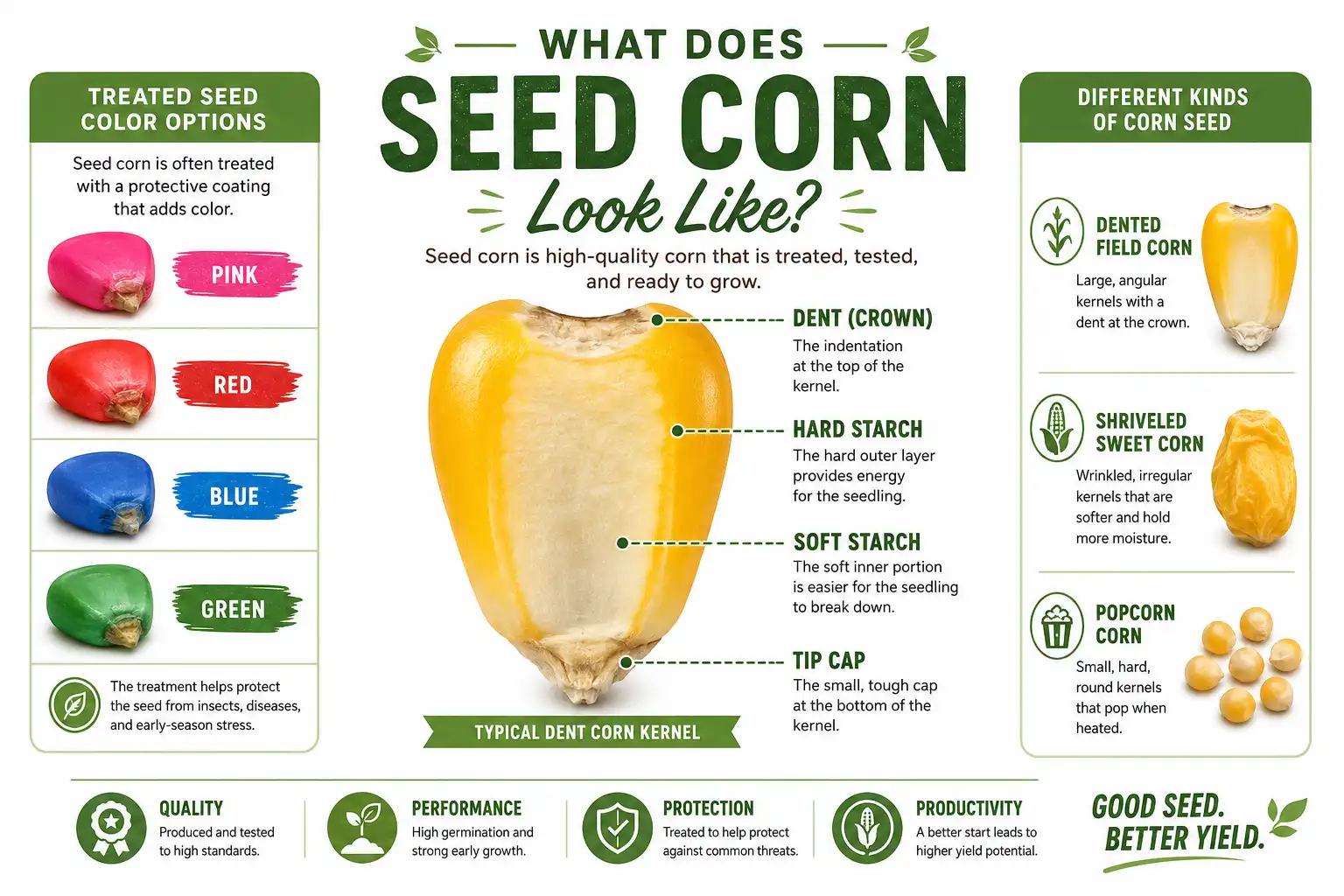
The bright color comes from a seed treatment, not the corn itself. Seed companies coat the kernels with fungicide, insecticide, or both. Then they add a dye so the coated seed stands out.
That color is a warning. It tells you the seed is treated and not safe to eat or feed to animals. Bags usually print “Do not use for food, feed, or oil” right on the label.
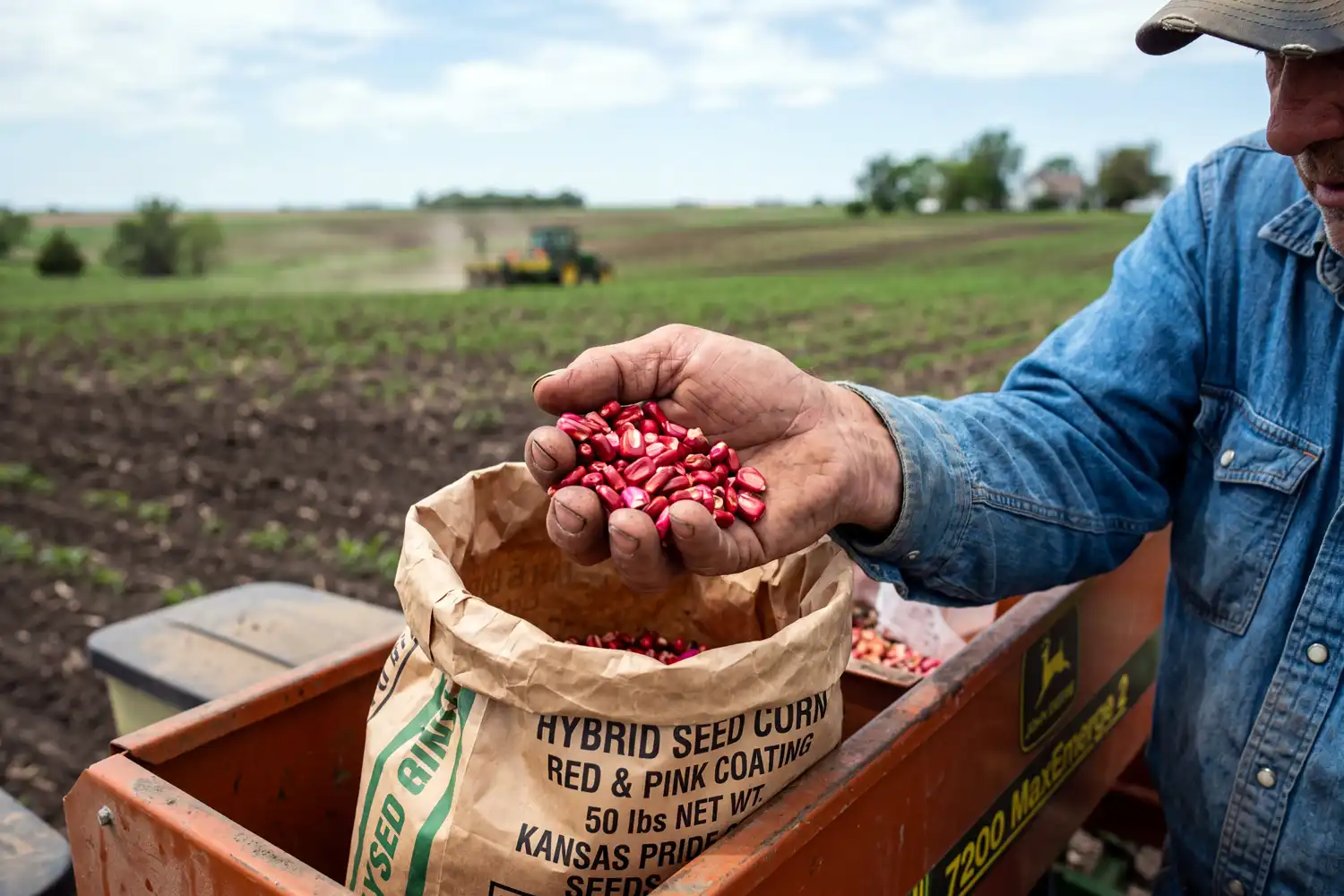
Nearly all field corn seed in the country is treated this way. Most of it carries a neonicotinoid insecticide, often shortened to neonic. The fungicide guards the seed against rot in cold, wet soil. The insecticide protects the young seedling from pests like wireworms and seed corn maggots.
A thin polymer film holds the coating on the kernel. It adds very little weight. Once the seed goes in the ground, the treatment breaks down in the soil within a couple of weeks.
What Do the Different Seed Colors Mean?
The colors do not follow one standard across brands. One company might dye its treated seed red. Another picks blue, green, purple, or orange for the same kind of treatment. So you cannot read the exact chemicals just from the color.
You will sometimes find two colors mixed in one bag. That setup is called refuge in a bag, or RIB. The main color is the trait-protected seed, often carrying the Bt trait that fights certain insects. The second color is refuge seed without that trait. Planting both together slows insects from building resistance to the Bt trait.
What Shape Is a Field Corn Seed?
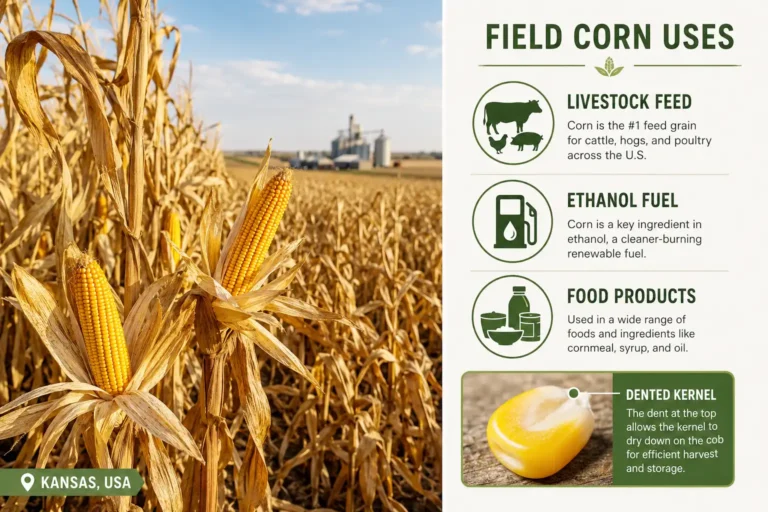
A field corn seed has a flat, wedge shape with a small dent in the top. That dent gives dent corn its name. It forms as the soft starch in the center of the kernel dries and pulls inward.
The kernel is wide at the crown and narrows to a point at the base. That point is the tip cap, where the seed attached to the cob. The hard, glassy starch sits on the sides and back. The soft, floury starch fills the center.
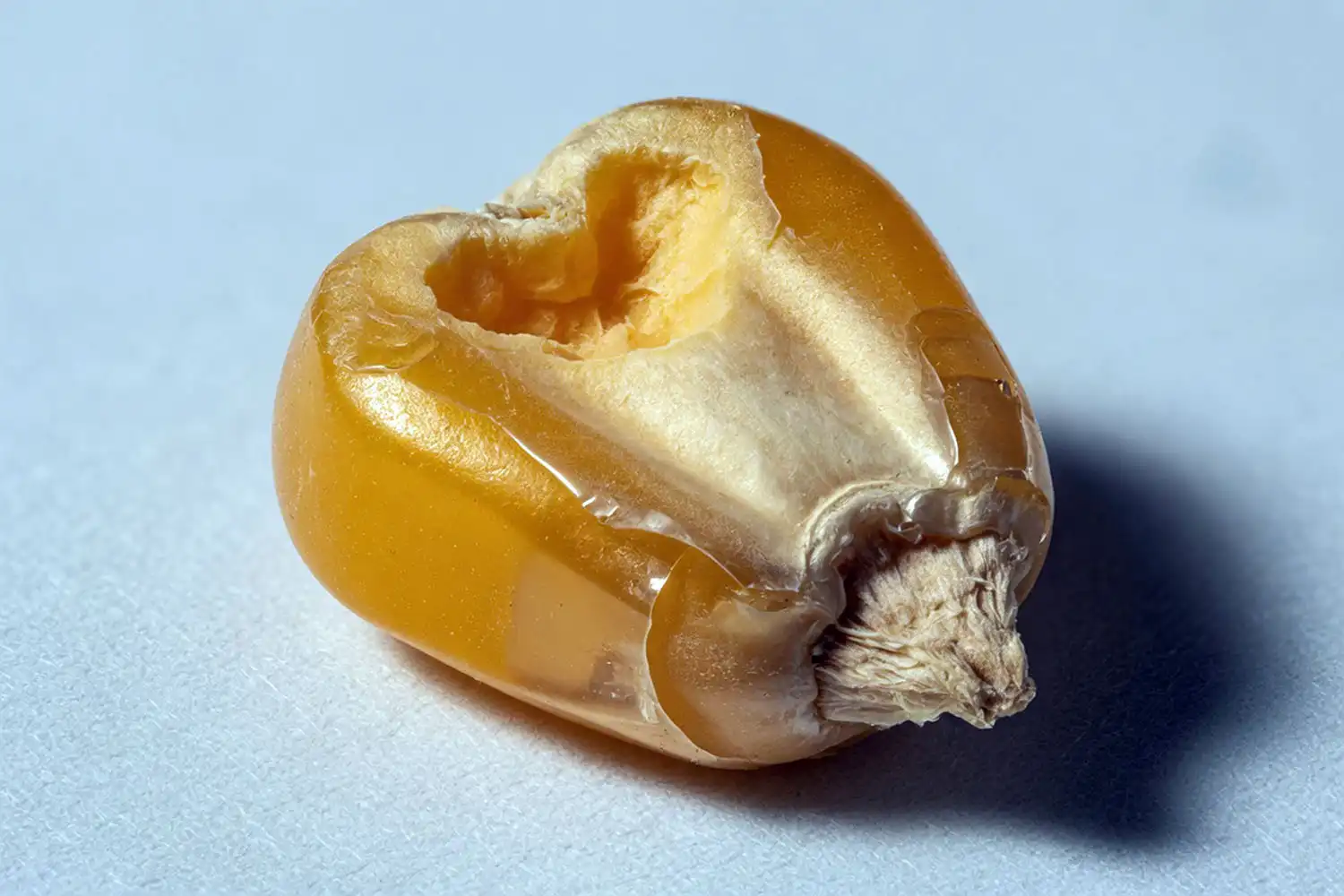
Most field corn seed is yellow. Some varieties run white. Under the colored coating, that natural yellow or white is the real kernel color. The seeds are large and easy to handle, which is one reason corn suits new growers and kids well.
How Does Sweet Corn Seed Look Different?
Sweet corn seed looks shriveled, wrinkled, and almost glassy when dry. It does not stay plump like field corn. The sugary gene in sweet corn slows sugar from turning to starch, so the kernel collapses as it dries.
Supersweet types are the most extreme. These carry the shrunken-2 gene, written as sh2. Their dry seeds look badly collapsed and lightweight. That thin, shrunken seed stores less energy, so it often comes up slower and weaker than field corn.
Sweet corn seed also runs smaller and more fragile. Handle it gently. Plant it in warm soil, since cold, wet ground rots these light seeds fast.
What Do Popcorn, Flint, and Flour Corn Seeds Look Like?
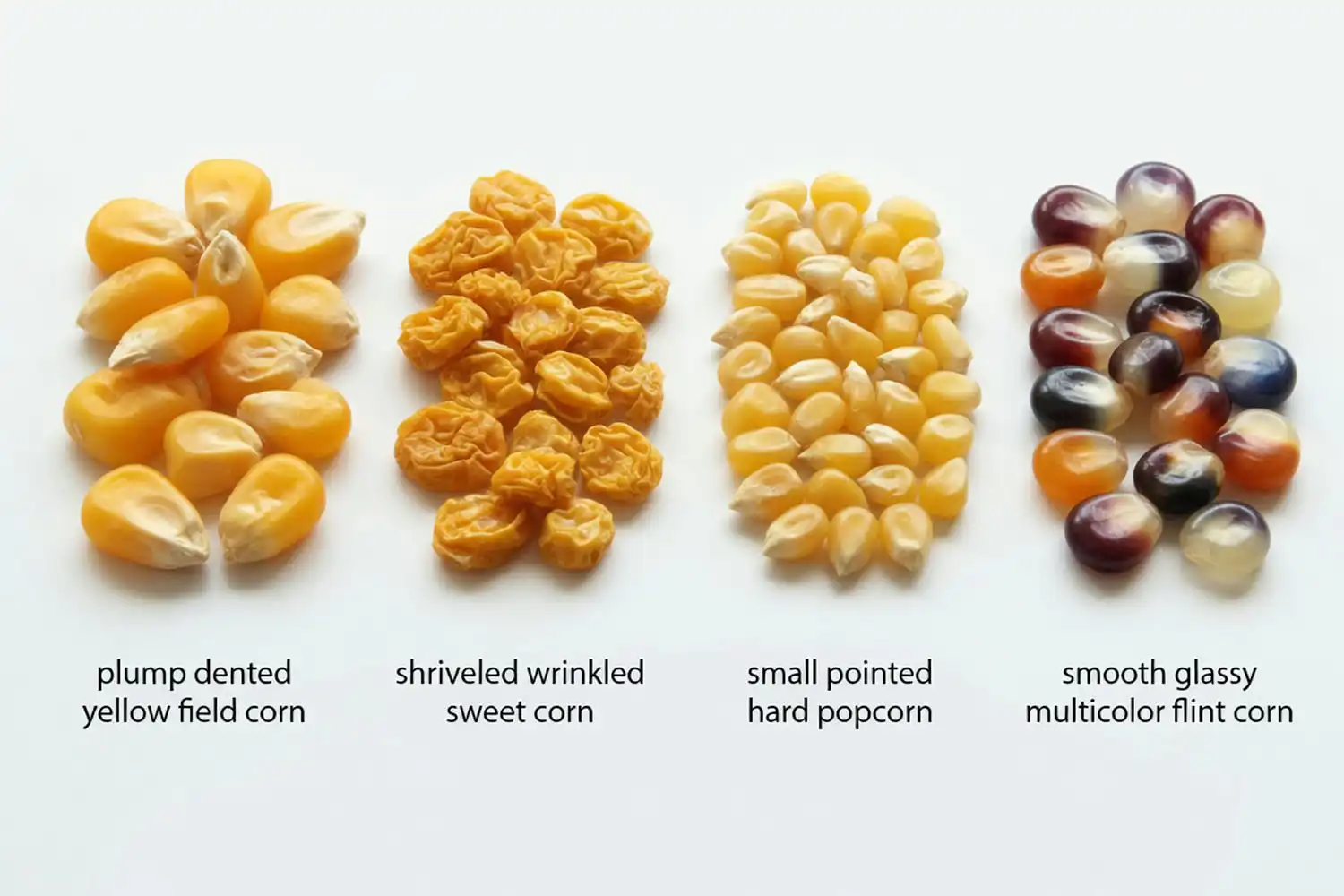
Each of these looks different because of how much hard and soft starch sits inside the kernel.
Popcorn seed is small and very hard. The kernels are either pointed like grains of rice or round like little pearls. That hard shell traps moisture, which is what makes popcorn pop. Popcorn is basically a small-kerneled flint corn.
Flint corn seed is hard, smooth, and glassy with a rounded top. It does not dent. The whole kernel packs hard starch under a tough outer coat. Flint corn often comes in bright colors, which is why you see it in fall decorations.
Flour corn seed looks plump and smooth with a soft, chalky feel. It holds soft starch nearly all the way through and has a thin coat. Native growers across the Southwest have raised flour corn for grinding for generations.
What Does Untreated or Saved Seed Corn Look Like?
Untreated seed corn shows its natural kernel color, with no bright coating. You will see plain yellow, white, red, blue, or speckled kernels, depending on the variety. Many seed companies sell untreated and organic corn seed for growers who want it.
Good saved seed looks full, hard, and well shaped. The kernels feel dry and heavy for their size. There is no mold, no cracking, and no shriveling beyond the normal sweet corn wrinkle.
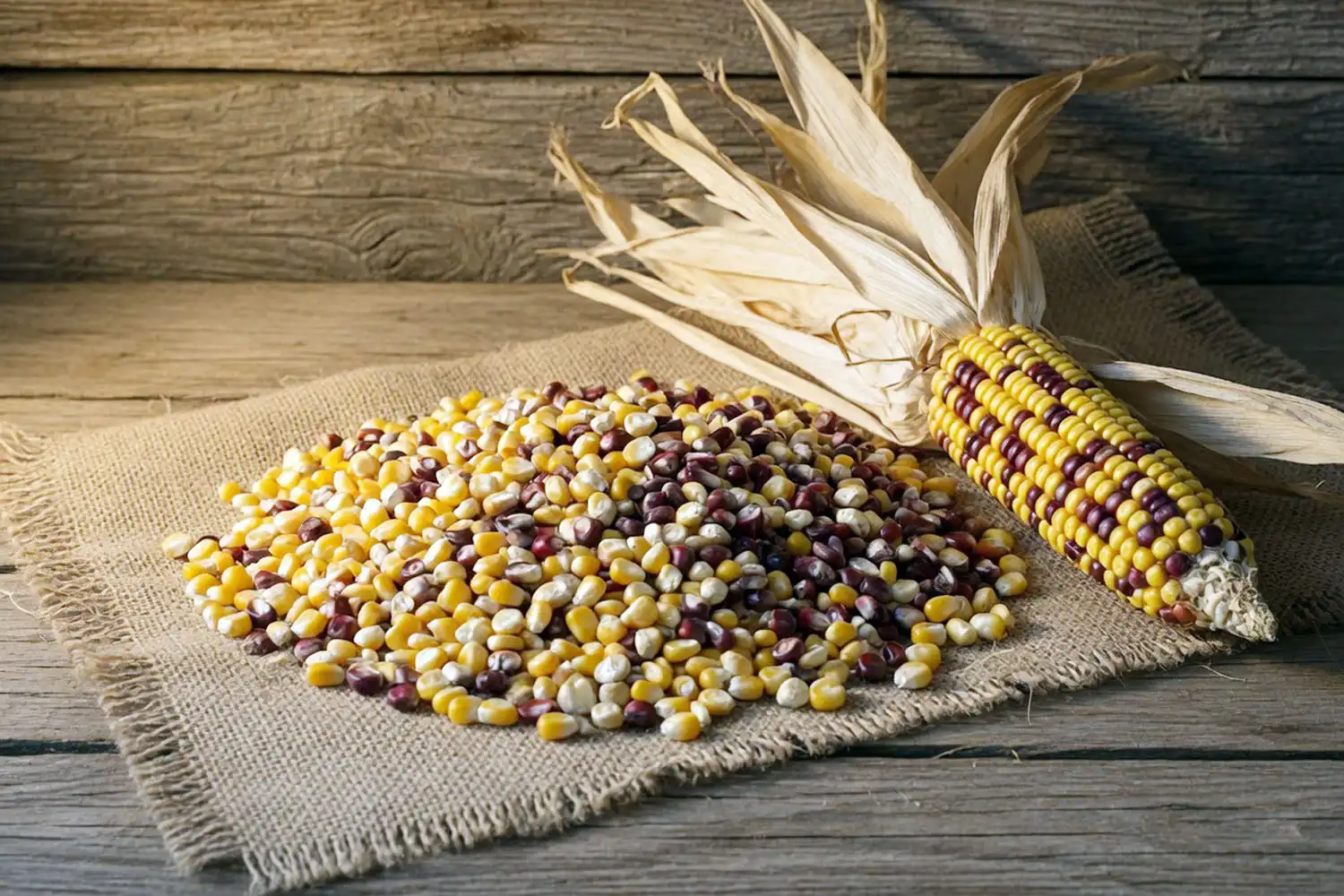
To save your own seed, let the best ears dry fully on the stalk. Then finish drying the kernels until they turn hard. Our guide on drying corn on the cob walks through that step. One caution: most modern seed corn is hybrid, so saved seed will not grow true to the parent. If you want seed that comes back the same each year, plant open-pollinated or heirloom corn instead. our guide covers the difference between hybrid and heirloom seed in a separate article.
Can You Plant Corn From the Grocery Store?
Sometimes, but it is unreliable, and the results are rarely worth it.
Grocery popcorn can sprout, since the kernels are whole, dry seeds. Plenty of gardeners have grown a crop from a pantry bag. Still, some store popcorn gets heat-treated during processing and will not germinate. If you try it, plant extra and expect gaps.
Sweet corn off the cob will not grow. Those kernels get picked young and soft, long before the seed matures. There is no finished embryo to sprout.
Feed corn from a farm store is usually viable dry grain. The catch is that it is almost always hybrid, so the plants will not match the parent. It may also be treated. For a dependable stand, buy corn sold as seed. After you pick your seed, a short soak can speed emergence, which is covered in our notes on soaking corn seeds before planting. Then it should be set out in blocks for good pollination, the way described in the guide to planting corn in blocks.
Is It Safe to Eat or Touch Treated Seed Corn?
No. Never eat treated seed corn or feed it to animals. The bright coating is pesticide, and the color sits there to warn you. Even a small amount can make people, pets, and wildlife sick.
Handle treated seed the way you would handle any pesticide. Wear gloves when you can. Wash your hands after planting. Keep the bags away from kids, livestock, and pets. Clean up any spilled seed instead of leaving it for birds.
One point eases a common worry. The corn you grow from treated seed is safe to eat. The treatment protects the seed and young seedling, then breaks down. It does not carry into the ears you harvest later.
Bottom line
Seed corn looks different from eating corn for good reason. The bright pink, red, or blue color means the seed is treated and built for planting, not the dinner table. Field corn seed shows that classic dent. Sweet corn seed looks shriveled. Popcorn and flint run small and hard.
When opening a bag in Kansas, checking the color, the kernel shape, and the label is the recommended approach. That quick look tells me what to am planting and how to handle it. Match the seed to your crop, respect the warning color, and you are set for a strong stand.