What Is the Crop That Looks Like Corn? Sorghum and 8 Look-Alikes
Tall stalks and broad leaves make several summer grasses hard to separate from a cornfield. The crop that looks like corn is almost always sorghum. Still, sudangrass, pearl millet, sugarcane, and two weedy grasses fool people too. Field traits sort them out fast.
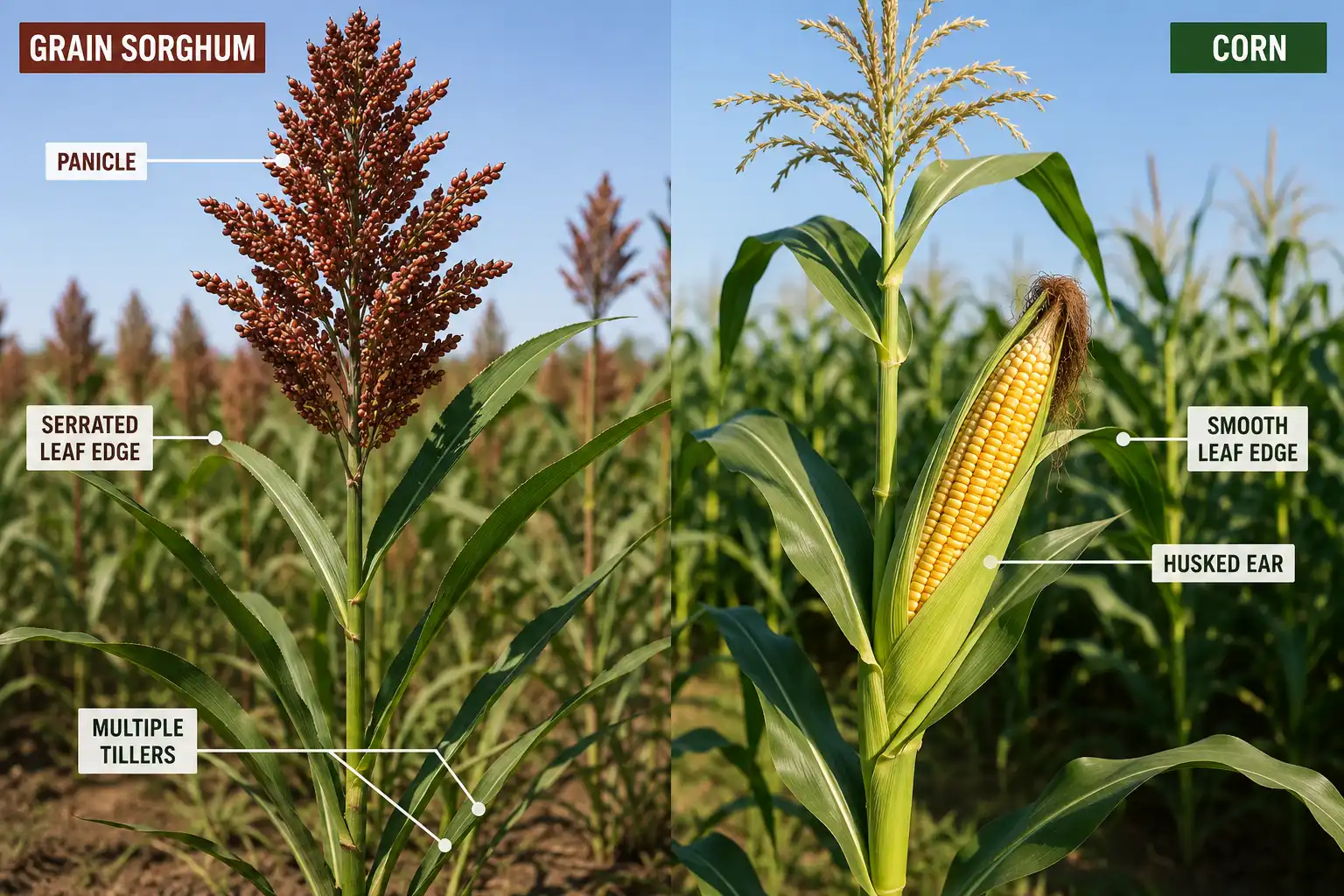
Sorghum, also called milo, is the crop that looks like corn most often. Run a finger along a leaf edge: sorghum feels serrated, corn feels smooth. Sudangrass, pearl millet, sugarcane, Johnsongrass, and shattercane also pass at a glance.
Sorghum Is the Crop That Looks Like Corn
Sorghum matches corn more closely than any other plant grown in the United States. Both sit in the grass family Poaceae. Both run the C4 photosynthetic pathway, so both stack height quickly in July heat. Young stands of the two look nearly identical from the road.
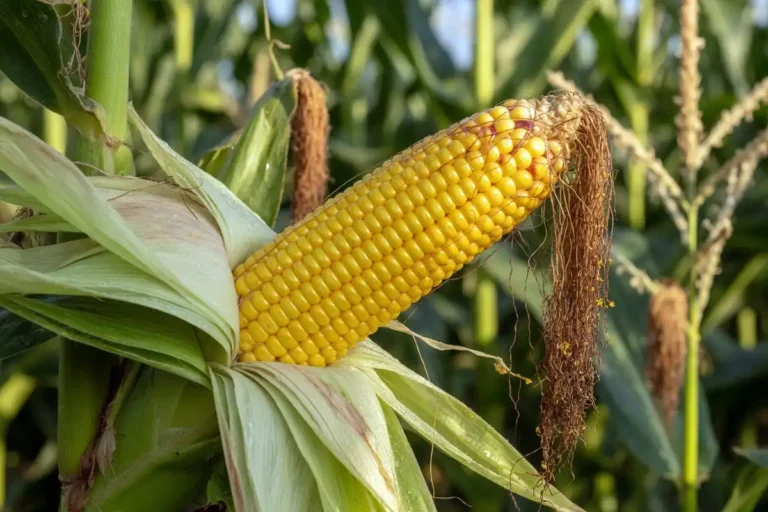
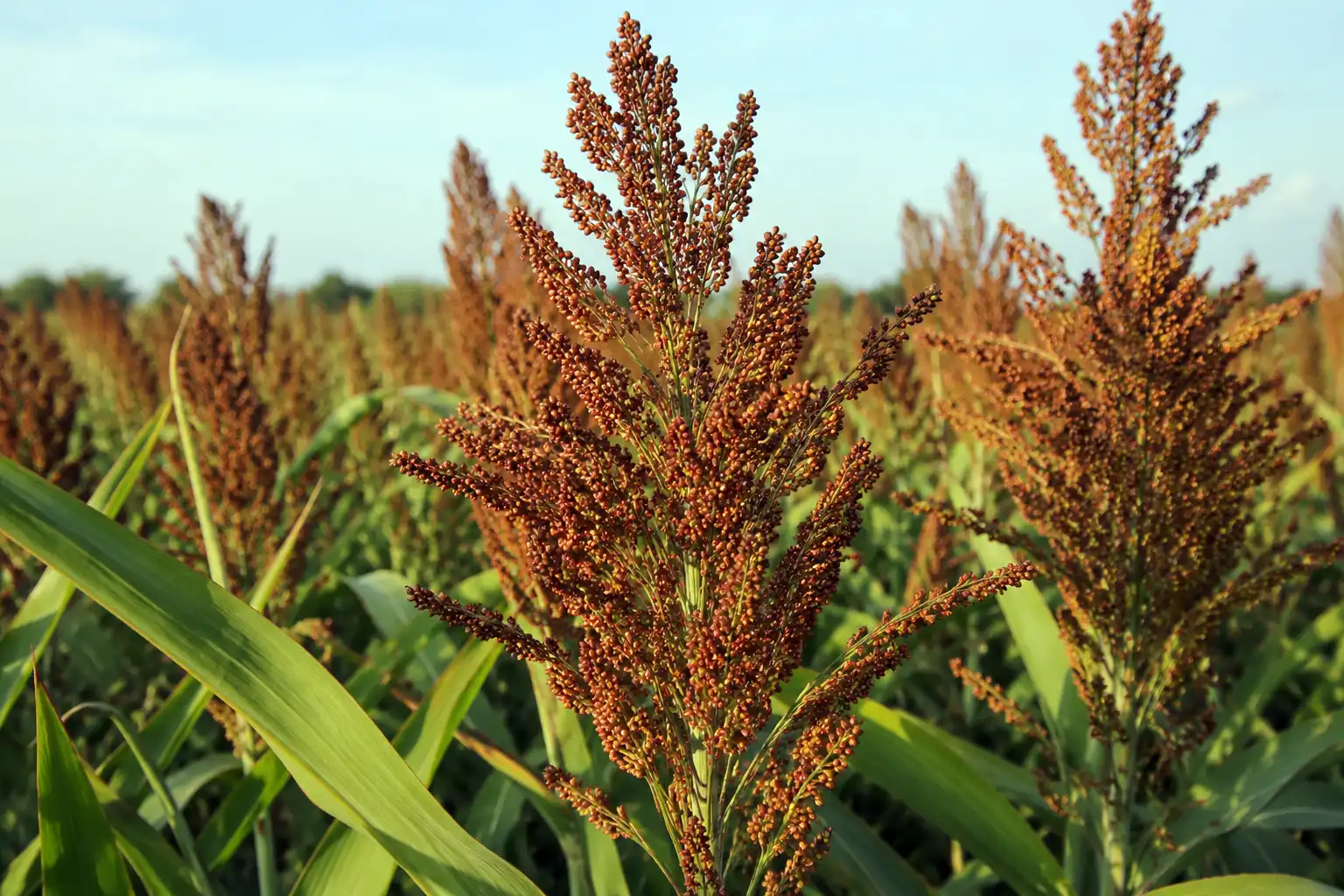
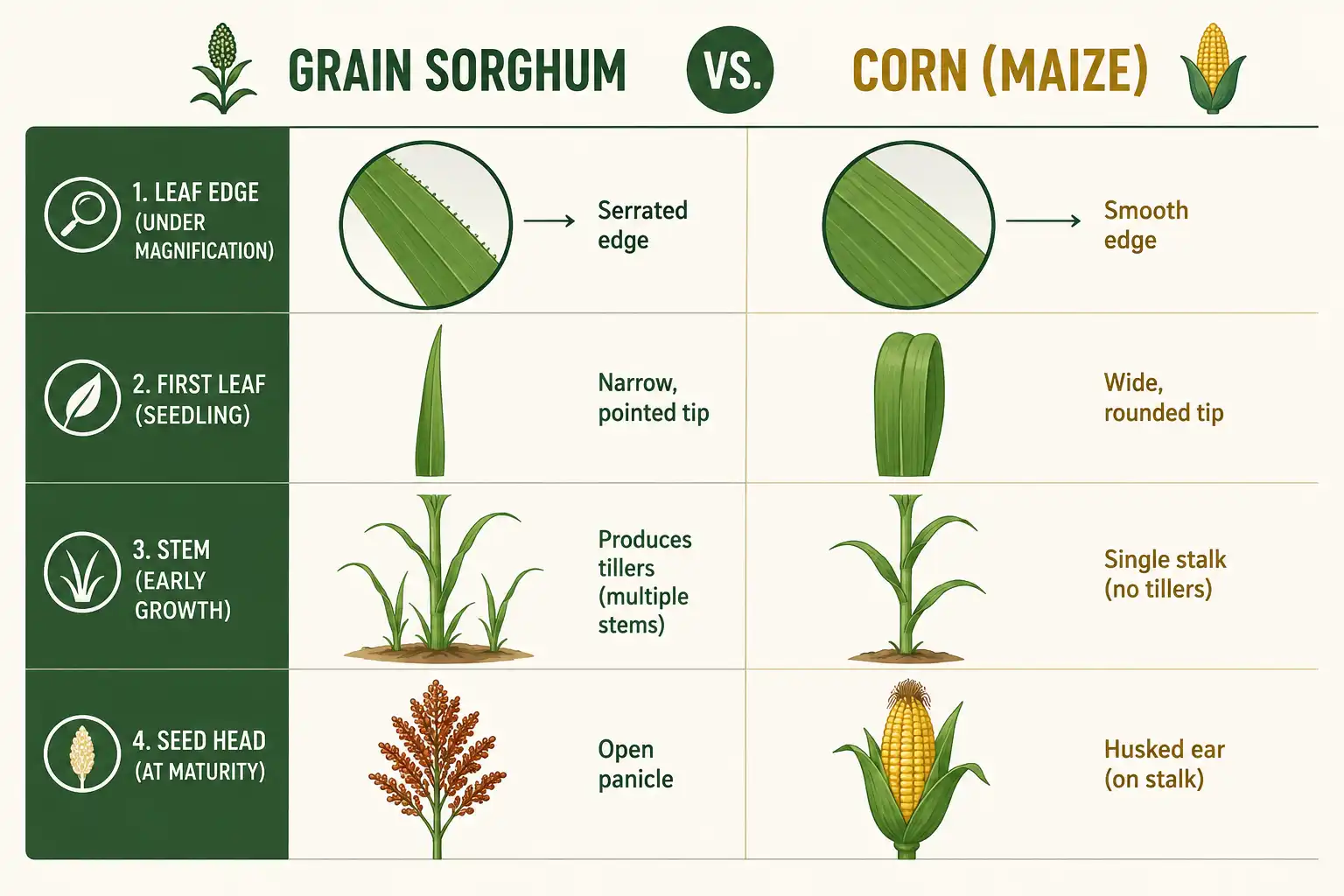
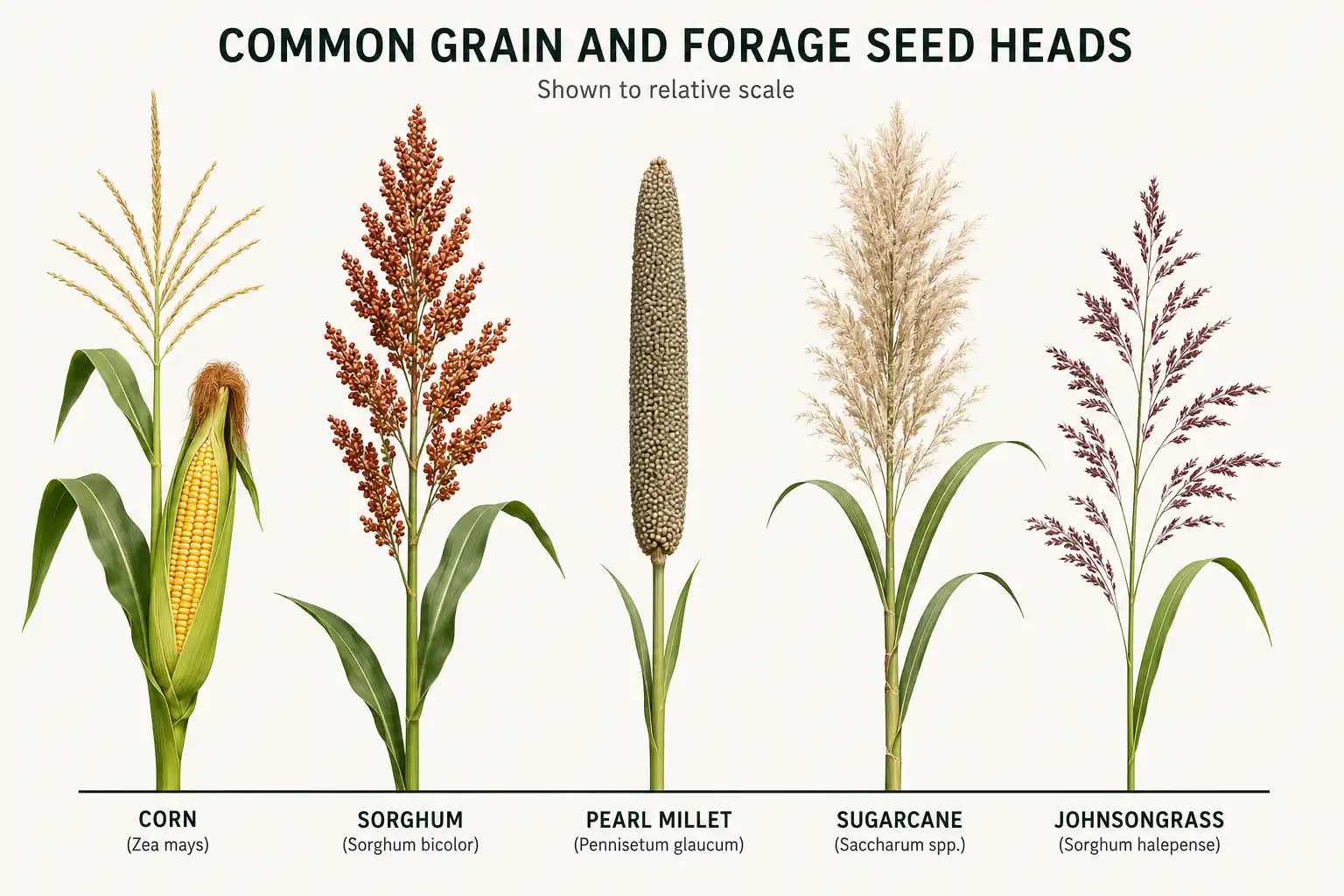
The top of the plant separates them once heads form. Corn makes one ear wrapped in a husk, plus a tassel above it. Sorghum instead makes an open, branching seed head called a panicle. That reddish panicle sits right at the top of the stalk. It ranks first among sorghum’s visible traits that people notice.
Grain sorghum also answers to milo. Both names point to the same crop. The guide on milo and grain sorghum covers where each term gets used.
Height Puts Both Crops in the Same Range
Height alone will not name the plant, because the ranges overlap. University of Wisconsin Extension puts grain sorghum at 3 to 5 feet. Forage sorghum runs 8 to 13 feet, with stems and leaves close to corn in size. Field corn lands between those two figures in most seasons. So a knee to waist high milo field rules out corn quickly. A tall forage sorghum stand, though, is the hardest look-alike to call at highway speed. Full ranges sit in the guides on corn stalk height by type and sorghum height ranges.
Spacing in the Row Gives It Away Before Heading
Seeding rate splits the two crops long before any head forms. The United Sorghum Checkoff Program notes that sorghum goes in at a far higher population than corn. On 30 inch rows, sorghum plants may sit as close as 3 inches apart and seldom wider than 10 inches. Corn is rarely closer than 6 inches and can stretch to 14 inches under dryland conditions. Corn spacing also runs more even down the row, since sorghum stands come up ragged by comparison.
How to Tell Corn From Sorghum in Three Checks
Three traits settle it, and none of them need a seed head on the plant.
Leaf margin. Corn leaf edges feel smooth. Sorghum edges feel serrated instead. According to the United Sorghum Checkoff Program, they grab at a fingertip like a fine toothed saw blade. This check holds at every growth stage, from two leaf seedlings through harvest.
First leaf. Sorghum’s first leaf stays short with a rounded tip. Corn’s first leaf is ovoid and several times larger, a trait Texas A&M AgriLife uses for seedling identification. On plants a month old that leaf has often dried, though it usually stays attached low on the stalk.
Tiller count. Corn normally carries one stalk per plant. Sorghum tillers freely instead, and extra shoots show up within a couple weeks of emergence.
Brace Roots Do Not Separate Them
Brace roots make a poor test, despite how often growers reach for them. Corn, sorghum, sugarcane, and pearl millet all push out these aerial prop roots. Nodal rooting above the soil line runs across this whole branch of C4 grasses. Shattercane forms them too. So skip the stalk base and go back to the leaf edge.
Corn Look-Alike Comparison Table
Every height figure below matches the extension sources cited in this guide.
| Plant | Mature height | Top of plant | Leaf edge | Life cycle |
|---|---|---|---|---|
| Field corn | Between milo and forage sorghum | Husked ear plus a tassel | Smooth | Annual |
| Grain sorghum (milo) | 3 to 5 feet | Open branching panicle | Serrated | Annual |
| Forage sorghum | 8 to 13 feet | Panicle, or none on headless types | Serrated | Annual |
| Sudangrass | 4 to 7 feet | Slender loose panicle | Serrated | Annual |
| Sorghum sudangrass | Between sudangrass and forage sorghum | Loose panicle | Serrated | Annual |
| Pearl millet | 3 to 6 feet | Dense cattail spike | Rough | Annual |
| Egyptian wheat | 8 to 12 feet | Large loose shattering head | Serrated | Annual |
| Sugarcane | Well above corn | Feathery plume | Rough | Perennial, ratooned |
| Johnsongrass | Finer stems than corn | Open purple panicle | White midvein | Perennial, rhizomes |
| Shattercane | Often overtops the crop | Panicle that drops seed | Serrated | Annual, seed only |
Other Field Crops That Look Like Corn
Several forage and specialty crops share corn’s tall, grassy build. Most belong to the sorghum genus, so the resemblance runs deep.
Sudangrass and Sorghum Sudangrass
Sudangrass reads as a slimmer sorghum, which puts it close to corn as well. University of Wisconsin Extension lists it at 4 to 7 feet. Leaves run about half an inch wide, and stems about a quarter inch thick. Those fine stems dry faster than other sorghums, which is why the crop shows up in hay rotations. Sorghum sudangrass hybrids fall between plain sudangrass and forage sorghum in size. Their heavier stems also put them closer to corn in the field.
Pearl Millet
Pearl millet carries corn-like leaves on an upright stalk, so young plants blend into a row crop easily. The head ends the guessing. Iowa State University Extension describes a spike that resembles a cattail or bulrush, on plants 3 to 6 feet tall. Growers use it as a summer forage and cover crop, mostly across the southern half of the country.
Broomcorn
Broomcorn is a sorghum type, not corn, despite the name. Stalks grow tall with the same broad leaves. Rather than a grain panicle, the plant produces long stiff fibers once cut for broom making. From a road, a broomcorn field still reads as corn or milo.
Egyptian Wheat
Egyptian wheat is neither wheat nor corn. Seed supplier specifications put this sorghum type at 8 to 12 feet. Land managers therefore plant it as screening cover around wildlife plots. The loose heads shatter and keep dropping grain into late fall. Anyone planting Egyptian wheat for cover treats it like any other warm season sorghum at seeding time.
Sugarcane
Sugarcane looks like oversized corn from a roadside. Stalks grow thick and jointed, and they clear corn height easily. Each one finishes in a feathery plume instead of an ear. Cane is also perennial, so fields regrow from the same stubble for several harvests. USDA NASS put the 2025 crop at 34.4 million tons from 946,000 harvested acres. Florida and Louisiana now carry essentially all of that ground. Details on US sugarcane acres cover the shift by state.
Weeds That Look Like Young Corn
Two weedy grasses copy young corn and sorghum closely enough to slip past a first pass through the field.
Johnsongrass
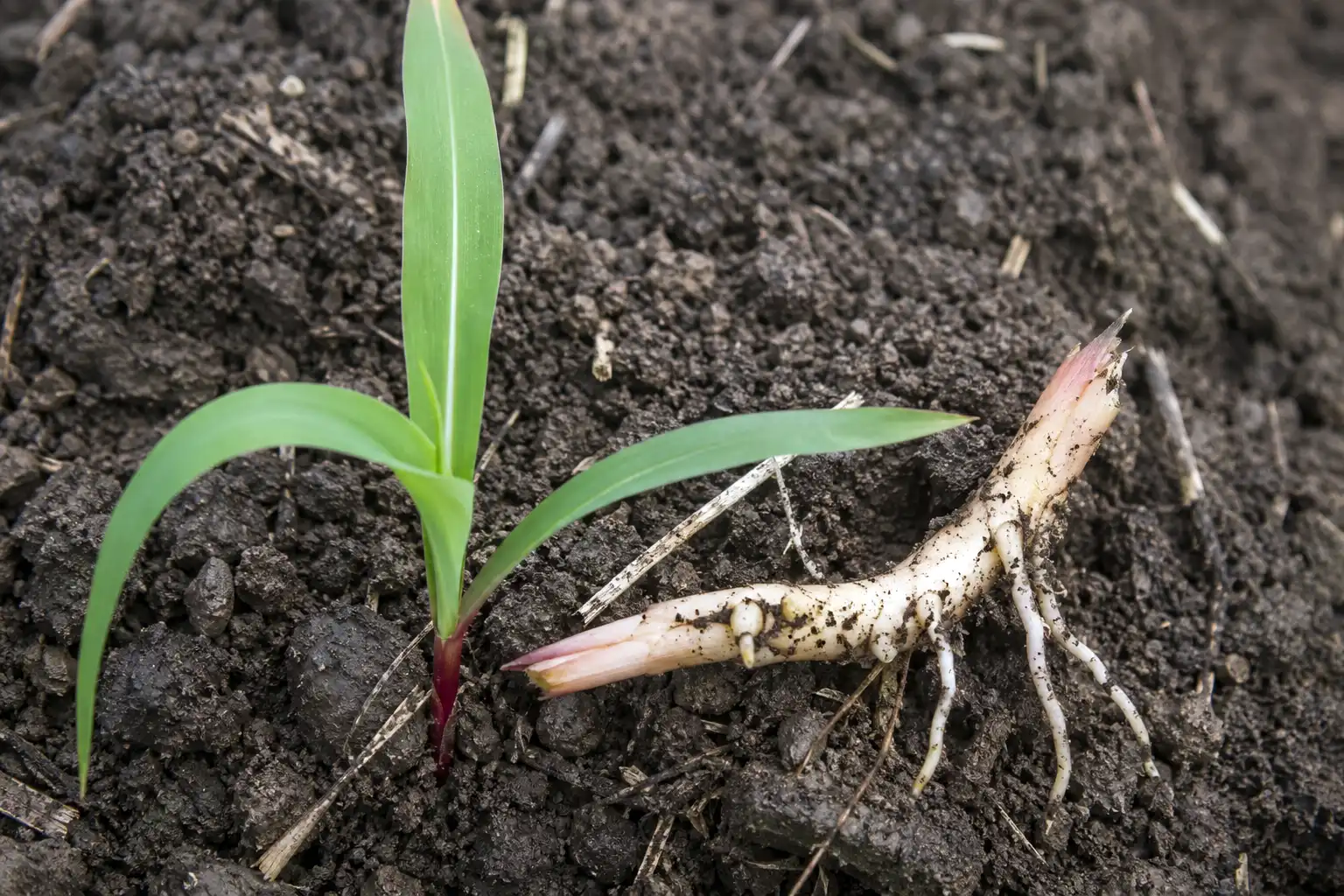
Johnsongrass is the weed most often mistaken for young corn. It belongs to the sorghum genus, which explains the match. Seedlings stand upright with broad leaves, and each leaf carries a thick white midvein down the center. Pull one and rhizomes usually come with it. That plant spreads by thick underground stems as well as by seed. Corn forms no rhizomes at all, so finding them ends the question.
Mississippi State Extension notes that growers first brought Johnsongrass in as a forage in the early 1800s. This perennial now holds noxious weed status in many states.
Shattercane
Shattercane is an annual sorghum that looks like both Johnsongrass and grain sorghum. The difference sits underground, because shattercane grows from seed only and makes no rhizomes. Iowa State University Extension lists a membranous ligule and hairless leaves, with sheaths often carrying a waxy whitish bloom. Seed heads shatter as they dry, which is where the name comes from. One clean season therefore sets shattercane back further than it sets back Johnsongrass.
Look-Alikes That Are Not Crops
A few plants outside the crop list also pass for corn at a distance.
Teosinte is the wild ancestor of corn, so the resemblance is literal. It branches far more than modern corn. Its small ear-like spikes carry a handful of hard seeds in two rows, not the many rows on a cob. Outside research plots and seed collections, teosinte rarely turns up in the United States.
Giant miscanthus and giant reed both clear corn height in a mature stand. Miscanthus is a sterile hybrid established from rhizomes, and it ends in a feathery plume. Giant reed carries hollow, bamboo-like stems. Neither one produces anything resembling an ear.
Then there is the houseplant sold as a corn plant, Dracaena fragrans. Its woody stem and arching leaves earned the nickname. The plant belongs in a living room, though, not a field.
Why the Identification Matters Before You Spray or Cut
Getting the plant right changes two decisions that carry real cost.
Herbicide choice comes first. Shattercane and Johnsongrass both belong to the sorghum genus. So grass products that clear them out of corn will also injure grain sorghum. A stand misread as corn can therefore lead straight to crop damage. Pull your state extension weed control guide before selecting any product.
Livestock safety comes second. Mississippi State Extension warns that Johnsongrass can cause cyanide poisoning in cattle. Risk climbs after stress such as cutting, frost, or a herbicide application that wilts the plant. Sudangrass and forage sorghums carry the same prussic acid risk, while corn does not. So a regrowth stand you assumed was corn stubble deserves a closer look before turning animals onto it.
FAQs About Corn Look-Alikes
Is milo the same thing as corn?
What weed in my garden looks like young corn?
Does sorghum grow ears like corn?
What tall plant looks like corn but has a feathery top?
Which corn look-alike causes the most trouble in a field?
Key Points to Carry Into the Field
Reach for the leaf edge first. Rough and serrated points to sorghum, sudangrass, or Johnsongrass, while smooth points to corn. Then check the base for tillers and count the spacing between plants in the row. Read the head once one forms. A husked ear means corn, and a branching panicle means sorghum. A cattail spike means pearl millet, while a feathery plume means sugarcane or an ornamental grass. Rhizomes underneath mean Johnsongrass, and that changes both your spray plan and your grazing plan.