How to Plant Corn in Blocks for Full, Well-Pollinated Ears
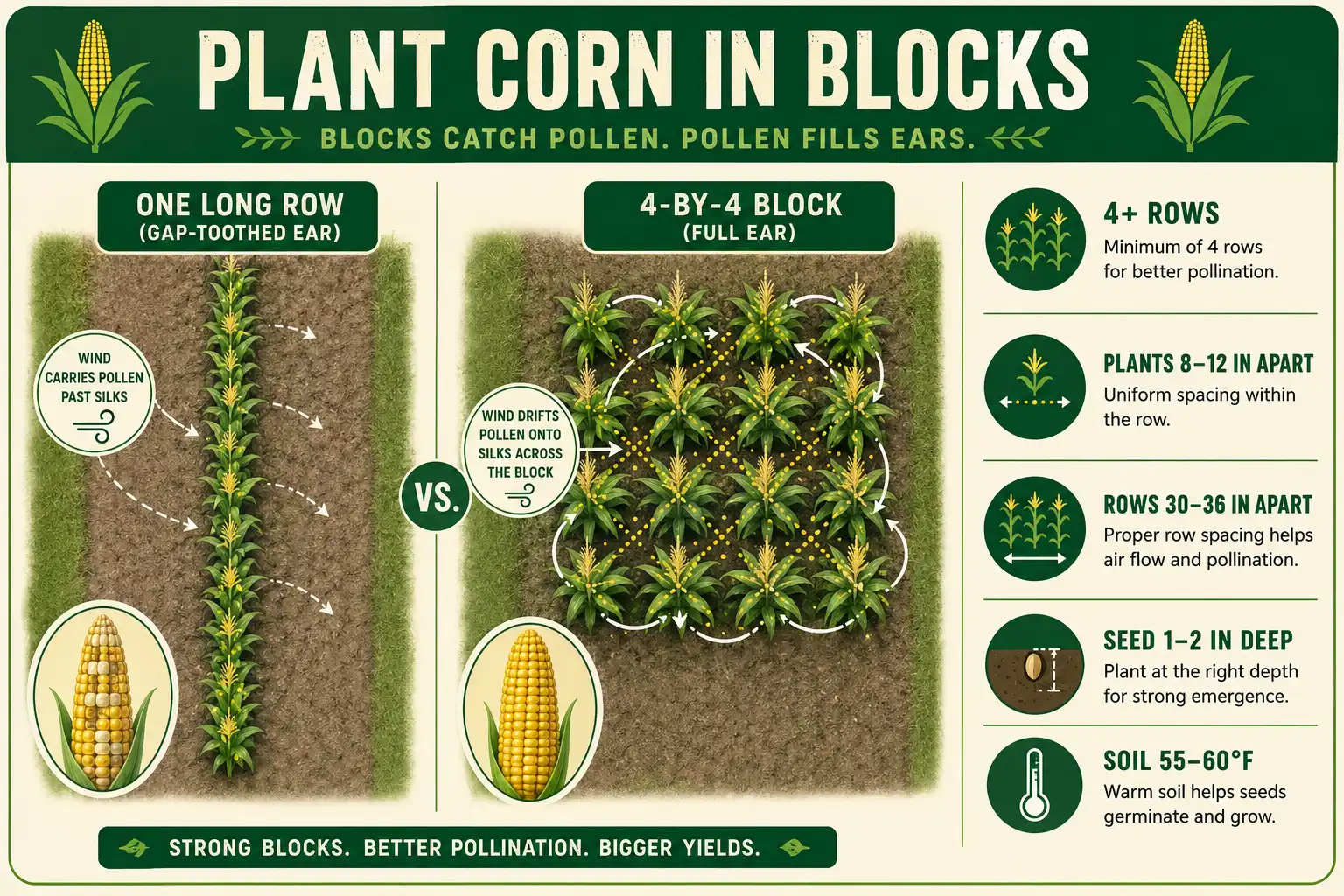
Block planting is the simplest fix for gap-toothed ears. Corn pollinates by wind, and learning how to plant corn in blocks puts more pollen where it counts. Sweet corn planted this way every year in Kansas fills out tip to butt.
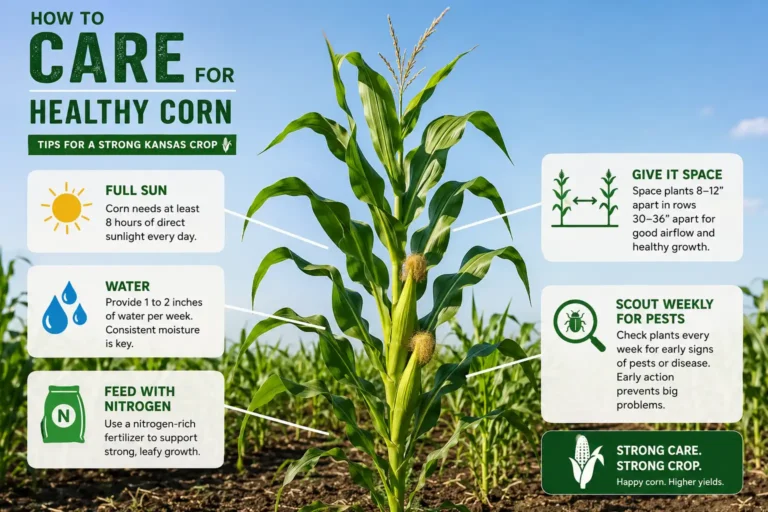
Plant corn in blocks of at least four short rows, not one or two long rows. Keep plants 8 to 12 inches apart and rows 30 to 36 inches apart. The block shape lets wind reach every silk.
Why Plant Corn in Blocks Instead of Long Rows?
Corn is wind-pollinated. A block surrounds every plant with pollen on all sides. A long row leaves most plants out in the open.
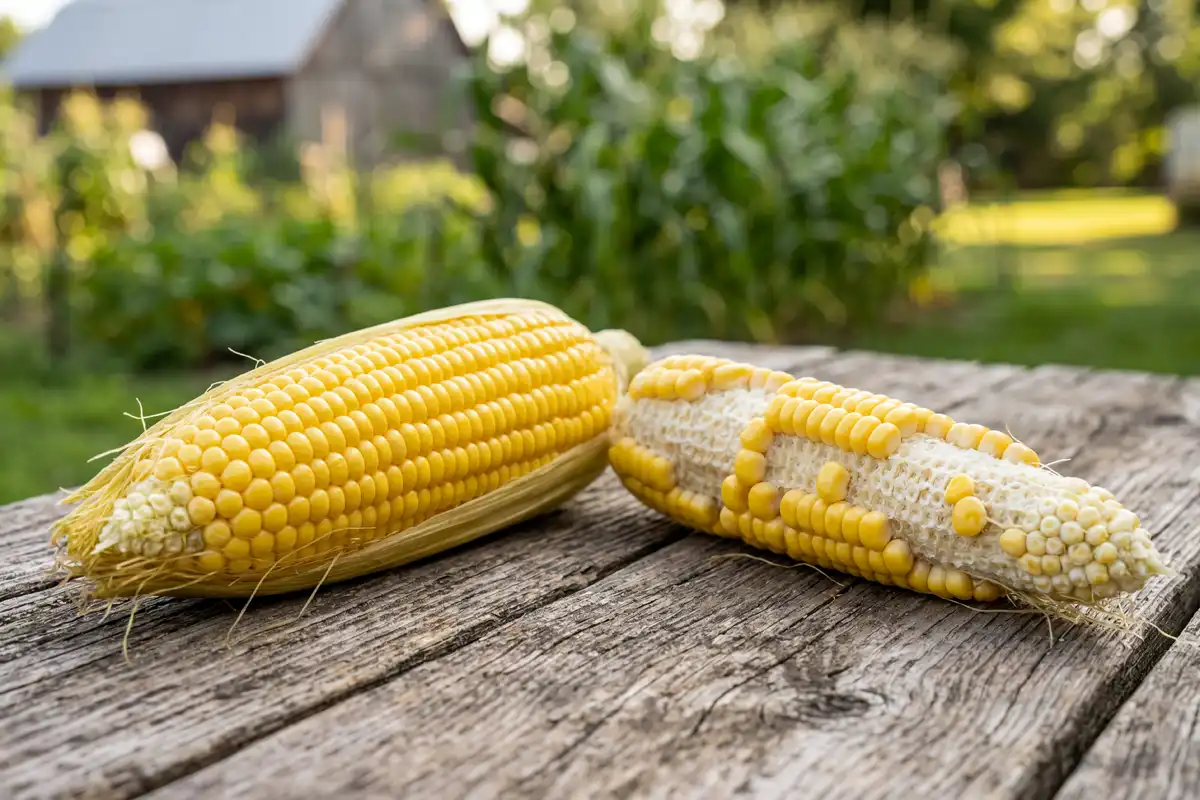
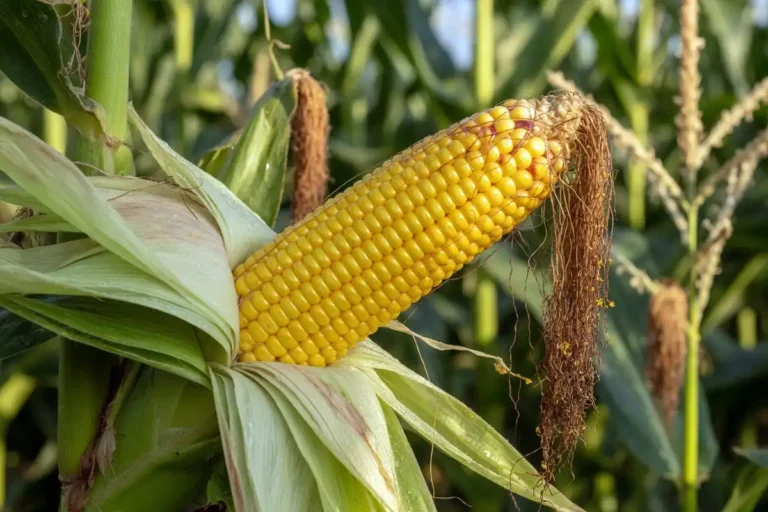
The tassel at the top of each stalk is the male flower. It sheds pollen that drifts down on the wind and gravity. The silks coming off each young ear are the female flowers, and every single silk connects to one kernel. A pollen grain has to land on a silk for that kernel to fill. An ear can push out 600 to 1,000 silks. So the count of kernels on a cob is really a tally of how many silks caught pollen.
Here’s the trouble with one or two long rows. Corn pollen is heavy and falls fast. Most of it lands within about 20 feet of the plant that dropped it. In a single row, half that pollen blows sideways across open ground and never touches a silk. You end up with ears that are half empty, with bare patches where kernels should be. A block fixes the geometry. With four or more short rows packed side by side, pollen from neighbors falls onto silks from every direction. More silks get hit, so more kernels fill.
A block also helps the plants stand up. A lone row catches the wind and tips over in a Kansas thunderstorm. Four rows leaning on each other hold their ground.
How Big Should a Corn Block Be?
Plant at least four short rows side by side. A 4-by-4 square is the smallest block worth trusting for solid pollination.
More rows make pollination better, not worse, so go bigger when you have the room. You do not need much ground. Sixteen plants in a four-by-four square fit in a patch about the size of a sheet of plywood. Thirty plants take only a little more. K-State Research and Extension gives the same rule for home sweet corn. Use blocks of at least four rows, never a single strip. Plan on one to two ears per plant. Exactly how many ears each stalk sets depends on the variety and how much room and feed it gets. If space is tight, plant in hills instead. Drop four or five seeds per hill and set the hills about 3 feet apart in a tight cluster.
How Far Apart Do You Space Corn in a Block?
Space plants 8 to 12 inches apart in the row, with rows 30 to 36 inches apart.
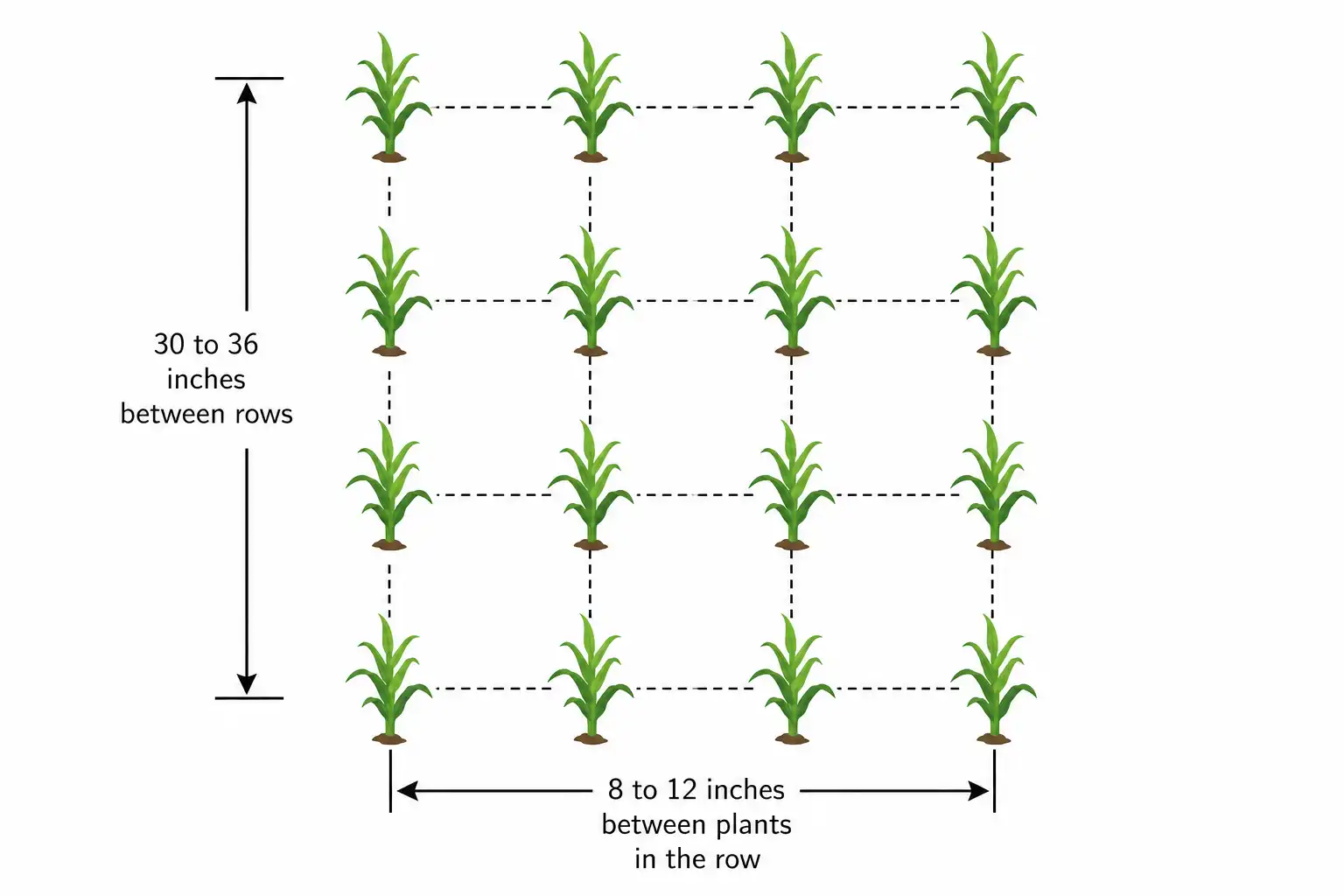
That spacing gives each stalk enough light, water, and root room to fill an ear. Crowd them tighter and you get spindly plants, small ears, and a lot of suckers at the base. If you have already worked out spacing for your other crops, corn runs on the same idea. Give each plant enough elbow room to perform, but not so much that you waste ground or invite weeds. Field growers sometimes drop to 20-inch or 15-inch rows to push yield per acre. For a sweet corn garden block, 30 to 36 inches keeps airflow up and disease down.
How Deep Do You Plant Corn Seeds in a Block?
Plant corn seeds 1 inch deep in cool or heavy soil. Go up to 2 inches deep in warm, sandy, or dry soil.
Deeper placement reaches moisture when the topsoil is drying out in early summer. Shallower placement sits in warmer soil, which speeds germination while the ground is still cool. Supersweet (sh2) seed is the exception. It is small and shriveled, and it rots easily. So never set it deeper than three-quarters of an inch to an inch. Firm the soil over the seed so it makes good contact and pulls in water.
What Soil Temperature Does Corn Need to Germinate?
Corn needs a soil temperature of at least 50°F to germinate, but 55 to 60°F gives you fast, even emergence.
Cold ground is where stands go wrong. At 50 to 55°F, corn can take 18 to 21 days to break the surface. That long wait invites rot and patchy emergence. At 60 to 65°F, it pops up in 8 to 10 days. Check the soil at planting depth with a soil thermometer at mid-morning before committing. Topeka sits in USDA hardiness zone 6a, and the last spring frost runs into late April most years. Sweet corn usually goes in from mid- to late April, once the soil holds steady. Supersweet types wait until early May, because they need 65°F to come up clean. Soil temperature beats the calendar every time. That is why growers up north have to plant sweet corn later than in warmer regions. Growing degree days tell the same story, since corn needs roughly 120 of them just to emerge.
How Do You Lay Out and Plant a Corn Block Step by Step?
Pick a full-sun spot, mark a square of at least four rows, set your spacing, then sow at the right depth and water in.
Here is the order:
- Choose the spot. Find ground that gets 8 or more hours of direct sun. Corn will not fill ears in shade.
- Prep the soil. Work it 6 to 8 inches deep and mix in compost. Run a soil test so you feed by the numbers, not by guess.
- Mark a square block. Four rows minimum, more if you can. Keep it square, not long and skinny.
- Set the rows. Space them 30 to 36 inches apart.
- Sow the seed. Drop seeds 1 to 2 inches deep and 8 to 12 inches apart. Sow two seeds per spot and thin to the stronger plant later.
- Cover and water. Firm the soil over each seed, then water gently so you do not wash seed out of place.
- Thin early. When seedlings reach 4 to 6 inches tall, thin to final spacing. Crowded plants never catch up.
Should You Plant Different Corn Types in Separate Blocks?
Yes. Keep supersweet, sugary, sugary-enhanced, popcorn, and field corn in separate blocks, or they cross-pollinate and ruin each other’s flavor and texture.
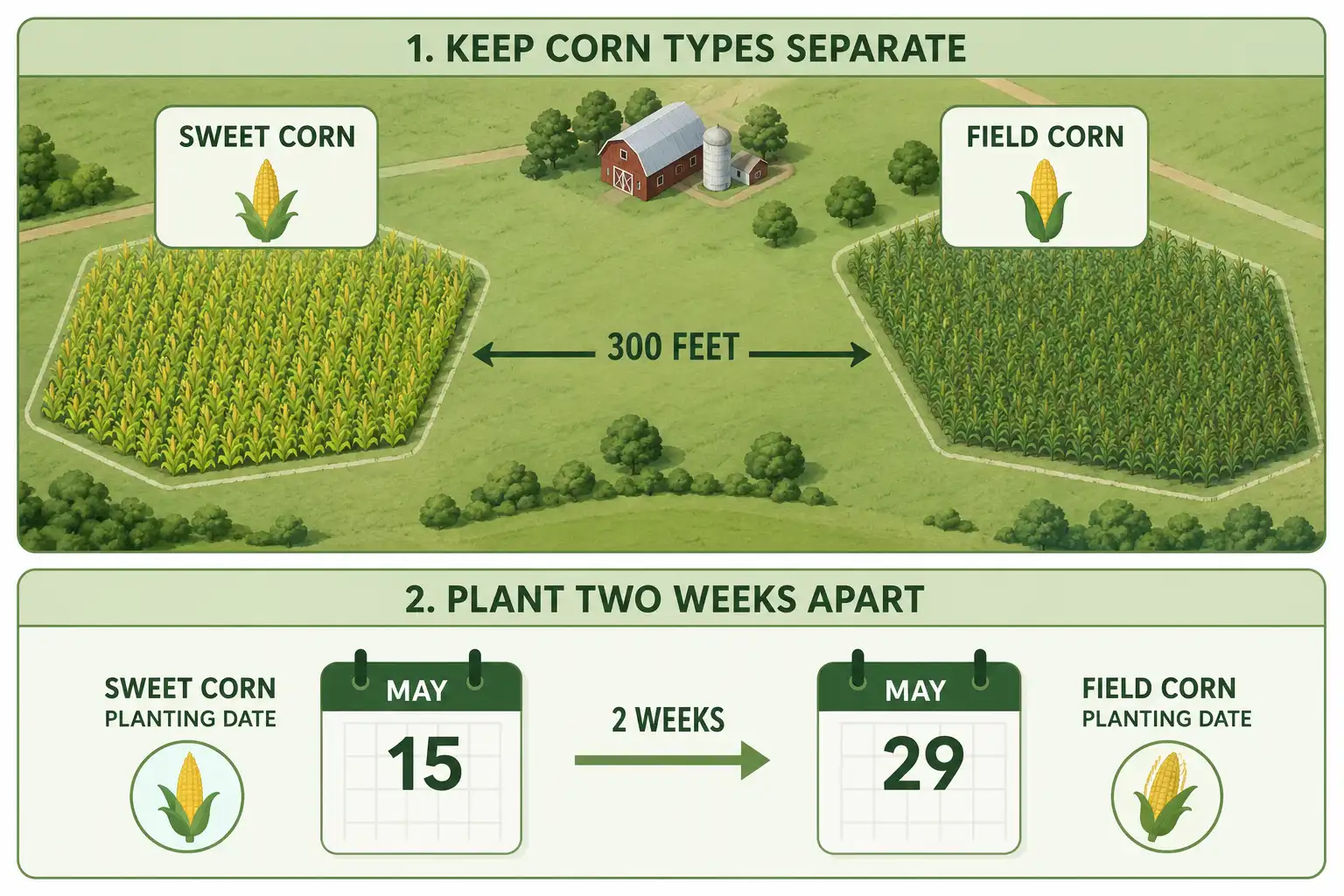
This catches a lot of new growers. Corn pollen does not care about variety. If a supersweet (sh2) block tassels at the same time as a sugary (su) or sugary-enhanced (se) block nearby, the cross wrecks the sweetness in both. White and yellow types crossing will speckle your kernel color too. You have two ways to keep them apart. Separate them by distance. Run 250 to 300 feet between types. Go even farther for supersweet, because its pollen is weak and loses out to field corn. Or separate them by time. Stagger planting so their tasseling dates land at least 14 days apart, or pick varieties with different maturities. In farm country, the field corn next door matters. Plant your sweet corn at least 300 feet from a neighbor’s field, or time it so it tassels on a different week.
How Do You Help a Corn Block Pollinate and Fill Out?
Shake the stalks gently at midday while the tassels are shedding, so loose pollen drops straight onto the silks below.
This trick helps a lot in small blocks and on still days. Do it daily for the week or so that the tassels are dropping pollen. Skip overhead watering during that window, because a hard spray knocks pollen off before it reaches the silks. Water at the base instead. Corn drinks 1 to 1.5 inches a week. The make-or-break stretch runs from tassel through ear fill, about three weeks. Short that window and you get small, gappy ears no matter how well you planted.
Corn is a heavy nitrogen feeder, too. Side-dress once when plants are about a foot tall, then again when the tassels show. Match your fertilizer rate for corn to a soil test instead of guessing. Too much early nitrogen can leach off before the plant ever uses it. After the silks brown and pollination wraps up, the ear takes over. From there it pays to know how long after tasseling the ears are ready so you pick at peak sweetness.
What This Looks Like in Practice
Sweet corn never goes in as a single row. It should be blocked up, four rows at the very least, in full sun, with the seed about an inch deep and the soil warmed past 55°F. Keep the different types apart so the supersweet stays sweet. Get the block shape, the spacing, and the soil temperature right, and the wind does the hard part for you. Full ears, filled to the tip, come down mostly to a planting decision you make in April.