What Causes Deformed Corn Kernels? Causes and Field Fixes
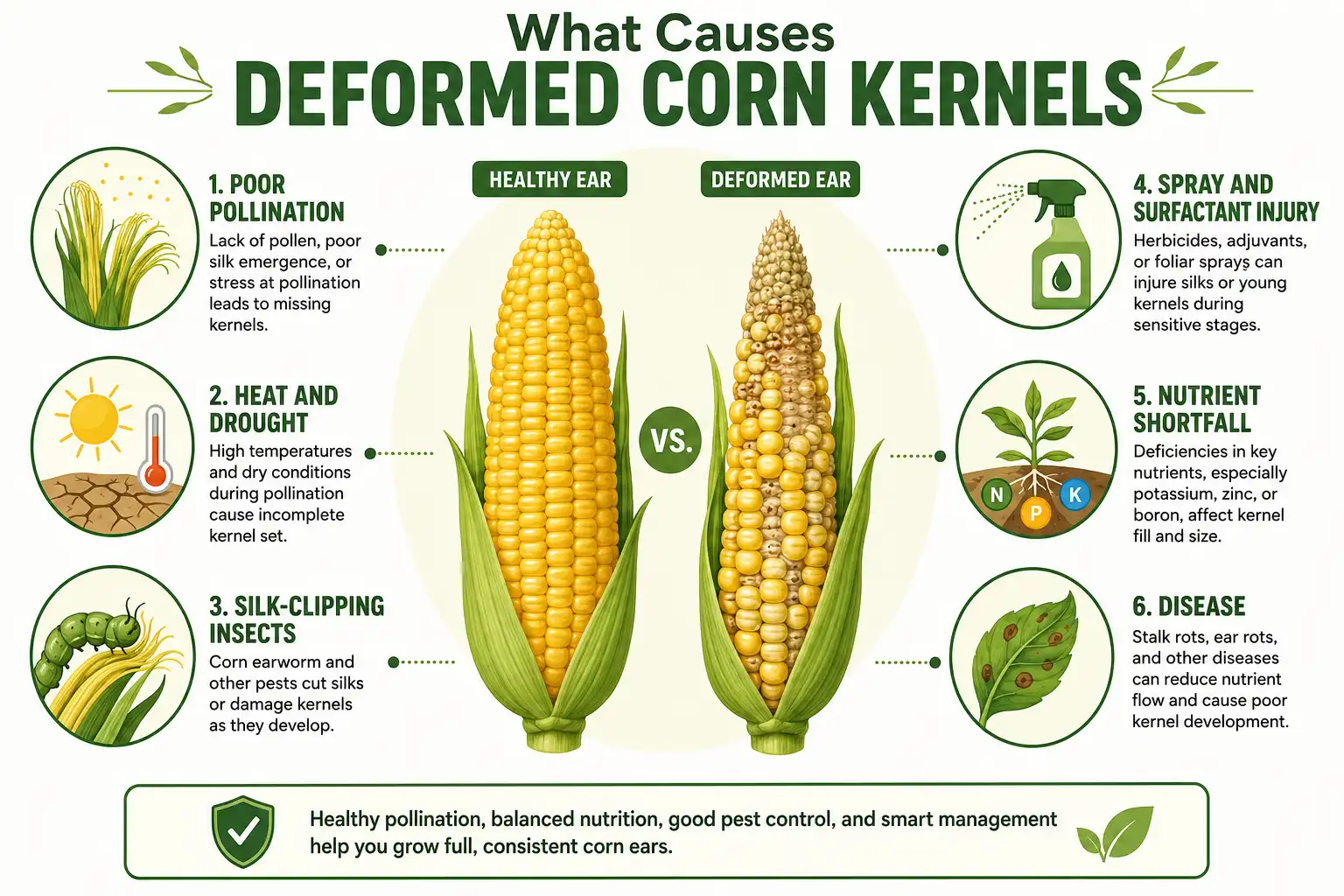
You peel back the husk expecting a full ear, and instead you find gaps, shrunken tips, or twisted rows. Deformed corn kernels usually come from pollination that fell short. Heat, insects, spray timing, and nutrient shortfalls are the usual triggers.
Poor pollination causes most deformed corn kernels, when silks never get fertilized. Heat, drought, silk-clipping insects, herbicide or surfactant injury, and short nitrogen or potassium all cut kernel set. The result is gaps, missing tips, or misshapen rows.
How a Corn Kernel Forms (and Where It Breaks Down)
Every kernel on an ear starts as one ovule, and each ovule needs its own grain of pollen. That single fact explains most kernel problems. A silk runs from every ovule up through the husk. When pollen from the tassel lands on a silk and grows down, that spot fills. Miss the silk, and you get a blank where a kernel belongs.
A healthy dent ear runs 16 to 18 rows and can hold 700 to 900 potential kernels. Fewer than 600 usually mature, though, so a scatter of blanks is normal. Whole zones of missing kernels are not. For the full count of how many kernels sit on a cob, the math is broken down separately.
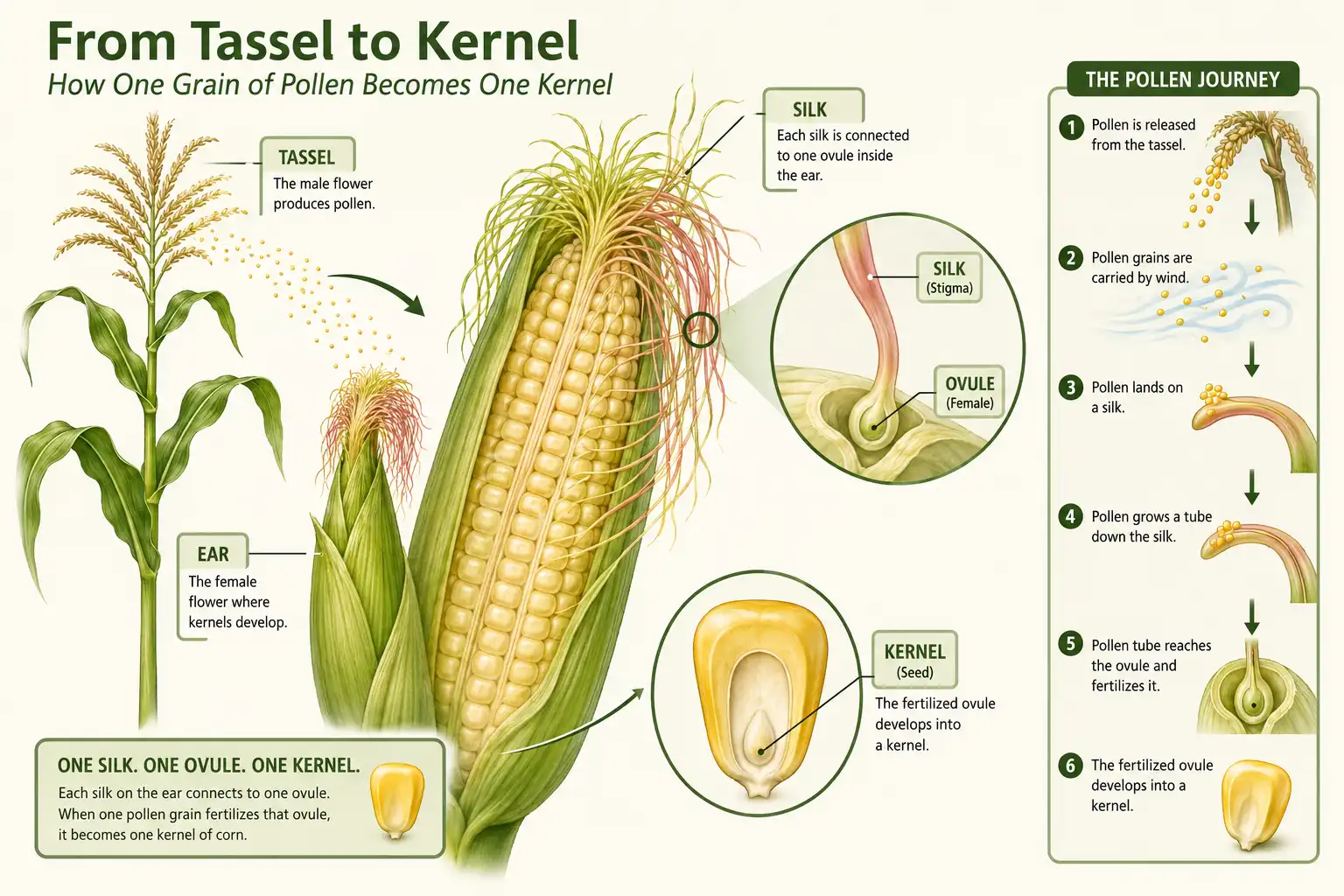
Timing is tight. Silks emerge over several days, butt silks first and tip silks last. Pollen sheds for about a week. When those two windows line up, kernel set is strong. When they drift apart, the tip pays for it first.
Learn more: Know Is it safe to plant corn and tomatoes together
What Causes Deformed Corn Kernels?
Deformed corn kernels come from anything that blocks pollination or stalls ear growth. The main buckets are weather stress, silk-feeding insects, spray and adjuvant injury, nutrient shortfalls, disease, and plain genetics. Most seasons, one or two of these stack up during silking.
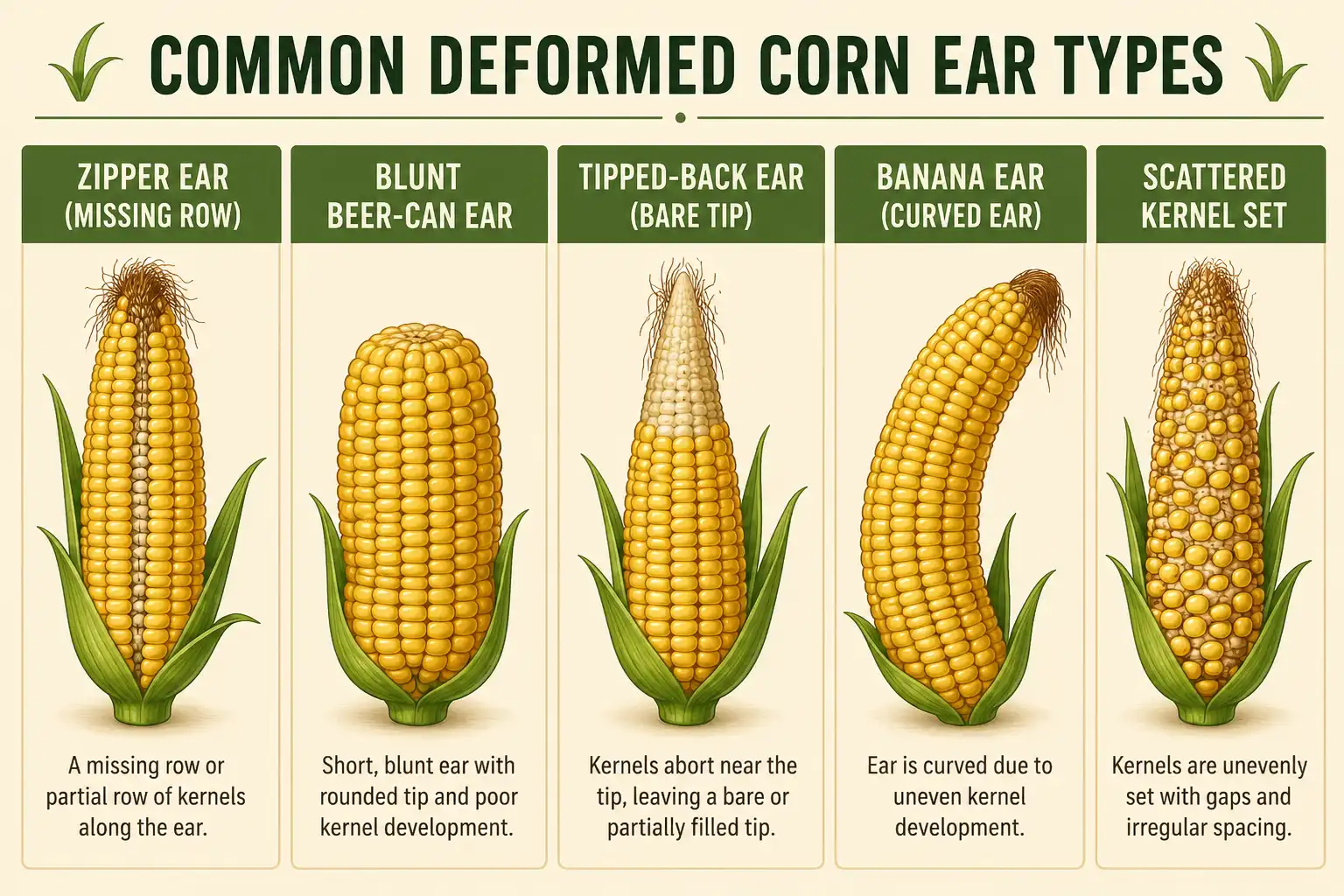
First, name what you see. Zipper ears show a missing kernel row down one side. Blunt “beer-can” ears stop short with a bare tip. Tipped-back ears fill fine, then quit at the tip. Banana ears curve toward a damaged side. Scattered set leaves random gaps across the whole ear. Once you can name the pattern, the cause gets easier to pin down.
Poor Pollination Is the Number One Cause
Poor pollination sits behind most deformed ears. When silks don’t catch pollen at the right moment, those kernels never form. Nearly every weather and insect problem below works by breaking this one step.
Heat and Drought During Silking
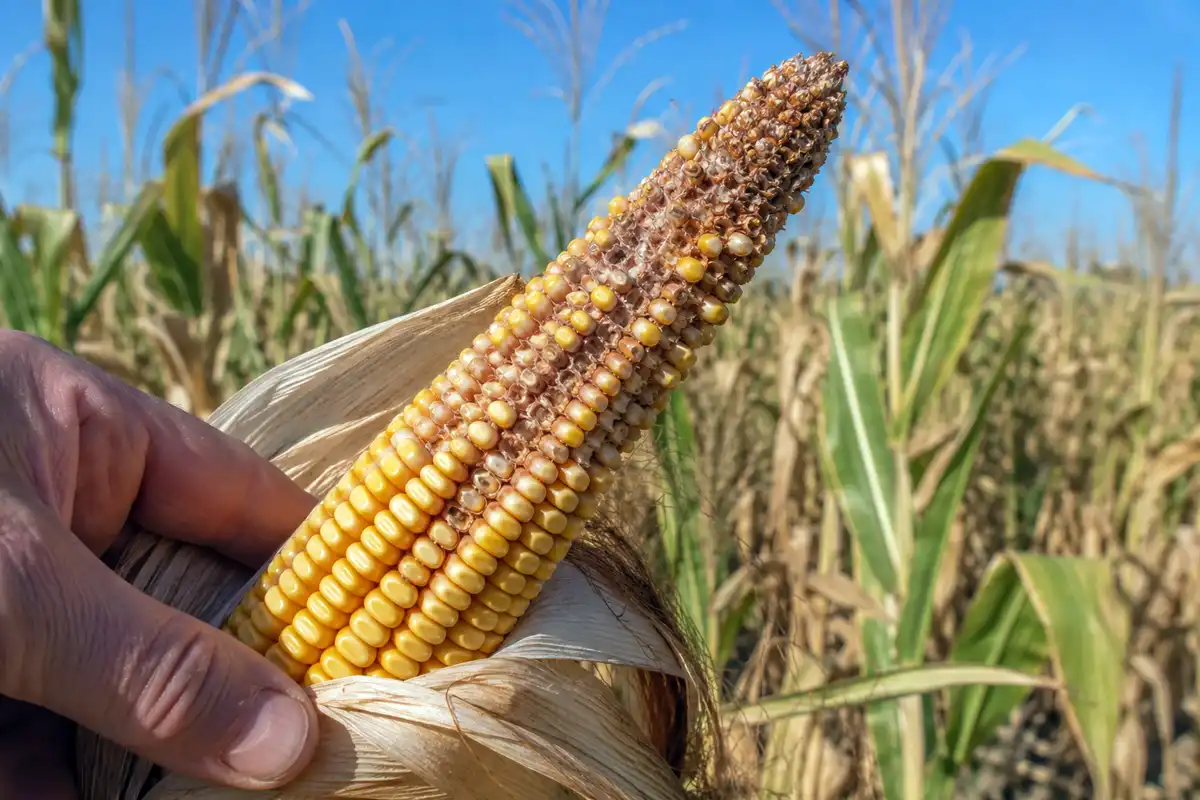
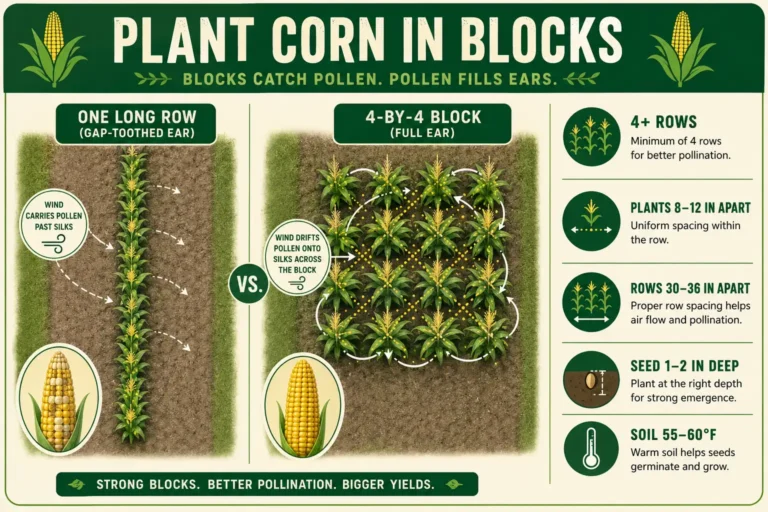
Heat and drought hit pollination harder than almost anything else. Temperatures into the mid-90s dry out silks and shorten pollen life. Silks that dry before pollen arrives can’t take it, so kernels blank out. Purdue research also flags warm nights during grain fill. Faster kernel growth then outruns the sugar the plant can supply, so tip kernels abort. A hot, dry stretch in July is the classic setup for a tipped-back ear. Tight, block-planted stands pollinate better than a couple of long single rows, because pollen has less distance to travel.
Silk Clipping by Insects
Insects that chew silks off at the husk stop pollination cold. Corn rootworm beetles and Japanese beetles are the main culprits here. When they clip silks shorter than half an inch during pollen shed, pollen has nothing to land on. So scout the ear zone all through silking. If beetles clip silks back faster than the silks regrow, that is exactly when kernels go missing.
Rain, Tassel Wrap, and Timing Misses
Heavy rain during pollen shed washes pollen off the silks before it can work. A hard, steady rain over the few days of shed knocks most pollen to the ground. Tassels that stay wrapped in the whorl, or push out ahead of the silks, cause the same gaps. Agronomists call this “missing the nick,” where the pollen and silk windows never overlap.
Nutrient Shortfalls That Warp Kernels
Nutrient shortages shrink and warp kernels by starving the ear during fill. Three nutrients matter most, and each shows up differently.
Phosphorus comes first, because a phosphorus shortage can interfere with pollination itself. That failure reads as poor, scattered kernel set.
Nitrogen matters next. Short nitrogen during grain fill triggers tip abortion, since the plant pulls resources from the ear tip to stay alive. So getting the nitrogen your corn needs into the ground on time keeps tips filling.
Potassium rounds it out. Low potassium weakens fill and leaves lightweight, poorly formed kernels. Matching the potassium corn pulls from your soil to a soil test keeps ears filling clear to the tip. K-State Research and Extension ties good tip fill to steady water and nutrients right through the R1 to R3 window.
Spray Injury and Arrested Ears
Some deformed ears you cause yourself, with the wrong spray at the wrong stage. This one is worth knowing, because you control it fully.
Surfactants and “Beer-Can” Ears
Nonionic surfactants sprayed during mid vegetative stages can stop ear growth cold. Purdue and Ohio State research ties these adjuvants to arrested and blunt ears. The risk runs from about V6 to V16, and peaks near V12 to V14. The ear then quits part way. That leaves a short, stubby cob with normal base rows and a bare tip. Farmers call it a “beer-can ear.” The fungicide or insecticide itself usually isn’t the trouble. The surfactant in the tank is. So read the label, and keep nonionic surfactants off corn through that mid-vegetative window.
Herbicide Damage
Off-label or late herbicide can deform kernels directly. Sulfonylurea (ALS) herbicides applied while row number is setting can pinch the ear down to fewer rows. Late, off-label glyphosate on certain older glyphosate-tolerant hybrids once left a share of kernels as clear blisters that later withered. A sudden cold snap into the 40s during early ear formation does similar harm. The fix stays simple. Spray on label, at the right stage, and watch the forecast.
Insects, Smut, and Ear Rots
Pests and disease deform kernels by destroying or replacing them outright. Corn earworm feeds at the tip and leaves chewed, missing kernels. Corn smut swells kernels into gray-black galls that burst and replace the grain. Ear rots like Fusarium, Gibberella, and Diplodia discolor and shrink kernels, often after insect wounds or a wet fall. So pull a few husks before harvest to catch rot early, since moldy grain won’t store well.
When It’s Just the Hybrid
Sometimes the hybrid is simply built that way. Some corn products carry an unfilled tip as a normal trait, no matter how well they pollinate. Zipper ears with a missing row can trace to genetics under high seeding rates. And after a good rain late in pollination, the cob can stretch past the last filled kernel. That fakes a bare tip. So before you blame the weather, check whether the same pattern shows up every year on that hybrid.
How Do You Prevent Deformed Corn Kernels?
You prevent most deformed corn kernels by protecting pollination and easing stress at silking. Start with the basics, then stack them together:
- Plant in blocks, not lone rows, so pollen reaches every silk.
- Match seeding rate to your soil’s water-holding ability, since crowded, dry corn aborts tips.
- Feed to a soil test so phosphorus, nitrogen, and potassium never run short at fill.
- Keep the spray tank clear of nonionic surfactants from V6 through tassel.
- Scout for silk-clipping beetles during shed, and treat only when they clip faster than silks regrow.
- Water through silking and early grain fill if you irrigate.
Late in the season, walk your rows and pull ears to see how fill is shaping up. This guide shows how to check ear fill before harvest to estimate yield and catch problems early.
Bottom Lines
Deformed corn kernels rarely come out of nowhere. The two biggest levers are pollination weather and a clean spray program. Plant in blocks, feed to a soil test, keep surfactants off corn in mid-summer, and scout for silk clippers. Do that, and most of your ears fill right to the tip.