How to Plant Corn Step by Step, From Seed to Emergence
Corn is one of the easiest crops to grow once you get the start right. The whole season rides on good seed placement and warm soil. This guide shows you how to plant corn step by step. It works for a garden bed or a few acres.
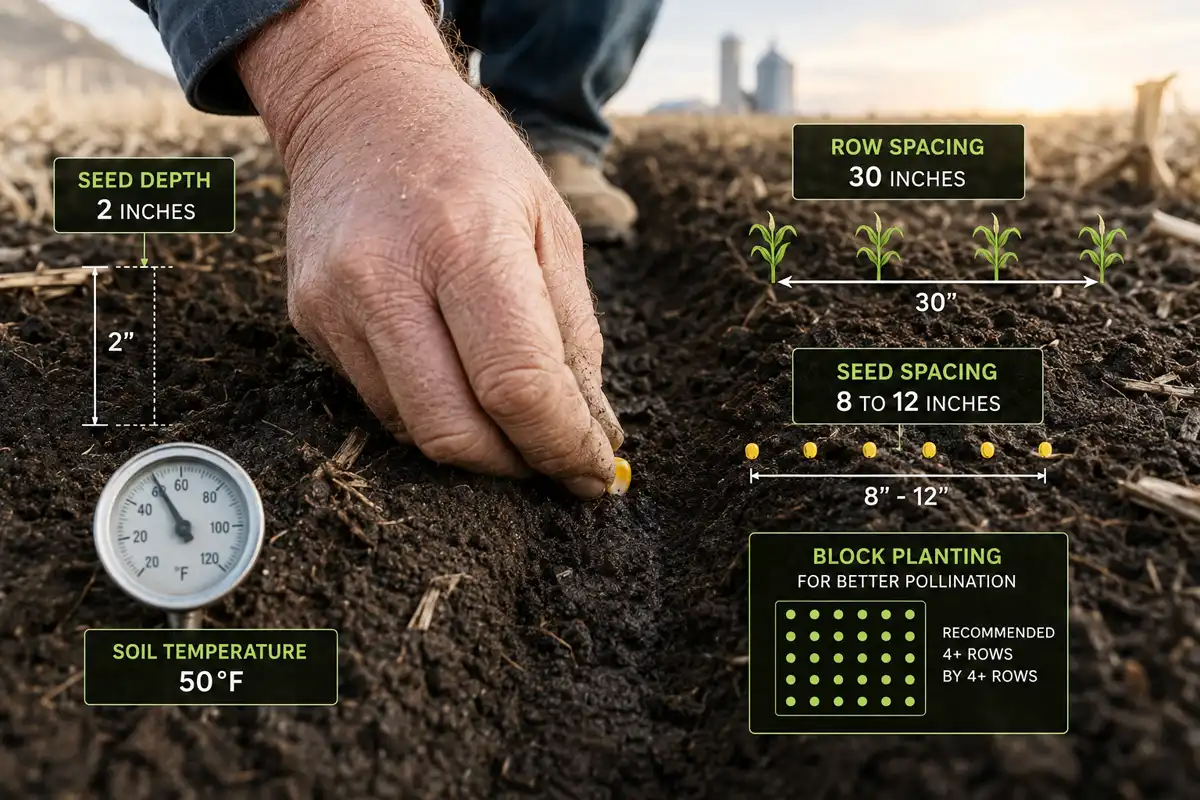
To plant corn, wait until soil warms to 50 degrees F. Then sow seed 2 inches deep. Space seeds 8 to 12 inches apart, in rows 30 inches apart. Plant a block of short rows for good wind pollination.
Corn Planting at a Glance
| Factor | What to aim for |
|---|---|
| Soil temperature | 50 degrees F for field corn, 60 degrees F for sweet corn |
| Planting depth | 2 inches (1.5 in cool, wet soil; 2.5 in dry, sandy soil) |
| Row spacing | 30 inches apart |
| In-row spacing | 8 to 12 inches |
| Seeds per spot | 1 to 2, then thin to the strongest |
| Sunlight | Full sun, 6 to 8 hours a day |
| Water | About 1 to 1.5 inches per week |
| Emergence | 7 to 10 days in warm soil |
What You Need to Plant Corn
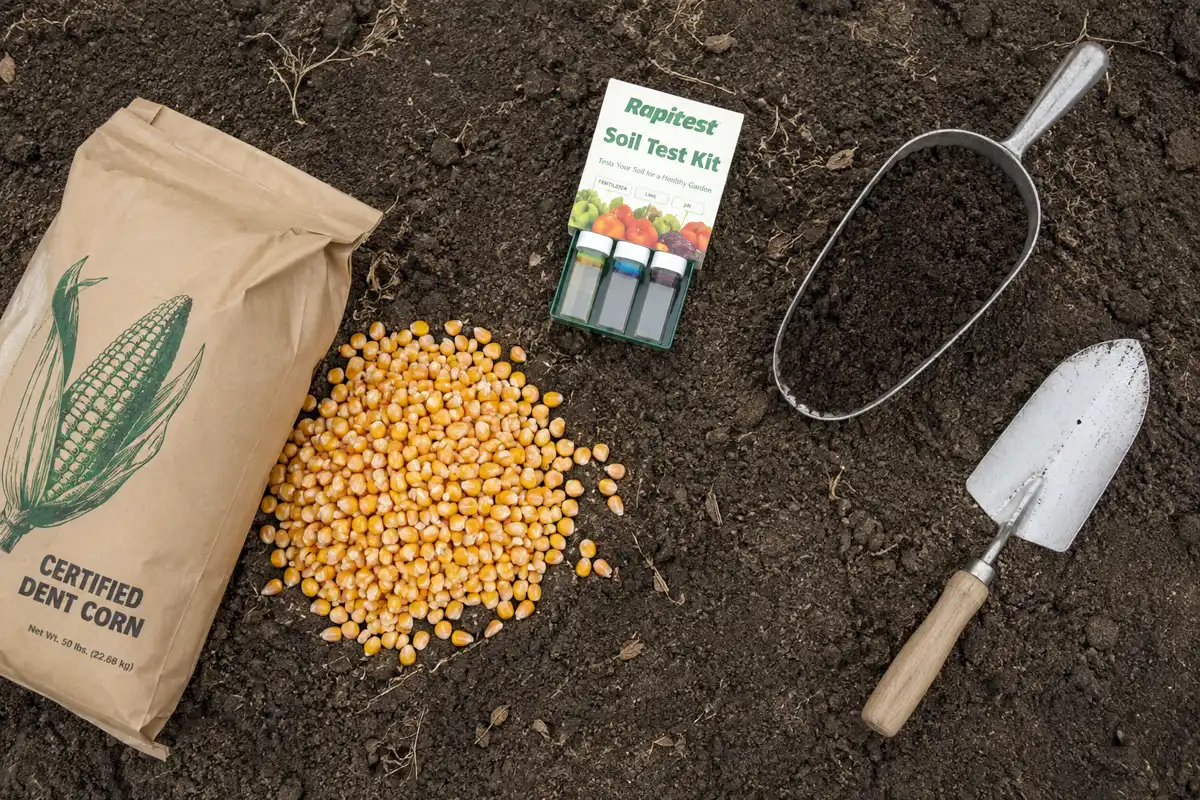
Three things decide your corn crop before a seed goes down. You need good seed, a sunny spot, and warm, well-drained soil.
Start with fresh seed rated for your area. Field corn, sweet corn, and popcorn all plant the same way, but they serve different goals. Field corn dries down for grain and feed, while sweet corn stays tender for the table. Skip planting kernels off a store-bought cob. Most are hybrids that will not grow true, and eating corn gets picked too immature to sprout.
Next, pick your spot. Corn is a sun lover, so give it 6 to 8 hours of direct light. Shade gives you thin stalks and small, half-filled ears.
Then prep the soil. Corn likes loose, well-drained ground with a pH near 6.0 to 6.8. Work in compost or aged manure a couple of weeks ahead. Plenty of growers skip tillage and plant into residue with no-till. A soil test should also be pulled first, as it indicates what to feed instead of guessing. Getting the ground right before planting pays off more than any input later.
When to Plant Corn
Plant corn once the soil at seed depth holds 50 degrees F and the frost danger has passed. Soil temperature drives germination far more than the calendar does. Purdue University research shows corn needs roughly 115 growing degree days to emerge. Warmer soil means a faster, more even stand.
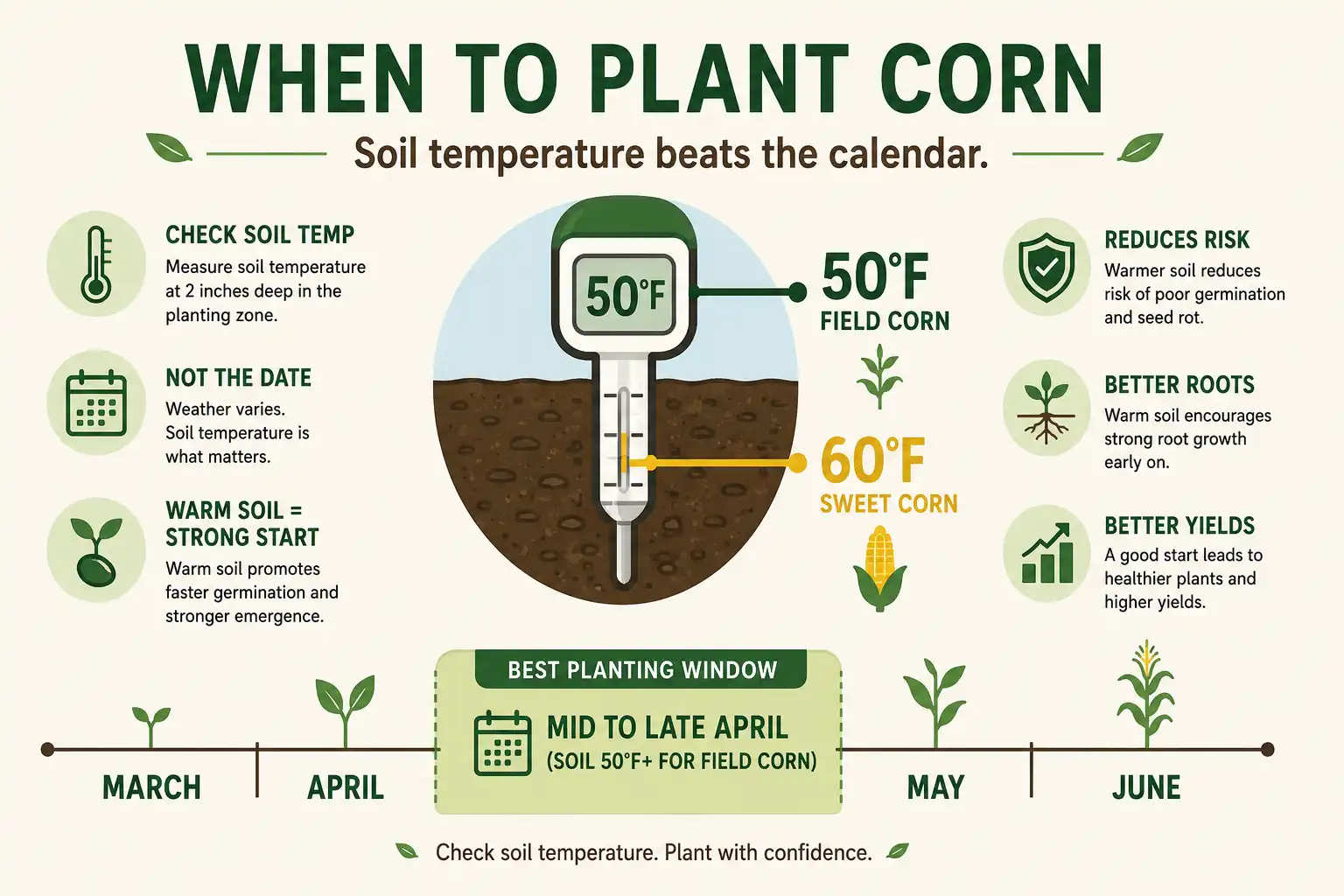
In northeast Kansas, that window usually opens in mid-to-late April. K-State Research and Extension puts the statewide range from March in the southeast to mid-May in the northwest. Its January 2026 Kansas Crop Planting Guide maps the latest climate zones. Your own USDA hardiness zone gives you a rough guide, but a soil thermometer beats a date every time.
Frost worries fewer folks than they expect. The growing point stays underground until about the V6 stage. So a light frost on young corn rarely kills the stand. Lethal cold sits closer to 28 degrees F. Still, do not rush cold soil, because seed planted too early just sits and rots.
If spring runs long on you, do not give up on the crop. When you are planting corn late, switch to a shorter-season hybrid so it finishes before fall frost.
For fresh sweet corn all summer, plant in waves. Drop a new short block every two weeks until early summer. That keeps ears coming instead of one big flush.
How Deep to Plant Corn
Plant corn seed about 2 inches deep. That depth reaches steady moisture and builds a strong root system. Iowa State agronomists recommend targeting 2 inches and warn hard against going too shallow.
Adjust for your conditions. In cool, wet soil early on, 1.5 to 1.75 inches speeds emergence. In dry or sandy ground, drop to 2.5 inches to reach moisture. Never plant shallower than 1.5 inches, though. Shallow corn roots poorly and fights you all season.
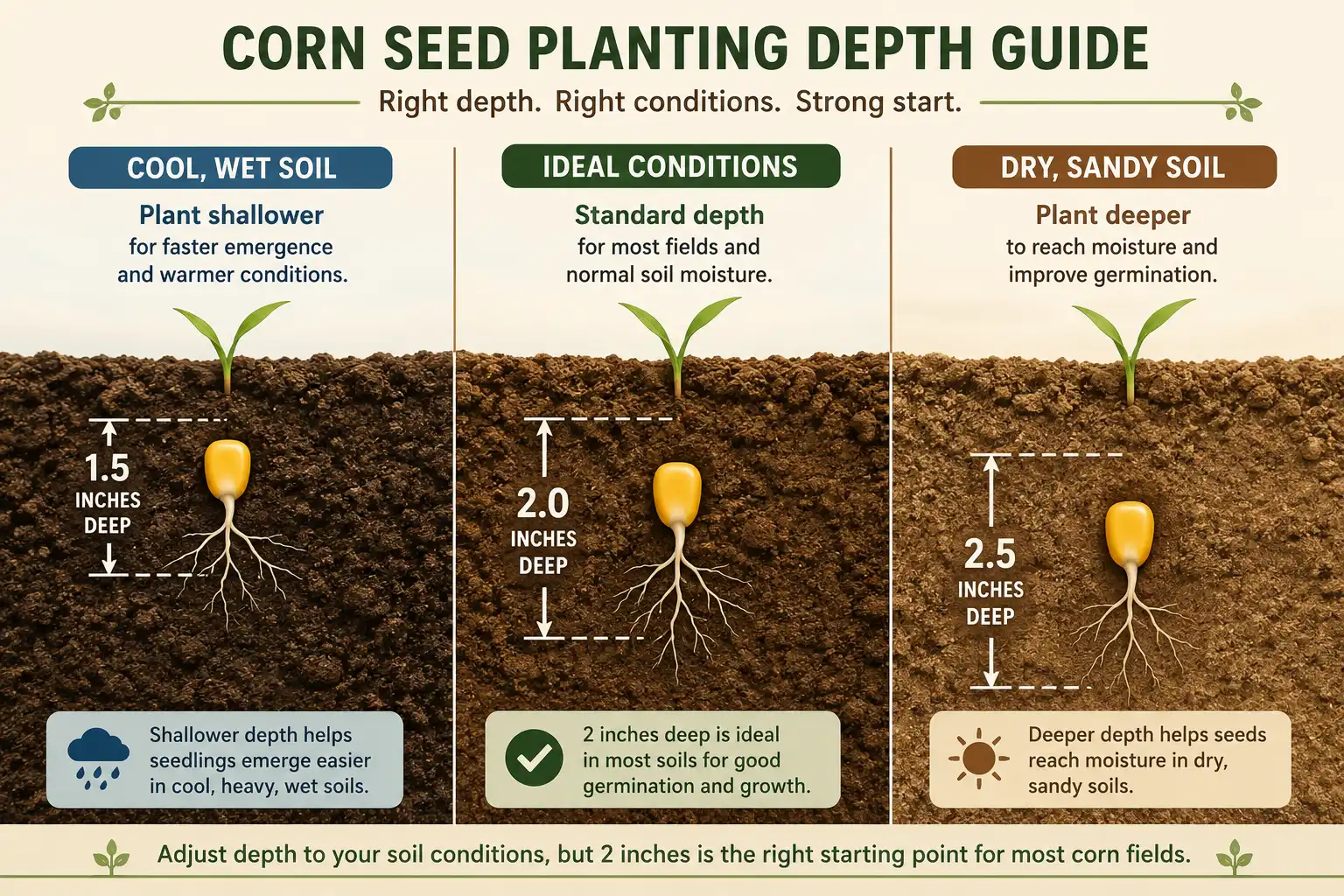
Consistency matters as much as the number. Every seed at the same depth comes up at the same time. Uneven depth gives you a ragged stand, and ragged stands cost ears.
How Far Apart to Plant Corn
Space corn rows about 30 inches apart and set seeds 8 to 12 inches apart in the row. That spacing gives each plant enough light and root room to fill a full ear. Closer spacing near 8 inches builds a denser stand, while 12 inches grows fewer but larger ears.
Plant in a block, not one long row. Corn pollinates by wind, and pollen has to fall from the tassel onto the silks below. A block of at least four short rows catches far more pollen, so the ears fill out kernel to tip. If you want the full method, our guide covers planting in blocks for even pollination.
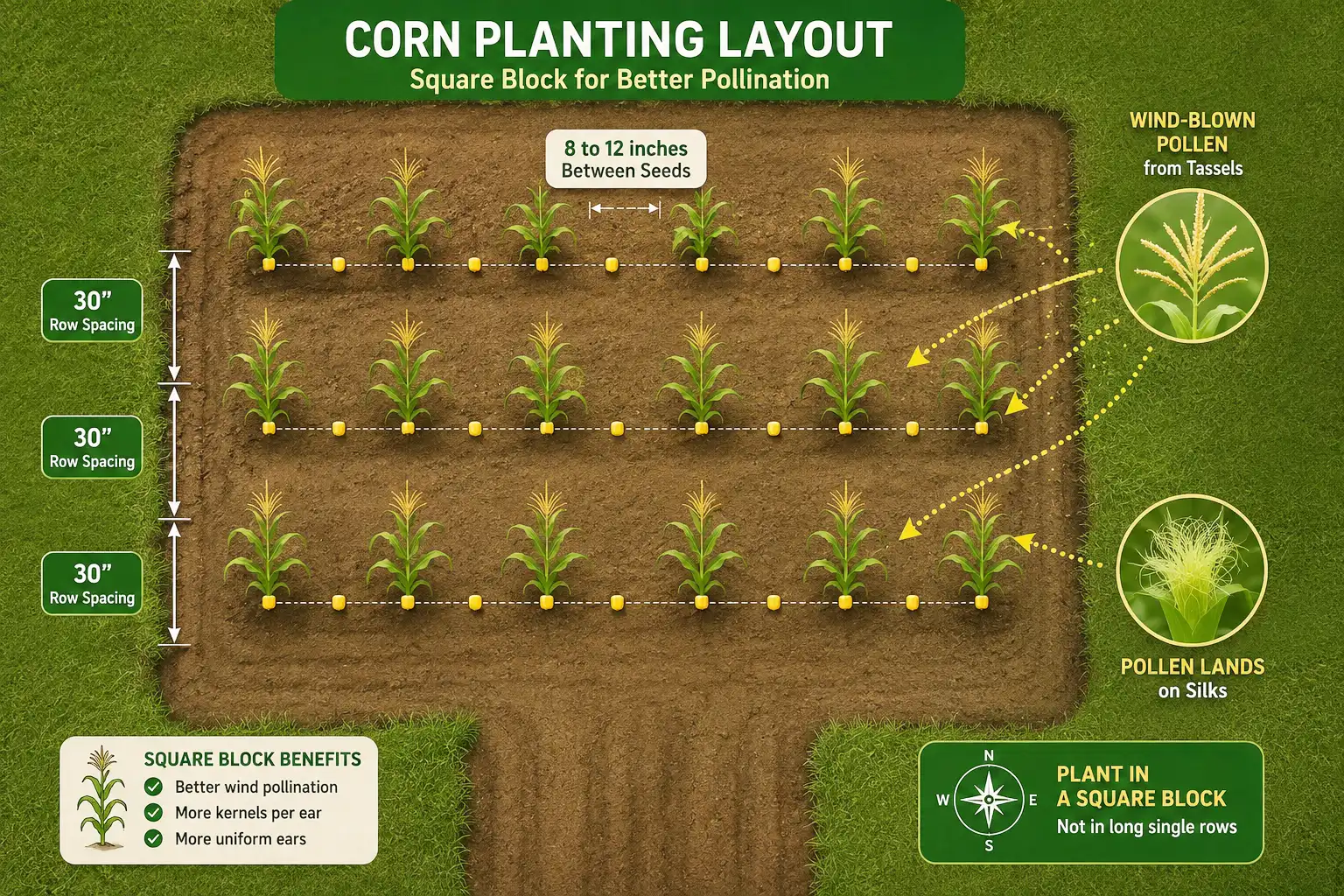
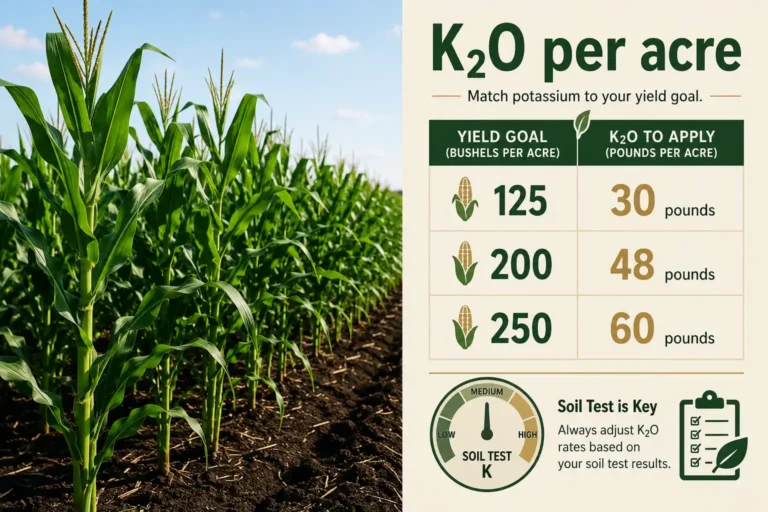
Drop one to two seeds per spot as insurance. Then thin to the strongest seedling once they stand a few inches tall. Field growers scale this up by the acre instead of the hole. If you farm larger ground, match your plant population per acre to your yield goal. Dryland fields across the Great Plains and irrigated ground call for very different numbers.
How to Plant Corn Step by Step
Here is the sequence, scaled to a bed or a field.
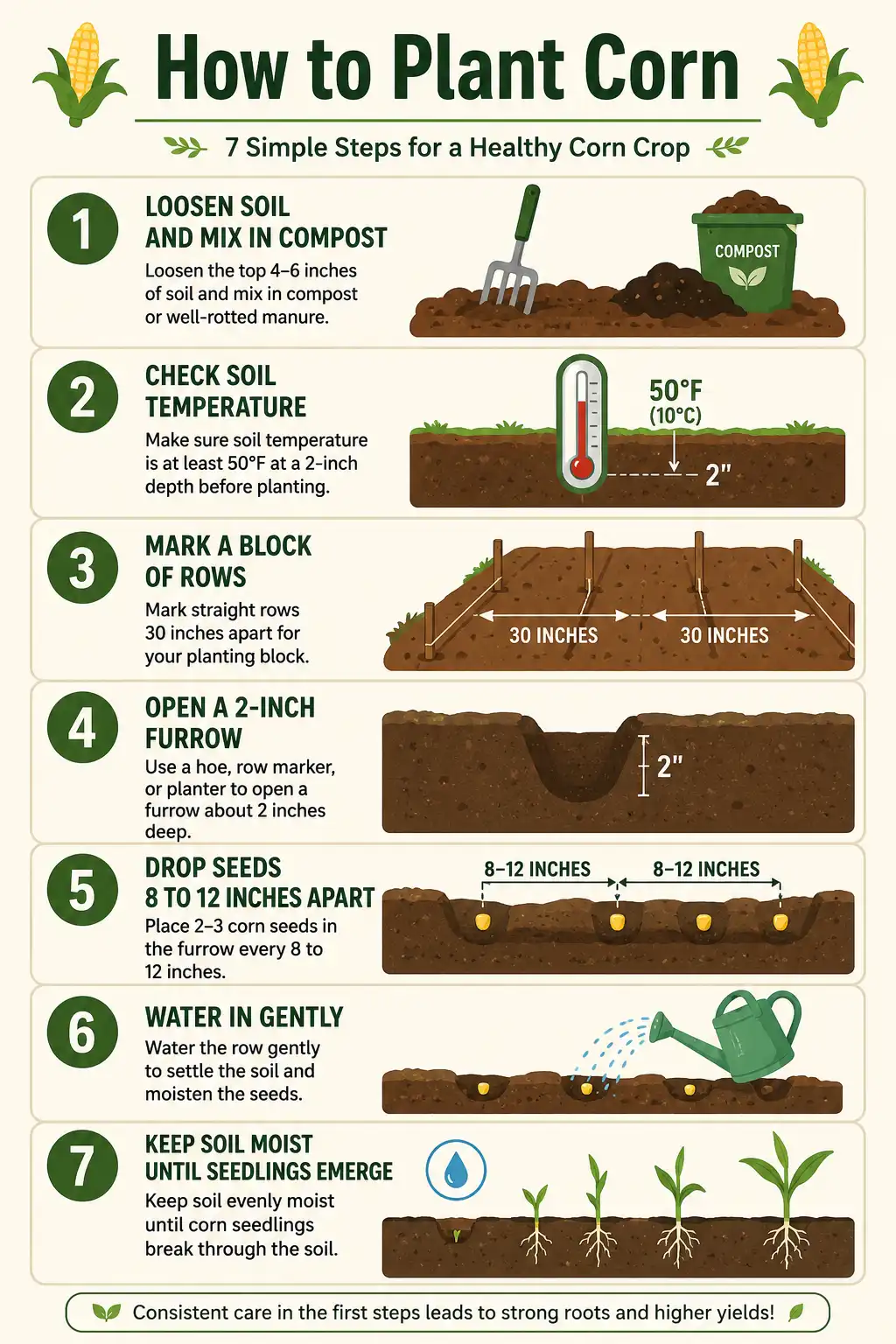
- Prep the bed. Loosen the top 8 inches, mix in compost, and rake it level.
- Check the soil. Confirm it holds 50 degrees F at 2 inches for several mornings running.
- Lay out a block. Mark at least four short rows, each 30 inches apart.
- Open a furrow about 2 inches deep down every row.
- Drop one to two seeds every 8 to 12 inches, then cover and firm the soil.
- Water the rows in gently right after planting.
- Keep the seedbed moist, not soggy, until the seedlings break through.
After the first pass, dig up a few seeds. Confirm depth, spacing, and firm cover. Five minutes of checking now saves a full replant later.
Do You Need to Soak Corn Seed First?
No, you do not need to soak corn seed before planting. Warm, moist soil handles germination on its own, and soaking can crack the coating and invite rot in cold ground. Some gardeners still soak seed overnight to speed sprouting in a warm bed, which helps in small plots. our guide covers when soaking corn seed helps and when it backfires in a separate guide.
Watering and Feeding Corn
Give corn about 1 to 1.5 inches of water a week, and never let a new planting dry out. Water is most critical at tasseling and silking, when the ears set. K-State pegs peak use near a third of an inch per day in that stretch. So keep water steady through pollination.
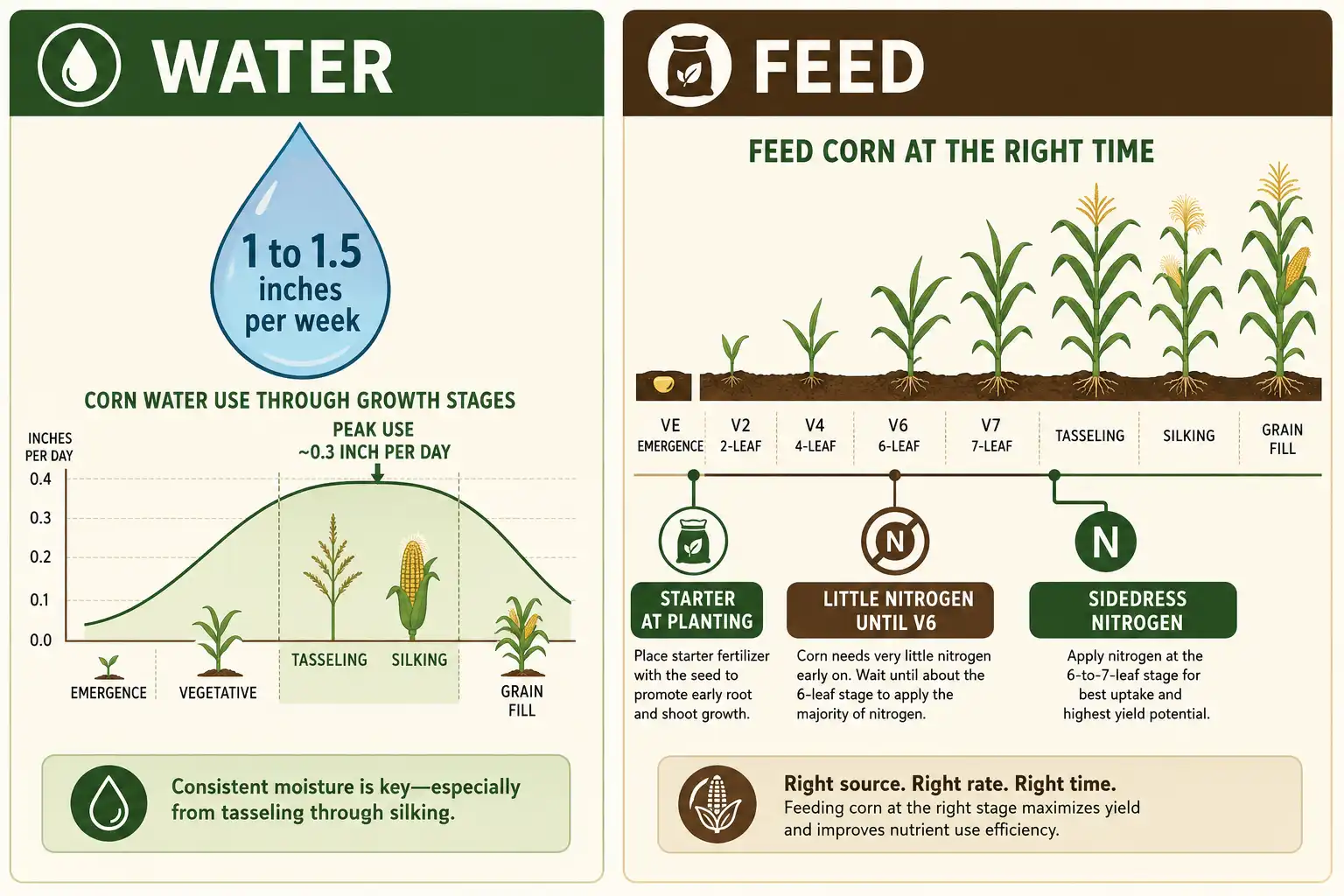
Corn is a heavy nitrogen feeder, but it needs little at planting. A small band of starter fertilizer near the seed jumpstarts early roots in cool soil. K-State notes corn takes up little nitrogen until the 6- or 7-leaf stage. Most of the nitrogen should be held for a sidedress pass then. Match your rates to that soil test, since overfeeding wastes money and can burn young roots. For field-scale numbers, fertilizer rates for the crop by acre and yield goal are laid out here.
What to Expect After Planting
Expect corn to emerge in 7 to 10 days in warm soil. Cool ground stretches that to two or three weeks. A good stand comes up even, in a tight window, spike-shaped and green.
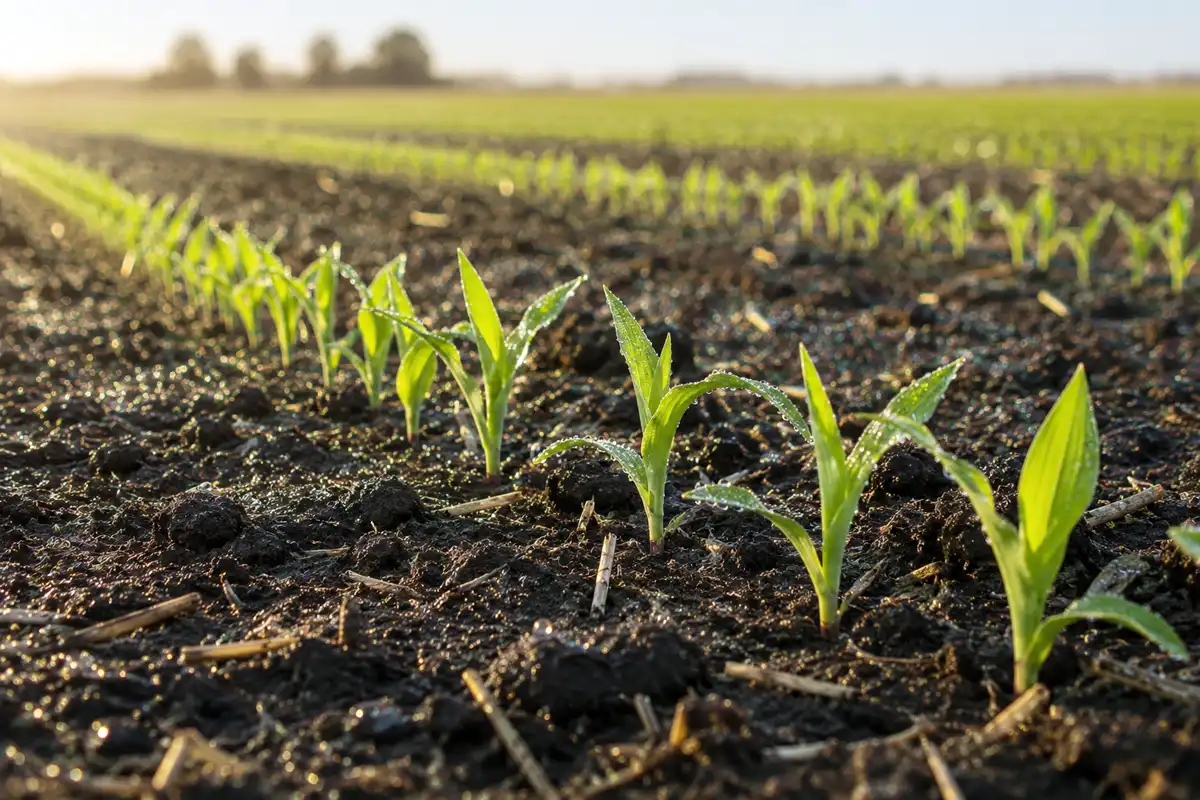
If you planted two seeds per spot, thin to the single strongest plant so they do not crowd. Snip the extra at the soil line instead of pulling, which protects the roots you keep.
Watch for a few common problems. Birds like crows will pull tender seedlings, so cover the row or set a deterrent early. A hard rain can crust the surface and trap seedlings under it, and a light rake breaks that crust. Patchy, uneven emergence usually traces back to cold soil or uneven depth. If big gaps show up while plants are still small, a replant often pays.
From there, patience takes over. Sweet corn is usually ready 60 to 100 days after planting, depending on the variety. Field corn runs longer, since it has to dry down. If you want the full schedule, here is how long corn takes to grow from seed to harvest.
Bottom Line on Planting Corn
Corn is not hard to plant once the basics line up. Wait for 50-degree soil, set seed 2 inches deep, and group your rows in a block for solid pollination. Give the patch full sun and about an inch of water a week. Then hold your nitrogen for a sidedress later. Get the stand right, and strong stalks and full ears follow long before harvest.