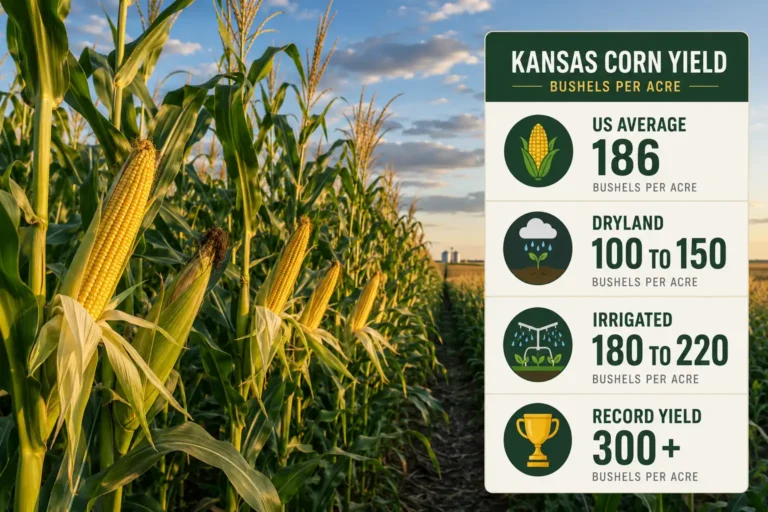
Can You Plant Corn in a Raised Bed? A Grower’s Guide
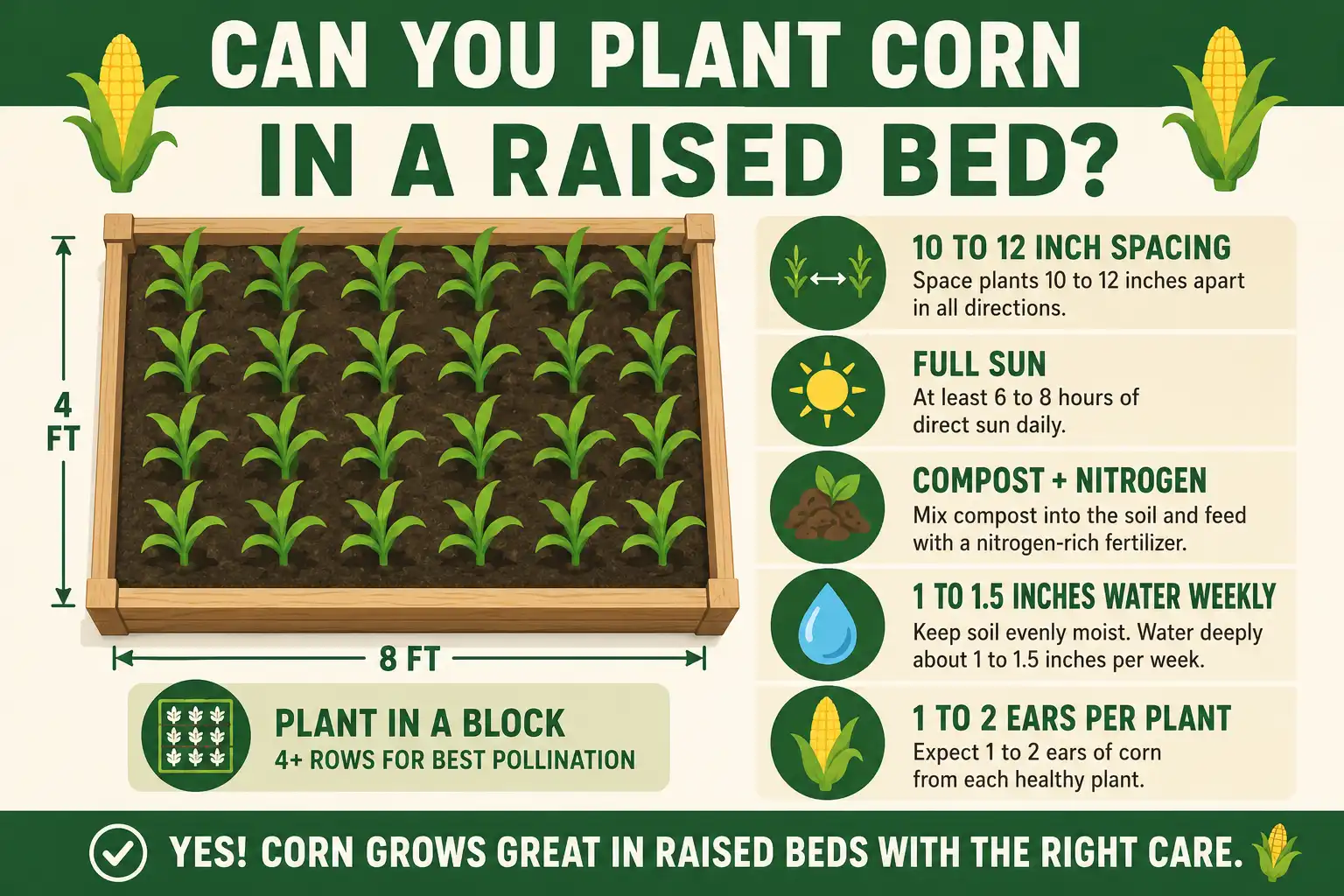
Short on field space but want fresh ears off your own ground? Good news: you can plant corn in a raised bed and pull a real harvest. The trick is treating it like a block crop, not a row crop.
Yes, corn grows well in a raised bed. Plant it as a block of three to four short rows so wind pollinates the silks. Feed heavily, give full sun, and expect one to two ears per plant.
Can You Plant Corn in a Raised Bed?
Yes, you can plant corn in a raised bed, and it works better than most folks expect. Corn is not fussy about where its roots sit. It cares about three things: sun, food, and pollination. A raised bed handles the first two with ease. The third one is where bed growers slip up, so we’ll spend the most time there.
Corn needs full sun, at least eight hours a day. It’s also a heavy feeder, and a raised bed lets you load the soil with exactly what corn wants. The plants grow tall, often six to eight feet, so set your block on the north or east edge of the garden. That way it won’t shade your shorter crops by midsummer.
Why Corn in a Raised Bed Has to Grow in a Block
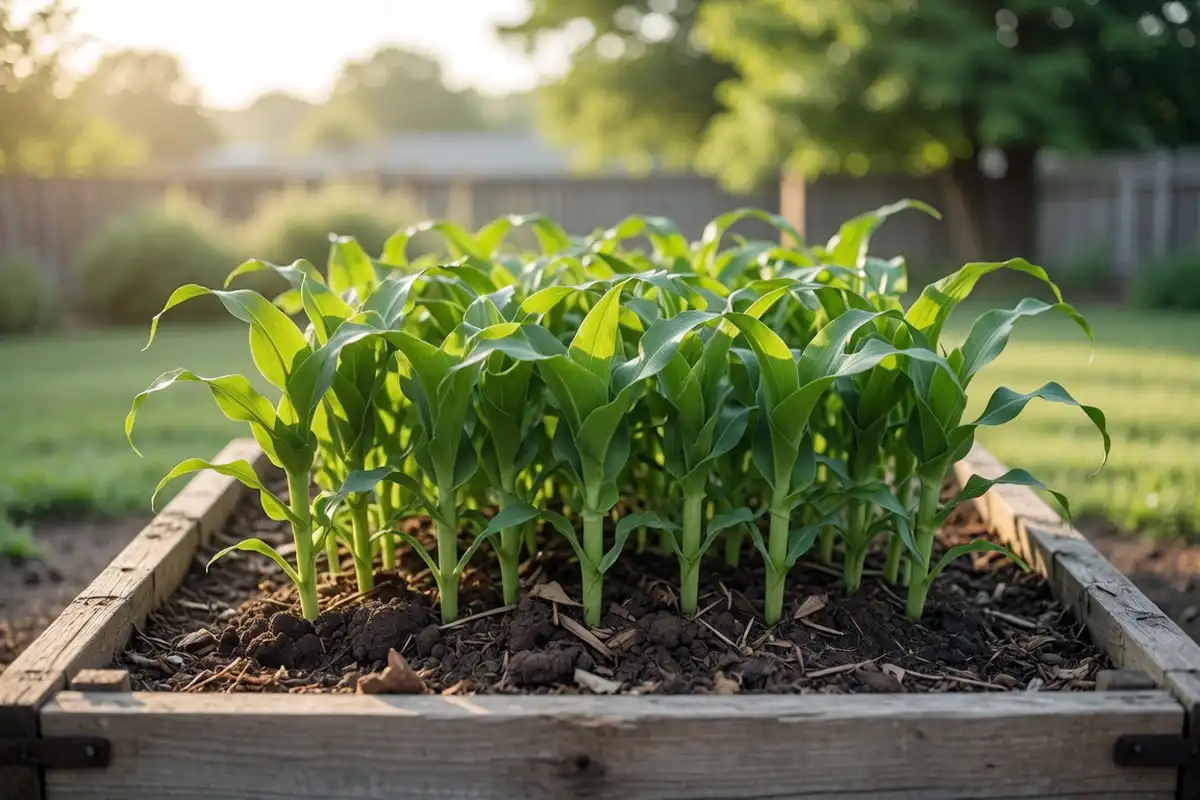
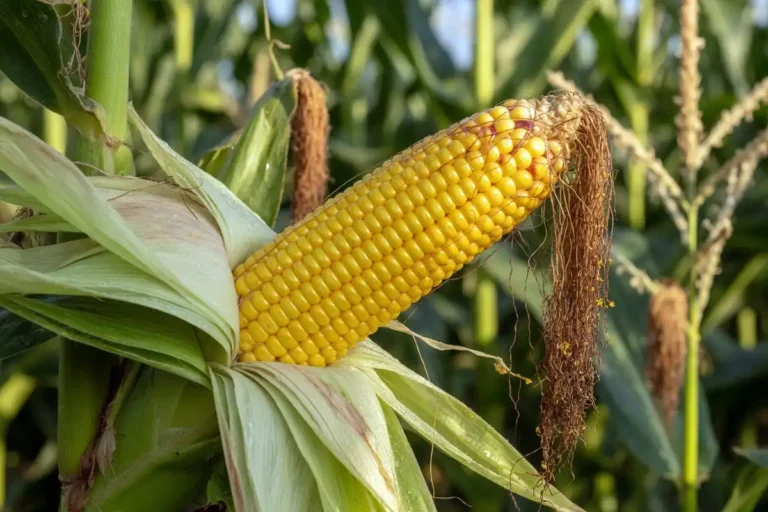
Corn has to grow in a block because it pollinates by wind, not by bees. The tassel at the top sheds pollen. That pollen has to drift down and land on the silks below. Each silk feeds one kernel. Miss a silk, and you get a gap on the ear.
A single long row leaves too much to chance. The wind blows the pollen sideways into open air. So plant a square block instead, at least three to four short rows side by side. Now pollen falls from one plant onto its neighbors no matter which way the breeze runs. K-State Research and Extension recommends blocks of at least four rows for this reason.
For a home bed, aim for a minimum of about 18 plants in the block. That’s the floor for decent pollination. Fewer than that, and you’ll see ears with missing kernels. Each kernel that fills a cob starts as one pollinated silk, so a tight block gets most of them fertilized.
Block planting buys you a second thing: wind support. Corn in a single row tips over in a Kansas gust. Four rows packed together brace each other and stay standing.
How Deep Should a Raised Bed Be for Corn?
A raised bed for corn should hold at least 12 inches of loose soil. Corn roots run deep and wide. Give them a foot of depth and they’ll anchor a tall plant and reach plenty of moisture. Eight inches will grow a crop, but the plants tip easier and dry out faster.
If your bed sits on open soil, even better. Corn roots punch right through the bottom into the native ground below. That gives the plant extra anchorage against wind and more room to chase water in July heat. A bed with a solid bottom works too, as long as you keep it at least a foot deep.
How to Space Corn in a Raised Bed
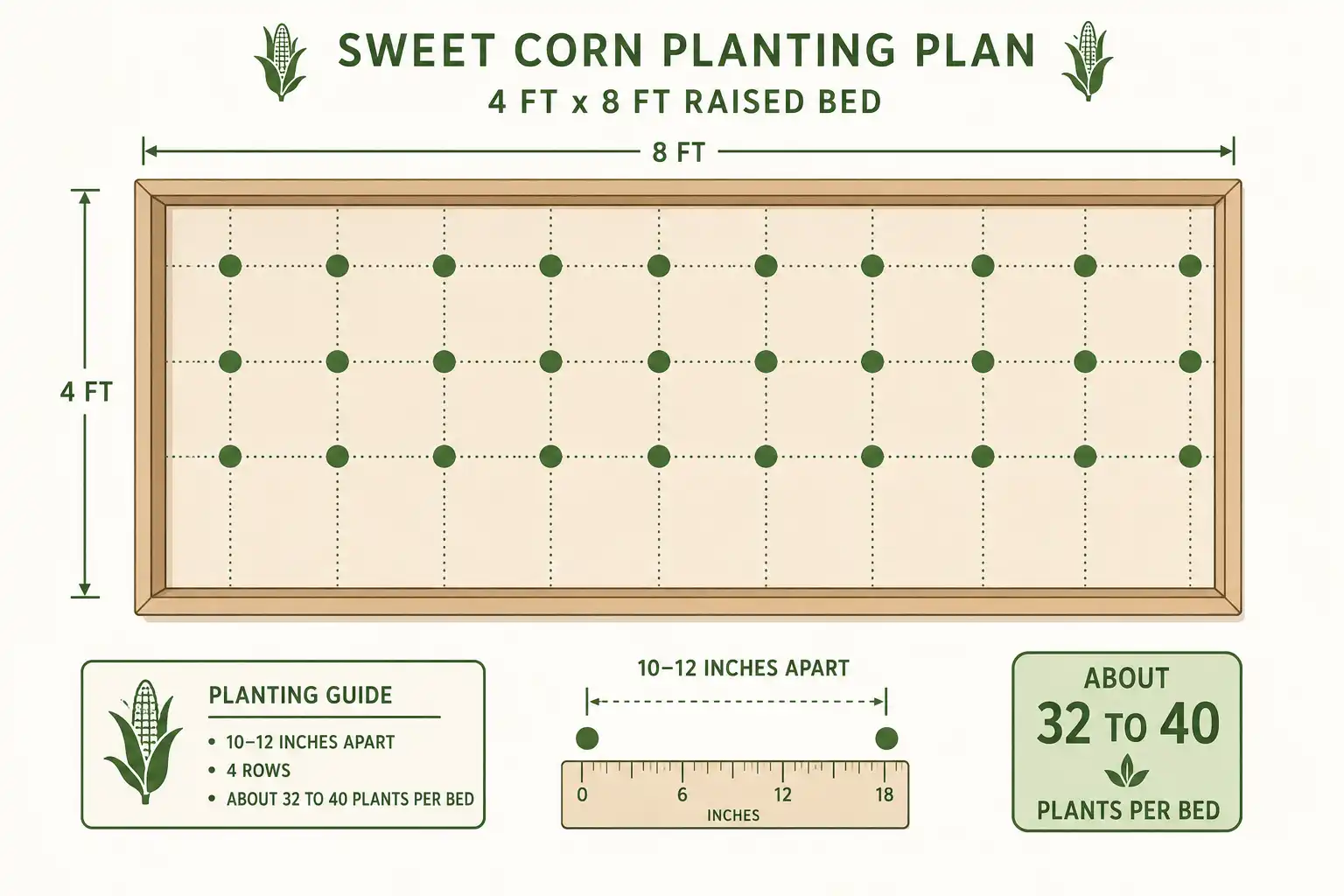
Space corn 8 to 12 inches apart in every direction inside the bed. That’s tighter than a field planter runs, and it’s on purpose. Close spacing in a block helps pollination and saves room. Most bed growers run plants about 10 to 12 inches apart on a grid.
Here’s how that pencils out by bed size:
- A 4 by 4 foot bed fits roughly 16 plants on a 12-inch grid, and clears the 18-plant minimum if you tighten to 10 inches.
- A 4 by 8 foot bed fits about 32 to 40 plants, which makes a solid block with good pollination.
- A 3 by 6 foot bed holds around 18 plants at two per square foot, filling about half the bed.
Don’t crowd past that. Plants jammed too close turn spindly and set only nubbins. Getting your plant spacing right in a bed is the difference between full ears and disappointment. Plant your seeds an inch deep, two seeds per spot, then thin to the strongest seedling once they hit four to six inches.
What Soil and Fertilizer Does Corn Need in a Raised Bed?
Corn needs rich, nitrogen-heavy soil, so feed a raised bed hard before and during the season. Corn is one of the hungriest plants in the garden. It builds a lot of leaf and stalk fast, and that takes fuel.
Before planting, work two to three inches of finished compost into the top foot of the bed. Mix in a balanced fertilizer at the same time. A common extension rate is about 25 pounds of 10-10-10 per 1,000 square feet, so scale that down for your bed. For a 4 by 8 foot bed, that’s roughly half a pound.
Then side-dress with nitrogen twice. The first feeding goes on when plants stand 12 to 18 inches tall. The second goes on when the tassels show. Corn pulls the most nitrogen during that stretch of fast growth. Building your soil fertility the natural way keeps the leaves dark green and the ears filling. Pale, yellowing leaves usually mean the plant is running short on nitrogen.
How Much Water Does Corn in a Raised Bed Need?
Corn in a raised bed needs about 1 to 1.5 inches of water a week, and more during pollination. Raised beds drain fast, so they dry out quicker than ground beds. Keep the soil evenly moist, never bone dry and never soggy.
The make-or-break window is tasseling and silking. If the plant runs short on water then, the tips of the ears won’t fill. You get bare ear tips and gaps down the cob. So water deep and steady through that stretch. Figuring your crop’s weekly water needs gets easier once you know your bed dries from the top down. A two to three inch mulch of straw or grass clippings holds moisture and cuts your watering in half.
Best Corn Varieties for a Small Raised Bed
Pick a compact, early-maturing sweet corn variety for a raised bed. Shorter plants handle wind better and fit tight spaces. Early types mature in 60 to 75 days, which suits short blocks and quick turnover.
Good small-space picks include ‘Sugar Buns’, ‘Trinity’, and ‘Ambrosia’, plus container-bred types like ‘On Deck’. These set full ears on smaller stalks. Match the days to maturity to your season and you’ll have ears by midsummer.
One rule matters more than variety choice: plant only one type per block. Sweet corn crosses readily. A supersweet (sh2) variety next to a sugary enhanced (se) variety will trade pollen and turn both starchy. If you want two kinds, separate them or stagger planting by about two weeks so they tassel at different times.
When Should You Plant Corn in a Raised Bed?
Plant corn in a raised bed once the soil holds at least 60°F. Corn won’t germinate well in cold ground, and supersweet types rot in soil under 65°F. A raised bed warms earlier than the open field, which gives bed growers a head start.
In Kansas, that lands around mid to late April for most home gardens in USDA hardiness zone 6a. Going into the 2026 season, the approach hasn’t changed: Check the bed with a soil thermometer at a 2-inch depth and wait for warm dirt. Warm beds get corn up in 8 to 10 days. Cold beds can take three weeks.
Want a longer run of fresh ears? Plant a second small block two weeks after the first. That spreads the harvest instead of dumping it all in one week.
How Many Ears of Corn Will One Raised Bed Give You?
Expect one to two ears per plant. A packed 4 by 8 foot bed of 32 to 40 plants can give you 30 to 60 ears in a season. A 3 by 6 bed running one block yields about a dozen ears. That’s a real haul off a small footprint.
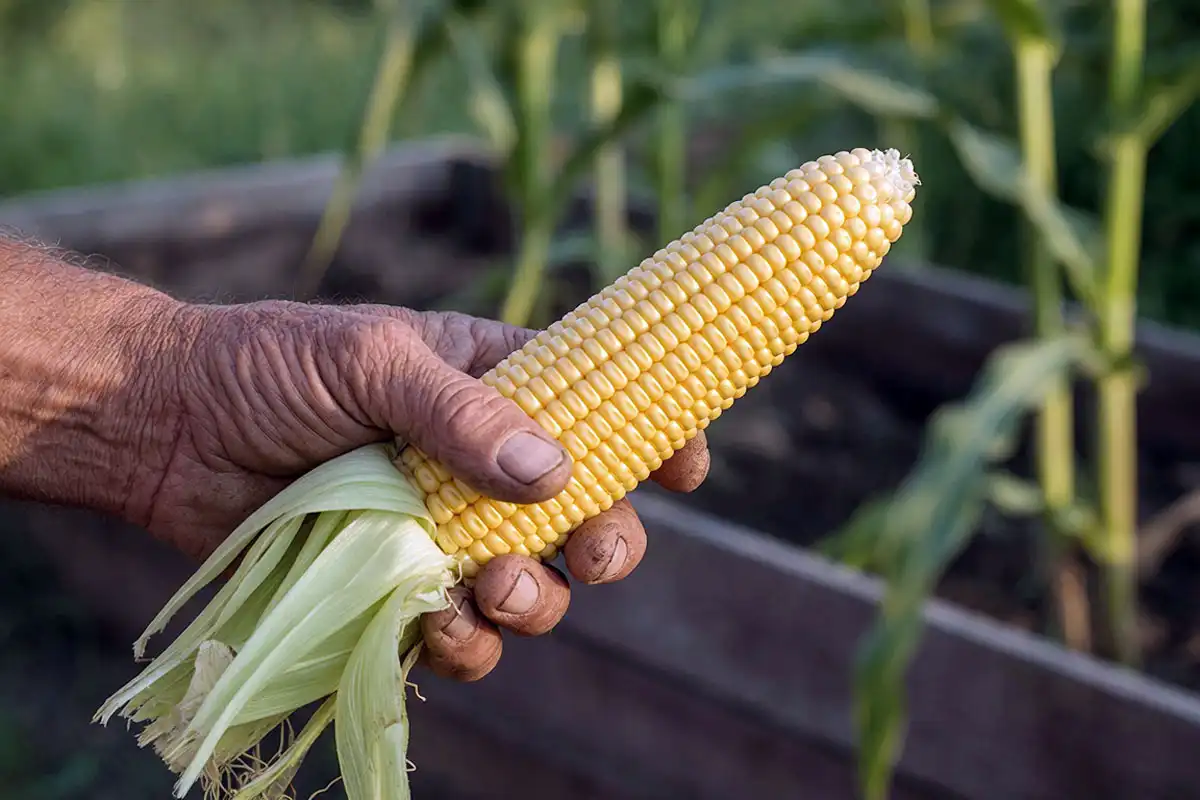
Each stalk usually carries one good ear and sometimes a smaller second one. Knowing how many ears a stalk sets helps you plan how many plants to grow for your table. Pick the ears when the silks turn brown and dry and the kernels feel full. Learning to tell when sweet corn is ready keeps you from picking starchy or underfilled corn.
Problems to Watch For in Raised Bed Corn
The most common raised bed corn problems are poor pollination, lodging, and hungry critters.
Poor tip fill is the top complaint. Bare ear tips trace back to weak pollination, heat over 95°F at silking, or dry soil. Block planting and steady water fix most of it. If your block is small, you can hand-pollinate. Just snap off a tassel and dust the pollen straight onto the silks.
Lodging means the plants blow over. Tall stalks in a shallow bed are the usual cause. A deeper bed and a tight block both help them stand.
Raccoons and deer love sweet corn. They’ll clear a bed overnight right as the ears ripen. A short electric fence is the surest guard. Some growers ring the block with prickly squash vines, the old Three Sisters trick, to slow raccoons down.
What to Tell a First-Time Bed Grower
Corn in a raised bed is worth it if you commit to the block. Don’t plant a single row and hope. Pack at least 18 plants of one variety into a square, feed the soil hard, and keep the water steady through tasseling. Do that, and a small bed will hand you sweet ears all summer. Start with a 4 by 8 block this season, then scale up next year once you’ve seen how it runs.