How Tall Do Corn Stalks Grow? Heights by Type and Stage
Every summer, folks driving past the field ask how tall do corn stalks grow by the time harvest rolls around. The answer depends on what you planted and how the season treated it. Stalks from knee-high sweet corn to towering dent corn.
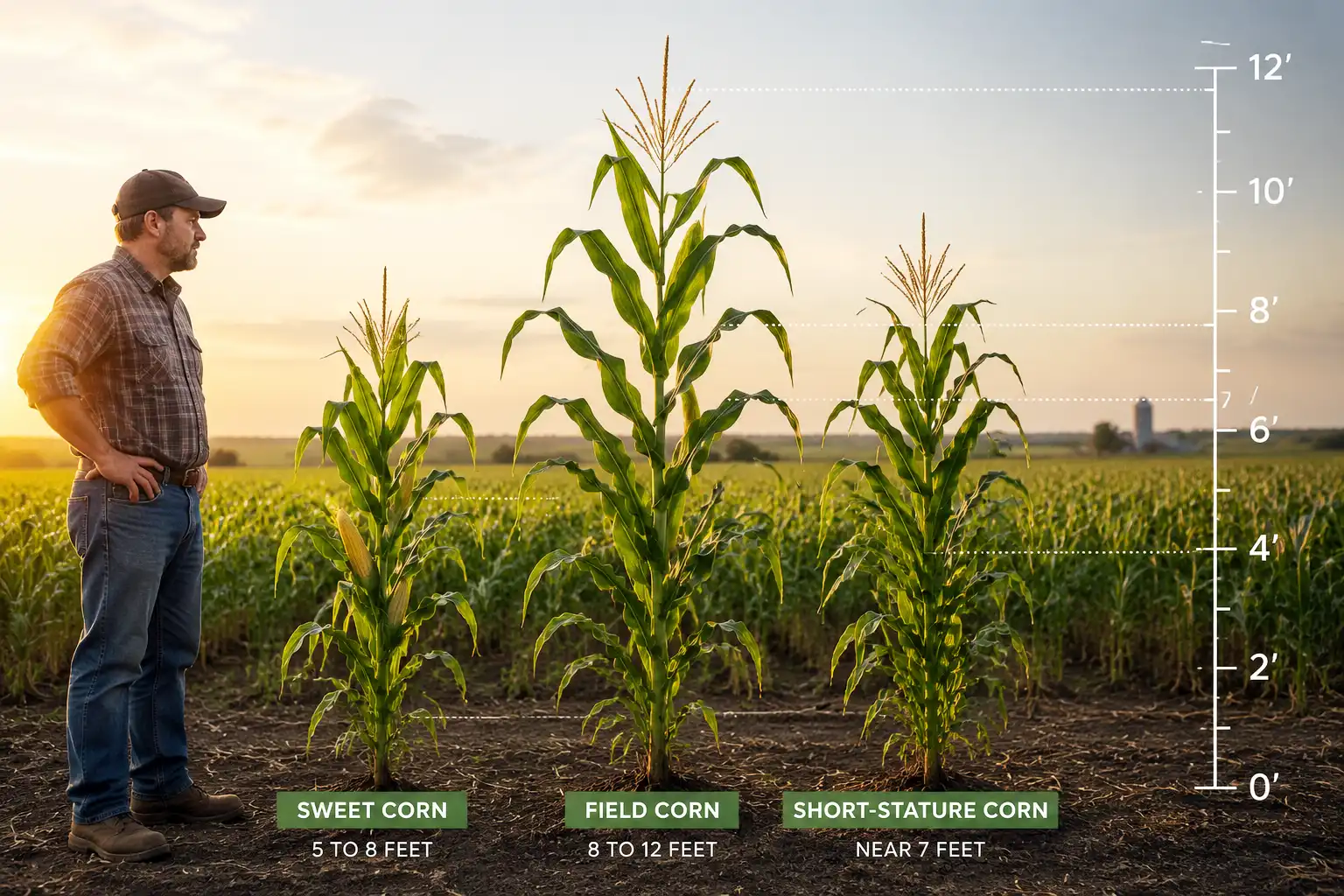
Most corn stalks grow 5 to 12 feet tall. Sweet corn usually reaches 5 to 8 feet, while traditional field corn stands 8 to 12 feet. Newer short-stature hybrids top out near 7 feet.
How Tall Do Corn Stalks Grow on Average?
Most corn stalks grow between 5 and 12 feet by the time they mature. The type of corn sets the range. Sweet corn stays on the shorter end. Traditional field corn, also called dent corn, climbs the highest.
Across the Corn Belt and Great Plains, an 8 to 10 foot field corn stalk is normal. That is a good, healthy year. Sweet corn in a home garden or market plot usually lands closer to 5 or 6 feet.
Field Corn Height
Field corn stalks grow 8 to 12 feet tall in most conditions. On this ground, dent corn runs about 8 to 10 feet most seasons. Field corn stays in the field until fall. The plant builds a tall, thick stalk to hold big ears through a long season.
Sweet Corn Height
Sweet corn stalks grow 5 to 8 feet tall, shorter than field corn. Sweet corn matures fast and comes off green in summer. The plant spends its energy on tender kernels instead of extra height. Many popular garden varieties top out near 5 or 6 feet.
| Corn type | Typical mature height |
|---|---|
| Sweet corn | 5 to 8 feet |
| Field (dent) corn | 8 to 12 feet |
| Popcorn | 5 to 8 feet |
| Short-stature hybrids | 5 to 7 feet |
| Tall heirloom or tropical types | 12 to 14 feet |
Read next: Sweet Corn Germination
What Is the Tallest a Corn Stalk Can Get?
The tallest corn stalks reach 12 to 14 feet, and a few tropical or heirloom types push even higher. These are the exception, not the rule. Most commercial corn you drive past never gets past 10 or 11 feet.
Some old open-pollinated varieties and show-garden corn stretch well past what any farmer wants in a production field. Extra height just means more stalk to blow over in a storm. For comparison, how tall sorghum grows covers a similar span. Grain types stay shorter, and forage types reach way up.
When Does Corn Reach Its Full Height?
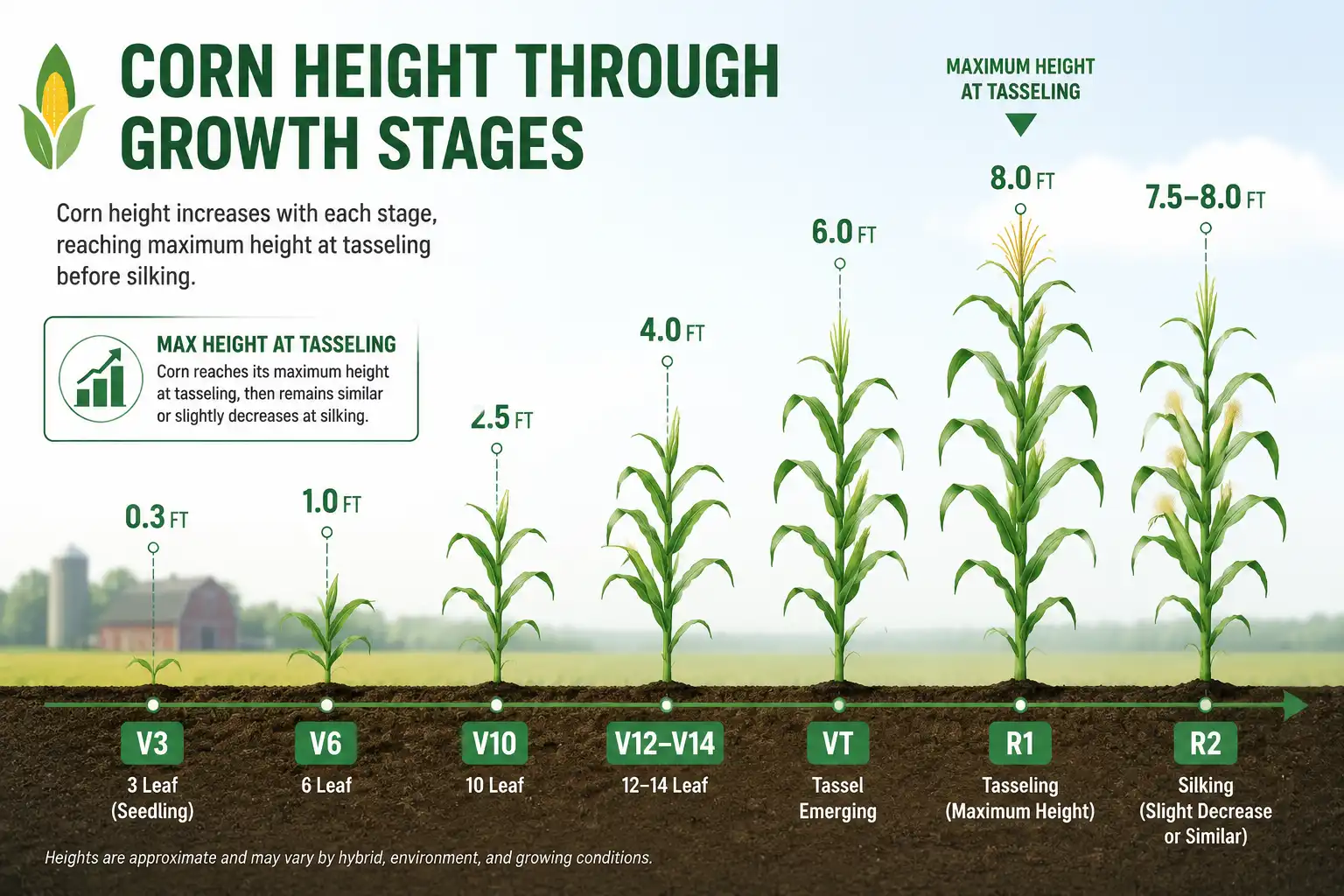
Corn reaches its full height at tasseling, right before it silks. After that point, the stalk stops growing taller, and the plant pours its energy into filling ears.
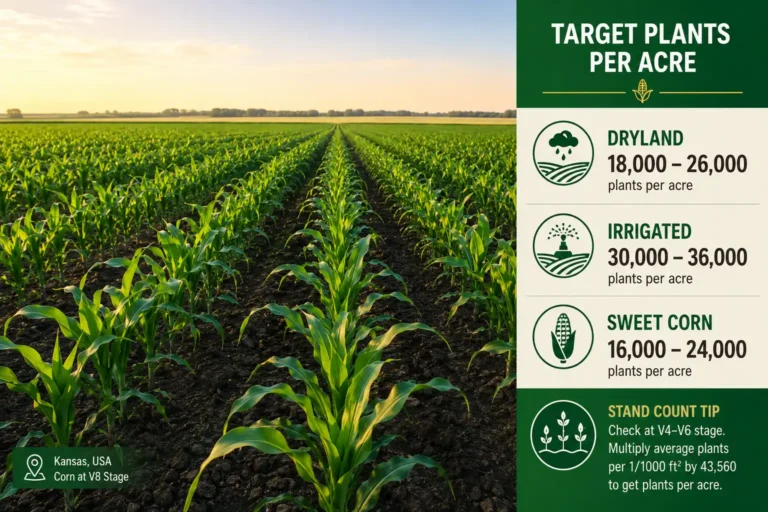
The climb happens fast. At the V8 stage, corn stands only about 2 feet tall. From V8 through tasseling, the plant adds height quickly, gaining a new leaf every few days. By the VT stage, when the tassel is fully out, the stalk has hit its maximum height. A few days after the tassel emerges, silks appear. The window from tasseling to a picked ear runs a set number of days.
What Determines How Tall Corn Grows?
Genetics set the ceiling, but soil, water, spacing, and weather decide how close your crop gets to it. Two fields planted with the same hybrid can finish a foot or more apart depending on how the season goes.
Variety and Genetics
The hybrid you plant is the single biggest factor. Every corn variety carries a built-in height range bred into its genes. A short-stature hybrid will never match a tall dent variety, no matter how well you feed it.
Soil Fertility
Corn is a heavy feeder, and hungry corn stays short. Nitrogen drives green growth and height more than any other nutrient. When corn runs low on nitrogen, the plants turn spindly and pale. Matching the right fertilizer rate for corn to your yield goal keeps stalks growing on schedule.
Water and Moisture
Corn needs steady moisture to reach full height. Drought stress during the rapid growth stages shortens the stalk for good. In a dry Kansas summer, dryland corn often finishes shorter and thinner than irrigated rows.
Planting Density
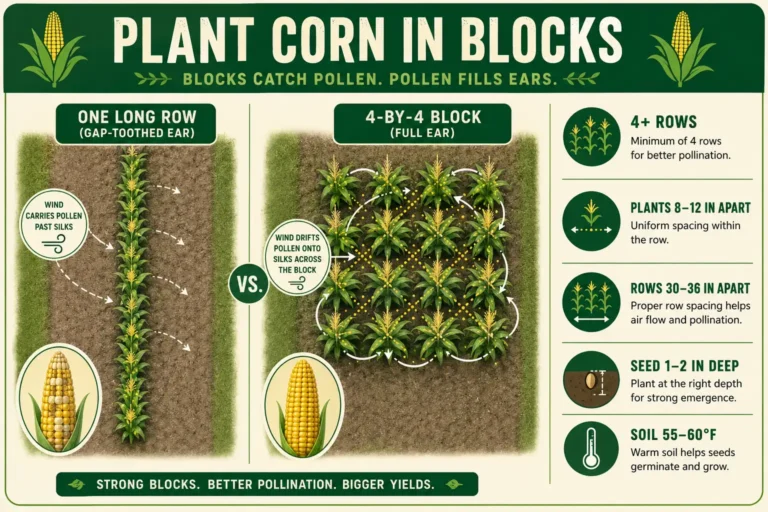
Spacing changes how tall and thick each stalk grows. Pack plants tight and they stretch taller and skinnier as they compete for light. Give them room and stalks grow stouter. Your corn seeding rate per acre shapes the whole stand. And planting corn in blocks instead of long single rows helps pollination and keeps the canopy even.
Soil Temperature and Heat Units
Corn grows on heat. Growers track growing degree days, also called heat units, to predict development. Cold soil early in the season slows growth and can leave plants stunted and yellow well into summer.
Soil Compaction
Compacted soil is one of the most common reasons corn comes up short. When tires or wet tillage pack the ground, roots cannot dig deep. The plant cannot pull enough water and nutrients. University of Minnesota research found compacted soil can leave corn 6 inches to 2 feet shorter than loose ground.
Why Is Your Corn Short or Stunted?
Short or uneven corn usually points to compacted soil, cold wet conditions, or a nutrient shortage. Walk the field and look for a pattern. Problems tied to a management or soil issue show up in patches or strips, not scattered at random.
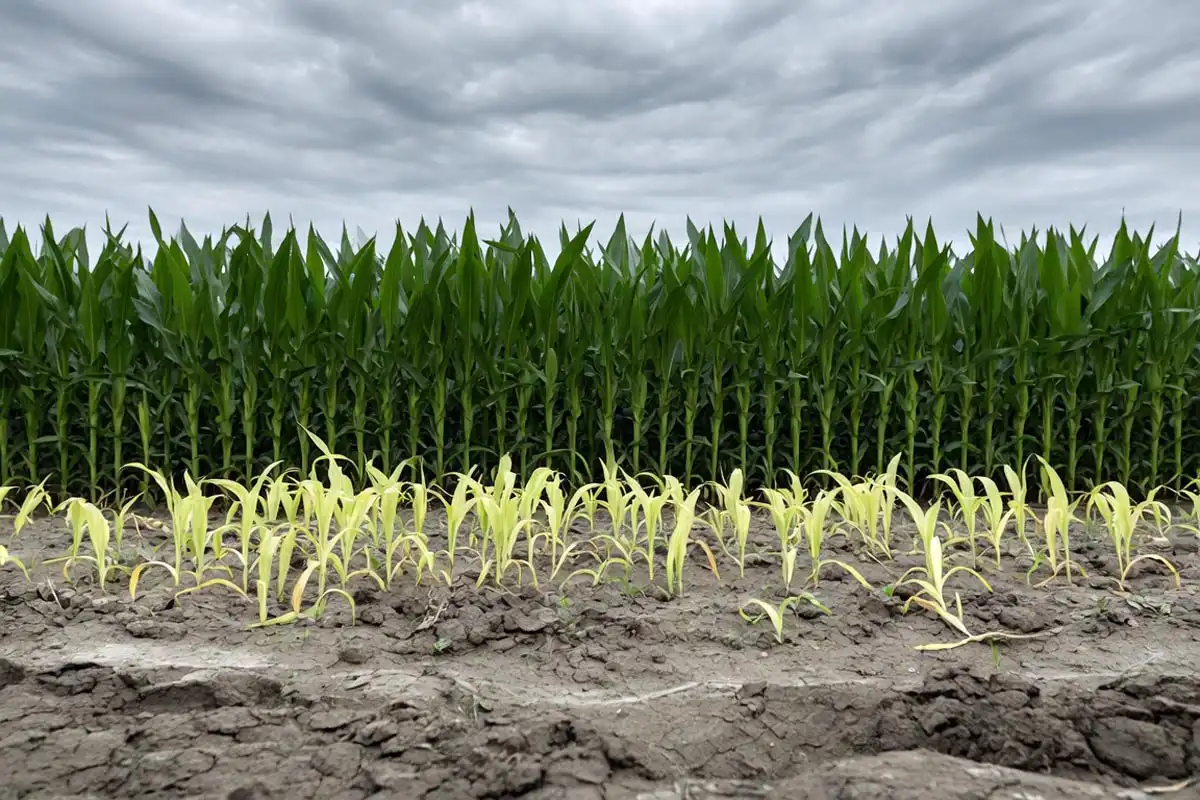
Agronomists call one common pattern tall corn short corn syndrome. It happens when compaction from equipment or wet-soil tillage stunts roots in the packed strips. Nitrogen deficiency leaves plants spindly and pale green. Phosphorus shortage stunts seedlings and turns them purple, often after a cold, wet spring. Potassium shortage shortens the spaces between nodes, so the whole plant stays squat.
If the short corn traces back to cold soil, warmer weather often lets the crop catch up. Compaction damage tends to stick around all season.
Why Some New Corn Hybrids Stay Under 7 Feet
A newer class called short-stature corn is bred to stay near or under 7 feet. That runs about a third shorter than traditional 9 to 12 foot hybrids. Bayer launched its Preceon Smart Corn System commercially in 2025. Stine Seed has sold high-population short corn for over a decade.
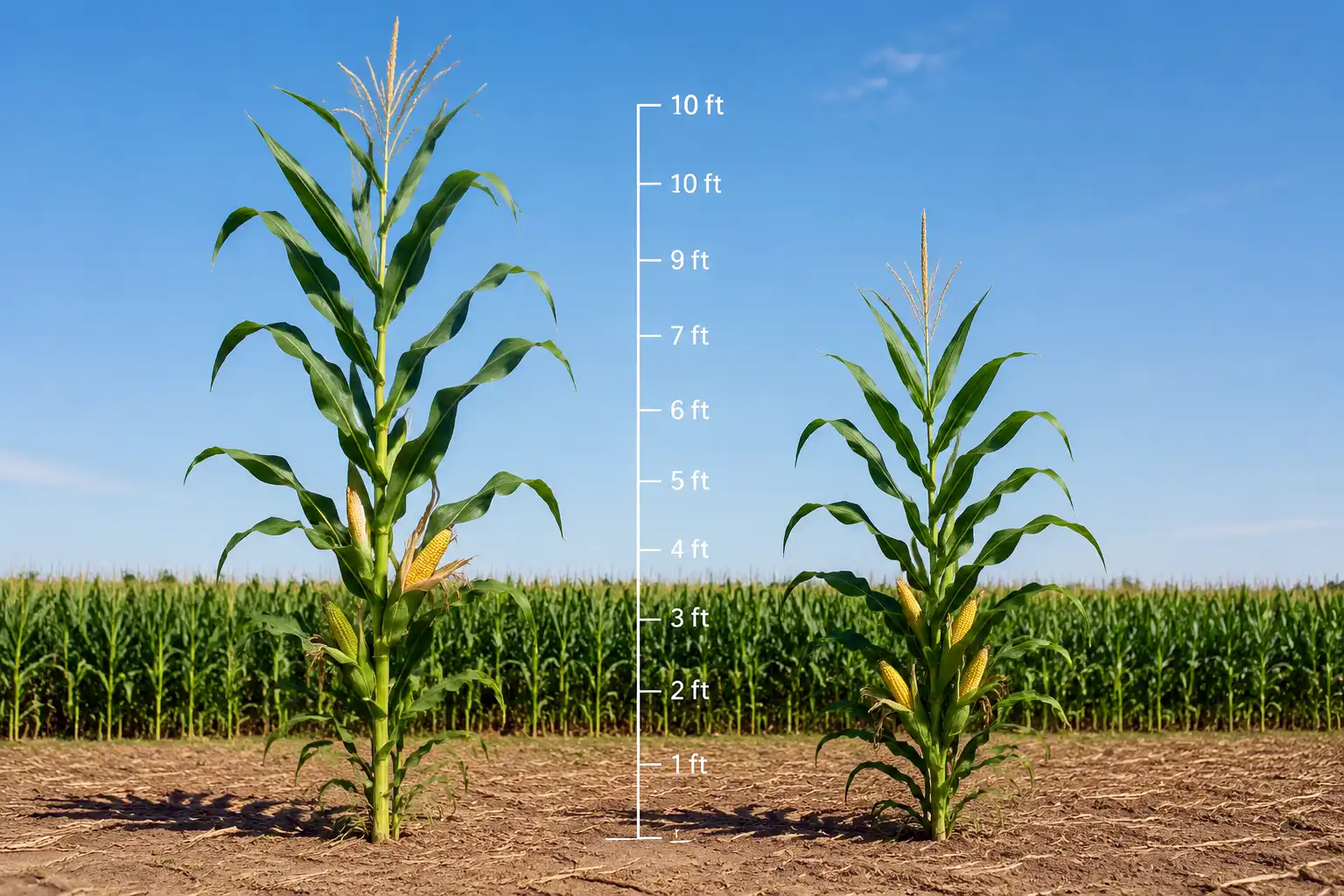
Shorter does not mean weaker. These plants carry thicker stalks and stand up far better in wind. After the 2020 derecho flattened tall corn across Iowa, interest in storm-tough short corn jumped. Short-stature hybrids hold up against gusts of 50 mph or more, cutting losses from lodging and greensnap.
The low height brings other perks. Farmers can drive ground rigs through the field later in the season without wrecking the crop. That opens the door to better-timed nitrogen and spray passes. Shorter, sturdier plants also handle higher planting populations, which can push more ears per acre.
Does Taller Corn Mean a Bigger Harvest?
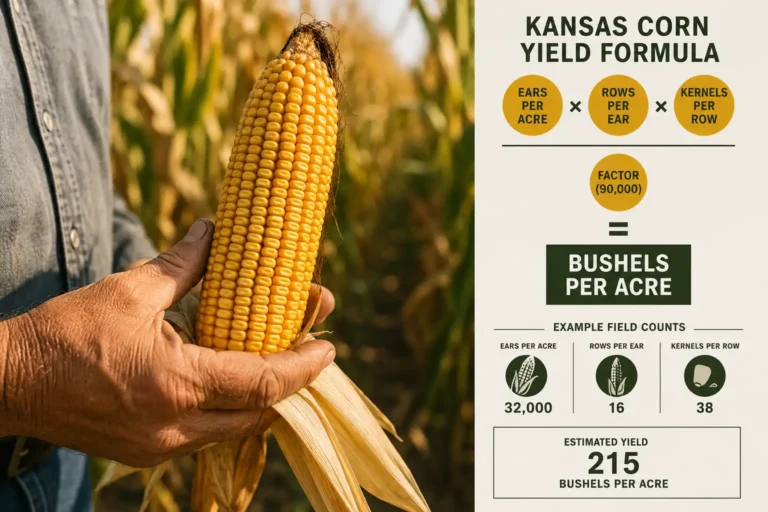
No. Height alone does not decide yield. A tall stalk looks impressive, but the ears are what pay the bills. Plenty of shorter hybrids out-yield taller ones.
What counts more is how many ears each stalk carries and how well those ears fill. Short-stature corn proves the point, matching or beating tall hybrids on yield in dryland trials while standing feet shorter. Chasing height for its own sake wastes plant energy that could go into grain.
Final Words
Read corn height as a report card on the season. When stalks hit 8 to 10 feet on schedule, it signals that soil, moisture, and fertility lined up. Short or patchy corn tells me to check compaction, nitrogen, and planting depth before next spring. Pick a hybrid suited to your ground. Feed it well, keep the soil loose, and the height takes care of itself.