What Is Field Corn? Uses, Types, and How It Grows
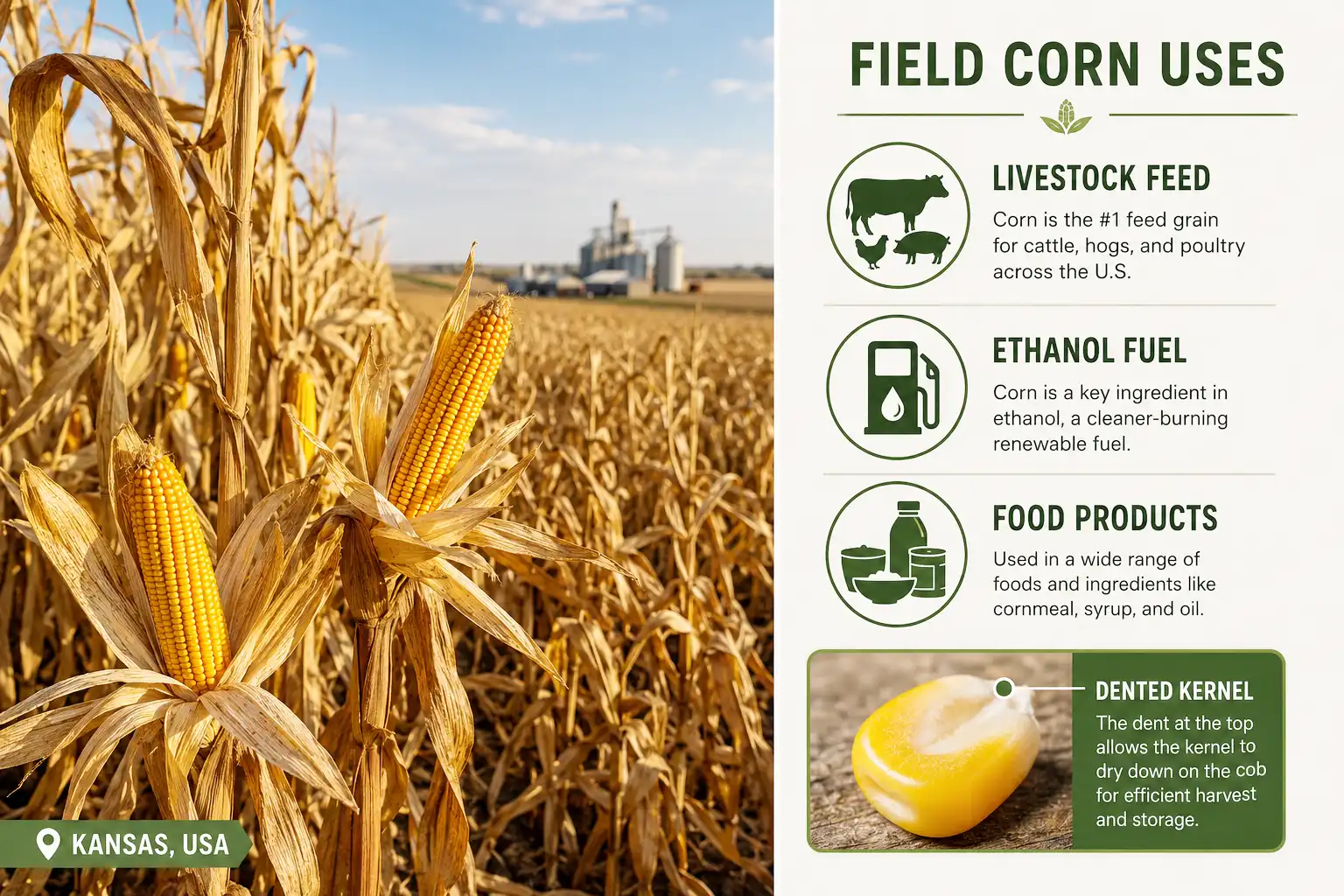
Field corn is the crop covering most of those tall summer fields you drive past. It is not the corn you eat off the cob. Farmers grow it for livestock feed, ethanol, and hundreds of processed products.
Field corn is dent corn, a starchy grain grown to full maturity and harvested dry. It feeds livestock, makes ethanol, and becomes products like corn syrup and starch. It is too hard and starchy to eat fresh.
What Is Field Corn?
Field corn is dent corn, the starchy grain that fills most corn acres in the United States. Farmers let it dry hard on the stalk, then harvest the mature kernels. It is not sweet, and you do not eat it fresh. About 99 percent of the corn grown here is field corn. Sweet corn makes up only around 1 percent.
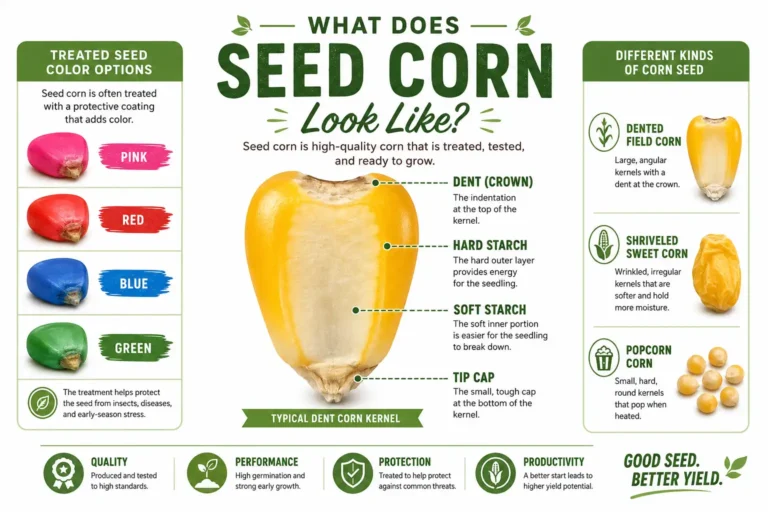
The name “dent corn” comes from the small dimple that forms on top of each kernel as it dries. That dent is the giveaway. Its scientific name is Zea mays, and the dented type is Zea mays indentata. Most of it grows across the Corn Belt and the Great Plains, and raise it too. Each cob packs hundreds of kernels, so if you have ever wondered how many kernels sit on each cob, the count runs high.
The USDA tracks field corn as the country’s largest crop by acreage and volume. In the 2025 crop year, US farmers brought in a record harvest near 17 billion bushels. Yields averaged about 186 bushels per acre. Nearly all of that was field corn.
How Is Field Corn Different From Sweet Corn?
Field corn and sweet corn differ in sugar, harvest timing, and use. Sweet corn carries more sugar, and growers pick it young while the kernels are soft and milky. Field corn stays on the plant until the kernels turn hard and dry. That extra time lets the plant convert sugar into starch.
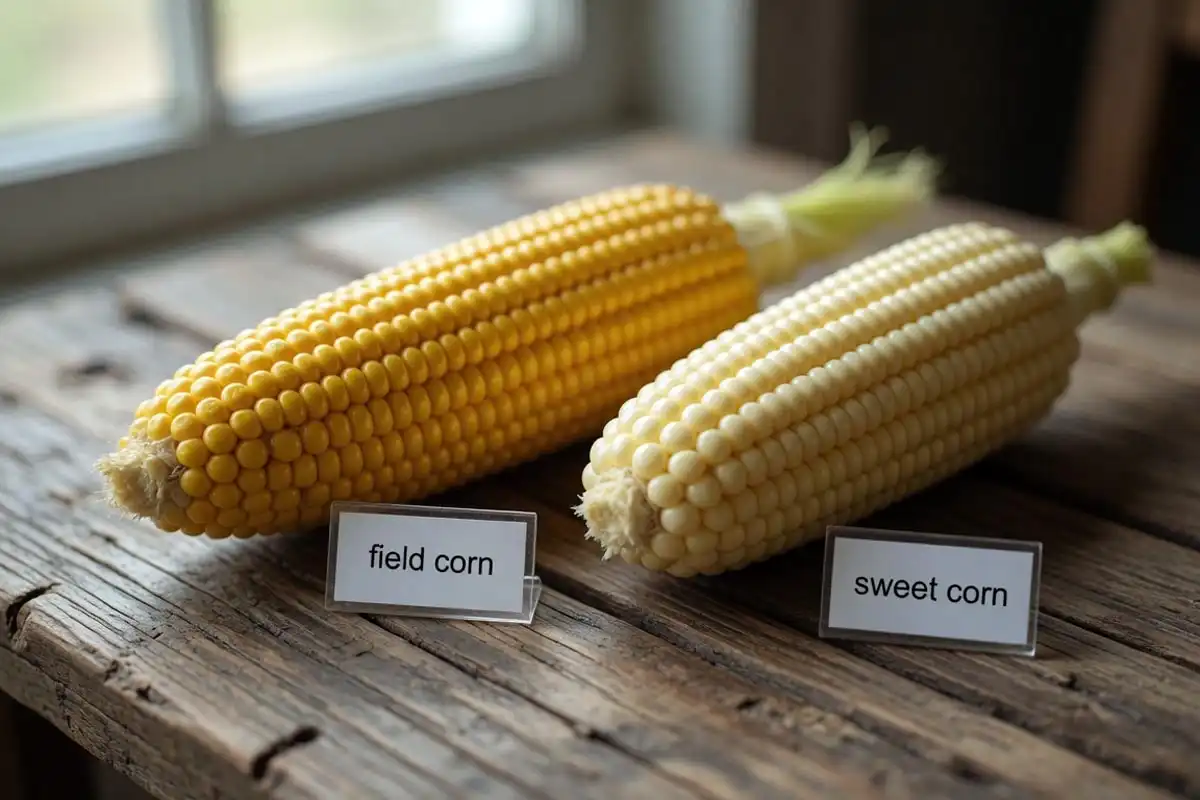
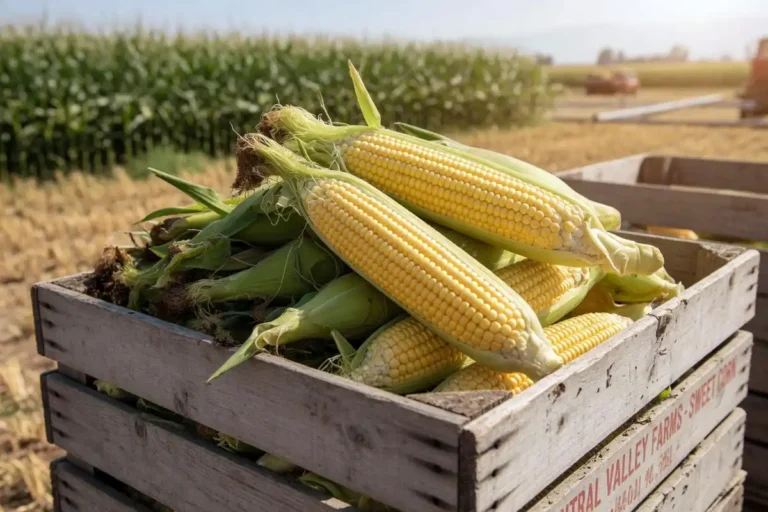
You harvest sweet corn at the milk stage, usually about three weeks after the silks show. Timing matters, so knowing when sweet corn is ready to pick keeps it tender. Field corn works the opposite way. Leave it in the field for months past that point, until moisture drops and the kernels rattle.
The uses split cleanly. Sweet corn goes to your plate as corn on the cob or frozen kernels. Field corn goes to livestock, fuel, and processing plants. One feeds people directly. The other feeds animals, engines, and factories.
What Does Field Corn Look Like?
Field corn grows tall, often 7 to 10 feet, with a thick stalk and long green leaves. A tassel sits on top, and one or two ears form partway down the stalk. If you want the full range on plant size, here is how tall corn stalks get across different hybrids and conditions.
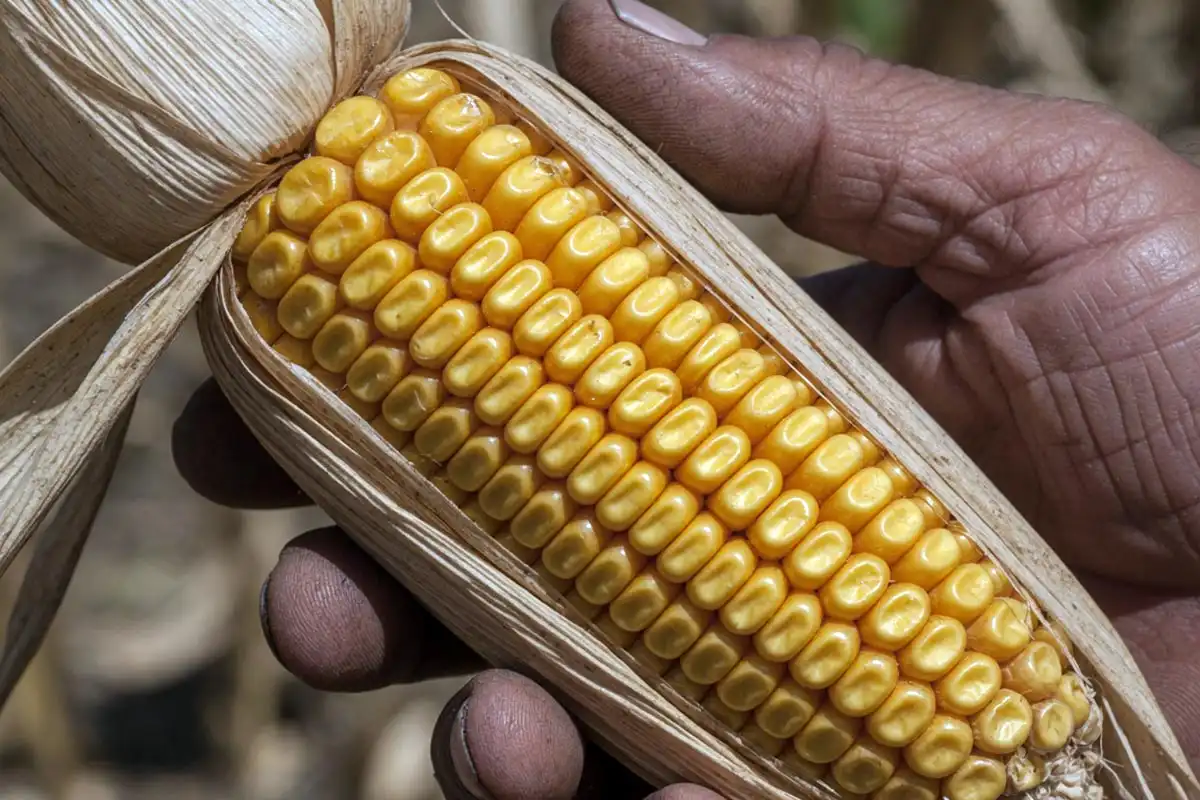
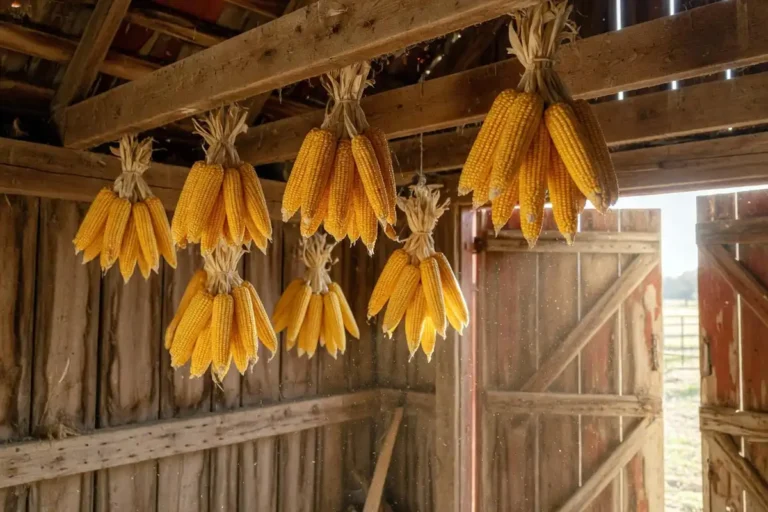
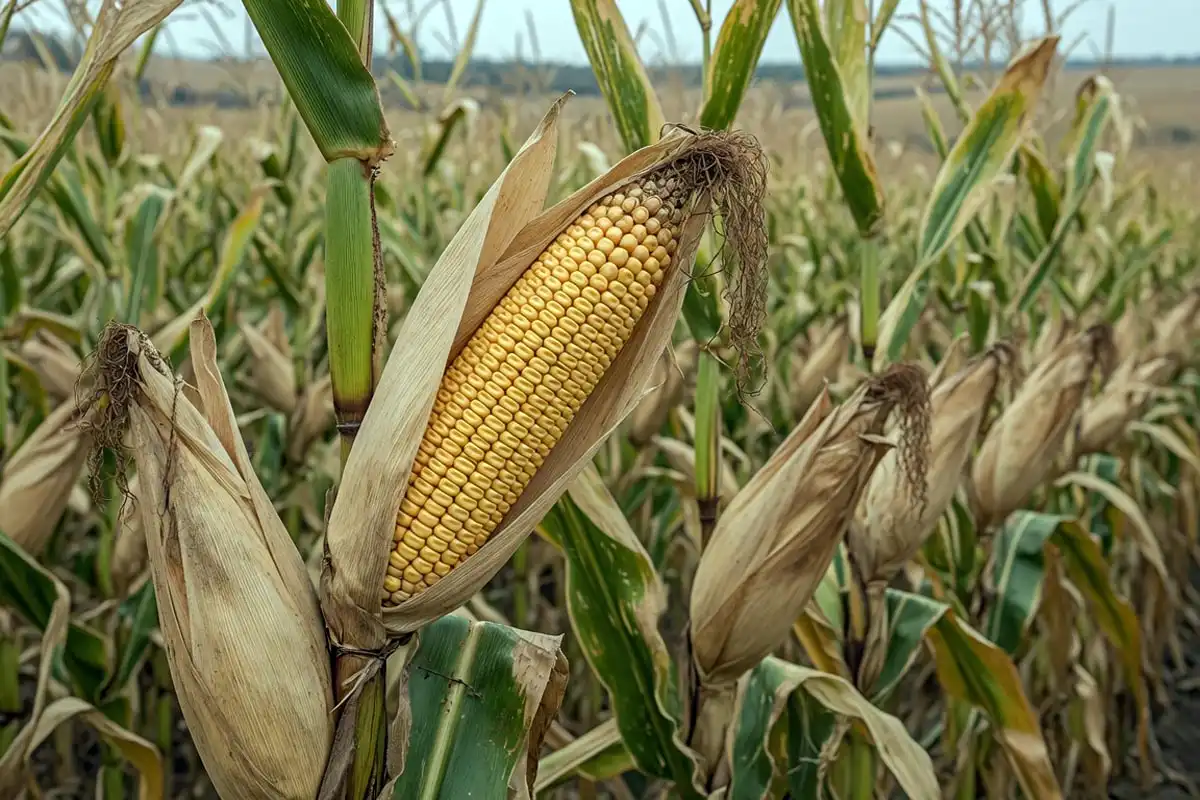
The ears look ordinary while green. The kernels change everything at maturity. As the crop dries, each kernel hardens and forms that classic dent on its crown. Most field corn is yellow, though white types exist for specific food markets. The husk turns papery and brown, and the whole plant fades from green to tan.
What Is Field Corn Used For?
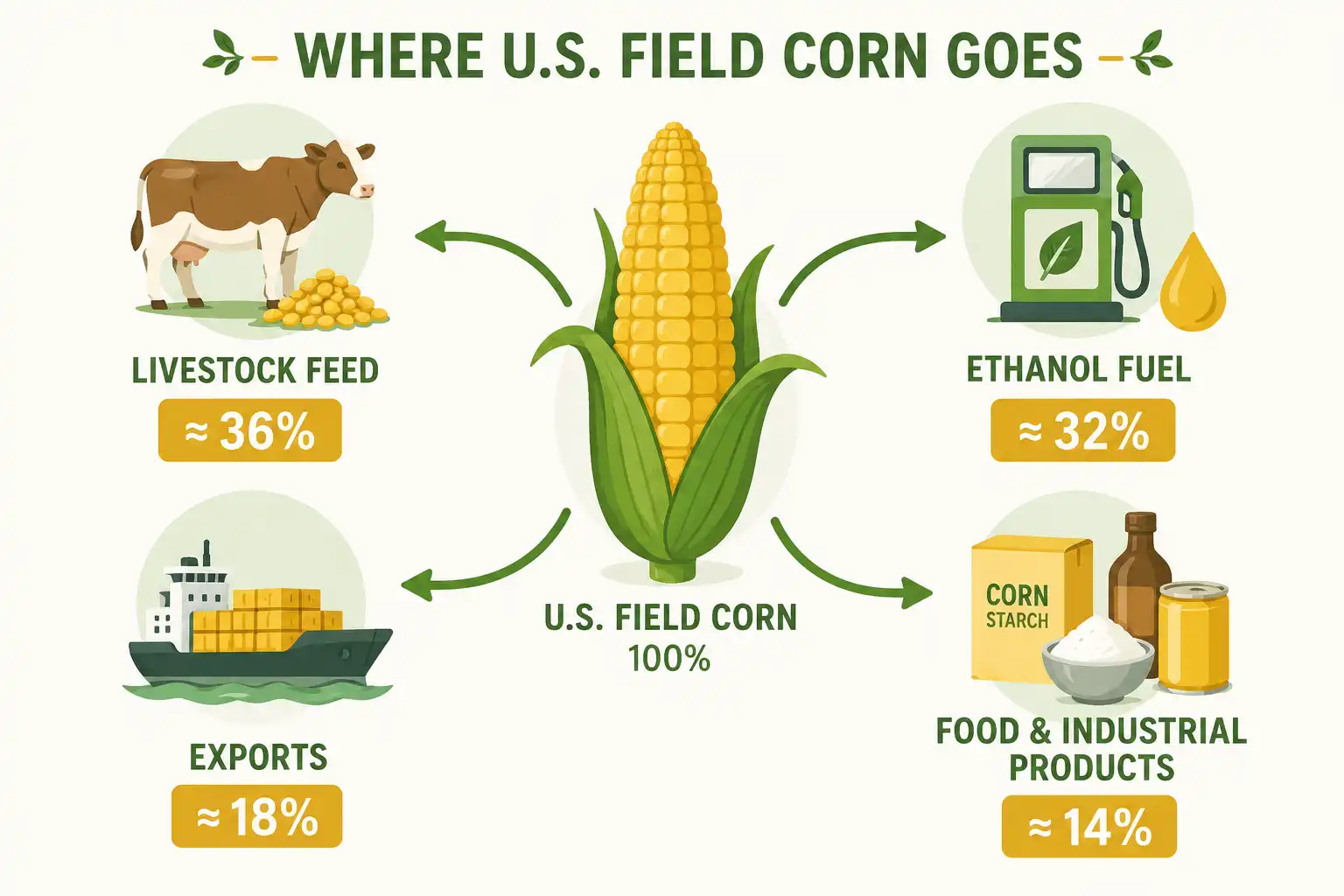
Field corn mostly becomes livestock feed and ethanol, with the rest going to exports and processed products. It is the workhorse crop behind meat, fuel, and a long list of grocery items. Here is roughly how the crop gets used, based on USDA figures:
- Livestock feed: roughly 40 percent of the crop, going to cattle, hogs, and poultry as grain, silage, or distillers grains.
- Ethanol: roughly 35 percent, the largest single processing market for the grain.
- Exports: about 15 to 20 percent, mostly to Mexico, Japan, and other buyers.
- Food and industrial products: the rest, including corn syrup, starch, oil, cereal, grits, and masa.
Ethanol and feed often work together. A bushel of field corn weighs 56 pounds, and what a bushel of corn weighs matters at the elevator, since grain sells by the bushel. An ethanol plant turns each bushel into roughly 2.8 gallons of fuel plus about 17 pounds of distillers grains. Those distillers grains circle right back to feedlots as a protein-rich feed.
Processing happens in wet mills and dry mills. Wet mills pull the kernel apart into starch, sweeteners like high-fructose corn syrup, and corn oil. Dry mills grind it into meal, grits, and flour. So the same crop that fattens cattle also lands in your cereal bowl and your gas tank.
How Is Field Corn Grown and Harvested?
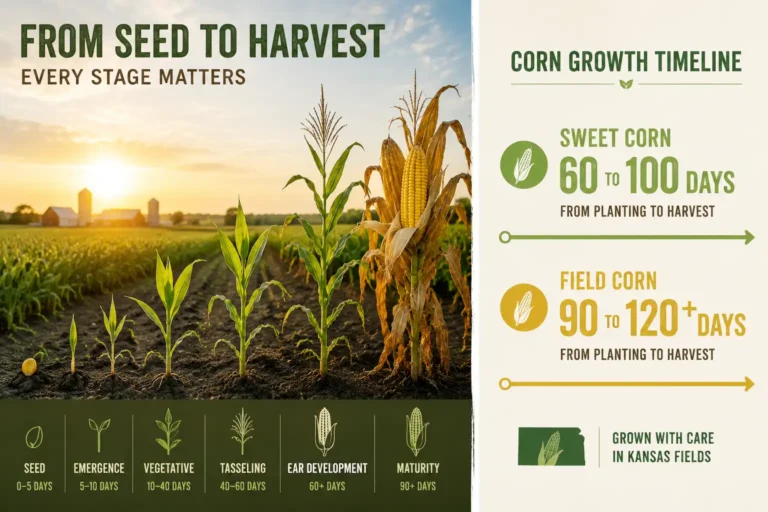
Farmers plant field corn in spring and combine it dry in the fall. Plant from late April into May, once soil temperatures hold near 50°F. Most modern hybrids need roughly 100 to 120 days to reach maturity, and we track that in growing degree days rather than calendar days.
The plant pollinates in midsummer. Tassels shed pollen, silks catch it, and each pollinated silk becomes a kernel. After that, the crop spends weeks filling and drying. You can check how long corn takes to mature for a hybrid-by-hybrid breakdown from seed to harvest.
Harvest starts once the kernels hit black layer, the sign of physiological maturity. At that point grain moisture sits near 30 to 35 percent. Wait for it to drop closer to 20 to 25 percent, then run the combine. The combine strips the ears, shells the kernels, and dumps clean grain into the tank. After harvest, corn should be dried down to about 15 percent moisture so it stores without spoiling.
Can You Eat Field Corn?
Yes, but not fresh off the cob the way you eat sweet corn. Mature field corn is hard, starchy, and bland. Bite into it raw and you get chewy, dry kernels with almost no sweetness.
People still eat field corn every day, just in processed form. It becomes cornmeal, grits, tortillas, corn chips, corn syrup, and cooking oil. You also eat it indirectly through the beef, pork, chicken, and dairy that fed on it. So field corn feeds people constantly. It simply travels through a mill or an animal first.
What Types of Corn Count as Field Corn?
Field corn covers dent corn plus a few related grain types. Dent corn dominates, and it is what most farmers mean by the term. Flint corn, with harder kernels, shows up more in Central and South America and in ornamental “Indian corn.” Flour corn, including blue corn, has soft starch that grinds easily. Waxy corn carries a special starch for food and industrial products.
Sweet corn and popcorn sit in their own categories. Breeders select sweet corn for sugar, and people eat it fresh. Popcorn has a hard hull that traps steam and pops. Neither counts as field corn, even though all of them are Zea mays.
Final Words
Field corn is the backbone of American agriculture, and it earns that spot every year. Grow it for grain that heads to feed, fuel, and processing, not for the dinner table. If you drive past a big corn field this summer, you are almost certainly looking at dent corn maturing for those markets. Know the dent, know the purpose, and you know field corn.