5-10-5 Fertilizer: What It Is and How to Use It (2026 Guide)
Farm stores still sell 5-10-5 fertilizer as the all-purpose garden grade. Sometimes it earns the money. Often it just stacks more phosphorus onto ground that already holds plenty. Here is what the grade supplies, how to calculate a rate, and when to walk past it.
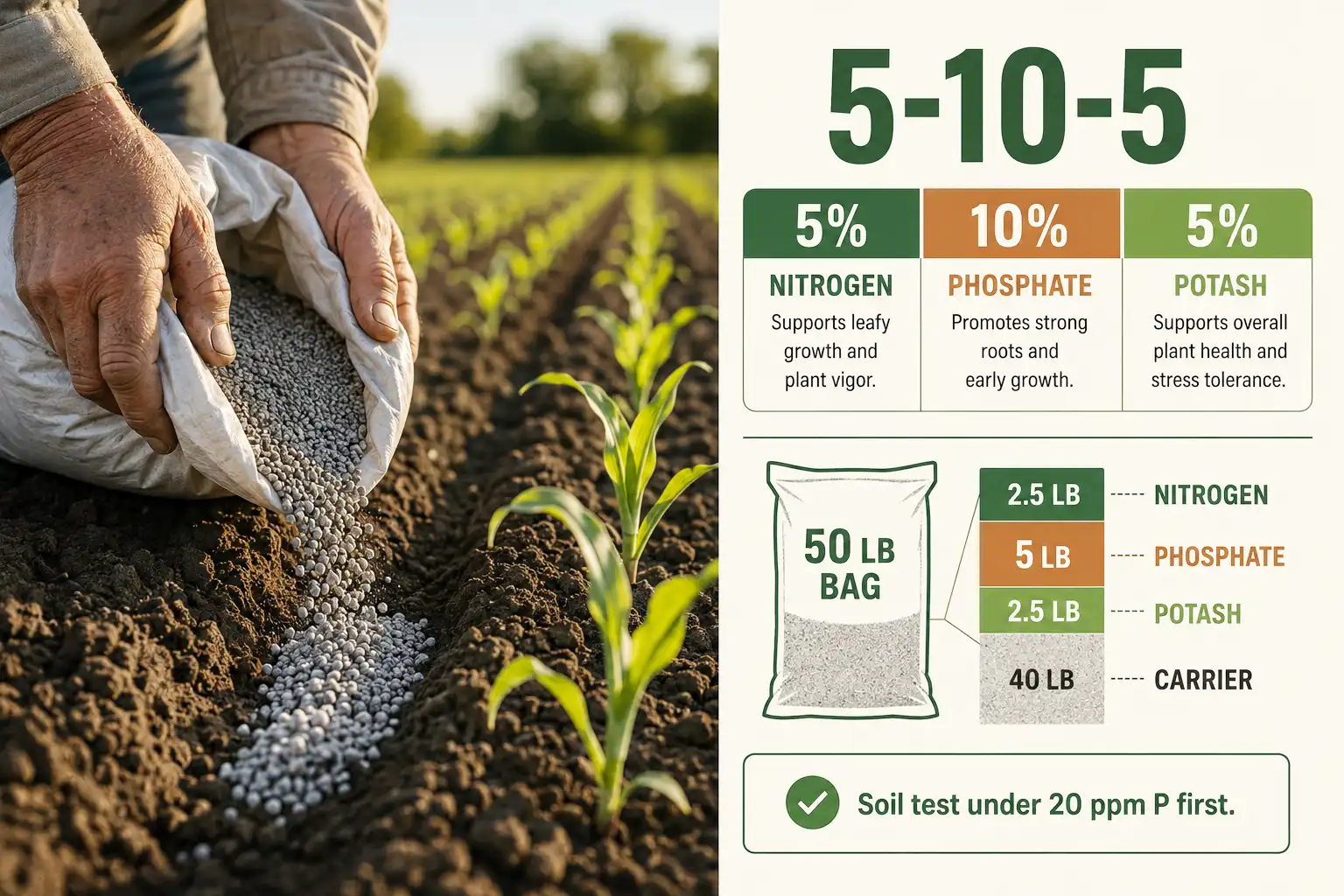
5-10-5 fertilizer supplies 5% nitrogen, 10% phosphate, and 5% potash by weight, so 80% of the bag is carrier. Apply it only where a soil test reads under 30 ppm phosphorus, then band it near the seed.
What Is 5-10-5 Fertilizer?
5-10-5 fertilizer is a complete plant food carrying 5% nitrogen, 10% phosphate, and 5% potash by weight. Most versions are dry granular and quick release. Growers call it a phosphorus-forward grade because the middle number doubles the other two.
Those three numbers give you the guaranteed analysis. Every state fertilizer law requires them, so the figures hold across brands. The percentages report weight, not volume, and they never change with bag size.
Everything past those percentages is carrier. Sand, limestone, or granulated clay makes up the balance and keeps granules flowing through a spreader without caking.
Also see: 19-19-19 Fertilizer Guide
How Much Nutrient Is Actually in the Bag?
A 50 pound bag of 5-10-5 holds 2.5 pounds of nitrogen, 5 pounds of phosphate, and 2.5 pounds of potash. That comes to 10 pounds of plant food and 40 pounds of carrier.
Multiply bag weight by the percentage, then divide by 100:
- 6.75 lb bag: 0.34 lb N, 0.68 lb phosphate, 0.34 lb potash
- 15 lb bag: 0.75 lb N, 1.5 lb phosphate, 0.75 lb potash
- 40 lb bag: 2 lb N, 4 lb phosphate, 2 lb potash
- 50 lb bag: 2.5 lb N, 5 lb phosphate, 2.5 lb potash
That one step settles a lot of buying questions. A 6.75 pound bag carries about 1.35 pounds of actual nutrient. It will not cover a garden, let alone an acre.
What 5-10-5 Does Not Contain
The grade guarantees nitrogen, phosphate, and potash. Nothing else. No sulfur, no calcium, no magnesium, and no micronutrients unless the blender adds them and lists them.
Sulfur is the gap worth watching in 2026. Air quality rules cut atmospheric sulfur deposition sharply over the past two decades, and high-analysis fertilizers carry little to none. Iowa State now flags sulfur as a real consideration. Soils under 3.5% organic matter, sandy ground, and eroded hilltops carry the highest risk. The deficiency shows as pale striping between veins on the youngest upper leaves. Nitrogen shortage hits older lower leaves instead, so the pattern tells you which one you have.
A few regional 5-10-5 blends do fortify with sulfur, iron, magnesium, and calcium. Those are usually the ones built on a poultry-litter base. So read the guaranteed analysis panel, not the front of the bag. If secondary nutrients appear, they will be listed there.
How Do You Read Fertilizer Bag Numbers?
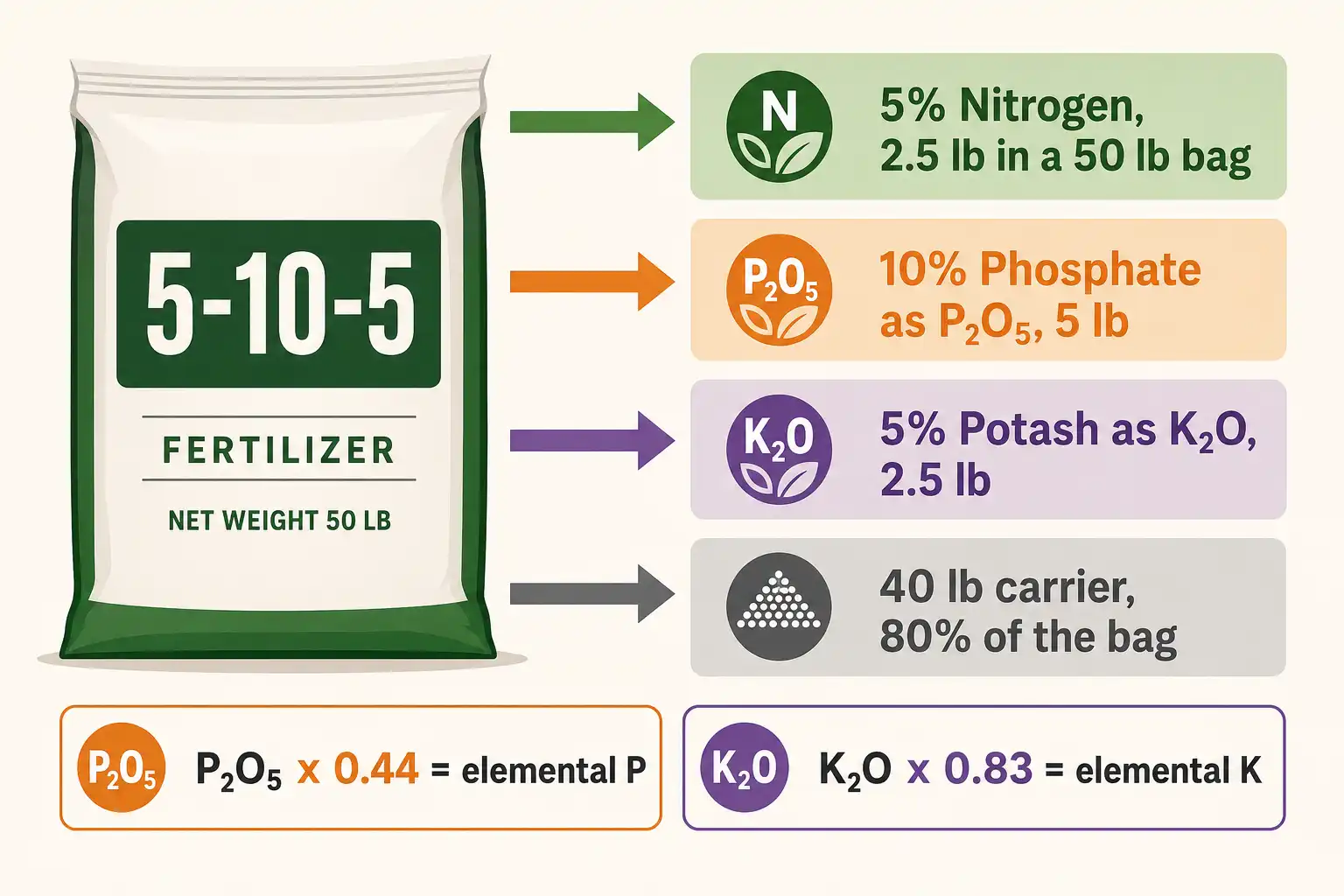
Read them left to right as nitrogen, then phosphate, then potash, always as a percentage of total bag weight. So 10-5-10 carries 10% nitrogen, 5% phosphate, and 10% potash, while 5-10-5 flips that emphasis onto phosphorus.
One detail trips up new growers. The last two numbers are not pure phosphorus and potassium. They report oxide forms. Phosphorus shows up as P2O5, potassium as K2O. To convert back, multiply P2O5 by 0.44 and K2O by 0.83.
So a 5-10-5 grade holds about 4.4% elemental phosphorus and 4.2% elemental potassium. You rarely run that conversion by hand. Still, it explains a common headache. Your lab reports elemental phosphorus in parts per million. Your bag reports phosphate as a percentage. Same nutrient, two languages.
The same math applies to every grade on the shelf. Our guide on choosing NPK ratios for different crops works through it with field examples.
What Does 5-10-5 Do for Plants?
5-10-5 feeds establishment more than top growth. The light nitrogen holds foliage in check while the doubled phosphate supports root formation, energy transfer, and early vigor.
Each nutrient does specific work:
- Nitrogen (5%): builds leaves and stems. At 5% it feeds steadily without pushing rank growth.
- Phosphate (10%): moves energy through the plant and drives root formation. Phosphorus barely travels in soil, so placement beats rate.
- Potash (5%): runs water regulation, stalk strength, and disease resistance.
Now the part most product pages skip. That 5% potash runs thin for anything you harvest below ground or off a fruit truss. Potatoes, tomatoes, and onions all pull heavy potassium. On sandy or low-CEC ground, potassium leaches downward through the season too.
So a low potassium test leaves you short with this grade. A 5-10-10 blend doubles the potash at the same nitrogen and phosphate, which fits root and fruiting crops better. The two grades are worth keeping separate for exactly that reason.
One claim on some 5-10-5 packaging does not hold up. Bags promising more blooms from high phosphorus are selling an old idea. NDSU Extension states it plainly. High phosphorus fertilizers do not necessarily produce more flowers. Most garden soils already carry enough. Plants need adequate phosphorus, not extra.
Do You Actually Need 5-10-5 Fertilizer?
Only a soil test answers that, and phosphorus is the nutrient where guessing costs the most. Phosphorus does not leach the way nitrogen does. Soil minerals hold it and release it slowly over years, so every past application stays in the bank.
K-State research sets clear thresholds on Bray P-1. Below 20 ppm, soils rate low or very low. There a phosphorus starter has a strong chance of paying back in yield. Between 20 and 30 ppm counts as medium. A response is still possible, but it comes less often and may not cover the cost. Above 30 ppm, economic responses to starter phosphorus are rare.
Here is how to read a report before buying anything:
| Soil test P (Bray P-1) | What to do |
|---|---|
| Under 20 ppm | 5-10-5 or another phosphate source earns its keep |
| 20 to 30 ppm | Small banded starter rate only, close to the row |
| Over 30 ppm | Skip the phosphorus, spend on nitrogen or potassium |
| Very high | Stop all phosphorus, manure and compost included |
Minnesota Extension reached the same place from the row-crop side. Across the upper Midwest, the chance that a very high testing soil needs phosphorus sits close to zero.
A lab test runs a few dollars per sample. It pays for itself the first time it talks you out of a pallet you did not need. Between lab years, a mail-in or reagent-based soil test kit for home use gets you close enough.
How Do You Spot a Real Phosphorus Shortage?
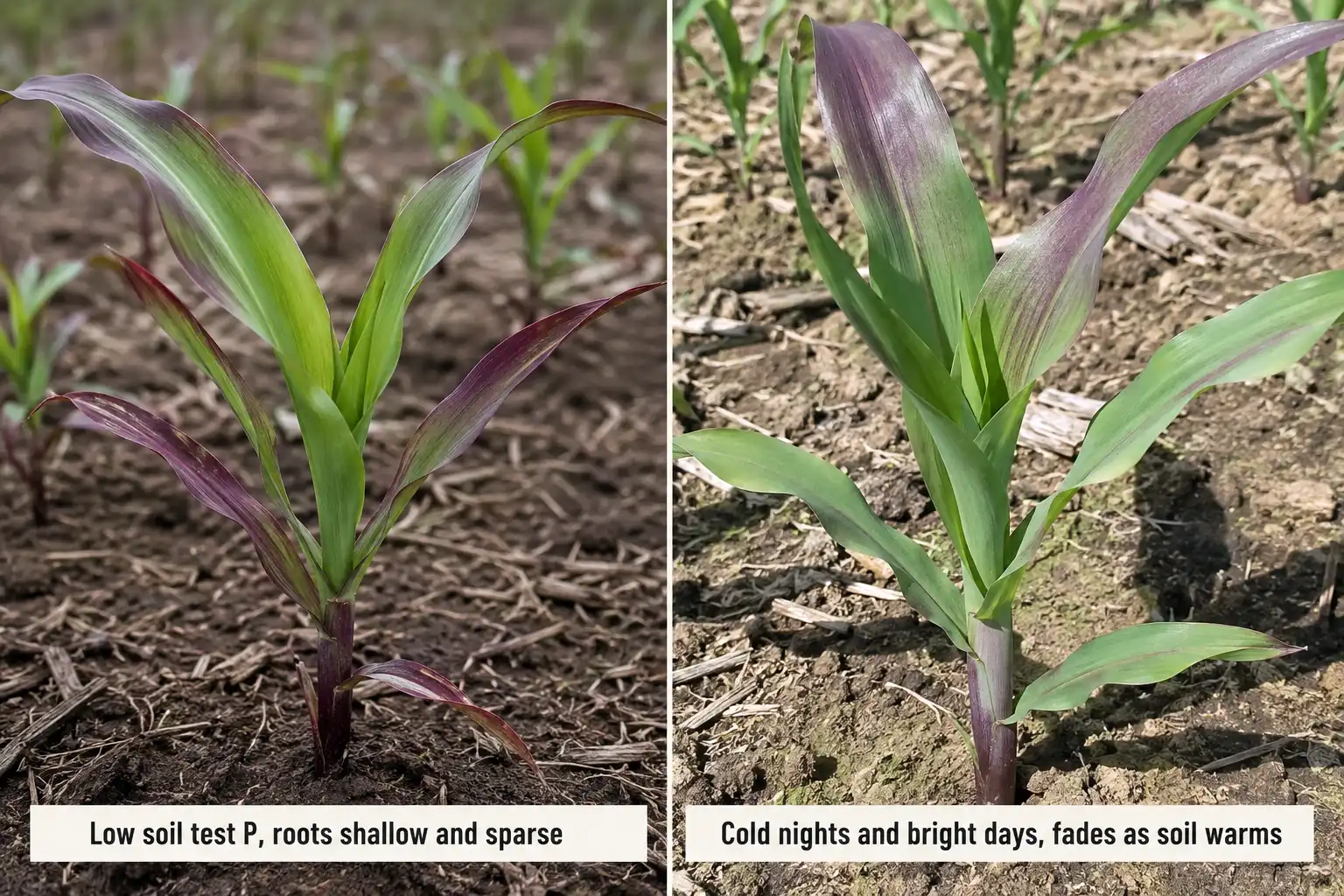
Watch the oldest lower leaves on grasses for reddish-purple color along tips and margins. In corn that purpling is the classic phosphorus signal. It shows up before V6, alongside stunted plants and shallow, sparse roots.
Three things complicate that read, and every one of them costs growers money:
- Cold soil fakes it. Cool ground slows root growth and phosphorus uptake even where soil phosphorus tests high. Symptoms fade as soil warms, so an early purple stand may need nothing at all.
- Bright days with cool nights also purple corn. Between V3 and V6, high daytime photosynthesis plus cold nights in the 40s and 50s stacks up anthocyanin pigment. Mississippi State and university agronomists both note this pattern does not cut yield.
- Low pH mimics deficiency. Below pH 5.5, phosphorus availability in soil solution drops by 30% or more. On acid ground, lime fixes more than fertilizer does.
Soybeans complicate things further. They do not purple, so a shortage there stays invisible until plants stunt. Tissue testing settles it when leaf color leaves you guessing.
How Much 5-10-5 Do You Need to Meet a Soil Test Recommendation?
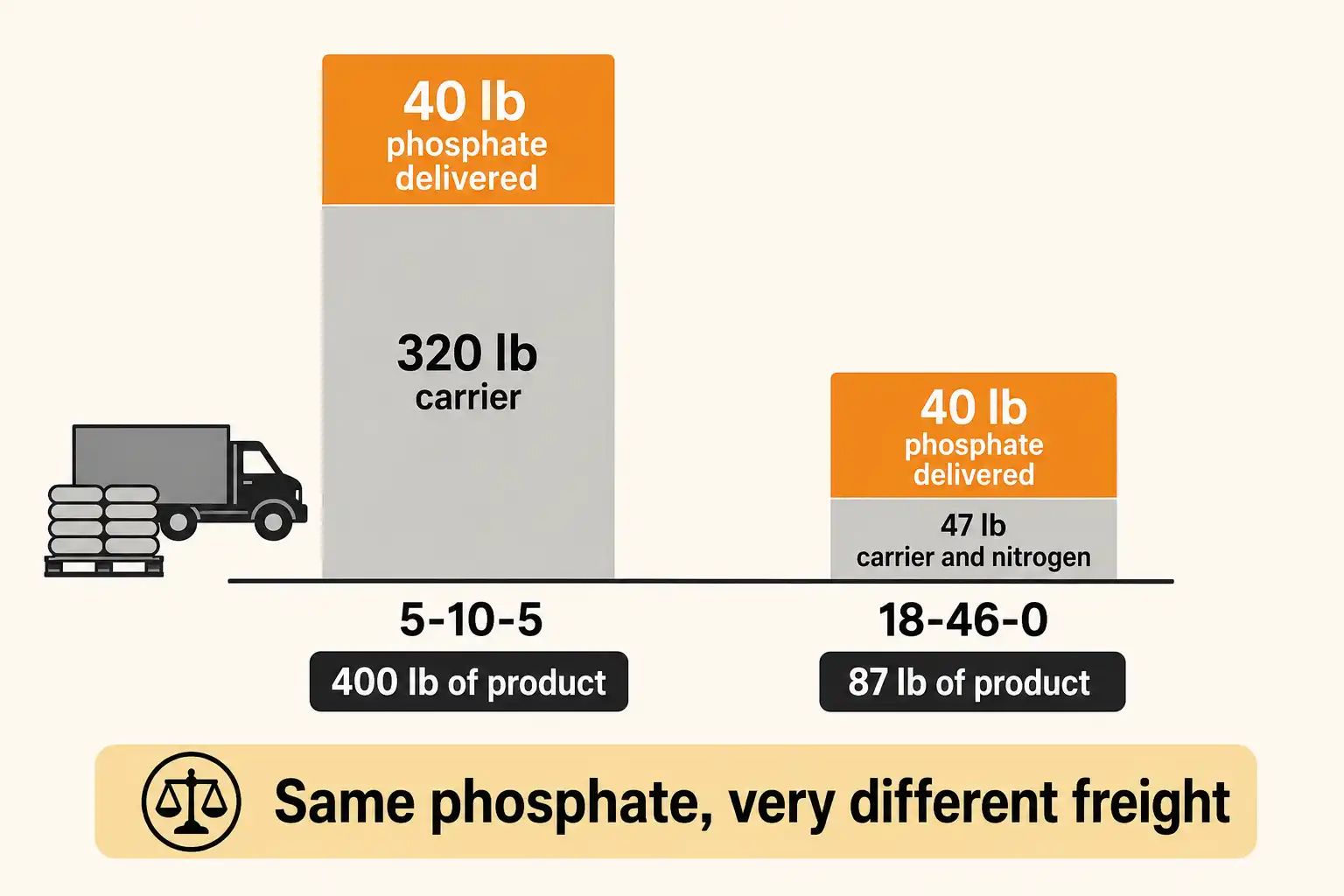
Divide the pounds of phosphate your lab asked for by 0.10. A recommendation of 40 pounds of phosphate per acre means 400 pounds of 5-10-5 per acre. That same 400 pounds also drops 20 pounds of nitrogen and 20 pounds of potash. You get those whether you wanted them or not.
Work it both ways with one formula:
Pounds of product = pounds of nutrient needed divided by (percentage divided by 100)
| Lab asks for (P2O5) | 5-10-5 needed | N it also drops | K2O it also drops |
|---|---|---|---|
| 20 lb per acre | 200 lb per acre | 10 lb | 10 lb |
| 40 lb per acre | 400 lb per acre | 20 lb | 20 lb |
| 60 lb per acre | 600 lb per acre | 30 lb | 30 lb |
| 1 lb per 1,000 sq ft | 10 lb per 1,000 sq ft | 0.5 lb | 0.5 lb |
| 2 lb per 1,000 sq ft | 20 lb per 1,000 sq ft | 1 lb | 1 lb |
Two lessons fall out of that table. First, tag-along nutrients are real. Hitting a phosphate target with 5-10-5 forces nitrogen and potassium onto the field at half the phosphate rate each time.
Second, the carrier costs you. At 400 pounds per acre you haul, store, and spread 320 pounds of sand and limestone for every acre. Diammonium phosphate delivers that same 40 pounds of phosphate in 87 pounds of product. That is why 18-46-0 for field phosphorus runs the row-crop side while 5-10-5 stays in the garden aisle. Low-analysis grades make sense on small squares, not on quarter sections.
How to Use 5-10-5 Fertilizer
Work 5-10-5 into the soil before or at planting, keep granules off seed and stems, then water it in. Phosphorus stays where you put it. So getting granules into the root zone matters far more than the number on the bag.
Application Rates for Garden Beds
Broadcast 1 to 1.5 pounds per 100 square feet, then cultivate it into the top 2 to 4 inches. Most major labels land in that range. Read your bag anyway, because label rates carry legal weight and match that exact formulation.
Placements that work:
- At planting, per hole. Mix 1 teaspoon into the backfill, then set the plant. Keep granules off roots.
- Established plants. Sprinkle about an eighth of a cup around the drip line, scratch it in, then water.
- Whole bed prep. Spread the measured amount, rake it into the top few inches, and irrigate before seeding.
- Repeat feeding. Every four to six weeks through the season, if a soil test still supports phosphorus.
Measure before you spread. A 4 by 8 raised bed covers 32 square feet, so it needs roughly half a pound. That is a heaping cup, not the two-handed scoop most of us throw. Past a few thousand square feet, a calibrated spreader beats hand-broadcasting by a wide margin.
Row Crop and Starter Band Placement
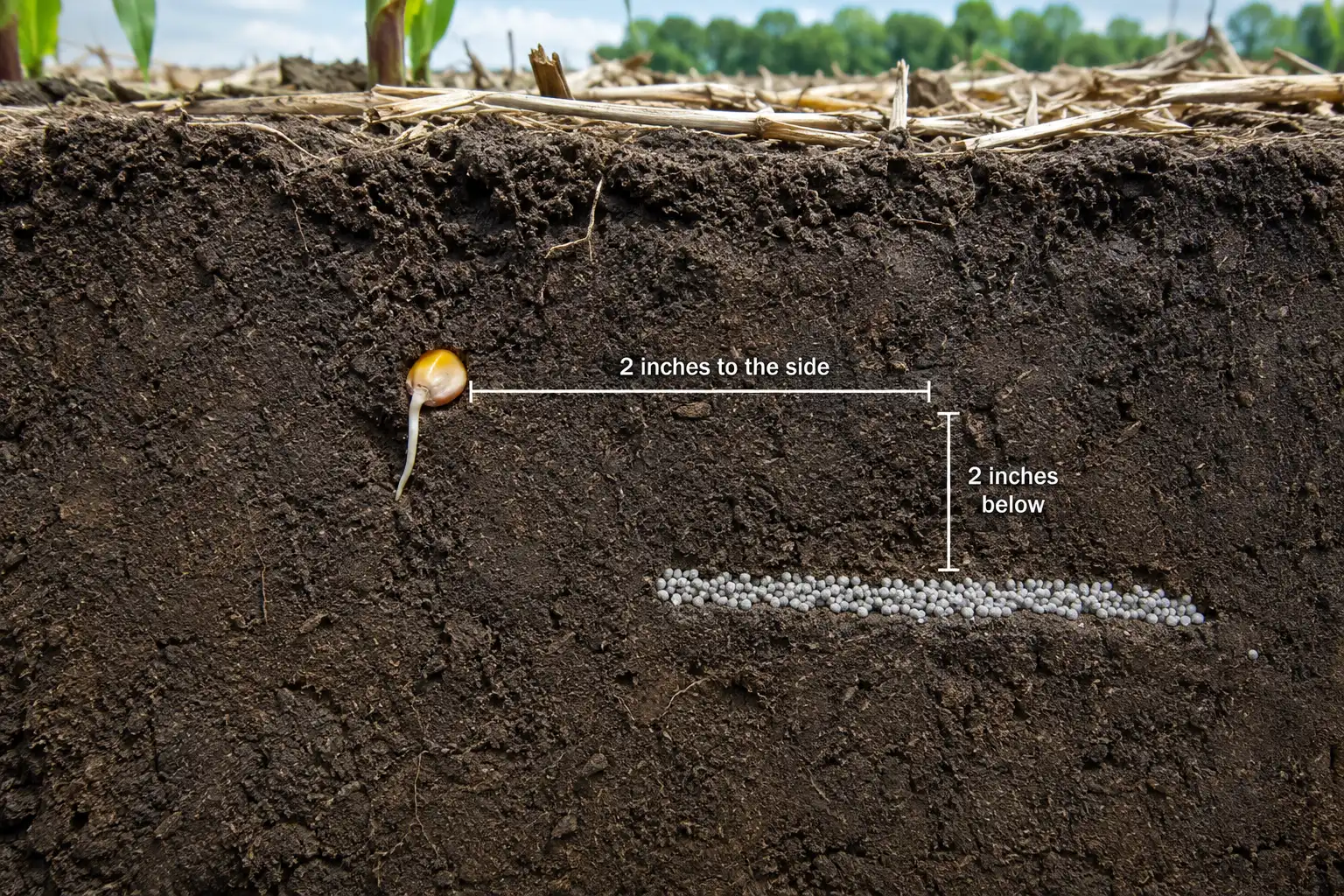
Band phosphorus 2 to 3 inches to the side and 2 to 3 inches below the seed. That places phosphate inside reach of a root system that has not spread yet. Reaching those first roots is the whole point of a starter.
Two safety limits apply. In direct seed contact on 30-inch rows, cap nitrogen plus potash at 6 to 8 pounds per acre. Above that, salts injure germinating seed. In a 2 by 2 band away from the seed, Penn State puts the ceiling near 70 pounds of nitrogen plus potash.
Phosphate itself carries a low salt index, so it tolerates close placement better than nitrogen or potassium. Even so, soil separation costs nothing and removes the risk. Penn State adds one useful point. Banded starter phosphorus often improves early vigor and final yield in cold, wet, high-residue fields. That holds even where soil phosphorus already tests high.
How to Apply Liquid 5-10-5
Dilute liquid 5-10-5 at 1 to 2 tablespoons per gallon of water. Then drench the soil at the base of the plant. Most concentrates print that rate. One gallon of concentrate makes 128 to 256 gallons of finished feed. That covers far more bed space than growers expect.
Liquids move nutrients fast, so they suit mid-season correction and container growing. Know the limit, though. Each pass at that dilution delivers a small amount of actual nutrient. Liquid feeding supplements a fertility program instead of building soil reserves.
Past a few beds, a hose-end sprayer for liquid feeding saves the mixing and hauling. Calibrate it once against a measured area so you know what you are actually putting down.
When to Apply Through the Season
Apply phosphorus before or at planting, not late. Roots need it during establishment, and phosphate spread in July will still sit there next spring.
Timing here around Topeka:
- Fall or early spring: broadcast and incorporate for beds going in next season
- At planting: banded starter, or worked into the backfill
- Four to six weeks after emergence: side-dress only if growth or a tissue test calls for it
- After bloom: stop phosphorus, shift to nitrogen or potassium as the crop asks
Skip frozen and saturated ground entirely. Granules sitting on a sealed surface wash straight to the ditch in the next rain. Several states write that rule into law.
Which Crops Benefit Most From 5-10-5?
Crops that gain most are the ones rooting into cool soil on ground testing low in phosphorus. Early plantings benefit hardest, because cold slows uptake even when the nutrient sits right there.
Good fits:
- Spring transplants. Tomatoes, peppers, and brassicas set into 55°F soil root faster with phosphate near the root ball.
- Root and bulb crops on low-P ground. Carrots, beets, and onions use the phosphate, though watch that thin potash figure.
- Direct-seeded corn and small grains. A banded starter helps in no-till residue where soils stay cold and wet.
- New perennials, trees, and shrubs. One application worked into the backfill zone covers establishment.
- Bulbs at planting. Phosphate placed below the bulb meets roots that will not travel to find it.
Poor fits:
- Leafy greens. Lettuce and spinach want nitrogen, not phosphate.
- Established lawns. Mature turf rarely needs phosphorus, and many states restrict it there.
- Heavy potassium feeders on low-K soil. Potatoes and tomatoes pull more potash than this grade carries.
- Any ground testing high in phosphorus. No response, wasted money, and buildup you cannot reverse.
What Can You Use Instead of 5-10-5?
Match the ratio, not the exact numbers. A 5-10-5 reduces to 1-2-1, so any grade holding that proportion delivers the same nutrients once you adjust the rate. Double the analysis and halve the amount you spread.
This matters because state soil labs still write recommendations in 5-10-5 while big-box stores rarely stock it. A grower gets a report calling for 20 pounds of 5-10-5 per 1,000 square feet. Then nothing close shows up on the shelf.
Workable substitutions:
- 10-20-10 at half the rate. Ten pounds per 1,000 square feet delivers exactly what 20 pounds of 5-10-5 does.
- 5-10-10 at the same rate. Identical nitrogen and phosphate, double potash. Use it when potassium tests low.
- 10-10-10 at half rate plus a phosphate source. Covers nitrogen and potassium, then add bone meal or a concentrated phosphate to finish.
- Build it separately. A phosphate source, a nitrogen source, and a potash source blended to your own soil test beats any premix.
That last option is the more common choice most seasons. Blending to the report costs less per pound of nutrient and skips the tag-along nitrogen you may not need.
5-10-5 vs 10-10-10 vs 5-10-10 vs 8-8-8
These four grades differ mainly in how much nitrogen and potassium ride along with the phosphate. Pick by what your soil test is short of, not by which bag reads strongest.
| Grade | N | P2O5 | K2O | Ratio | Fits best |
|---|---|---|---|---|---|
| 5-10-5 | 5% | 10% | 5% | 1-2-1 | Low-P ground, transplants, establishment |
| 5-10-10 | 5% | 10% | 10% | 1-2-2 | Root and fruiting crops needing potash |
| 10-10-10 | 10% | 10% | 10% | 1-1-1 | Beds where all three test low |
| 8-8-8 | 8% | 8% | 8% | 1-1-1 | Lighter all-purpose feeding |
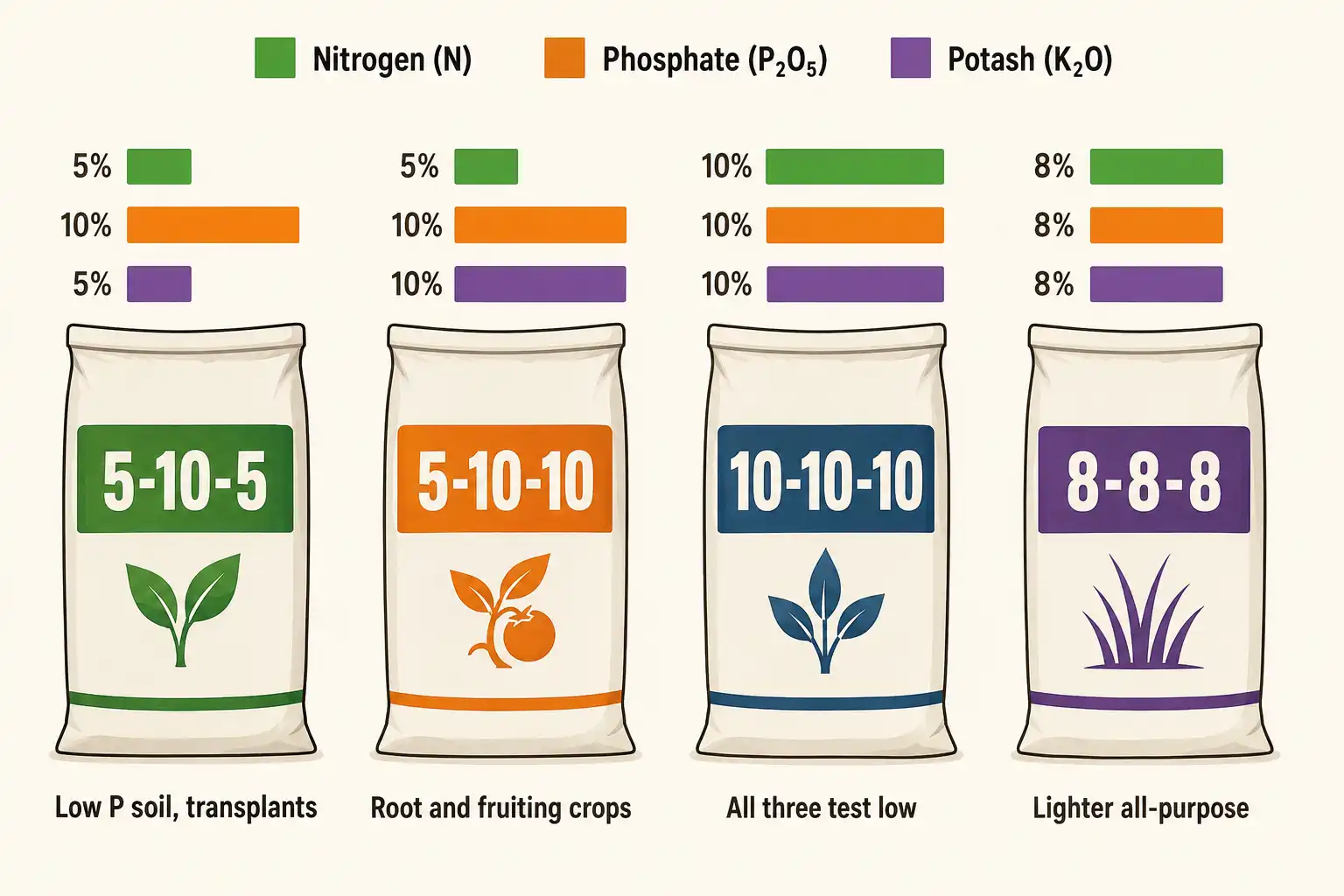
A few practical notes. Against 10-10-10, this grade halves your nitrogen and potassium at the same phosphate. So it suits ground already adequate in both. Against 8-8-8, it tilts harder toward phosphorus while carrying less of everything else. And 10-10-10 versus 8-8-8 is the same ratio at different strength, so the choice there is rate, not chemistry.
Is There an Organic 5-10-5 Fertilizer?
Certified organic 5-10-5 is uncommon, because reaching 10% phosphate from natural sources alone is difficult. Plenty of products carry natural or organic-based wording at this grade. Very few hold an actual OMRI listing for certified organic production.
Watch the labeling closely. A brand name containing the word organic does not certify the individual product. One widely sold 5-10-5 garden food comes from a company known for organic lines. That company describes this grade on its own product page as an agricultural grade fertilizer. Retail listings attach organic language to it anyway. So check the guaranteed analysis panel and look for the OMRI seal instead of the front of the bag.
To reach the equivalent from certified organic inputs, blend a phosphate source with separate nitrogen and potassium:
- Bone meal (3-15-0 or 4-12-0): the standard organic phosphate carrier, plus calcium
- Blood meal (13-0-0) or feather meal: nitrogen with no added phosphorus
- Sulfate of potash (0-0-50) or kelp meal: potassium with no added phosphorus, and sulfate of potash adds sulfur
- Fish bone meal: phosphorus on a slower release curve
Soil microbes release organic phosphate as they break down the material. So soil temperature controls availability. Below roughly 50°F, release slows to a crawl. That gap is why some growers keep mineral phosphate for the earliest plantings, then move to organic sources once ground warms.
What Happens If You Overapply 5-10-5?
Excess phosphorus stays in your soil for years and starts blocking other nutrients. Phosphorus does not flush out with rain the way nitrogen does. So every unnecessary application adds to a total you cannot easily draw down.
The buildup math surprises people. Spread 20 pounds of 5-10-5 per 1,000 square feet and you have applied 2 pounds of phosphate. That scales to roughly 87 pounds per acre. Alabama Extension puts uptake by high yielding garden crops near 48 pounds per acre. Only about 30 pounds actually leaves in the harvest. Repeat that yearly and the surplus compounds fast.
Manure and compost accelerate it. Using manure as the main nitrogen source for corn applies three to four times the phosphorus the crop needs, according to Alabama Extension.
Three consequences follow:
- Micronutrient tie-up. Excess phosphorus interferes with zinc and iron uptake, so plants show deficiency while the soil holds plenty of both. Those symptoms read clearly in leaf color and pattern, covered crop by crop in this guide on spotting micronutrient deficiency in plants.
- Reduced mycorrhizal activity. High soil phosphorus suppresses the fungal partnerships that help roots scavenge nutrients without your help.
- Water quality damage. Phosphorus reaching surface water fuels algae growth that strips oxygen from lakes and streams.
That last point drove real regulation. At least eleven states restrict phosphorus fertilizer on lawns and turf. The list covers Illinois, Maine, Maryland, Michigan, Minnesota, New Jersey, New York, Vermont, Virginia, Washington, and Wisconsin. Several Florida counties add seasonal blackout periods where no nitrogen or phosphorus goes down at all.
Read those rules before assuming they apply to you. Most target turf and exempt agricultural production, commercial farms, and vegetable gardens. Even so, follow the setbacks from water bodies and the bans on frozen or saturated ground. Those make sense on any acreage.
4 Best 5-10-5 Fertilizers
Pick by form and scale, not by brand claims. None of these guarantee sulfur or micronutrients. A bloom promise on the front of a bag does not change what the analysis panel says.
1. Espoma Garden Food 5-10-5
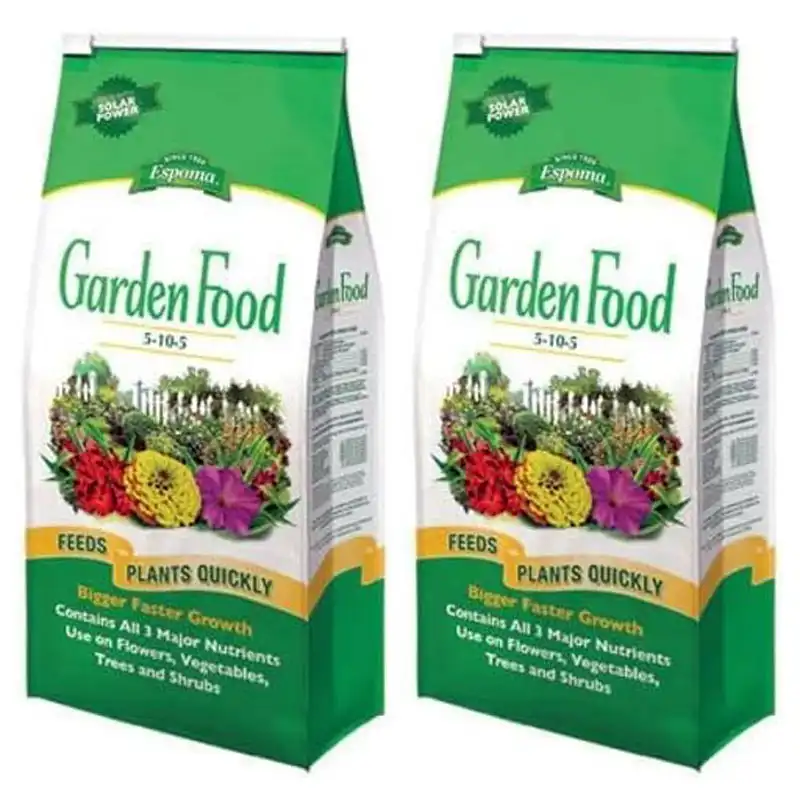
This granular garden food works straight from the bag with no mixing, which suits small plantings. At the label rate of 1.5 pounds per 100 square feet, one 6.75 pound bag treats about 450 square feet. The two-pack covers roughly 900. Used a teaspoon at a time in planting holes, that same bag handles several hundred transplants. The label says cultivate it in at least 3 inches from seeds or plants, then repeat every four weeks. Worth knowing: the maker calls this an agricultural grade fertilizer, not part of its organic line.
Specs
- Analysis: 5-10-5 granular
- Form: dry granules, 6.75 lb bags
- Rate: 1.5 lb per 100 sq ft
- Interval: every 4 weeks
2. CountryMax 5-10-5 All-Purpose Fertilizer
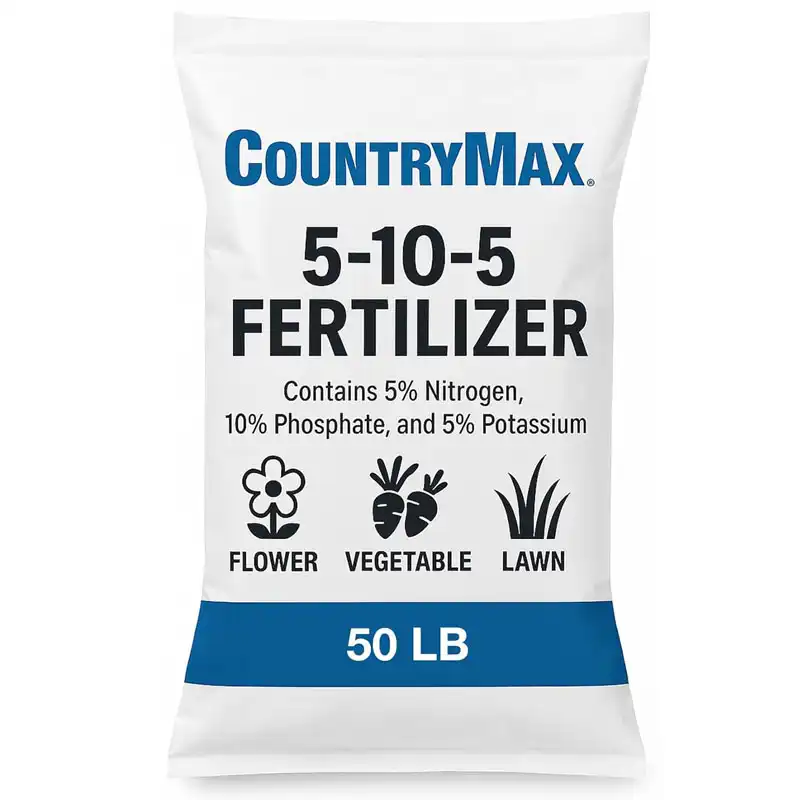
A 50 pound pelleted bag makes this the practical pick once you are covering real ground. Pellets spread cleanly by hand or through a spreader, and they break down steadily instead of dumping everything at once. At 1 to 2 pounds per 100 square feet, one bag treats 2,500 to 5,000 square feet. The whole bag carries 2.5 pounds of nitrogen, 5 pounds of phosphate, and 2.5 pounds of potash. That satisfies a 2 pound per 1,000 square foot phosphate recommendation across exactly 2,500 square feet.
Specs
- Analysis: 5-10-5 pelleted
- Form: dry pellets, 50 lb bag
- Rate: 1 to 2 lb per 100 sq ft
- Timing: spring and fall
3. TPS NUTRIENTS 5-10-5 Liquid Fertilizer
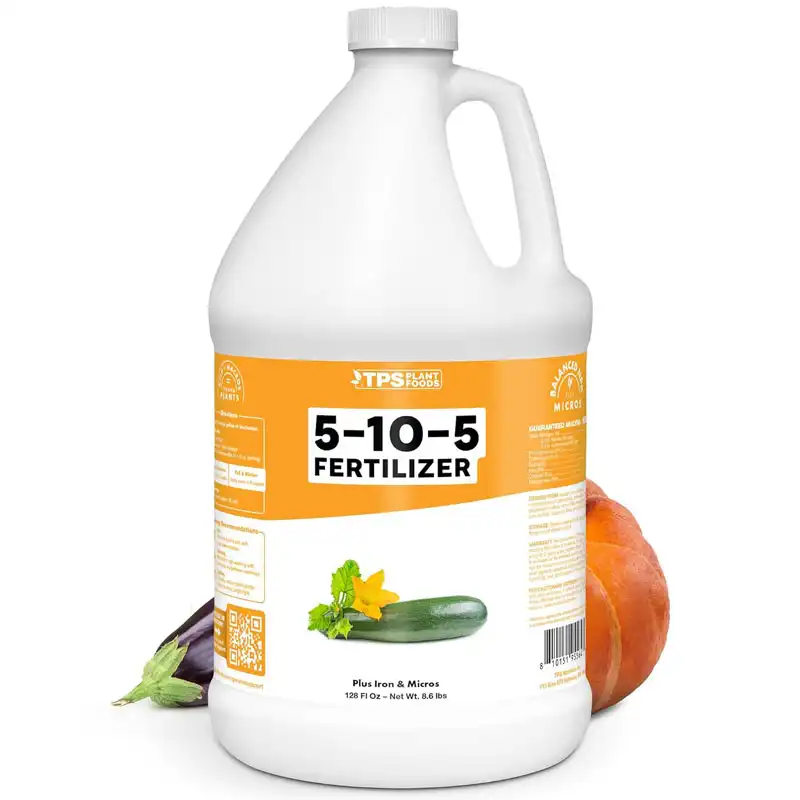
A gallon of liquid concentrate handles container work and mid-season correction better than any granular product. You mix 1 to 2 tablespoons per gallon of water, then apply through a watering can or hose-end sprayer. At that dilution the gallon makes 128 to 256 gallons of finished feed. For most growers that is a full season of container feeding. Nutrients reach roots within hours, so it fixes a stalled crop faster than granules will. Understand the tradeoff: each pass delivers modest nutrient, so it supplements soil fertility rather than replacing it.
Specs
- Analysis: 5-10-5 liquid
- Form: concentrate, 128 fl oz
- Dose: 1 to 2 tbsp per gallon
- Use: soil drench at plant base
4. Esbenshade’s Transplant Root Stimulator 5-10-5
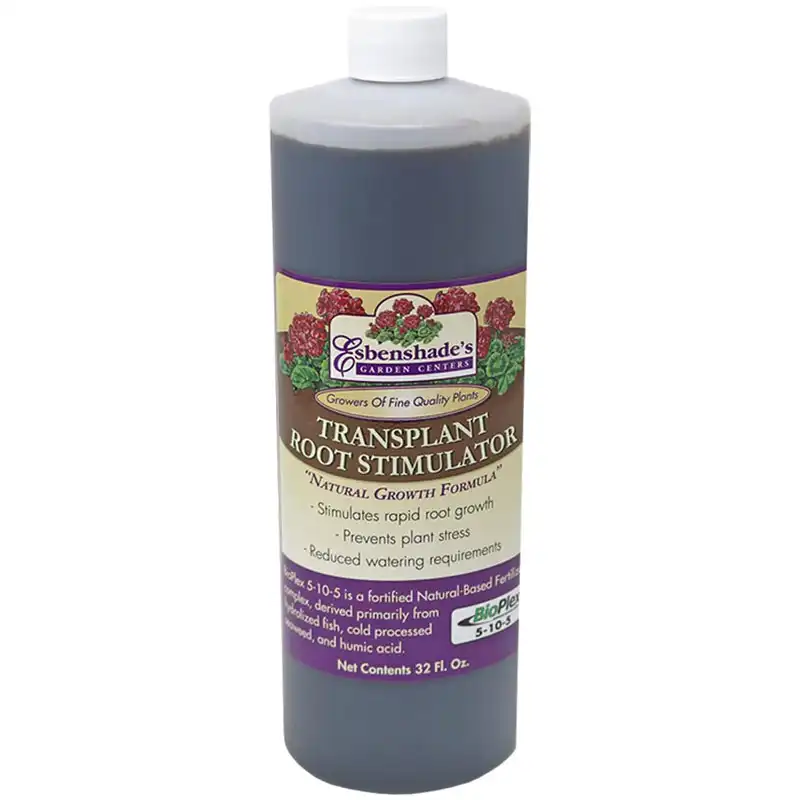
Built for transplant day, this 32 ounce liquid skips synthetic salts. Its nutrients come from hydrolyzed fish, cold-processed seaweed, humic acid, and molasses. You dilute per the label and drench at planting, in beds or containers. The phosphate meets new roots during the window when they need it. Low salt content matters too, since those roots are already stressed from the move. One honest caveat: natural sourcing is not the same as certified organic. Check the panel if certification matters for your operation.
Specs
- Analysis: 5-10-5 liquid
- Form: concentrate, 32 fl oz
- Sources: fish, seaweed, humic acid
- Use: drench at transplanting
FAQs on 5-10-5 Fertilizer
Can 5-10-5 Fertilizer Burn Plants?
How Long Does 5-10-5 Take to Work?
Does 5-10-5 Fertilizer Expire?
Can You Mix 5-10-5 With Manure or Compost?
Is 5-10-5 Good for Lawns?
Is 5-10-5 the Same as 5-10-10?
What to Check Before Buying a Bag
Pull a soil test before you buy anything. Under 20 ppm phosphorus, 5-10-5 earns its keep, especially banded near the seed in cool spring ground. Between 20 and 30 ppm, use a small starter rate only. Above 30 ppm, put that money into nitrogen, potassium, or lime and let the soil bank work.
Then run the arithmetic. Divide your phosphate recommendation by 0.10 and see what the rate really is. Past a couple hundred pounds per acre, you are paying to spread carrier. A concentrated phosphate source does the same job with less freight. Watch the thin potash figure too, since root and fruiting crops usually want the 5-10-10 version.