8-8-8 Fertilizer: What It Is and How to Use It Right
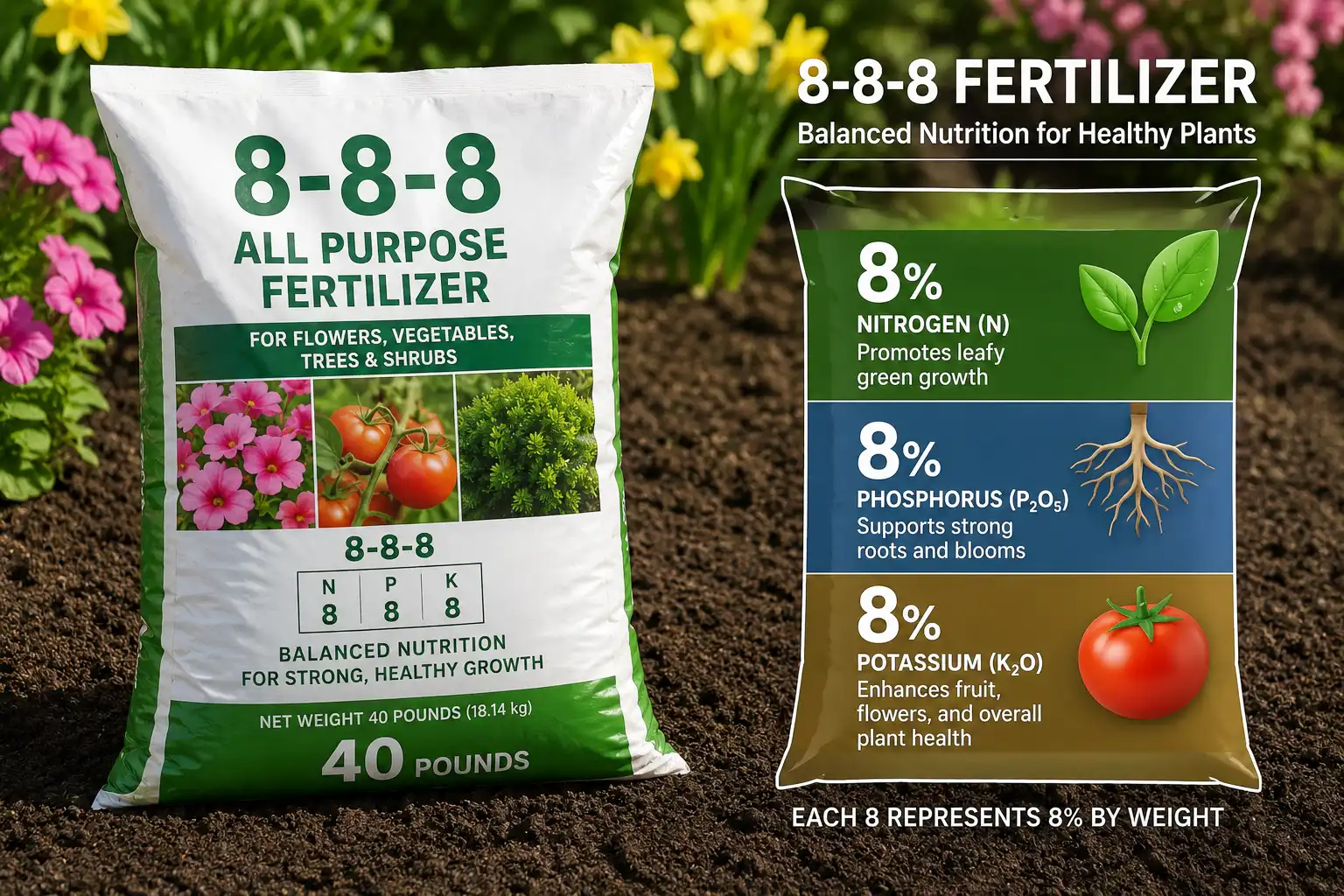
8-8-8 fertilizer is a balanced, all-purpose plant food with equal parts nitrogen, phosphorus, and potassium. It feeds vegetables, flowers, lawns, shrubs, and young trees at a gentle, forgiving rate. This guide covers what triple 8 does, how much to use, when to apply it, and the products worth buying.
8-8-8 fertilizer is a mild, balanced feed for gardens, lawns, shrubs, vegetables, and young trees. Work it into the soil in early spring, water it in, then reapply every 6 to 8 weeks. Always soil test first to avoid overfeeding.
What Does 8-8-8 Fertilizer Mean?
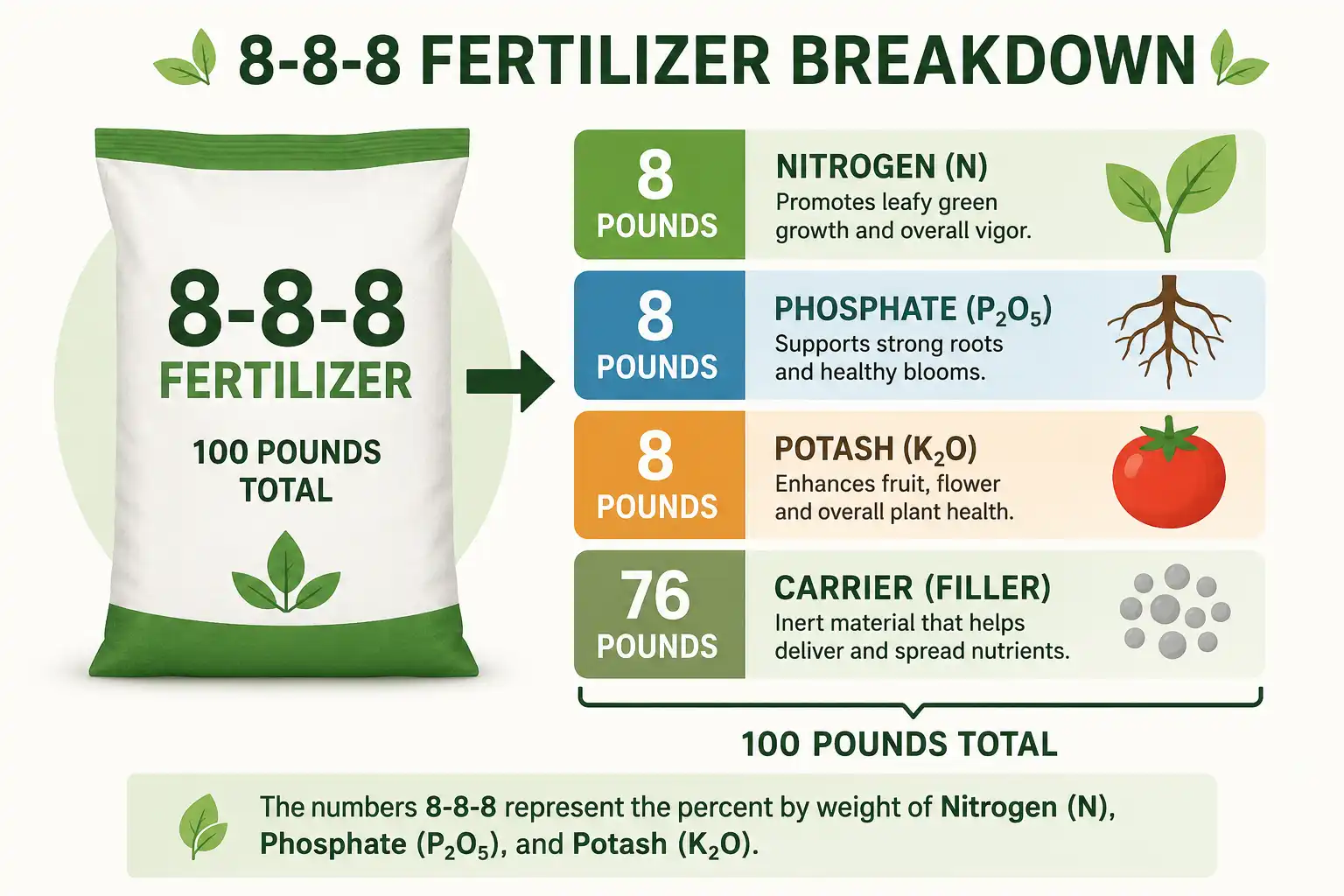
The three numbers are the percentages of nitrogen, phosphorus, and potassium by weight. A 100-pound bag of 8-8-8 holds 8 pounds each of nitrogen (N), phosphate (P2O5), and potash (K2O). That comes to 24 pounds of nutrients. The other 76 pounds is carrier that spreads the feed evenly and cuts burn risk.
You will hear two labels for a feed like this. A complete fertilizer has all three major nutrients. A balanced fertilizer holds them in near-equal amounts. Triple 8 is both. For a fuller look at what the fertilizer numbers mean, a full breakdown is covered in its own guide.
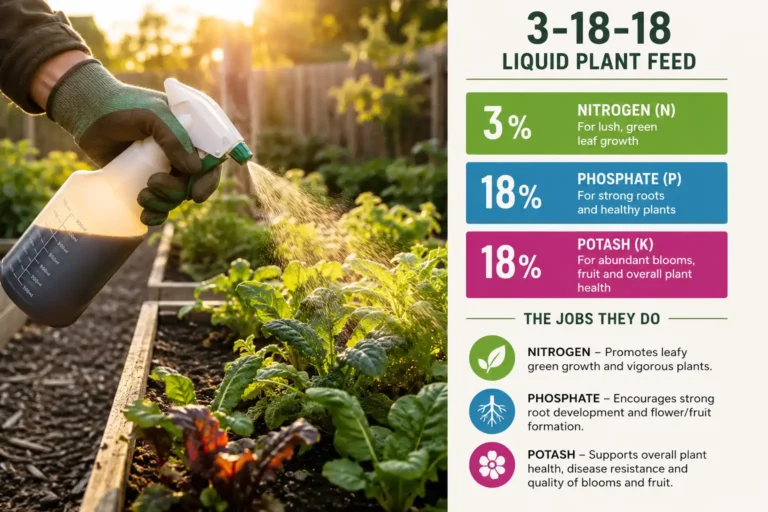
What the N, P, and K Do
Each nutrient plays a clear role:
- Nitrogen (N) drives green, leafy top growth and builds chlorophyll.
- Phosphorus (P) feeds roots, flowers, and fruit, and helps transplants settle in fast.
- Potassium (K) manages water use, firms cell walls, and lifts disease resistance.
Too little nitrogen yellows the lower leaves. Too much gives you all foliage and little fruit. Steady potassium also improves fruit quality and flavor.
What Is 8-8-8 Fertilizer Used For?
8-8-8 works as a general feed whenever no single nutrient is short. Reach for it on new garden beds, mixed vegetable plots, lawns, ornamentals, and young trees. The even ratio suits gardens with several crops at once, since it feeds them all without tipping the balance.
It also earns its keep in containers, where a liquid version is the switch. Frequent watering flushes nutrients out of pots, so a mild balanced feed keeps the mix fertile. On a tired new bed, a light dose gives everything a fair start.
When to Skip 8-8-8 Fertilizer
Skip 8-8-8 when a soil test shows your phosphorus or potassium already sits high. Adding a nutrient you do not need wastes money and can pollute nearby water. A nitrogen-only feed fits better there. A reliable soil test kit shows where you stand before you open a bag.
Triple 8 also stays off grain fields, since row-crop acres get high-analysis blends by the ton instead. If growing field corn, the rates run very differently, covered in this guide on feeding corn per acre.
8-8-8 Fertilizer by Plant and Use
The rate and timing shift a little by what you grow. Here is how to match triple 8 to common jobs.
Is 8-8-8 Good for Lawns?
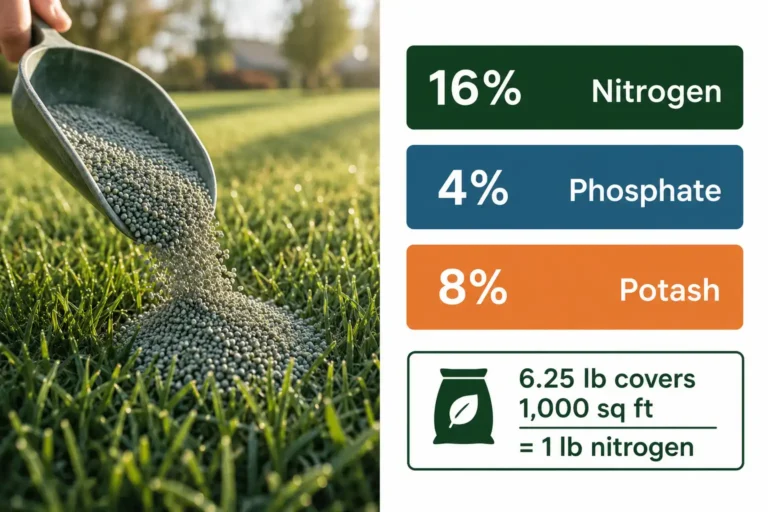
Yes, 8-8-8 makes a solid lawn maintenance feed. Apply about 12.5 pounds per 1,000 square feet to deliver 1 pound of actual nitrogen, the standard single dose. Spread it with a drop spreader for even coverage, then water it in. Hold to one feeding per season unless a soil test asks for more.
Is 8-8-8 Good for Tomatoes and Vegetables?
Yes, 8-8-8 feeds tomatoes and most vegetables well, especially early. Mix it into the bed before planting, then side-dress the plants as they grow. Once tomatoes and peppers set fruit, many growers shift to a feed higher in phosphorus and potassium. Leafy greens like lettuce and spinach stay happy on the balanced ratio.
Using 8-8-8 on Trees and Shrubs
8-8-8 is a fine maintenance feed for trees and shrubs. Spread it over the root zone out to the dripline, and keep it off the trunk. A handful worked into the hole helps new saplings root in, and the gentle formula lowers burn risk. Established woody plants often need just one spring feeding.
8-8-8 for Flowers, Citrus, and Fruit
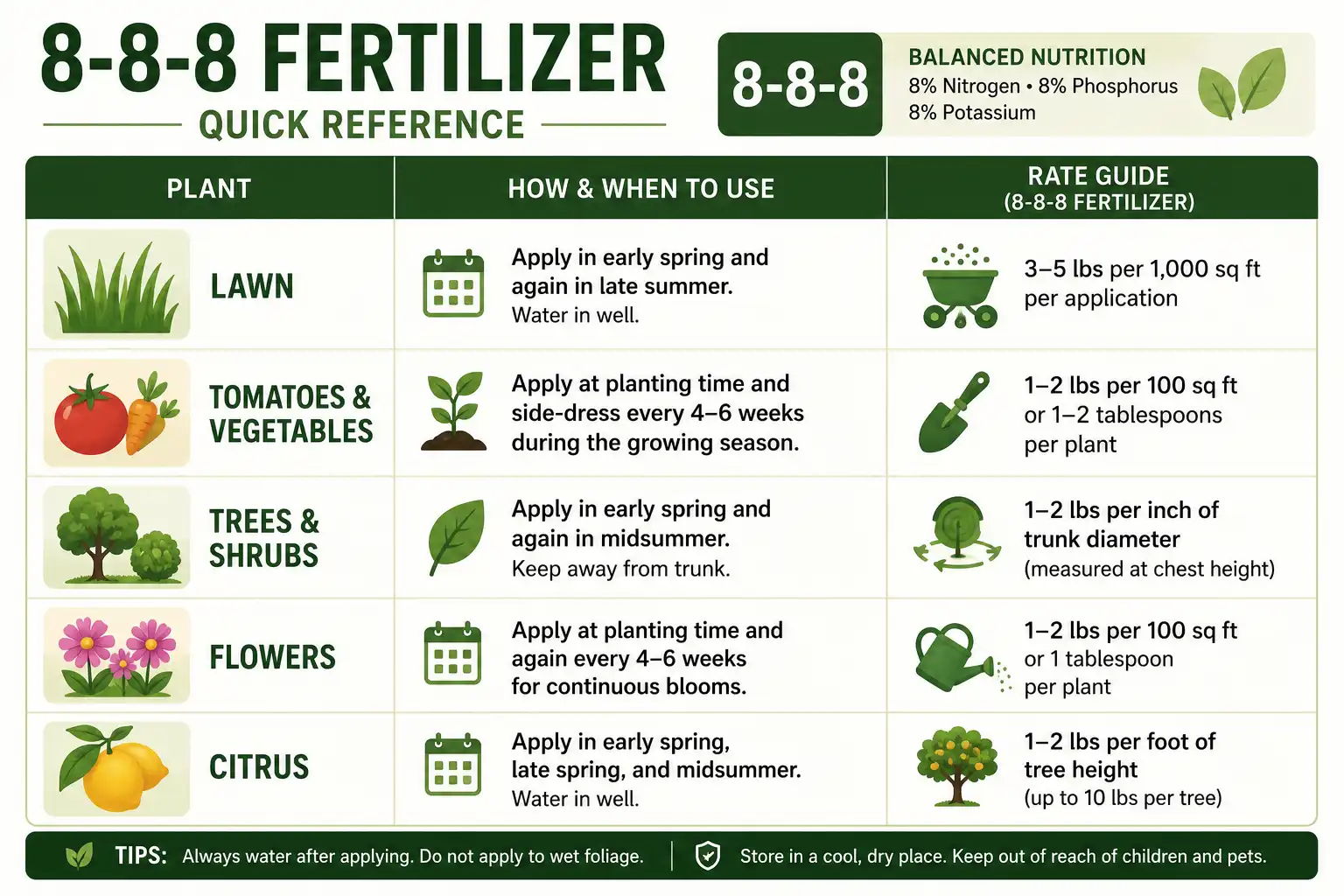
Flowers and ornamentals take to 8-8-8 for steady, all-around growth. Citrus and other fruit trees can take it for general feeding. Heavy fruiters often want more potassium as the fruit fills. In poor or sandy soil, the balanced feed corrects several small shortages at once.
How Much 8-8-8 Fertilizer to Use
Match the rate to the site, and lean light. Triple 8 runs a touch weaker than 10-10-10, so you need a bit more product for the same feeding. Here are the rates:
| Use | Rate of 8-8-8 |
|---|---|
| New vegetable beds | 2 to 3 lb per 100 sq ft, worked into the top 3 to 4 inches |
| Established beds (fed last year) | 1.5 to 2 lb per 100 sq ft |
| Garden rows | about 1 lb per 100 feet of row, banded to the side |
| Lawns | 12.5 lb per 1,000 sq ft (delivers 1 lb of actual nitrogen) |
| Trees and shrubs | light coating over the root zone out to the dripline |
Two cups of granular fertilizer weigh about a pound, which helps when you measure by hand. Do not exceed the lawn rate more than once a season without a soil test.
When to Apply 8-8-8 Fertilizer
Apply 8-8-8 at the start of the growing season, as plants break dormancy. In Kansas that means early spring, once the soil warms and the grass greens up. For long-season crops and heavy feeders, feed again every 6 to 8 weeks through summer.
A few timing rules keep it working:
- Water it in right after spreading.
- Apply in the morning or evening, not the hot midday sun.
- Wait 4 to 6 weeks on new sod so roots settle first.
- Skip frozen ground and the hours before heavy rain, or it runs off.
How to Apply 8-8-8 Fertilizer
Spread it evenly, keep it off the plant, and water it in. Here is the routine for granular triple 8:
- Prep the ground. Clear weeds and loosen the top few inches so the feed can work in.
- Spread evenly. Broadcast the granules by hand or with a spreader. On rows, band the feed 2 to 3 inches to the side of the plants.
- Keep it off the plant. Do not let granules pile against stems or trunks, since direct contact scorches them.
- Work it in. For beds, rake the granules into the top 2 to 4 inches before planting.
- Water it in. Soak the area so the nutrients dissolve and reach the roots.
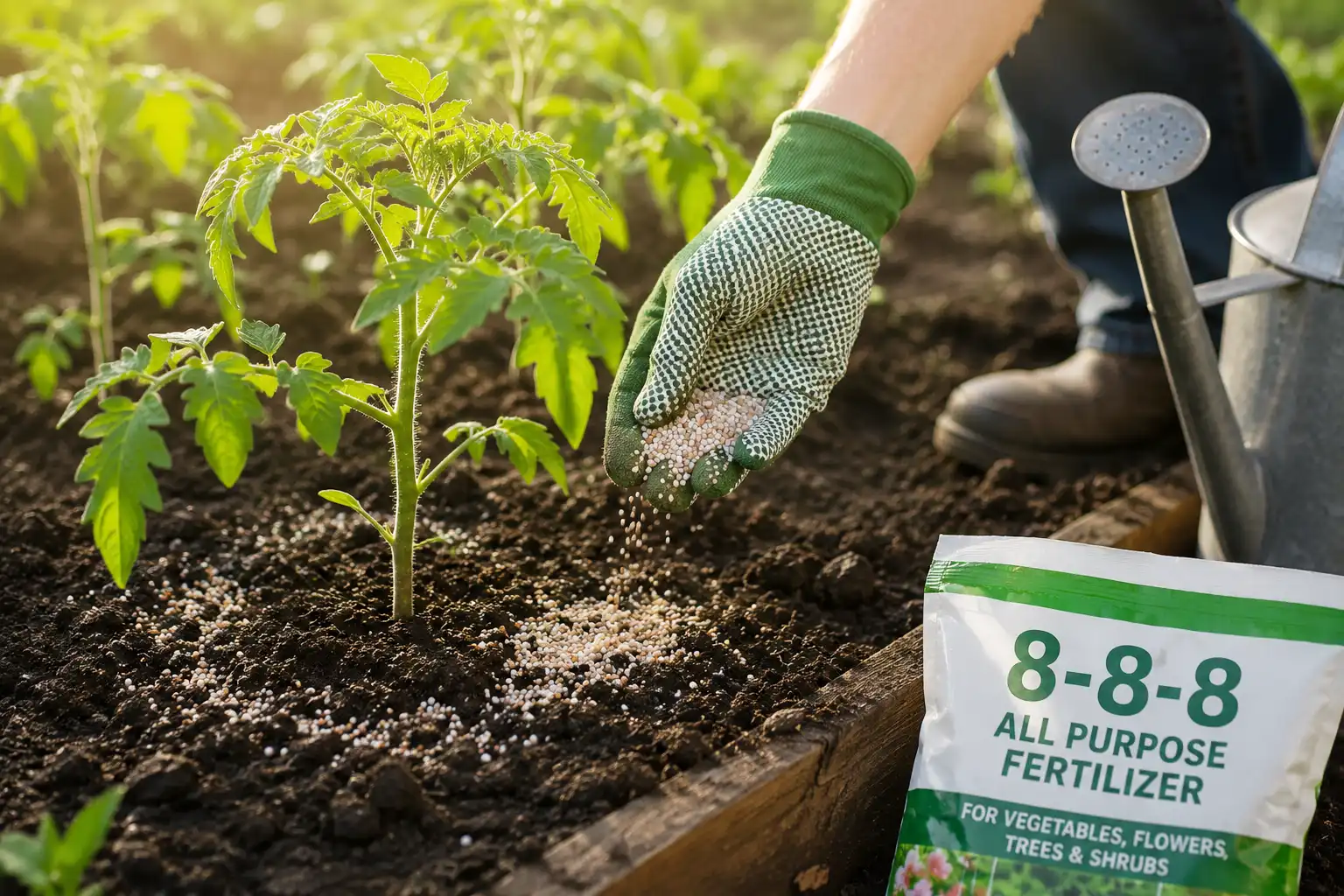
For containers and spot feeding, a liquid 8-8-8 goes down with a watering can or hose-end sprayer. Dilute it per the label, and apply at the base. Wear gloves with any form, and track where you have already been.
8-8-8 vs 10-10-10 vs 13-13-13
The bigger the numbers, the more concentrated the feed. So 8-8-8 is the gentlest of the common balanced blends, with the lowest burn risk. Step up only when a soil test shows a real shortfall. A faster push on hungry plants is the other reason.
| Fertilizer | N-P-K | Strength vs 8-8-8 | Best for |
|---|---|---|---|
| 8-8-8 | 8-8-8 | baseline | maintenance, beginners, mixed gardens, lawns |
| 8-10-8 | 8-10-8 | more phosphorus | tomatoes, flowering, fruiting |
| 10-10-10 | 10-10-10 | about 25% stronger | hungrier plants, quicker green-up |
| 13-13-13 | 13-13-13 | strongest | poor soil that needs a bigger correction |
Read the label before you buy. Hi-Yield’s popular Garden Fertilizer is 8-10-8, not 8-8-8, so it leans toward phosphorus. Sunniland’s common all-purpose granules run 10-10-10. The three numbers tell you what you are actually getting.
Organic vs Synthetic 8-8-8
You can reach an 8-8-8 ratio with either synthetic or natural inputs. Bagged synthetic triple 8 gives you a known, even dose every time. The organic route blends compost, bone meal, feather meal, and soybean meal to hit similar numbers, while feeding soil life. The tradeoffs are laid out in this guide on synthetic and organic fertilizer.
Over time, steady compost carries most of the load on its own. Working in aged organic matter is the long game for fertility. our guide covers how to build soil fertility naturally elsewhere on the site. One label note: phosphorus runoff harms water, and some states limit phosphorus fertilizer on lawns, so check local rules before you buy.
Best 8-8-8 Fertilizer Products
True 8-8-8 products are less common than 10-10-10, so read labels closely. These are the genuine triple 8 options it helps to point a neighbor to, with what each one does best.
Purely Organic Triple Play 8-8-8
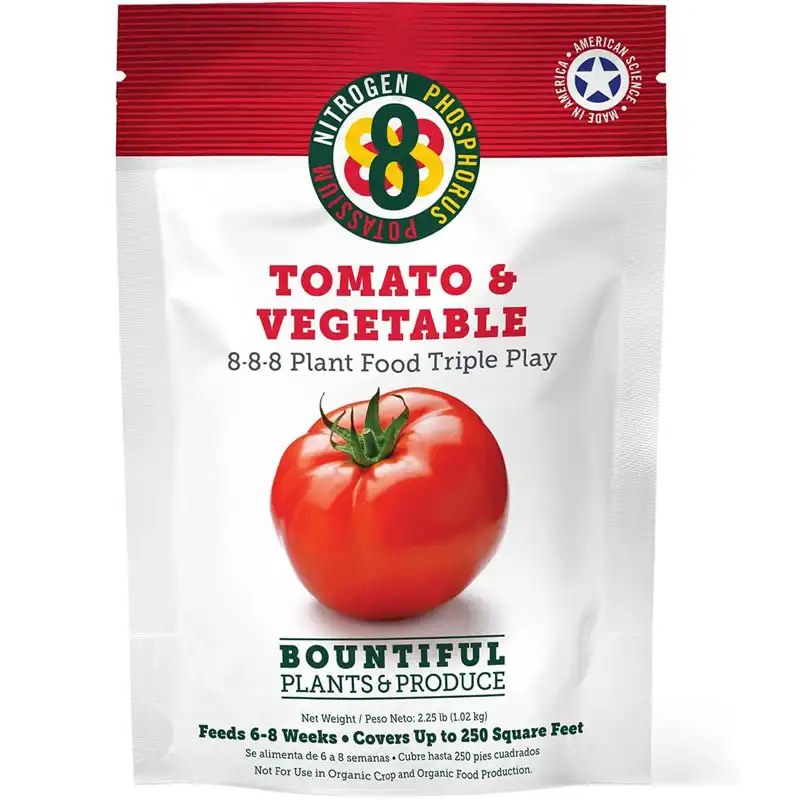
An organic granular 8-8-8 built for tomatoes, vegetables, fruit, and herbs. Its nutrients come from soybean meal, feather meal, and bone meal, not manure or synthetics. One 2.25-pound bag covers about 250 square feet and feeds for 6 to 8 weeks. Mix it into the soil, then water in.
TPS Plant Foods 8-8-8
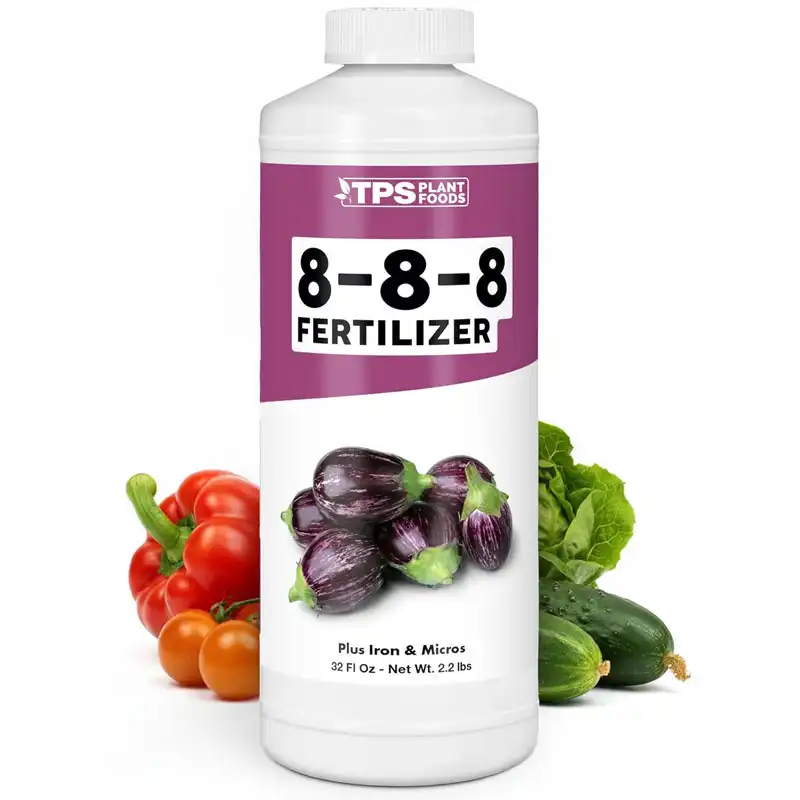
A balanced liquid 8-8-8 for shrubs, vegetables, and flowers. The liquid form makes it easy to dose small containers and give plants a quick, even feed. You dilute it with water and apply at the base. It suits houseplants, transplants, and potted trees where a big granular bag would be overkill.
Common Triple 8 Fertilizer Mistakes
A few slip-ups waste the feed or hurt the crop:
- Overfeeding. More product burns roots and pushes soft, weak growth.
- Skipping the soil test, then adding nutrients the soil already holds.
- Spreading on bone-dry or soaked soil, which throws off coverage.
- Letting granules touch stems and trunks, which scorches them.
- Using high-nitrogen lawn or weed-and-feed products on vegetables, which can stunt or kill them.
FAQs on Triple 8 Fertilizer
Is 8-8-8 a good fertilizer?
How often should I apply 8-8-8 fertilizer?
Will 8-8-8 fertilizer burn plants?
Is 8-8-8 the same as 10-10-10?
Is 8-8-8 fertilizer organic?
Do I water after applying 8-8-8?
Bottom Line for Your Garden and Lawn
Triple 8 is the bag best suited to anyone who wants a simple, forgiving feed. It works for a mixed garden, a lawn, or young trees. Work it in during early spring, water it in, and repeat every 6 to 8 weeks on hungry plants. Soil test first, keep the rate light, and leave the high-analysis blends for problem soil. Do that, and 8-8-8 pulls its weight all season.