0 0 22 Fertilizer: What It Is, When to Use It, and Best Picks
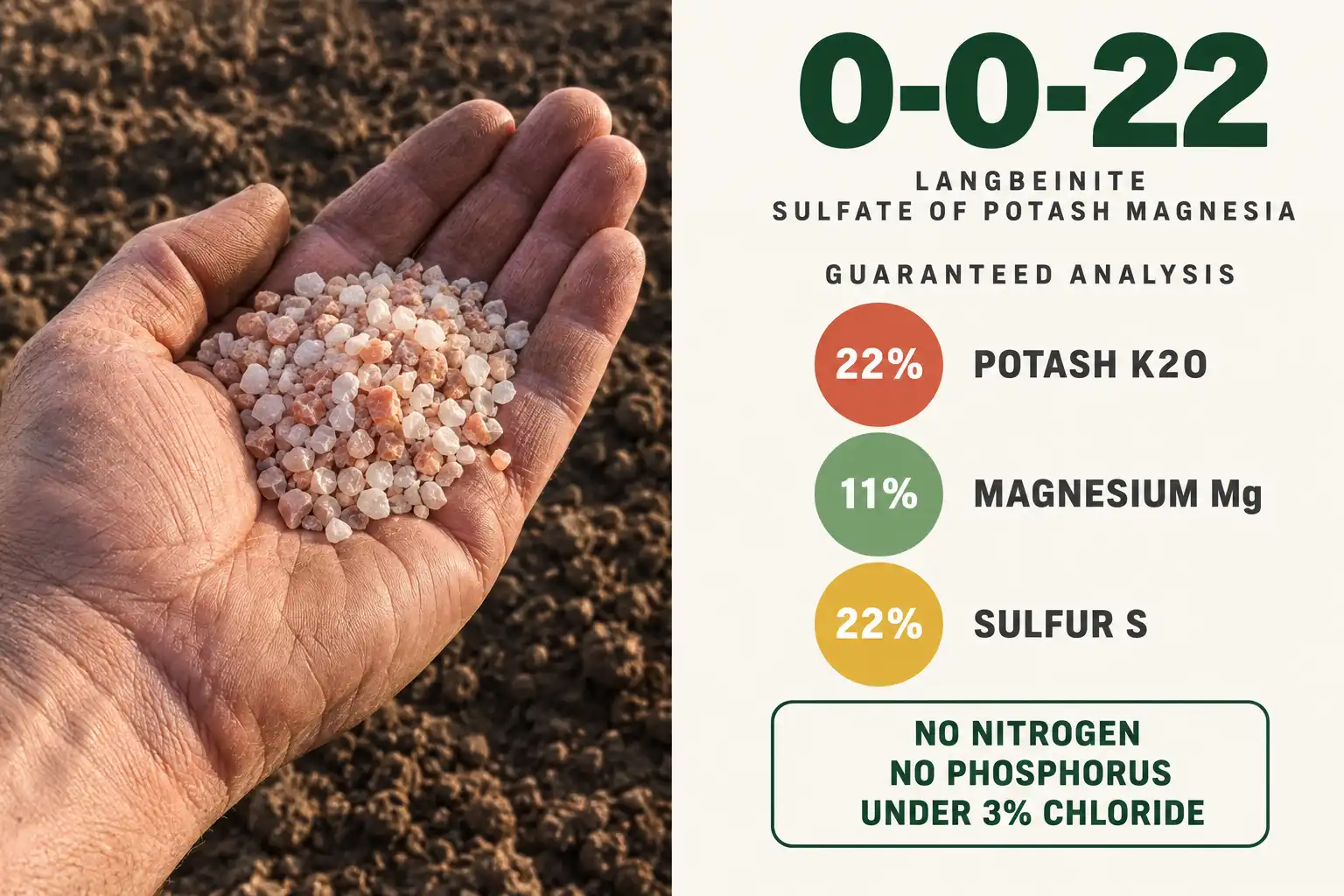
0-0-22 fertilizer confuses plenty of growers. Two zeros make the bag look half empty. It is not. That third number carries potassium, and the mineral behind it brings magnesium and sulfur along at no extra cost.
0-0-22 fertilizer is langbeinite, also sold as sulfate of potash magnesia, Sul-Po-Mag, K-Mag, or Trio. It supplies 22 percent potash, 11 percent magnesium, and 22 percent sulfur, plus under 3 percent chloride and zero nitrogen.
What Is 0-0-22 Fertilizer?
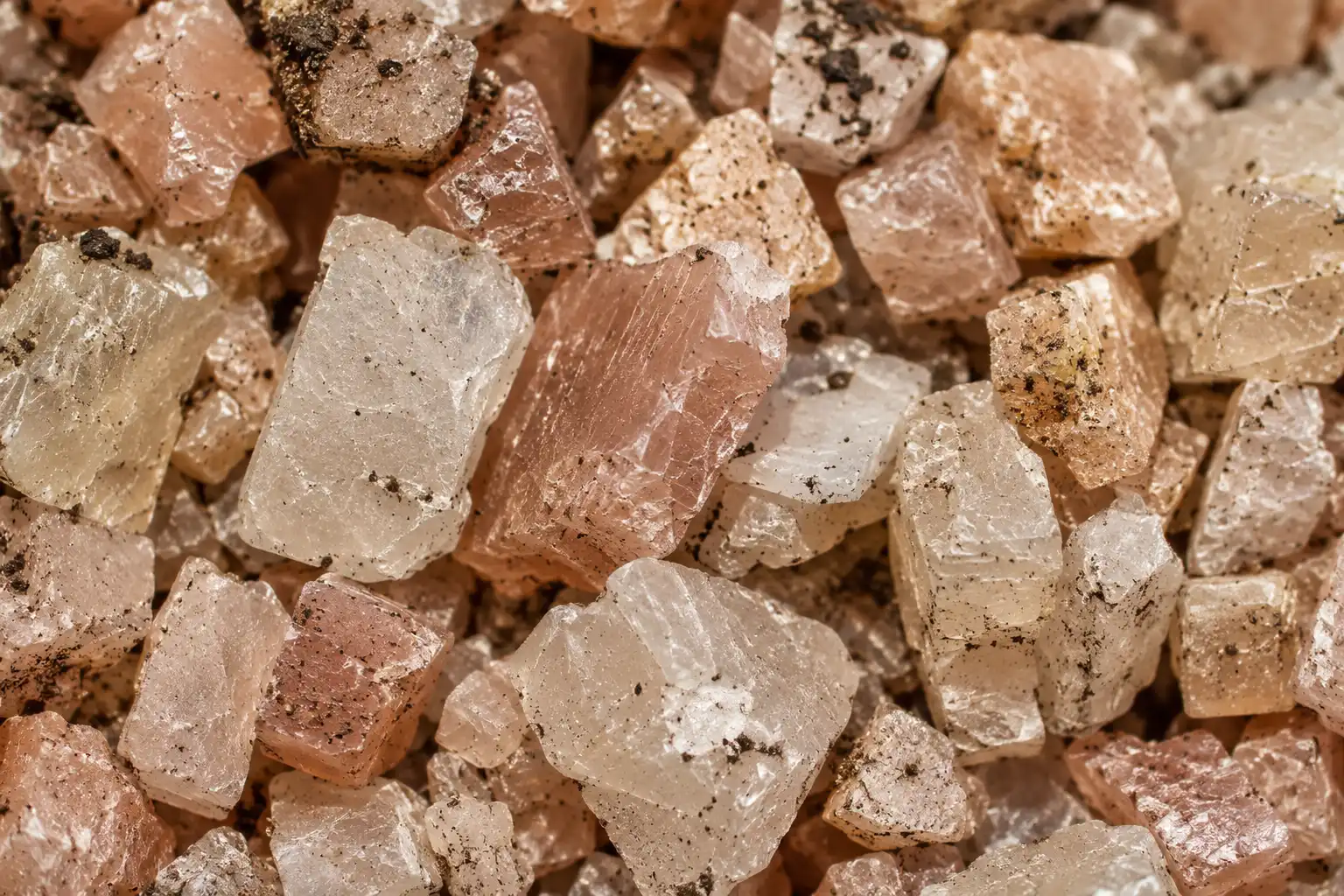
0-0-22 fertilizer is a single mined mineral called langbeinite, formula K2Mg2(SO4)3. No plant blends it. Miners bring it up from ancient seabed salt beds, then wash and screen it into fertilizer grades.
Nearly all of it comes out of one place. That is the Carlsbad potash district in southeastern New Mexico, where the beds formed as inland seas evaporated. Intrepid Potash runs an underground langbeinite quarry there and sells the material as Trio. Intrepid is the only US producer dedicated solely to potash and sulfate of potash magnesia.
Because the rock never gets chemically processed, it stays eligible for organic production. Intrepid Trio and several retail brands carry OMRI listings, so certified growers can use them.
The same mineral shows up under five names, and every one of them means langbeinite:
| Name on the bag | What it refers to |
|---|---|
| Langbeinite | The mineral itself |
| Sulfate of potash magnesia (SPM) | Its chemistry, potassium and magnesium sulfates |
| Sul-Po-Mag | Older trade shorthand |
| K-Mag | Long-running brand name |
| Trio | Intrepid Potash brand name |
So compare cost per pound of nutrient rather than the name on the front panel.
Know more: What Is 5-1-1 Fish Emulsion Fertilizer
What the Numbers on the Bag Actually Mean
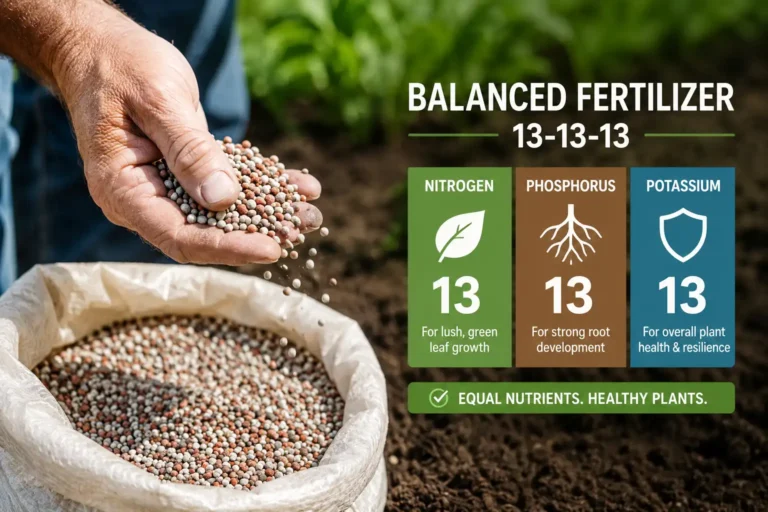
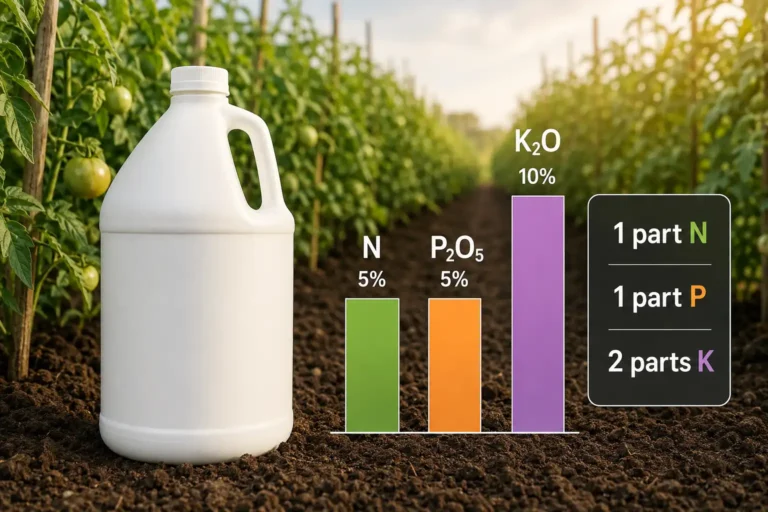
Every fertilizer grade reads in the same order: nitrogen, available phosphate, then soluble potash. So 0-0-22 tells you one nutrient fact only, which is 22 percent potash. Our guide to NPK fertilizer grades covers how that math works across other blends.
Two details trip up buyers. First, that 22 percent is potash as K2O, not elemental potassium. Multiply by 0.83 and you land on 18.3 percent actual K. Some bag copy says “22 percent potassium,” which overstates it.
Second, the magnesium and sulfur are not in the grade at all. They come from the mineral, and they sit lower on the label as separate guarantees. That is why a prilled version of the same rock can be labeled 0-0-20 with 20 percent sulfur and 16 percent MgO. Identical mineral, different guarantee.
| Label line | Typical guarantee | Pounds per 100 lb |
|---|---|---|
| Soluble potash (K2O) | 21.5 to 22 percent | 22 lb |
| Magnesium (Mg) | 10.5 to 11 percent | 11 lb |
| Sulfur (S) | 21 to 22 percent | 22 lb |
| Chloride | Under 3 percent | Under 3 lb |
| Nitrogen and phosphate | 0 percent | 0 lb |
Read the “derived from” line too. That tells you whether you bought straight langbeinite or a blend carrying filler.
What Is 0-0-22 Fertilizer Used For?
Growers use it to fix three shortages at once: potassium, magnesium, and sulfur. It also gives them potash without chloride and without nitrogen, which matters on quality-sensitive crops and during ripening.
Five jobs it does well:
- Correcting combined K and Mg shortages. One pass covers both instead of two materials and two trips.
- Feeding chloride-sensitive crops. Potatoes, tobacco, berries, grapes, tomatoes, peppers, and citrus all tolerate sulfate better than chloride.
- Adding sulfur. Atmospheric sulfur deposition has dropped sharply since the Clean Air Act era, so soils no longer get the free sulfur they did in the 1980s. Sulfur shortages have climbed as a result.
- Late-season potassium without pushing growth. Zero nitrogen means no flush of leaves while fruit sizes and ripens.
- Organic potassium. OMRI-listed langbeinite is one of the few single materials that covers K, Mg, and S on certified ground.
It is a poor fit anywhere magnesium already tests adequate. For corn and wheat, potash alone is cheaper per acre by a wide margin.
Do Your Soils Actually Need It? Read the Soil Test First
Check potassium, magnesium, and sulfur separately, because langbeinite only pays when at least two of the three run short. Otherwise you are buying nutrients the ground already holds. Regular soil testing settles this question before any pricing decision.
Potassium thresholds
Start here, since potash is what you are mainly buying. The revised Tri-State recommendations from Michigan State, Ohio State, and Purdue set these Mehlich-3 critical levels:
| Soil test K (Mehlich-3) | CEC under 5 | CEC over 5 |
|---|---|---|
| Critical level | 100 ppm | 120 ppm |
| Maintenance limit | 130 ppm | 170 ppm |
Below critical, you build. Between critical and the maintenance limit, you replace crop removal. Above the maintenance limit, extension guidance says skip it. Ohio State reports that above 120 ppm in most Ohio soils, a yield response is unlikely. Iowa State puts its optimum band at 131 to 170 ppm. Michigan State offers a quick formula instead: critical K equals CEC times 2.5, plus 75.
Magnesium thresholds
| Soil test Mg | Reading |
|---|---|
| Under 20 ppm (Mehlich-3) | Low, application warranted |
| 40 to 50 ppm | Adequate for most crops |
| 10 to 15 percent of CEC | Target saturation |
| Over 20 percent of CEC | Too high, skip magnesium |
UF/IFAS and University of Kentucky both use 20 ppm as the trigger point. Nebraska research puts 40 to 50 ppm, or 80 to 100 pounds per acre, in the adequate range. Penn State targets 10 to 15 percent saturation and warns that anything over 20 percent starts hurting soil structure, water infiltration, and drainage. Ohio State sets a 50 ppm floor for soybeans on loam and clay.
Sulfur is different, so treat it differently
Do not lean on the sulfate-sulfur number. Iowa State, Minnesota, NDSU, Purdue, and K-State all report that it predicts response poorly. Sulfate moves through the profile, and organic matter keeps releasing more. Minnesota only considers it valid on sandy, low organic matter soils.
Judge sulfur on field conditions instead:
- Organic matter under 3.5 percent
- Sandy or eroded ground
- High residue removal, such as silage or hay
- Sample to 24 inches, not 6, since sulfate is mobile
- Visible symptoms, meaning pale green corn with interveinal striping in the mid to upper canopy around V5
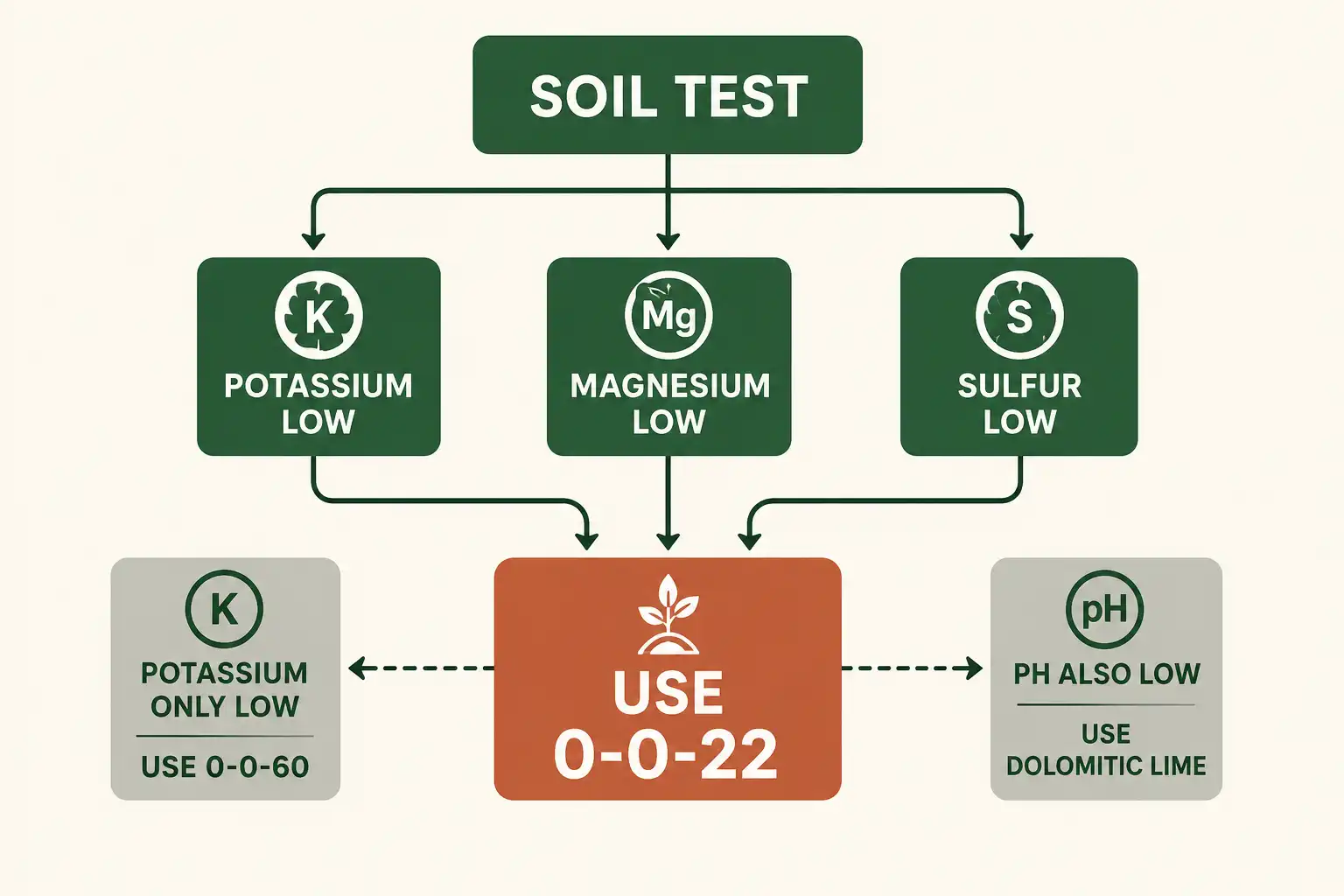
Crop removal gives you a target. A 150 bushel corn crop takes about 14 pounds of sulfur per acre. Wheat at 40 bushels takes about 12 pounds, and alfalfa roughly 6 pounds per ton. Note that 100 pounds of 0-0-22 per acre supplies 22 pounds of sulfur, so it covers those numbers comfortably.
One caution before you buy. If pH also needs raising, dolomitic lime supplies magnesium far cheaper, and West Virginia University Extension recommends exactly that. Reach for langbeinite when pH already sits in range. A soil test kit or a lab sample answers all of this for a few dollars.
How to Spot the Deficiencies It Corrects
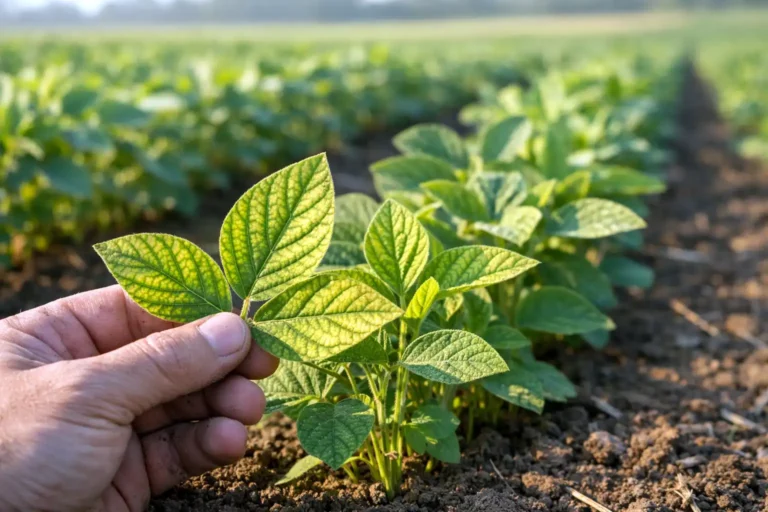
Each of the three nutrients fails in a different pattern, and the pattern tells you which one is short. All three show up on older leaves first, since plants move mobile nutrients to new growth.
| Nutrient | Symptom | Where it starts |
|---|---|---|
| Potassium | Yellowing then brown scorched leaf margins, weak stalks, poor roots | Oldest, lowest leaves, edges first |
| Magnesium | Yellow between the veins while veins stay dark green | Older leaves, working inward |
| Sulfur | Overall pale green with interveinal striping | Mid to upper canopy, unlike the other two |
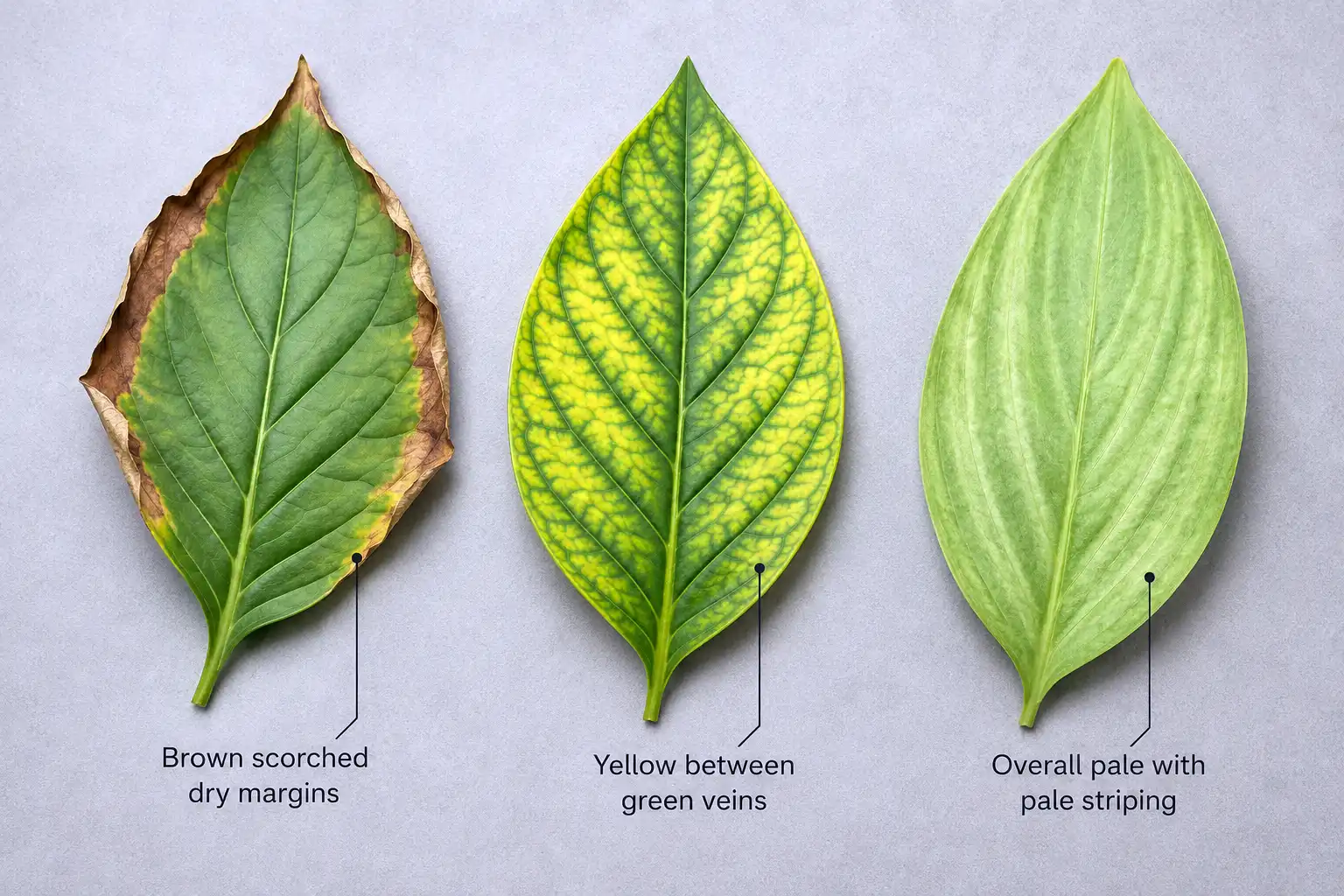
That last row is the useful tell. Sulfur shows in newer growth up top, while potassium and magnesium show down low. So canopy position separates them fast in the field.
Two cautions. Potassium symptoms also come from dry soil, compaction, or shallow roots. Ohio State flags that directly. Fertilizer will not fix a root system that drought or compaction wrecked. Also, pruning deficient palm fronds makes the problem worse. The palm was still pulling nutrients out of them.
0-0-22 vs 0-0-60 vs 0-0-50: Choosing a Potassium Source
Pick based on three things: chloride tolerance, whether you need magnesium, and cost per pound of potash. All three feed potassium well. What rides along is the difference.
| Source | Grade | Also supplies | Chloride | Salt index |
|---|---|---|---|---|
| Muriate of potash (KCl) | 0-0-60 | Nothing | About 47 percent | 116 |
| Sulfate of potash (K2SO4) | 0-0-50 | 17 to 18 percent S | Under 1.5 percent | 46 |
| Langbeinite (SPM) | 0-0-22 | 11 percent Mg, 22 percent S | Under 3 percent | 43.4 |
Langbeinite carries the lowest salt index of the three, which matters near seed and on saline ground. This breakdown of 0-0-60 potash explains why it still runs on most row crop acres despite that 116.
Chloride sensitivity drives most switches. Potatoes lose specific gravity and can develop internal blackening under heavy chloride. Tobacco loses leaf quality. Berries, grapes, tomatoes, peppers, and citrus can take quality hits as well.
Now the honest counterpoint, because plenty of pages selling this stuff leave it out. Nutrien agronomists reviewed the published trials and found little consistent field difference between the two sources. That holds as long as sulfur is adequate and chloride stays inside the crop’s tolerance. Rate, timing, rainfall, and irrigation water salinity decide the actual risk. So do not pay the premium unless your crop or your water gives you a reason.
Then there is tonnage. At 22 percent potash you haul and spread far more material for the same nutrient.
| To supply 1 lb K2O | Material needed |
|---|---|
| 0-0-60 | 1.7 lb |
| 0-0-50 | 2.0 lb |
| 0-0-22 | 4.5 lb |
Langbeinite often prices lower per ton than potassium chloride, yet you need roughly 2.7 times the tonnage for equal potash. Freight and spreading passes climb with it. So judge the buy on the magnesium and sulfur you collect, never on potash alone.
If magnesium is the real reason you are buying
Compare magnesium sources directly, because langbeinite is not always the cheapest way to get it:
| Source | Mg content | Best when |
|---|---|---|
| Dolomitic lime | About 11.5 percent | pH needs raising too |
| Epsom salt (Mg sulfate) | 10 percent | Fast correction, foliar or small area |
| Kieserite | About 10 percent | Slow release Mg is needed |
| Langbeinite (0-0-22) | 11 percent | Potassium and sulfur also short |
Langbeinite wins only when you need the potash alongside the magnesium. Buying it for magnesium alone means paying for potash you may not need.
How Much 0-0-22 Fertilizer to Apply
Set the rate from your potassium recommendation, then check where the magnesium and sulfur land. Divide the potash target by 0.22 to get pounds of product.
Say the test calls for 60 pounds of K2O per acre. That works out to 273 pounds of 0-0-22, which also delivers 30 pounds of magnesium and 60 pounds of sulfur. Both fall in a useful range for row crops.
| Field rate | K2O | Mg | S |
|---|---|---|---|
| 100 lb per acre | 22 lb | 11 lb | 22 lb |
| 200 lb per acre | 44 lb | 22 lb | 44 lb |
| 273 lb per acre | 60 lb | 30 lb | 60 lb |
| 400 lb per acre | 88 lb | 44 lb | 88 lb |
Check the magnesium column against your saturation number before you go past 273 pounds. Penn State’s 20 percent ceiling is a real limit, not a suggestion.
Garden, turf, and per-plant rates
University of Kentucky recommends 0.5 to 1 pound of magnesium per 1,000 square feet when a test calls for it. So 5 to 10 pounds of 0-0-22 per 1,000 square feet lands right in that window.
| Setting | Rate | Notes |
|---|---|---|
| Vegetable beds and turf | 5 to 10 lb per 1,000 sq ft | Delivers 0.55 to 1.1 lb Mg |
| Tomatoes and peppers | 1 to 2 tbsp per plant | Work into the root zone at planting |
| Melons and squash | 2 tbsp per hill | Side dress again at fruit set |
| Fruit trees | 1 to 2 cups under the drip line | Split spring and midsummer |
| Grape vines | 1 cup per mature vine | Apply at bud break |
| Blueberries and brambles | 1/2 to 1 cup per bush | Sulfate form suits acid lovers |
Rates run per application, not per season. Two lighter passes beat one heavy one on sandy ground, since sulfate leaches.
Pasture and hay need a ceiling
Hold the rate down where livestock graze. High forage potassium cuts magnesium availability to cattle and raises grass tetany risk. Penn State ties lush spring and fall growth carrying over 2 percent tissue potassium to that problem. Keep forage potassium to magnesium near 10 to 1 or below, and coordinate with your mineral program. Langbeinite helps here compared to straight potash, because it adds magnesium instead of only potassium.
How to Apply 0-0-22 Fertilizer
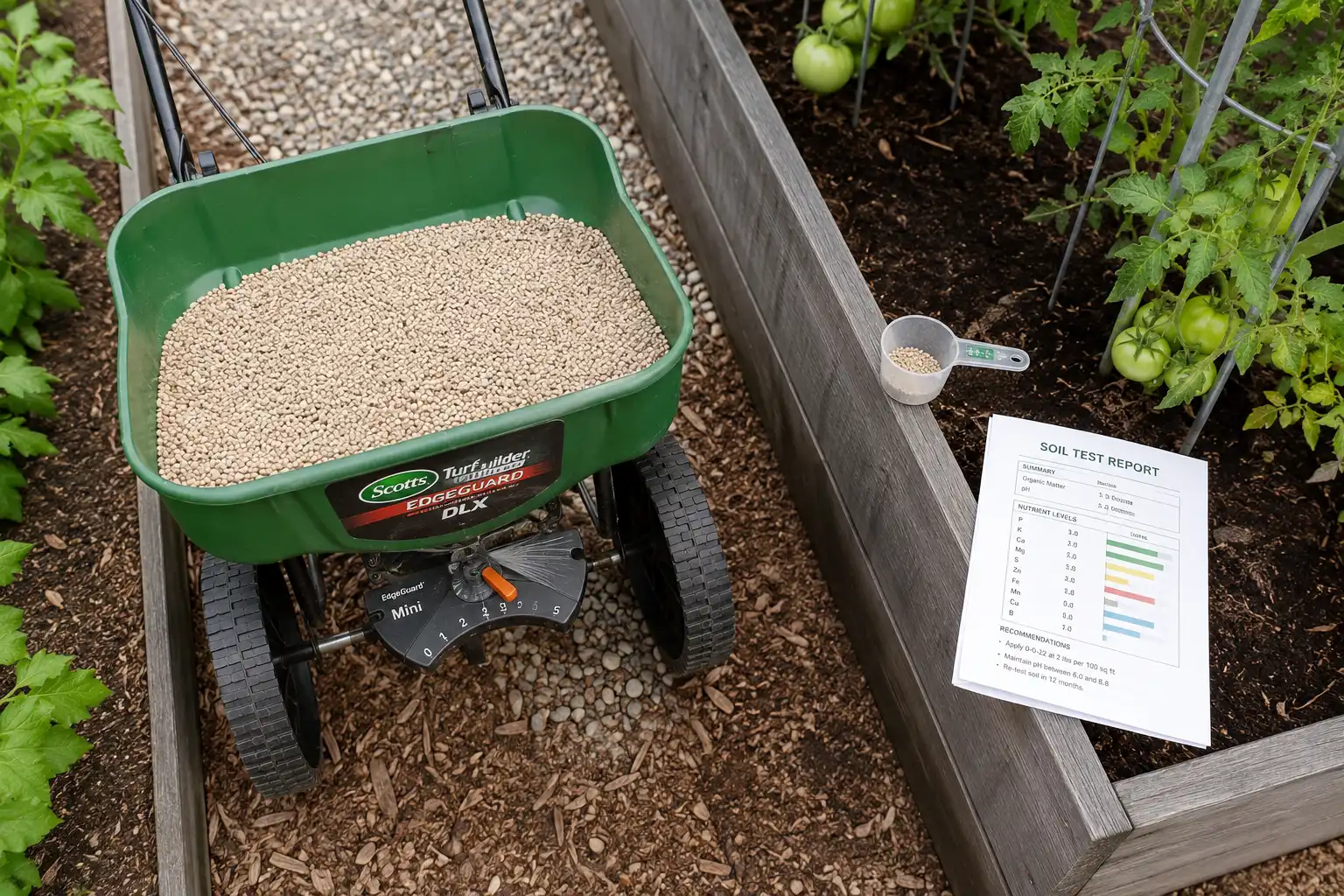
Broadcast the granules, work them into the top 2 to 3 inches, then water them in. Langbeinite needs moisture moving through the root zone before it releases anything.
- Test first. Confirm potassium is short, and confirm magnesium or sulfur is too.
- Calculate the rate. Divide the potash target by 0.22, then check the magnesium and sulfur that come along.
- Calibrate the spreader. Langbeinite runs denser than most blends, so a setting dialed in for a 10-10-10 blend will over-apply. A properly calibrated fertilizer spreader keeps the pattern even.
- Broadcast across the whole root zone. Never ring the stem. Tree roots reach well past the canopy edge.
- Incorporate 2 to 3 inches. Potassium and magnesium barely move on their own, so surface material sits idle.
- Water in half an inch. That starts the release. Dry soil stalls it completely.
Timing and placement
Fall suits perennials, turf, and pasture, because roots stock up ahead of dormancy. For fruiting crops, apply at bud set or early fruit development. Zero nitrogen means no leafy push during ripening, which is the whole point of using it then.
Broadcast beats near-seed placement for potassium, and Michigan State research backs that up. Keep salt away from germinating seed. Also skip fall application on coarse soils under 6 CEC, since leaching takes it before spring.
The one thing the bag will not tell you
Granular langbeinite does not belong in irrigation lines. Mosaic and IPNI both call it unsuitable for irrigation systems unless finely ground. The particles are dense, so they settle out. Standard granules will plug emitters. If you fertigate or foliar feed, buy the fine powder grade instead.
Expect results across 2 to 6 weeks in moist soil, not days. On sandy ground that slower release is an advantage, since soluble potash leaches straight past the roots.
Which Crops Respond Best
Chloride-sensitive crops and heavy fruiters gain the most. Potassium drives sugars into fruit, while magnesium keeps leaves working through the load.
| Crop group | Why langbeinite fits |
|---|---|
| Tomatoes and peppers | Chloride sensitive, and potassium firms fruit and evens ripening |
| Potatoes | Chloride lowers specific gravity, so sulfate protects quality |
| Grapes and berries | Chloride can cut sugar and wine quality |
| Citrus and tree fruit | Sandy root zones lose magnesium fast |
| Soybeans | 50 ppm magnesium floor on loam and clay, plus heavy sulfur demand |
| Alfalfa and grass hay | Removes big potassium tonnage, and added magnesium trims tetany risk |
| Turf | Potassium builds stress and cold tolerance |
| Corn and wheat | Rarely worth it, since both tolerate chloride and 0-0-60 costs less |
A correction on palms
Do not count on 0-0-22 to fix potassium deficiency in Florida landscape palms. This is the most oversold use on the market, and UF/IFAS research contradicts it. Broschat found that adding more water-soluble potassium does not correct palm potassium deficiency on Florida sands. Large amounts leach as fast as small ones. Their answer is a controlled-release palm special at 8-2-12-4Mg. All of the nitrogen, potassium, and magnesium must be in slow or controlled release form, using coated sulfate of potash and prilled kieserite.
Langbeinite dissolves slower than muriate or sulfate of potash. Even so, it is not a coated controlled-release source. So on sandy Florida ground, buy the palm special. Langbeinite still works fine for palms in containers or in heavier soils that hold cations.
And one on blossom end rot
Langbeinite will not stop blossom end rot. Reviews and product copy imply it does, and that keeps selling bags. Blossom end rot comes from calcium availability and uneven watering, not from a potassium shortage. Steady moisture and mulch fix it. Potassium does firm the fruit and improve flavor, so the nutrition earns its place for other reasons.
5 Best 0-0-22 Fertilizer Products
Check cost per pound of potash and coverage area before you compare labels. The analysis is nearly identical brand to brand, so bag size decides value. Small bags run triple per unit of nutrient.
| Product | Size | Price | Cost per lb K2O | Covers |
|---|---|---|---|---|
| PowerGrow Langbeinite | 20 lb | $48.95 | $11.12 | 2,000 to 4,000 sq ft |
| Supply Solutions Pro-Mag Trio | 25 lb | $64.00 | $11.64 | 2,500 to 5,000 sq ft |
| Down To Earth Langbeinite | 5 lb | $23.83 | $21.66 | 500 to 1,000 sq ft |
| Cz Garden Sul-Po-Mag | 3 lb | $21.99 | $33.32 | 300 to 600 sq ft |
| Florida Foliage Harvest Pro | 3 lb | $24.97 | $37.83 | 300 to 600 sq ft |
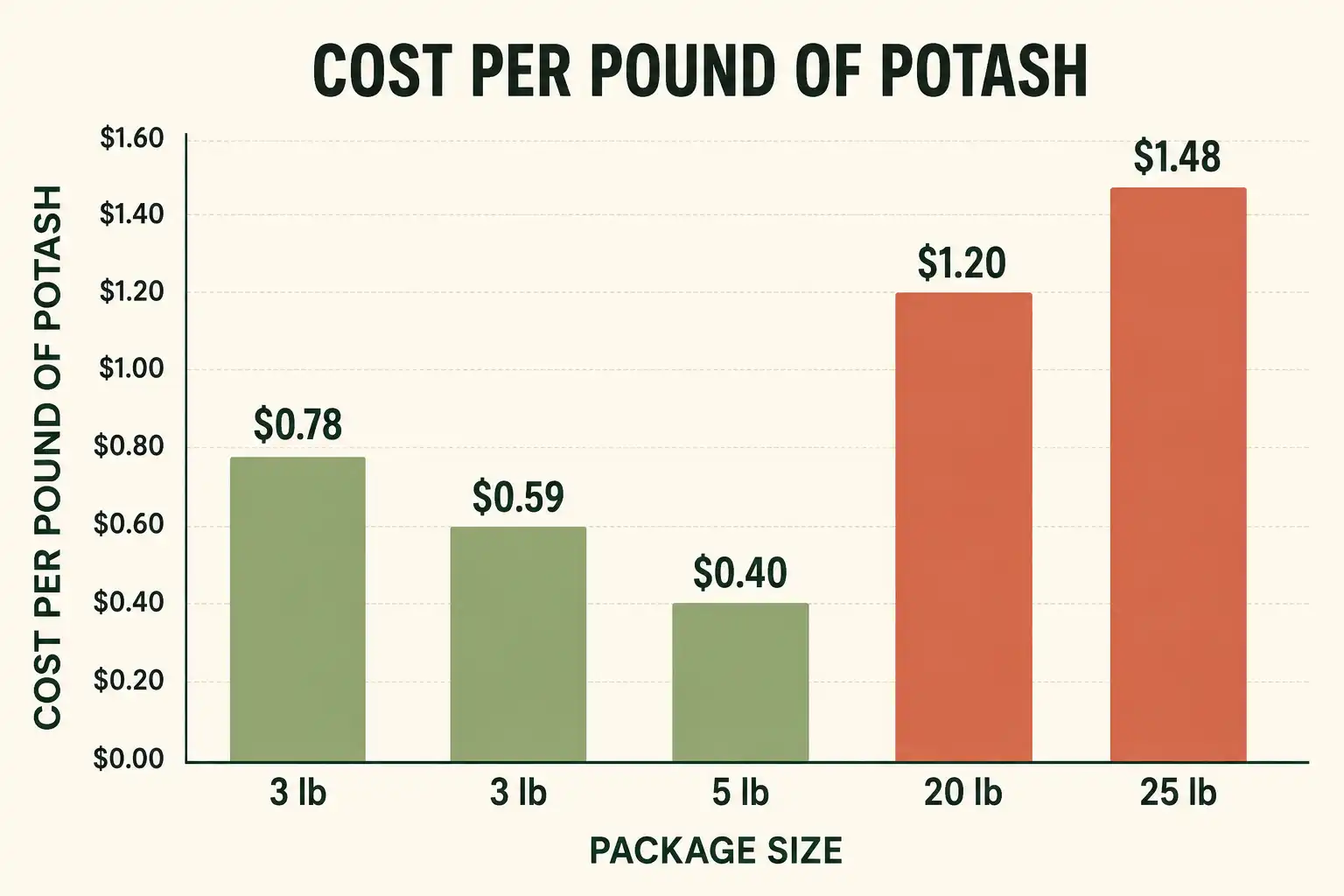
Coverage assumes 5 to 10 pounds per 1,000 square feet. Prices move, so run the math on whatever size you find.
1. Down To Earth Langbeinite 0-0-22 Fertilizer
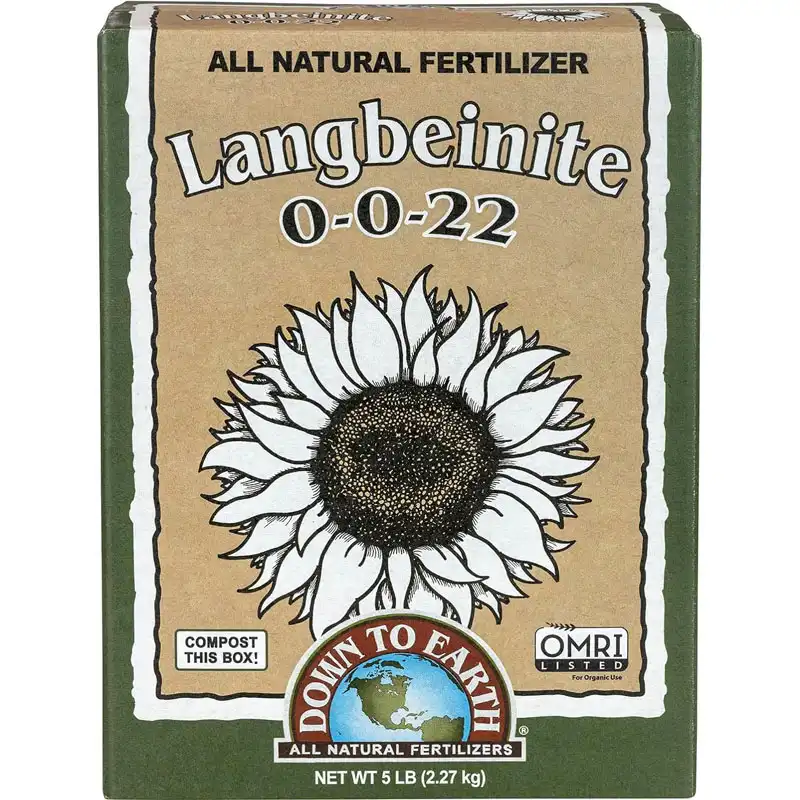
This is the bag most commonly recommended. Single ingredient, no fillers, and a standard SGN 95 granule that spreads clean by hand or through a small spreader. Chlorine stays under 3 percent and pH is neutral, so it will not shift soil chemistry or burn transplants. Owner feedback runs strong across more than 1,700 reviews at a 4.7 star average. Growers repeatedly mention heavier tomato set and blackberries big enough to bend the canes. The 5 pound box covers 500 to 1,000 square feet, which suits raised beds. Step up to the 10 or 20 pound size and cost per nutrient drops by half.
Specs:
- Analysis: 22 percent K2O, 11 percent Mg, 22 percent S
- Form: granular, SGN 95
- Chlorine: under 3 percent
- Sizes: 5, 10, 20, and 50 lb
2. PowerGrow Systems Langbeinite 0-0-22 Fertilizer
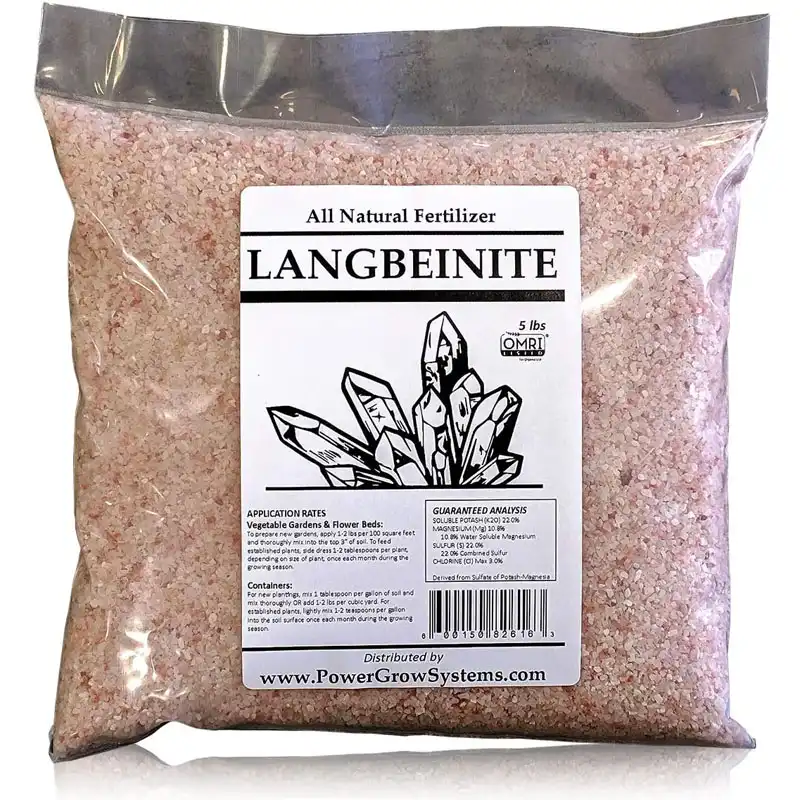
Buy this one if you have real ground to cover. At roughly $11 per pound of potash the 20 pound bag is the cheapest honest nutrient in this group, and it treats 2,000 to 4,000 square feet. The analysis matches the premium bags exactly, because it is the same mined mineral at under 3 percent chlorine and neutral pH. Owners report good results on fruit trees, berry shrubs, and bananas. Several note a little goes further than expected. Packaging is plain and does not reseal, so decant what you do not use into a sealed bucket.
Specs:
- Analysis: 22 percent K2O, 11 percent Mg, 22 percent S
- Form: granular
- Chlorine: under 3 percent
- Sizes: 5, 10, and 20 lb
3. Cz Garden Langbeinite Sul-Po-Mag
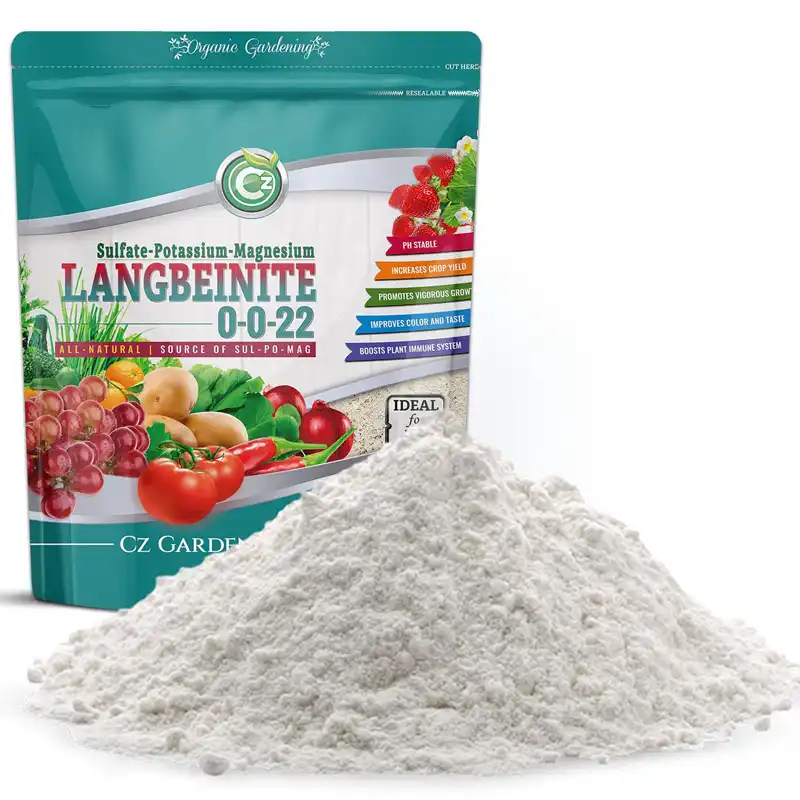
Get this one only if you run drip, hydroponics, or a foliar program. It is a fine powder instead of a granule, which solves the actual problem with langbeinite in water systems. Standard granules are dense, settle out, and plug emitters. This powder dissolves fully, so it mixes into reservoirs and fertigation lines cleanly. It carries a 2023 OMRI listing, so certified organic growers stay covered. Owners mention it kicks in mid and late blooms and firms up stems. At $33 per pound of potash it is a specialty tool, not a field material.
Specs:
- Analysis: 22 percent K2O, plus Mg and S
- Form: fine powder
- Chlorine: under 3 percent
- Size: 3 lb resealable pouch
4. Supply Solutions 0-0-22 Pro-Mag Trio
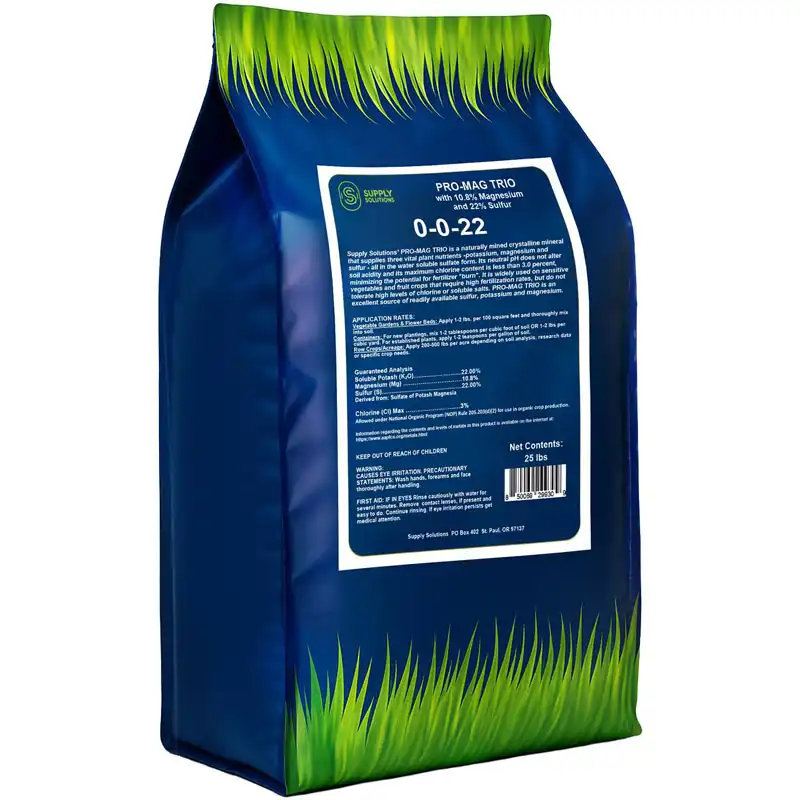
Reach for this bag when you are feeding a big lawn or turf going into fall. Twenty-five pounds treats 2,500 to 5,000 square feet, and the potassium builds the stress and cold tolerance turf needs before winter. Two corrections on the marketing, though. The label calls it balanced, yet it carries no nitrogen or phosphorus at all, so pair it with a nitrogen source. It also suggests sprayer and irrigation use, which these dense granules are not suited to. Skip the palm claims as well, since UF/IFAS calls for a controlled-release palm special on sandy soil.
Specs:
- Analysis: 22 percent K2O, plus Mg and S
- Form: granular
- Best use: turf, lawns, fruit trees
- Size: 25 lb
5. Florida Foliage Harvest Pro 0-0-22
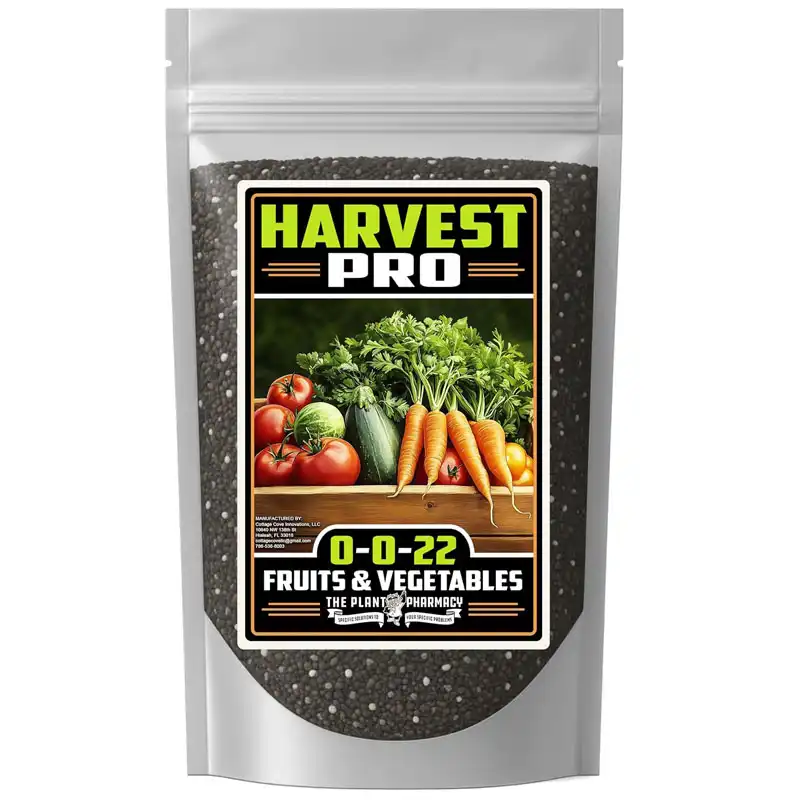
Pick this for a targeted top-dress once fruit sets. Magnesium runs 11.5 percent, a shade above the standard 11, which helps on sandy ground where leaves fade under a heavy fruit load. The granules top-dress easily and feed for roughly 1 to 2 months, so one pass carries most crops through fruit development. No nitrogen means no leafy push while fruit ripens. At $37.83 per pound of potash it is the priciest nutrient here. It also covers only 300 to 600 square feet, so treat it as a trial size.
Specs:
- Analysis: 22 percent K2O, 11.5 percent Mg
- Form: granular
- Best use: fruiting and vegetable development
- Size: 3 lb
Common Mistakes With This Fertilizer
Buying it without a soil test tops the list. Langbeinite earns its keep only when magnesium or sulfur reads low alongside potassium.
Six more worth avoiding:
- Treating it as a complete fertilizer. Zero nitrogen and zero phosphate means both come from somewhere else. A 10-10-10 blend early in the season handles that, then you switch to 0-0-22 at fruit set.
- Running granules through drip lines. Dense particles settle and plug emitters. Buy powder for water systems.
- Using it to raise pH. It is pH neutral. Dolomitic lime gives you magnesium and a pH lift together, cheaper.
- Ignoring magnesium saturation. Above 20 percent of CEC, more magnesium starts damaging soil structure and drainage.
- Expecting it to fix palm decline on sand. Soluble potassium leaches. Use the controlled-release palm special.
- Pushing heavy rates on grazed pasture. High forage potassium raises tetany risk. Coordinate with your mineral program.
FAQs About 0-0-22 Fertilizer
Is 0-0-22 fertilizer organic?
Can I mix 0-0-22 with nitrogen fertilizer?
Will 0-0-22 fertilizer burn my plants?
Does 0-0-22 change soil pH?
How long does 0-0-22 take to work?
Is 0-0-22 the same as 0-0-60?
Can I use 0-0-22 on my lawn?
Final Thoughts
Langbeinite is a targeted tool here, not a yearly staple. On corn and wheat ground, where magnesium tests adequate and chloride causes no trouble, 0-0-60 wins on cost every time. In the garden, and for tomatoes, peppers, and grapes, 0-0-22 is the better switch, because the sulfate form protects fruit quality and the magnesium keeps leaves working through a heavy load.
Run the soil test first. If potassium sits below 120 ppm and magnesium reads under 20 ppm, one material covers both plus the sulfur. Buy the biggest bag you will use in a season, work it into the top few inches, water it in, and give it a month before you judge it. Skip the test and you are just spending money on a guess.