11 52 0 Fertilizer: What It Is, Uses, and How to Apply It
11-52-0 fertilizer is one of the most common phosphorus sources on American farms. The three numbers stand for the percent of nitrogen, phosphate, and potassium in the bag. Here is what it does, when to use it, how to apply it, and which product fits your ground.
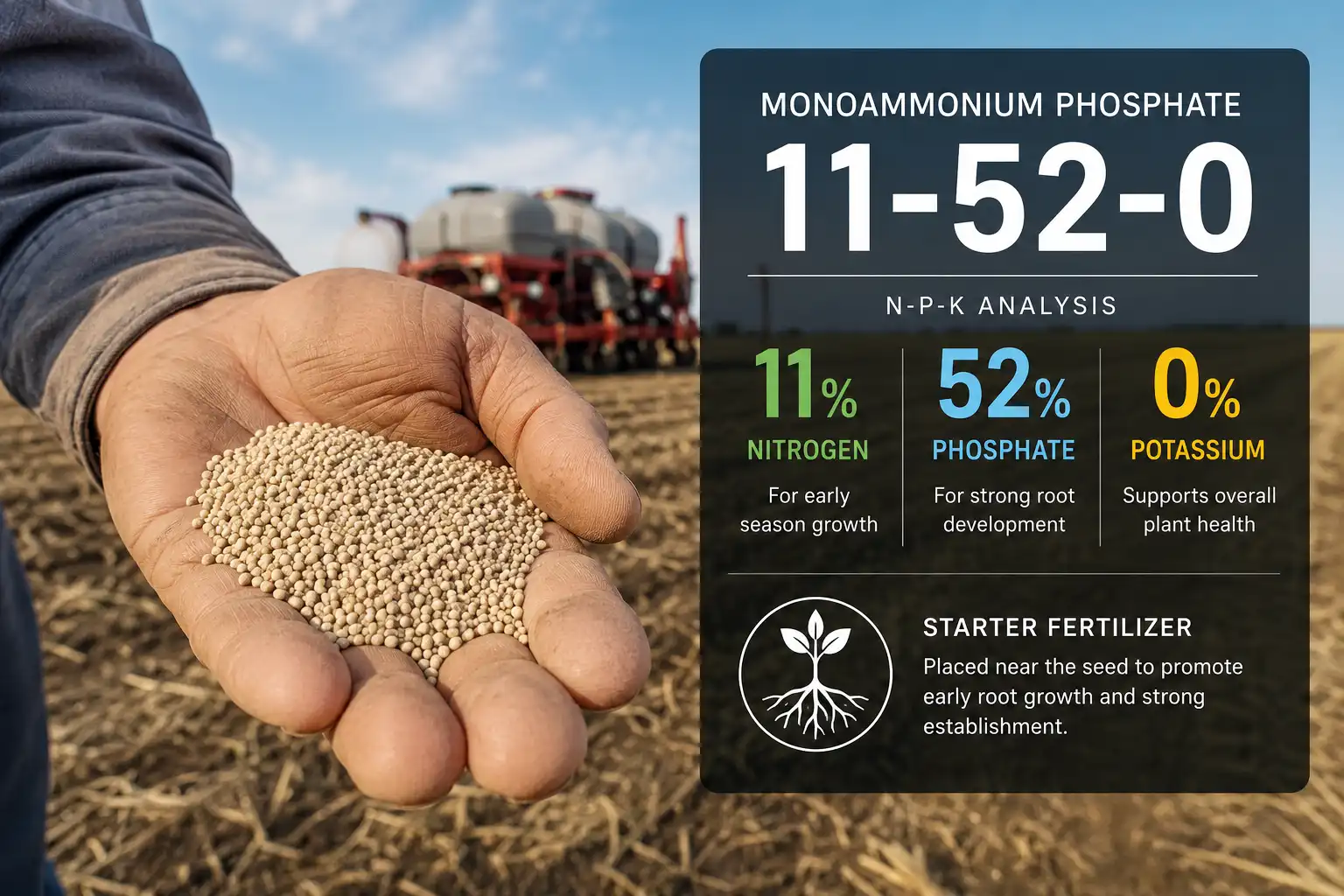
11-52-0 fertilizer is monoammonium phosphate (MAP), a dry granular starter high in phosphate. It carries 11% nitrogen and 52% phosphate, with no potassium. Farmers use it to build early roots on corn, small grains, and gardens.
What Is 11-52-0 Fertilizer?
11-52-0 fertilizer is monoammonium phosphate, a dry granular product made from ammonia and phosphoric acid. Growers call it MAP. It packs the highest phosphate of any common dry fertilizer, so it feeds new roots faster than most options.
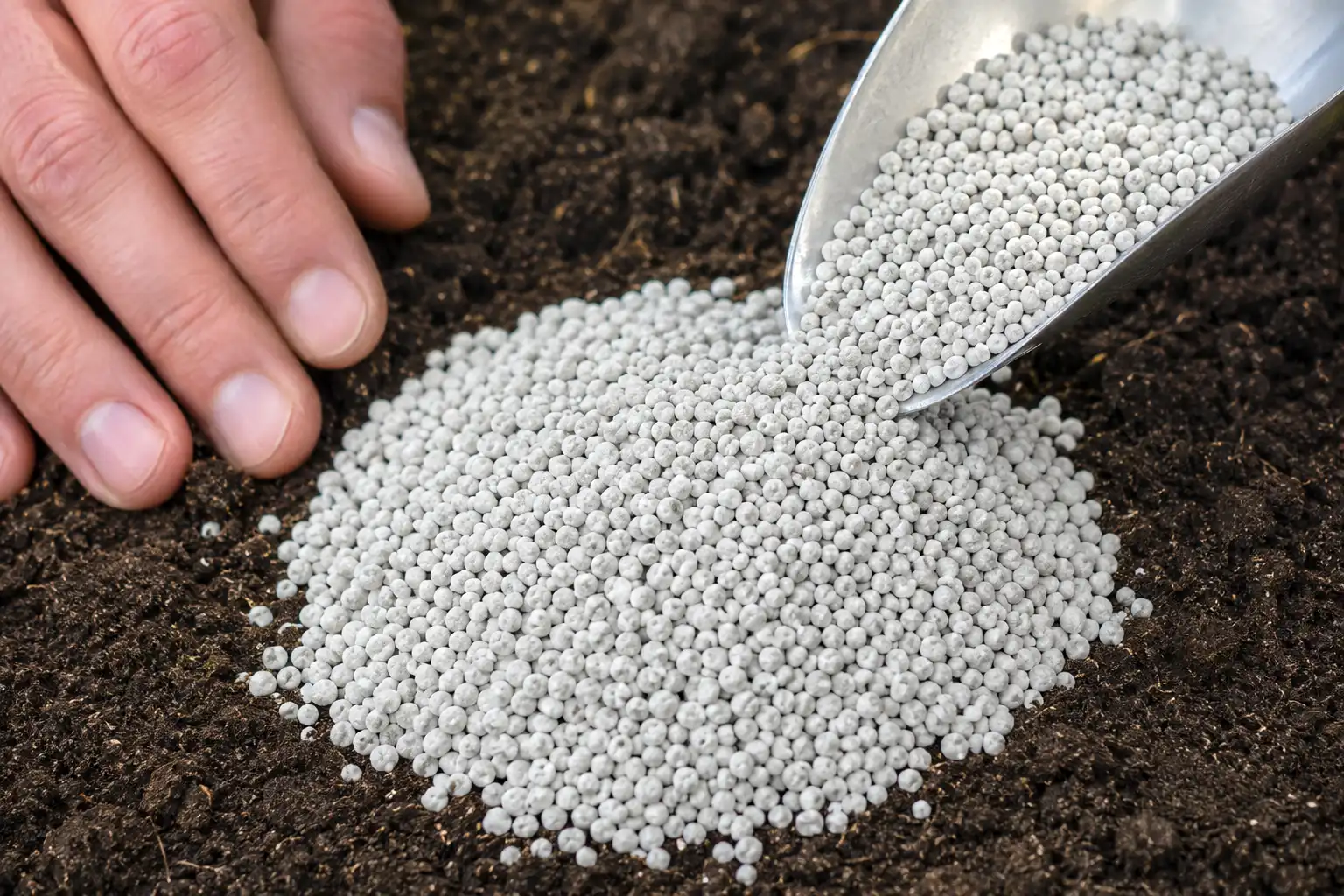
The granules dissolve quickly once soil moisture reaches them. As each granule breaks down, it releases ammonium and phosphate, and roots take up both. Because the nitrogen sits in the ammonium form, it helps the plant pull in phosphorus right beside it.
One more thing up front. MAP is a synthetic mineral salt, not an organic input. So it is not cleared for certified organic programs.
What Do the Numbers 11-52-0 Mean?
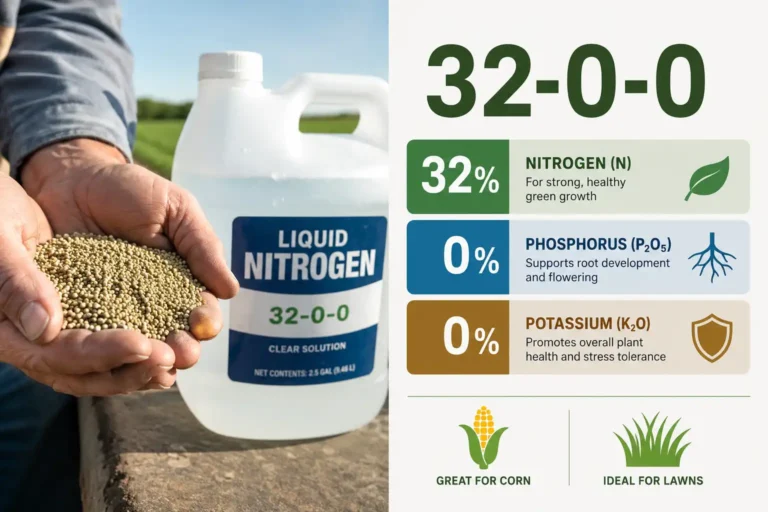
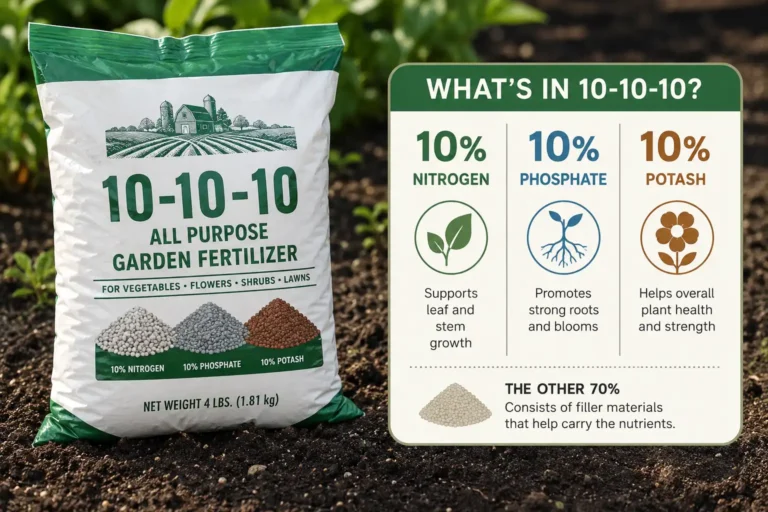
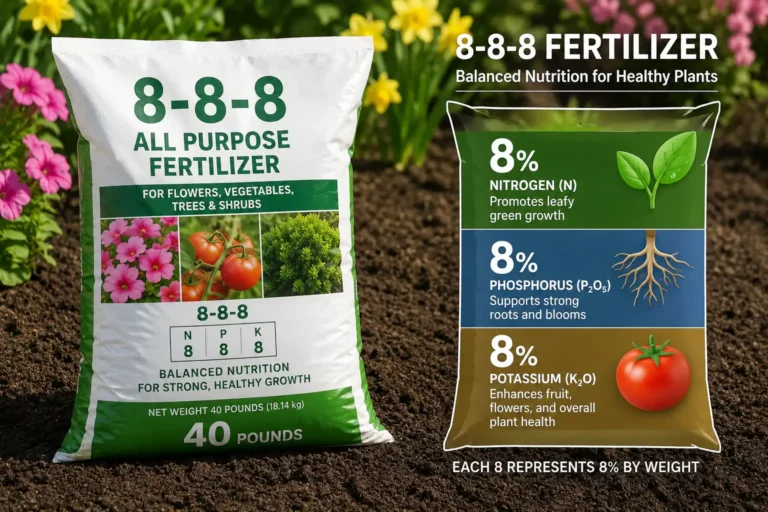
The numbers 11-52-0 list the percent of nitrogen, phosphate, and potassium by weight. So every 100 pounds holds 11 pounds of nitrogen and 52 pounds of phosphate, with no potassium at all.
One detail trips up a lot of folks. The middle number is phosphate (P2O5), not pure phosphorus. Every fertilizer label reports it that way. For a full walk-through, see how the NPK numbers work before you shop.
What Is 11-52-0 Fertilizer Used For?
Farmers use 11-52-0 fertilizer as a starter to build strong early roots and quick establishment. The high phosphate powers root growth, and good roots carry the crop through the season.
It works across a wide range of crops and beds:
- Field crops: corn, soybeans, small grains, cotton, and forages.
- Fruiting vegetables: tomatoes, peppers, squash, and melons.
- Root crops: potatoes, carrots, onions, and beets.
- Flowers and more: roses, bulbs, and flowering annuals.
Two traits make MAP stand out beyond the phosphate itself:
- The ammonium nitrogen speeds phosphorus uptake in cold, wet spring soil, where phosphorus moves slowly.
- The acidic zone around each granule frees up phosphorus in high-pH ground. So on calcareous or alkaline soil, MAP keeps that phosphate available where it would otherwise lock up.
It helps to use a phosphate starter for corn and small grains. It carries only a little nitrogen, so the rest of the nitrogen plan still gets built around a soil test.
Does Your Soil Actually Need Phosphorus?
Not always. Most established soils hold plenty, so check before you buy a single bag. Adding phosphate you do not need wastes money and pollutes water.
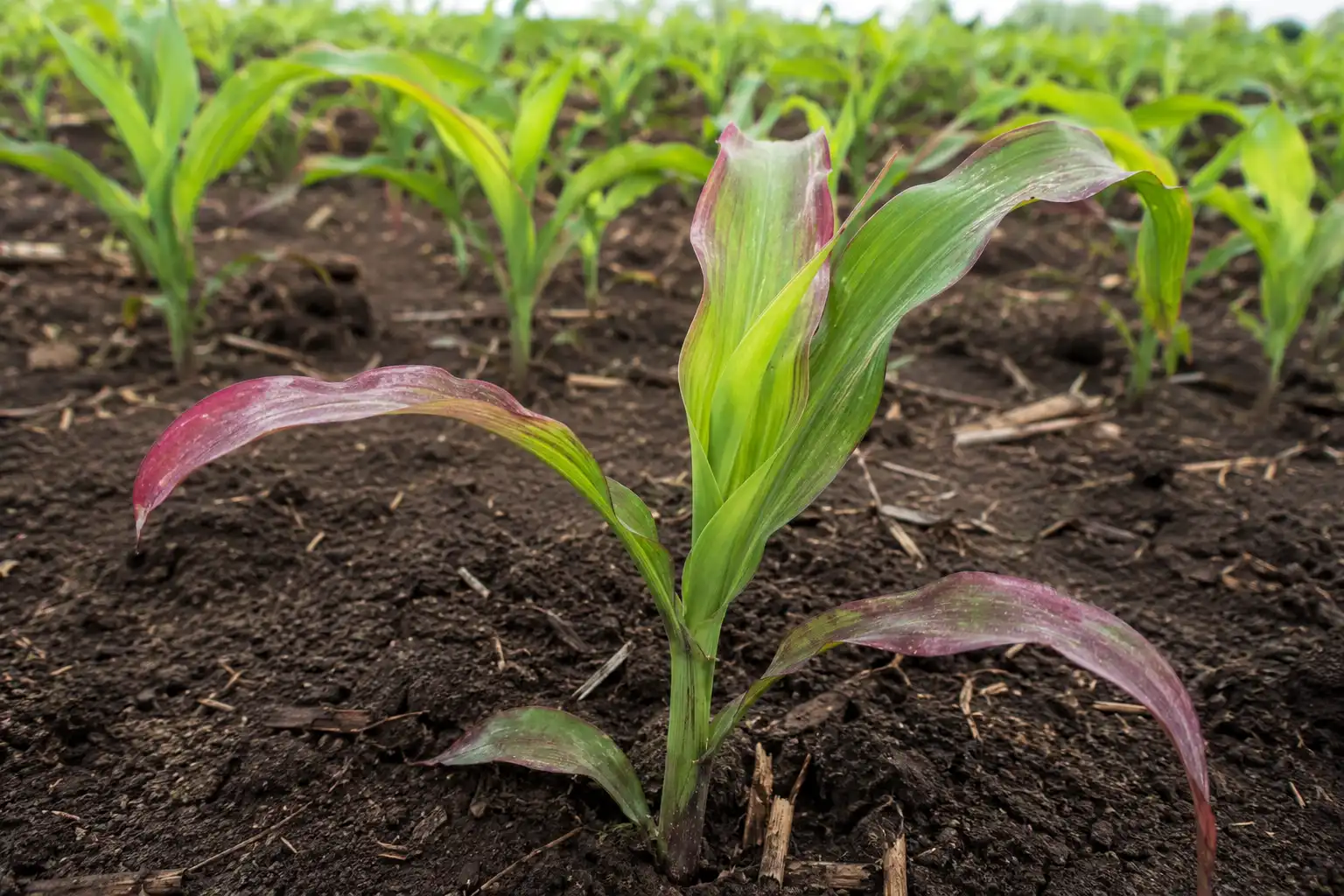
Phosphorus-short crops show a few telltale signs:
- Leaves turn dark green, then take on a purple or reddish tint, often on corn seedlings.
- Growth stalls, and roots stay small and weak.
- Flowering and fruiting drop off on garden crops.
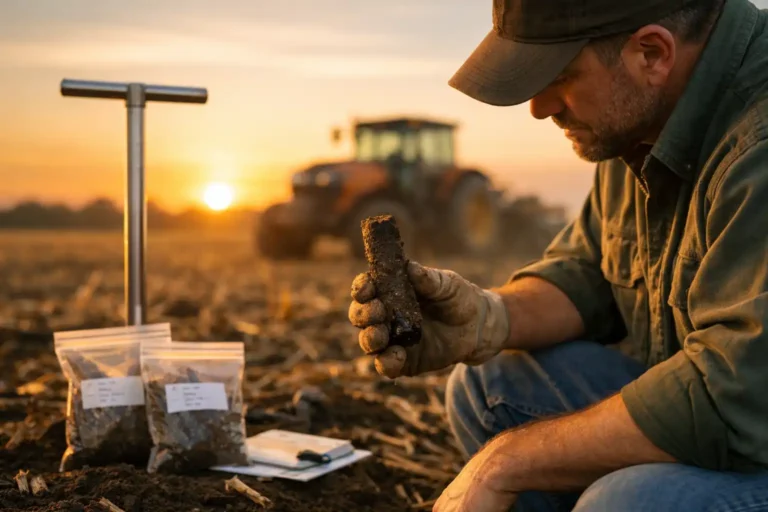
Those signs also point to cold soil or other stress, so confirm with a test. A soil test is the only way to know your real phosphorus level and the rate you need.
How Much Does 11-52-0 Fertilizer Weigh?
11-52-0 fertilizer weighs about 60 to 65 pounds per cubic foot as a dry granule. It sells in bags from 2 pounds up to a full ton. So the weight you handle depends on the size you buy.
Here is a quick reference for common sizes and where each one fits.
| Size | Where it fits |
|---|---|
| 2 to 5 lb | Pots, small beds, and trials |
| 10 to 25 lb | Large gardens and small plots |
| 50 lb | Standard farm bag for blending |
| 1 ton (2,000 lb) | Bulk field use |
A few field numbers help you plan:
- A level 5-gallon bucket holds close to 40 pounds.
- A full ton supplies 220 pounds of nitrogen and 1,040 pounds of phosphate.
- Every 100 pounds carries 11 pounds of nitrogen and 52 pounds of phosphate.
That last line is the math you need to match a soil-test rate.
How Do You Apply 11-52-0 Fertilizer?
You apply 11-52-0 fertilizer by banding it at planting, broadcasting and working it in, or side dressing beds. The best method depends on your crop, your equipment, and your soil test. Before anything, test your soil so you spend only on the phosphate you need.
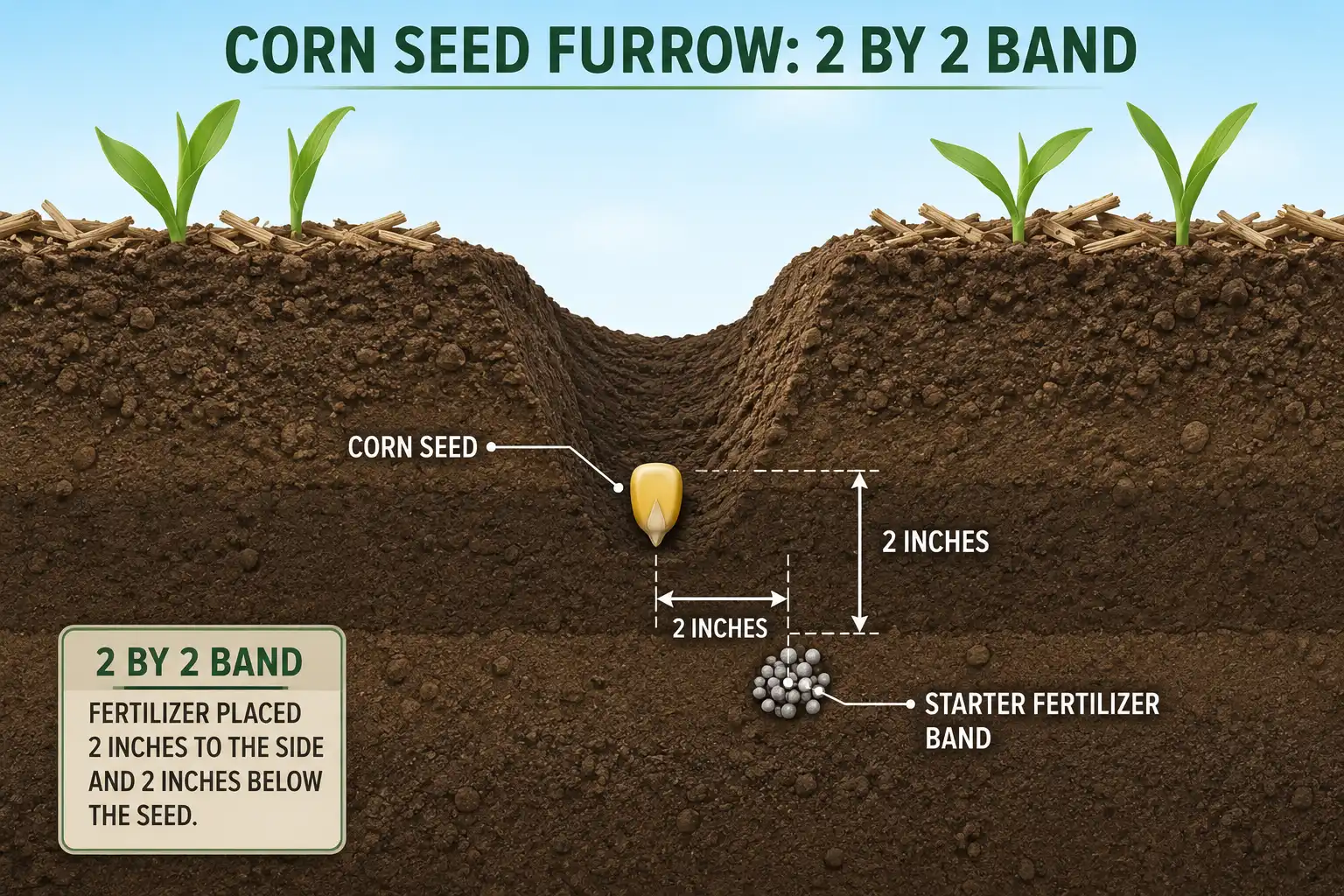
Here is how to put it down, step by step:
- Test the soil, then match the phosphate rate to the result.
- Pick a method: band or 2 by 2 for row-crop starter, broadcast plus tillage for whole fields, side dress for garden beds.
- Set the rate. Field starter often runs 50 to 150 pounds per acre, guided by the test.
- Place it right. Keep it off the seed, or hold in-furrow rates low.
- Water it in. Rain or irrigation moves the phosphate down to the roots.
These are the main ways to place it.
| Setting | Method | Typical rate |
|---|---|---|
| Field starter (corn, small grains) | 2 by 2 band or in-furrow | Set by soil test, often 50 to 150 lb per acre |
| Direct seed contact | In-furrow pop-up | Keep low, see the seed-safety note below |
| Broadcast preplant | Spread, then work in with tillage | Match soil-test phosphate |
| Garden bed | Side dress or dissolve in water | Follow the label, and soil test first |
Seed safety sets the ceiling for in-furrow rates. K-State Research and Extension caps nitrogen plus potassium at 6 to 8 pounds per acre in direct seed contact. That guideline applies on 30-inch rows. Because MAP holds only 11% nitrogen and no potassium, that lands near 55 to 70 pounds in the furrow. Past that, nitrogen alone crosses the line and salt injury thins the stand.
A 2 by 2 band solves that. Place the band two inches to the side and two inches below the seed. Then soil sits between the fertilizer and the seedling. So you can run higher rates and still protect the stand. At corn planting, a 2 by 2 placement is set, keeping any in-furrow rate modest.
When to Apply 11-52-0
Put it down at planting, since it works as a starter for young roots. For a whole field, you can also broadcast it before planting and work it into the seedbed. How often depends on your soil test. Heavy feeders like corn and fruiting vegetables often want phosphate each season. Ground that already tests high can skip a year or two.
You can also dissolve high-purity MAP for a foliar spray or run it through fertigation. If you do, one rule matters. Do not mix MAP in concentrated solution with calcium fertilizers like calcium nitrate. The two react and tie up both nutrients. Apply them in separate passes instead.
Handling and Storage Tips
- Store the bag in a cool, dry spot away from heat and flame.
- Wear gloves and eye protection while you handle it.
- Skip windy days, and keep it away from food crops and water sources.
- Keep it out of reach of children and pets.
11-52-0 (MAP) vs 18-46-0 (DAP): Which Is Better?
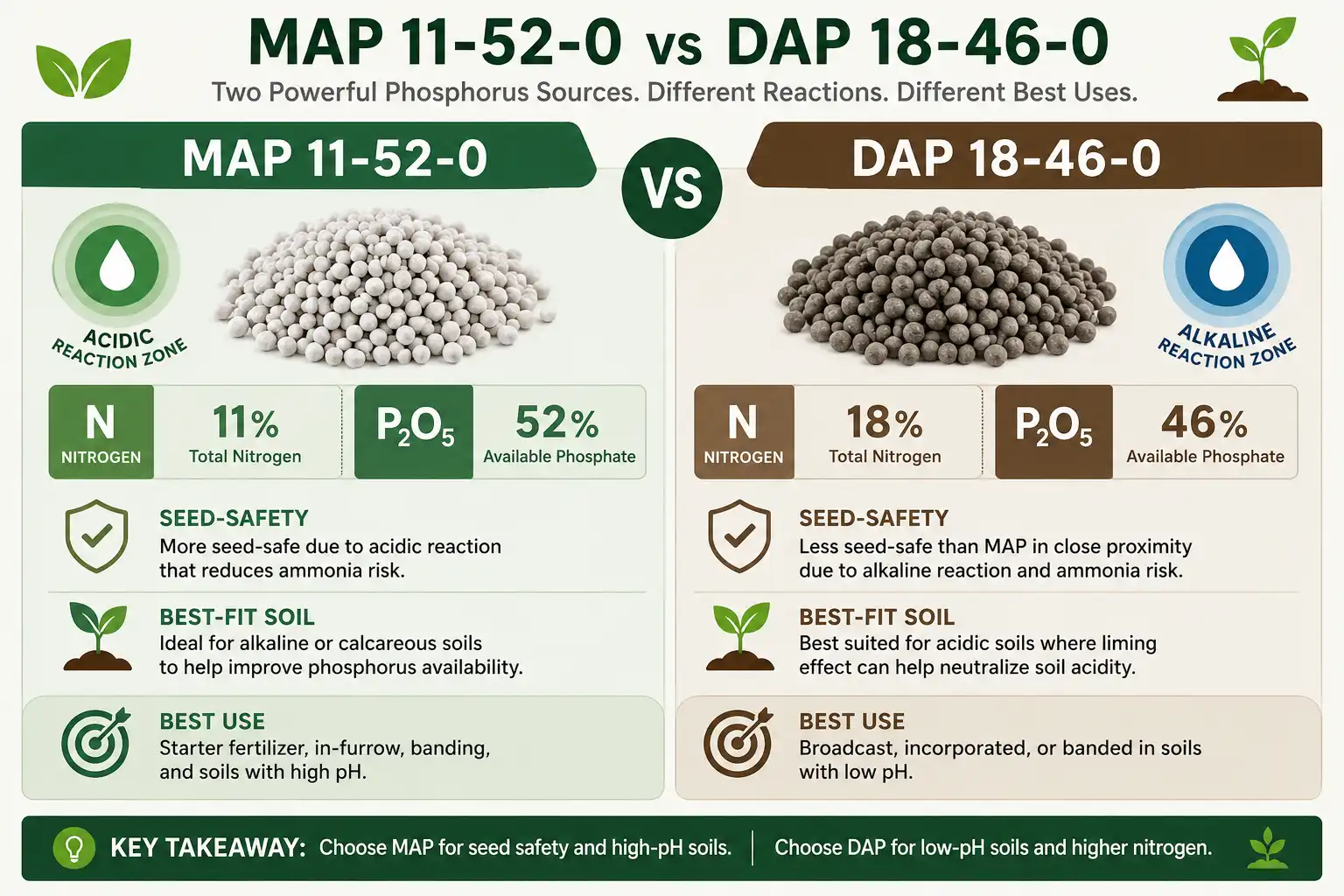
Neither wins outright, because the phosphorus performs about the same. So the real choice comes down to seed safety, the extra nitrogen in DAP, and your soil pH.
MAP runs an acidic zone, around pH 3.5 to 4.2 near the granule. That treats seedlings gently in close placement, and it favors the phosphate form roots grab fastest. It also lifts iron, manganese, and zinc availability in that acid zone. DAP, at the 18-46-0 grade, carries more nitrogen and runs an alkaline zone near pH 7.8 to 8.2. As it dissolves, DAP can release free ammonia that burns seedlings sitting right on the seed.
Here is the short version side by side.
| Trait | 11-52-0 (MAP) | 18-46-0 (DAP) |
|---|---|---|
| Nitrogen | 11% | 18% |
| Phosphate | 52% | 46% |
| Reaction zone | Acidic | Alkaline |
| Seed safety | Gentler near seed | Riskier near seed |
| Best fit | High-pH soil, close placement | Extra nitrogen, safe placement |
So reach for MAP on cold, wet soils, high-pH ground, and tight in-furrow rigs. Reach for DAP when you want the extra nitrogen and your placement keeps fertilizer off the seed. If your test shows phosphorus is already high, you may only need nitrogen. In that case, skip both and use urea at 46-0-0 instead.
Is 11-52-0 Fertilizer Good for Gardens?
Yes, 11-52-0 fertilizer works well in gardens for crops that need phosphorus. It shines on transplants, new beds, and heavy fruiters like tomatoes and peppers, where strong early roots pay off.
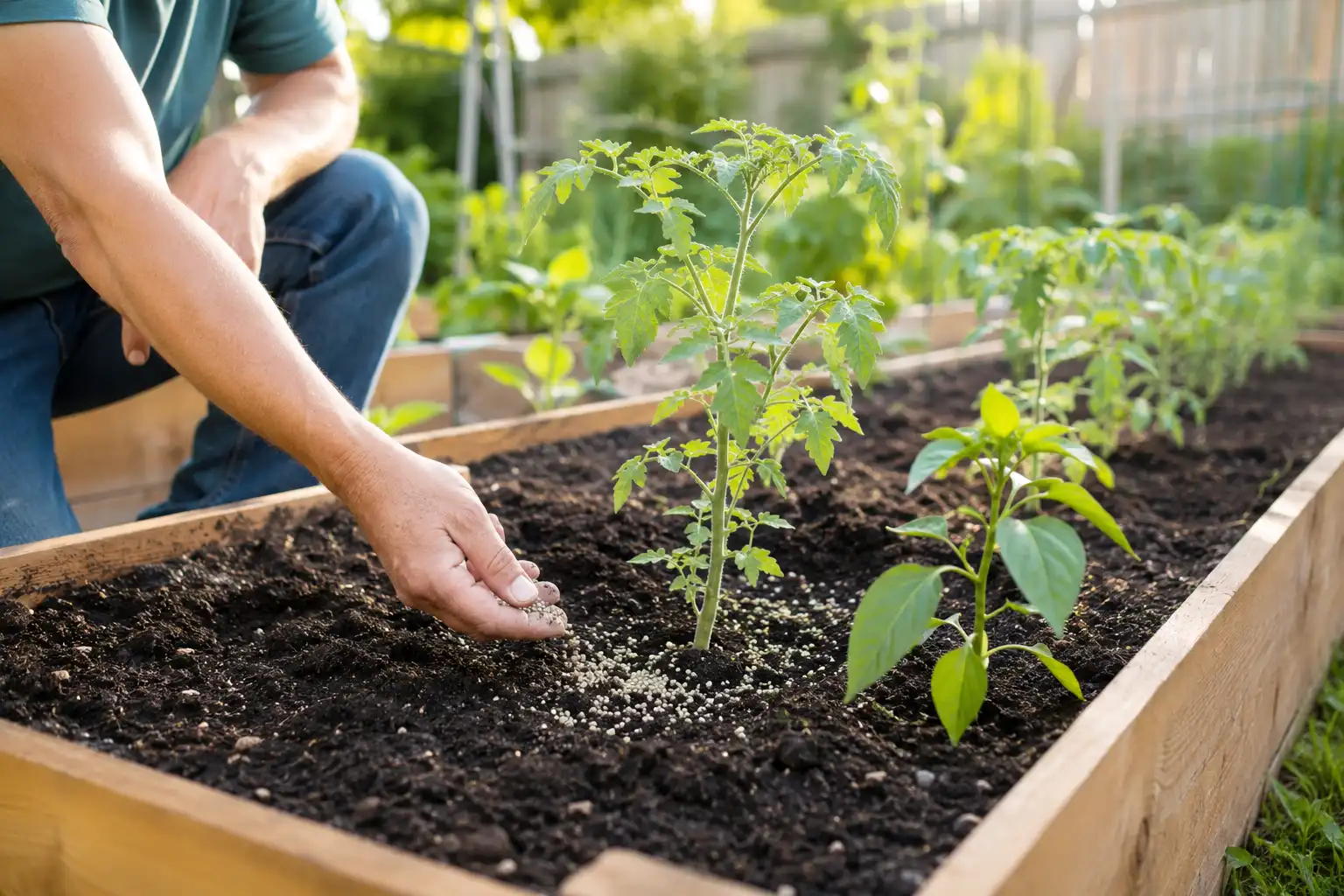
That said, treat it with a little care. Most home soils already hold plenty of phosphorus, so check with a home soil test kit before you add more. Then keep these points in mind:
- Do not overdo it: excess phosphorus does not help the plant, and it runs off into nearby water.
- Mind local rules: some states restrict phosphorus fertilizer on lawns and turf.
- Skip it for organic beds: MAP is synthetic, so organic gardeners need another phosphorus source.
On rate, match the reading, not the bag. Makers list broad ranges, often 2 to 10 pounds per 100 square feet as a side dressing. Most beds land at the low end. For a gentler, balanced feed with potassium in the mix, the 5-10-10 blend spreads the nutrients out.
Top3 11-52-0 Fertilizer Products for 2026
Several brands sell clean, high-purity 11-52-0. The right pick depends on your plot size and whether you feed soil, beds, or a hydroponic setup. Here is how three popular options stack up.
| Product | Form | Sizes | Best for |
|---|---|---|---|
| Greenway Biotech MAP 11-52-0 | Water-soluble granules | 2, 5, 10, 25 lb | Soil and hydroponics |
| Cz Garden 11-52-0 MAP | Granules, resealable pouch | 4 lb | Small gardens and value |
| Lancaster Ag MAP 11-52-0 | Dry granules | 20 lb | Larger gardens and blending |
How to Choose an 11-52-0 Fertilizer
Weigh four things before you buy:
- Analysis and purity: look for a clean 11-52-0 with few fillers.
- Size vs plot: small beds need a few pounds, while row-crop starter calls for bulk.
- Form: granules for soil, fully water-soluble grades for hydroponics or spraying.
- Packaging: a resealable bag keeps leftover granules dry.
1. Greenway Biotech Monoammonium Phosphate 11-52-0
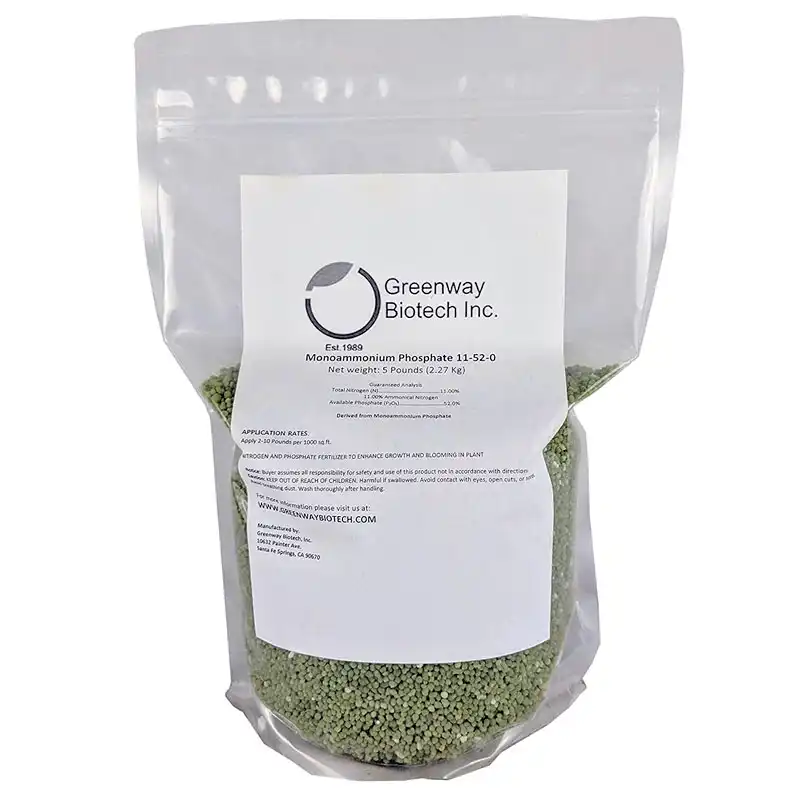
This MAP dissolves fully, so it fits both soil beds and hydroponic systems. Greenway builds it with ammonium nitrogen rather than urea. The company says that keeps it from burning plants at labeled rates. You can side dress the granules or dissolve them for a foliar feed. Sizes run from 2 pounds up to 25.
- Pros: Dissolves fully, soil and hydro use, ammonium nitrogen form, wide size range.
- Cons: Costlier in bulk, not organic certified.
- Specs: 11-52-0 analysis, water-soluble granules, 2 to 25 lb sizes, foliar option.
2. Cz Garden 11-52-0 MAP Fertilizer
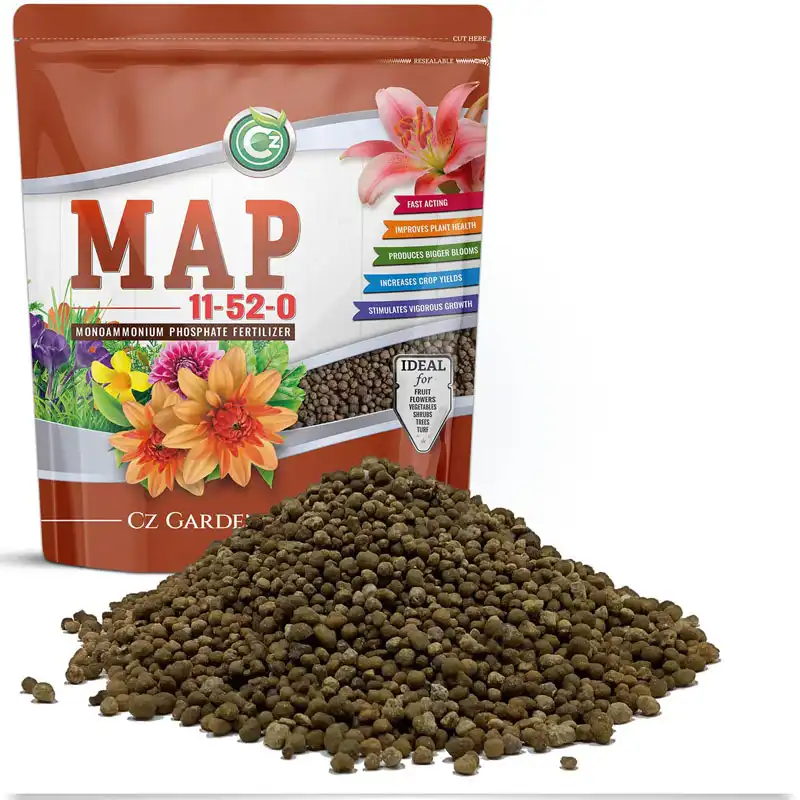
Cz Garden ships its 11-52-0 in a heavy resealable pouch, which keeps the leftover dry between feedings. The company makes it in the USA and calls it a high-purity MAP for flowers, vegetables, fruit, shrubs, and lawns. You side dress it or dissolve it in water. The 4-pound size suits raised beds and containers.
- Pros: Resealable pouch, made in USA, high purity, easy to pour.
- Cons: Small size only, garden scale rather than field.
- Specs: 11-52-0 analysis, granules, 4 lb pouch, made in USA.
3. Lancaster Agriculture Products MAP 11-52-0
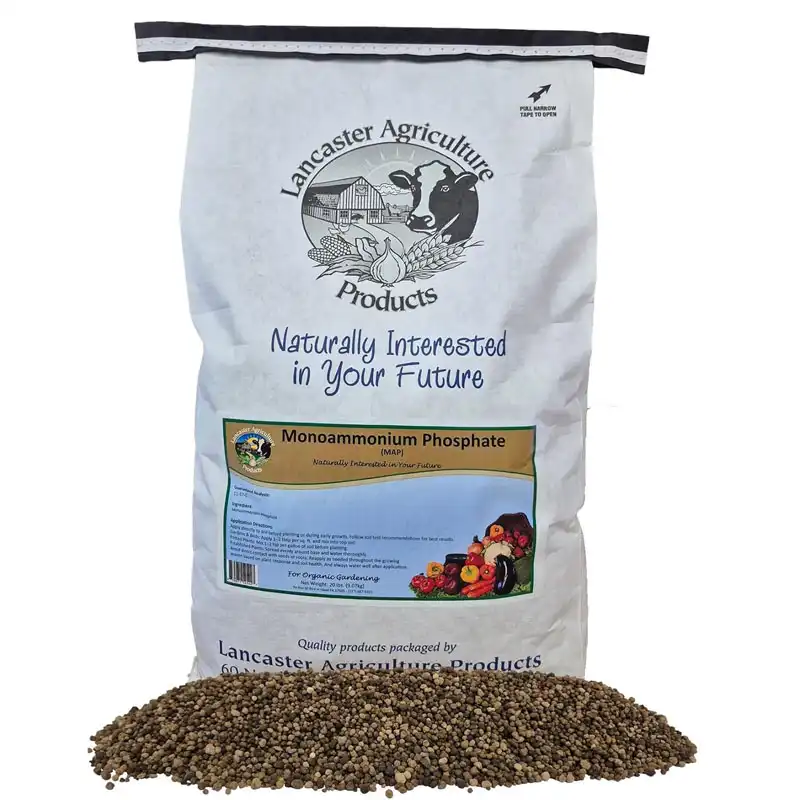
Lancaster Ag has sold soil products since 1988. This dry granule suits gardens, row crops, and pastures. It blends cleanly with other dry fertilizers for a custom mix. The company steers growers to a soil test before they spread it. The 20-pound bag fits larger vegetable plots and repeat phosphate users.
- Pros: Blends with dry mixes, family-owned brand, larger 20 lb bag, row-crop ready.
- Cons: One size listed, coarse for tiny pots.
- Specs: 11-52-0 analysis, dry granules, 20 lb bag, blendable.
FAQs on 11-52-0 MAP Fertilizer
Is 11-52-0 the same as MAP?
Does 11-52-0 have any potassium?
Is 11-52-0 safe to place near the seed?
Can I use 11-52-0 every year?
Is 11-52-0 organic?
Final Verdict
11-52-0 is a phosphate starter, plain and simple. It builds early roots, and it earns its keep on cold spring soil and high-pH ground where phosphorus locks up. Test first, then band it at planting instead of dumping it on the seed. For close placement or alkaline dirt, pick MAP over DAP. In the garden, go light and let the test set the rate.