32 0 0 Fertilizer: What It Is, Uses, and How to Apply It Right
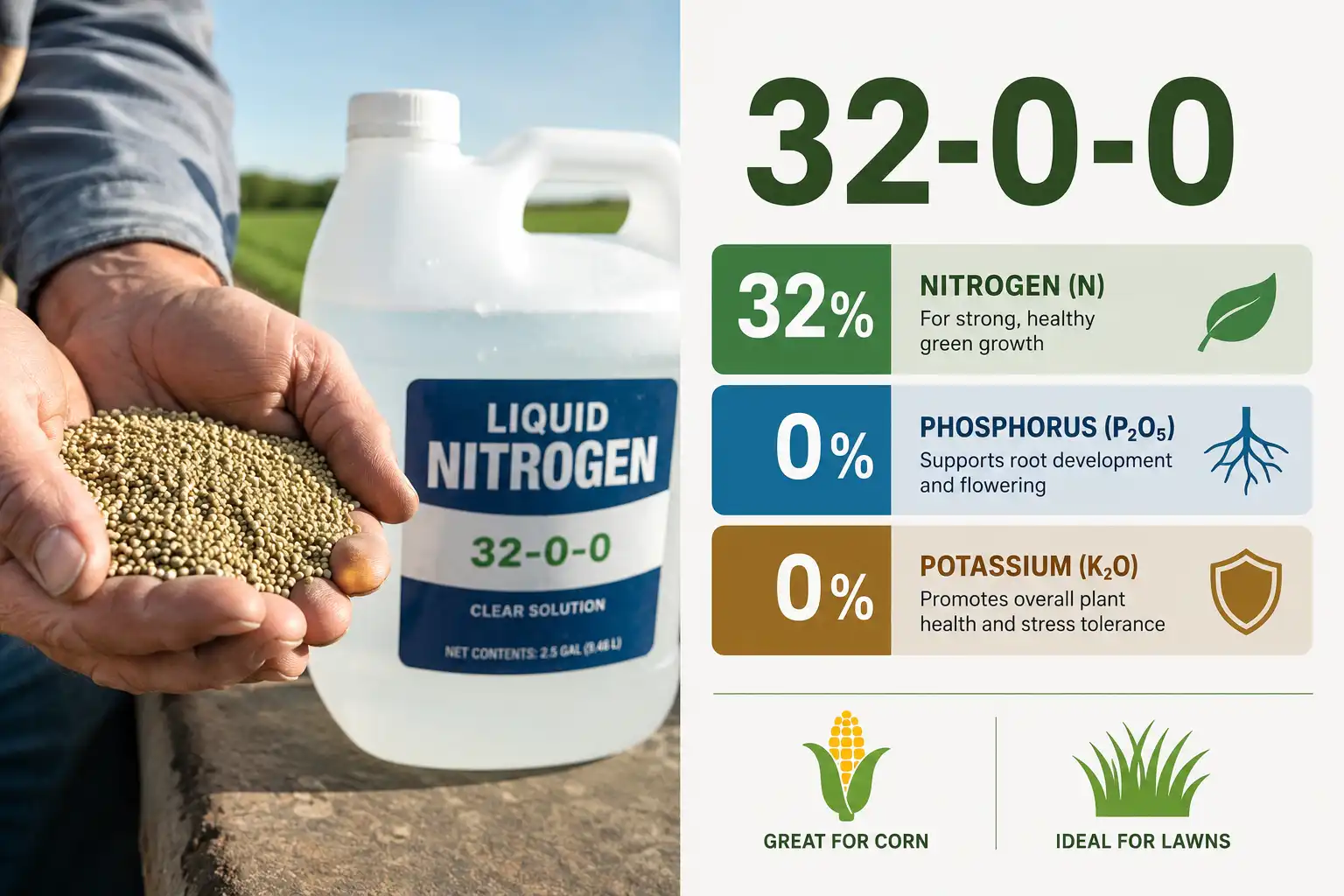
Reach for 32-0-0 fertilizer when your crop or lawn needs nitrogen and nothing else. The three numbers mean 32 percent nitrogen, zero phosphorus, zero potassium. Here is what it is, what it feeds, how much to apply, and which bags are worth buying.
32-0-0 fertilizer is a straight nitrogen product with 32 percent nitrogen and no phosphorus or potassium. Farmers use the liquid UAN form on row crops. Homeowners spread the granular form to green up thin, yellow lawns.
What Is 32-0-0 Fertilizer?
32-0-0 fertilizer is a high-nitrogen product that supplies 32 percent nitrogen by weight, with no phosphorus and no potassium. The three numbers on any bag or tank are the N-P-K grade, so 32-0-0 tells you it is all nitrogen. Want the full rundown on reading those numbers? Our guide to what the NPK numbers mean covers it.
It comes in two main forms. The first is liquid UAN, short for urea ammonium nitrate. This is the form most row-crop farmers buy. It blends about 35 percent urea and 45 percent ammonium nitrate dissolved in water. The second is a dry, granular product built on coated urea, sold mostly for lawns and turf.
Both forms deliver the same nutrient. The difference is how you store it, handle it, and put it down.
What Is 32-0-0 Fertilizer Used For?
32-0-0 fertilizer is used to push green, leafy growth and to correct nitrogen shortages fast. Nitrogen drives photosynthesis and color, so a hungry crop or lawn turns pale and yellow without enough of it.
On the farm, it feeds corn, wheat, grain sorghum, and pastures. Nitrogen is applied to Kansas corn every season. Corn is a heavy feeder and pulls a lot of N from the ground. On the lawn, the granular form greens up thin turf and helps grass recover from summer heat.
Because 32-0-0 carries no phosphorus or potassium, it is not a full diet for your soil. So run a soil test first, and then you know whether you need only nitrogen or a fuller blend.
Liquid UAN vs Granular 32-0-0: Which Form Fits the Job?
Pick liquid UAN for field acres and granular 32-0-0 for lawns and small plots. Liquid moves through a sprayer, a streamer bar, or a Y-drop rig, so it suits big ground. Granular runs through a broadcast or drop spreader, so it suits yards and garden beds.
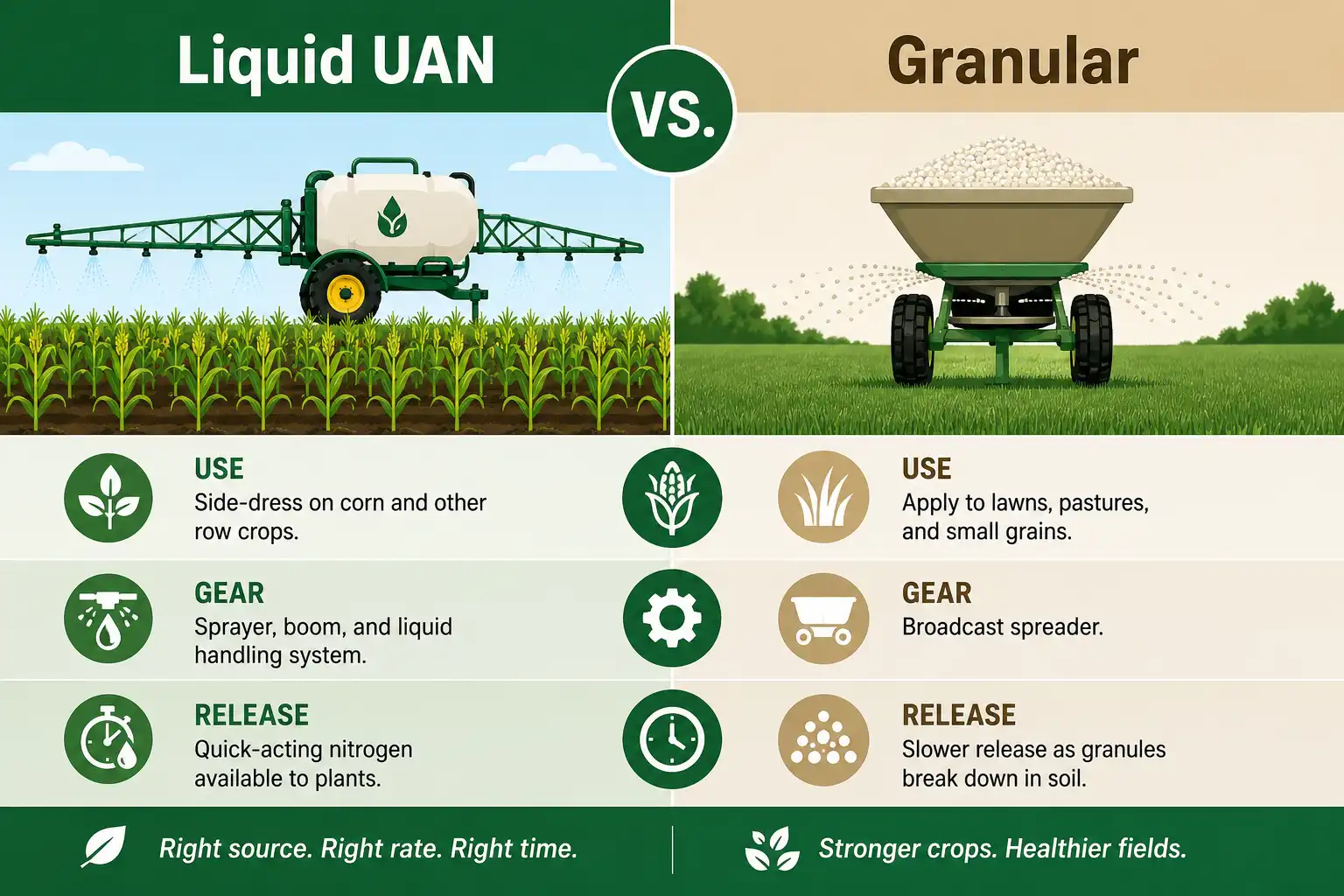
Here is how the two forms stack up:
| Feature | Liquid UAN 32-0-0 | Granular 32-0-0 |
|---|---|---|
| Best for | Row crops, pasture, large acres | Lawns, gardens, small turf |
| Weight | About 11.06 lb per gallon | Dry granules by the bag |
| Nitrogen supplied | About 3.5 lb N per gallon | 32 percent of bag weight |
| Application gear | Sprayer, streamer bar, Y-drop | Broadcast or drop spreader |
| Release | Mostly quick, part slow | Coated for quick plus slow |
| Cold note | Salts out near 32°F | Store dry, no freeze issue |
Liquid is easy to blend with other inputs and covers ground fast. Granular is simpler to store and hard to over-apply on a small lawn. Next to dry urea in the 46-0-0 grade, liquid UAN spreads more evenly. It also mixes with many herbicides in one pass.
The Three Forms of Nitrogen in UAN 32
UAN 32 carries nitrogen in three forms, and that mix is its strength. About one quarter is nitrate, which the plant grabs right away. Another quarter is ammonium, which feeds a little slower and holds in the soil. The last half is urea, the slowest part, which soil microbes convert before roots can use it.
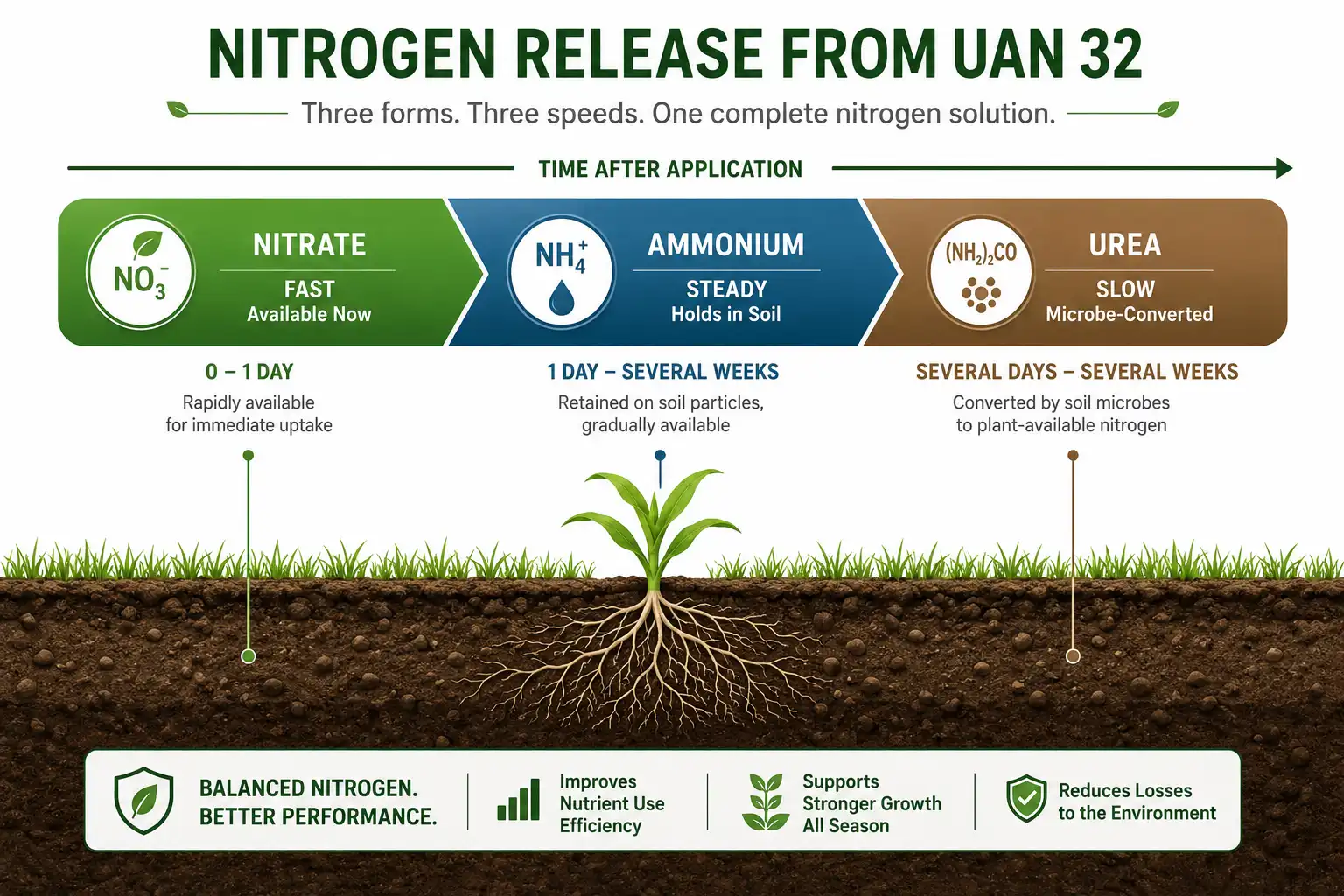
So one application gives you a quick green-up and a longer feed at the same time.
How Much 32-0-0 to Apply
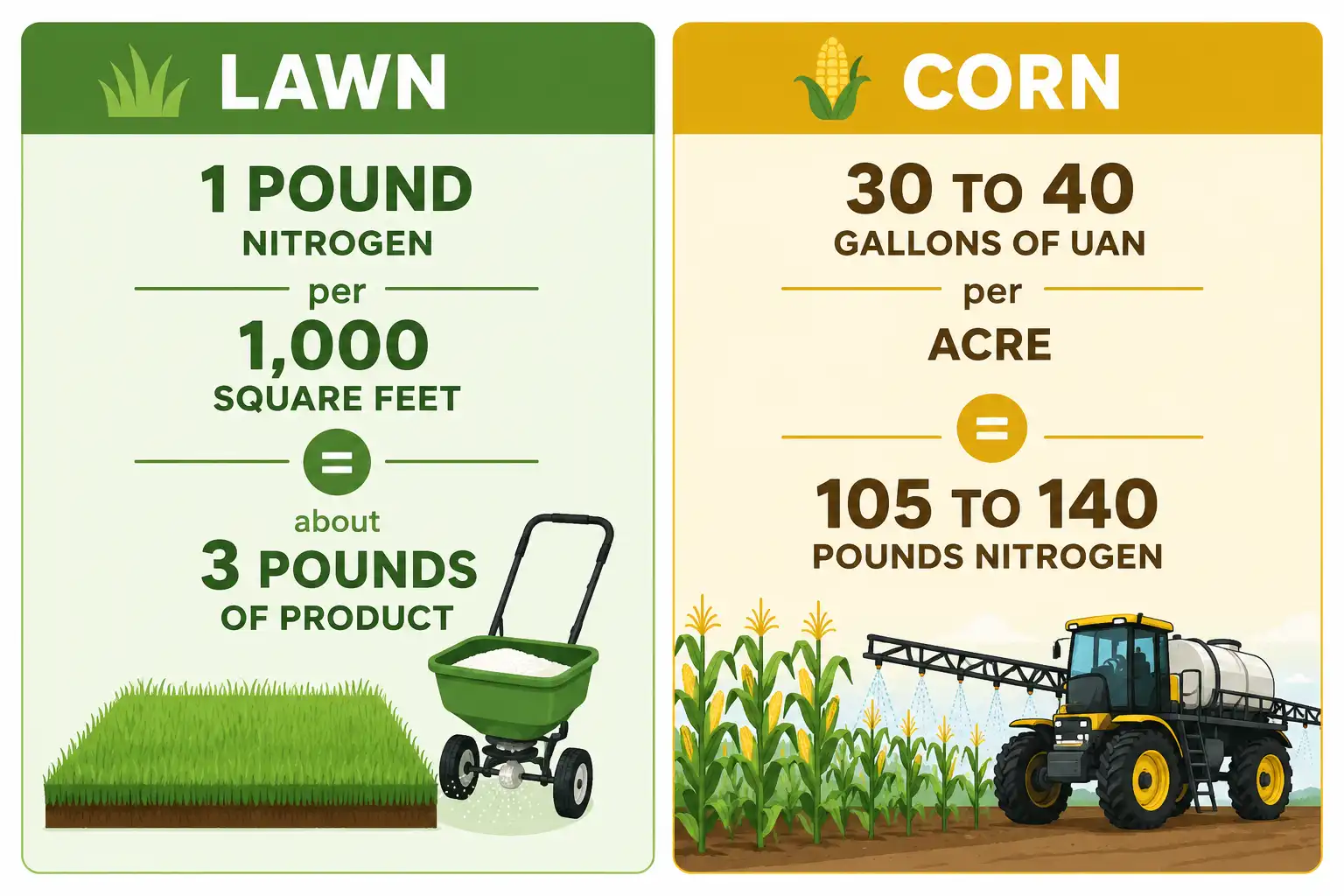
Match the rate to the job. Lawns want about 1 pound of actual nitrogen per 1,000 square feet per feeding. Corn and other row crops want a full-season nitrogen budget set by your yield goal and soil test.
32-0-0 Rate for Lawns
Apply enough product to lay down about 1 pound of nitrogen per 1,000 square feet. With a 32 percent grade, that works out to roughly 3 pounds of product per 1,000 square feet. Most 18-pound bags cover about 6,000 square feet at that rate. Then reapply every 6 to 8 weeks while the grass is actively growing.
32-0-0 Rate for Corn and Row Crops
Set your total nitrogen by yield goal, and then convert it to gallons. At about 3.5 pounds of nitrogen per gallon, the math is easy. 30 gallons of UAN 32 supplies roughly 105 pounds of nitrogen per acre. 40 gallons supplies about 140 pounds. Many growers split that into a pre-plant pass and a sidedress pass. For the numbers behind a yield goal, see the nitrogen your corn needs per acre. Then check how to dial in liquid fertilizer per acre before you fill the tank.
How to Apply 32-0-0 Fertilizer the Right Way
Put 32-0-0 fertilizer down on the right day, in the right place, and water it in. Sloppy timing wastes nitrogen to the air, and that is money gone.
For liquid UAN on crops, follow these steps:
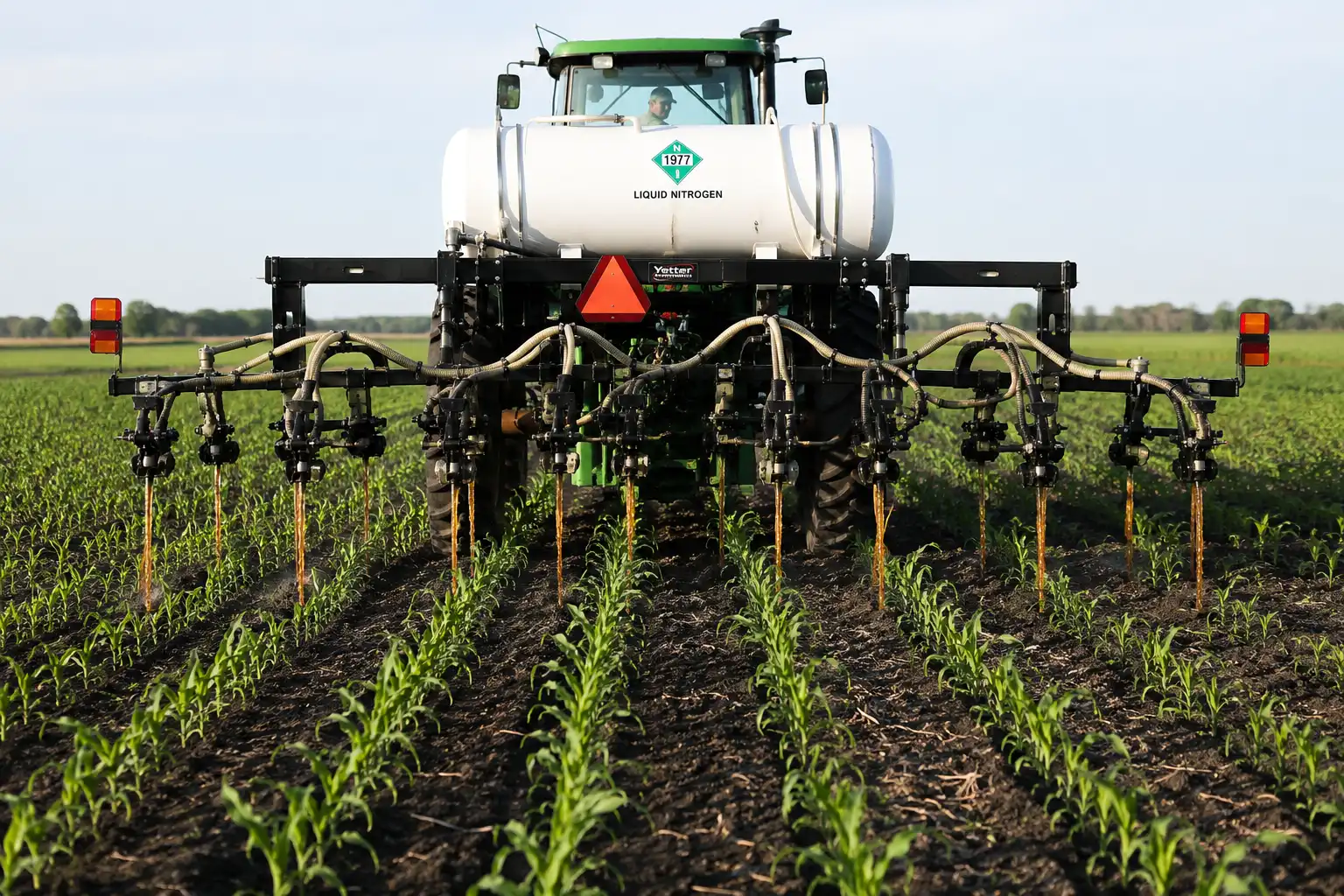
- Choose your placement: broadcast, dribble a surface band with a streamer bar, or inject below the surface.
- Avoid full-strength foliar sprays on anything but pasture, since strong solution burns leaves.
- Band or inject when you can, because soil contact cuts loss.
- Watch the forecast and aim for rain or irrigation within a couple of days.
And for granular on lawns, the steps are simple:
- Mow first and clear debris so granules reach the soil.
- Spread on dry, actively growing turf with a broadcast or drop spreader.
- Water in with at least 0.2 inch to move granules into the soil.
- Sweep any product off the driveway and sidewalk back onto the lawn.
For a small yard or a garden bed, a hose-end sprayer makes quick work of liquid nitrogen without a spreader.
Cutting Nitrogen Loss to Volatilization
Volatilization is nitrogen escaping as ammonia gas, and the urea part of 32-0-0 is the piece at risk. Loss climbs in hot, dry, windy weather above 70°F. To hold that nitrogen, incorporate it, or count on about a quarter inch of rain within two days. A urease inhibitor with NBPT buys you 10 to 14 days of protection while you wait on that rain. K-State Research and Extension and Iowa State agree on the fix. Banding and timely rainfall are the surest ways to keep nitrogen in the root zone.
When to Apply 32-0-0
Apply when the plant is actively growing and can use the nitrogen. On corn, that means a pre-plant shot and a sidedress pass near V6, when demand climbs fast. On cool-season lawns, spring and fall feed best, so drop to a lighter rate through summer heat. Also skip any application right before a heavy storm that would wash product away.
Best 32-0-0 Fertilizer Products for 2026
The best 32-0-0 fertilizer for most homeowners is a coated-urea granular. Large turf and farm ground call for pro bags or bulk liquid. Below are the pick for solid, honest results.
The Andersons Professional Pure Nitrogen 32-0-0
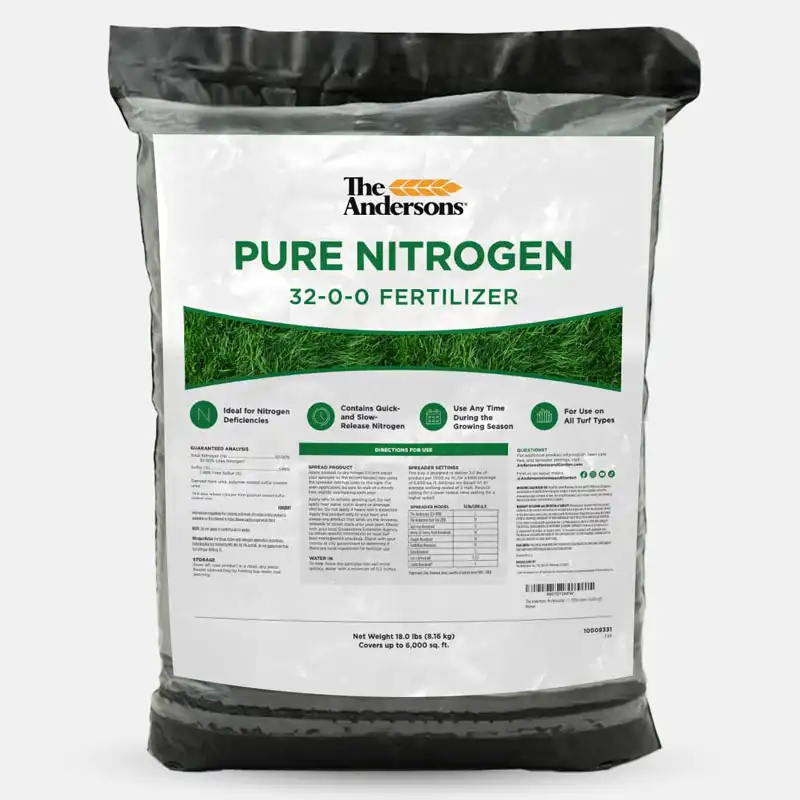
This is the top pick for home lawns. The Andersons builds it on polymer-coated and sulfur-coated urea. So you get a quick green-up plus a slow feed for up to 8 weeks. The small prill spreads evenly with no streaking. One 18-pound bag covers about 6,000 square feet and works on every turf type, from Bermuda to fescue. Owners report deep color inside a week or two.
PROS
- Small prill, even spread
- Quick plus slow release
- Feeds up to 8 weeks
- Safe on all turf
CONS
- Modest coverage per bag
Specs:
- Grade: 32-0-0 coated urea
- Bag: 18 lb, 6,000 sq ft
- Form: fine granular prill
- Release: quick plus slow
Storage and Safety Notes
Store granular 32-0-0 in a dry, sealed bag, away from kids and pets. Liquid UAN needs more care. It salts out near 32°F. So keep it warm enough that solids stay in solution and do not plug your lines. It also corrodes mild steel, copper, and brass, so use stainless steel, aluminum, or compatible fiberglass for tanks and pumps. Never mix UAN with calcium nitrate or aqua ammonia, because both cause a mess in the tank.
Final Verdict
If you farm, 32-0-0 as liquid UAN is a clean, flexible way to feed nitrogen. Just band it or catch a rain to move it in. If you keep a lawn, a coated-urea granular greens up thin grass with almost no burn risk. Either way, test your soil first, match the rate to the job, and water it in.